
Shipping container parts
A shipping container looks like a simple steel box from the outside, but it is an assembly of dozens of precisely engineered shipping container parts — each governed by international standards, each designed to survive decades of ocean transit, crane lifts, and stacking loads that would crush an ordinary structure. Whether you are buying a used container, planning a container home, troubleshooting a repair, or simply building your logistics vocabulary, understanding every individual component is the difference between making an informed decision and an expensive mistake.
This guide covers every shipping container part in depth: what it is, what it is made of, which ISO standard governs it, how it fails, and how to maintain it. No competitor page covers all of these parts. This one does.
What Are the Main Parts of a Shipping Container?
Every standard dry freight container — regardless of manufacturer, age, or size — shares a common structural anatomy. At the highest level, the container breaks down into five core assemblies, each made up of multiple sub-components.
The Five Core Components
A shipping container is not a monocoque structure. It is a steel frame onto which panels, a floor, and door hardware are welded, bolted, and sealed. The five core assemblies are:
- The Frame — The skeleton. Corner posts, top rails, bottom rails, end frames, and cross members. Everything else hangs off the frame.
- The Walls and Roof — Corrugated Corten steel panels. They enclose the cargo space, resist racking forces, and shed water.
- The Floor — Marine-grade plywood screwed onto steel cross members. It carries the full weight of the cargo.
- The Doors — Twin steel doors on the rear end, with a multi-point locking mechanism, gaskets, and security hardware.
- The Corner Castings — Eight cast steel blocks at every corner. They are the universal interface for cranes, twist locks, and stacking.
| Core Component | Primary Material | Key Function | Governing ISO Standard |
|---|---|---|---|
| Frame | High-tensile steel (10mm corner posts) | Load-bearing skeleton; transfers stacking and racking forces | ISO 1496-1 |
| Walls & Roof | 14-gauge Corten steel, corrugated | Enclosure, weather protection, racking resistance | ISO 1496-1 |
| Floor | 28mm marine-grade laminated plywood over steel cross members | Cargo load-bearing surface | ISO 1496-1 |
| Doors | Corrugated steel panels, rubber gaskets, steel lock rods | Access, security, weather seal | ISO 1496-1 |
| Corner Castings | Cast steel (ISO 1161) | Lifting, stacking, securing interface | ISO 1161 |
Key Insight: The container’s weight is never carried by the roof sitting on the floor below it. When containers are stacked, the entire load transfers through the corner posts and corner castings — corner casting to corner casting, post to post. The roof panels bear almost none of the stacking load.
Where Did Shipping Container Parts and Standardization Come From?
Understanding modern shipping container parts means understanding why they were standardized in the first place. Before 1956, international cargo was moved as break-bulk: individual barrels, crates, and sacks manhandled onto ships one at a time. A single ship could spend a week in port being loaded and unloaded.
The Birth of the ISO Container in 1956
Malcolm McLean, a trucking entrepreneur from North Carolina, recognized that the real bottleneck was not ocean speed — it was port time. His insight was radical: instead of loading cargo piece by piece, load the entire truck trailer onto the ship. On April 26, 1956, the converted tanker SS Ideal X sailed from Newark to Houston carrying 58 of McLean’s containers. The container era had begun.
But for the concept to work globally, every container had to be interchangeable. A container built in Japan had to lock perfectly onto a chassis built in Germany and stack onto a container built in Brazil. This required standardization of every part — from the dimensions of corner castings to the spacing of cross members.
How ISO 668, 1161, and 1496 Defined Every Component
The International Organization for Standardization (ISO) stepped in during the 1960s and produced the standards that define virtually every shipping container part today:
- ISO 668 — Defines external dimensions, minimum internal dimensions, and maximum gross mass ratings for Series 1 freight containers. This is why a 20-foot container from any manufacturer is interchangeable with any other.
- ISO 1161 — Defines the dimensions, tolerances, and strength requirements for corner castings. Every hole position, every oblong shape, every load rating is specified here.
- ISO 1496-1 — Specifies the testing procedures every container type must pass: stacking tests, lifting tests, floor strength tests, racking tests, and weatherproofing tests. A container cannot carry a CSC plate without passing these.
Without these three standards, the global supply chain as we know it would not exist. Every shipping container part you encounter — from the corner casting to the door gasket — exists within the framework these standards created.
What Is the Structural Frame of a Shipping Container?
The frame is the container’s skeleton. It is made entirely of steel, and every structural member has a specific name and function. If you need to describe damage, order a replacement part, or understand load paths, you must know the frame components.
Corner Posts: The Vertical Load-Bearing Spine
Corner posts are the vertical structural members at all four corners of the container. They are fabricated from high-tensile steel — typically 10mm thick at the door end and often even thicker at the front end. When a container is stacked in a ship’s hold, the entire weight of every container above it passes through the corner posts.
A fully loaded 40-foot container can weigh 30,480 kg. Stacked nine-high on a container ship, the bottom corner posts must support over 270 tonnes of compressive force — all concentrated onto four steel columns.
Rear (door-end) corner posts are narrower than front-end posts because they must accommodate the door hinge and locking hardware. Front-end corner posts are typically wider and designed to absorb impact from chassis during loading.
Top Rails and Bottom Rails: The Longitudinal Frame Members
Top side rails run the full length of the container along the upper edge of each side wall. They connect the front corner posts to the rear corner posts and provide the attachment surface for the roof panels. Top rails come in two profiles: box section (hollow rectangular tube) or flat bar (solid 10mm plate). Box section rails offer superior stiffness and are standard on modern containers.
Bottom side rails run along the lower edge of each side wall. They form part of the understructure and provide the attachment points for cross members. The bottom rails at the door end and front end have machined cut-outs — these are intentionally designed to prevent the rail from being pierced by twist-lock pins when the container is lowered onto a chassis or another container.
Top end rails and bottom end rails perform the same function at the front end of the container, connecting the front corner posts horizontally.
Front End Frame and Rear End Frame
The front end frame is the structural assembly at the end opposite the doors. It consists of the top end rail, bottom end rail, and the two front corner posts, all joined to the front corner castings. On most containers, the front end is a solid corrugated steel wall.
The rear end frame is the door-end assembly. It consists of the door header (the horizontal beam above the door opening), the door sill (the horizontal beam at floor level), and the two rear corner posts, all joined to the rear corner castings. The rear end frame must be exceptionally rigid because the doors — which are heavy and frequently opened — hang from it.
Cross Members: The Underfloor Support Grid
Cross members are lateral steel beams that span the width of the container between the two bottom side rails. They are spaced at approximately 12-inch (305mm) centers and form the structural grid that supports the plywood floor. Each cross member is typically a C-channel or I-beam profile, and the flooring is screwed directly into them.
Cross members are among the most commonly damaged shipping container parts because they sit low and are exposed to forklift strikes, road debris, and corrosion from beneath. IICL5 (Institute of International Container Lessors) repair standards specify that any cross member repair must not cut through the full profile — the top flange must remain intact to preserve floor support.
What Are Corner Castings and How Do They Work?
If there is one shipping container part that makes the entire global container system possible, it is the corner casting. These eight cast steel blocks are the universal interface through which every container is lifted, stacked, locked, and secured.
ISO 1161: The Universal Corner Fitting Standard
Corner castings (also called corner fittings) are manufactured from cast steel to the exact specifications of ISO 1161. Each casting has elongated oblong holes on three of its faces — the top face, the side face, and the end face. The hole facing inward toward the container body is typically absent.
The oblong holes are not all the same size or shape. The bottom corner castings have larger, differently oriented holes than the top corner castings. This is by design: the bottom holes are shaped to receive twist-lock pins during stacking, while the top holes are shaped to engage crane spreaders and lifting equipment.
A standard top corner casting hole measures approximately 124.5mm × 63.5mm on the end face. The bottom corner casting has a hole of approximately 93mm × 63mm. These dimensions are specified down to the millimeter in ISO 1161.
How Twist Locks and Corner Castings Connect Containers
A twist lock (or twistlock) is a mechanical locking device that inserts into the oblong hole of a corner casting, then rotates 90 degrees to lock in place. The mushroom-shaped head of the twist lock passes through the wide dimension of the oblong hole, and when rotated, the head cannot be withdrawn because it is now wider than the narrow dimension of the hole.
Semi-automatic twist locks engage when the container is lowered onto them — the weight of the container triggers the locking mechanism. Manual twist locks require a worker to rotate the lock using a lever. Bridge fittings connect two containers horizontally (side-by-side), commonly used on flat racks or when containers are secured to a deck without vertical stacking.
| Corner Casting Position | Hole Configuration | Primary Function | Twist Lock Interface |
|---|---|---|---|
| Top Front-Left (TFL) | Holes on top, end, and side faces | Crane lifting, stacking (female) | Receives bottom twist lock of container above |
| Top Front-Right (TFR) | Holes on top, end, and side faces | Crane lifting, stacking (female) | Receives bottom twist lock of container above |
| Top Rear-Left (TRL) | Holes on top, end, and side faces | Crane lifting, stacking (female) | Receives bottom twist lock of container above |
| Top Rear-Right (TRR) | Holes on top, end, and side faces | Crane lifting, stacking (female) | Receives bottom twist lock of container above |
| Bottom Front-Left (BFL) | Holes on bottom, end, and side faces | Stacking (male), chassis securing | Bottom hole engages twist lock of container below |
| Bottom Front-Right (BFR) | Holes on bottom, end, and side faces | Stacking (male), chassis securing | Bottom hole engages twist lock of container below |
| Bottom Rear-Left (BRL) | Holes on bottom, end, and side faces | Stacking (male), chassis securing | Bottom hole engages twist lock of container below |
| Bottom Rear-Right (BRR) | Holes on bottom, end, and side faces | Stacking (male), chassis securing | Bottom hole engages twist lock of container below |
What Are the Wall and Roof Panels Made Of?
Corrugated Corten Steel: The Panel Material
The walls and roof of a standard shipping container are made from Corten steel (also known as weathering steel), typically 14-gauge (approximately 1.9mm thick). Corten steel is a copper-chromium alloy steel that, when exposed to the elements, forms a stable, protective rust-like patina. This oxide layer — once formed — actually protects the underlying steel from further corrosion, rather than flaking away as ordinary rust does.
The corrugation profile is not decorative. Every ridge and valley in the wall panel adds rigidity and racking resistance. A flat sheet of 14-gauge steel would buckle under the racking forces experienced during ocean transit. The corrugations — typically spaced at roughly 280mm intervals — create a structure that resists bending in multiple planes simultaneously.
Wall panels are welded to the top rail, bottom rail, and corner posts. The weld seam at the bottom rail is one of the most common failure points on older containers: water pools at the bottom edge, and if the protective Corten patina is compromised, rust can eat through the seam.
Roof Bows and Roof Reinforcement Plates
Some containers — particularly older aluminum or GRP (glass-reinforced plastic) designs — use roof bows: lateral arches beneath the roof panel that provide additional support. Modern all-steel containers typically do not use roof bows because the corrugated roof panel itself provides sufficient stiffness when welded directly to the top rails.
Roof reinforcement plates (also called striker plates) are additional steel plates welded to the roof panel adjacent to the top corner castings. They protect the roof from misaligned crane spreaders during lifting operations. Sling pads are similar plates located in the center of the roof, protecting against cable slings used during older lifting methods.
Ventilators and Air Exchange
Ventilators are small, louvered devices permanently mounted on the side wall or front end panel — typically two or more per container. They allow air exchange between the container interior and the outside environment while preventing water ingress. Ventilators serve two critical functions:
- Pressure equalization — When a container is sealed and then subjected to temperature changes, the internal air pressure can build enough to stress the door seals. Vents allow pressure to equalize.
- Condensation control — Air circulation helps prevent the buildup of condensation inside the container, which can damage moisture-sensitive cargo.
How Does a Shipping Container Floor Work?
Marine-Grade Plywood and Steel Cross Members
The floor of a shipping container is a composite structure. The riding surface is marine-grade laminated plywood — typically 28mm (1-1/8 inches) thick — consisting of multiple hardwood veneers bonded with waterproof adhesive. This plywood is screwed (not nailed) into the steel cross members below.
Why wood and not steel? A steel floor would be slippery, prone to sparking, and would transfer condensation directly to cargo. The plywood provides a surface with natural grip, absorbs minor impacts, and can be replaced section by section as it wears.
Joint strips are hat-shaped steel or aluminum profiles installed between adjacent plywood sheets to integrate and support the edges. A threshold plate (also called a crash plate) is a steel plate positioned just forward of the door sill that protects the floor edge from forklift impact during loading and unloading.
Forklift Pockets and Gooseneck Tunnels
Forklift pockets are reinforced tunnels running transversely across the understructure. They are installed in pairs at ISO-prescribed positions and provide openings in the bottom side rails so that a forklift can lift the container from the side. Each pocket is reinforced with a forklift pocket strap — a steel plate welded to the bottom of the opening.
A gooseneck tunnel is a recessed area in the forward portion of the understructure, more common on 40-foot and longer containers. It accommodates the raised forward section of a gooseneck chassis, allowing the container to sit lower on the trailer for reduced overall height.
What Are the Parts of a Shipping Container Door?
The door assembly is the most mechanically complex part of any shipping container. It is also the part most frequently interacted with, and therefore the part most likely to need repair.
Door Frame, Panels, and Hinges
Each container has two doors at the rear end. The door panels are made of corrugated steel — similar to the wall panels but with a different corrugation profile designed for the stresses of repeated opening and closing. The doors are hung on heavy-duty steel hinges welded to the rear corner posts. These hinges allow the doors to swing open to 270 degrees, folding flat against the side walls for maximum access during loading.
Locking Mechanism: Lock Rods, Cams, Keepers, and Handles
The four-bar locking mechanism is what secures the container doors. Here is how it works, part by part:
- Lock rods (also called locking bars) run the full height of each door. There are typically two rods per door — four total. Each rod is a solid steel bar with a cam at both the top and bottom.
- Cams are the shaped steel lobes welded to the ends of each lock rod. When the rod is rotated, the cam swings into a keeper — a steel bracket welded to the door header (top) or door sill (bottom).
- Keepers are the receiving brackets. When the cam rotates into the keeper, it pulls the door tight against the frame and compresses the gasket.
- Door handles (also called levers) are attached to each lock rod at waist height. When you lift the handle, the rod rotates, the cams engage or disengage, and the door unlocks or locks. When the door is locked, the handle folds flat against the door and is held in place by a door handle bracket.
- Cam retainers are small mechanisms that hold the lock rod in place once engaged, preventing vibration from rotating the cam loose during transit.
Door Gaskets and Weather Seals
Door gaskets are rubber or plastic seals that run around the perimeter of each door. When the cams pull the doors tight against the frame, the gaskets compress and create a watertight, airtight seal. Gaskets are the most frequently replaced shipping container part on any door assembly — they degrade over time from UV exposure, mechanical compression, and temperature cycling.
A failed gasket means water ingress, which can ruin cargo and accelerate floor rot. Annual gasket inspection is a minimum for any container in active service.
Lock Boxes and Security Features
A lock box is a welded steel housing that surrounds the padlock on the right-hand door. It consists of a metal box that extends over the left door, with a post welded to the left door that fits into the box when the doors are closed. The padlock is placed on the post inside the box, making it extremely difficult to cut with bolt cutters. Lock boxes are standard on one-trip and new containers.
Security seals — numbered plastic or metal strips — are used in conjunction with the locking mechanism to provide tamper evidence. Once a seal is broken, it cannot be re-attached, providing a clear chain of custody indicator.
What Is a CSC Plate and Why Does It Matter?
The CSC plate (Container Safety Convention plate) is a permanently affixed metal plate — typically bolted to the left door — that is the container’s legal identity document. Required under the International Convention for Safe Containers (CSC) of 1972, the plate must display:
- Manufacturer’s name and country
- Date of manufacture
- Maximum gross mass (the total permissible weight of container + cargo)
- Maximum payload (the maximum cargo weight)
- Tare weight (the weight of the empty container)
- Stacking test load
- Racking test load
- CSC safety approval number
- ACEP (Approved Continuous Examination Program) reference, if applicable
A container without a valid CSC plate cannot legally be transported internationally. The plate must be re-certified periodically — typically every 30 months — through a qualified inspector. This is why you will often see multiple inspection date stamps on a CSC plate.
What Are Lashing Rings and Interior Securing Parts?
Lashing rings are steel D-rings or lashing points recessed into the interior walls, floor, or corner posts of the container. They are used to secure cargo using straps, chains, or ropes. Each lashing ring has a rated SWL (Safe Working Load) — typically stamped on the ring itself — and should never be loaded beyond this rating.
Lashing rings are far more common on specialized containers (flat racks, open tops) than on standard dry freight containers, but they are present on many general-purpose containers as well. On a standard GP container, you will typically find lashing rings along the bottom side rails and corner posts.
How Do Specialized Container Types Differ in Parts?
Not all containers are standard dry boxes. Specialized types have unique shipping container parts that serve specific functions.
Refrigerated Container (Reefer) Parts
A reefer container is an insulated container with an integrated refrigeration unit. Its unique parts include:
- Insulated walls, roof, and floor — Typically polyurethane foam sandwiched between steel or aluminum skins.
- T-floor — An aluminum floor with raised T-shaped rails that allow cold air to circulate beneath the cargo.
- Refrigeration unit — Mounted at the front end. Contains the compressor, condenser, evaporator, and control electronics.
- Temperature logger — Records internal temperature throughout the journey for compliance verification.
- Return air sensor and supply air sensor — Monitor the temperature of air returning to the unit and air being supplied to the cargo space.
- Fresh air vent — Allows controlled introduction of outside air to regulate atmosphere composition (important for fresh produce).
Open-Top and Flat Rack Container Parts
Open-top containers have no rigid roof. Instead, they use a tarp (tarpaulin) — a waterproof fabric cover — secured by a TIR cable (a plastic-sheathed wire rope threaded through welded loops on the sides and door panels). The TIR cable is designed in accordance with TIR customs conventions to prevent tampering. The front header is often removable to allow loading of over-height cargo.
Flat rack containers have no side walls, no roof, and collapsible end walls. They are essentially a heavy-duty steel floor with corner castings. Their unique parts include heavy-duty lashing points, removable end wall pins, and reinforced bottom side rails.
Tank Container Parts
ISO tank containers are cylindrical pressure vessels mounted within a rectangular steel frame. Key tank-specific parts include:
- Tank shell — The cylindrical stainless steel vessel, typically insulated and clad in aluminum.
- Manlid — The access hatch on top of the tank.
- Discharge valve — The bottom outlet for unloading.
- Pressure relief valve — Safety device that vents pressure if the tank exceeds its rated pressure.
- Steam heating system — External coils or jackets for heating viscous cargoes.
How Are Shipping Container Parts Maintained and Repaired?
Common Failure Points and IICL5 Repair Standards
The Institute of International Container Lessors (IICL) publishes the industry-standard repair guide — IICL5 — which defines acceptable damage criteria and repair methods for every shipping container part. The most common failure points are:
- Bottom rail weld seams — Rust and corrosion at the junction of the wall panel and bottom rail. Water pools here, and if the Corten patina is damaged, the seam can rust through.
- Roof panels — Pitting and bubble rust on the roof exterior. If a container is dropped too hard, microscopic pinholes can form around corroded areas. These are often invisible from inside.
- Floor plywood — Sagging, cracking, or delamination. Improperly installed replacement sections (those not spanning at least three cross members) are a common cause of failure.
- Cross members — Bowing or cracking from forklift strikes. The IICL5 standard is strict: any cross member repair must preserve the top flange intact.
- Door gaskets — Compression set, tearing, or UV degradation. A failed gasket is the most common cause of water ingress.
- Corner posts — Impact damage or improper repairs. Corner post repairs have the strictest repair criteria because a failed corner post can trigger a stack collapse.
Replacement Parts: OEM vs Aftermarket
When replacing shipping container parts, you have two options:
- OEM (Original Equipment Manufacturer) parts — Manufactured to the same specifications as the original container. For corner castings, this means ISO 1161 compliance. For door hardware, this means matching the original manufacturer’s design. OEM parts are the safer choice for structural components.
- Aftermarket parts — Typically less expensive but may not meet ISO tolerances. Aftermarket door gaskets, for example, may use inferior rubber compounds that degrade faster. For non-structural parts (ventilators, lashing rings, handle brackets), aftermarket can be acceptable if sourced from a reputable supplier.
For any structural part — corner castings, corner posts, cross members, top rails — insist on ISO-certified OEM or equivalent parts. The cost savings from aftermarket structural parts are not worth the risk of a stack failure.
What Are the Most Common Misconceptions About Shipping Container Parts?
Five Myths Debunked
Myth 1: “All shipping containers are identical.”
Reality: While all containers conform to ISO dimensional standards, the specifications of individual shipping container parts vary significantly between manufacturers and eras. A 1990s container may have flat bar top rails; a 2020s container has box-section rails. Aluminum containers have entirely different wall construction than steel containers. GRP containers use fiberglass-reinforced plywood panels instead of corrugated steel.
Myth 2: “When containers are stacked, the floor of one sits on the roof of the one below.”
Reality: The stacking load transfers entirely through the corner posts and corner castings. The roof panels of the lower container carry almost none of the weight of the containers above. This is why the corner posts are the thickest steel in the entire container.
Myth 3: “Corten steel doesn’t rust, so containers don’t need rust maintenance.”
Reality: Corten steel forms a protective oxide patina, but that patina requires alternating wet and dry cycles to form properly. In continuously wet environments — or where the patina is mechanically damaged — Corten steel will corrode like any other steel. The bottom rail seam is particularly vulnerable.
Myth 4: “Any steel can be used to repair a container part.”
Reality: Container repairs — especially structural ones — must use steel of equivalent or greater grade and thickness. Welding ordinary mild steel into a high-tensile corner post creates a weak point that can fail under load. IICL5 specifies exact repair material requirements.
Myth 5: “Door seals are optional — a little water inside doesn’t matter.”
Reality: Door gaskets are the only barrier between your cargo and the outside environment. Water ingress leads to cargo damage, mold growth, floor rot, and accelerated corrosion of the container’s interior. A failed gasket that goes unrepaired for months can necessitate a full floor replacement.
Frequently Asked Questions
What are the five basic parts of a shipping container?
The five basic parts are the walls (corrugated Corten steel panels), the roof (corrugated Corten steel panels, welded to the frame), the floor (marine-grade plywood over steel cross members), the corner posts (high-tensile steel vertical columns at all four corners), and the doors (twin steel doors with locking mechanisms and gaskets). These five assemblies form the core of every standard dry freight container.
What is the difference between a corner casting and a corner post?
A corner post is the vertical structural steel column at each corner of the container. A corner casting is the cast steel block welded to the top and bottom of each corner post. The corner post carries the stacking load; the corner casting provides the standardized interface for cranes, twist locks, and stacking pins. Think of the corner post as the bone and the corner casting as the joint.
How do twist locks work?
A twist lock has a mushroom-shaped head that inserts into the oblong hole of a corner casting. Once inserted, the head is rotated 90 degrees, at which point it cannot be withdrawn because the head is now wider than the narrow dimension of the oblong hole. This locks two containers together — or locks a container to a chassis, ship deck, or crane spreader. Semi-automatic twist locks engage on contact; manual twist locks require a worker to rotate the mechanism.
What are shipping container parts made of?
The vast majority of structural shipping container parts are made from Corten steel (weathering steel), a copper-chromium alloy that forms a protective rust patina. Corner posts use high-tensile steel (typically 10mm thick). Corner castings are cast steel. The floor is marine-grade laminated plywood (typically 28mm thick). Door gaskets are EPDM rubber or PVC. Non-structural parts like ventilators may use aluminum or plastic.
How do you identify the front end versus the rear end of a container?
The rear end is the end with the doors. The front end is the solid end opposite the doors. When a container is on a truck chassis, the doors face the rear of the truck. The front end faces the cab. The curb side is the right side when facing the rear end; the road side is the left side when facing the rear end.
What is the most commonly damaged part of a shipping container?
The door gaskets are the most frequently replaced part due to UV degradation, compression set, and mechanical damage. Structurally, the bottom rail weld seam is the most common failure point — water pools there and rust can eat through the seam if the protective Corten patina is compromised. Roof panels are also commonly damaged by misaligned crane spreaders and can develop pinhole corrosion.
Can you replace individual shipping container panels?
Yes. Individual wall panels, roof panels, and door panels can be cut out and replaced. However, panel replacement requires welding and must be done to IICL5 standards. The replacement panel must match the original material (typically 14-gauge Corten steel) and the weld must be continuous and watertight. For structural components like corner posts and rails, replacement is significantly more complex and should only be done by a certified container depot.
What does a CSC plate tell you?
The CSC (Container Safety Convention) plate is the container’s legal identity document. It tells you the manufacturer, date of manufacture, maximum gross mass, tare weight, maximum payload, stacking test load, racking test load, and CSC safety approval number. It also shows the ACEP reference and re-inspection dates. A container without a valid CSC plate cannot be transported internationally.
How often do container parts need inspection?
Under the CSC, containers in international transport must undergo a periodic examination at least every 30 months. However, many operators inspect more frequently — every 12 months is common for containers in active service. Between formal inspections, drivers and handlers are required to perform a visual pre-trip inspection of the container’s exterior condition, door operation, and floor integrity.
Where can I buy shipping container replacement parts?
Shipping container replacement parts are available from specialized suppliers including Pacific Marine & Industrial (PM&I), Container Modification World, Mytee Products, Ultimate Bunker, Conexwest, and Delta Mark. For OEM parts, CIMC Equilink (the manufacturing arm of the world’s largest container builder) sells directly. Most major container depots also stock common replacement parts including door gaskets, lock rods, handles, corner castings, and ventilators.
Other container news...
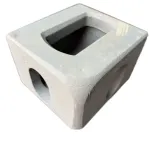
Corner casting steel vs aluminum
Every shipping container in the world — all 40 million of them — rests on eight critical components. Corner castings are the load-bearing blocks at each corner of an ISO shipping container, and they are the universal interface between the container and every crane, twistlock, spreader, and chassis on the planet. When you lift a container, stack it nine high on a ship, or lock it to a truck trailer, every ton of force flows through these fittings.

Construction cabin – selection, tips, dimensions and prices
Every construction project – whether a family house, a development project or a reconstruction – starts with the infrastructure. No construction manager, craftsman or investor who needs an on-site office, a changing room for workers or a safe storage for tools can do without a quality construction cell. But navigating the offer is not easy: residential containers, sanitary cells, storage modules, rental, purchase, refurbished pieces… This guide will give you answers to all the essential questions in one place.
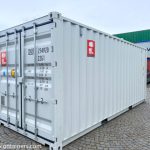
Storage container
A storage container is a lockable steel box designed for the safe and dry storage of materials, tools, goods or equipment. Originally created as a shipping container for maritime transport, its durability and versatility have found their way onto construction sites, corporate premises and private land.
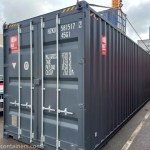
Shipping container 12m (40 ft)
A 12m shipping container is an investment that, if properly selected and cared for, will pay off in decades of trouble-free use. Whether you plan to use it as a warehouse, workshop, garage or the basis for a residential module — the key is careful selection of the condition, a thorough inspection before purchase and high-quality preparation of the base for placement. Take the time to compare offers, check the seller’s references and do not hesitate to personally inspect the container before buying. A properly selected 40-foot container will serve you reliably for many years.