
Shipping container news
On this page you will find several articles in the field of shipping containers. We draw information from various foreign websites and from our own experience. Here you will find a variety of articles about specific types of containers, container markings, container quality, and the latest news from the container world. The purpose of this page is to provide you with as much information as possible to purchase shipping containers.

Obligation to Check Tightness When Selling a Reefer Container
Who is responsible for the refrigerant leak check when selling a refrigerated container? Find out what obligations the seller has at the time of handover and why they must provide a PTI report along with the technical data plate. Learn which regulatory requirements and F-gas record-keeping duties become the sole responsibility of the new owner.

New shipping containers
If you are currently considering purchasing a new shipping container, you are not alone. While just twenty years ago containers were used almost exclusively for maritime transport, today they have found their way into construction, storage, business, and even housing. This growing popularity brings with it a host of questions: Which type should you choose? How much does it cost? How do you recognize quality? How can you avoid falling victim to scammers?
New sea shipping containers
If you are currently considering purchasing a new shipping container, you are not alone. While just twenty years ago containers were used almost exclusively for maritime transport, today they have found their way into construction, storage, business, and even housing. This growing popularity brings with it a host of questions: Which type should you choose? How much does it cost? How do you recognize quality? How can you avoid falling victim to scammers?

6m shipping container
Are you thinking about buying a 6-meter shipping container but aren’t sure what to look for? You are not alone—this 20-foot container is the best-selling size on the Czech market, and the differences between various types, conditions, and prices can be significant. In this guide, you will find everything you need to know: from exact dimensions and a comparison of categories (such as “one-way,” refurbished, and “Cargo Worthy”) to current prices and shipping advice.
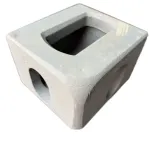
Corner casting steel vs aluminum
Every shipping container in the world — all 40 million of them — rests on eight critical components. Corner castings are the load-bearing blocks at each corner of an ISO shipping container, and they are the universal interface between the container and every crane, twistlock, spreader, and chassis on the planet. When you lift a container, stack it nine high on a ship, or lock it to a truck trailer, every ton of force flows through these fittings.

Construction cabin – selection, tips, dimensions and prices
Every construction project – whether a family house, a development project or a reconstruction – starts with the infrastructure. No construction manager, craftsman or investor who needs an on-site office, a changing room for workers or a safe storage for tools can do without a quality construction cell. But navigating the offer is not easy: residential containers, sanitary cells, storage modules, rental, purchase, refurbished pieces… This guide will give you answers to all the essential questions in one place.
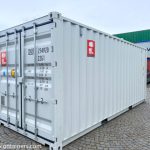
Storage container
A storage container is a lockable steel box designed for the safe and dry storage of materials, tools, goods or equipment. Originally created as a shipping container for maritime transport, its durability and versatility have found their way onto construction sites, corporate premises and private land.
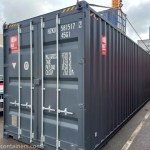
Shipping container 12m (40 ft)
A 12m shipping container is an investment that, if properly selected and cared for, will pay off in decades of trouble-free use. Whether you plan to use it as a warehouse, workshop, garage or the basis for a residential module — the key is careful selection of the condition, a thorough inspection before purchase and high-quality preparation of the base for placement. Take the time to compare offers, check the seller’s references and do not hesitate to personally inspect the container before buying. A properly selected 40-foot container will serve you reliably for many years.

Construction container
A construction container is an investment in safety, order and comfort — whether it is protecting tools from thieves or providing a dignified environment for workers. There are three key decisions: type (storage, residential, sanitary, rubble), form of acquisition (rent vs. purchase) and legislative provision (occupation, building code).
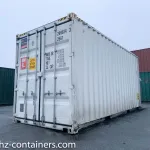
Used shipping container marketplace – prices, condition, transport and how to avoid scams
Buying a shipping container from a second-hand store doesn’t have to be risky if you know what to look for. Always check the seller, compare prices including VAT and shipping, and if possible, arrange a personal inspection. A suspiciously low price is the most common warning sign – a quality used shipping container at a fair price is worth much more than the cheapest option, which can cost you extra money and nerves.
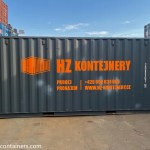
Rental of shipping containers
Do you need a quick and reliable solution for storing materials, tools or goods, but you don’t want to invest hundreds of thousands in buying your own container? Renting shipping containers is one of the most effective solutions for companies and individuals today – whether you are dealing with seasonal storage, arranging facilities on a construction site, or looking for temporary space when moving. This guide will give you a complete overview: from prices and types of containers to rental conditions and a comparison of verified providers. After reading it, you will know exactly which container to choose, how much you will pay for it and what to look out for when renting.

Construction containers
A construction container is an investment that, if chosen correctly, will quickly pay off — whether in the form of safely stored tools, more productive employees, or comfortable facilities on the construction site. The key is not to rush into making a decision: define the purpose, compare types and sizes, consider buying vs. renting, and check out the supplier. With this guide, you have all the information you need in one place. If you are still unsure, contact specialized companies like HZ Containers — their consultants will help you make a choice tailored to your project.

Shipping container with free shipping
If you are looking for a shipping container with free delivery, you have likely come across dozens of ads promising “free delivery throughout the Czech Republic.” However, the reality is often more complex. Transporting a container weighing several tons on a special trailer equipped with a hydraulic crane is never truly free—someone always has to pay for it. This raises an important question: what exactly does a “free delivery” offer include, what are the conditions, and what should you watch out for to avoid hidden costs?
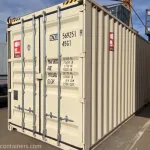
One way shipping container
Are you planning to buy a shipping container and have come across the term “one-way”? You are not alone. In recent years, this term has become one of the most sought-after in the container sales industry—and for good reason. A one-way shipping container represents the ideal balance between price and quality: a container that has completed a single sea voyage before being put up for sale. In this guide, you will learn everything you need to know—from the definition, technical specifications, and current prices to the actual purchasing process.

High Cube container specifications
A high cube container — also referred to as an HC container, HQ container, or high-cube — is an intermodal shipping container that stands one foot taller than the standard ISO container. While a standard general-purpose container measures 8 feet 6 inches (2.59 m) in external height, a high cube container extends to 9 feet 6 inches (2.89 m). This extra 12 inches of vertical clearance translates into approximately 10–15% more cubic capacity without altering the container’s footprint — the same length and width are maintained, meaning the container occupies the same floor space on a vessel, chassis, or storage yard.