
TANK CONTAINER
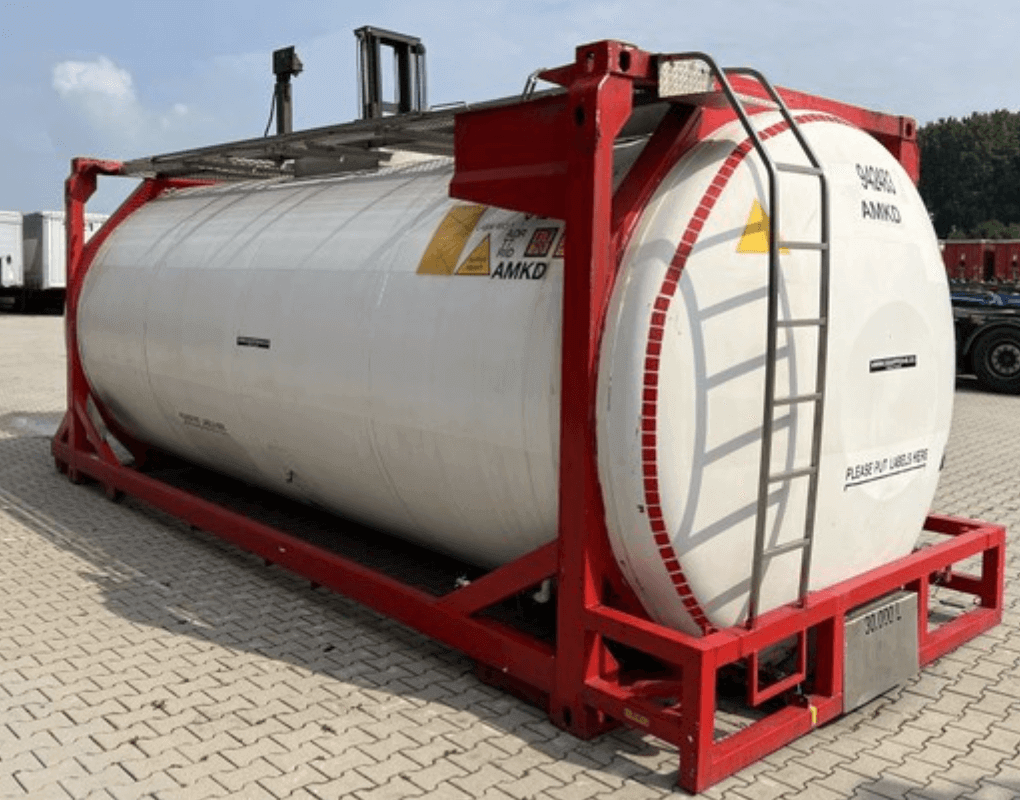
Tank container, also known as an ISO tank or tank container, a cistern or tank, are specially designed containers intended for the transportation of liquid or gaseous substances and represent a key solution for their safe transport. Due to their robust construction and versatile use, they have become an indispensable element in many industrial sectors. They are made from a steel shell capable of withstanding pressure and impacts. They comply with international ISO standards for shipping containers.
The capacity of a tank container typically ranges from 14,000 liters to approximately 26,000 liters and is available in various sizes and variants. It is always necessary to choose a specific tank according to the intended content. These tank containers are suitable for smaller volumes of transported substances. They are easier to handle because they have a lower weight, which is beneficial for transport by trucks or rail. These containers are designed to withstand demanding conditions and ensure the safety of the transported cargo. Due to their sturdy construction, they can endure multiple uses and handling during loading and unloading.
For liquid substances, 20′ tank containers are commonly used, but there are also 40′ tank containers on the market, which have a capacity of approximately 50,000 to 66,000 liters, depending on the manufacturer. These containers are suitable for larger volumes of liquid substances and are often used for transporting petroleum products, chemicals, or food products that require a larger volume. However, they are not commonly available for sale in the Czech Republic. Such large tank containers are primarily used in countries like China, Japan, America, the Netherlands, and Germany, where the requirements for the transportation of chemicals are higher.
What is a tank container used for?

These tank containers are widely used for transporting various liquids and gases, such as petroleum products, chemicals, food substances, and pure gases like oxygen or ammonia.
Tank containers are also used for transporting and storing bulk loose substrates, especially cement, lime, kaolin, etc. They are also used for transporting various types of liquids (oil, diesel, acids, beverages, etc.) and compressed gases.
However, if we want to change the type of transported substrate, it is necessary to carefully clean the tank container, which is not always a straightforward task for some types of substrates.
During transportation, the container is often placed on special chassis or wagons and is adapted for handling within intermodal transport. This means it can be transported by road, on a ship, or by rail.
Most common types of tank containers
There are several types of tank containers that differ in their purpose and construction:
- Containers for diesel and water:
- Ideal for the transport and distribution of fuels such as diesel and also water.
- Comply with international regulations for the transport of hazardous goods (ADR).
- ISO tank containers:
- Designed for the transport of liquefied hydrocarbon gases, such as LPG.
- Manufactured and certified according to international standards PED, ISO 1496-3, CSC, IMDG, RID, ADR.
- Containers for contaminated water:
- Specifically designed for transporting contaminated water, such as wastewater from industrial processes.
Tank containers are an important element in international logistics and the transport of liquids and gases. They enable efficient, safe, and economical transport of various liquids around the world.
How is a tank container manufactured?
Tank containers are made from a steel shell that is strong, durable, and able to withstand pressure and impacts. The main part of the tank container is a cylindrical pressure vessel, or tank, made of stainless steel, which is horizontally placed within the supporting structure of the container, that is, in its outer frame.
The container is filled through a filling neck, and emptying is done pneumatically using overpressure or is gravitational. Hoses are used for filling with liquids.
The tank container is equipped with valves, ventilation systems, and other safety features that ensure proper handling and transport of hazardous or sensitive substances. Inside the tank container, there is a unit called “tank,” which is closed and secured against any leakage of substances, which also applies to the protection of the “cargo” inside.
In terms of design and equipment, these containers are very complex. Their operation is the most costly, and the price of transport or rental is often high for these reasons.
TANKS FOR SALE – COMPLETE OFFER HERE
Tank containers production
High-strength steel No. 316 is most commonly used for the production of tank containers, which is capable of withstanding pressure, impacts, and corrosive effects.
The steel shell of the container is shaped using a special pressing process. The shell is usually made from two or more sections that are subsequently welded together. The inner tank, which serves to hold liquid or gaseous substances, is installed into the steel shell. The tank is made of compatible material that is resistant to the transported substances.
The container is equipped with various valves, fittings, and safety features that ensure proper handling and safety of the transported liquids and gases.
Upon completion of manufacturing, tank containers undergo various tests, such as leak testing, pressure resistance testing, and other safety tests that must be met before they set off on their journey with sensitive cargo. They then must pass certification, which confirms their compliance with international standards and regulations.
Shipping containers offer a wide variety of sizes and designs. You can take a detailed look at their breakdown in the section on shipping containers.
YOU CAN BUY A TANK CONTAINER IN THE FOLLOWING SIZES:
 | TANK CONTAINERS – tanks | |||||||
| External dimensions (m) | Weight kg | Capacity | ||||||
| Container type | length | width | height | container | max capacity | l | ||
| 20′ | 6.058 | 2.438 | 2.591 | 3070 to 4190 | 26290 | 21000 | ||
Before using a tank container, it is always essential to verify the exact capacity with the manufacturer or supplier and to comply with the relevant transport regulations.
It is always important to consider current laws and regulations regarding transportation and allowable weight limits in different countries.
Advantages of Tank Containers
Tank containers offer a wide range of advantages that make them an ideal choice for various applications:
- Safety and Protection: The design of the containers ensures complete integrity and inviolability of the transported cargo. Protective features such as wave breakers and DN500 manways enhance safety during handling.
- Mobility and Flexibility: With corner fittings and stacking capabilities, containers are easily maneuverable and transportable in various ways – by road, rail, water, and sea transport.
- Resistance to External Influences: Testing for weather resistance ensures that containers can be used in various climatic conditions.
- Low Operating Costs: Unlike other transport methods, tank containers do not require road tax or mandatory insurance, reducing operating costs.
Applications of Tank Containers
Tank containers find broad application in various industries:
- Industrial Transport: Transport of chemicals, petroleum products, and other liquids on an industrial scale.
- Agriculture: Distribution of fertilizers, pesticides, and water.
- Food Industry: Transport of food liquids, such as oils, milk, and juices.
- Emergency Situations: Rapid distribution of drinking water and fuels in case of natural disasters or other emergencies.
Tank containers represent an essential tool for the efficient and safe transport of liquids and gases. Their robust construction, wide range of uses, and low operating costs make them an ideal choice for many industries. If you are looking for a reliable solution for liquid transportation, tank containers are the right choice.
After exploring the ins and outs of tank containers, you might be interested in learning about the different kinds of shipping containers. Discover their uses and why they are so crucial in global trade. If you're curious about more specific types, check out the bulk containers that are perfect for transporting loose materials. They offer unique solutions for specific cargo needs. For those considering extra storage space, the container garage might catch your attention. It provides insights into selecting the right size and setup for your container-based garage. Finally, if you have any questions or need further assistance, don’t hesitate to reach out through our contact page. Our team is ready to help with all your container needs.