Door Cam
What is a shipping container door cam?
A shipping container door cam (also known as Locking Bar Cam) is a robust metal component that forms a key part of the locking mechanism for standard ISO shipping container doors. Its function is crucial for the safe, secure, and tight closure of the container doors.
The cam is welded to the top and bottom ends of each vertical locking bar on the doors. When the door handle is turned, the entire locking bar rotates, causing the cam to move and engage with the cam keeper, which is firmly fixed to the container structure. This mechanism forms a fundamental safety element of the door system and is known as a cam lock.
Main functions of the cam:
- Mechanically secure the doors against opening,
- Pull the doors towards the frame and compress the rubber seal,
- Protect the cargo from weather conditions, unauthorized access, and damage during transport.
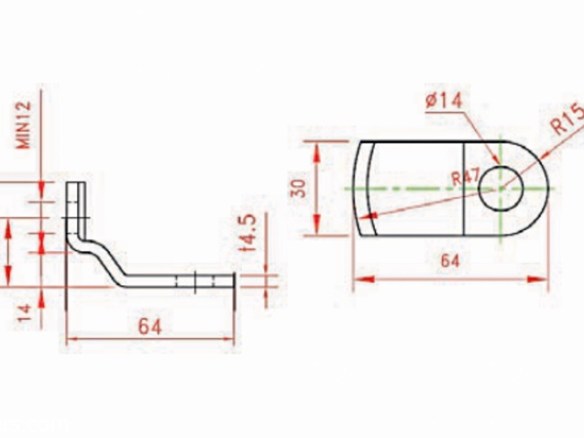
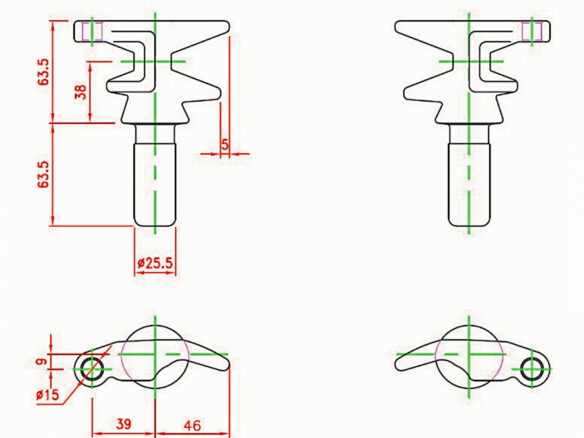
Catalog number: HZ000245 and HZ000246 and HZ000249 with security eyelet
Basic Terminology
For better orientation, here is an overview of the main related components of a shipping container door system:
| Component | Function |
|---|---|
| Locking Bar | Vertical bar that carries the cams and controls locking when rotated |
| Cam Keeper | Steel part on the frame into which the cam engages |
| Door Handle | Lever that rotates the locking bar |
| Handle Retainer | Secures the handle in the folded position |
| Security Cam | Cam with a hole for a seal |
Purpose and Function of the Door Cam
Principle of the Cam Mechanism
The cam utilizes a simple but highly effective lever principle – when the locking bar rotates, the cam engages and creates a strong leverage effect that pulls the doors towards the container and seals them tightly.
Door Locking Process:
- The doors are open, cams are disengaged from the keepers.
- After closing the doors, the handle is turned, rotating the locking bar with the cams.
- The cams engage with the cam keepers.
- Further rotation creates a leverage effect, pulling the doors towards the frame.
- The handle is secured in its retainer, preventing accidental opening.
Role in Security and Sealing
The cam and its keeper form the main locking point of the container doors. They are designed to:
- Resist attempts at forced entry (e.g., prying, cutting),
- Ensure hermetic compression of the rubber seal around the entire perimeter of the doors,
- Protect the interior of the container from water, dust, and insects.
Anti-Racking Effect
Containers are exposed to torsional stress during transport, which can lead to twisting (known as racking). The system of cams and keepers increases the rigidity of the container door wall, absorbs forces during stacking or handling, and prevents deformation of both the doors and the frame.
Placement and Number of Cams
Where are cams found?
- Cams are located at the top and bottom ends of each locking bar on the container doors (always 2 per bar).
- Each door leaf has 2 locking bars (both right and left doors).
Standard Number of Cams per Container
| Door | Locking Bars | Cams per Bar | Total Cams |
|---|---|---|---|
| Left | 2 | 2 – HZ000246 | 4 |
| Right | 2 | 2 – HZ000245 | 4 |
| Total | 4 | 2 | 8 |
This number ensures an even distribution of forces and maximum security.
Types of Door Cams
Standard Cam (Standard Locking Bar Cam)
- Basic type, solid steel casting without additional holes. Left HZ000246 and right HZ000245
- Primarily ensures mechanical locking of the doors. HZ000249
Security Cam
- Structurally based on the standard cam, but equipped with a hole (approx. 15 mm) for a security seal (bolt seal).
- Allows for sealing the container and recording any unauthorized opening.
Material, Dimensions, and Technical Specifications
Materials and Surface Treatment
| Material | Surface Treatment | Properties |
|---|---|---|
| Cast steel | Galvanization (zinc coating) | High strength, weather resistance, corrosion resistance, long lifespan |
Typical Dimensions (according to manufacturing standards)
| Parameter | Value |
|---|---|
| Length | 127 mm |
| Width | 76 mm |
| Thickness | 26 mm |
| Weight | approx. 1 kg |
| Hole Diameter (Security Cam) | 15 mm |
Cams are standardized, ensuring compatibility between different manufacturers and easy replacement.
Door Cam in Container Door System
Main Components of the Door Mechanism
- Door Leaves: Made of corrugated steel sheet for increased rigidity.
- Locking Bars: Vertically oriented, carrying the cams.
- Cams & Cam Keepers: The locking part.
- Handles & Retainers: Control the locking.
- Hinges & Pins: For opening the doors.
- Gaskets: Ensure watertightness.
- Lock Box: Steel protection for a padlock.
Correct Procedure for Opening and Closing Doors
- Opening: Start with the right door leaf, release and turn the handles, disengage the cams from the keepers, open the door. Then the left door leaf.
- Closing: Reverse order – first the left door leaf, then the right. This ensures proper overlap and sealing.
Common Problems, Damage, and Maintenance
Typical Cam Damage
- Missing cam – doors cannot be locked, replacement is necessary.
- Deformation/bending – often caused by impact or an attempt to close the doors over an obstruction. Sometimes it can be straightened, other times replacement is needed.
- Broken/cracked cam – serious damage, complete replacement is necessary.
Causes of Damage
- Shifting of heavy cargo during transport,
- Corrosion in aggressive environments (especially damaged galvanization),
- Freezing of the door mechanism,
- Incorrect handling or use of inadequate tools.
Recommended Maintenance and Repairs
- Regular lubrication of moving parts (pins, contact surfaces of cams and keepers),
- Inspection for leaks, damage, and corrosion,
- Replacement of the cam always by welding a new one onto the locking bar (re-welding the original is not recommended).
Safety and Handling Tools
Risks and Operator Protection
- Handling stuck or rusted doors carries a risk of injuries (sprains, muscle strains, back injuries). Statistics show that up to 50% of logistics injuries are associated with opening/closing container doors.
Special Tools
- Leverage Tools: Allow for safe and efficient opening of even stuck doors (e.g., OPNBar).
- Cam Pin Compressor: Assists in seating a slightly deformed cam into the keeper.
- Seal Breaker: Facilitates the removal of seals without the need for additional tools.
Cams in Specialized Containers
Refrigerated/Freezer Containers (Reefer)
- Emphasis on perfect door sealing,
- More robust locking mechanism,
- Higher pressure on special seals.
Tank Containers
- Different closing system (lids, bolting),
- Emphasis on tightness and safety due to the transport of liquids/gases.
Container Conversions
- When retaining original doors, it is important to maintain the full functionality of cams and keepers,
- It is necessary to adhere to ISO standards even during modifications (e.g., when converting to a warehouse, office, or living space such as shipping container home or a container house).
Related Concepts
- ISO Container: A container with internationally standardized dimensions and components.
- Conex Box: Historical name for a shipping container.
- Intermodal Container: A container suitable for multiple modes of transport without the need for transshipment of goods.
Conclusion
The door cam of a shipping container is an inconspicuous but essential structural component. Its proper function is crucial for the safety, tightness and structural integrity of the container and the protection of the goods being transported. Modern cams are designed to withstand the demanding conditions of global logistics, be easily replaceable and compatible across manufacturers, while allowing for rapid inspection by customs and security authorities.
 Czech Republic
  WITHOUT SHIPPING