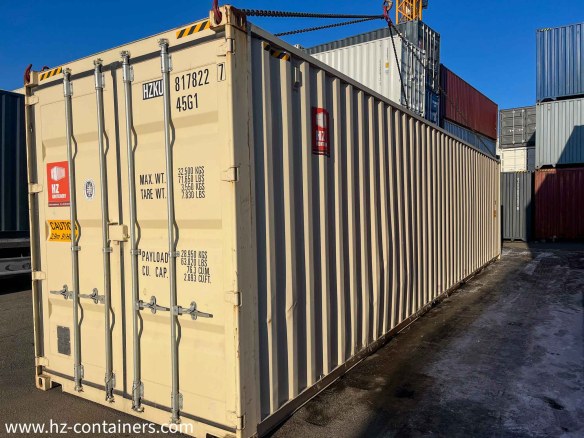
Payload – Useful Load
In the complex and indispensable world of global logistics and maritime trade, understanding fundamental concepts such as Payload (useful load) and shipping container is key. These elements, considered the backbone of international commerce, play a crucial role in determining the efficiency and safety with which goods are transported around the world. This glossary is designed to clarify these fundamental concepts, provide an exploration of their definitions, significance, and impact on the shipping industry.
Understanding the dynamics of useful load and the principles of containerization is not only fundamental for logistics professionals, but is essential for maintaining a competitive advantage in the maritime industry. By aligning operations with prescribed standards and adapting to technological advances, they can effectively harness the full potential of innovative shipping solutions, ensuring sustainability and efficiency in global business activities. This glossary serves as a path to gaining deeper insight into these key logistics components, supporting informed decision-making and strategic planning in maritime operations.

What is the Useful Load of Shipping Containers?
“Useful load of shipping containers” refers to the maximum weight of cargo that a shipping container can carry, excluding the weight of the container itself, known as the weight of an empty container (tare). Understanding this measurement is crucial for determining how much cargo can be efficiently transported in a single container, which affects both costs and regulatory compliance. Container capacity is influenced by its size, type, and construction materials.
Key Terms Related to Useful Load of Shipping Containers
- Weight of Empty Container (Tare): Weight of an empty shipping container, which is crucial for calculating net useful capacity. The weight of an empty 20-foot container typically ranges between 2,300 kg (5,071 pounds) and 2,360 kg (5,204 pounds), while the weight of an empty 40-foot container is approximately 3,750 kg (8,265 pounds).
- Gross Weight: The total weight of the container, including the weight of the empty container and cargo, with a maximum gross weight for standard containers such as 20ft and 40ft around 30,480 kg (67,200 pounds).
- Useful Load Capacity: The difference between gross weight and the weight of the empty container, representing the maximum weight of cargo that can be loaded into the container. A 20-foot container has a useful load capacity of approximately 21,600 kg (47,620 pounds), while a 40-foot container can hold around 26,730 kg (58,935 pounds).
What is Payload – Useful Load?
Definition and Significance: Useful load, a key term in logistics, refers to the weight or volume of goods that a transport vehicle or container can safely carry. This does not include the weight of the vehicle or container itself and is crucial not only for efficiency, but also for compliance with safety standards. According to regulations governed by organizations such as the International Maritime Organization (IMO), understanding useful load capacities helps mitigate the risks of overloading, which is crucial for preventing accidents at sea and ensuring smooth operations across multimodal transport systems.
Useful Load Capacity: Useful load capacity defines the limit of how much weight a vehicle or container can safely and efficiently carry. For logistics professionals, it is crucial to accurately manage this capacity to avoid fines, equipment damage, or dangerous situations. Capacity takes into account not only the weight of goods, but sometimes also includes passengers and equipment, which is necessary to maintain a balance between operational capacity and regulatory compliance.
Factors Affecting Useful Load: Key factors affecting useful load include the design of transport vehicles, compliance with safety and environmental standards, and current environmental conditions that may affect transport dynamics. As emphasized by innovators in shipping such as Mediterranean Shipping Company, adapting to these variables is crucial for maintaining the smoothness and reliability of global supply chains.
What are Shipping Containers?
Types and Dimensions: Shipping containers serve as standardized units for international transport of goods, with common types including containers of 20 feet and 40 feet in length, along with variants such as high-cube containers for greater volume. This standardization simplifies logistics by ensuring compatibility across ships, trucks, and trains, thereby reducing handling times and costs.
Weight Measurement: Knowledge of weight measurements such as tare weight, gross weight, and net weight (useful load) is essential. Tare weight refers to the weight of the container without cargo, gross weight is the combined weight of the container and its maximum useful load, and net weight refers to the cargo only. These measurements form the basis of reliable cargo documentation and operational efficiency.
Significance in Global Trade: As detailed in reports on global shipping, container shipping has fundamentally transformed world trade by dramatically improving the efficiency, safety, and cost-effectiveness of transporting goods, underscoring its irreplaceable role in supporting a thriving competitive market.
Key Terms and Definitions
Dead Weight, Gross Weight, and Tare Weight: Precise understanding of these weight classifications is crucial for effective logistics management:
- Dead weight includes the total safe carrying capacity including all factors.
- Gross weight includes everything inside the vehicle or container, ensuring full compliance and safety.
- Tare weight helps logistics managers balance costs against vehicle limitations.
Understanding the differences between useful load and towing capacity is equally important for operational accuracy within logistics strategies:
- Useful load capacity refers to internal loading limits.
- Towing capacity covers external towing limits.
Safety and Security Standards for Shipping Containers: IMO plays a key role in formulating safety and security standards for shipping. Compliance with these guidelines ensures minimal disruption, risk, and increased safety for goods in transit.

 Benátky nad Jizerou, Czech Republic
  FREE SHIPPING