
Corner Castings and Their Significance
Corner casting (also called corner fitting) is a fundamental, highly standardised structural component found in each of the eight corners of inter‑modal transport containers (ISO containers). It is a robust block of cast steel, machined with millimetre precision. It serves as a universal joining and load‑bearing point that enables handling, stacking, securing and transport of the container throughout the entire logistics chain – sea, rail and road. Despite its unobtrusive appearance, corner castings are the essential foundation of the functionality and safety of global container transport.
Key attributes of corner castings
- Location: In each of the four upper and four lower corners of an ISO container.
- Material: High‑strength cast steel (usually without alloying elements, sometimes Corten steel).
- Dimensions: Strictly to ISO 1161 – 178 mm × 162 mm × 118 mm.
- Certification: All corner castings must meet ISO 1161:2016 and be tested for strength and dimensional accuracy.
Detailed definition and characteristics
A corner casting is far more than “a piece of iron”. It is a sophisticated engineering solution that transfers all forces acting on the container during transport and handling. All forces – cargo weight, pressure during stacking, dynamic impacts during transit – are concentrated into these eight points. Therefore corner castings are designed and tested to withstand extreme loads.
Material specifications
| Property | Cast steel | Aluminium |
|---|---|---|
| Strength | High (withstands stacking of 9–10 container layers) | Lower (unsuitable for extreme loads) |
| Weldability | Excellent | Limited, requires special techniques |
| Corrosion resistance | Higher (Corten steel) | Excellent, but lower thermal resistance |
| Cost | Lower | Significantly higher |
| Temperature resistance | High (‑50 °C to +70 °C) | Lower (deforms at higher temperatures) |
Conclusion: Cast steel is essential for corner castings not only because of its strength but also due to excellent weldability and mechanical properties in extreme conditions.

Anatomy of a corner casting: Three technical holes
Each corner casting has three holes on its faces, each serving a unique function:
| Face | Shape and size of hole | Function |
|---|---|---|
| Side (long) | Oval (stadium), approx. 65 × 130 mm | Horizontal joining (bridge clamps, accessories) |
| Side (short) | Oval (stadium), approx. 65 × 130 mm | Access for spreaders, lashing, joining |
| Top/Bottom | Round/elongated stacking hole, Ø ≈ 51 mm | Lifting by crane, twist‑locks, stacking |
Note: The shape and exact dimensions are defined by ISO 1161 and must meet millimetre tolerances to ensure global compatibility of handling equipment (twist‑locks, spreaders, cranes).
Illustration of hole types
- Side “stadium” holes: Allow containers to be joined side‑by‑side.
- Top/Bottom hole: For twist‑locks during stacking or securing to a vehicle.
- Front hole (on upper corner castings): Optimised for easy crane attachment.
Typology of corner castings: Position variants
Four types are used on each container (each in pairs):
- Top Left (TL) – upper left
- Top Right (TR) – upper right
- Bottom Left (BL) – lower left
- Bottom Right (BR) – lower right
Each type is mirror‑symmetrical; precise placement of holes and shape is critical for the system’s proper operation. One end of a container has a set of four types, the opposite end repeats the same set.
Key functions and significance in logistics
- Lifting and handling: Only via corner castings can a fully loaded container be safely lifted. Handling equipment (cranes, reach stackers, spreaders) is designed to the dimensions of these holes.
- Stacking: Enables stacking of containers up to 9–10 layers on ships. All forces are transferred through the corner castings, protecting the container’s floor and walls.
- Securing: Containers are attached to transport modes (train, ship, truck) via twist‑locks inserted into the lower corner castings.
- Structural integrity: The total weight (cargo and any containers stacked above) is carried through these eight points, which therefore protrude slightly from the container’s outline.
- Intermodality: Standardisation allows containers to change transport mode without repacking – ship to rail, rail to road, etc.
ISO 1161: The cornerstone of safety and compatibility
ISO 1161:2016 (“Series 1 freight containers — Corner and intermediate fittings — Specifications”) is essential for the proper functioning of the global container transport system.
Main points of ISO 1161
- Dimensional tolerances: Precise dimensions of corner castings and holes with deviations typically 0 to +1.5 mm.
- Strength requirements: Minimum 86 kN tensile (lifting) and up to 500 kN compressive (stacking).
- Functional requirements: Compatibility with twist‑locks, spreaders and other handling devices worldwide.
- Testing: Manufacturers must demonstrate load‑bearing performance and provide certification.
Note: Containers that do not comply with ISO 1161 must not be used in regular international service.
Production and quality control
Manufacturing process
- Casting steel into moulds according to precise drawings (usually sand casting or precision casting).
- Machining of surfaces and holes (milling, drilling) to tolerances of tenths of a millimetre.
- Material testing (tensile, compressive and fatigue tests).
- Certification: Each production batch must be certified (e.g., Lloyd’s Register, DNV GL, Bureau Veritas).
- Surface treatment: Anti‑corrosion coating, or special protective layers where required.
Inspection: Every corner casting is regularly inspected throughout the container’s service life. Damaged or non‑conforming castings must be replaced by a qualified welder.
Technical data tables
Dimensions and basic data (ISO 1161)
| Parameter | Value |
|---|---|
| External dimensions | 178 × 162 × 118 mm |
| Hole diameters | Ø ≈ 51 mm (round), 65 × 130 mm (oval) |
| Weight | 11–12.5 kg |
| Material | Cast steel S355 or equivalent (no alloy, sometimes Corten) |
| Minimum tensile strength | 86 kN |
| Maximum stacking load | up to 500 kN |
Container types and corner casting universality
| Container type | Role and significance of corner castings |
|---|---|
| Standard (Dry) | Basic application – load‑bearing, stacking, handling |
| Refrigerated (Reefer) | Same handling as standard containers |
| Open Top | Provides structural strength without a fixed roof |
| Flat Rack | Crucial for handling oversized cargo |
| Tank | Load‑bearing frame with 8 corner castings enables standard transport |
| Special (High Cube, Open Side) | Standard corner castings retained for full compatibility |
Related components, systems and accessories
- Twist Locks: Mechanical locks inserted into corner casting holes to secure containers to each other or to a transport platform. Available in manual and automatic versions.
- Spreaders: Crane attachments that engage the four upper corner castings for rapid, safe lifting.
- Bridge Clamps: Horizontal clamps for joining adjacent containers (e.g., in storage yards or on ships).
- Corner Posts: Together with corner castings they form the basic frame of a container.
- Rails: Upper and lower longitudinal beams linking the corner castings.
Maintenance, inspection and repair of corner castings
Recommended procedures
- Regular inspection: Check for corrosion, deformation, cracks and wear of holes.
- Repair: Damaged casting must be replaced by a certified welder in accordance with IICL standards. The procedure includes removing the old casting, preparing the surface and precisely welding a new casting, followed by weld inspection.
- Corrosion prevention: Periodic painting and application of anti‑corrosion treatments, especially on exposed areas (holes, welds).
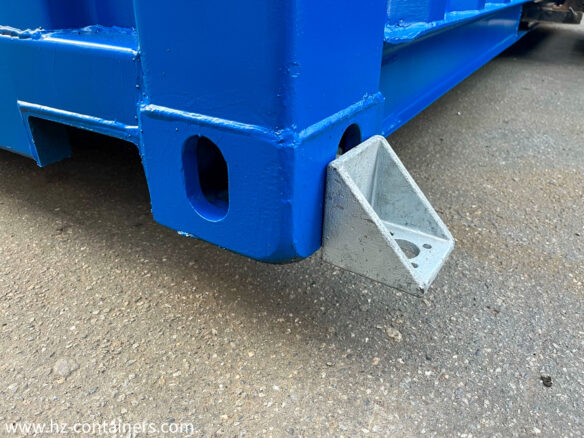
- Ground placement: When a container is placed on a soft surface (soil, gravel) the lower corner castings should be supported with timber or concrete to avoid sinking and loss of stability.
Corner castings in practice: Suppliers, purchase and use
High‑quality corner castings are supplied by specialised manufacturers and distributors that guarantee compliance with ISO 1161, e.g., Konijnenburg BV, Conexwest, CIMC Equilink, Industrial Wheels. It is advisable to purchase only certified products with documented load testing and dimensional reports.
When selecting, consider:
- Material (cast steel, preferably S355, non‑alloyed)
- Certification (ISO 1161, Lloyd’s Register, etc.)
- Surface finish (anti‑corrosion coating)
- Availability of complete kits for all container types
 Czech Republic
  WITHOUT SHIPPING

Other container news...
Corner casting steel vs aluminum
Every shipping container in the world — all 40 million of them — rests on eight critical components. Corner castings are the load-bearing blocks at each corner of an ISO shipping container, and they are the universal interface between the container and every crane, twistlock, spreader, and chassis on the planet. When you lift a container, stack it nine high on a ship, or lock it to a truck trailer, every ton of force flows through these fittings.

Construction cabin – selection, tips, dimensions and prices
Every construction project – whether a family house, a development project or a reconstruction – starts with the infrastructure. No construction manager, craftsman or investor who needs an on-site office, a changing room for workers or a safe storage for tools can do without a quality construction cell. But navigating the offer is not easy: residential containers, sanitary cells, storage modules, rental, purchase, refurbished pieces… This guide will give you answers to all the essential questions in one place.
Storage container
A storage container is a lockable steel box designed for the safe and dry storage of materials, tools, goods or equipment. Originally created as a shipping container for maritime transport, its durability and versatility have found their way onto construction sites, corporate premises and private land.
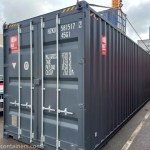
Shipping container 12m (40 ft)
A 12m shipping container is an investment that, if properly selected and cared for, will pay off in decades of trouble-free use. Whether you plan to use it as a warehouse, workshop, garage or the basis for a residential module — the key is careful selection of the condition, a thorough inspection before purchase and high-quality preparation of the base for placement. Take the time to compare offers, check the seller’s references and do not hesitate to personally inspect the container before buying. A properly selected 40-foot container will serve you reliably for many years.