
Twist-lock: Mechanism, Principles and Safety Standards
Twist-lock (rotary lock) is a fundamental mechanical connecting element in container transport, serving to securely fasten shipping containers to each other and to transport vehicles. Its simple principle – insertion and 90° rotation – ensures fast, safe and universal handling of all standardized containers according to ISO. Twist-lock is a key link in the global supply chain and enables efficient, safe and automated transportation of goods worldwide.
History: The invention of the twist-lock in the 1950s (Keith Tantlinger, USA) revolutionized logistics, enabled ISO container standardization and introduced rapid cargo handling. The patent was released without fees, leading to worldwide adoption and development of intermodal transport systems.
Historical Context and Significance of Twist-lock
Before twist locks were introduced, cargo transportation was extremely labor-intensive – goods were loaded manually, resulting in losses and damage. Twist lock together with corner castings enabled:
- Lightning-fast loading/unloading – containers can be handled without touching the cargo inside.
- Safe stacking – containers can be stacked up to 9 layers, maximizing ship and terminal capacity.
- Intermodality – the same container can easily be transported between ship, train and truck without transshipment.
Significant Studies and Real Cases:
- In the Port of Rotterdam, automatic twist-locks were introduced and unloading was accelerated by up to 40%25.
- Maersk, after implementing stricter rules and twist-lock maintenance, reduced incidents related to container shifting by 30%25 (Maersk Sustainability Report, 2022).
- The Ever Given incident (Suez, 2021) demonstrated the risks of inadequately secured containers; security procedures were revised throughout the industry.
Principle and Mechanism of Operation
Twist lock operates on the basis of connecting two basic parts:
Corner Casting:
- Steel casting (according to ISO 1161), welded into all eight corners of the container.
- Dimensions: 178 × 162 × 118 mm, 3 holes (top, side, bottom), weight approximately 10–11 kg/piece.
- Serves as a universal connection point for container handling and securing.
Twist-lock:
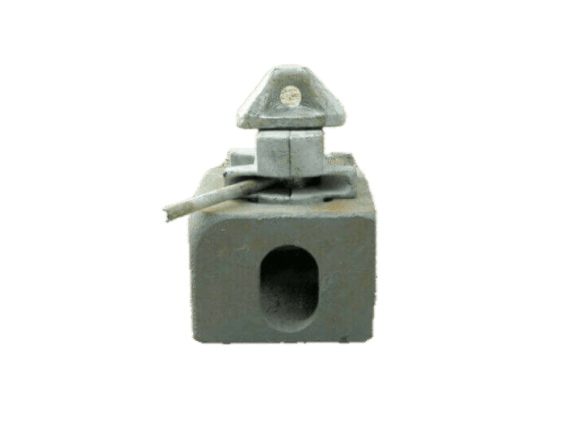
- Male element, inserted into an oval hole in the corner casting, after 90° rotation it locks.
- High tensile strength: typically 20–25 tons, some types up to 30 tons.
- Material: high-strength steel alloys, modern versions also with surface treatments against corrosion.
Operating Principle:
- Twist lock head in open position → insertion into casting.
- Rotation of lever/shaft by 90° → locking.
- Release only by reversing the movement.
Types of Twist-locks
Twistlocks can be divided according to control method and application:
By Control Method
| Type | Control Method | Advantages | Disadvantages |
|---|---|---|---|
| Manual | Hand lever | Low cost, simplicity | Requires physical work |
| Semi-automatic | Self-locking under load, manual release | Faster, safer, minimizes errors | Release control required |
| Automatic (FATL) | Fully automatic, controlled from crane cabin | Fastest, minimizes human factor | Higher cost, complex service |
By Application
- Vertical (for stacking):
- Double-ended twist locks – connect upper and lower container.
- Horizontal (for side-by-side connection):
- Bridge fittings for increased rigidity of container blocks.
- Surface Attachment:
- Dovetail twist-locks – fixation on ship deck, floor, wagons.
- Chassis twist-locks – integrated in truck and railway wagon chassis.
New Types and Innovations
- Smart twist-locks (smart locks): Sensors for lock detection, GPS, IoT connectivity, RFID tags.
- Automatic twist-locks with status indication and remote control capability.
- Material innovations: Lightweight alloys, surface treatments, environmentally recyclable materials.
Safety Standards and Regulations
Basic Technical and Safety Standards
| Standard | Description | Significance for Twist-locks |
|---|---|---|
| ISO 1161 | Geometry of corner castings | Ensures compatibility and safety |
| ISO 668 | Container classification and dimensions | Standardizes dimensions for twist-locks |
| ISO 3874 | Container handling and securing | Procedures for correct use |
| CSC (Convention for Safe Containers) | Safety requirements and inspections | Mandatory regular system inspections |
Practice and Recommendations
- Visual and functional inspection before each use (cracks, deformation, corrosion).
- Regular lubrication of moving parts (min. 2× per year, or more frequently depending on conditions).
- Immediate replacement of damaged or heavily worn locks.
- Inspection records and staff training – each operator should be trained in fault detection and correct use.
- Predictive maintenance – modern operations use IoT sensors to monitor twistlock load and condition in real time.
Twist-lock Failures in Practice
- Ever Given Incident (Suez, 2021): Inadequately secured containers contributed to worsening the crisis situation.
- Maersk (2022): Implementation of regular inspections reduced container shifting incidents by 30%25.
- Port of Los Angeles: Automation of twist-locks accelerated container turnaround by 25%25 and reduced errors.
Innovation and Trends (Future-proofing and Digitalization)
Smart Twist-locks and IoT
- Lock sensors – lock information available in real time to dispatch.
- GPS and RFID – enable end-to-end cargo location tracking and security.
- Predictive maintenance – artificial intelligence (AI) based algorithms monitor load and wear, alert to upcoming replacement needs.
Automation and Robotization
- Automatic twist-locks controlled from crane cabin, without manual intervention.
- Robotic stations – tested in the world’s largest ports (e.g., Rotterdam), eliminate risks of working at heights and increase safety.
Sustainability and Ecology
- Recycling and reuse of materials from old twist-locks.
- Development of lightweight, ecological alloys with lower carbon footprint.
- Surface treatments increasing corrosion resistance without toxic components.
Maintenance and Service of Twist-locks
Recommended Maintenance Procedure:
| Step | Description | Frequency |
|---|---|---|
| Visual inspection | Cracks, deformation, corrosion, cleanliness | At each use |
| Functional test | Lever movement, locking, correct rotation | At each use |
| Lubrication | Lubricant on moving parts, moisture protection | 2× per year, more frequently in aggressive environment |
| Replacement of damaged | Immediately upon detection of fault | As needed |
| Maintenance records | Documentation of inspections and repairs | Continuously |
Most Common Faults and Their Prevention
- Corrosion – surface treatment, use of quality lubricant.
- Mechanism jamming – cleaning, lubrication, bearing replacement.
- Lever and pin wear – regular inspection, replacement.
- Head deformation – improper handling, immediate replacement.
Examples of Twist-lock Use in Practice
Case Studies
- Port of Rotterdam: Automated twist-locks reduced container turnaround by up to 40%25.
- Maersk Line: Implementation of regular maintenance and safety protocols reduced incidents by 30%25.
- Evergreen Ever Given (Suez, 2021): Inadequately secured containers contributed to worsening the crisis situation.
- Port of Los Angeles: Automation of twist-locks reduced handling time and increased safety.
Future of Twist-locks
Twist-locks are becoming part of smart logistics systems. Development is heading towards:
- Full IoT integration – monitoring of condition, location and unauthorized manipulation.
- Automation – robotic handling, without need for human intervention.
- Sustainable materials – recyclable alloys, ecological production.
- AI predictive maintenance – minimizing failures, extending service life.

 Czech Republic
  WITHOUT SHIPPING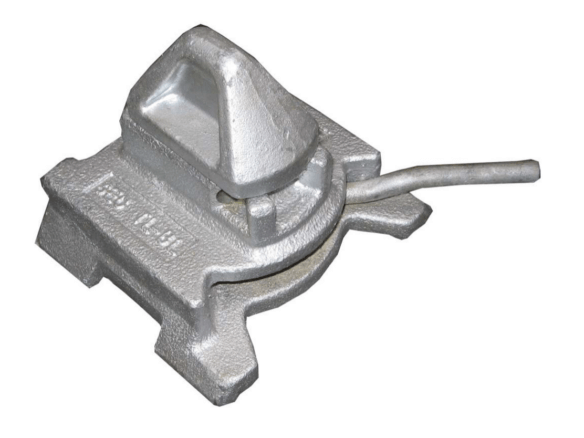
Other container news...
Corner casting steel vs aluminum
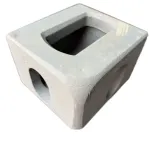
Every shipping container in the world — all 40 million of them — rests on eight critical components. Corner castings are the load-bearing blocks at each corner of an ISO shipping container, and they are the universal interface between the container and every crane, twistlock, spreader, and chassis on the planet. When you lift a container, stack it nine high on a ship, or lock it to a truck trailer, every ton of force flows through these fittings.

Construction cabin – selection, tips, dimensions and prices
Every construction project – whether a family house, a development project or a reconstruction – starts with the infrastructure. No construction manager, craftsman or investor who needs an on-site office, a changing room for workers or a safe storage for tools can do without a quality construction cell. But navigating the offer is not easy: residential containers, sanitary cells, storage modules, rental, purchase, refurbished pieces… This guide will give you answers to all the essential questions in one place.

Storage container
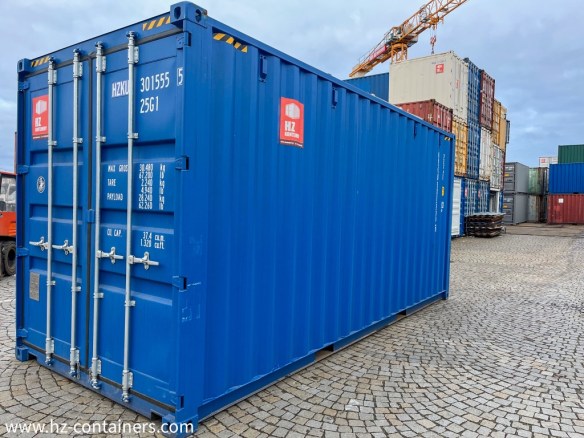
A storage container is a lockable steel box designed for the safe and dry storage of materials, tools, goods or equipment. Originally created as a shipping container for maritime transport, its durability and versatility have found their way onto construction sites, corporate premises and private land.
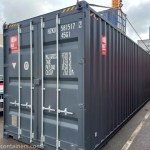
Shipping container 12m (40 ft)
A 12m shipping container is an investment that, if properly selected and cared for, will pay off in decades of trouble-free use. Whether you plan to use it as a warehouse, workshop, garage or the basis for a residential module — the key is careful selection of the condition, a thorough inspection before purchase and high-quality preparation of the base for placement. Take the time to compare offers, check the seller’s references and do not hesitate to personally inspect the container before buying. A properly selected 40-foot container will serve you reliably for many years.