
Open-Top Containers
Open-top containers are a specialized type of shipping container that offer unique flexibility when handling oversized, irregularly shaped, or heavy cargo. Their construction, which includes an open roof covered by a removable tarpaulin or solid roof, makes them ideal for industries ranging from construction to agriculture. This article explains what open-top containers are, their structural elements, dimensions, uses, and the benefits they provide in global transport and logistics.

What is an Open-Top Container?
An open-top container is a type of shipping container designed for transporting cargo that cannot fit into standard containers due to its size, shape, or handling requirements. Unlike standard containers with fixed roofs, open-top containers have removable tops made of tarpaulin (soft roof) or steel (hard roof). This allows easy loading and unloading from above, often with the help of cranes or forklifts, making them indispensable in industries dealing with oversized or bulky goods.
These containers are typically available in 20-foot and 40-foot sizes and are manufactured with robust steel frames to ensure durability and protection during transport. They also include standard doors on one or both sides, providing greater flexibility in loading and unloading.
Key Features of Open-Top Containers
1. Removable Roof
- Soft Roof: Tarpaulin or canvas cover secured with fasteners or eyes. They are lightweight, flexible, and easy to handle, making them ideal for irregularly shaped cargo.
- Hard Roof: Solid roof made of steel or aluminum that provides greater security and protection against external elements.
2. Top Access
The open design allows loading of oversized cargo, such as machinery or construction materials, using cranes or other overhead equipment.
3. Standard Doors
Most open-top containers have doors on one or both sides, providing greater variability in cargo handling.
4. Weather Resistance
The tarpaulin or solid roof combined with waterproof seals ensures protection against rain, wind, and other environmental factors during transport.
5. Reinforced Construction
These containers are made from durable steel or aluminum and include securing points for cargo securing during transport.
6. Ventilation
Some open-top containers allow better air circulation, which is particularly useful for transporting goods requiring ventilation, such as agricultural products.
Dimensions and Specifications
Open top containers are available in two main sizes, 20-foot and 40-foot, which correspond to standard shipping container dimensions.
1. 20-Foot Open-Top Container
- External Dimensions: 20′ x 8′ x 8’6″ (6.10 m x 2.44 m x 2.59 m)
- Internal Dimensions: 19’4″ x 7’9″ x 7’10” (5.898 m x 2.352 m x 2.393 m)
- Payload Capacity: Approximately 28,000 kg
- Volume: ~32 m³
2. 40-Foot Open-Top Container
- External Dimensions: 40′ x 8′ x 8’6″ (12.19 m x 2.44 m x 2.59 m)
- Internal Dimensions: 39’6″ x 7’9″ x 7’10” (12.025 m x 2.352 m x 2.393 m)
- Payload Capacity: Approximately 30,480 kg
- Volume: ~67 m³
Customization Options
Some open-top containers are customized for specific cargo requirements. For example, high-cube containers offer increased height for taller goods, while additional reinforcements can be added for transporting extra-heavy cargo.
Uses of Open-Top Containers
Open-top containers are used in industries that require transporting goods that cannot fit into standard containers. Their main applications include:
1. Oversized Cargo
- Examples: Heavy machinery, turbines, cranes, vehicles, and industrial equipment.
- Reason: These items are too large for standard containers and benefit from top-loading capability.
2. Construction Materials
- Examples: Steel beams, pipes, prefabricated building components, and construction waste.
- Reason: The open design allows easy handling of long or bulky items commonly used in construction.
3. Raw Materials
- Examples: Coal, minerals, stones, and other bulk materials.
- Reason: These bulk materials are easily loaded and unloaded from above, making open-top containers an efficient choice.
4. Agricultural Products
- Examples: Grain, hay bales, and large tree trunks.
- Reason: Ventilation and top-loading capability make them ideal for agricultural products requiring air circulation or specific loading methods.
5. Project Cargo
- Examples: Components of large infrastructure projects, such as power plants or bridges.
- Reason: These items often exceed standard container dimensions and require customized handling solutions.
Conclusion
Open-top containers are a key element of modern logistics and offer irreplaceable functionality when transporting oversized and irregularly shaped cargo. Their unique design combined with robust construction and weather resistance makes them the preferred choice across many industries. When selecting an open-top container, it is important to consider factors such as size, roof type, and specific cargo requirements to ensure optimal performance and safety.

 Czech Republic, Třebíč
  FREE SHIPPING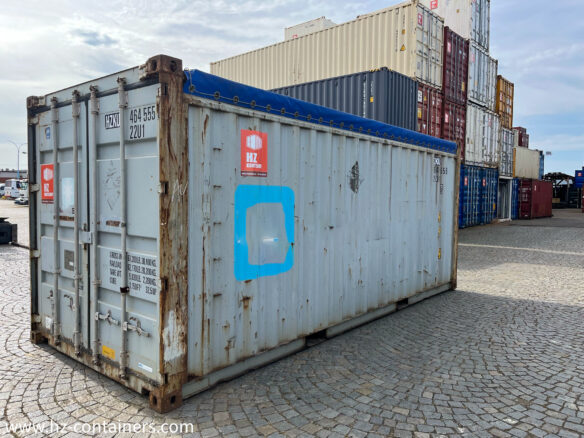
Other container news...
Shipping container 12m (40 ft)
A 12m shipping container is an investment that, if properly selected and cared for, will pay off in decades of trouble-free use. Whether you plan to use it as a warehouse, workshop, garage or the basis for a residential module — the key is careful selection of the condition, a thorough inspection before purchase and high-quality preparation of the base for placement. Take the time to compare offers, check the seller’s references and do not hesitate to personally inspect the container before buying. A properly selected 40-foot container will serve you reliably for many years.
Construction container
A construction container is an investment in safety, order and comfort — whether it is protecting tools from thieves or providing a dignified environment for workers. There are three key decisions: type (storage, residential, sanitary, rubble), form of acquisition (rent vs. purchase) and legislative provision (occupation, building code).

Construction cabin – selection, tips, dimensions and prices
Every construction project – whether a family house, a development project or a reconstruction – starts with the infrastructure. No construction manager, craftsman or investor who needs an on-site office, a changing room for workers or a safe storage for tools can do without a quality construction cell. But navigating the offer is not easy: residential containers, sanitary cells, storage modules, rental, purchase, refurbished pieces… This guide will give you answers to all the essential questions in one place.
Storage container
A storage container is a lockable steel box designed for the safe and dry storage of materials, tools, goods or equipment. Originally created as a shipping container for maritime transport, its durability and versatility have found their way onto construction sites, corporate premises and private land.