
40 Foot Container Dimensions
If you have ever booked ocean freight, planned a warehouse layout, or designed a modular building project, you have asked the same question: what are the exact 40 foot container dimensions — and what do they mean for what you can actually load? The numbers are standardized worldwide, but the practical implications of those numbers are surprisingly nuanced. A 40-foot container is not simply 40 feet of usable space, and its weight limits are not what most people assume. This guide covers every measurement, every weight rating, and every loading consideration you need to make informed decisions about the world’s most common shipping container.
Quick Answer: A standard ISO 40-foot shipping container measures 12.19 m (40 ft) long × 2.44 m (8 ft) wide × 2.59 m (8 ft 6 in) high externally and provides approximately 67.7 m³ (2,390 ft³) of usable internal volume. The maximum gross weight is 30,480 kg (67,200 lbs), with a typical payload capacity of approximately 26,700–26,800 kg (58,900–59,000 lbs).
What Are the Exact Dimensions of a 40 Foot Container?
The 40 foot container dimensions are defined by ISO 668, the international standard that governs freight container classification, dimensions, and ratings. Every 40-foot container in circulation — regardless of manufacturer or shipping line — conforms to the same external footprint. This is what makes the global intermodal system work: a container loaded in Shanghai fits onto a truck in Rotterdam, a railcar in Chicago, and a ship anywhere in between.
External Dimensions
The external measurements are the ones that matter for vessel stowage, chassis loading, and terminal handling. The 40-foot designation refers specifically to the nominal length.
| Measurement | Feet & Inches | Meters | Centimeters | Millimeters |
|---|---|---|---|---|
| External Length | 40 ft 0 in | 12.19 m | 1,219 cm | 12,190 mm |
| External Width | 8 ft 0 in | 2.44 m | 244 cm | 2,440 mm |
| External Height | 8 ft 6 in | 2.59 m | 259 cm | 2,590 mm |
The external width of 8 feet (2.44 m) is universal across all standard ISO containers — from 10-foot units to 45-foot units. Only the length and, in some cases, the height change.
Internal Dimensions
This is where the numbers that actually govern your cargo plan diverge from the external ones. The corrugated steel walls, corner posts, and the plywood-over-steel floor consume between 4 and 10 inches of space on each axis. Every manufacturer’s wall profile differs slightly, but the usable interior dimensions have converged on the following values:
| Measurement | Feet & Inches | Meters | Millimeters |
|---|---|---|---|
| Internal Length | 39 ft 6 in | 12.03 m | 12,030 mm |
| Internal Width | 7 ft 8 in | 2.35 m | 2,350 mm |
| Internal Height | 7 ft 10 in | 2.39 m | 2,390 mm |
| Usable Volume | 2,390 ft³ | 67.7 m³ | — |
| Floor Area | 304 ft² | 28.3 m² | — |
The 6-inch shortfall in length is because the rear doors and the front wall each consume roughly 3 inches of the total. The width shrinkage of 4 inches comes from the corrugated side walls, and the height loss of 8 inches is shared between the floor thickness and the roof structure.
Door Opening Dimensions
The door opening is the most frequently overlooked constraint in 40 foot container dimensions. The cargo doors are not the same size as the interior cross-section. A steel header beam runs across the top of the door frame, reducing the opening height by approximately 4 inches compared to the interior ceiling.
| Measurement | Feet & Inches | Meters | Millimeters |
|---|---|---|---|
| Door Width | 7 ft 8 in | 2.34 m | 2,340 mm |
| Door Height | 7 ft 6 in | 2.28 m | 2,280 mm |
This means that if you are loading tall items with a forklift, you must measure against the 7 ft 6 in (2.28 m) door height, not the 7 ft 10 in (2.39 m) interior ceiling. A load that clears the ceiling can still strike the door header. For high-cube containers, the door height increases to 8 ft 6 in (2.58 m), which is why high-cube units are preferred for tall cargo.
Where Did the 40-Foot Container Standard Come From?
The 40 foot container dimensions did not emerge by accident. They are the product of one of the most consequential standardization efforts in modern economic history.
The Birth of Containerization
Before the 1950s, cargo was loaded and unloaded piece by piece — a process called break-bulk shipping. A typical transatlantic voyage spent more time in port than at sea. In 1956, an American trucking entrepreneur named Malcolm McLean loaded 58 truck trailers onto a converted tanker ship called the Ideal X and sailed them from Newark to Houston. The cost of loading dropped from $5.86 per ton to $0.16 per ton.
McLean’s insight was that the container — not the ship, not the truck — should be the fundamental unit of cargo. But early containers came in a chaotic variety of sizes: 24-foot, 27-foot, 33-foot, and 35-foot boxes were all in circulation. Ports and ships could not handle them efficiently.
The ISO 668 Standard
In 1961, the International Organization for Standardization formed Technical Committee 104 (ISO/TC 104) to create universal container standards. The resulting ISO 668 standard, first published in 1968, defined the external dimensions, corner fitting locations, and strength ratings for all intermodal containers. The 40-foot container was classified as Type 1A, with the 20-foot container as Type 1C.
Why 40 Feet?
The 40-foot length was chosen because it was the longest practical unit that could be transported by road in most countries without special permits. It also created an elegant 2:1 ratio with the 20-foot container, which became the base unit of measurement in the shipping industry: the TEU (Twenty-foot Equivalent Unit). A 40-foot container equals 2 TEU. This ratio means that vessel capacity, port throughput, and freight rates can all be expressed in a single, universal metric.
The standard has remained remarkably stable. The external dimensions of a 40-foot container have not changed in over 50 years, because every ship, crane, chassis, and railcar in the global fleet is built to these exact measurements.
How Much Weight Can a 40 Foot Container Hold?
Weight is where the 40 foot container dimensions intersect with regulatory compliance, and the numbers are more complex than a single payload figure.
Tare Weight, Payload, and Gross Weight Explained
Every container has three weight values that govern what you can load:
| Weight Term | Definition | Typical Value (40ft Standard) |
|---|---|---|
| Tare Weight | The empty weight of the container itself | 3,700–3,750 kg (8,160–8,270 lbs) |
| Maximum Gross Weight (MGW) | The maximum total weight of container + cargo | 30,480 kg (67,200 lbs) |
| Payload (Net Load) | MGW minus Tare = maximum cargo weight | ~26,730–26,780 kg (58,900–59,040 lbs) |
The MGW of 30,480 kg is the ISO 668 rating. Some carriers certify containers to a slightly higher MGW — up to 32,500 kg or even 34,000 kg for certain high-cube models — but the 30,480 kg figure is the universal baseline. Always confirm the specific rating of the container assigned to your shipment, because the rating plate on the door takes legal precedence over general specifications.
Road and Rail Weight Restrictions
The container’s MGW is only one part of the equation. The weight limits imposed by road and rail authorities in the country of loading and delivery often create a lower effective payload than the container’s rated capacity.
- United States: Federal limits allow 80,000 lbs (36,287 kg) gross vehicle weight on interstate highways. A loaded 40-foot container on a standard chassis, combined with the tractor weight, typically leaves 43,000–45,000 lbs (19,500–20,400 kg) of actual cargo capacity — well below the container’s rated payload of 59,000 lbs.
- European Union: The maximum gross vehicle weight for a tractor-semi-trailer combination is 40 tonnes (40,000 kg) in most EU countries. With the tractor and chassis weighing approximately 14–15 tonnes, the effective payload drops to roughly 25–26 tonnes — aligning closely with the container’s rated payload of 26.7 tonnes, but leaving no margin for error.
- Australia and other markets: Different jurisdictions have different axle load formulas. Always check both the container MGW and the road weight limits along the entire route.
The practical implication: in many real-world scenarios, road regulations are the binding constraint, not the container’s MGW. An overweight container can trigger fines, mandatory unloading at roadside weigh stations, and significant delays.
What Is the Difference Between a 40ft Standard and a 40ft High Cube Container?
The high cube (HC) variant is the most important alternative to the standard 40-foot container, and the difference is primarily — but not exclusively — about height.
Dimension Comparison
| Specification | 40ft Standard | 40ft High Cube | Difference |
|---|---|---|---|
| External Length | 12.19 m (40 ft) | 12.19 m (40 ft) | None |
| External Width | 2.44 m (8 ft) | 2.44 m (8 ft) | None |
| External Height | 2.59 m (8 ft 6 in) | 2.90 m (9 ft 6 in) | +1 ft (305 mm) |
| Internal Length | 12.03 m (39 ft 6 in) | 12.03 m (39 ft 6 in) | None |
| Internal Width | 2.35 m (7 ft 8 in) | 2.35 m (7 ft 8 in) | None |
| Internal Height | 2.39 m (7 ft 10 in) | 2.70 m (8 ft 10 in) | +12 in (305 mm) |
| Door Height | 2.28 m (7 ft 6 in) | 2.58 m (8 ft 6 in) | +12 in (305 mm) |
| Usable Volume | 67.7 m³ (2,390 ft³) | 76.3 m³ (2,694 ft³) | +8.6 m³ (304 ft³) |
| Tare Weight | ~3,750 kg | ~3,900–4,000 kg | +150–250 kg |
| Payload | ~26,730 kg | ~26,500 kg | ~230 kg less |
| Max EUR Pallets | 25 | 25 | None (same floor) |
The extra foot of height adds approximately 13% more volume — 8.6 cubic meters — without increasing the container’s footprint on a ship, truck, or railcar. This makes high-cube containers ideal for lightweight, voluminous cargo such as furniture, textiles, insulation, and empty packaging.
When to Choose a High Cube
High-cube containers are the right choice when:
- Your cargo is light but voluminous — you will hit the volume limit before you hit the weight limit.
- You need to double-stack pallets — the additional headroom accommodates two layers of standard palletized goods.
- Your cargo includes tall items that cannot be laid flat, such as certain machinery, assembled furniture, or large components.
- The door height matters more than the interior ceiling height — the HC door opening of 2.58 m (8 ft 6 in) is significantly more accommodating than the standard 2.28 m (7 ft 6 in).
The trade-off is a slightly higher tare weight (150–250 kg more) and a marginally lower payload. The cost premium for a high-cube on most trade routes is modest — typically 5–10% more than a standard container — making it an economical choice when the extra volume is genuinely needed.
40ft Container Variants Overview
Beyond standard and high-cube dry containers, several specialized 40-foot container types exist for specific cargo requirements:
| Variant | Best For | Key Difference from Standard |
|---|---|---|
| Standard Dry | General palletized and boxed cargo | — |
| High Cube | Light, voluminous cargo | +1 ft height, +13% volume |
| Reefer (Refrigerated) | Temperature-controlled goods (-25°C to +25°C) | Built-in refrigeration unit; reduced internal dimensions and payload |
| Open Top | Over-height cargo loaded by crane | Removable canvas roof; no top rail constraint |
| Flat Rack | Out-of-gauge cargo, heavy machinery | Collapsible end walls; no sides or roof |
| Pallet Wide | Optimized for Euro pallets | Slightly wider interior (2.42–2.44 m) to fit two Euro pallets side by side |
How Many Pallets Fit in a 40 Foot Container?
Pallet count is one of the most practical applications of 40 foot container dimensions, and the answer depends on the pallet standard you are using.
By Pallet Type
| Pallet Type | Dimensions | Quantity in 40ft Standard | Arrangement Notes |
|---|---|---|---|
| Euro Pallet (EUR / EPAL 1) | 1,200 × 800 mm | 24–25 | Loaded lengthwise; two rows of 12 fit in the width |
| Industrial Pallet (EPAL 2) | 1,200 × 1,000 mm | 20–21 | Loaded with 1,000 mm side parallel to container length |
| North American GMA Pallet | 48 × 40 in (1,219 × 1,016 mm) | 20–21 | Two rows; pinwheel pattern can sometimes fit 22 |
| ISO Pallet | 1,219 × 1,016 mm | 20–21 | Similar to GMA |
These figures assume a single floor tier without double-stacking. The actual number may be lower when pallets have overhanging cargo, irregular packaging, or when weight distribution requirements restrict placement.
Loading Patterns and Optimization
How you arrange the pallets inside the container affects the total count. For Euro pallets, the standard approach is to load them with the 1,200 mm side parallel to the container’s length, placing two pallets side by side across the 2,350 mm interior width. This yields 12 pairs along the 12,030 mm length, for a total of 24. A 25th pallet can sometimes fit depending on the exact container length and the condition of the pallets.
For North American GMA pallets (48 × 40 in), a pinwheel pattern — alternating the orientation of adjacent pallets — can sometimes increase the count from 20 to 21 or even 22, though this requires careful planning and may not be feasible with overhanging cargo.
Weight distribution is equally important: aim for a 60/40 split of cargo weight toward the front of the container (the end opposite the doors). This prevents the container from becoming tail-heavy during transport, which can cause dangerous instability on the road and complicate crane operations at the terminal.
How Does a 40 Foot Container Compare to a 20 Foot Container?
The choice between a 20-foot and a 40-foot container is one of the most frequent decisions in logistics. The dimensions, weight characteristics, and economics of each size make them suited to different cargo profiles.
| Specification | 20ft Standard | 40ft Standard | Ratio (40ft / 20ft) |
|---|---|---|---|
| External Length | 6.06 m (19 ft 10.5 in) | 12.19 m (40 ft) | 2.01× |
| External Width | 2.44 m (8 ft) | 2.44 m (8 ft) | 1.00× |
| External Height | 2.59 m (8 ft 6 in) | 2.59 m (8 ft 6 in) | 1.00× |
| Internal Length | 5.90 m (19 ft 4 in) | 12.03 m (39 ft 6 in) | 2.04× |
| Internal Width | 2.35 m (7 ft 9 in) | 2.35 m (7 ft 8 in) | 1.00× |
| Internal Height | 2.39 m (7 ft 10 in) | 2.39 m (7 ft 10 in) | 1.00× |
| Usable Volume | 33.2 m³ (1,172 ft³) | 67.7 m³ (2,390 ft³) | 2.04× |
| Floor Area | 13.9 m² (150 ft²) | 28.3 m² (304 ft²) | 2.04× |
| Tare Weight | ~2,300 kg (5,070 lbs) | ~3,750 kg (8,270 lbs) | 1.63× |
| Max Gross Weight | ~24,000–30,480 kg | 30,480 kg | 1.00–1.27× |
| Max Payload | ~21,700–28,200 kg | ~26,730 kg | 0.95–1.23× |
| Max Euro Pallets | 11 | 24–25 | 2.18–2.27× |
| TEU Equivalent | 1 TEU | 2 TEU | 2.00× |
When to Choose Each Size
The 20-foot container is better suited for:
- Dense, heavy cargo — the 20ft has a higher payload-to-volume ratio, meaning you can load proportionally more weight per cubic meter.
- Smaller shipments — if you cannot fill a 40ft container, paying for unused space is wasteful.
- Sites with limited access — a 20ft container requires less space for delivery and placement.
The 40-foot container is better for:
- Voluminous cargo — the cost per cubic meter is lower.
- Larger shipments — freight rates for a 40ft are typically only 30–50% more than a 20ft, for double the capacity.
- Palletized loads — the 40ft accommodates more than twice the number of pallets.
What Are the Most Common Misconceptions About 40 Foot Container Dimensions?
Several widespread assumptions about 40 foot container dimensions lead to expensive mistakes in logistics planning.
“40 Feet Means 40 Feet of Usable Length”
The most fundamental misconception is that the nominal length equals the usable length. The internal length of a 40-foot container is 39 feet 6 inches (12.03 m) — a 6-inch (15 cm) shortfall. This discrepancy arises from the thickness of the front wall and the rear door assembly. When planning cargo that must fit precisely — such as long pipes, beams, or continuous runs of shelving — those 6 inches can be the difference between a clean fit and a costly repack.
“All 40 Foot Containers Are the Same”
While ISO 668 ensures dimensional uniformity, containers vary by manufacturer, age, and condition. Wall thickness, floor condition, and door seal integrity differ. A 40-foot container from a premium carrier may have a 2,352 mm internal width, while another from a different manufacturer measures 2,340 mm. These 12 mm can matter when loading precision-fit pallets.
“The Door Opening Is the Same as the Interior Height”
The door opening height is 2.28 m (7 ft 6 in), while the interior ceiling is 2.39 m (7 ft 10 in). The 4-inch difference is caused by the steel header beam above the doors. Loading a 7 ft 9 in item through a 7 ft 6 in door is impossible — even if the item would fit comfortably inside once loaded.
“Maximum Payload Is Always Achievable”
The container’s rated payload is often higher than what road regulations permit. In the United States, a fully loaded 40-foot container on a chassis typically leaves only 43,000–45,000 lbs of actual cargo capacity after accounting for the tractor weight — well below the 59,000 lbs the container itself can carry. The container’s MGW is a theoretical maximum; the practical payload is dictated by the weakest link in the transport chain.
What Does the Future Hold for 40 Foot Container Specifications?
The ISO 40-foot container has been dimensionally stable for over five decades, but several trends are reshaping its role in global logistics.
Smart Containers and IoT
An increasing number of 40-foot containers are being equipped with GPS trackers, temperature sensors, humidity monitors, and shock detectors. These “smart containers” transmit real-time data to shipping lines and cargo owners, enabling proactive intervention when conditions deviate from acceptable ranges. The physical dimensions remain unchanged, but the operational capabilities are being transformed by the digital layer.
Lightweight Materials
Container manufacturers are experimenting with composite materials and high-strength steel alloys that reduce tare weight without sacrificing structural integrity. A reduction of 500 kg in tare weight translates directly to 500 kg of additional payload — a significant gain for dense cargo. The challenge is maintaining the stacking strength and corrosion resistance that steel provides.
Sustainability and Circularity
The average 40-foot container has a service life of 10–15 years in maritime service, after which it is often repurposed for storage, modular construction, or recycled. The industry is increasingly focused on designing containers for full recyclability and on reducing the carbon footprint of container manufacturing.
Will Dimensions Change?
The short answer is: probably not for the standard 40-foot unit. The global infrastructure — ships, cranes, chassis, railcars, terminals — is built around the 40-foot × 8-foot × 8-foot-6-inch envelope. Changing this would require a coordinated global transition that would take decades and cost trillions. However, 45-foot and 53-foot containers are gaining market share in specific trade lanes, particularly in North America, where road regulations permit longer units. The 40-foot container is likely to remain the backbone of global trade for the foreseeable future, even as the technology inside it evolves.
Frequently Asked Questions
What are the exact dimensions of a 40 foot container in meters?
A standard 40-foot container measures 12.19 m long × 2.44 m wide × 2.59 m high externally. The internal dimensions are 12.03 m long × 2.35 m wide × 2.39 m high. The door opening is 2.34 m wide × 2.28 m high.
How much weight can a 40 foot container hold?
A standard 40-foot container has a maximum gross weight of 30,480 kg (67,200 lbs). Subtracting the tare weight of approximately 3,750 kg (8,270 lbs) leaves a payload capacity of approximately 26,730 kg (58,900 lbs). However, road regulations in many countries impose lower effective limits.
How many pallets fit in a 40 foot container?
A standard 40-foot container accommodates 24–25 Euro pallets (1,200 × 800 mm), 20–21 industrial pallets (1,200 × 1,000 mm), or 20–21 North American GMA pallets (48 × 40 in) in a single floor tier. Exact counts depend on the loading pattern and whether pallets have overhanging cargo.
What is the difference between a 40ft standard and a 40ft high cube container?
The high cube container is exactly 1 foot (305 mm) taller — 9 ft 6 in externally vs. 8 ft 6 in, and 8 ft 10 in internally vs. 7 ft 10 in. This adds approximately 8.6 m³ (304 ft³) of usable volume. The floor dimensions are identical, so the pallet count in a single tier does not change.
What are the door opening dimensions of a 40 foot container?
The door opening on a standard 40-foot container is 2.34 m (7 ft 8 in) wide × 2.28 m (7 ft 6 in) high. The door height is approximately 4 inches shorter than the interior ceiling height because of the steel header beam above the door frame.
How many cubic meters is a 40 foot container?
A standard 40-foot container provides approximately 67.7 cubic meters (2,390 cubic feet) of usable internal volume. A 40-foot high cube container provides approximately 76.3 cubic meters (2,694 cubic feet).
What is the tare weight of a 40 foot container?
The tare weight (empty weight) of a standard 40-foot dry container is approximately 3,700–3,750 kg (8,160–8,270 lbs). High-cube containers are slightly heavier, with tare weights around 3,900–4,000 kg (8,600–8,820 lbs).
How does a 40 foot container compare to a 20 foot container?
A 40-foot container provides roughly double the internal volume (67.7 m³ vs. 33.2 m³), double the floor area (28.3 m² vs. 13.9 m²), and more than double the pallet capacity (24–25 vs. 11 Euro pallets). However, the payload is only about 23% higher (26,730 kg vs. 21,700 kg), because the 40-foot container’s own structure is heavier. Shipping rates for a 40ft are typically only 30–50% more than a 20ft, making it more economical per cubic meter.
What is the maximum gross weight of a 40ft container?
The standard maximum gross weight (MGW) for a 40-foot container under ISO 668 is 30,480 kg (67,200 lbs). Some carriers certify containers to higher ratings — up to 32,500 kg or 34,000 kg — but the 30,480 kg rating is the universal baseline.
Can a 40 foot container be used for storage?
Yes. Retired shipping containers are widely used for on-site storage, workshop space, and modular construction. The same 40 foot container dimensions apply, and the structural integrity of a used container is usually sufficient for static storage even after its maritime service life ends. Many suppliers offer used 40-foot containers specifically for storage purposes.
Other container news...
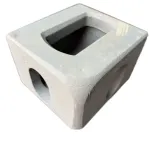
Corner casting steel vs aluminum
Every shipping container in the world — all 40 million of them — rests on eight critical components. Corner castings are the load-bearing blocks at each corner of an ISO shipping container, and they are the universal interface between the container and every crane, twistlock, spreader, and chassis on the planet. When you lift a container, stack it nine high on a ship, or lock it to a truck trailer, every ton of force flows through these fittings.

Construction cabin – selection, tips, dimensions and prices
Every construction project – whether a family house, a development project or a reconstruction – starts with the infrastructure. No construction manager, craftsman or investor who needs an on-site office, a changing room for workers or a safe storage for tools can do without a quality construction cell. But navigating the offer is not easy: residential containers, sanitary cells, storage modules, rental, purchase, refurbished pieces… This guide will give you answers to all the essential questions in one place.
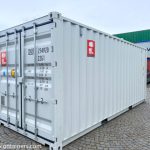
Storage container
A storage container is a lockable steel box designed for the safe and dry storage of materials, tools, goods or equipment. Originally created as a shipping container for maritime transport, its durability and versatility have found their way onto construction sites, corporate premises and private land.
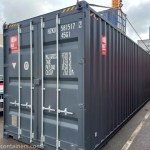
Shipping container 12m (40 ft)
A 12m shipping container is an investment that, if properly selected and cared for, will pay off in decades of trouble-free use. Whether you plan to use it as a warehouse, workshop, garage or the basis for a residential module — the key is careful selection of the condition, a thorough inspection before purchase and high-quality preparation of the base for placement. Take the time to compare offers, check the seller’s references and do not hesitate to personally inspect the container before buying. A properly selected 40-foot container will serve you reliably for many years.