
The OPNBar leverage tool
What Is an OPNBar Leverage Tool?
The OPNBar leverage tool is a professional-grade, multi-purpose hand tool designed specifically for the shipping container and trucking industry. Manufactured by Shipping Container Safety International (SCS International) and proudly Made in the USA, the OPNBar is fundamentally a 3-in-1 trucker tool that combines a shipping container door leverage bar, a tire thumper, and a 5th wheel pull hook into a single, compact steel implement. The name “OPNBar” is a direct reference to its primary function: it is the bar that “opens” containers.
The OPNBar is also known across the industry as “The Original Persuader Bar™” — a trademarked term that reflects its role in “persuading” stubborn container doors to open or close when they refuse to budge.
At its core, the OPNBar leverage tool solves a problem that has plagued the logistics industry since the invention of the standardized shipping container in the 1950s: shipping container doors are frequently difficult, dangerous, and physically demanding to operate. Rust, corrosion, ice, misaligned frames, and simple mechanical wear all conspire to make container door handles resistant to human force. The OPNBar provides the mechanical advantage needed to overcome these obstacles safely, reducing the risk of sprains, strains, and other musculoskeletal injuries that account for a staggering portion of all trucking-related workplace injuries.
The Three Core Functions Explained
The OPNBar is not simply a leverage bar. Its design integrates three distinct functions that a truck driver or warehouse operator would otherwise need three separate tools to accomplish. This multi-function design reduces the number of tools an operator must carry, streamlines workflows, and ensures that safety equipment is always within reach.
| Function | Description | Key Benefit |
|---|---|---|
| Leverage Bar (Door Latch Handle Extender) | The hooked mouth of the OPNBar slides over the shipping container’s door handle, extending the effective lever length. The operator grips the extended handle and applies force to open or close the door. | Multiplies the operator’s applied force through mechanical advantage, making it possible to open doors that are rusted, frozen, or jammed without straining the back, shoulders, or arms. |
| Tire Thumper | The solid steel body of the OPNBar doubles as a tire thumper. The operator strikes the tire sidewall with the tool and listens for the sound and rebound to assess whether the tire is properly inflated. | Provides a quick, reliable method to check tire pressure during pre-trip inspections without needing a pressure gauge for every tire. Under-inflated tires can be identified by a dull thud rather than a crisp rebound. |
| 5th Wheel Pull Hook | The curved hook end of the OPNBar is designed to engage the 5th wheel release handle on a tractor-trailer. The operator uses the extended reach to pull the release handle without bending, reaching, or climbing between the tractor and trailer. | Eliminates the awkward, injury-prone posture required to manually release the 5th wheel. Reduces risk of neck, shoulder, and back strain, as well as preventing clothing damage from grease and grime. |
Beyond the Core Three: Additional Functions
While marketed as a 3-in-1 tool, experienced operators have discovered that the OPNBar leverage tool can perform several additional functions that further justify its place in every trucker’s cab:
- Container Seal Breaker: The tip of the OPNBar can be used to break the tamper-evident seal on a shipping container, eliminating the need for separate cutters or pliers.
- Cam Pin Compressor: When a container door’s cam (the rotating locking mechanism) is misaligned with the keeper (the receiving bracket), the OPNBar can be placed underneath the cam to lever it into alignment, allowing the door to close properly.
- T-Handle Toolbox Latch Tool: The OPNBar’s hook can engage T-handle latches on truck toolboxes, headache racks, and other equipment, providing leverage for latches that have become stiff or corroded.
- Breaker Bar / Cheater Bar / Torque Bar (Version 4): The Version 4 OPNBar is specifically designed with a detachable extension handle that allows it to function as a breaker bar for loosening stubborn nuts and bolts — effectively replacing yet another tool in the operator’s kit.
Who Uses the OPNBar and Why?
The OPNBar leverage tool is used across the entire logistics and supply chain spectrum:
- Long-haul truck drivers rely on it daily at pickup and delivery points where containers may have been exposed to weather, salt, and road grime for weeks or months.
- Warehouse and distribution center operators use it to open inbound containers efficiently without risking injury or delaying unloading operations. Amazon warehouses throughout North America, for example, have adopted the OPNBar as a standard tool.
- Port and intermodal yard workers encounter containers that have been exposed to saltwater spray, extreme temperatures, and rough handling — all of which make doors particularly difficult to operate.
- Fleet managers and safety officers specify the OPNBar as part of their workplace safety programs because it demonstrably reduces injury rates and workers’ compensation claims.
- Shipping container owners — including those who use containers for storage, workshops, or modified container homes — benefit from having a reliable tool for doors that may sit unused for extended periods.
Where Did the OPNBar Leverage Tool Come From?
Understanding the origin of the OPNBar leverage tool requires understanding the broader problem it was invented to solve — a problem that has existed for as long as the standardized shipping container itself.
The Problem Before the OPNBar (1950s–2000s)
The modern intermodal shipping container was invented by Malcolm McLean in 1956 and rapidly standardized through the International Organization for Standardization (ISO) in the 1960s. The container’s locking mechanism — a system of vertical lock rods, rotating cams, and keepers operated by door handles — was designed for security and durability, not for ease of use. From the very beginning, container doors were heavy, stiff, and prone to binding.
For decades, truck drivers and dock workers had few options when faced with a stuck container door. The most common approaches were:
- Brute force: Operators would plant their feet, grip the door handle with both hands, and pull with their entire body weight. This technique was responsible for countless back, shoulder, and neck injuries.
- Makeshift pipes: Many drivers carried a length of steel pipe or PVC tubing that they would slide over the door handle to extend the lever. These improvised “cheater bars” were never designed for the purpose, often slipped off the handle, and could bend or shatter under load.
- Pry bars and crowbars: Some operators would wedge a pry bar between the door and frame, risking damage to the door seal, the container frame, and the operator if the bar slipped.
- Two-person operations: In some cases, opening a container door required two people — one to pull the handle and one to push or kick the door itself. This doubled the labor cost and the injury exposure.
None of these approaches were safe, reliable, or efficient. The industry was losing billions of dollars annually to workplace injuries, delayed deliveries, and damaged equipment — all because of a door that wouldn’t open.
The Birth of the Original Persuader Bar (2005)
In 2005, Shipping Container Safety International (SCS International) introduced the first purpose-built container door leverage tool and trademarked it as “The Original Persuader Bar™.” The tool was designed from the ground up to solve the specific ergonomic and mechanical challenges of opening and closing shipping container doors.
The original Persuader Bar — what would later be called OPNBar Version 1 — was a simple but revolutionary design: a length of high-strength steel with a hooked mouth on one end that fit securely over a container door handle, and a comfortable grip area on the other end. By extending the effective length of the door handle, the tool multiplied the operator’s applied force through basic mechanical advantage, making it possible to open even the most stubborn doors with controlled, safe effort.
The name “OPNBar” was a stroke of practical branding. It told operators exactly what the tool did (open bars — i.e., open the locking bars on containers) and was easy to remember and communicate over the radio in noisy truck yards and port terminals.
SCS International committed from the beginning to manufacturing the OPNBar in the United States using US-sourced steel. This commitment to domestic manufacturing was not merely patriotic — it was a quality control decision. The forces involved in opening a seized container door are substantial, and a tool failure at the wrong moment could result in serious injury. US-made steel, combined with American manufacturing standards, provided a level of reliability that imported alternatives could not match.
The Complete Version Evolution (V1 → V4)
The OPNBar leverage tool has undergone four major design iterations since its introduction, each addressing specific feedback from the field and expanding the tool’s capabilities. No single source on the internet currently documents all four versions comprehensively — until now.
| Feature | Version 1 (Original) | Version 2 (Universal Bend) | Version 3 (Deep Mouth) | Version 4 (Breaker Bar) |
|---|---|---|---|---|
| Approximate Introduction | 2005 | ~2018 | ~2022 | ~2024 |
| Mouth Design | Standard hook | Angled bend for universal compatibility | Deeper and larger mouth for rubber-sleeved handles | Deeper mouth (same as V3) |
| Handle Design | Single grip | Single grip | Double ergonomic grip | Double ergonomic grip + detachable extension |
| 5th Wheel Release Hook | Yes | Yes | Yes (with extension) | Yes |
| Breaker Bar / Cheater Bar Function | No | No | No | Yes — with detachable handle |
| Key Innovation | First purpose-built container door tool | 10-degree bend accommodates more container types, including those with protruding lockrods | Larger mouth fits rubber-sleeved handles; double grip for two-handed operation | Functions as a breaker bar/cheater bar/torque bar for nuts and bolts |
| Material | US steel | US steel | US steel, tougher construction | US steel, heat-treated |
| Best For | Standard containers with exposed metal handles | Containers with excess metal protrusions on sides or protruding lockrods | Containers with rubber-sleeved handles; operators who need two-handed control | Operators who need maximum versatility, including mechanical work |
Version 1 established the concept and proved that a dedicated tool could dramatically reduce injuries and improve efficiency. It was immediately adopted by safety-conscious fleets and became the benchmark against which all subsequent container door tools would be measured.
Version 2 introduced an angled bend to the tool’s mouth. Field reports had revealed that some shipping containers had excess metal protruding on the sides of the door handles, or lockrods that extended further toward the operator. The original straight design could not always seat properly on these containers. The Version 2 bend solved this universal fit problem while maintaining all the functionality of the original.
Version 3 represented a significant ergonomic upgrade. The mouth was made deeper and larger to accommodate shipping container handles equipped with rubber sleeves — a common feature on newer and better-maintained containers. The handle received a double ergonomic grip, allowing operators to use two hands with comfortable, secure purchase. This version also featured tougher overall construction to withstand even more demanding use in high-volume environments.
Version 4 was the most ambitious evolution yet. Recognizing that truck drivers and warehouse operators frequently need a breaker bar (also called a cheater bar or torque bar) for loosening stubborn nuts and bolts, SCS International designed Version 4 with a detachable extension handle. In its standard configuration, Version 4 functions as a full-featured container door leverage bar. With the extension attached, it becomes a breaker bar capable of applying significant torque to fasteners. This effectively added a fourth primary function to the already versatile 3-in-1 design.
How Does the OPNBar Leverage Tool Work?
The OPNBar leverage tool operates on fundamental principles of physics that have been understood for millennia — but its genius lies in how it applies those principles specifically to the unique geometry of a shipping container door.
The Physics of Mechanical Advantage
The OPNBar is, at its most basic, a lever. A lever is a simple machine that multiplies force by increasing the distance from the fulcrum (pivot point) to the point where force is applied. The formula for mechanical advantage in a lever is:
Mechanical Advantage (MA) = Effort Arm Length ÷ Load Arm Length
When the OPNBar is hooked onto a container door handle, the effective length of the handle is extended from approximately 6–8 inches (the handle itself) to roughly 24–30 inches (the handle plus the OPNBar). This means the operator’s applied force is multiplied by a factor of approximately 3 to 5 times.
For example, if an operator applies 50 pounds of force to the end of the OPNBar, the tool can deliver approximately 150 to 250 pounds of force at the door handle. This is frequently enough to break free a rusted or frozen door mechanism that would be impossible to move with bare hands alone.
The OPNBar does not change the amount of work being done (work = force × distance). It trades distance for force: the operator moves their hands through a longer arc but with proportionally less effort. This is the same principle that allows a single person to lift a car with a jack — or, in the trucking context, to open a door that seems welded shut by rust.
How the Hook/Mouth Engages the Door Handle
The OPNBar’s hooked mouth is the critical interface between the tool and the container door. The mouth is designed to:
- Slide over the door handle from the side, seating securely around the handle’s shaft
- Grip without slipping thanks to the close-tolerance fit and the angle of the hook
- Distribute force evenly across the handle rather than concentrating it at a single point, which could bend or damage the handle
- Release easily when the operator is done, without getting stuck or requiring excessive force to remove
The depth of the mouth is particularly important. Version 3 and Version 4 OPNBar tools feature a deeper mouth that accommodates handles with rubber sleeves — a common feature that makes bare-handed operation more comfortable but can interfere with tools that have shallower hooks. The deeper mouth ensures the OPNBar grips the metal core of the handle, not the rubber sleeve, providing a secure and non-damaging connection.
On Version 2 and later, the angled bend in the tool body provides additional clearance between the operator’s hands and the container door surface, reducing the risk of pinched fingers or scraped knuckles. This is especially important when closing doors, where the natural motion brings the operator’s hands closer to the door frame.
Opening vs. Closing: Different Force Dynamics
Opening a container door and closing it present fundamentally different force challenges, and the OPNBar addresses both:
Opening a stuck door typically requires overcoming static friction in the locking mechanism and breaking any rust or ice bonds that have formed. The operator slides the OPNBar over the door handle, grips the extended handle, and pulls outward and toward themselves. The OPNBar’s length provides the mechanical advantage needed to break the initial resistance. Once the lock rod begins to rotate, the required force drops significantly, and the door can be opened with controlled, steady motion.
Closing a hard-to-close door is often more challenging than opening. When a container door won’t close, the problem is usually that the cam (the rotating locking lobe on the end of the lock rod) is not aligning with the keeper (the receiving bracket on the door frame). This misalignment can be caused by:
- The container sitting on uneven ground, which twists the frame
- A bent or warped lock rod
- A cam that has shifted on its mounting
- Debris or ice in the keeper
The OPNBar can be used in two ways to close a stubborn door. First, as a cam pin compressor, the tool is placed underneath the cam and used to lever it upward into alignment with the keeper. Second, as a door handle extender, the OPNBar provides the extra force needed to rotate the lock rods even when the cams are binding against the keepers.
Understanding the Breaker Bar / Cheater Bar Function (Version 4)
Version 4 of the OPNBar introduced a detachable extension handle that transforms the tool into a functional breaker bar (also called a cheater bar or torque bar). A breaker bar is a long-handled tool used to loosen overtightened or rusted nuts and bolts by providing additional leverage.
The anatomy of a cheater bar is straightforward: a long handle with a socket attachment point at one end. The extended handle multiplies the torque applied to the fastener, making it possible to break free bolts that would be impossible to turn with a standard wrench or ratchet.
On the OPNBar Version 4, the detachable extension handle can be removed from the main tool body and used independently as a breaker bar. Alternatively, the extension can remain attached to provide maximum reach. This functionality is particularly valuable for truck drivers who may need to:
- Loosen lug nuts during a roadside tire change
- Free stuck bolts on trailer components
- Adjust equipment that has seized due to corrosion or lack of maintenance
The breaker bar function is a genuine innovation that further distinguishes the OPNBar from any other container door tool on the market. No competing product offers this capability.
Why Are Shipping Container Doors So Hard to Open and Close?
To appreciate what the OPNBar leverage tool accomplishes, it’s essential to understand why shipping container doors become difficult to operate in the first place. The forces involved are not trivial — a seized container door can require hundreds of pounds of force to move, far exceeding what a human being can safely generate with their bare hands.
Rust, Corrosion, and Environmental Factors
Shipping containers spend their lives in some of the most corrosive environments on Earth. They cross oceans exposed to salt spray, sit in port terminals under blazing sun and torrential rain, and travel through winter road salt and summer humidity. The door mechanisms — hinges, lock rods, cams, and keepers — are typically made of steel, and despite protective coatings, they eventually rust.
Rust does two things to a container door mechanism:
- It increases friction between moving parts. A rusted hinge pin or cam requires significantly more force to rotate than a clean, lubricated one.
- It physically bonds surfaces together. In advanced cases, rust can effectively weld the cam to the keeper or the lock rod to its guide bracket.
Frozen gaskets present a similar but distinct problem. The rubber gasket that seals the container door against the frame can freeze solid in cold weather, especially if moisture has penetrated the seal. When the gasket is frozen, the door cannot swing open even after the locking mechanism is released. The operator must break the ice bond — a task that frequently requires the leverage provided by the OPNBar.
Temperature extremes also affect the fit of the door within its frame. Metal expands when hot and contracts when cold. A container door that opens easily at 70°F may bind tightly at 0°F, as the contracting metal pulls the door tighter against the frame.
Mechanical Issues: Warped Lock Rods, Misaligned Cams, and Racked Frames
Even without environmental factors, container doors can be difficult to operate due to mechanical problems:
- Warped lock rods: The vertical rods that run the height of the door can become bent through rough handling, impacts, or simply the cumulative stress of thousands of open/close cycles. A bent lock rod binds against its guide brackets, increasing the force needed to rotate it.
- Misaligned cams and keepers: The cam is a rotating lobe on the end of the lock rod. When the lock rod is rotated to the closed position, the cam should seat securely into the keeper on the door frame. If the cam and keeper are misaligned — due to frame twisting, wear, or damage — the cam may not seat properly, preventing the door from closing, or may bind so tightly that it cannot be rotated to open.
- Racked frames: When a shipping container sits on uneven ground, its frame can twist — a condition called “racking.” A racked frame puts the door out of square with its opening, causing the lock rods to bind and the door edges to scrape against the frame. The more uneven the ground, the worse the racking, and the harder the door is to operate.
The Injury Risk of Manual Door Operation
The human cost of struggling with container doors is staggering. According to research cited by Shipping Container Safety International, 50% of all trucking injuries are sprains and strains, and a significant portion of those are related to opening and closing container and trailer doors. The Bureau of Labor Statistics consistently ranks musculoskeletal disorders (MSDs) among the most common workplace injuries in the transportation and warehousing sector.
The mechanics of injury are straightforward:
- Shoulder injuries occur when operators pull on a door handle at an awkward angle, especially when the handle is above shoulder height
- Back injuries result from the combination of bending, twisting, and pulling — a biomechanical worst-case scenario for the lumbar spine
- Neck strains develop when operators must apply force while looking upward or sideways
- Hand and finger injuries happen when tools slip, or when operators pinch their hands between the door handle and the container frame
The financial impact is equally severe. Trucking, cargo, and insurance companies lose billions of dollars annually to operator injury claims, according to SCS International. A single shoulder injury requiring surgery can cost upwards of $100,000 in medical expenses and lost productivity. The OPNBar, which retails for a fraction of that cost, represents one of the highest-return safety investments a fleet manager can make.
How Do You Use the OPNBar Leverage Tool? (Step-by-Step)
Using the OPNBar leverage tool is straightforward, but proper technique is essential for both effectiveness and safety. The following procedures are based on the manufacturer’s official instructions and reflect best practices developed through nearly two decades of field use.
Opening a Stuck Container Door
- Position the OPNBar: Stand facing the container door. Identify the door handle on the right-hand door (the right-hand door always opens first on a standard shipping container). Slide the hooked mouth of the OPNBar over the door handle from the side, ensuring the hook seats fully and securely around the handle shaft.
- Establish your grip: Grip the OPNBar’s handle with both hands if possible (Version 3 and 4 feature a double ergonomic grip specifically for this). Position your body so that you can pull steadily without twisting your torso.
- Apply steady, controlled force: Pull the OPNBar toward you in a smooth, steady motion. Do not jerk or use sudden, explosive force — this increases the risk of tool slippage and injury. The mechanical advantage of the OPNBar should allow you to rotate the lock rod with moderate, sustained effort.
- Complete the rotation: Continue pulling until the lock rod has rotated fully and the cam has cleared the keeper. You will typically feel the resistance decrease sharply once the cam breaks free.
- Remove the tool and open the door: Slide the OPNBar off the handle. The door should now swing open freely. If the door is frozen shut at the gasket, you may need to apply force to the door itself — the OPNBar can assist here by providing a pushing surface, though the manufacturer recommends caution.
- Repeat for the left-hand door: Once the right-hand door is open, repeat the process for the left-hand door’s handles.
Closing a Hard-to-Close Container Door
- Swing the doors into position: Close the left-hand door first, then the right-hand door. Ensure both doors are flush against the frame.
- Slide the OPNBar over the handle: Position the OPNBar on the door handle as you would for opening, but this time you will be pushing rather than pulling.
- Apply controlled force to rotate the lock rod: Push the OPNBar away from you in a smooth, steady motion to rotate the lock rod and engage the cam with the keeper.
- If the cam won’t align with the keeper (cam pin compressor function): Place the tip of the OPNBar underneath the cam (the rotating lobe at the end of the lock rod). Use the OPNBar as a lever to lift the cam upward until it aligns with the keeper. Once aligned, return to step 2 and rotate the lock rod to seat the cam.
- Secure the handle: Once the lock rod is fully rotated, push the handle down into its retaining bracket to lock it in place.
Using the Tire Thumper Function
The tire thumper function is used during pre-trip and en-route inspections to quickly assess tire inflation:
- Grip the OPNBar by the handle end so that the hook end is free to swing.
- Strike the tire sidewall firmly with the side of the OPNBar’s steel body — not the hook itself.
- Listen and feel: A properly inflated tire produces a crisp, solid thud and the tool rebounds cleanly. An under-inflated tire produces a dull, dead sound and the tool does not rebound as sharply. A severely under-inflated tire may feel soft or spongy.
- Compare across tires: Thump all tires on the vehicle and compare the sound and feel. A tire that sounds significantly different from its neighbors warrants investigation with a pressure gauge.
The tire thumper method is a screening tool, not a replacement for a pressure gauge. If a tire sounds suspicious, always verify with a gauge before deciding whether to add air or replace the tire.
Using the 5th Wheel Release Hook
The 5th wheel release function is one of the most valued features among long-haul truck drivers:
- Position the OPNBar: Stand beside the tractor-trailer connection point. Identify the 5th wheel release handle — typically located on the side of the 5th wheel plate.
- Engage the hook: Place the curved hook end of the OPNBar over or against the 5th wheel release handle. The design of the hook is intended to grip the handle securely.
- Pull to release: Pull the OPNBar toward you to actuate the release mechanism. The extended reach of the tool allows you to operate the release without bending over, reaching between the tractor and trailer, or risking contact with grease and moving parts.
- Complete the disconnect: Once the 5th wheel releases, remove the OPNBar and proceed with the standard disconnect procedure.
The 5th wheel release hook is particularly valuable because the manual alternative — bending over and reaching into the gap between tractor and trailer — puts the operator in a biomechanically vulnerable position. The OPNBar eliminates this risk entirely.
Additional Functions: Container Seal Breaker, Cam Pin Compressor, and T-Handle Tool
Container Seal Breaker: The tip of the OPNBar’s hook can be inserted into the loop of a standard container bolt seal. By twisting the OPNBar, the operator can break the seal without needing bolt cutters. This is a convenience feature that saves time during inspections and unloading.
Cam Pin Compressor: As described in the closing procedure, the OPNBar can be placed underneath a misaligned cam to lever it into position. This function is essential for closing doors on containers that have settled or twisted on uneven ground.
T-Handle Toolbox Latch Tool: Many truck toolboxes and headache racks use T-handle latches that can become stiff or corroded. The OPNBar’s hook can engage these T-handles, providing the leverage needed to turn them without straining the operator’s hands.
What Are the Different Versions of the OPNBar Tool?
The OPNBar leverage tool has evolved through four distinct versions, each building on the strengths of its predecessors. Understanding the differences between versions is essential for choosing the right tool for your specific needs.
Version 1: The Original Persuader Bar
The Version 1 OPNBar — the tool that started it all — was a straightforward, no-frills leverage bar. It featured a standard-depth mouth, a single grip area, and the 5th wheel release hook that has defined the OPNBar design from the beginning. Version 1 proved that a dedicated container door tool was not just viable but essential, and it quickly gained adoption among safety-conscious fleets and independent truck drivers.
While Version 1 is no longer in active production, it established the design language and functional DNA that all subsequent versions would inherit. Many original Version 1 tools are still in service today — a testament to the durability of US-made steel and manufacturing.
Version 2: The Universal Bend
Version 2 addressed the single most common complaint about Version 1: it didn’t fit every container. Some shipping containers — particularly those with excess metal protruding on the sides of the door handles, or with lockrods that extended further toward the operator — could not accommodate the straight design of Version 1.
The solution was a 10-degree angled bend in the tool body. This bend provided additional clearance between the operator’s hands and the container door surface, and it allowed the hook to seat properly on containers that had previously been incompatible. Version 2 maintained all the classic features of Version 1 — the 5th wheel release hook, the tire thumper function, and the door latch handle extender — while adding this critical universal compatibility.
Version 3: Deeper Mouth and Double Ergonomic Grip
Version 3 represented a significant ergonomic and functional upgrade:
- Deeper and larger mouth: The mouth was redesigned to accommodate shipping container handles equipped with rubber sleeves — a common feature that improves bare-handed comfort but can interfere with tools that have shallow hooks. The deeper mouth ensures the OPNBar grips the metal core of the handle securely.
- Double ergonomic grip: For the first time, the OPNBar featured a dedicated two-handed grip area. This allowed operators to apply force with both hands, distributing the effort across the upper body and reducing the strain on any single muscle group.
- Tougher construction: Version 3 was built with upgraded materials and manufacturing processes to withstand even more demanding use in high-volume environments like ports, warehouses, and distribution centers.
The double ergonomic grip was a particularly important innovation. Biomechanically, using two hands to pull or push is far safer than using one — it keeps the spine more neutral, engages the larger muscle groups of the back and legs, and reduces the risk of asymmetric loading that can lead to injury.
Version 4: Breaker Bar / Cheater Bar with Detachable Extension
Version 4 is the most versatile OPNBar ever produced. It retains all the features of Version 3 — the deeper mouth, the double ergonomic grip, the universal bend, and the 5th wheel release hook — and adds a detachable extension handle that transforms the tool into a functional breaker bar, cheater bar, and torque bar.
The detachable extension handle can be used in two configurations:
- Fully assembled: The extension remains attached to the main tool body, providing maximum reach for opening and closing container doors. This configuration is ideal for operators who need the longest possible lever arm.
- Detached: The extension handle is removed from the main body and used independently as a breaker bar for loosening nuts and bolts. This configuration turns the OPNBar into a genuine multi-purpose mechanical tool.
The breaker bar function addresses a real and frequent need. Truck drivers and warehouse mechanics regularly encounter seized bolts on trailer components, landing gear, and other equipment. Having a breaker bar built into the same tool they already carry for door operations eliminates the need for yet another tool in the cab.
Which Version Is Right for You?
| Use Case | Recommended Version | Reason |
|---|---|---|
| Standard container operations with exposed metal handles | Version 2 | The universal bend provides compatibility with most containers, and the single-grip design is simpler and lighter. |
| Containers with rubber-sleeved handles | Version 3 or 4 | The deeper mouth is essential for secure engagement with rubber-sleeved handles. |
| Operators who want two-handed control | Version 3 or 4 | The double ergonomic grip is a significant safety and comfort upgrade for users who regularly deal with difficult doors. |
| Drivers who also perform mechanical work | Version 4 | The detachable breaker bar function replaces a separate tool and adds genuine mechanical capability. |
| Fleet purchases for maximum safety | Version 4 | The combination of deepest mouth, double grip, extended reach, and breaker bar function provides the most comprehensive safety solution. |
| Budget-conscious operators | Version 2 | More affordable while still providing the core leverage bar, tire thumper, and 5th wheel release functions. |
How Does the OPNBar Compare to Other Container Door Leverage Bars?
The OPNBar leverage tool operates in a competitive market, but it occupies a distinct position as the original, the most versatile, and the only Made-in-USA option with a 20-year track record of continuous improvement.
OPNBar vs. Generic Pry Bars and Pipes
The most common “alternative” to the OPNBar is not a competing product but an improvised solution: a length of pipe, a pry bar, or a crowbar. These makeshift tools are dangerous for several reasons:
| Factor | OPNBar Leverage Tool | Pipe / Pry Bar / Makeshift |
|---|---|---|
| Fit on handle | Engineered hook seats securely; designed for the specific geometry of container door handles | No engineered interface; pipe may slip off; pry bar may damage handle or seal |
| Force distribution | Even force across the handle; minimal risk of bending or damage | Force concentrated at a single point; high risk of bending the handle |
| Slip risk | Minimal — the hook is designed to grip under load | High — pipes have no retention mechanism; pry bars can eject violently |
| Multi-function | 3-in-1 (leverage bar, tire thumper, 5th wheel release) | Single function; operator must carry separate tools for other tasks |
| Ergonomics | Purpose-designed grip; balanced weight; controlled operation | No ergonomic consideration; sharp edges; awkward grip positions |
| Durability | US-made steel; heat-treated (V4); designed for thousands of cycles | PVC shatters; aluminum bends; steel pipe is heavy and unrefined |
| Safety | Engineered safety tool with documented injury reduction | Accidents waiting to happen — documented cases of injury from pipe slippage |
The cost difference between an OPNBar and a length of pipe is deceptive. A pipe might cost $5–10 at a hardware store, but the first time it slips and causes a shoulder injury, the true cost becomes apparent — tens of thousands of dollars in medical bills, lost work time, and workers’ compensation claims. The OPNBar is not an expense; it is an investment in safety that pays for itself the first time it prevents an injury.
OPNBar vs. Competitor Leverage Bars
Several companies now produce container door leverage bars, but none match the OPNBar’s combination of longevity, versatility, and manufacturing quality.
| Feature | OPNBar (V4) | USA Containers Easy-Open | Generic Import Leverage Bar | Homemade Pipe |
|---|---|---|---|---|
| Made in USA | ✓ | ✗ | ✗ | N/A |
| US Steel | ✓ | Unknown | Typically Chinese steel | Varies |
| 5th Wheel Release Hook | ✓ | ✗ | ✗ | ✗ |
| Tire Thumper Function | ✓ | ✗ | ✗ | ✗ |
| Breaker Bar / Cheater Bar | ✓ (V4) | ✗ | ✗ | ✗ |
| Container Seal Breaker | ✓ | ✗ | ✗ | ✗ |
| Cam Pin Compressor | ✓ | ✗ | ✗ | ✗ |
| Double Ergonomic Grip | ✓ (V3/V4) | ✗ | ✗ | ✗ |
| Detachable Extension | ✓ (V4) | ✗ | ✗ | ✗ |
| 20-Year Track Record | ✓ | ✗ | ✗ | ✗ |
| Used by Amazon, Walmart | ✓ | Unknown | Unknown | ✗ |
| Heat-Treated | ✓ (V4) | Unknown | Unlikely | ✗ |
| Price Range (single unit) | $40–75 | $30–50 | $15–30 | $5–15 |
The USA Containers Easy-Open bar is a competent single-purpose leverage bar, but it lacks the multi-function design that makes the OPNBar a genuine 3-in-1 (or 4-in-1, with V4) tool. Generic import leverage bars are cheaper but use lower-quality steel, lack heat treatment, and have no track record of reliability in demanding commercial environments.
Why “Made in the USA” Matters for This Tool
The “Made in the USA” designation on the OPNBar is not marketing fluff — it has real implications for the tool’s quality, safety, and longevity:
- Material quality: US-sourced steel is subject to stringent metallurgical standards. The steel in an OPNBar is consistent, traceable, and certified. Imported tools may use steel of unknown composition and quality, with inconsistent heat treatment and unpredictable failure characteristics.
- Manufacturing standards: American manufacturing facilities operate under OSHA regulations and quality control systems that are not universal in all countries. Every OPNBar is produced under conditions that prioritize worker safety and product consistency.
- Accountability: SCS International is a US-based company subject to US product liability laws. If an OPNBar were to fail and cause injury, the company has legal accountability. Imported tools from anonymous overseas manufacturers offer no such recourse.
- Heat treatment (V4): The Version 4 OPNBar is heat-treated — a process that significantly increases the steel’s strength and resistance to bending. Proper heat treatment requires precise temperature control and metallurgical expertise. Imported tools at lower price points almost certainly skip or shortcut this process.
What Are the Safety and Ergonomic Benefits of the OPNBar?
The OPNBar leverage tool is fundamentally a safety device. Its primary value proposition is not that it opens containers faster (though it does) — it’s that it opens containers without injuring the operator.
Injury Prevention: The Data
The statistics on trucking industry injuries paint a stark picture:
- 50% of all trucking injuries are sprains and strains, according to data cited by SCS International. These are overwhelmingly musculoskeletal injuries caused by overexertion, awkward postures, and repetitive motion.
- The Bureau of Labor Statistics consistently reports that transportation and warehousing has one of the highest rates of musculoskeletal disorders (MSDs) of any industry sector.
- The average workers’ compensation claim for a shoulder injury exceeds $30,000 in direct medical costs alone. When indirect costs — lost productivity, replacement labor, increased insurance premiums — are factored in, the total cost can exceed $100,000 per incident.
- Trucking, cargo, and insurance companies lose billions of dollars annually to operator injury claims, according to SCS International’s research.
The OPNBar addresses the root cause of many of these injuries: the excessive force required to operate container doors manually. By multiplying the operator’s applied force through mechanical advantage, the OPNBar reduces the physical effort required to open or close a door to a level that is well within the safe range for human exertion.
Several studies and ergonomic assessments have demonstrated the effectiveness of leverage tools:
- RULA (Rapid Upper Limb Assessment) and REBA (Rapid Entire Body Assessment) scores — standardized ergonomic risk assessment tools — show significant reductions in injury risk scores when operators use leverage bars compared to manual door operation.
- Field studies conducted by fleets that have adopted the OPNBar show measurable reductions in injury rates and workers’ compensation claims.
Ergonomic Design: Double Grip, Extended Handle, and Clearance
The OPNBar’s ergonomic features are not cosmetic — each one addresses a specific injury mechanism:
- Double ergonomic grip (V3/V4): Allows two-handed operation, which engages both arms and the larger back muscles rather than loading a single shoulder and arm. Two-handed pulling also keeps the spine more neutral, reducing the risk of the asymmetric twisting that causes many back injuries.
- Extended handle: Provides the mechanical advantage that reduces the force required from the operator. The longer the handle, the less force the operator must exert — and the lower the injury risk.
- Clearance bend (V2+): The angled bend in the tool body creates space between the operator’s hands and the container door surface. This prevents pinched fingers and scraped knuckles, which are common when operators work close to the door frame.
- Balanced weight: The OPNBar is heavy enough to be durable and effective as a tire thumper, but light enough to be used repeatedly without causing fatigue. The weight distribution is optimized for the leverage bar function, with the balance point positioned for comfortable handling.
OSHA Compliance and Workplace Safety
The Occupational Safety and Health Administration (OSHA) requires employers to provide a workplace “free from recognized hazards that are causing or are likely to cause death or serious physical harm.” For trucking companies, fleets, warehouses, and port operators, the hazard of manual container door operation is well-recognized and well-documented.
Providing operators with the OPNBar leverage tool is a straightforward, cost-effective step toward OSHA compliance. It demonstrates that the employer has:
- Identified a recognized hazard (manual container door operation)
- Implemented an engineering control (the OPNBar leverage tool) to mitigate that hazard
- Provided training and equipment to employees
In the event of an injury, the presence or absence of tools like the OPNBar can be a significant factor in OSHA investigations and workers’ compensation proceedings. Employers who have provided appropriate safety tools are in a far stronger position than those who have not.
What Are Common Misconceptions About the OPNBar?
Despite its 20-year track record and widespread adoption, several misconceptions about the OPNBar leverage tool persist in the industry.
“Any Metal Bar Will Do the Same Job”
This is the most common and most dangerous misconception. A length of pipe, a pry bar, or a crowbar does not have:
- An engineered hook that seats securely on the container door handle
- The correct angle and clearance to prevent hand injuries
- The material strength and heat treatment to withstand repeated use without bending or failure
- The multi-function design that eliminates the need for additional tools
A pipe slipped over a door handle is an accident waiting to happen. When it slips — and it will, eventually — the operator’s momentum can carry them backward into traffic, into other equipment, or onto the ground. The OPNBar’s hook is specifically designed to prevent this failure mode.
“It Will Damage the Container Door Handle”
When used correctly, the OPNBar does not damage container door handles. The hook is designed to distribute force evenly across the handle, not concentrate it at a single point. The manufacturer specifically warns against using excessive force — the OPNBar is designed to provide controlled, steady leverage, not to be used as a battering ram.
In fact, the OPNBar is less likely to damage a door handle than the improvised alternatives. A pipe concentrates force on a small contact area. A pry bar can gouge or bend the handle. The OPNBar’s engineered interface is specifically designed to be gentle on the equipment it operates.
“It’s Only for Weak or Inexperienced Operators”
This misconception reflects a culture of machismo that has no place in workplace safety. Container doors can require hundreds of pounds of force to open — force that exceeds the safe capacity of any human being, regardless of their strength or experience. Using a tool to multiply force is not a sign of weakness; it’s a sign of professionalism and intelligence.
Professional athletes use equipment designed to protect their bodies. Professional truck drivers should do the same. The OPNBar is not a crutch for the weak — it’s a tool for the smart.
“One Version Works for All Containers”
While all OPNBar versions will work on most containers, the different versions exist for a reason. Containers with rubber-sleeved handles require the deeper mouth of Version 3 or 4. Containers with protruding lockrods or excess metal on the sides require the angled bend of Version 2 or later. Operators who need breaker bar functionality require Version 4.
Choosing the right version for your specific operating environment ensures maximum effectiveness and safety. The table in the Versions section above provides guidance on matching the version to the use case.
How Do You Maintain an OPNBar Leverage Tool?
The OPNBar is a low-maintenance tool, but proper care will extend its service life and ensure it performs reliably when needed.
Inspection and Cleaning
- Inspect the hook mouth regularly for signs of wear, deformation, or cracking. The mouth is the most highly stressed part of the tool and should be checked before each use.
- Check the handle grip for wear or damage. The ergonomic grip (on V3 and V4) should be secure and free of tears or looseness.
- Clean the tool periodically with a cloth to remove dirt, grease, and road grime. For stubborn deposits, use a mild solvent.
- Check for rust: While the OPNBar is made of corrosion-resistant steel, it can develop surface rust if exposed to salt and moisture for extended periods. Light surface rust can be removed with steel wool or fine sandpaper. Apply a light coating of oil to prevent recurrence.
- Inspect the detachable extension (V4): Ensure the connection mechanism operates smoothly and locks securely. A loose or wobbly extension is a safety hazard.
When to Replace Your OPNBar
The OPNBar is designed for a long service life under demanding conditions. According to the manufacturer, the tool’s life expectancy depends on frequency and intensity of use, but tools in daily commercial service can last for years.
Replace your OPNBar if:
- The hook mouth shows any sign of cracking or deformation
- The tool has been bent beyond its original shape
- The handle grip is damaged to the point where it cannot be held securely
- The detachable extension (V4) no longer locks securely
- The tool has been subjected to extreme force beyond its design limits (e.g., used as a pry bar to lift heavy objects)
A damaged OPNBar is a safety hazard. Do not attempt to weld or repair a cracked or bent tool — the heat from welding can alter the steel’s heat treatment and create a weak point that may fail catastrophically under load.
Storage Best Practices
- Store the OPNBar in a dry location, preferably inside the truck cab or in a protected toolbox
- Avoid leaving the tool exposed to the elements for extended periods
- If storing the V4 with the detachable extension, consider removing the extension to prevent the connection mechanism from seizing
- Keep the tool accessible — it should be reachable without climbing or stretching, so that operators are encouraged to use it rather than attempting to open a door manually
Frequently Asked Questions
What is the best OPNBar version for my needs?
If you handle standard containers with exposed metal handles, Version 2 provides excellent value. If you frequently encounter rubber-sleeved handles or want the safety of two-handed operation, choose Version 3. If you also perform mechanical work and need a breaker bar, Version 4 is the clear choice and the most versatile OPNBar ever produced.
Can the OPNBar damage my shipping container door?
When used correctly, the OPNBar will not damage container doors. The hook is designed to distribute force evenly across the door handle. The manufacturer explicitly warns against using excessive, jerking force — the tool is designed for controlled, steady leverage. Proper use actually reduces the risk of door damage compared to improvised tools like pipes or pry bars.
How long does an OPNBar tool last?
The OPNBar is built from US-sourced steel and, in Version 4, heat-treated for additional strength. Under normal commercial use, the tool can last for years — many original Version 1 tools from 2005 are still in service. Life expectancy depends on frequency of use, operating conditions, and whether the tool is stored properly when not in use.
Where can I buy an OPNBar leverage tool?
The OPNBar is available through multiple channels: Amazon, Walmart.com, eBay, the official Shopify store (shopify.shippingcontainertool.com), Bonanza, and directly from authorized distributors including Terminal Transportation. Volume pricing is available for fleet purchases by contacting SCS International directly through shippingcontainertool.com.
Is the OPNBar worth the cost compared to a cheap alternative?
The OPNBar costs more than a generic import leverage bar or a length of pipe, but the comparison is misleading. The OPNBar is a 3-in-1 (or 4-in-1, with V4) tool that replaces multiple separate tools. More importantly, it is a safety device — a single prevented injury saves tens of thousands of dollars in medical costs, lost productivity, and workers’ compensation claims. The OPNBar pays for itself the first time it prevents a shoulder or back injury.
What is the difference between a persuader bar and a leverage bar?
“Persuader Bar” is a trademarked term used by SCS International for the OPNBar. Functionally, a persuader bar and a leverage bar are the same type of tool — a device that extends the effective length of a container door handle to provide mechanical advantage. “The Original Persuader Bar™” specifically refers to the OPNBar, which has been in continuous production since 2005.
Can I use the OPNBar on all types of containers?
The OPNBar is designed for standard ISO shipping containers and intermodal trailers. Version 2 and later, with the angled bend, are compatible with a wider range of containers, including those with protruding lockrods and excess metal on the handle sides. Version 3 and 4, with the deeper mouth, accommodate rubber-sleeved handles. Some specialized or non-standard containers may not be compatible — always verify the fit before applying force.
Does the OPNBar work on frozen or iced-over containers?
Yes. The OPNBar is specifically designed to provide the additional leverage needed to break ice bonds on frozen container doors. The tool’s mechanical advantage multiplies the operator’s force, making it possible to overcome the resistance of frozen gaskets and iced-over locking mechanisms. The OPNBar is widely used in northern climates and during winter months specifically for this purpose.
How much force can the OPNBar handle?
The OPNBar is constructed from US-sourced steel and, in Version 4, is heat-treated for additional strength. While the manufacturer does not publish a specific maximum force rating, the tool is designed to withstand the forces generated by an average adult male applying maximum two-handed pulling force through the extended handle — which, through mechanical advantage, can translate to several hundred pounds of force at the door handle. The tool is not designed to be used with additional extensions or cheater bars beyond the manufacturer-supplied detachable extension on Version 4.
Is there a warranty on the OPNBar?
SCS International stands behind the OPNBar with a manufacturer’s warranty. Specific warranty terms may vary by version and purchase channel. For the most current warranty information, consult the product listing on Amazon, Walmart, or the official website, or contact SCS International directly.
Other container news...
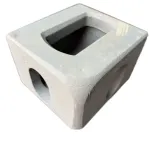
Corner casting steel vs aluminum
Every shipping container in the world — all 40 million of them — rests on eight critical components. Corner castings are the load-bearing blocks at each corner of an ISO shipping container, and they are the universal interface between the container and every crane, twistlock, spreader, and chassis on the planet. When you lift a container, stack it nine high on a ship, or lock it to a truck trailer, every ton of force flows through these fittings.

Construction cabin – selection, tips, dimensions and prices
Every construction project – whether a family house, a development project or a reconstruction – starts with the infrastructure. No construction manager, craftsman or investor who needs an on-site office, a changing room for workers or a safe storage for tools can do without a quality construction cell. But navigating the offer is not easy: residential containers, sanitary cells, storage modules, rental, purchase, refurbished pieces… This guide will give you answers to all the essential questions in one place.
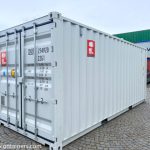
Storage container
A storage container is a lockable steel box designed for the safe and dry storage of materials, tools, goods or equipment. Originally created as a shipping container for maritime transport, its durability and versatility have found their way onto construction sites, corporate premises and private land.
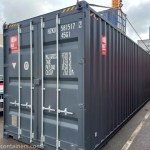
Shipping container 12m (40 ft)
A 12m shipping container is an investment that, if properly selected and cared for, will pay off in decades of trouble-free use. Whether you plan to use it as a warehouse, workshop, garage or the basis for a residential module — the key is careful selection of the condition, a thorough inspection before purchase and high-quality preparation of the base for placement. Take the time to compare offers, check the seller’s references and do not hesitate to personally inspect the container before buying. A properly selected 40-foot container will serve you reliably for many years.