
Shipping container wheels
Moving a 12-meter-long steel box that weighs up to 67,200 pounds was, for decades, exclusively a job for a crane and a licensed operator. That reality has changed. Shipping container wheels — an umbrella term covering a family of mobility solutions — now let a single person reposition a 20ft or 40ft container across a yard, warehouse, or construction site without calling in heavy equipment. This guide covers every aspect of container wheel systems: what they are, how they work, the types available, what they cost, and how to choose the right kit for your container.
What Are Shipping Container Wheels and How Do They Work?
Shipping container wheels are not a single product. The term describes an entire category of heavy-duty mobility solutions united by one design principle: they all interface with the standardized corner castings found on every ISO shipping container manufactured since the late 1960s. Instead of lifting a container onto a trailer or summoning a crane, operators attach wheels directly to the container’s structure, converting a stationary steel box into a rollable — and often towable — unit.
Definition and Core Concept
In practice, the industry uses several more specific names for different configurations of container wheels:
- Container casters or swivel casters — swiveling or fixed wheel assemblies with a twist-lock top plate that locks into the bottom corner casting of the container. These are what you see in warehouses and port facilities.
- End wheels — non-swiveling wheel assemblies that mount to the side or end corner castings. They keep the container low to the ground and are the most common consumer-grade option.
- Container undercarriage systems — paired front and rear units (one steerable, one towed) that bolt to all four bottom corners and connect to a tow vehicle via a tow bar. These are the professional-grade solution.
- Bolt-on spindle kits — hub and spindle assemblies that bolt through the existing holes in the container’s corner castings and accept standard trailer tires. These are the simplest and most affordable option.
- Hydraulic self-lifting systems — wheel assemblies with integrated hydraulic jacks that lift the container off the ground before towing. No separate lifting equipment is needed.
What connects all of these systems is the corner casting.
The Corner Casting: The Universal Interface
Every intermodal shipping container has eight corner castings — one at each of the eight corners of the box. These are standardized steel blocks measuring 178 mm × 162 mm × 118 mm (approximately 7 × 6.4 × 4.6 inches), manufactured to the ISO 1161 standard. Each casting has oval openings on three faces, and these openings are what cranes, spreaders, twist-locks, and container wheel systems all use to grip and secure the container.
The corner casting is the single most important piece of engineering in container logistics. It is designed to bear the full weight of a loaded container — whether stacked nine-high on a container ship or suspended from a spreader crane. Container wheel systems use the exact same load path: instead of a crane lifting from above, the wheel system locks in from below and transfers the container’s weight through the same steel block.
The ISO 1161 standard means that any container wheel system designed for the standard corner casting will fit any 20ft or 40ft ISO container, regardless of manufacturer, age, or country of origin. This universality is what makes the entire container wheel market possible.
Why Container Wheels Changed On-Site Logistics
Before container wheel systems became widely available, repositioning a container on-site meant one of two things: calling a tilt-bed truck to reposition it, or hiring a crane operator. A crane mobilization typically costs $1,500 or more per visit, and the operator needs to be scheduled days in advance. A tilt-bed truck is similarly expensive and requires enough space to maneuver.
Container wheel kits eliminate all of that. Once wheels are installed, a single person with a forklift, skid steer, or even a pickup truck can reposition a 20ft or 40ft container in minutes. The economic case is compelling: a wheel kit that costs between $300 and $900 can pay for itself in two to three moves compared to crane rental fees.
Where Did Container Wheel Systems Come From?
The history of container wheels is a story of practical necessity meeting standardized engineering. Understanding where these systems came from helps explain why they work the way they do today.
The Pre-Wheel Era: Cranes and Tilt-Beds Only
When Malcolm McLean launched the first container ship — the Ideal-X — in 1956, his revolutionary idea was about moving cargo between ships, trucks, and trains without unpacking. The container itself was designed to be lifted, stacked, and locked. It was never designed to roll on its own wheels. For the first several decades of containerization, the only way to move a container on land was to lift it with a crane or slide it onto a tilt-bed truck.
This worked fine for the shipping industry. But as containers began to be repurposed for storage, workshops, offices, and tiny homes in the 1990s and 2000s, the limitation became obvious: once a container was delivered to a site, moving it even a few feet required a major equipment mobilization.
The Birth of Container Mobility Solutions
The first container wheel systems emerged in European ports and industrial facilities in the early 2000s. Industrial wheel manufacturers, already producing heavy-duty casters for factories and warehouses, recognized that the standardized ISO 1161 corner casting created a perfect mounting point. By adding a twist-lock top plate to an industrial caster, they created a wheel that could be locked onto any container in seconds.
The Netherlands-based Interwheel and Germany’s JUNG were among the early innovators, developing purpose-built container casters and undercarriage systems for the European market. In the United States, companies like Container Nut (with their EZY Wheels line) and USA Containers brought the concept to the American market, adapting designs for the trailer-wheel ecosystems common in the US.
Modern Innovation: From Simple Casters to Engineered Systems
Today’s container wheel market spans from simple bolt-on spindle kits sold on Amazon for under $300 to German-engineered JUNG dolly systems costing $15,000 or more. The key innovations have been:
- Material science: Polyurethane treads that resist flat-spotting even under heavy static loads — a problem that destroyed early nylon casters.
- Lug pattern standardization: Adoption of standard trailer and truck lug patterns (6×5.5″ and 8×6.5″) so users can source replacement tires anywhere.
- DOT-approved systems: The DynaDolly, originally called the “Texas Come Along,” became the first container wheel system approved for highway towing behind a standard pickup truck — blurring the line between on-site mobility and road transport.
How Do Container Wheels Attach to ISO 1161 Corner Castings?
The attachment mechanism is what separates shipping container wheels from ordinary wheels. There are two fundamental approaches: twist-lock and bolt-on.
The Twist-Lock Mechanism Explained
A twist-lock is a standardized mechanical fastener used throughout the container industry. On a container wheel system, the twist-lock is mounted on the top plate of the caster or wheel bracket. Here is how it works:
- The operator inserts the twist-lock cone into the oval opening on the bottom face of the container’s corner casting.
- The operator rotates the twist-lock 90 degrees using a lever or handle.
- The rotated cone is now wider than the oval opening in one dimension, locking the wheel assembly securely to the container.
- Spring tension or a locking pin keeps the twist-lock in the locked position during movement.
Most twist-lock systems include a visual indicator — a colored tab or pin position — that confirms the lock is fully engaged. Never move a container without verifying every twist-lock is seated. One incomplete lock can cause the container to shift mid-move, potentially causing serious injury or damage.
Bolt-On vs. Twist-Lock: Two Attachment Philosophies
| Feature | Twist-Lock Systems | Bolt-On Spindle Systems |
|---|---|---|
| Installation time | 1–2 minutes per wheel | 5–10 minutes per wheel |
| Tools required | None (hand-operated) | Wrenches, sockets |
| Attachment point | Bottom face of corner casting | Side holes of corner casting |
| Security | Spring tension / locking pin | Bolted connection |
| Common use case | Temporary, frequent moves | Semi-permanent, long-distance moves |
| Typical system type | Casters, undercarriage systems | End wheels, spindle kits |
| Weight capacity | Up to 7,500 lbs per wheel | Up to 22,000 lbs per wheel |
Twist-lock systems are ideal when you need to attach and remove wheels frequently — for example, in a container depot where wheels are shared across multiple containers. Bolt-on systems are better when the container will stay on wheels for an extended period and you want the most secure connection possible.
The Role of Ratchet Straps and Shackles
Many bolt-on end wheel kits include ratchet straps and shackles as part of the installation. A common misconception is that these straps bear the weight of the container. They do not. The vertical load is carried entirely by the metal-on-metal contact between the wheel bracket and the inside of the corner casting. The straps serve a single purpose: keeping the bracket perfectly vertical against the container wall so the wheels do not lean inward or outward while rolling. This prevents uneven tire wear and keeps the container tracking straight.
What Are the Different Types of Shipping Container Wheel Systems?
The container wheel market offers four distinct categories. Choosing the right one depends on your container size, load weight, surface conditions, and how frequently you plan to move the container.
Container Casters (Swivel Casters)
Container casters are the most maneuverable option. Each caster consists of a heavy-duty swivel fork holding two polyurethane-tread wheels, with a twist-lock top plate. The dual-wheel design centers the pivot point between the two wheels, dramatically reducing the force needed to turn the caster under load.
Key features of quality container casters include:
- Polyurethane treads: Non-marking on warehouse floors, resistant to flat-spotting, and capable of rolling over small obstacles and cracks.
- Directional locks: Many casters can lock their swivel rotation every 90 degrees, effectively converting a swivel caster into a fixed caster for straight-line towing.
- Brakes: Optional wheel brakes prevent rolling on slight inclines or in windy conditions.
- Drag wheels: A small collapsible wheel at the rear of the caster lets you roll the caster upright on three wheels when positioning it under a corner casting — a significant safety and ergonomic improvement.
Container casters are best suited for hard, flat surfaces like warehouse concrete, asphalt, and factory floors. A set of four casters with a 3,000 kg (6,600 lb) capacity per wheel can support a total dynamic load of approximately 9,000 kg (19,800 lbs) — enough for most empty and partially loaded 20ft and 40ft containers.
End Wheels (Bolt-On Spindle Kits)
End wheels are the most popular consumer-grade option and the type most often sold as “container wheel kits” on Amazon, Home Depot, and specialized retailers. A typical end wheel kit includes:
- Two hub and spindle assemblies (one for each rear corner of the container)
- Ratchet straps or shackles for securing the bracket
- Wheels and tires (sometimes included, sometimes sold separately)
The hubs use standard trailer lug patterns — most commonly 6×5.5″ (six lugs on a 5.5-inch circle) or 8×6.5″ (eight lugs on a 6.5-inch circle). The bracket inserts into the side opening of the corner casting, twists 90 degrees to lock, and is then secured with a ratchet strap running from the top of the bracket to the upper corner casting.
End wheels are non-swiveling, which means the container only moves in a straight line while being towed. For turning, you need to lift the front of the container with a forklift or skid steer and physically steer it. Despite this limitation, end wheels are the most cost-effective solution for occasional repositioning of empty containers.
Container Undercarriage / Dolly Systems
Container dolly systems represent the professional tier. A complete system consists of:
- A front steerable unit with a tow bar and towing eye that connects to a forklift, yard tug, tractor, or truck hitch
- A rear straight-line follower unit that tracks behind the front unit
- Twist-locks at all four corners that lock into the bottom corner castings
The JUNG line from Germany is the dominant player in this category, offering three capacity tiers:
| JUNG System | Combined Capacity | Suitable For |
|---|---|---|
| 14-ton set | 28,000 lbs | Empty 20ft and 40ft containers, lightly loaded 20ft |
| 20-ton set | 40,000 lbs | Loaded 20ft containers, partially loaded 40ft |
| 30-ton set | 60,000 lbs | Fully loaded 40ft containers (near ISO max gross) |
JUNG’s patented JUWAthan+ polyurethane wheels are furnace-baked for a specific blend of elasticity and hardness. This allows them to roll over small obstacles, cracks, and uneven pavement without the flat-spotting that destroys standard nylon casters within months of outdoor use. Pricing for a complete JUNG set ranges from $5,000 to $15,000+, depending on the capacity tier.
The DynaDolly takes a different approach: it is DOT-approved for highway towing, meaning you can hitch a loaded container to a standard pickup truck and tow it on public roads. Capacity ranges from 5 to 15 tons, and pricing runs $3,000 to $8,000.
Hydraulic Self-Lifting Wheel Systems
The most advanced — and most expensive — option integrates hydraulic jacks directly into the wheel assemblies. The operator positions the wheel unit under the corner casting, pumps the integrated jack to lift that corner off the ground, and then engages the twist-lock. No separate forklift, crane, or jack is needed. These systems are rare in the consumer market and are primarily used in specialized industrial and military applications.
System Type Comparison
| Feature | End Wheel Kit | Container Casters | Dolly System | Hydraulic Self-Lifting |
|---|---|---|---|---|
| Price range | $300–$900 | $800–$2,500/set | $3,000–$15,000+ | $10,000+ |
| Weight capacity | 7,000–22,000 lbs/wheel | 4,000–10,000 lbs/wheel | 28,000–60,000 lbs/set | 20,000–40,000 lbs/set |
| Installation | 5–10 min/wheel | 1–2 min/wheel | 10–15 min total | 5 min/wheel |
| Maneuverability | Straight-line only | Full 360° swivel | Steerable via tow bar | Steerable via tow bar |
| Best surface | Hard, flat | Hard, flat (concrete/asphalt) | Mixed, incl. gravel | All surfaces |
| Best for | Occasional moves, empty containers | Warehouses, frequent repositioning | Professional yards, loaded containers | Remote sites, no equipment access |
| Highway legal | No | No | Some models (DynaDolly) | No |
What Is the Difference Between 6-Lug and 8-Lug Container Wheel Kits?
One of the most common questions from buyers is whether they need a 6-lug or 8-lug kit. The answer is less about strength and more about compatibility.
Understanding Lug Patterns
The lug pattern describes the number of wheel studs and the diameter of the circle they form. For container wheel kits:
- 6×5.5″ (6-lug): Six studs on a 5.5-inch diameter circle. This matches the bolt pattern used by many Chevrolet and GMC trucks, as well as common trailer hubs.
- 8×6.5″ (8-lug): Eight studs on a 6.5-inch diameter circle. This matches the bolt pattern of many heavy-duty Ford, Dodge, and Chevrolet trucks, as well as larger trailer axles.
For equivalent-quality container wheel kits, the 6-lug and 8-lug versions are typically rated for the same weight capacity. The lug count is not the determining factor for strength — the spindle diameter, bearing size, and steel quality are. The lug count determines which wheels and tires you can mount.
When to Choose 6-Lug vs. 8-Lug
Choose 6-lug if:
- You want the widest availability of replacement tires and wheels at local trailer supply stores
- You plan to use standard trailer tires on paved surfaces
- You want a lighter assembly that is easier to handle during installation
Choose 8-lug if:
- You need to run larger-diameter or wider tires for rough terrain
- You already have 8-lug wheels and tires from a truck or heavy trailer
- You want the maximum possible tire selection for specialized applications
Common Tire Options
| Lug Pattern | Common Tire Sizes | Typical Use |
|---|---|---|
| 6×5.5″ | ST205/75R15, ST225/75R15, 205/75R15 | Paved surfaces, hard-packed gravel |
| 8×6.5″ | ST235/80R16, LT235/85R16, 235/80R16 | Mixed terrain, heavier loads, all-terrain |
Standard trailer tires (ST-rated) are designed for highway use and have stiff sidewalls. Light truck tires (LT-rated) offer more flexibility and better traction on unpaved surfaces. For containers that will never see a public road, used truck tires are a cost-effective option — just make sure the sidewalls are in good condition and the tires are properly inflated.
How Much Weight Can Container Wheels Support?
Weight capacity is the most critical specification when choosing container wheels, and it is also the most misunderstood.
Understanding Load Ratings
Container wheel capacity is always specified as a per-wheel rating. The total capacity of a set depends on how many wheels are in use:
- End wheel kit (2 wheels): Total capacity = 2 × per-wheel rating. The front of the container is supported by the towing vehicle, so only two wheels bear weight.
- Caster set (4 wheels): Total capacity = 4 × per-wheel rating, but the industry uses a “divide by 3” safety formula to account for uneven load distribution. The practical dynamic capacity of a 4-caster set is approximately (4 × per-wheel rating) ÷ 3 × 3, or more simply, the per-wheel rating × 3 for the practical working load.
The industry also distinguishes between:
- Dynamic load: The weight the wheel can support while rolling. This is the rating you see on most product listings.
- Static load: The weight the wheel can support while stationary. This is typically 30–50% higher than the dynamic rating.
Weight Ranges by Container Size
| Container | Tare (Empty) Weight | Max Gross Weight | Typical Payload |
|---|---|---|---|
| 20ft Standard | ~5,000 lbs (2,270 kg) | ~67,200 lbs (30,480 kg) | ~62,200 lbs |
| 40ft Standard | ~8,000 lbs (3,630 kg) | ~67,200 lbs (30,480 kg) | ~59,200 lbs |
| 40ft High Cube | ~8,700 lbs (3,950 kg) | ~67,200 lbs (30,480 kg) | ~58,500 lbs |
An empty 20ft container weighs about 5,000 lbs, which is well within the capacity of even the most basic end wheel kit rated at 7,000 lbs per wheel. An empty 40ft container at 8,000 lbs is also easily handled by most kits. The challenge comes with loaded containers. A fully loaded 40ft container at 67,200 lbs requires a professional dolly system in the 30-ton class — and even then, operators should verify the actual gross weight before committing to a move.
Capacity Tiers: What Each System Can Actually Move
| System Type | Per-Wheel Rating | Practical Limit | Can Move |
|---|---|---|---|
| Basic 6-lug end wheel kit | 7,000–8,800 lbs | Empty 20ft or 40ft | Empty containers only |
| Heavy-duty 8-lug end wheel kit | 15,000–22,000 lbs | Empty 40ft + light load | Empty + up to 5,000 lbs payload |
| 4.5-ton caster set | 9,900 lbs/wheel | ~30,000 lbs total | Empty 40ft + moderate load |
| JUNG 14-ton dolly | 14,000 lbs/wheel | 28,000 lbs total | Empty 40ft + up to 20,000 lbs |
| JUNG 30-ton dolly | 30,000 lbs/wheel | 60,000 lbs total | Near-fully loaded 40ft |
Always verify the actual gross weight of your container using a weighbridge, cargo manifest, or weigh station before selecting wheels. The consequences of exceeding a wheel’s capacity can include catastrophic bearing failure, wheel separation, and loss of control — all of which become exponentially more dangerous with a 40ft steel box in motion.
How Do You Install Shipping Container Wheels on a 20ft or 40ft Container?
Installing container wheels is straightforward, but the process involves lifting a heavy steel structure, and that demands careful attention to safety.
Step-by-Step Installation for End Wheel Kits
Step 1: Elevate the Container
Use a forklift, skid steer, telehandler, or a dedicated container jack to raise the rear corner castings of the container off the ground. The container needs to be high enough to insert the wheel bracket and mount the tire — typically 12 to 18 inches of clearance. Place heavy-duty wooden cribbing securely under the container frame to support the weight while you work. Never rely on a hydraulic jack alone to hold a container.
Step 2: Insert and Lock the Hub Bracket
Take the wheel hub bracket assembly and insert the locking lug side into the lower side opening of the container’s rear corner casting. Twist the bracket upward into place to engage the internal mechanism. The metal-on-metal contact point inside the corner casting handles 100% of the vertical load once the container is lowered.
Step 3: Secure with the Support Strap
Hook a ratchet strap to the top of the wheel bracket assembly. Run the strap up the side of the container and anchor it to the upper corner casting’s D-ring or structural top lip. Tighten the ratchet strap until the wheel hub bracket sits completely flush and vertical against the container wall. This strap does not bear the container’s weight — its sole function is to keep the bracket straight so the wheels do not lean inward or outward while rolling.
Step 4: Mount the Tires
Slide the tire onto the hub assembly. Thread the lug nuts on by hand, then use a wrench or impact socket to tighten them to the manufacturer’s torque specification. Repeat Steps 1 through 4 on the opposite rear corner. Once both sides are fully assembled, carefully lower the container onto its new wheels.
Tools and Equipment Needed
- Forklift, skid steer, telehandler, or container jack (rated for the container’s weight)
- Heavy-duty wooden cribbing blocks
- Ratchet straps (if not included with the kit)
- Lug wrench or impact wrench with correct socket size
- Torque wrench (recommended)
- Work gloves and steel-toe boots
Safety Precautions During Installation
- Never work under a lifted container. Even with cribbing in place, the risk of a catastrophic collapse is too high.
- Verify all twist-locks are fully engaged before moving the container. Check visual indicators on every corner.
- Stay at least 2 meters (6 feet) away from the container while it is in motion.
- Move at walking speed or slower. Container wheels are not designed for speed.
- Check tire pressure before each use. Underinflated tires can fail under load.
- Inspect straps and shackles for wear, fraying, or deformation before each use.
What Surfaces Can Container Wheels Roll On?
Not all container wheels are suitable for all surfaces. Choosing the wrong wheel type for your terrain can result in a container that won’t budge — or worse, one that sinks, tips, or becomes uncontrollable.
Hard Surfaces: Concrete, Asphalt, Warehouse Floors
For hard, flat surfaces, polyurethane-tread casters are the ideal choice. Polyurethane offers:
- Low rolling resistance, making the container easy to push or pull
- Non-marking properties that won’t leave black streaks on warehouse floors
- Sufficient hardness to resist flat-spotting under static loads
- The ability to roll over small cracks, expansion joints, and minor debris
Most indoor container operations — warehouses, factories, distribution centers — use polyurethane casters exclusively.
Soft Surfaces: Grass, Gravel, Sand, Dirt
Soft surfaces demand a fundamentally different approach. Polyurethane wheels, with their relatively narrow contact patch, will sink into soft ground, making movement nearly impossible. For grass, gravel, sand, and dirt, you need:
- Pneumatic (air-filled) tires with a wide footprint that distributes the container’s weight over a larger surface area
- Larger-diameter wheels (16 inches or more) that can roll over obstacles rather than getting caught on them
- All-terrain tread patterns for traction on loose surfaces
Several manufacturers offer all-terrain container wheel configurations with pneumatic tires. These are typically end wheel or dolly systems rather than casters, as the larger tire diameter makes swiveling impractical.
Slope and Grade Considerations
Container wheels are designed for movement on relatively flat surfaces. As a general rule, avoid grades steeper than 3–5% (a 3–5 foot rise over 100 feet of travel). On any slope:
- Use braked casters or wheel chocks when the container is stationary
- Always tow from the uphill side so the towing vehicle can control the descent
- Reduce speed to a crawl
- Ensure the towing vehicle has sufficient weight and traction to control the container
How Much Do Container Wheel Kits Cost?
Container wheel pricing spans two orders of magnitude, from under $300 to over $15,000. The price you pay reflects capacity, engineering quality, durability, and whether the system is designed for occasional use or daily professional operation.
Price Ranges by System Type
| System Type | Price Range | What’s Typically Included |
|---|---|---|
| Basic 6-lug end wheel kit (Amazon/eBay) | $250–$400 | 2 hub assemblies, straps, shackles; wheels/tires often NOT included |
| Branded 6-lug end wheel kit (USA Containers, VEVOR) | $400–$650 | 2 hub assemblies, straps, shackles; simple kit excludes wheels |
| Branded kit with wheels & tires | $600–$900 | Complete kit, ready to install |
| Container caster set (4 casters) | $800–$2,500 | 4 casters with twist-locks; polyurethane tread |
| Tow bar accessory | $200–$500 | Connects to forklift or truck hitch |
| DynaDolly system | $3,000–$8,000 | Complete undercarriage, DOT-approved for highway |
| JUNG dolly system (14-ton) | $5,000–$8,000 | Front steerable + rear follower, JUWAthan+ wheels |
| JUNG dolly system (30-ton) | $12,000–$15,000+ | Heavy-duty, fully loaded 40ft capable |
Cost vs. Crane Mobilization: The ROI
The economic case for container wheels becomes clear when you compare the alternatives:
A single crane mobilization costs $1,500–$3,000. A tilt-bed truck repositioning costs $300–$800 per move. A $600 end wheel kit pays for itself in one crane visit or two tilt-bed trips. Even a $5,000 JUNG dolly system reaches breakeven in 3–4 crane mobilizations.
For operations that move containers weekly or daily — container depots, construction sites, modular office providers — the payback period is measured in weeks, not months.
Hidden Costs to Consider
- Wheels and tires are not always included. Many “simple kits” include only the hub and bracket assembly. Budget $100–$200 for a pair of trailer tires and wheels if not included.
- Tow bars are typically sold separately. If you need to connect to a vehicle, factor in an additional $200–$500.
- Shipping costs. Container wheel kits are heavy — a two-wheel kit can weigh 75–150 lbs. Shipping can add $50–$200.
- Replacement tires. Polyurethane casters last for years, but pneumatic tires on end wheel kits will eventually need replacement, especially if used on rough surfaces.
What Are the Common Misconceptions About Container Wheels?
Several persistent myths surround container wheel systems. Understanding the reality behind them can save you from costly mistakes.
“You Can Tow a Container on Public Roads with End Wheels”
False. Almost every end wheel kit on the market explicitly states “not intended for transportation on public roads.” These kits lack the suspension, braking, lighting, and safety systems required for highway use. The only container wheel systems approved for public road use are the DOT-certified DynaDolly and similar engineered undercarriage systems. Attempting to tow a container on public roads with end wheels is not only dangerous but illegal in every US state.
“6-Lug and 8-Lug Wheels Have Different Weight Ratings”
Partially false. For equivalent-quality kits from the same manufacturer, the 6-lug and 8-lug versions are typically rated identically. The lug count determines wheel compatibility, not weight capacity. The true determinants of capacity are the spindle diameter, bearing size, and steel quality of the hub assembly — not the number of lug studs.
“You Can Move a Fully Loaded Container with Any Wheel Kit”
Dangerously false. Most consumer-grade end wheel kits are rated for 7,000–8,800 lbs per wheel. With two wheels, that gives a total capacity of 14,000–17,600 lbs. An empty 40ft container weighs about 8,000 lbs, which is fine. But a fully loaded 40ft container can weigh 67,200 lbs — nearly four times the capacity of the strongest consumer kit. Moving a loaded container requires a professional dolly system rated for the actual gross weight.
“One Person Can’t Install and Move a Container Alone”
False — with the right equipment. A single person with a skid steer, telehandler, or forklift can install end wheels and reposition a container. The key is having powered lifting equipment. Without it, one person cannot safely lift a container corner. But with a machine doing the lifting, the installation and movement process is entirely manageable for one person.
“Container Wheels Will Damage the Corner Castings”
False — when used correctly. The corner castings are designed to bear the full weight of a loaded container in stacking and lifting scenarios far more demanding than rolling on wheels. The load path through a wheel bracket is identical to the load path through a crane twist-lock. However, using wheels that exceed the container’s weight or operating on extremely rough terrain at speed can cause damage. Within design parameters, corner castings will not be harmed.
What Does the Future of Container Mobility Look Like?
Container wheel technology continues to evolve. Several trends are shaping the next generation of container mobility:
Electric and autonomous container movers are already appearing in major ports and logistics hubs. These self-propelled units dock under a container, lift it, and transport it to a programmed destination without a human operator. While currently limited to controlled environments, the technology is expected to trickle down to smaller-scale operations within the next decade.
Smart corner castings with integrated load sensors, GPS trackers, and condition monitors are being prototyped. A container that can report its own weight, location, and whether it has been dropped or damaged could transform logistics and insurance.
Modular container architecture — the use of containers as building blocks for homes, offices, schools, and hospitals — is driving demand for mobility systems that can handle frequent repositioning on varied terrain. The container wheel systems of the future may need to be as versatile as the containers themselves.
Frequently Asked Questions
Can I put wheels on any 20ft or 40ft shipping container?
Yes, if the container has standard ISO 1161 corner castings. Virtually every intermodal shipping container manufactured since the late 1960s meets this standard. The corner castings are identical across 20ft, 40ft, standard, and high-cube containers, so the same wheel kit works on all of them. Non-ISO containers, custom-built units, and some very old or specialized containers may not have standard corner castings — always verify before purchasing a wheel kit.
Do I need special tools to install container wheels?
For twist-lock caster systems, no tools are required — the twist-lock is operated by hand. For bolt-on end wheel kits, you will need a lug wrench or impact wrench with the correct socket size, and optionally a torque wrench. The more significant requirement is lifting equipment: a forklift, skid steer, telehandler, or container jack rated for the container’s weight.
How long does it take to install container wheels?
With a twist-lock caster system, installation takes 1–2 minutes per wheel. A bolt-on end wheel kit takes 5–10 minutes per wheel, including mounting the tire. For a complete two-wheel installation, expect 15–30 minutes from start to finish, including the time needed to lift and crib the container.
Are container wheels safe for moving loaded containers?
Only if the wheels are rated for the total weight of the container plus its contents. Most consumer-grade end wheel kits are designed for empty containers. Moving a loaded container requires a professional dolly system with a verified capacity rating that exceeds the container’s gross weight. Always weigh the container before attempting to move it on wheels.
Can I use container wheels on uneven ground?
It depends on the wheel type. Polyurethane casters perform best on hard, flat surfaces and can handle minor cracks and expansion joints. For grass, gravel, sand, or uneven terrain, you need pneumatic tires with a wide footprint. Even with pneumatic tires, the ground should be reasonably level — steep inclines or deeply rutted surfaces are unsafe for container movement on any wheel system.
What is the lifespan of shipping container wheels?
Polyurethane caster wheels, when used on appropriate surfaces, can last 5–10 years or more with proper maintenance. Pneumatic tires on end wheel kits have a shorter lifespan — typically 2–5 years depending on frequency of use, surface conditions, and UV exposure. Bearings should be inspected annually and repacked or replaced as needed. The steel brackets and hub assemblies themselves are essentially lifetime components if not overloaded or corroded.
Do container wheel kits come with tires?
Not always. Many “simple kits” include only the hub and bracket assembly, with wheels and tires sold separately. “Combination kits” or “complete kits” include wheels and tires. Always check the product listing carefully before purchasing. If buying a simple kit, make sure you can source compatible wheels and tires in the correct lug pattern.
Can I move a container by myself with a wheel kit?
Yes, with the right powered lifting equipment. A single person operating a skid steer, forklift, or telehandler can lift the container, install the wheels, and tow the container to its new location. Without powered equipment, one person cannot safely lift a container corner, so at minimum you need a machine to do the heavy lifting.
Will container wheels damage my container or the corner castings?
No, when used within the manufacturer’s specifications. The corner castings are engineered to withstand far greater forces during stacking and crane lifting than they experience during wheeled movement. The load path is identical. However, overloading the wheels, operating at excessive speed on rough terrain, or using damaged brackets can potentially cause localized wear or deformation over time.
How do I maintain shipping container wheels?
- Inspect before each use: Check tires for proper inflation, cracks, or excessive wear. Verify all lug nuts are tight.
- Check bearings: Spin each wheel by hand before loading. Any grinding, roughness, or play indicates that bearings need attention.
- Lubricate twist-locks: Apply a light coating of grease or anti-seize to the twist-lock mechanism to prevent corrosion and ensure smooth operation.
- Inspect straps and shackles: Replace any ratchet strap that shows fraying, cuts, or UV damage. Replace any shackle that is bent or deformed.
- Store properly: When not in use, store wheel assemblies in a dry location. If stored outdoors, protect polyurethane wheels from direct sunlight, which can accelerate degradation.
- Replace tires as needed: Pneumatic tires should be replaced when tread depth is below 2/32 inch or when sidewall cracking is visible.
Other container news...
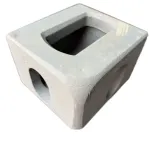
Corner casting steel vs aluminum
Every shipping container in the world — all 40 million of them — rests on eight critical components. Corner castings are the load-bearing blocks at each corner of an ISO shipping container, and they are the universal interface between the container and every crane, twistlock, spreader, and chassis on the planet. When you lift a container, stack it nine high on a ship, or lock it to a truck trailer, every ton of force flows through these fittings.

Construction cabin – selection, tips, dimensions and prices
Every construction project – whether a family house, a development project or a reconstruction – starts with the infrastructure. No construction manager, craftsman or investor who needs an on-site office, a changing room for workers or a safe storage for tools can do without a quality construction cell. But navigating the offer is not easy: residential containers, sanitary cells, storage modules, rental, purchase, refurbished pieces… This guide will give you answers to all the essential questions in one place.
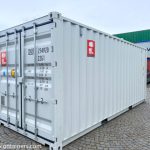
Storage container
A storage container is a lockable steel box designed for the safe and dry storage of materials, tools, goods or equipment. Originally created as a shipping container for maritime transport, its durability and versatility have found their way onto construction sites, corporate premises and private land.
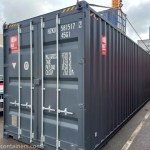
Shipping container 12m (40 ft)
A 12m shipping container is an investment that, if properly selected and cared for, will pay off in decades of trouble-free use. Whether you plan to use it as a warehouse, workshop, garage or the basis for a residential module — the key is careful selection of the condition, a thorough inspection before purchase and high-quality preparation of the base for placement. Take the time to compare offers, check the seller’s references and do not hesitate to personally inspect the container before buying. A properly selected 40-foot container will serve you reliably for many years.