
Side Opening container
A side opening container is an ISO-compliant intermodal shipping container engineered with full-length bi-fold doors along one of its long side walls, in addition to the standard cargo doors at one end. Unlike conventional containers that restrict access to a single set of rear doors, a side opening container — also widely called an open side container, open-sided shipping container, or side door container — provides unobstructed lateral access across the entire 20-foot or 40-foot length of the unit. This design transforms the container from a narrow tunnel into a wide-open space that forklifts can enter from the side, multiple workers can load simultaneously, and oversized cargo that would never fit through standard end doors can be placed without struggle.
What Is a Side Opening Container?
Definition and Core Concept
A side opening container is a dry cargo shipping container built to the same external dimensional standards as any ISO container (ISO 668 and ISO 1496), but with one critical difference: the entire long side wall is replaced by a set of full-height, full-length doors. These doors most commonly use a bi-fold configuration — also called a 4-leaf door system — where the side opening is divided into two sections, each consisting of two door leaves that fold back against the container’s exterior. When fully opened, the doors fold 180 to 270 degrees, exposing the container’s entire interior width from floor to ceiling.
The container retains its standard cargo doors at one short end. This means you get two access points: the rear doors for conventional loading and the full-length side for broad, unrestricted access.
The side door is typically a 4-leaf door that opens in two sections — 50% to the left and 50% to the right of the opening. Each leaf is hinged to the next, and the outermost leaves are hinged to the container’s corner posts. The locking mechanism uses the same heavy-duty container locking gear found on standard end doors: cam-action lock rods, keeper plates, and rubber compression gaskets that form a watertight seal when closed.
How Does the Bi-Fold Door Mechanism Work?
The bi-fold door system on a side opening container is a mechanical feat of industrial engineering. Each door leaf is a steel-framed panel with a marine-grade plywood or steel interior face, matching the construction of the container walls. The leaves are connected by heavy-duty continuous hinges rated for thousands of cycles. When unlatched, the doors fold accordion-style — the two middle leaves fold toward the two outer leaves, which in turn fold flat against the container’s exterior side wall.
The locking rods run vertically through each door leaf. When the handle is turned, cam mechanisms at the top and bottom of each rod engage with keeper plates welded into the container’s top and bottom side rails. This compression action pulls the door tight against the rubber gasket, creating the same wind-and-watertight seal that standard container doors provide.
Below is a comparison of the bi-fold side door mechanism and the standard end door system:
| Feature | Bi-Fold Side Doors | Standard End Doors |
|---|---|---|
| Opening width | Full container length (20 ft or 40 ft) | Full container width (~7.7 ft / 2.34 m) |
| Door leaf count | 4 leaves (2 bi-fold sections) | 2 leaves |
| Fold angle | 180–270° (flat against exterior) | 270° (flat against container sides) |
| Locking points per door | 4–8 vertical cam locks | 4 vertical cam locks |
| Gasket sealing | Full perimeter compression gasket | Full perimeter compression gasket |
| Forklift entry | Yes — from the side | Yes — from the end |
| Weather resistance | Wind and watertight (CSC certified) | Wind and watertight (CSC certified) |
| Structural impact | Slightly reduced side-wall rigidity | Full structural integrity |
Where Did the Side Opening Container Come From?
The Evolution of ISO Shipping Containers
The story of the side opening container begins with the standardization of intermodal freight. In 1956, Malcolm McLean loaded 58 trailer bodies onto the deck of the Ideal-X in Newark, New Jersey, and shipped them to Houston — the birth of containerized shipping. Within a decade, the International Organization for Standardization (ISO) established technical committee ISO/TC 104 in 1961, and by the late 1960s, the ISO 668 standard locked in the familiar 20-foot (TEU) and 40-foot (FEU) dimensions that define global container traffic today.
The earliest containers were simple steel boxes with double doors at one end. They were designed for one thing: moving palletized, uniform cargo efficiently between ships, trains, and trucks. But as global trade diversified, so did cargo. Machinery, vehicles, construction materials, and irregularly shaped goods didn’t fit neatly through a 7.7-foot-wide end door. The standard container was efficient — but rigid.
The Emergence of Specialized Container Types
The side opening container emerged as a direct response to the limitations of end-door-only access. While exact introduction dates are not universally documented, specialized container types — including open-top, flat-rack, and side-opening variants — began appearing in the 1970s and 1980s as shipping lines and container manufacturers recognized the need for more flexible loading configurations.
The side opening container was developed primarily for two market demands: oversized cargo transport (machinery, vehicles, long steel products) and rapid ground-level access (construction sites, military logistics, event staging). By replacing one side wall with doors, manufacturers created a container that could be loaded from the side with a forklift — a workflow that standard containers simply could not support.
Today, side opening containers are manufactured by major container producers including CIMC, Singamas, and CXIC, and are available through container dealers, leasing companies, and modification specialists worldwide. They remain a niche but essential part of the global container fleet.
What Are the Dimensions and Specifications of a Side Opening Container?
20ft Side Opening Container Specifications
The 20-foot side opening container is the most common variant, balancing interior space with maneuverability. It conforms to ISO 668 1C dimensions and is available in both standard height (8 ft 6 in) and high cube (9 ft 6 in) configurations.
| Specification | 20ft Standard | 20ft High Cube |
|---|---|---|
| External length | 20 ft (6,058 mm) | 20 ft (6,058 mm) |
| External width | 8 ft (2,438 mm) | 8 ft (2,438 mm) |
| External height | 8 ft 6 in (2,591 mm) | 9 ft 6 in (2,896 mm) |
| Internal length | 19 ft 4 in (5,898 mm) | 19 ft 4 in (5,898 mm) |
| Internal width | 7 ft 8 in (2,288 mm) | 7 ft 8 in (2,352 mm) |
| Internal height | 7 ft 10 in (2,393 mm) | 8 ft 10 in (2,698 mm) |
| Side door opening width | ~19 ft (5,700 mm) | ~19 ft (5,700 mm) |
| Side door opening height | ~7 ft 6 in (2,285 mm) | ~8 ft 6 in (2,590 mm) |
| Tare weight | ~5,290 lbs (2,400 kg) | ~5,950 lbs (2,700 kg) |
| Maximum payload | ~47,840 lbs (21,700 kg) | ~47,180 lbs (21,400 kg) |
| Floor area | ~148 sq ft (13.7 m²) | ~148 sq ft (13.7 m²) |
| CSC certification | Yes | Yes |
40ft and 40ft High Cube Specifications
The 40-foot side opening container doubles the length and offers significantly more cargo volume. The 40ft high cube variant adds an extra foot of height, making it ideal for tall cargo or interior build-outs.
| Specification | 20ft Standard | 40ft Standard | 40ft High Cube |
|---|---|---|---|
| External length | 20 ft (6,058 mm) | 40 ft (12,192 mm) | 40 ft (12,192 mm) |
| External height | 8 ft 6 in (2,591 mm) | 8 ft 6 in (2,591 mm) | 9 ft 6 in (2,896 mm) |
| Internal length | 19 ft 4 in (5,898 mm) | 39 ft 5 in (12,032 mm) | 39 ft 5 in (12,032 mm) |
| Internal width | 7 ft 8 in (2,288 mm) | 7 ft 8 in (2,352 mm) | 7 ft 8 in (2,352 mm) |
| Internal height | 7 ft 10 in (2,393 mm) | 7 ft 10 in (2,393 mm) | 8 ft 10 in (2,698 mm) |
| Tare weight | ~5,290 lbs (2,400 kg) | ~8,820 lbs (4,000 kg) | ~10,140 lbs (4,600 kg) |
| Maximum payload | ~47,840 lbs (21,700 kg) | ~58,200 lbs (26,400 kg) | ~56,880 lbs (25,800 kg) |
| Floor area | ~148 sq ft | ~304 sq ft (28.2 m²) | ~304 sq ft (28.2 m²) |
| Side door opening | ~19 ft | ~39 ft (11,800 mm) | ~39 ft (11,800 mm) |
All dimensions are approximate and vary slightly by manufacturer. Always verify the CSC plate on the specific unit for exact ratings.
How Does a Side Opening Container Differ from a Standard Shipping Container?
Structural Differences
A standard shipping container is a closed steel box with corrugated Corten steel walls on all four sides. The long side walls are integral to the container’s structural rigidity — they act as deep shear panels that resist racking, twisting, and bending forces during transport and stacking.
A side opening container removes one of these shear panels and replaces it with a door assembly. To compensate, manufacturers reinforce the top and bottom side rails with heavier-gauge steel, use stronger corner posts, and add additional structural members in the roof and floor. The door frame itself is a structural element, transferring loads between the corner castings. Despite these reinforcements, a side opening container is slightly less rigid than a standard container of the same size — this is a well-understood engineering trade-off, not a defect.
Access and Loading Comparison
The most significant difference is operational. Consider the following comparison:
| Factor | Side Opening Container | Standard Container |
|---|---|---|
| Primary access | Full-length side + rear doors | Rear doors only |
| Forklift loading | Drive-in from side at any point | Drive-in from rear only |
| Simultaneous worker access | Multiple workers along full length | 1–2 workers through end |
| Cargo longer than 8 ft | Can be loaded straight in | Must be angled or cannot fit |
| Palletized goods access | Any pallet reachable without digging | Front pallets block rear pallets |
| Cross-docking efficiency | High — full-length access | Low — single-point access |
| Site placement flexibility | Requires clearance on working side | Requires clearance at rear only |
| Loading speed | 2–3× faster than standard | Baseline |
Cost and Availability Differences
Side opening containers carry a price premium of 30–60% over equivalent standard containers. A new 20ft standard container might cost $3,000–$4,500, while a new 20ft open side container typically ranges from $5,000–$8,000. For 40ft high cube units, the gap widens — a standard 40ft HC might be $6,000–$8,000, while a side opening 40ft HC can run $12,000–$16,000.
Used side opening containers are harder to find than standard units, simply because fewer were produced. One-trip (like-new) units are the most common option on the market, and they represent the best value for buyers who need the functionality without paying full factory-new prices.
What Are the Different Types of Side Opening Containers?
Not all side opening containers are created equal. Three primary configurations exist, each offering a different balance of access, structural integrity, and cost.
Full Open-Side (Bi-Fold) Containers
This is the classic side opening container. The entire long side wall is replaced by a 4-leaf bi-fold door system. When fully open, there is no obstruction along the entire length of the container — you get a continuous opening from the front corner post to the rear corner post. This is the configuration that provides maximum forklift access and is the most common type found in the market.
One-Post Open-Side Containers
A one-post open side container retains a single central vertical post (pillar) in the middle of the long side, dividing the opening into two large bays. Each bay has its own set of bi-fold doors. This design provides better structural rigidity than the full open-side while still offering excellent access. The central post does create a minor obstruction, but for most cargo, it’s negligible. One-post containers are often preferred for high cube units where the taller walls benefit from the extra mid-span support.
Four-Door (Three-Post) Open-Side Containers
Sometimes called a “4-door open side” or “3-post container,” this variant retains three vertical posts along the long side, creating four separate door openings. Each opening has its own pair of doors. This configuration provides the best structural integrity of the three types — it’s closest to a standard container in terms of racking resistance — but at the cost of the most obstructed access. The posts are approximately 10 feet apart on a 40-foot unit, which still allows most forklift operations.
| Type | Side Wall Posts | Door Openings | Structural Rigidity | Forklift Access | Relative Cost |
|---|---|---|---|---|---|
| Full Open-Side | None | 1 continuous | Lowest | Unobstructed | Highest |
| One-Post | 1 central | 2 bays | Medium | Minor obstruction | Medium |
| Four-Door (3-Post) | 3 posts | 4 doors | Highest | Moderate obstruction | Lowest |
What Are the Common Uses of Side Opening Containers?
Construction and Industrial Sites
On construction sites, a side opening container serves as a secure tool crib, materials warehouse, and equipment staging area. The full-length side access means workers can walk up to any section of the container and retrieve tools, fasteners, or materials without needing to climb over other items. Contractors often fit them with shelving along the back wall and use the open side as a covered work bay. The container can be delivered to site, dropped in place, and operational within hours.
Retail Pop-Ups and Events
The open side of these containers makes them ideal for temporary retail environments. When the side doors are fully opened, the container transforms into a street-facing storefront with a wide counter or serving window. Festival organizers, food vendors, and brand activations use side opening containers as mobile bars, merchandise booths, ticket counters, and exhibition spaces. The ability to close and lock the entire unit at night provides security that tents and temporary structures cannot match.
Warehousing and Distribution
In warehouse settings, a side opening container functions as a portable loading dock extension. Forklifts can drive directly into the container from the side to place or retrieve palletized goods. Multiple forklifts can operate simultaneously along the length of the container. For cross-docking operations where goods move directly from inbound to outbound transport, the full-length access dramatically reduces handling time.
Specialized Cargo Transport
Side opening containers excel at transporting cargo that standard containers cannot accommodate. This includes:
- Long steel products: pipes, beams, and rebar that cannot be angled through end doors
- Heavy machinery: excavator attachments, industrial equipment, generators
- Vehicles: ATVs, motorcycles, small construction vehicles
- Pre-fabricated components: building modules, trusses, large panels
- Agricultural equipment: harvesters, sprayers, tillage tools
For many of these use cases, the side opening container is the only ISO container type that can handle the cargo without resorting to flat-rack or open-top configurations, which lack weather protection.
What Are the Advantages and Disadvantages of Side Opening Containers?
| Advantages | Disadvantages |
|---|---|
| Full-length forklift access from the side | 30–60% higher purchase price than standard |
| Multiple workers can load/unload simultaneously | Slightly reduced structural rigidity |
| Oversized cargo loads without angling | Requires more site clearance (working side) |
| 2–3× faster loading/unloading | Door seal maintenance is more critical |
| Any item accessible without moving others | Heavier tare weight than standard equivalent |
| Versatile — works as storage, retail, workshop | Fewer used units available on the market |
| Retains ISO intermodal compatibility | Door hardware requires periodic lubrication |
| Wind and watertight when closed | Higher insurance cost in some jurisdictions |
| CSC certified for international freight | More expensive to repair if side doors are damaged |
Key Advantages Explained
The full-length forklift access is the single most transformative feature. With a standard container, forklift operators must navigate the narrow end opening, often requiring precision maneuvering and multiple repositioning moves. With a side opening container, the forklift can approach from any point along the 20- or 40-foot opening, place the load directly where it belongs, and exit without reversing through a confined space.
Simultaneous loading means that instead of a single worker or forklift bottlenecking at the rear doors, a team can spread out along the entire side of the container. For logistics operations with tight schedules, this parallel workflow can cut loading times by more than half.
Limitations and Trade-Offs
The reduced structural rigidity is real but manageable. A side opening container cannot be stacked as high as a standard container in some configurations — though most still meet the ISO stacking requirements for their class. The trade-off is well understood by manufacturers, who reinforce the top rail, bottom rail, and corner posts accordingly.
Site placement is another consideration. The side opening needs clearance equal to the full container length on the working side — at least 20 to 40 feet of open space. This is not always available on tight urban sites or in dense storage yards. Standard containers can be placed flush against walls or other containers on three sides; side opening containers cannot.
How Much Does a Side Opening Container Cost?
New vs. One-Trip vs. Used Pricing
Prices for side opening containers vary significantly based on size, condition, and location. The following ranges reflect US market pricing as of 2026:
| Unit Type | New (Factory) | One-Trip (Like New) | Used / Modified |
|---|---|---|---|
| 20ft Standard Open Side | $7,000–$10,000 | $5,000–$7,000 | $4,000–$6,000 |
| 20ft High Cube Open Side | $8,000–$11,000 | $5,500–$7,500 | $4,500–$6,500 |
| 40ft Standard Open Side | $10,000–$14,000 | $7,000–$9,000 | $5,500–$8,000 |
| 40ft High Cube Open Side | $12,000–$16,000 | $8,000–$11,000 | $6,500–$9,000 |
Delivery costs typically add $300–$800 depending on distance, and site accessibility (tilt-bed truck required for most residential deliveries) can add $150–$400.
Factors That Affect Price
- Condition: Factory-new units carry a premium. One-trip containers (shipped once with cargo, then sold) offer near-new condition at a meaningful discount. Used units are cheapest but may have door seal wear, surface rust, or minor dents.
- CSC certification: A valid CSC (Container Safety Convention) plate is required for international shipping. Units with expired or missing CSC plates are cheaper but limited to domestic storage use.
- Modifications: Pre-installed shelving, lighting, ventilation, insulation, or electrical hookups add cost.
- Location: Prices are higher in landlocked regions due to transport costs from port cities. Coastal markets with container depots (Houston, Los Angeles, Charleston, Savannah, Newark) offer the best pricing.
Can a Standard Container Be Modified into a Side Opening Container?
Modification Process
Yes, a standard container can be modified to add side doors, but it is a significant structural undertaking. The process involves:
- Engineering assessment: The container’s structural integrity must be evaluated. Not all containers are suitable candidates — units with significant corrosion or prior damage may not be safe to modify.
- Cutting the side wall: Using plasma cutters or angle grinders, the corrugated steel side wall is removed along the desired opening. The cut must be precise and clean.
- Reinforcement: The top and bottom side rails are reinforced with additional steel members to compensate for the lost shear strength of the removed wall panel. This is the most critical step — inadequate reinforcement can cause the container to sag or twist.
- Door frame installation: A steel door frame is welded into the opening. The frame must be square, plumb, and precisely aligned to ensure proper door operation and sealing.
- Door installation: Pre-fabricated or custom-built door leaves are hung on the frame with heavy-duty hinges. Locking hardware, gaskets, and keeper plates are installed.
- Finishing: All welds are ground smooth, primed, and painted with marine-grade paint to match the container’s existing finish.
DIY vs. Professional Modification
DIY modification is possible but risky. The structural stakes are high — a poorly executed side door installation can compromise the container’s ability to be stacked, lifted, or transported safely. Professional container modification companies have the engineering expertise, welding certifications, and liability insurance to perform the work correctly. A professional modification for a 20ft side door typically costs $2,500–$5,000, depending on the size of the opening and the door hardware used.
Important note: Modifying a container will void any manufacturer warranty and may invalidate the CSC safety certification. If you need the container for international shipping, a factory-built side opening container is the only safe choice.
What Are the Common Misconceptions About Side Opening Containers?
“Side Opening Containers Aren’t Weatherproof”
This is perhaps the most persistent myth. In reality, a properly maintained side opening container is just as wind and watertight as a standard container. The bi-fold doors use the same compression gasket and cam-lock technology as end doors. Factory-built side opening containers undergo the same water-tightness testing required for CSC certification. The key is maintenance — door gaskets should be inspected annually and replaced if they show signs of cracking, compression set, or tearing. A well-maintained gasket will keep the interior bone-dry in all weather conditions.
“They’re Just as Strong as Standard Containers”
This is the opposite misconception — and it’s equally inaccurate. Side opening containers are not as structurally rigid as standard containers. The missing side wall panel reduces the container’s resistance to racking (side-to-side twisting) and longitudinal bending. Manufacturers compensate with reinforcement, but the physics are inescapable: a closed box is stiffer than an open one. This does not mean side opening containers are unsafe — they meet all ISO structural requirements for their class — but they are not interchangeable with standard containers in high-stress stacking scenarios.
“They’re Only for Shipping”
While side opening containers were designed for cargo transport, the vast majority of units sold today are used for static storage, retail, and workspace applications. The side access makes them ideal for tool cribs, workshops, pop-up retail, equipment storage, and even container home conversions. The shipping capability is a bonus, not the primary use case for most buyers.
How to Choose Between a Side Opening and Standard Container?
Decision Framework
Ask yourself these questions:
- What are you loading? If your cargo is uniform, palletized, and fits through a 7.7-foot-wide door, a standard container is sufficient. If you handle oversized, irregular, or long items, a side opening container is worth the premium.
- How often do you access the interior? Daily access with multiple workers favors the side opening design. Occasional access for long-term storage does not justify the cost.
- What is your site layout? Do you have 20–40 feet of clear space on one side of the container’s planned location? If not, a side opening container may not be practical.
- What is your budget? If the 30–60% premium pushes you out of budget, consider whether a tunnel container (doors at both ends) or a standard container with internal organization (shelving, sliding racks) can meet your needs.
- Do you need CSC certification? If international shipping is required, stick to factory-built, CSC-certified side opening containers. Modified units may not qualify.
Alternatives to Consider
| Alternative | Description | Best For |
|---|---|---|
| Tunnel Container (Double-Door) | Standard container with doors at both ends | Cargo that needs pass-through access |
| Curtain-Sided Container | Side walls replaced with tensioned tarpaulin curtains | Rapid loading from the side, lighter weight |
| Roll-Up Door Container | Standard container modified with roll-up door on the side | Occasional side access at lower cost |
| Flat-Rack Container | Collapsible end walls, no side walls, no roof | Extremely oversized cargo, top-loading |
| Open-Top Container | Removable roof, standard side walls | Top-loading with crane, weather protection retained |
What Does the Future Hold for Side Opening Containers?
Emerging Trends and Innovations
The side opening container is evolving in several directions. Smart locking systems with GPS tracking and electronic access control are beginning to appear on premium units, allowing remote monitoring of door status and location. Improved gasket materials — including silicone-based compounds that resist compression set better than traditional EPDM rubber — are extending seal life and reducing maintenance.
Modular container systems are another emerging trend. Manufacturers are developing side opening containers with pre-installed modular interior systems — fold-down shelving, integrated lighting, climate control, and modular partitioning — that turn the container into a turnkey workspace or retail unit straight from the factory.
Some manufacturers are exploring the use of higher-recycled-content steel and low-VOC coatings. The inherent reusability of containers — a side opening container can serve 20+ years as a storage unit after its shipping life — aligns with circular economy principles.
The most significant trend may be in urban logistics. As last-mile delivery networks become more complex, side opening containers are being deployed as micro-warehouses and cross-dock points in urban areas, where their full-length access enables rapid sorting and dispatch of goods for final delivery.
Frequently Asked Questions
What is the difference between a side opening container and a standard container?
A side opening container has full-length bi-fold doors along one of its long side walls in addition to the standard rear doors. A standard container has doors only at one end. This means a side opening container provides forklift access along the entire length of the unit, while a standard container restricts all access to the 7.7-foot-wide end opening.
How much does a 20ft open side container cost?
A new 20ft open side container typically costs $7,000–$10,000. One-trip (like-new) units range from $5,000–$7,000, and used or modified units can be found for $4,000–$6,000. Prices vary by location, manufacturer, and included features.
Can a forklift drive into a side opening container?
Yes. When the side doors are fully opened, a forklift can drive directly into the container from the side at any point along its length. This is the primary advantage of the side opening design. The container floor is rated to support the weight of a loaded forklift, and the door opening height and width accommodate standard forklift dimensions.
Are open side containers weatherproof?
Yes. Factory-built side opening containers use the same rubber compression gasket and cam-lock door sealing system as standard containers. They are tested for wind and watertightness and carry CSC certification. As with any container, regular inspection and maintenance of the door gaskets is essential to maintain weatherproofing.
What sizes are available for side opening containers?
Side opening containers are available in 20ft standard height, 20ft high cube (9ft 6in), 40ft standard height, and 40ft high cube configurations. The 20ft and 40ft high cube are the most common. Some manufacturers also produce 10ft and 45ft variants on special order.
Is a side opening container more expensive than a standard container?
Yes. Side opening containers carry a 30–60% price premium over standard containers of the same size and condition. The additional cost reflects the more complex door hardware, additional structural reinforcement, and lower production volumes.
Can I modify my existing container to have side doors?
Yes, but it requires professional engineering and fabrication. The process involves cutting the side wall, reinforcing the top and bottom rails, installing a door frame, and hanging new doors. This modification will void the manufacturer warranty and may invalidate CSC certification. Professional modification costs $2,500–$5,000 for a 20ft unit.
What is the load capacity of a side opening container?
A 20ft side opening container has a maximum payload of approximately 47,000–48,000 lbs (21,700 kg). A 40ft unit can carry approximately 58,000 lbs (26,400 kg). Exact capacities vary by manufacturer and are listed on the CSC plate affixed to each container.
Are side opening containers CSC certified for international shipping?
Factory-built side opening containers are CSC certified and can be used for international freight. Modified units may or may not retain certification depending on the quality of the modification and whether the work was inspected and re-certified. If international shipping is a requirement, always purchase a factory-built, CSC-certified unit.
How do I maintain the door seals on a side opening container?
Inspect door gaskets every 6–12 months. Look for cracks, tears, compression set (flattening), or gaps where the gasket meets the door frame. Clean gaskets with mild soap and water to remove dirt and debris. Apply a silicone-based rubber conditioner to prevent drying and cracking. Replace damaged gaskets promptly — a failed gasket can lead to water ingress and cargo damage.

 Czech Republic, Třebíč
  FREE SHIPPING
Other container news...
Corner casting steel vs aluminum
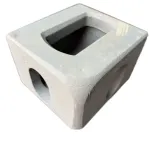
Every shipping container in the world — all 40 million of them — rests on eight critical components. Corner castings are the load-bearing blocks at each corner of an ISO shipping container, and they are the universal interface between the container and every crane, twistlock, spreader, and chassis on the planet. When you lift a container, stack it nine high on a ship, or lock it to a truck trailer, every ton of force flows through these fittings.

Construction cabin – selection, tips, dimensions and prices
Every construction project – whether a family house, a development project or a reconstruction – starts with the infrastructure. No construction manager, craftsman or investor who needs an on-site office, a changing room for workers or a safe storage for tools can do without a quality construction cell. But navigating the offer is not easy: residential containers, sanitary cells, storage modules, rental, purchase, refurbished pieces… This guide will give you answers to all the essential questions in one place.
Storage container
A storage container is a lockable steel box designed for the safe and dry storage of materials, tools, goods or equipment. Originally created as a shipping container for maritime transport, its durability and versatility have found their way onto construction sites, corporate premises and private land.
Shipping container 12m (40 ft)
A 12m shipping container is an investment that, if properly selected and cared for, will pay off in decades of trouble-free use. Whether you plan to use it as a warehouse, workshop, garage or the basis for a residential module — the key is careful selection of the condition, a thorough inspection before purchase and high-quality preparation of the base for placement. Take the time to compare offers, check the seller’s references and do not hesitate to personally inspect the container before buying. A properly selected 40-foot container will serve you reliably for many years.