
Cargo worthy container
If you have ever shopped for a used shipping container, you have almost certainly encountered the term cargo worthy — often abbreviated as CW or CWO (Cargo Worthy Only). It is one of the most important classifications in the container industry, yet it is also one of the most misunderstood. A cargo worthy container is not a container that looks new. It is not necessarily a container that has a valid CSC plate. And it is definitely not the same as a wind and watertight container. This guide explains what cargo worthy really means — from its technical definition and historical origins to the precise structural criteria, inspection process, cost implications, and common misconceptions that trip up even experienced buyers.
What Is a Cargo Worthy Container?
Definition and Core Meaning
A cargo worthy container is a used shipping container that has been inspected and certified as structurally sound enough to safely transport cargo on a container vessel, railcar, or truck. The designation means the container meets the minimum structural and weatherproofing requirements necessary for one more international shipping journey — functioning as a shipper owned container (SOC).
The term “cargo worthy” is not a legal standard in itself. Rather, it is an industry designation that draws its authority from two foundational documents: the Convention for Safe Containers (CSC) of 1972, administered by the International Maritime Organization (IMO), and the Container Owners Association (COA) Technical Guidance TG-01: Criteria for Cargo Worthy (CCW). The COA defines cargo worthy as describing “the structural condition of an ISO Dry Freight General Purpose container when assessed to be acceptable for transport on a one-way trip as a shipper owned container.”
In practice, a cargo worthy container must satisfy three core requirements:
- Structural integrity — the frame, corner posts, corner castings, top and bottom side rails, and understructure must be free of damage that compromises the container’s ability to be lifted, stacked, and secured.
- Weather resistance — the container must be watertight, meaning no water or light penetrates through the roof, walls, or doors when closed.
- Functional doors and hardware — doors must open, close, and seal properly. Gaskets must be intact, and locking mechanisms must operate.
Key distinction: A cargo worthy container is structurally capable of being re-certified for international shipping, but the “cargo worthy” designation by itself does not guarantee that a valid, current CSC plate is affixed. The two are closely related but not identical — a point we will explore in depth.
The Origin of the Term “Cargo Worthy”
Understanding where the term comes from helps explain why it matters. The modern shipping container was invented by Malcolm McLean in 1956, but it was not until the late 1960s that the industry recognized the need for standardized safety regulations. Containers were being stacked ever higher on ships, handled by cranes in ports across the world, and transported across multiple jurisdictions — and there was no universal agreement on what made a container safe.
The Convention for Safe Containers (CSC) was adopted in 1972 under the auspices of the IMO and entered into force in 1977. It established, for the first time, internationally uniform testing procedures, strength requirements, and periodic examination protocols. Every container used in international transport was required to carry a CSC Safety Approval Plate — a permanent metal plate certifying that the unit had been built to and maintained in accordance with the Convention.
But the CSC was designed for carrier-owned containers (COCs) — the thousands of units owned by shipping lines and leasing companies. Meanwhile, shippers who owned their own containers (SOCs) needed a way to prove that their units were also fit for service. The Institute of International Container Lessors (IICL) developed detailed inspection and repair standards — IICL-5 and IICL-6 — which became the de facto benchmarks for container condition. IICL-5, in particular, corresponds closely to what the industry now calls “cargo worthy.”
The Container Owners Association (COA) formalized the cargo worthy criteria in its Technical Guidance TG-01, providing a single, clear reference document that container inspectors, shipping lines, and buyers could all use. The COA brought together the major shipping lines and lessors to agree on exactly what “cargo worthy” meant — down to the millimeter on dent tolerances.
Today, when a container is sold as “cargo worthy,” the seller is implicitly referencing the COA TG-01 criteria and asserting that the container would pass a CSC survey — even if a current CSC plate is not yet attached.
How Does a Cargo Worthy Container Differ from Other Container Grades?
The container market uses a hierarchy of grades that describe a unit’s condition. Understanding where cargo worthy fits in this spectrum is essential for making the right purchasing decision.
Container Grade Comparison Matrix
| Grade | Condition | CSC Plate | Stackable | Watertight | Typical Age | Best For | Typical Price Range (20ft) |
|---|---|---|---|---|---|---|---|
| One-Trip / New | Like new; minimal dents and scratches | Valid CSC (IICL-6) | Yes | Yes | 0–1 year | International shipping, high-end storage, customer-facing installations | $2,500–$4,000 |
| IICL / Excellent | Minor wear; 95%+ original paint | Valid CSC (IICL-5 or 6) | Yes | Yes | 2–7 years | Premium storage, food-grade applications, frequent cargo moves | $2,000–$3,200 |
| Cargo Worthy (CW) | Visible wear, rust, dents; structurally sound | Eligible for CSC (may need re-certification) | Yes | Yes | 7–15 years | International shipping, export, heavy-duty storage, stacking | $1,400–$2,100 |
| Wind & Watertight (WWT) | Significant cosmetic wear; rust, dents, faded paint | No CSC | Not guaranteed | Yes | 12–18 years | On-site storage, workshops, non-stacking applications | $1,000–$1,600 |
| AS-IS | May have holes, heavy rust, structural damage | No | No | Not guaranteed | 15+ years | Scrap, DIY projects, repair candidates | $800–$1,300 |
Cargo Worthy vs. Wind and Watertight (WWT)
This is the most common comparison buyers face, and it is where confusion often begins. Visually, a CW container and a WWT container can look nearly identical — both will have dents, dings, surface rust, and faded paint. The difference is not cosmetic; it is structural.
A WWT container is guaranteed to keep wind and water out. That is the full extent of the guarantee. It may have structural issues that prevent it from being stacked on a vessel or lifted by a crane with cargo inside. A WWT container may have compromised corner castings, weakened understructure, or floor delamination that is severe enough to disqualify it from cargo use.
A cargo worthy container, by contrast, has been assessed against the COA TG-01 criteria and found structurally sound. The corner posts can handle stacking loads. The corner castings can engage twist-locks. The floor can support the weight of cargo. The container can be lifted when loaded.
If you are using a container for static on-site storage — sitting on the ground, not being loaded and unloaded repeatedly — a WWT container is often the most cost-effective choice. If you need to ship goods internationally, stack containers, or lift the container while loaded, you need cargo worthy.
Cargo Worthy vs. One-Trip Containers
One-trip containers are the closest thing to “new” in the used container market. They are manufactured overseas, loaded with cargo exactly once, shipped to their destination, and then sold. They typically have 100% original paint, no rust, and essentially no wear.
The key difference is not just appearance — it is predictability. A one-trip container has a known history and decades of service life remaining. A cargo worthy container has an unknown number of trips behind it (typically 25–30 ocean crossings over its service life), and while it is structurally sound, it will require more maintenance over time.
For international shipping, both grades are eligible. For long-term storage where appearance matters, one-trip is superior. For budget-conscious buyers who need structural integrity without the premium price tag, cargo worthy is the sweet spot.
Cargo Worthy vs. IICL Grade
The IICL (Institute of International Container Lessors) publishes the most rigorous container inspection standards in the industry. An IICL-5 container is essentially the technical benchmark behind the cargo worthy classification. The IICL-5 standard specifies repair criteria for containers that are still in active leasing fleets — meaning they are held to a higher standard than what the COA TG-01 requires for a one-way SOC trip.
In practice, not every cargo worthy container has been inspected to IICL-5 standards. The COA criteria are slightly more lenient in certain areas (for example, dent tolerances on panels) because the COA assumes the container is making one final trip before retirement from cargo service. IICL-5 containers are generally in better cosmetic condition and come with a valid CSC plate. If you need a container that looks professional and is ready for shipping without any additional certification work, IICL-5 is the better choice. If you need a container that is structurally capable of shipping at a lower price point, cargo worthy is the practical option.
What Technical Standards Must a Cargo Worthy Container Meet?
The COA Criteria for Cargo Worthy (TG-01)
The COA TG-01 document is the definitive technical reference for cargo worthy classification. It specifies, component by component, the maximum allowable damage and the required repair action. The document is written for qualified container inspectors, but understanding its key thresholds helps buyers evaluate what they are purchasing.
The COA criteria cover every major structural component of the container:
- Top Side Rails: Dents must not exceed 30 mm in depth. Any hole, cut, tear, break, or crack requires repair.
- Bottom Side Rails: Web dents must not exceed 50 mm. Holes, cuts, tears, breaks, or cracks require repair. Flange cracks or tears that extend into the web radius must be welded.
- Corner Posts: Dents must not exceed 25 mm in depth. Any hole, cut, tear, break, or crack requires repair. Corner castings that are cracked, deformed, broken, or unable to engage twist-locks must be replaced.
- Front and Rear Headers: Dents must not exceed 40 mm. Any hole, cut, tear, break, or crack requires repair. Rear header damage must not interfere with door operation.
- Cross Members: Web dents must not exceed 75 mm. Bowed cross members must not exceed 50 mm above or below the corner casting plane. Floor separation must not exceed 15 mm.
- Floor Boards: Broken or missing boards must be overlaid, sectioned, or renewed. Gouges deeper than 15 mm and wider than 150 mm require repair. Three or more adjacent loose, broken, or missing floor screws must be refastened.
- Doors: Must be operational and light-tight. Gaskets must be intact and not impede door operation. Door hardware must be functional.
- Panels (Sides, Ends, Roof): Dents must not intrude more than 50 mm into the interior cube on sides/ends, or more than 70 mm from the roof inner corrugation to the floor top surface. Holes, cuts, tears, breaks, or cracks require welding or patching.
Structural Criteria at a Glance
| Component | Maximum Allowable Damage | Required Action If Exceeded |
|---|---|---|
| Top Side Rail | Dent > 30 mm depth | Straighten, weld, insert, section, or renew |
| Bottom Side Rail (Web) | Dent > 50 mm depth | Straighten, weld, insert, section, or renew |
| Corner Post | Dent > 25 mm depth | Straighten, weld, insert, or renew |
| Corner Casting | Cracked, deformed, or broken | Replace |
| Cross Member (Web) | Dent > 75 mm depth | Straighten, weld, insert, or renew |
| Floor Board | Gouge > 15 mm deep and 150 mm wide | Overlay, section, or renew |
| Side/End Panel | Dent > 50 mm into cube | Straighten |
| Door | Not operational or not light-tight | Repair |
| Forklift Pocket | Holed, cut, torn, broken, missing | Straighten, weld, insert, or renew |
The Role of the Convention for Safe Containers (CSC)
The CSC is the international treaty that underpins the entire container safety regime. Adopted in 1972 and enforced globally, it requires that every container used in international transport:
- Be of a type approved under the Convention.
- Carry a valid CSC Safety Approval Plate that is permanently affixed, corrosion-resistant, and fireproof.
- Undergo periodic examinations at prescribed intervals.
The CSC was designed to protect everyone involved in container handling — dockworkers, crane operators, ship crews, and truck drivers — by ensuring that no unsafe container enters the international transport chain. Without a valid CSC plate, a container cannot legally be loaded onto a ship for international transport.
What Is a CSC Plate and Why Does It Matter?
What Information a CSC Plate Contains
A CSC plate is a metal data plate permanently affixed to the exterior of every container approved for international shipping — typically on the left door. It contains:
- Manufacturer’s identification number and serial number
- Date of manufacture
- Maximum gross weight (MGW) — the total weight of the container plus cargo
- Maximum stacking weight — the load the container can bear when stacked
- Racking test load — lateral force resistance
- Country of approval and approval reference
- Next Examination Date (NED) — the date by which the next periodic inspection must be completed
The NED is the single most important field. If the NED has passed, the container’s CSC approval is no longer valid — regardless of the container’s physical condition. A container with an expired NED that is otherwise in perfect structural condition is legally no more shippable than a container with a hole in the roof.
CSC Examination Intervals
The CSC mandates the following examination schedule:
- First examination: Within 5 years of the date of manufacture.
- Subsequent examinations: At intervals not exceeding 30 months.
Some countries permit an Approved Continuous Examination Program (ACEP) , which allows container owners to inspect their own fleet on a rolling basis rather than at fixed intervals, provided the program is approved by the relevant national administration. The ACEP is typically used by large leasing companies and shipping lines with thousands of containers.
What Happens During a Cargo Worthy Container Inspection?
The Inspection Checklist
A cargo worthy survey is conducted by a certified maritime surveyor or a qualified container inspector. The inspection is methodical and covers every component of the container. Here is what a surveyor examines:
Exterior inspection:
- All four corner castings for cracks, deformation, or twist-lock damage
- All four corner posts for dents, holes, cuts, or corrosion
- Top and bottom side rails along their entire length
- Front and rear headers and sills
- Roof panel for holes, dents, or patches
- Side and end panels for dents, holes, and corrosion
- Forklift pockets and gooseneck tunnel
- Door gaskets, hinges, locking bars, and handles
- CSC plate — presence, legibility, and validity of the NED
- ISO markings and other required decals
Interior inspection (light test):
- The surveyor enters the container and closes both doors.
- In complete darkness, any visible light entering through the walls, roof, or door seals indicates a leak.
- The floor is inspected for broken boards, delamination, gouges, and stains.
- Floor screws are checked for tightness and completeness.
- Interior panels are inspected for dents and corrosion from the inside.
- Evidence of previous cargo contamination is noted.
Functional tests:
- Doors are opened and closed multiple times to verify smooth operation.
- Locking bars and handles are tested.
- The container is assessed for any signs of twisting or racking.
Who Conducts the Survey?
CSC surveys are conducted by inspectors certified by a classification society or an organization approved by a national administration. Major classification societies include Lloyd’s Register, Bureau Veritas, DNV, and the American Bureau of Shipping (ABS). In the United States, the U.S. Coast Guard is the national administration responsible for CSC enforcement.
Not all cargo worthy surveys are formal CSC surveys. A container can be assessed as “cargo worthy” by a qualified inspector using the COA TG-01 criteria without undergoing the full CSC certification process. However, if the container will actually be used for international shipping, a formal CSC survey resulting in a valid CSC plate is required.
How Much Does a Cargo Worthy Container Cost?
Price Ranges by Size
Container pricing varies significantly by location, market conditions, and the specific condition of the unit. As of 2026, the following ranges are typical for cargo worthy containers in the United States:
- 20ft Cargo Worthy Container: $1,400–$2,100
- 40ft Standard Cargo Worthy Container: $1,650–$2,500
- 40ft High Cube Cargo Worthy Container: $1,800–$2,800
Prices are typically higher in inland locations (due to delivery costs from port cities) and lower in coastal markets with high container availability, such as Houston, Los Angeles, Savannah, and New York/New Jersey.
Cost Comparison Across Grades
The price premium for cargo worthy over WWT is generally $200–$500, depending on size and location. This premium reflects the cost of the survey, the generally better structural condition, and the container’s eligibility for international shipping. For buyers who need to export goods, this premium is not optional — it is the cost of compliance. For buyers who only need storage, the premium may be unnecessary.
The jump from cargo worthy to one-trip is significantly larger — typically $800–$1,500. This jump reflects the near-new condition and decades of additional service life.
When Should You Choose a Cargo Worthy Container?
Use Cases Where CW Is Required
- International shipping and export: If you are shipping goods overseas, you need a cargo worthy container with a valid CSC plate. Shipping lines will not accept a WWT or AS-IS container onto a vessel.
- Stacking containers: Whether for multi-story container architecture or simply stacking storage units, cargo worthy certification ensures the corner posts and castings can handle the load.
- Frequent lifting and transport: If the container will be loaded onto trucks, lifted by crane, or moved repeatedly, cargo worthy structural integrity is essential.
- Regulatory compliance: Certain industries, construction sites, and government contracts may require containers to meet cargo worthy standards.
- Resale value: Cargo worthy containers retain more value on the secondary market because they have a broader range of potential uses.
Use Cases Where CW May Be Overkill
- Static on-site storage: If the container will sit in one place and never be moved while loaded, a WWT container provides the same weather protection at a lower cost.
- Workshops and studios: For a workspace that does not involve stacking or transport, WWT is sufficient — and the money saved can go toward insulation, electrical, and interior finishing.
- Non-critical applications: Construction site tool storage, agricultural equipment sheds, and similar uses rarely require cargo worthy certification.
How Can You Verify a Cargo Worthy Container Before Purchase?
Red Flags to Watch For
- Missing or illegible CSC plate: If the container is sold as cargo worthy but has no CSC plate at all, ask why. A cargo worthy container should at minimum have the original manufacturer’s plate. A missing CSC plate may indicate the container was retired from service for structural reasons.
- Expired NED: If the CSC plate shows an NED that has passed by more than a few months, the container will need a new CSC survey before it can be shipped.
- Door problems: Doors that are stiff, misaligned, or fail to seal properly are one of the most common issues. Open and close the doors yourself.
- Floor condition: Heavy delamination, soft spots, or chemical staining on the floor can indicate serious problems. Walk the floor and feel for spongy areas.
- Visible holes or patches on the roof: The roof is the most vulnerable part of the container. Multiple patches or visible holes are disqualifying.
- Corner casting damage: Examine all eight corner castings (four top, four bottom). Cracks or deformation are expensive to repair and may render the container unsafe.
Questions to Ask Your Supplier
- “When was the last CSC survey conducted, and by whom?”
- “Does the container come with a valid CSC plate and a current NED?”
- “What is the age of the container, and can you provide the manufacturer and serial number?”
- “Has the container been inspected to COA TG-01 or IICL-5 standards?”
- “What warranty do you offer on cargo worthy containers?”
- “Can I see photos of the specific container — not a representative unit — including the CSC plate, doors, roof, and floor?”
What Are Common Misconceptions About Cargo Worthy Containers?
“CW Means the Container Looks New”
This is perhaps the most pervasive misconception. Cargo worthy containers are used. They have dents, scratches, surface rust, and faded paint. They show their service life. The designation is about structural and functional integrity, not cosmetic appearance. A container with peeling paint and surface rust on the panels can be fully cargo worthy if the frame, doors, and floor meet the COA criteria.
“CW Automatically Includes a Valid CSC Plate”
Cargo worthy and CSC are related but distinct concepts. “Cargo worthy” is an industry classification that describes a container’s condition. A CSC plate is a legal certification. A container can be in cargo worthy condition but lack a current CSC plate — for example, if the NED has expired or if the container was assessed by a qualified inspector but not submitted for formal CSC re-certification. If you need the container for international shipping, you must confirm that a valid CSC plate — with a current NED — is included.
“CW Containers Are Food-Grade”
Cargo worthy classification does not address the container’s previous cargo history. A CW container may have transported chemicals, industrial goods, or other non-food cargo. Food-grade certification is a separate designation that requires the container to have a documented history of carrying only food-safe cargo and to meet additional cleanliness standards. If you need a container for food storage or transport, specify “food-grade” — not just “cargo worthy.”
“CW and IICL Are the Same Thing”
While IICL-5 is the technical standard that most closely aligns with cargo worthy, the two are not identical. IICL-5 containers are typically held to more stringent cosmetic and repair standards because they are still in active leasing fleets. Cargo worthy containers assessed under COA TG-01 may have slightly more cosmetic wear and are specifically intended for one final shipping trip as an SOC.
What Is the Future of Cargo Worthy Container Standards?
Trends in Container Grading
The container industry is moving toward greater transparency and standardization in grading. Digital platforms like Container xChange are making it easier for buyers to compare container conditions across suppliers. The COA continues to refine its technical guidance, and there is industry discussion about integrating the cargo worthy criteria more formally with the CSC periodic examination system.
Smart containers — equipped with IoT sensors for location tracking, temperature monitoring, and structural health monitoring — are beginning to enter the market. In the future, a container’s structural history may be digitally recorded, giving buyers real-time data on impacts, stress events, and maintenance history rather than relying solely on a discrete survey.
Sustainability and the CW Market
The cargo worthy classification plays a critical role in the circular economy of shipping containers. By defining a clear standard for what constitutes “one more trip,” the COA criteria enable containers to remain in the cargo transport chain for as long as they are safe — rather than being prematurely retired. This extends the useful life of each container, reducing the demand for new steel container manufacturing and lowering the carbon footprint of the global container fleet.
At the same time, the growing market for container-based architecture — homes, offices, retail spaces, and community facilities — has created a parallel demand for cargo worthy containers that are structurally sound enough to be modified and stacked safely. The CW designation gives architects and builders confidence that the container they are purchasing has the structural integrity to support a multi-story building.
Frequently Asked Questions
Are cargo worthy containers new?
No. Cargo worthy containers are used units that have typically been in service for 7–15 years and have completed multiple ocean crossings. They show visible signs of wear, including dents, scratches, and surface rust. The designation refers to structural and functional integrity, not cosmetic condition.
Can cargo worthy containers be stacked?
Yes. A cargo worthy container has been assessed as structurally capable of being stacked. The corner posts and corner castings must meet the COA TG-01 criteria, which include dent tolerances and structural integrity requirements that ensure the container can bear stacking loads. This is one of the key differences between cargo worthy and WWT containers.
Do cargo worthy containers look new?
No. Cargo worthy containers show their service life. Expect dents, dings, surface rust, faded paint, and non-matching paint touch-ups. The interior will typically have scuffing, scratching, and minor surface rust. The floor may have stains and minor delamination. These cosmetic issues do not affect the container’s structural integrity or cargo worthiness.
Are cargo worthy containers suitable for long-term storage?
Yes. Cargo worthy containers are excellent for long-term storage because they are structurally sound and watertight. They are actually over-engineered for most static storage applications, as the cargo worthy classification includes criteria (stacking, lifting while loaded) that are not relevant for a container that simply sits on the ground. However, the structural quality means a CW container will typically outlast a WWT container in storage use.
How long does a cargo worthy container last?
With proper maintenance — including touch-up paint on rust spots, ensuring good drainage, and keeping the container level — a cargo worthy container can last 15–25 years or more in storage use. If used for continued international shipping, the container’s service life depends on the frequency of trips and the conditions it encounters, but the cargo worthy classification is specifically intended for one final shipping voyage.
What is the difference between cargo worthy and seaworthy?
The terms are often used interchangeably, but there is a subtle distinction. “Seaworthy” is a broader maritime term that refers to a vessel’s fitness for sea travel. In the container context, “cargo worthy” is the more precise industry term, defined by the COA TG-01 criteria. A container that is cargo worthy is considered seaworthy for the purpose of international shipping. However, some shipping lines may require additional checks beyond the COA criteria before accepting an SOC for transport.
Can a cargo worthy container be used for container homes?
Yes, and in fact cargo worthy containers are often preferred for container home construction. The structural integrity of a CW container provides confidence that the container can be modified (cutting windows and doors, joining multiple units) without compromising the frame. The ability to stack CW containers is also critical for multi-story container homes. However, if the container will be used for a home, buyers should also verify that the container has not carried toxic cargo — a consideration that is separate from the cargo worthy classification.
How can I tell if a container is genuinely cargo worthy?
The most reliable method is to request documentation from the seller: a survey report from a certified inspector, the CSC plate with a current NED, and photos of the specific container. If you are inspecting the container in person, check the corner castings for cracks, the doors for smooth operation and light-tight sealing, the floor for structural integrity, and the roof for holes. When in doubt, hire an independent container surveyor to assess the unit before purchase.
Is a cargo worthy container worth the extra cost over WWT?
It depends entirely on your use case. If you need to ship goods internationally, stack containers, or lift the container while loaded, the extra cost is not optional — it is required. If you are using the container for static on-site storage, a WWT container provides the same weather protection at a lower price. For buyers who are uncertain about their future needs, a cargo worthy container provides more flexibility and retains higher resale value.
What happens if I ship a container without a valid CSC plate?
Shipping lines will not accept a container without a valid CSC plate onto their vessels. If a container is discovered to have an expired or missing CSC plate after it has been loaded, the container may be removed from the ship, and the shipper may face penalties, delays, and additional costs. The CSC is enforced globally, and the consequences of non-compliance are severe.
Other container news...
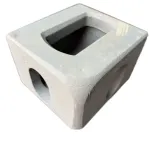
Corner casting steel vs aluminum
Every shipping container in the world — all 40 million of them — rests on eight critical components. Corner castings are the load-bearing blocks at each corner of an ISO shipping container, and they are the universal interface between the container and every crane, twistlock, spreader, and chassis on the planet. When you lift a container, stack it nine high on a ship, or lock it to a truck trailer, every ton of force flows through these fittings.

Construction cabin – selection, tips, dimensions and prices
Every construction project – whether a family house, a development project or a reconstruction – starts with the infrastructure. No construction manager, craftsman or investor who needs an on-site office, a changing room for workers or a safe storage for tools can do without a quality construction cell. But navigating the offer is not easy: residential containers, sanitary cells, storage modules, rental, purchase, refurbished pieces… This guide will give you answers to all the essential questions in one place.
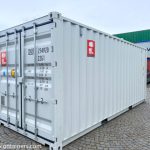
Storage container
A storage container is a lockable steel box designed for the safe and dry storage of materials, tools, goods or equipment. Originally created as a shipping container for maritime transport, its durability and versatility have found their way onto construction sites, corporate premises and private land.
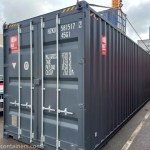
Shipping container 12m (40 ft)
A 12m shipping container is an investment that, if properly selected and cared for, will pay off in decades of trouble-free use. Whether you plan to use it as a warehouse, workshop, garage or the basis for a residential module — the key is careful selection of the condition, a thorough inspection before purchase and high-quality preparation of the base for placement. Take the time to compare offers, check the seller’s references and do not hesitate to personally inspect the container before buying. A properly selected 40-foot container will serve you reliably for many years.