
Types of reefer containers
Every year, over 1.3 billion tons of temperature-sensitive cargo moves across the world’s oceans inside refrigerated containers. From the bananas on your kitchen counter to the vaccines in your local pharmacy, reefer containers — short for refrigerated containers — are the backbone of the global cold chain. But not all reefers are created equal. A container built to transport frozen tuna at -60°C is fundamentally different from one designed to keep fresh-cut roses at 1°C with precisely controlled humidity. Understanding the types of reefer containers is not merely an academic exercise — it is the difference between a shipment arriving in perfect condition and one that becomes an insurance claim.
This guide is the most comprehensive classification of reefer container types available. We will examine reefers by cooling method, by atmosphere control, by temperature range, by size, and by specialized function. Whether you are a logistics manager deciding which container to book for a new trade lane or a student building your understanding of intermodal freight, this article will give you the complete picture.
What Is a Reefer Container and Why Do Its Types Matter?
A refrigerated container is an intermodal shipping container equipped with the ability to maintain a controlled internal environment — temperature, humidity, ventilation, and, in advanced models, atmospheric gas composition. Unlike a standard dry container, which simply protects cargo from the elements, a reefer container actively regulates conditions to preserve the quality and safety of perishable goods.
Core Definition: A reefer container is an ISO-standard intermodal container capable of maintaining a set temperature between approximately -70°C and +40°C (-94°F to +104°F) through an integrated or external refrigeration system, while also managing humidity, ventilation, and atmospheric gases.
The reason classification matters is straightforward: different cargo requires different environments. A shipment of frozen beef at -18°C needs stable, dry cold — but no fresh air exchange. A shipment of avocados at 5°C, by contrast, requires not only precise temperature control but also the removal of ethylene gas (which accelerates ripening) and the regulation of oxygen and carbon dioxide levels. Put the avocados in a basic closed reefer and they may arrive overripe and unsellable. Put the beef in a controlled atmosphere container and you are paying for technology you do not need.
Reefer containers can be classified along several dimensions, and this guide covers each one:
- By cooling method — integral, porthole, and insulated
- By atmosphere control — closed, modified/controlled atmosphere (MA/CA), and automatic fresh air management (AFAM)
- By temperature range — standard, deep freezer, and super freezer / ultra-low temperature (ULT)
- By size — 20ft, 40ft, 40ft high cube, and 45ft high cube
- By specialized function — cryogenic, hanging meat, non-operating reefer (NOR)
A single container can belong to multiple categories simultaneously. For example, a 40ft high cube integral closed reefer is simultaneously defined by its cooling method (integral), atmosphere control (closed), and size (40ft HC). Understanding these overlapping classifications is essential to making informed shipping decisions.
Where Did Reefer Containers Come From? A Brief History of Refrigerated Container Evolution
The reefer container is the product of over 150 years of incremental innovation. Its history is not just a story of engineering — it is a story of how global trade in perishable goods became possible.
Early Attempts at Refrigerated Transport (1800s)
Before the modern reefer existed, the challenge of moving perishable goods over distance was solved — imperfectly — with ice and salt. In the early 1800s, shippers packed ice and salt under and alongside cargo to slow spoilage. The results were unreliable. Livestock died in transit; meat spoiled before reaching its destination.
The first patent for a refrigerated rail car was granted to J.B. Sutherland of Detroit in 1867. His design included ice storage compartments at each end of the rail car. In 1876, the French engineer Charles Tellier, often called the “Father of the Cold,” created the first ether-based mechanical refrigeration system capable of maintaining 0°C. His system was installed on a steamship called Le Frigorifique. The following year, Ferdinand Carré improved Tellier’s design and successfully shipped 150 tons of frozen meat from Sydney to the United Kingdom over 50 days — a landmark achievement that proved long-distance refrigerated sea transport was viable.
The first purpose-built refrigerated vessels appeared in the early 1900s. The Port Morant, launched in 1901, used CO₂-based refrigeration machines to transport bananas. By the 1930s, Fred Jones had invented the first portable air-cooling unit, which was mounted on the exterior of trucks — a precursor to today’s clip-on generator sets.
The Birth of the Porthole Container (1956)
The first true reefer container — the porthole container — was introduced in 1956. These containers had no built-in refrigeration unit. Instead, they relied on a ship’s central cooling plant to pump cold air through sealable openings (portholes) on the container’s walls. This was the dominant design for roughly two decades. Porthole containers offered greater cargo capacity because no internal space was consumed by refrigeration machinery. However, they tethered the cargo to the vessel’s infrastructure — once off the ship, the container needed to be connected to a terminal cooling system or a clip-on generator unit to maintain temperature.
The Rise of Integral Reefers (1970s)
The 1970s brought the integral reefer container — a self-contained unit with its own refrigeration machinery built into the front wall. This was a transformational shift. Integral reefers could be plugged into any compatible power source — on board a ship, at a terminal, or on a truck chassis with a genset. They freed the cold chain from dependence on specialized ships and terminals. The integral reefer quickly became the industry standard, and today it accounts for the overwhelming majority of the global reefer fleet.
The Modern Era (1990s–Present)
The 1990s and 2000s saw the introduction of controlled atmosphere (CA) and modified atmosphere (MA) containers, which could not only regulate temperature but also the gaseous composition inside the container. By flushing the container with nitrogen and carbon dioxide and scrubbing ethylene, CA containers could dramatically extend the shelf life of fresh produce. The Automatic Fresh Air Management (AFAM) system, introduced later, automated this process using sensors.
The most recent evolution has been the rise of super freezer containers capable of maintaining temperatures as low as -70°C, driven largely by demand from the pharmaceutical and biotech industries — particularly for mRNA vaccine distribution. Today, the integration of IoT sensors, AI-driven predictive analytics, and blockchain traceability is pushing reefer containers into the era of smart logistics.
What Are the Main Types of Reefer Containers by Cooling Method?
The most fundamental classification of reefer containers is based on how they achieve cooling. There are three historical categories, though only two remain in widespread commercial use.
Integral Reefer Containers (Built-In Refrigeration Unit)
An integral reefer container — also called an integrated unit or integral unit — has a self-contained refrigeration system built into the front wall of the container. The unit draws in return air from inside the container, passes it over an evaporator coil cooled by a compressor-driven refrigerant cycle, and blows the cooled air back into the cargo space. This is the most common type of reefer container in operation today.
How the airflow works: Integral reefers use a T-shaped decking system. Cold air is blown from the refrigeration unit at the front of the container, travels along T-shaped channels in the floor (grating), rises vertically through the cargo, and is drawn back into the unit at the top. The corrugated side walls also create channels that facilitate air circulation. This bottom-to-top airflow pattern ensures that every part of the load receives cooling. Pallets are essential — they create the gap between the container floor and the cargo that allows the supply air to distribute evenly.
Power supply: Integral reefers can be powered in several ways:
- On board a ship: Connected to the vessel’s 440V–460V three-phase electrical supply via reefer plug points.
- At a terminal: Connected to the terminal’s shore power grid.
- On road or rail: Powered by a genset (generator set) — either a clip-on unit attached to the container or an underslung generator mounted on the chassis. Some gensets are integrated directly into the refrigeration unit.
- Power packs: When a ship’s electrical capacity is insufficient, standalone diesel generator packs (sized to match a 20ft container footprint) can supplement the power supply.
Advantages of integral reefers:
- Full autonomy: The container carries its own refrigeration system. It only needs a power source, not a specialized cooling plant.
- Seamless intermodal transfers: The same container can move from ship to rail to truck without changing cooling infrastructure.
- Real-time monitoring: Built-in microprocessors, digital displays, and data loggers allow continuous temperature tracking. The Partlow recorder (chart recorder) and modern digital loggers provide verifiable temperature histories.
- Precise control: Adjustable temperature, humidity, ventilation, and fresh air exchange settings.
- Wide availability: Integral reefers dominate the global fleet. Port workers, technicians, and logistics providers are universally familiar with them.
Disadvantages of integral reefers:
- Reduced cargo capacity: The refrigeration unit occupies internal volume, reducing payload space compared to porthole containers.
- Higher maintenance costs: The onboard refrigeration machinery requires regular servicing.
- Higher tare weight: The integrated unit adds weight, reducing net payload capacity.
Porthole Containers (Conair / External Cooling)
A porthole container — also known as a Conair container — does not have a built-in refrigeration unit. Instead, it relies entirely on an external cooling system. The container has two sealable openings (portholes) on the front wall: a lower inlet for cold supply air and an upper outlet for warm return air. On board a ship, cold air is blown into the container from the vessel’s central cooling plant, which is permanently installed below deck. The air travels through the T-floor grating, rises through the cargo, and exits through the upper return air porthole.
Off the ship: When the container is at a terminal or being transported over land, temperature is maintained by clip-on generator units — portable refrigeration units that attach to the porthole openings. Alternatively, the container may be connected to a terminal’s centralized refrigeration system. When clip-on units are attached, the container no longer conforms to ISO dimensions, which can complicate stacking and handling.
Advantages of porthole containers:
- Greater cargo capacity: No internal space is consumed by refrigeration machinery. The entire internal volume is available for cargo.
- Lower tare weight: The container itself is lighter than an integral reefer, allowing a higher net payload.
- Lower upfront cost: The container is simpler and cheaper to manufacture than an integral reefer.
- Repurposing potential: Decommissioned porthole containers are often converted into standalone storage units because their thick insulation is still valuable.
Disadvantages of porthole containers:
- Total dependence on external infrastructure: Cooling is only possible when connected to a ship’s central plant, a terminal system, or a clip-on unit. If any of these fail, the cargo has no temperature protection.
- Limited temperature control: Porthole systems typically maintain a constant temperature rather than adjusting it dynamically. There is no independent setpoint control per container.
- No integrated monitoring: Temperature readings must be obtained from the external cooling system, not from a display on the container itself. Real-time monitoring is significantly harder.
- Increased wear and tear: The process of positioning containers over cooling sources adds handling and mechanical stress.
- Declining availability: The global fleet of porthole containers is shrinking. Most carriers have phased them out in favor of integral reefers. Porthole containers are now found primarily on specialized routes or in legacy operations.
Insulated Containers (Passive Cooling)
An insulated container is the simplest form of temperature-controlled container. It has no active cooling system at all — no integral unit, no portholes. Instead, it relies on thick layers of insulation (typically polyurethane foam sandwiched between steel or aluminum walls) to maintain the cargo’s initial temperature. The container acts as a large thermos: if the cargo is loaded cold, it stays cold for a limited period; if loaded warm, it stays warm.
How long do they work? Insulated containers can typically preserve temperature for up to 10 days, depending on the initial temperature, the quality of insulation, and the ambient conditions. After that, heat transfer through the walls inevitably brings the internal temperature close to the external environment.
Use cases: Insulated containers are suitable for:
- Short-distance journeys where active cooling is unnecessary
- Cargo that can tolerate slight temperature variations
- Situations where no power source is available
- As a temporary holding solution during transshipment delays
Advantages:
- No power required: Zero energy consumption during transit.
- No mechanical failure risk: No compressors, fans, or refrigerants to malfunction.
- Lowest cost: Cheapest temperature-controlled option.
Disadvantages:
- Limited duration: Not suitable for long-haul shipping.
- No temperature adjustment: Cannot respond to changing conditions.
- No monitoring: Typically no built-in temperature recording.
Comparison: Integral vs. Porthole vs. Insulated Containers
| Feature | Integral Reefer | Porthole (Conair) | Insulated |
|---|---|---|---|
| Cooling source | Built-in refrigeration unit | External ship/terminal/clip-on system | None (passive) |
| Temperature range | -35°C to +30°C (standard); -70°C (super freezer) | Depends on external system (typically -25°C to +25°C) | Depends on initial load temperature |
| Temperature control | Precise, adjustable setpoint | Limited, constant temperature | None |
| Power requirement | Continuous electrical power | Continuous connection to cooling plant | None |
| Cargo capacity | Reduced (unit occupies ~1.5 m³) | Larger (no internal machinery) | Largest (no machinery) |
| Intermodal flexibility | Excellent — plug into any power source | Poor — requires specialized cooling at each transfer point | Excellent — no infrastructure needed |
| Monitoring | Built-in digital/log display | External monitoring only | Typically none |
| Availability | Dominant; 90%+ of global fleet | Declining; legacy routes only | Niche; short-haul specialists |
| Maintenance cost | High (refrigeration unit) | Low (container only; cooling maintained externally) | Very low |
| ISO-compliant dimensions | Yes | Yes (without clip-on); no (with clip-on) | Yes |
What Are the Types of Reefer Containers by Atmosphere Control?
Beyond temperature, the atmosphere inside a reefer container — specifically the levels of oxygen, carbon dioxide, nitrogen, and ethylene — has a dramatic effect on the shelf life of fresh produce. This has led to a second major classification of reefer containers: by their atmosphere control capability.
Closed Reefer Containers
A closed reefer is the standard, most common type of refrigerated container. It controls temperature, humidity, and ventilation — but does not actively modify the gaseous composition of the air inside the container. Fresh air exchange is managed through manually adjustable ventilation flaps, but the internal atmosphere is essentially ambient air at the set temperature.
What closed reefers do well:
- Frozen goods (meat, seafood, ice cream) at -18°C or below
- Chilled goods (dairy, cheese, processed foods) at 0°C to +4°C
- Any cargo that does not respire or produce metabolic gases
Limitations: Closed reefers are not ideal for fresh fruits and vegetables that produce ethylene gas and consume oxygen. In a closed reefer, ethylene accumulates and accelerates ripening, while oxygen depletion can lead to anaerobic respiration and off-flavors. Ventilation can mitigate this to some extent, but it cannot create the precisely controlled low-oxygen, high-CO₂ environment that maximizes shelf life.
Modified / Controlled Atmosphere (MA/CA) Containers
Modified Atmosphere (MA) and Controlled Atmosphere (CA) containers are designed to extend the shelf life of fresh produce by manipulating the gas composition inside the container. The key distinction between MA and CA is the degree of active control:
- Modified Atmosphere (MA): The gas composition is set once at the beginning of the journey (typically by flushing the container with nitrogen to reduce oxygen, or by injecting CO₂). The atmosphere is not actively regulated during transit. MA is a “set and forget” approach.
- Controlled Atmosphere (CA): The gas composition is continuously monitored and actively adjusted throughout the journey. Sensors measure O₂, CO₂, and sometimes ethylene levels, and the system responds by injecting nitrogen, scrubbing CO₂, or removing ethylene as needed. CA is an active, dynamic process.
How it works:
- Initial flushing: After loading, the container is flushed with nitrogen (N₂) to rapidly reduce oxygen levels from the ambient 21% to a target level — typically 1% to 5% for many fruits.
- CO₂ management: As the produce respires, it consumes oxygen and produces CO₂. In a sealed container, CO₂ levels would rise to toxic levels. CA systems use CO₂ scrubbers (typically activated carbon or molecular sieves) to remove excess CO₂.
- Ethylene scrubbing: Many fruits and vegetables produce ethylene (C₂H₄), a plant hormone that accelerates ripening and senescence. CA containers often include ethylene scrubbers (potassium permanganate filters or catalytic converters) to remove ethylene from the air.
- O₂ replenishment: If oxygen levels drop too low, the system injects fresh air in controlled amounts to maintain the target O₂ concentration.
Ideal cargo for CA/MA containers:
- Avocados (highly sensitive to ethylene and oxygen)
- Bananas (ethylene producers that benefit from low O₂)
- Apples (can be stored for months in CA conditions)
- Stone fruit (peaches, plums, nectarines)
- Kiwifruit
- Asparagus
- Broccoli
Real-world example: A shipment of avocados from Mexico to Europe takes approximately 14–18 days by sea. In a standard closed reefer, the avocados would likely arrive overripe or with significant quality loss. In a CA container with oxygen reduced to 4% and CO₂ maintained at 5%, the same avocados arrive firm and at the optimal stage for retail distribution.
CA containers must be gastight. Any leakage of ambient air (21% O₂) into the container undermines the controlled atmosphere. This requires high-quality door seals, specially designed cable pass-throughs, and rigorous pre-trip inspection protocols.
Automatic Fresh Air Management (AFAM) Containers
AFAM containers represent the most sophisticated level of atmosphere control. They are essentially an advanced version of CA containers that use sensor-driven automation to regulate fresh air exchange in real time.
Unlike basic CA systems that rely on pre-set gas targets, AFAM containers continuously measure the respiration rate of the cargo by monitoring CO₂ production and O₂ consumption. Using this data, the system calculates the optimal ventilation rate and adjusts the fresh air intake automatically. The system can also detect and respond to ethylene buildup.
Key advantages of AFAM:
- No manual configuration needed: The system adapts to the cargo’s actual respiration rate, which varies with temperature, maturity, and handling history.
- Optimized for mixed loads: When shipping different varieties of produce that have different respiration rates, AFAM can maintain conditions that are optimal for the most sensitive item.
- Best for flowers and high-respiration produce: Cut flowers, which are extremely sensitive to ethylene and CO₂, benefit enormously from AFAM’s precise control.
- Energy efficiency: By ventilating only as much as needed (rather than at a fixed rate), AFAM saves energy.
Ideal cargo for AFAM containers:
- Fresh-cut flowers (roses, carnations, chrysanthemums)
- Mixed produce shipments
- High-value, respiration-sensitive fruits (berries, cherries)
- Live plants and nursery stock
Comparison: Closed vs. MA/CA vs. AFAM Containers
| Feature | Closed Reefer | MA/CA Reefer | AFAM Reefer |
|---|---|---|---|
| Temperature control | Yes | Yes | Yes |
| Humidity control | Yes (dehumidification) | Yes | Yes |
| Ventilation | Manual fresh air flaps | Controlled, integrated with gas management | Fully automated, sensor-driven |
| O₂ management | None (ambient ~21%) | Reduced to 1–5% target | Dynamically adjusted |
| CO₂ management | None (ventilation only) | Active scrubbing | Active scrubbing |
| Ethylene removal | None | Optional scrubbers | Standard (integrated) |
| Automation level | Manual | Pre-set with active regulation | Fully adaptive |
| Best for | Frozen, chilled, non-respiring goods | Fresh fruits and vegetables | Flowers, high-value produce, mixed loads |
| Cost | Lowest | Higher | Highest |
| Complexity | Simple | Moderate | High |
What Are the Types of Reefer Containers by Temperature Range?
The third major classification is by temperature capability. Not all reefers can reach the same lows, and the difference between -25°C and -70°C is operationally enormous.
Standard Reefer Containers (-30°C to +30°C / -22°F to +86°F)
The vast majority of the global reefer fleet falls into this category. Standard reefers can maintain temperatures from approximately -30°C to +30°C. The most common setpoints are:
- -18°C (0°F): Frozen food standard (meat, seafood, frozen vegetables, ice cream)
- +2°C to +4°C (35°F–39°F): Chilled fresh products (dairy, fresh meat, prepared foods)
- +12°C to +14°C (54°F–57°F): Temperature-sensitive fruits (bananas, pineapples)
Important note: The Maersk fleet, one of the largest in the world, specifies their 20ft standard reefers at -30°C to +30°C, while their 40ft high cube standard reefers go to -35°C. Kuehne+Nagel reports standard reefers at +25°C to -25°C. The exact range depends on the manufacturer, the age of the unit, and the refrigerant used.
Deep Freezer Containers (-35°C to -40°C / -31°F to -40°F)
A subset of standard reefers are rated for deeper freezing — typically -35°C to -40°C. These containers are used for:
- Specialty frozen seafood (sashimi-grade tuna, which requires colder temperatures than standard frozen fish)
- Certain pharmaceutical products that require storage below -25°C
- Extended frozen storage where lower temperatures provide a safety margin
Super Freezer / Ultra-Low Temperature (ULT) Containers (-60°C to -70°C / -76°F to -94°F)
Super freezer containers — also called ultra-low temperature (ULT) containers — are capable of maintaining temperatures as low as -70°C (-94°F). These are specialized, relatively rare units that serve niche but critical roles in the cold chain.
The significance of -62°C: At -62°C, the eutectic point is reached — the temperature at which all water in the cells of a product is completely frozen and all microbial decomposition is brought to a standstill. In theory, foodstuffs stored below -62°C can be preserved for an “infinite” period without loss of quality. This is the principle behind cryogenic preservation.
Key applications:
- Tuna for sashimi: High-grade tuna destined for the Japanese and global sashimi market is typically frozen to -60°C immediately after catch to preserve color, texture, and flavor. At higher temperatures, enzymatic degradation continues and the bright red color fades to brown.
- Pharmaceuticals and vaccines: mRNA vaccines (such as the Pfizer-BioNTech COVID-19 vaccine) initially required storage at -70°C. Super freezer containers were critical to the global distribution of these vaccines.
- Biotech products: Cell cultures, gene therapies, lab-grown proteins, and other advanced biologics often require ultra-cold storage to maintain molecular integrity.
- Specialty chemicals: Certain temperature-sensitive industrial chemicals and reagents require deep freezing.
Can a super freezer container also cool, or only freeze? This is a common question. The answer is: yes, super freezer containers can also cool. They are not limited to their maximum freezing capacity. The temperature setpoint is adjustable, just like a standard reefer. A super freezer container set to +2°C functions perfectly well as a refrigerated (chilled) container. The “super freezer” designation simply indicates its extended low-temperature capability, not a restriction on its operating range. However, super freezer containers are more expensive to operate and maintain, so they are generally not used for chilled cargo unless the same container needs to handle both frozen and chilled loads across different trips.
Temperature Range Comparison Table
| Container Type | Minimum Temperature | Maximum Temperature | Typical Setpoints | Primary Cargo |
|---|---|---|---|---|
| Standard Reefer (20ft) | -30°C (-22°F) | +30°C (+86°F) | -18°C, +2°C, +13°C | Frozen food, dairy, fruit |
| Standard Reefer (40ft HC) | -35°C (-31°F) | +30°C (+86°F) | -18°C, +2°C, +13°C | Frozen food, dairy, fruit |
| Deep Freezer | -40°C (-40°F) | +30°C (+86°F) | -35°C, -25°C | Sashimi tuna, specialty pharma |
| Super Freezer / ULT | -70°C (-94°F) | +30°C (+86°F) | -60°C, -70°C | Tuna, mRNA vaccines, biotech |
| Cryogenic (dry ice / LN₂) | Below -70°C (varies) | Ambient (varies) | Variable | Ultra-cold chain, clinical trials |
What Are the Different Reefer Container Sizes and Dimensions?
Reefer containers are manufactured in ISO-standard sizes, but the internal dimensions differ from dry containers of the same nominal size because the insulation and refrigeration unit consume space.
20ft Reefer Containers
The 20ft reefer is the workhorse for smaller shipments and heavy cargo. Because 20ft containers have a higher weight limit relative to their volume, they are ideal for dense, heavy frozen goods.
| Measurement | 20ft Reefer Container |
|---|---|
| Internal length | 17.9 ft / 5.45 m |
| Internal width | 7.5 ft / 2.29 m |
| Internal height | 7.4–7.5 ft / 2.25–2.27 m |
| Max load height | ~7.1 ft / 2.16 m |
| Tare weight | 3,080 kg / 6,790 lbs |
| Payload capacity | 27,400 kg / 60,417 lbs |
| Cubic capacity | 999 ft³ / 28.3 m³ |
| Door width | 7.5 ft / 2.29 m |
| Door height | 7.3 ft / 2.22 m |
40ft Reefer Containers
The 40ft standard reefer suits larger volumes of temperature-sensitive cargo. It is the most commonly used size for long-haul ocean freight.
| Measurement | 40ft Reefer Container |
|---|---|
| Internal length | 37.9 ft / 11.56 m |
| Internal width | 7.5 ft / 2.28 m |
| Internal height | 7.4 ft / 2.25 m |
| Max load height | ~7.1 ft / 2.16 m |
| Tare weight | 4,800 kg / 10,584 lbs |
| Payload capacity | 27,700 kg / 61,079 lbs |
| Cubic capacity | 2,093 ft³ / 59.3 m³ |
40ft High Cube (HC) Reefer Containers
The high cube variant adds an extra foot of internal height, making it ideal for bulky, lightweight cargo such as flowers, salad greens, and certain fruits. High cube integral units are particularly popular for voluminous and light goods.
| Measurement | 40ft High Cube Reefer |
|---|---|
| Internal length | 38.0 ft / 11.58 m |
| Internal width | 7.5 ft / 2.29 m |
| Internal height | 7.9–8.2 ft / 2.40–2.50 m |
| Max load height | ~7.8 ft / 2.38 m |
| Tare weight | 4,180–4,480 kg / 9,216–9,880 lbs |
| Payload capacity | 26,000–29,520 kg / 57,320–65,080 lbs |
| Cubic capacity | 2,380 ft³ / 67.3 m³ |
45ft High Cube Reefer Containers
Less common but available in certain trades, the 45ft high cube reefer provides maximum volume for temperature-controlled cargo.
| Measurement | 45ft High Cube Reefer |
|---|---|
| Internal length | ~43.0 ft / ~13.1 m |
| Internal width | ~7.5 ft / ~2.29 m |
| Internal height | ~8.2 ft / ~2.50 m |
| Payload capacity | ~28,000 kg / ~61,730 lbs |
| Cubic capacity | ~2,640 ft³ / ~74.8 m³ |
What Is a Non-Operating Reefer (NOR) Container?
A non-operating reefer (NOR) is a reefer container with its refrigeration unit turned off. Instead of carrying temperature-sensitive cargo, a NOR carries dry (non-perishable) goods. NORs are used to solve a fundamental logistics problem: trade imbalances.
Consider the trade lane between Europe and South America. Europe exports large volumes of refrigerated goods (dairy, pharmaceuticals, chilled meats) to South America. South America exports large volumes of refrigerated goods (fruit, vegetables, frozen seafood) to Europe. But the volumes are not perfectly balanced. If more refrigerated cargo moves in one direction than the other, empty reefer containers must be repositioned back to the origin — a costly exercise.
NORs solve this by allowing the empty reefer to carry dry cargo on the return leg. The container is simply treated as a well-insulated dry box. The refrigeration unit remains off for the entire journey. This reduces repositioning costs and improves overall fleet utilization.
Cargo suitable for NORs: Any dry cargo that fits within the slightly smaller internal dimensions of a reefer and does not require ventilation. Examples include:
- Paper products and packaging materials
- Textiles and clothing
- Non-perishable consumer goods
- Machinery and equipment (subject to weight limits)
Cargo NOT suitable for NORs: Goods that produce moisture, odors, or dust that could contaminate the container’s insulation and air channels, compromising its future use as a reefer.
What Are ISO Type Codes for Reefer Containers?
Every shipping container carries a four-character ISO type code on its CSC safety approval plate. For reefer containers, the code follows the pattern XXRX, where “R” in the fourth position stands for “Reefer.”
The ISO 6346 standard defines the following relevant codes:
| ISO Code | Container Type |
|---|---|
| R0 | Mechanically refrigerated (integral reefer) |
| R1 | Mechanically refrigerated and heated (integral reefer with heating capability) |
| R2 | Mechanically refrigerated, self-powered (integral reefer with genset) |
| R3 | Mechanically refrigerated and heated, self-powered |
| H0 | Refrigerated or heated with removable equipment (porthole with clip-on) |
| H1 | Refrigerated or heated with removable equipment, self-powered |
| H2 | Insulated (no active cooling/heating) |
| H5 | Insulated, hazardous materials capable |
| H6 | Insulated, hazardous materials, self-powered |
The first two characters of the full ISO code (e.g., “22R1”) indicate the container’s size and type. For example, “22R1” is a 20ft x 8ft x 8ft 6in mechanically refrigerated and heated container.
How Do Specialized Reefer Containers Work?
Cryogenic Containers
Cryogenic reefer containers use dry ice (solid CO₂, -78.5°C) or liquid nitrogen (LN₂, -196°C) as their cooling medium rather than a mechanical compressor-based refrigeration system. These are specialized containers for extreme cold chain applications where temperatures below -70°C are required. Cryogenic containers are not common in routine intermodal freight — they are more often used for clinical trial shipments, specialized biotech logistics, and certain aerospace applications.
The cooling mechanism is straightforward: the cryogenic substance sublimates or evaporates, absorbing heat from the cargo space. The rate of sublimation/evaporation determines the internal temperature. This is a passive system in the sense that there is no compressor — but the temperature can be regulated by controlling the flow rate of the cryogen.
Hanging Meat Reefer Containers
Standard reefer containers are designed for boxed or palletized cargo. But for certain types of chilled meat — particularly beef and pork carcasses — hanging transport is preferred because it allows air to circulate evenly around every surface of the meat, promoting efficient cooling and preventing contact-related spoilage. Hanging meat reefers are equipped with hook rails mounted on the ceiling. The carcasses are suspended from these hooks, and cold air circulates around them.
This is a specialized subtype of integral reefer rather than a distinct container type. The container itself is a standard integral reefer with the addition of reinforced ceiling rails and hooks. The rail system is rated for the weight of hanging carcasses, and the floor is designed to collect any drips.
Dual-Temperature / Multi-Compartment Reefers
Some specialized reefer containers are divided into two or more compartments, each with independent temperature control. These are rare in deep-sea shipping but are used in certain domestic and regional distribution applications. A dual-temperature reefer might, for example, carry frozen goods at -18°C in one compartment and chilled produce at +4°C in the other. This is more commonly seen in refrigerated truck trailers than in ISO container formats, but multi-compartment ISO reefers do exist for niche applications.
How Do You Choose the Right Type of Reefer Container for Your Cargo?
Choosing the right reefer container type is a decision that should be driven by your cargo’s specific requirements. Here is a practical decision framework:
Step 1: Determine the Required Temperature
| Cargo Category | Typical Setpoint | Container Type |
|---|---|---|
| Frozen food (standard) | -18°C to -20°C | Standard reefer |
| Deep-frozen seafood | -35°C to -40°C | Deep freezer reefer |
| Sashimi-grade tuna | -60°C | Super freezer / ULT |
| mRNA vaccines, biotech | -70°C | Super freezer / ULT |
| Chilled meat, dairy | 0°C to +4°C | Standard reefer |
| Fresh fruit (tropical) | +12°C to +14°C | Standard or CA reefer |
| Fresh fruit (temperate) | 0°C to +4°C | CA reefer |
| Cut flowers | +1°C to +4°C | AFAM reefer |
Step 2: Determine If Atmosphere Control Is Needed
| Cargo Characteristic | Recommendation |
|---|---|
| Frozen or non-respiring | Closed reefer is sufficient |
| Fresh produce, short transit (< 7 days) | Closed reefer with ventilation |
| Fresh produce, long transit (> 7 days) | CA or MA reefer |
| High-respiration produce (broccoli, asparagus, berries) | CA reefer |
| Ethylene-sensitive produce (avocados, kiwifruit) | CA reefer with ethylene scrubbing |
| Flowers, mixed loads, premium produce | AFAM reefer |
Step 3: Choose the Right Size
| Consideration | Recommendation |
|---|---|
| Dense, heavy cargo (frozen meat, seafood) | 20ft (higher weight capacity per volume) |
| Bulky, lightweight cargo (salad greens, flowers) | 40ft High Cube |
| Standard volume cargo | 40ft standard |
| Maximum volume required | 40ft HC or 45ft HC |
Cargo-to-Container Type Quick Reference
| Cargo | Recommended Container Type | Temperature | Atmosphere |
|---|---|---|---|
| Frozen beef | 20ft or 40ft standard integral reefer | -18°C | Closed |
| Sashimi tuna | 20ft or 40ft super freezer | -60°C | Closed |
| Bananas | 40ft standard integral reefer | +13.5°C | Closed with ventilation |
| Avocados (long haul) | 40ft CA reefer | +5°C to +7°C | CA (4% O₂, 5% CO₂) |
| Fresh-cut roses | 40ft HC AFAM reefer | +1°C to +2°C | AFAM |
| Ice cream | 20ft or 40ft standard integral reefer | -25°C | Closed |
| Vaccines (mRNA) | 20ft super freezer | -70°C | Closed |
| Pharmaceuticals (2°C–8°C) | 20ft or 40ft standard integral reefer | +5°C | Closed |
| Apples (long-term storage) | 40ft CA reefer | +1°C | CA (1–2% O₂, 1–3% CO₂) |
| Chilled dairy | 20ft or 40ft standard integral reefer | +2°C to +4°C | Closed |
What Are the Advantages and Disadvantages of Each Reefer Container Type?
The following table provides a comprehensive comparison across all major reefer container types, rated on the factors that matter most to logistics professionals.
| Container Type | Temperature Flexibility | Atmosphere Control | Cargo Capacity | Monitoring Ease | Intermodal Flexibility | Operating Cost | Availability | Best For |
|---|---|---|---|---|---|---|---|---|
| Integral — Closed | ★★★★★ | ★☆☆☆☆ | ★★★☆☆ | ★★★★★ | ★★★★★ | ★★★☆☆ | ★★★★★ | Frozen and chilled goods |
| Integral — CA/MA | ★★★★★ | ★★★★☆ | ★★★☆☆ | ★★★★★ | ★★★★★ | ★★★★☆ | ★★★☆☆ | Long-haul fresh produce |
| Integral — AFAM | ★★★★★ | ★★★★★ | ★★★☆☆ | ★★★★★ | ★★★★★ | ★★★★★ | ★★☆☆☆ | Flowers, premium produce |
| Integral — Super Freezer | ★★★★★ | ★☆☆☆☆ | ★★★☆☆ | ★★★★★ | ★★★★★ | ★★★★★ | ★★☆☆☆ | Tuna, pharma, biotech |
| Porthole | ★★☆☆☆ | ★☆☆☆☆ | ★★★★★ | ★★☆☆☆ | ★★☆☆☆ | ★★★☆☆ | ★☆☆☆☆ | Legacy operations, large volumes |
| Insulated | ★☆☆☆☆ | ★☆☆☆☆ | ★★★★★ | ★☆☆☆☆ | ★★★★★ | ★☆☆☆☆ | ★★☆☆☆ | Short-haul, tolerant cargo |
| NOR | N/A | N/A | ★★★☆☆ | N/A | ★★★★★ | ★☆☆☆☆ | ★★★★★ | Dry cargo repositioning |
What Does the Future Hold for Reefer Container Types?
The reefer container is not a static technology. Several converging trends are reshaping the types and capabilities of reefers entering the global fleet.
IoT Integration and Smart Reefers
The next generation of reefer containers is connected. IoT sensors embedded in the container continuously transmit data on temperature, humidity, door status, location, shock, and gas composition to cloud platforms. This enables real-time remote monitoring — a logistics manager in Rotterdam can check the temperature of a reefer crossing the Pacific and receive alerts if the setpoint deviates. Companies like Maersk (through its Remote Container Management system) and Kuehne+Nagel (with its carrier-independent monitoring devices) are already deploying these capabilities at scale.
The implication for container types is significant: the traditional distinction between “monitored” and “unmonitored” reefers is disappearing. In the near future, nearly all new-build reefers will be IoT-enabled.
Sustainable Refrigerants
The refrigeration industry is under pressure to phase out hydrofluorocarbons (HFCs), which are potent greenhouse gases. The Kigali Amendment to the Montreal Protocol mandates a phasedown of HFCs. Reefer container manufacturers are transitioning to lower-GWP (Global Warming Potential) refrigerants such as R-513A and, in some cases, natural refrigerants like CO₂ (R-744). This transition will affect the types of reefers available, as older refrigerant-based units are retired and replaced.
Solar-Powered Reefers
Experimental solar-powered reefer units, with photovoltaic panels integrated into the container roof, are being tested. While solar alone cannot power a full-size reefer’s refrigeration unit, it can supplement the power supply and reduce fuel consumption from gensets. Solar-assisted reefers are likely to become a distinct subtype in the medium term.
AI-Driven Predictive Temperature Management
Artificial intelligence is being applied to reefer logistics in two ways: predictive maintenance (identifying which units are likely to fail before they do) and dynamic temperature optimization (adjusting setpoints based on real-time cargo condition, weather, and route data). AI-driven reefers represent a new category of “adaptive” containers that can make autonomous decisions to protect cargo quality.
Blockchain for Cold Chain Transparency
Blockchain technology is being integrated into reefer container tracking to create immutable, auditable records of the entire cold chain journey. Every temperature reading, door opening, and location ping is recorded on a distributed ledger. For pharmaceutical shippers, this provides regulatory-grade proof of cold chain integrity. For food shippers, it provides the transparency that consumers increasingly demand.
Frequently Asked Questions
What is the difference between integral and porthole reefer containers?
An integral reefer container has a built-in refrigeration unit that operates independently when connected to any compatible electrical power source. A porthole container has no internal refrigeration unit; it relies on external cooling systems — a ship’s central cooling plant, a terminal refrigeration system, or a clip-on generator unit — that pump cold air through sealable openings (portholes) in the container walls. Integral reefers dominate the modern fleet because they offer greater flexibility, independent temperature control, and real-time monitoring. Porthole containers are declining in use and are now found primarily on legacy routes.
What is the coldest type of reefer container?
The coldest standard reefer containers are super freezer / ultra-low temperature (ULT) containers, which can maintain temperatures as low as -70°C (-94°F). For even colder requirements, cryogenic containers using liquid nitrogen (LN₂) can maintain temperatures below -150°C, though these are specialized units not commonly used in routine intermodal freight.
What is an AFAM reefer container?
AFAM stands for Automatic Fresh Air Management. An AFAM reefer container uses sensors to continuously measure the respiration rate of the cargo (CO₂ production, O₂ consumption, ethylene levels) and automatically adjusts the fresh air intake to maintain optimal atmospheric conditions. AFAM containers are the most advanced type of atmosphere-controlled reefer and are ideal for flowers, mixed produce loads, and high-value perishables that require precise gas management.
How does a controlled atmosphere reefer container work?
A controlled atmosphere (CA) reefer container actively manages the gaseous composition inside the container. After loading, the container is flushed with nitrogen to reduce oxygen from the ambient 21% to a target level (typically 1–5%). During transit, CO₂ scrubbers remove excess carbon dioxide produced by respiring cargo, and ethylene scrubbers remove the ripening hormone ethylene. Oxygen levels are maintained by controlled injection of fresh air. The result is a low-oxygen, moderate-CO₂, ethylene-free environment that dramatically slows the ripening and senescence of fresh produce.
What is a non-operating reefer container?
A non-operating reefer (NOR) is a reefer container whose refrigeration unit is turned off. It is used to carry dry (non-perishable) cargo instead of temperature-sensitive goods. NORs are primarily used to solve trade imbalances: when more refrigerated cargo moves in one direction than the other, NORs allow the empty reefer to carry dry cargo on the return leg, reducing repositioning costs.
What are the ISO codes for reefer containers?
Reefer container ISO codes follow the pattern XXRX, where “R” in the fourth position stands for “Reefer.” Common codes include R0 (mechanically refrigerated), R1 (mechanically refrigerated and heated), R2 (refrigerated, self-powered), R3 (refrigerated and heated, self-powered), H0 (refrigerated with removable equipment), H2 (insulated), and H5/H6 (insulated with hazardous materials capability).
Can a super freezer container also cool, or only freeze?
Yes, a super freezer container can also cool. It is not limited to freezing. The temperature setpoint is fully adjustable, so a super freezer set to +2°C functions perfectly well as a refrigerated (chilled) container. The “super freezer” designation refers to its extended low-temperature capability, not a restriction on its operating range. However, because super freezers are more expensive to operate and maintain, they are rarely used for chilled cargo unless the same container needs to handle both ultra-low and chilled loads across different trips.
How do I choose between a closed reefer and a CA reefer?
The decision depends on your cargo and transit time. For frozen goods, chilled meat, dairy, and any non-respiring cargo, a closed reefer is sufficient and more cost-effective. For fresh fruits and vegetables on long-haul ocean voyages (typically more than 7 days), a CA reefer is strongly recommended. The CA atmosphere extends shelf life by slowing respiration and ripening, which can mean the difference between produce arriving in marketable condition or being rejected. For short transits or cargo that is naturally robust (e.g., potatoes, onions), a closed reefer with ventilation may be adequate.
What is the difference between modified atmosphere and controlled atmosphere?
A modified atmosphere (MA) is set once at the beginning of the journey — typically by flushing the container with nitrogen — and is not actively regulated during transit. A controlled atmosphere (CA) is continuously monitored and actively adjusted throughout the journey using sensors, scrubbers, and gas injection systems. CA provides more precise control and is better suited for long transits and sensitive cargo, but it is more expensive and complex.
Are porthole containers still used today?
Yes, but in very limited numbers and on specific routes. Porthole containers have been largely phased out in favor of integral reefers, which now account for over 90% of the global reefer fleet. Porthole containers survive primarily in legacy operations where the port and vessel infrastructure still supports them — for example, certain specialized banana trades and some regional short-sea routes. However, their numbers continue to decline, and most major container lines have fully transitioned to integral reefers.
Other container news...
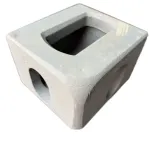
Corner casting steel vs aluminum
Every shipping container in the world — all 40 million of them — rests on eight critical components. Corner castings are the load-bearing blocks at each corner of an ISO shipping container, and they are the universal interface between the container and every crane, twistlock, spreader, and chassis on the planet. When you lift a container, stack it nine high on a ship, or lock it to a truck trailer, every ton of force flows through these fittings.

Construction cabin – selection, tips, dimensions and prices
Every construction project – whether a family house, a development project or a reconstruction – starts with the infrastructure. No construction manager, craftsman or investor who needs an on-site office, a changing room for workers or a safe storage for tools can do without a quality construction cell. But navigating the offer is not easy: residential containers, sanitary cells, storage modules, rental, purchase, refurbished pieces… This guide will give you answers to all the essential questions in one place.
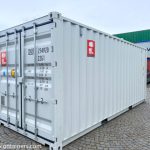
Storage container
A storage container is a lockable steel box designed for the safe and dry storage of materials, tools, goods or equipment. Originally created as a shipping container for maritime transport, its durability and versatility have found their way onto construction sites, corporate premises and private land.
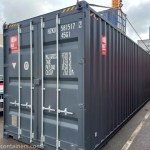
Shipping container 12m (40 ft)
A 12m shipping container is an investment that, if properly selected and cared for, will pay off in decades of trouble-free use. Whether you plan to use it as a warehouse, workshop, garage or the basis for a residential module — the key is careful selection of the condition, a thorough inspection before purchase and high-quality preparation of the base for placement. Take the time to compare offers, check the seller’s references and do not hesitate to personally inspect the container before buying. A properly selected 40-foot container will serve you reliably for many years.