
Storage container
What is a storage container and what is it used for
A storage container is a lockable steel box designed for safe and dry storage of materials, tools, goods, or equipment. Originally created as a shipping container for maritime transport, thanks to its durability and versatility it has found its way to construction sites, corporate premises, and private properties.
Compared to a classic brick warehouse building, a storage container offers several key advantages:
- Immediate availability – the container is ready for use immediately upon delivery and assembly, without building permits and waiting for building approval.
- Mobility – it can be moved with a forklift or crane, even with stored content.
- Durability – fully welded steel construction withstands weather conditions, corrosion, and burglary attempts.
- Flexibility – available in a wide range of dimensions, from compact 2.25 m to spacious 12 m shipping containers.
- Low costs – the purchase price is a fraction of the investment in a permanent building, and there are no costs for building permits.
You will most often encounter a storage container at construction sites as a storage container for construction, in manufacturing companies for storing materials and spare parts, in logistics as a mobile warehouse, or in households as a garden storage for tools, lawn mowers, or seasonal equipment.
Did you know? A standard 20′ shipping container can carry up to 28 tons of cargo and, with proper maintenance, lasts 15–20 years even in demanding outdoor conditions.
Types of storage containers – overview and comparison
On the Czech market, you will encounter several basic types of storage containers. Each of them is suitable for a different purpose, budget, and way of use. Let us introduce them in detail.
Folding storage containers
Folding containers are a lighter variant of welded containers. They are made of galvanized trapezoidal sheet metal and their main advantage is the possibility of being disassembled into flat parts – this dramatically reduces transport costs (dozens of disassembled containers fit on one truck). Assembly can be handled by 2–3 people in 1–2 hours. They are ideal for light storage – tools, construction material, seasonal equipment. Typical lengths are 2.25 m, 3 m, 4 m, 5 m, and 6 m, however their lifespan, load capacity, and durability are considerably lower than a classic shipping container.
Fully welded steel storage containers
Fully welded containers represent the highest level of durability and safety. They are made of steel sheets 1.5–2 mm thick (walls) and 4 mm (bottom), welded into one solid unit. Thanks to the robust construction, they withstand extreme weather, vandalism, and can be stacked in several layers. They are suitable for storing valuable materials, machines, or as a long-term storage solution for companies.
Shipping ISO containers (20′ and 40′)
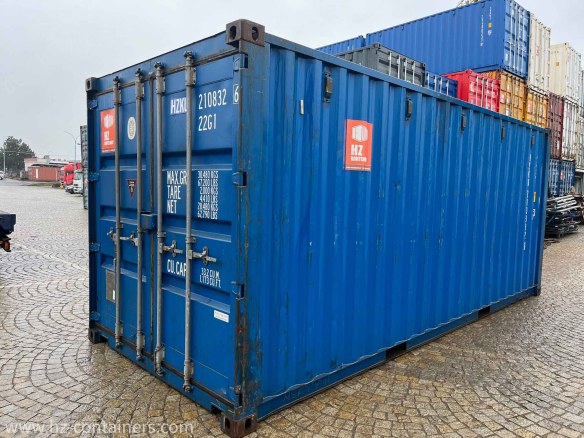
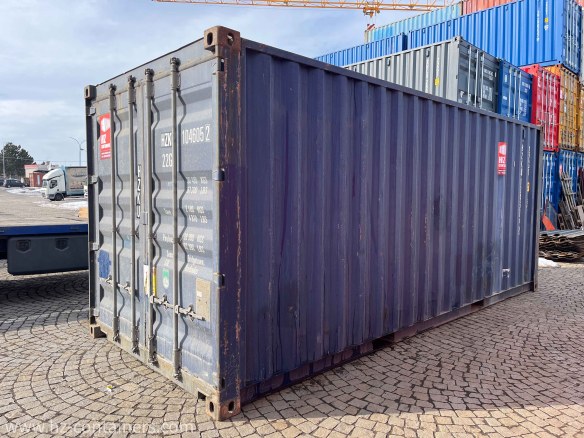
Shipping containers are original transport units decommissioned from maritime transport. Standard dimensions are 20′ (6.06 × 2.44 × 2.59 m) and 40′ (12.19 × 2.44 × 2.59 m). Their undeniable advantage is extreme durability (they are built for transporting 30-ton cargo across the ocean), worldwide standardization, and availability of used units at favorable prices. The disadvantage is the higher weight and limited variability of dimensions, but they last for years.
Special storage containers
This category includes containers with a containment basin for safe storage of liquids and hazardous substances, insulated storage containers for storing temperature-sensitive materials, or office and sanitary containers that combine storage space with working facilities.
| Container type | Durability | Price | Assembly | Ideal use |
|---|---|---|---|---|
| Folding | Medium | 25–80,000 CZK | 1–2 hours, 2–3 people | Light storage, tools, construction |
| Fully welded | High | 40–120,000 CZK | Ready immediately | Valuable materials, machines, companies |
| Shipping ISO 20′ | Very high | 30–90,000 CZK (used) | Ready immediately | Heavy storage, logistics |
| Shipping ISO 40′ – 40’HC | Very high | 50–150,000 CZK (used) | Ready immediately | Large-volume warehouses |
| With containment basin | High | 40–100,000 CZK | According to type | Chemicals, liquids, waste |
Prices are indicative and may vary depending on the season and current price. For an exact calculation, contact us or view our current price list.
Dimensions and load capacity of storage containers
Choosing the right size is a key decision that will affect not only the utility value but also the price and logistics. Let us look at the standard dimensions available on the Czech market.
Standard dimensions
Folding and assembled containers from Czech manufacturers are produced in the following lengths:
- 2.25 m – compact storage for tools, garden equipment, ideal for a smaller property
- 3 m – the best-selling size for construction companies and tradesmen
- 4 m – suitable for storing larger quantities of material or as a workshop
- 5 m – for medium-sized companies, storage of goods and equipment
- 6 m – a full replacement for a small warehouse, comparable to a 20′ shipping container
The standard width is 2.18–2.20 m, the external height is 2.20–2.26 m. Some manufacturers also offer an increased version with an external height of 2.60 m.
For shipping ISO containers, the dimensions are strictly defined by international standards:
- 20′ container: 6.06 × 2.44 × 2.59 m (internal volume approx. 33 m³)
- 40′ container: 12.19 × 2.44 × 2.59 m (internal volume approx. 67 m³)
- 40′ HC (High Cube): 12.19 × 2.44 × 2.90 m (internal volume approx. 76 m³)
- however, the offer also includes 4′, 6′, 8′, 10′ custom-made containers as well as 15′ containers
In addition, gates, windows, entrance doors, sectional doors, and others can be custom-added according to the specific customer requirements.
Load capacity and floor
The floor load capacity varies depending on the type of container. Folding containers usually have floors made of OSB boards or wood with a load capacity of 500–1,000 kg/m². Fully welded containers have floors made of steel sheet or ribbed aluminum with a load capacity of up to 2,000 kg/m². Shipping containers have a wooden floor impregnated against pests with a load capacity of over 4,000 kg/m² – they are built for forklift operation.
How to choose the right size
When choosing a size, follow a simple rule: choose a size 20–30% larger than your current volume of stored material. This will give you space for future expansion, material handling, and air circulation. A too-tight container loses its main advantage – clarity and quick accessibility of stored items.
Storage container for construction – practical tips
Construction companies form the largest group of customers for storage containers. And no wonder – a mobile warehouse directly on the construction site saves time, money, and worries. Here are some practical recommendations on what to focus on when choosing.
Security first
A construction site is a risky environment – many people move around it and it is often unguarded after working hours. Choose a container with robust double-wing doors, a quality locking mechanism, and the possibility of installing an additional padlock. For fully welded models, the resistance to burglary is significantly higher than for folding variants.
Weather resistance
A container at a construction site stands outside all year round – it must withstand rain, snow, frost, and summer sun. Galvanized trapezoidal sheet metal in folding models provides solid anti-corrosion protection, but fully welded containers with quality surface treatment are even more durable. For shipping containers, pay attention to the condition of the door seal and the integrity of the roof – even a small leak can lead to water ingress and damage to stored material.
Handling and mobility
At a construction site, the container is often moved according to the progress of work. Check whether the container has crane lugs (eyes on the corners) and whether it is structurally adapted for forklift handling. Folding containers have an advantage here – they can be disassembled, transported, and reassembled at a new location, saving costs on special transport.
Price of a storage container – new vs. used
The price of a storage container depends on the type, size, manufacturer, and condition (new vs. used). Let us look at the current price range for 2025.
Indicative prices of new containers
| Type and size | Price without VAT | Price with VAT |
|---|---|---|
| Folding 6 m | 50,000–80,000 CZK | 61,000–97,000 CZK |
| Shipping storage container 6 m | 55,000–65,000 CZK | 35,500–49,500 CZK |
| Fully welded 6 m | 60,000–120,000 CZK | 73,000–145,000 CZK |
| Insulated storage 6 m | 70,000–140,000 CZK | 85,000–169,000 CZK |
Prices are indicative and may vary depending on the season and current price. For an exact calculation, contact us or view our current price list.
Used shipping container – is it worth it?
Used shipping containers are available on the market in several quality grades:
- Cargo Worthy (CW) – fully functional, approved for further transport, excellent condition. Price for 20′ approx. 35,500–49,500 CZK.
- One-way (IICL6) – container after one maritime voyage, in like-new condition. Ideal for storage and long-term solutions. Price for 20′ approx. 55,500–66,500 CZK.
- As Is – decommissioned, may have minor defects, rust, dents. Price for 20′ approx. 30,000–35,000 CZK.
A used shipping container is an excellent choice if you need a durable storage at a reasonable price. Always inspect the container personally before buying – check the condition of the floor, the seal of the doors, the presence of corrosion, and the integrity of the roof by choosing the right category: shipping container quality: IICL6, IICL, CW, AS IS.
Rent vs. buy – what pays off?
- Buying pays off for long-term use (2 years and more). The investment pays off and the container has residual value.
- Renting is ideal for short-term projects (construction, seasonal storage). Monthly rent starts at approx. 1,500 CZK for a small folding container, 1,900–3,000 CZK for a 20′ shipping container. The price includes transport and possibly a refundable deposit.
How to order a storage container – step by step
The process of ordering a storage container is straightforward, but it pays to follow a few steps that will save you time and money.
1. Define the purpose and requirements
Before you start inquiring, clarify:
- What will you store and what volume will it take up?
- Will the container stand outside or under a shelter?
- Do you need insulation, a containment basin, or special equipment?
- How long will you use the container?
2. Choose the type and size
Based on the purpose, choose the type (folding, fully welded, shipping) and size. Remember the 20–30% reserve for handling and future expansion.
3. Secure a place for installation
Before delivery, prepare:
- Hardened and level surface – concrete slab, panels, or at least compacted gravel. An uneven surface causes twisting of the structure and problems with opening the doors.
- Access road – the container is delivered on a truck with a hydraulic arm or crane. Ensure sufficient space for handling (minimum width 3 m and height 4 m).
- Maintain distance from the property boundary – if you place the container near a neighboring property, the consent of the neighbor or the building authority may be required.
4. Do I need a permit?
In most cases, a building permit is not required – a storage container is considered a mobile device, not a building. Exceptions are situations when:
- You firmly attach the container to the ground (foundation)
- You place it in a heritage zone
- You exceed the municipal regulatory plan
In case of doubt, contact the local building authority – consultation is free and prevents later complications.
Storage container Prague and larger cities – rental and availability
In Prague and other large cities (Brno, Ostrava, Plzeň), the demand for storage containers is highest. This brings both advantages and specifics.
Availability and transport
Most nationwide suppliers (for example HZ-containers) have coverage throughout the Czech Republic including Prague. Transport to the capital is usually included in the price or for a surcharge of 1,500–5,000 CZK depending on the distance. It also depends on the size of the container.
Rental in Prague
Rental prices in Prague are usually 10–20% higher than in the regions, which reflects higher demand and logistics costs. Monthly rental of a 20′ shipping container in Prague costs 3,000–5,500 CZK.
Placement in urban development
In dense urban development, it is key:
- Check the accessibility of the location – narrow streets, underpasses, and parked cars can make it impossible to unload the container
- Check the regulations – some city districts have their own regulations on placing mobile structures
- Consider aesthetics – a container in a residential neighborhood can be perceived negatively by neighbors; consider a color design or placement out of direct view
FAQ
What is a storage container?
A storage container is a solid, lockable steel box designed for safe and dry storage of materials, tools, goods, or equipment. It is based on the construction of shipping containers, but it is also produced in specialized variants – folding, fully welded, insulated, or with a containment basin.
What are the types of storage containers?
We distinguish four main types: folding containers (lightweight, easily transportable), fully welded steel (maximum durability), shipping ISO containers (20′ and 40′, extremely durable), and special containers (with containment basin, insulated, office cells).
What are the dimensions and load capacity of storage containers?
Folding and assembled containers are produced in lengths of 2.25 m, 3 m, 4 m, 5 m, and 6 m, with a width of approx. 2.2 m and a height of 2.2–2.6 m. Shipping containers are available in standard sizes 20′ (6.06 × 2.44 × 2.59 m) and 40′ (12.19 × 2.44 × 2.59 m). The load capacity of the floor ranges from 500 kg/m² (folding) to more than 4,000 kg/m² (shipping).
Where to buy a storage container in the Czech Republic?
Among the main suppliers of storage containers in the Czech Republic is HZ-containers with a range of various types and sizes.
How to order a storage container?
The ordering process includes five steps: (1) define the purpose and storage requirements, (2) choose the type and size of the container, (3) inquire with several suppliers with a specific specification, (4) prepare a hardened and level surface with an access road for a truck with a hydraulic arm, (5) check the possible need for a building permit – in most cases it is not needed.
Is it better to rent or buy a storage container?
Renting pays off for short-term use of 1–2 years – monthly rent ranges from 1,500 CZK for a small folding container to 5,000 CZK for a large shipping container. Buying is more advantageous for long-term use – the investment pays off and the container has residual value. When deciding, also consider the possibility of future resale of the used container.
Is a storage container safe against burglary?
Fully welded and shipping containers are highly resistant to burglary – steel walls, robust gates, and the possibility of installing security locks make them one of the safest mobile storage spaces. Folding containers are safe when using a quality lock, but their construction is somewhat lighter. For maximum security, we recommend adding a security lock with anti-cut protection and considering the installation of an alarm.

 Czech Republic, Prostějov
  FREE SHIPPING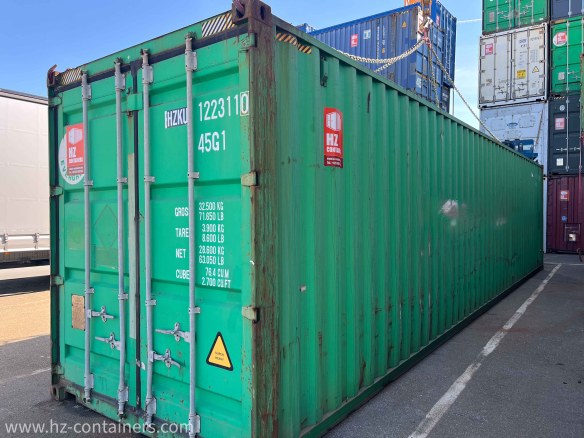
Other container news...
Shipping container 12m (40 ft)
A 12m shipping container is an investment that, if properly selected and cared for, will pay off in decades of trouble-free use. Whether you plan to use it as a warehouse, workshop, garage or the basis for a residential module — the key is careful selection of the condition, a thorough inspection before purchase and high-quality preparation of the base for placement. Take the time to compare offers, check the seller’s references and do not hesitate to personally inspect the container before buying. A properly selected 40-foot container will serve you reliably for many years.
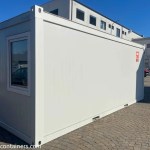
Construction container
A construction container is an investment in safety, order and comfort — whether it is protecting tools from thieves or providing a dignified environment for workers. There are three key decisions: type (storage, residential, sanitary, rubble), form of acquisition (rent vs. purchase) and legislative provision (occupation, building code).

Construction cabin – selection, tips, dimensions and prices
Every construction project – whether a family house, a development project or a reconstruction – starts with the infrastructure. No construction manager, craftsman or investor who needs an on-site office, a changing room for workers or a safe storage for tools can do without a quality construction cell. But navigating the offer is not easy: residential containers, sanitary cells, storage modules, rental, purchase, refurbished pieces… This guide will give you answers to all the essential questions in one place.
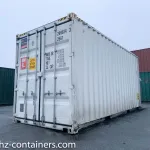
Used shipping container marketplace – prices, condition, transport and how to avoid scams
Buying a shipping container from a second-hand store doesn’t have to be risky if you know what to look for. Always check the seller, compare prices including VAT and shipping, and if possible, arrange a personal inspection. A suspiciously low price is the most common warning sign – a quality used shipping container at a fair price is worth much more than the cheapest option, which can cost you extra money and nerves.