
Construction cabin – selection, tips, dimensions and prices
Every construction site – whether it’s a family house, a development project, or a renovation – starts with the facilities. No site manager, tradesman, or investor who needs an on-site office, changing room for workers, or a secure tool storage can do without a quality construction cabin. But navigating the market is not easy: residential containers, sanitary cabins, storage modules, rental, purchase, refurbished units… This guide will give you answers to all the essential questions in one place.
Whether you are planning a short-term rental for one season, or an investment in your own cabin for many years, after reading you will know exactly which type, size, and price level to choose – and what to watch out for when making your selection.
What is a construction cabin and what is it used for
A construction cabin is a portable modular structure, most often with a steel frame construction and insulated sandwich panels, which serves as a temporary or permanent facility on construction sites, in industrial areas, and on private properties. Unlike a classic shipping container, a construction cabin is designed from the ground up for human occupancy – it has built-in electrical wiring, thermal insulation, windows and doors adapted for everyday use.
Structurally, it is a galvanized steel frame filled with panels with an insulating core (most often polyurethane foam or mineral wool). The floor is usually made of OSB boards, plywood, or steel sheet with an anti-slip finish. The standard roof panel is designed to withstand normal weather conditions and bear the snow load.
Main uses of construction cabins
| Cabin type | Use | Typical equipment |
|---|---|---|
| Office / residential | Facilities for site managers, client meetings, administration | Electrical wiring, heating, air conditioning, table, chairs, lighting |
| Changing room | Changing and rest area for workers | Benches, coat racks, lockable cabinets, heating |
| Sanitary | Toilet, washroom, showers | Ceramic toilet, sink, shower enclosure, boiler, water supply |
| Storage | Secure storage of tools, machines, and materials | Steel construction, double-leaf doors, no insulation |
| Combined | Multi-purpose facilities – office + kitchen + WC | Depending on configuration – sink, stove, fridge, sanitary facilities |
| Gatehouse / reception | Entry control on construction site or premises | Glazed walls, electric heating, counter |
Construction cabin vs. classic container – what is the difference
People often confuse a construction cabin with a shipping container. There are three key differences:
- Insulation: A construction cabin always has thermal insulation in the walls, roof, and floor. A shipping container is a bare steel box – it overheats in summer and freezes in winter.
- Electrical wiring: A cabin comes standard with electrical wiring (230 V sockets, lighting, circuit breakers). With a shipping container, you have to solve the electricity afterwards.
- Purpose: A construction cabin is designed from the beginning for human occupancy. A shipping container is a transport unit. Even though it can be converted, the cost of modifications often exceeds the price of a specialized cabin.
Summary: If you need a space for people – an office, changing room, accommodation – always choose a construction cabin. If you only need storage and don’t mind the lack of insulation, a storage container will be sufficient.
Types of construction cabins – overview and comparison
On the Czech market, you will find several basic types of construction cabins that differ in purpose, equipment, and price. Let’s go through them in detail.
Residential (office) cabins
The most widespread category. A residential cabin serves as a mobile office, meeting room, or temporary accommodation. It is fully insulated, has windows (often plastic with insulating double glazing), an entrance door, and standard electrical wiring including a distribution board. Heating is provided by electric radiators or convectors, with air conditioning in more expensive models.
Typical interior equipment includes floor covering (PVC, linoleum), plastered or painted walls, and basic lighting. Furniture and other equipment are usually purchased or rented separately.
Sanitary cabins (toilet, showers)
A sanitary construction cabin is equipped with water and waste plumbing. Depending on the configuration, it can include:
- Toilet bowl and sink (basic sanitary cabin)
- Shower enclosure with boiler (shower cabin)
- Urinal, multiple toilet cubicles (high-capacity sanitary container)
The walls and floors are waterproof, with ceramic tiles or PVC surface. Ventilation is provided by forced ventilation. These cabins require connection to water, sewage, and electricity.
Storage cabins and containers
Storage units are structurally simpler – often without insulation, with an emphasis on safety and durability. Entry is provided by double-leaf steel doors that allow handling of larger items. The floor is typically made of steel sheet with an anti-slip finish.
A storage container is ideal for storing tools, construction materials, machines, or seasonal equipment. Some models also have racking systems and lockable boxes for small tools.
Combined and special cabins
Combined assemblies, where multiple modules are connected into a larger unit, are a separate chapter. A typical example is a cabin with an office section, kitchenette, and sanitary facilities – all within one module or two connected units.
Special cabins include, for example, sales stands, cash desks at swimming pools, mobile clinics, or laboratories. These are custom-made according to specific requirements.
| Type | Indicative price (new) | Monthly rental from | Suitable for |
|---|---|---|---|
| Residential / office | 180,000–280,000 CZK | 2,500–4,000 CZK | Office, changing room, accommodation |
| Sanitary | 220,000–350,000 CZK | 3,000–5,000 CZK | Toilet, showers, washroom |
| Storage | 55,000–120,000 CZK | 1,500–2,500 CZK | Tool and material storage |
| Combined | 300,000–500,000 CZK | 4,000–7,000 CZK | Complete facilities on construction site |
Prices are indicative and may vary depending on the season and current price. For an accurate calculation, contact us or view our current price list.
Dimensions of construction cabins – how to choose the right size
Dimensions are one of the most important parameters. Standardized dimensions are based on logistical possibilities – the cabin must be transportable on a regular truck with a hydraulic arm.
Standard dimensions
The most common size of a construction cabin on the Czech market is:
- Length: 6,000 mm (external) / 5,800 mm (internal)
- Width: 2,500 mm (external) / 2,300 mm (internal)
- Height: 2,800 mm (external) / 2,500 mm (internal)
The weight ranges between 1,300 and 2,500 kg depending on the type and equipment. The floor load capacity is usually 200–250 kg/m².
Small, medium, and large cabins – overview
In addition to the most common size of 6×2.5 m, there are other variants:
- Small cabins (3–4 m length): Suitable as gatehouses, small offices, or storages on smaller plots. Easy to transport even on smaller vehicles.
- Medium cabins (6 m length): The gold standard. Universal for offices, changing rooms, and storages. Best price/performance ratio.
- Large cabins (7–12 m length): For larger teams or specific uses. Requires heavier equipment for handling.
Non-standard dimensions and modular assemblies
Most manufacturers also offer non-standard dimensions made to order. Cabins can be combined:
- Side by side: Creates a wide open space – ideal for large offices or canteens.
- Stacked (one on top of another): Two-story assemblies save space on small plots. Static assessment and a staircase module are required.
- In L or U shape: Creates naturally separated zones for different purposes.
Practical tip: When planning dimensions, consider not only the interior space but also the handling space for a crane or hydraulic arm during installation. The minimum access road width is 3 meters.
Equipment and basic accessories of a construction cabin
What can a construction cabin contain? The answer depends on the specific type, but in general, the better you equip the cabin, the more comfortable and productive the work on the construction site will be.
Standard vs. premium equipment
Standard equipment (usually included in the base price):
- Electrical wiring 230 V / 400 V with distribution board and circuit breakers
- Lighting – LED panels or fluorescent tubes
- Sockets (2–4 pcs depending on type)
- Windows with insulating double glazing (1–2 pcs)
- Entrance door with security lock
- Heating – electric radiator or convector
Premium equipment (solved by purchasing from your own sources):
- Air conditioning (split unit)
- Data cabling (LAN sockets, structured cabling)
- Security system (alarm, cameras)
- Kitchenette (sink, stove, fridge)
- Wall and floor coverings (ceramics, PVC)
- Custom furniture (built-in wardrobes, shelves)
Accessories for specific uses
For tool storage, racking systems and lockable boxes are key. A storage construction cabin should also have sufficient ventilation to prevent moisture buildup inside – especially if you store electrical tools or moisture-sensitive materials.
For office use, it is worth investing in quality lighting (min. 500 lux at the work surface), air conditioning, and sound insulation. Site managers will also appreciate a separate corner for client meetings.
For workers’ changing rooms, lockable cabinets (minimum 30×30×180 cm per person), benches, and coat racks are essential. According to OHS regulations, each worker must have at least 1.25 m² of floor area in the changing room.
Construction cabin price – current overview
Prices of construction cabins have stabilized in recent years. Below you will find a current overview.
Price of a new construction cabin
A new or used residential cabin of standard dimensions (6×2.5 m) costs between 115,500 and 139,500 CZK excluding VAT. The price includes basic electrical wiring, lighting, windows, and doors. Sanitary cabins are more expensive – expect 220,000 to 350,000 CZK excluding VAT due to water plumbing, fixtures, and waterproofing.
Price of a refurbished / used construction cabin
Refurbished cabins are a significantly cheaper alternative. Prices start at 115,000 CZK for older but functional units, and go up to 125,000 CZK for cabins in good condition, for example with new electrical wiring and new paint. When buying a refurbished cabin, always check:
- Condition of the steel frame – corrosion in corners and at joints is the biggest risk
- Functionality of the electrical wiring – have it inspected by a revision technician
- Condition of the insulation – whether it is damp or moldy (you can tell by the smell inside)
- Tightness of windows and doors
Construction cabin rental – price per month
The monthly rental of a residential cabin ranges from 2,500 to 4,500 CZK excluding VAT, depending on location, equipment, and rental length. Sanitary cabins cost more – 3,000 to 6,000 CZK per month. Long-term rentals (over 6 months) often bring a discount of 10–20%.
| Type of acquisition | Indicative price (excl. VAT) | Advantages | Disadvantages |
|---|---|---|---|
| New – purchase | 139,500 CZK | Warranty, long service life, modern equipment | Higher initial investment |
| Refurbished – purchase | 115,000–125,000 CZK | Low price, quick availability | Risk of hidden defects, shorter service life |
| Rental – monthly | 2,500–4,500 CZK/month | No initial investment, service | More expensive than purchase for long-term use |
Prices are indicative and may vary depending on the season and current price. For an accurate calculation, contact us or view our current price list.
Rental or purchase of a construction cabin? Decision framework
This is a question that every investor and site manager asks themselves. The answer depends on three factors: length of use, budget, and the need for flexibility.
When rental pays off
Renting a construction cabin is ideal in these scenarios:
- Short-term projects (up to 12 months): Rental costs are lower than amortization of your own cabin.
- Irregular use: If you build once every 2–3 years, it doesn’t make sense to own and store a cabin.
- Uncertain budget: Rental does not burden cash flow with a large one-time investment.
When purchase pays off
Purchase makes sense if:
- Long-term use (over 18 months): Rental costs over this period exceed the price of a refurbished cabin.
- Repeated projects: If you own a construction company with multiple contracts per year, owning a cabin pays off quickly.
- Specific requirements: You need an atypical size or equipment that rental companies do not offer.
- Possibility of resale: A quality cabin retains its value – after 5 years you can resell it for 40-60% depending on condition.
How to rent a construction cabin step by step
- Define requirements: Determine the type of cabin (office, changing room, sanitary), size, required equipment, and estimated rental period.
- Check contract terms: Watch out for the minimum rental period (often 1–3 months), notice period, and penalties for damage.
- Provide the base: The cabin needs a level, hardened base – concrete panels, gravel bed, or asphalt. Clarify in advance whether the lessor or you will provide it.
- Prepare connections: Electricity (230 V / 400 V socket, depending on the cabin), for a sanitary cabin water and sewage.
Legislation and permits – what you need to know before you acquire a cabin
Do I need a building permit?
In general, a construction cabin as a temporary structure for up to 3 years does not require a building permit or notification – provided it meets the conditions according to § 103 of the Building Act. Specifically, these are structures for construction site facilities. In practice, this means:
- The cabin is located on a plot where construction is taking place for which a building permit has been issued.
- The cabin serves as construction facilities (office, changing room, storage).
- After completion of the construction, the cabin is removed.
Warning: If you place the cabin outside the construction site – for example, in the garden as a permanent storage or workshop – a zoning consent or notification may be required. Always check with the relevant building authority in advance.
Base and placement – what to watch out for
A construction cabin does not need foundations in the true sense of the word, but it requires a level, hardened, and drained base. The most commonly used are:
- Concrete panels (road panels) – ideal, distribute weight, can be removed after the event
- Gravel bed of 16–32 mm fraction, compacted – cheaper, but less stable
- Asphalt or concrete surface – if already available on the plot
The minimum load-bearing capacity of the base should be 150 kPa. The cabin must be placed so that the doors can be fully opened and there is at least 1 meter of handling space around it. For sanitary cabins, allow for a water connection, sewage (or sump), and electricity.
Conclusion: How to choose the right construction cabin
The choice of a construction cabin depends on the answers to four questions:
- What will it be used for? Office, changing room, storage, or sanitary facilities? Each purpose requires a different type.
- For how long? Up to 12 months → rental. Over 18 months → purchase (refurbished or new).
- What budget? Limited budget → refurbished or rental. Investment for the future → new.
- What equipment do you need? Basic electrical wiring and heating, or air conditioning, data cabling, and a kitchenette?
For a construction company with multiple parallel contracts, a combination usually pays off – owning a basic set of residential and storage cabins and renting sanitary cabins for larger projects. An individual building a family house usually gets by with renting one residential cabin for 6–12 months.
Whichever you choose, always have a specific technical specification presented to you before signing the contract, ask for references, and compare at least three offers. A quality construction cabin is the basis of good facilities – and good facilities are the basis of a successful construction project.
FAQ – Frequently Asked Questions
What are the standard dimensions of a construction cabin?
The standard dimensions of a residential construction cabin are 6,000 × 2,500 × 2,800 mm (length × width × height). The internal dimensions are approximately 5,800 × 2,300 × 2,500 mm.
How much does it cost to rent a construction cabin per month?
The monthly rental of a residential cabin ranges from 2,500 to 4,500 CZK excluding VAT. Sanitary cabins cost 3,000–6,000 CZK per month. The price depends on the equipment, location, rental length, and specific lessor. For long-term rental (over 6 months), a discount of 10–20% can be obtained.
What is the difference between a construction cabin and a residential container?
In the Czech environment, these terms are often used as synonyms – both refer to an insulated modular structure for human occupancy. Strictly speaking, a construction cabin is a broader term encompassing all types (residential, sanitary, storage), while a residential container is a specific type of cabin intended for office or accommodation purposes.
Can a construction cabin be used all year round?
Yes, if it is equipped with sufficient thermal insulation (min. 60 mm polyurethane or mineral wool) and heating. Quality residential cabins have insulation parameters comparable to masonry construction. In summer, on the other hand, air conditioning or at least forced ventilation is suitable, because sandwich panels can heat up in direct sunlight.
How does the transport and installation of a construction cabin work?
A construction cabin is transported on a truck with a hydraulic arm (HR) or on a truck, when it is necessary to provide a crane on the customer’s side at the place to assemble the container. The whole operation takes 10–30 minutes. The condition is a hardened access road with a width of at least 3 meters and sufficient handling space. Transport is charged according to actual transport costs based on distance (approx. 20–40 CZK/km).
Can multiple construction cabins be connected together?
Yes, cabins can be connected side by side (side connection) and one on top of another (stacking). For two-story assemblies, static assessment and a staircase module are required. By connecting multiple cabins, large office complexes, canteens, or accommodation capacities can be created.
Do I need a building permit for a construction cabin?
If the cabin is part of the construction site facilities (i.e., it stands on a plot where construction with a building permit is taking place), you do not need a permit. If you place it separately as a permanent structure (e.g., in the garden), a zoning consent or notification may be required. We always recommend consultation with the local building authority.
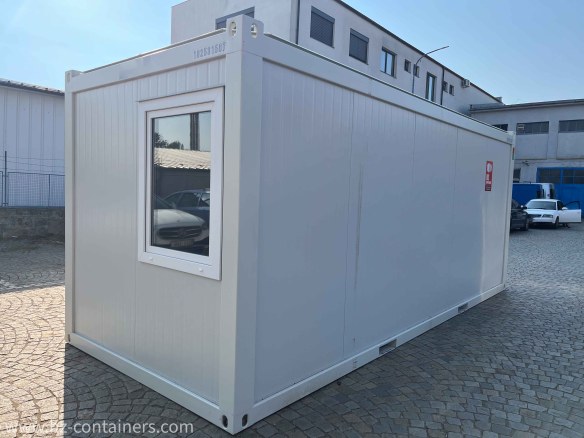
 Czech Republic, Třebíč
  WITHOUT SHIPPING
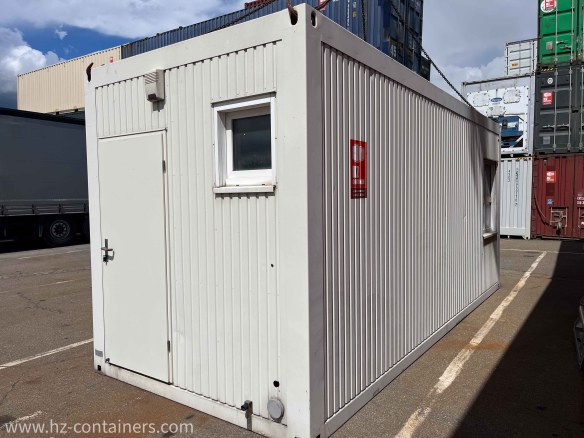

Other container news...

New shipping containers
If you are currently considering purchasing a new shipping container, you are not alone. While just twenty years ago containers were used almost exclusively for maritime transport, today they have found their way into construction, storage, business, and even housing. This growing popularity brings with it a host of questions: Which type should you choose? How much does it cost? How do you recognize quality? How can you avoid falling victim to scammers?
New sea shipping containers
If you are currently considering purchasing a new shipping container, you are not alone. While just twenty years ago containers were used almost exclusively for maritime transport, today they have found their way into construction, storage, business, and even housing. This growing popularity brings with it a host of questions: Which type should you choose? How much does it cost? How do you recognize quality? How can you avoid falling victim to scammers?

6m shipping container
Are you thinking about buying a 6-meter shipping container but aren’t sure what to look for? You are not alone—this 20-foot container is the best-selling size on the Czech market, and the differences between various types, conditions, and prices can be significant. In this guide, you will find everything you need to know: from exact dimensions and a comparison of categories (such as “one-way,” refurbished, and “Cargo Worthy”) to current prices and shipping advice.
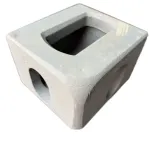
Corner casting steel vs aluminum
Every shipping container in the world — all 40 million of them — rests on eight critical components. Corner castings are the load-bearing blocks at each corner of an ISO shipping container, and they are the universal interface between the container and every crane, twistlock, spreader, and chassis on the planet. When you lift a container, stack it nine high on a ship, or lock it to a truck trailer, every ton of force flows through these fittings.