Component Code
Component Code in the field of shipping containers designates a standardized alphanumeric identifier that precisely specifies a particular part, structural element, or property of a transport container. There is not just a single universal system, but several different standards that together cover the entire lifecycle of containers – from identification through operation to maintenance and repairs.
Key code groups:
- Identification and classification codes – determine the entire container as a unit, its owner, and physical parameters (size, type). The basic standard is ISO 6346.
- Component codes for damage and repairs – describe in detail specific parts of the container for inspection, maintenance, and repair purposes. The main systems are CEDEX (ISO 9897) and EDIS.
These systems form the backbone of modern container management, enabling tracking, automation in ports, accurate repair estimates, and efficient communication between owners and service providers worldwide.
Primary identification system: ISO 6346 standard in detail
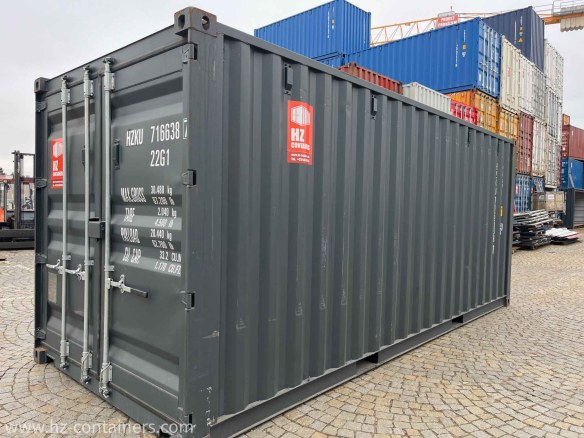
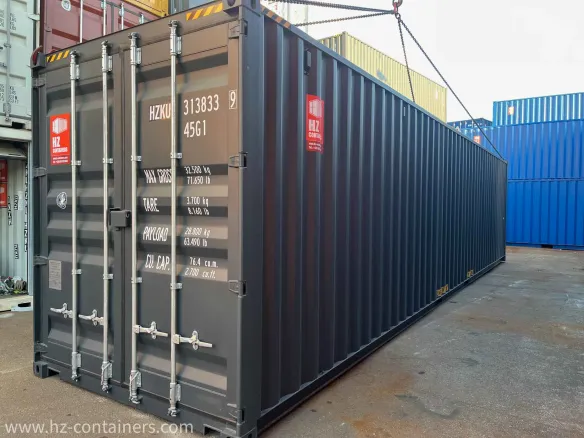
ISO 6346 is an international standard that determines how to uniquely identify each cargo container. It is the cornerstone for logistics, customs management, and safety in international transport. The code is prominently displayed on the outside of the container and consists of four parts:
ISO 6346 code structure
| Part of code | Example | Description |
|---|---|---|
| Owner code (BIC code) | HZK | Three capital letters identifying the owner or operator. Registered with the Bureau International des Containers. |
| Equipment category identifier | U | One letter following the owner code. Main meanings: U – standard container, J – accessories (e.g., generator), Z – chassis/trailer. |
| Serial number | 123456 | Six-digit number, unique within the owner. |
| Check digit | 7 | Single-digit number calculated by algorithm (according to ISO), verifies the correctness of the entire code. |
Example of complete code: HZKU 123456 7
Meaning of individual parts:
- Owner code (BIC code): Registration with BIC is mandatory for ISO compliance. Without registration, the container is not recognized as standard and may be rejected at ports or during customs clearance.
- Equipment identifier: U for all standard containers, J for detachable equipment, Z for chassis.
- Serial number: Unique within the owner’s fleet; in combination with the BIC code, it forms a globally unique identifier.
- Check digit: Key element for automated systems; protects against data entry errors.
Container size and type code according to ISO 6346
In addition to the identification number, the container also contains a size and type code that ensures proper handling and manipulation.
| Position | Meaning | Examples |
|---|---|---|
| 1st character | Length | 2 – 20 feet, 4 – 40 feet, L – 45 feet |
| 2nd character | Height and width | 2 – standard height 8’6″, 5 – High Cube 9’6″ |
| 3rd and 4th character | Type | G1 – dry with passive ventilation, R1 – refrigerated, U1 – open-top, P1 – flat, T1 – tank |
Examples:
- 22G1 = 20 feet, 8’6″ height, dry container
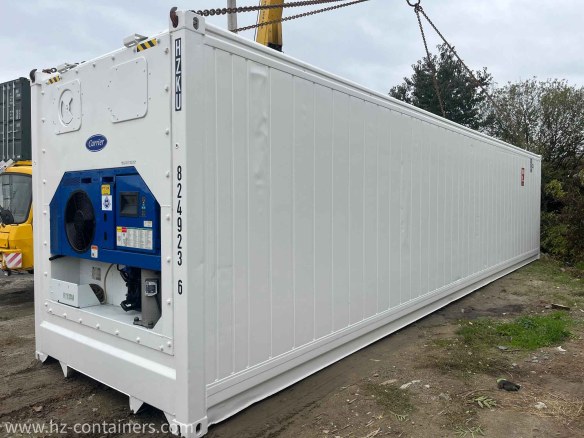
- 45R1 = 40 feet, 9’6″ High Cube, refrigerated container
Detailed view: Component codes for damage, repairs, and inspection
While ISO 6346 concerns the entire container, CEDEX and EDIS systems standardize the description of specific parts and types of damage within inspections and repairs.
CEDEX (Container Equipment Data Exchange, ISO 9897)
- CEDEX is an international standard for electronic data exchange about containers (ISO 9897).
- Enables precise, unambiguous, and language-independent communication between depots, owners, and leasing companies.
- CEDEX reporting structure:
- Component code – identifies a specific part (e.g., top frame, floor, doors).
- Damage location code – precise location on the container (left side, lower half, etc.).
- Damage type code – nature of damage (dent, crack, hole).
- Repair code – recommended repair method (straightening, replacement, patch).
EDIS (Equipment Damage and Inspection System)
- EDIS was developed by IICL (Institute of International Container Lessors).
- Used for uniform and detailed damage reporting during inspections and container handovers.
- IICL Preferred Codes: IICL recommends using preferred codes to ensure consistency across different partners and depots.
Table: Comparison of CEDEX and EDIS
| Property | CEDEX | EDIS |
|---|---|---|
| Developed by | UNECE | IICL |
| Main use | Global data exchange, compatibility | Damage reporting, inspection |
| Focus | Structured data, compatibility | Detailed description of damage and repairs |
| Area of use | Software, carriers, depots | Depots, inspectors, leasing companies |
Detailed overview of main container components and their codes
For daily practice of inspectors, technicians, and warehouse workers, component tables according to CEDEX/EDIS are key.
Structural frame (skeleton)
| Component | CEDEX/EDIS code | Description |
|---|---|---|
| Corner fitting (corner fitting/casting) | CFG | Steel reinforcements for handling, stacking, fastening (ISO 1161). |
| Corner post (external) | CPO | Main vertical beam in corners. |
| Corner post (internal) | CPI | Internal part, part of door frame or front. |
| Upper side frame | RLA | Horizontal beam at upper edge of side wall. |
| Lower side frame | RLA | Lower beam along side wall, supports floor. |
| Front upper beam | HEP | Upper crossbar on front of container. |
| Rear upper beam | HEP | Upper crossbar above doors (door frame). |
| Rear lower threshold | RLA | Lower beam below doors, threshold strip. |
Walls, roof, floor
| Component | CEDEX/EDIS code | Description |
|---|---|---|
| Side panel | PAA | Corrugated steel sheet on sides. |
| Front panel | PAA | Corrugated steel sheet on front. |
| Roof panel | PAA / PSC | Corrugated steel sheet of roof. |
| Floor (plywood) | FPP | Wooden plywood, often hardwood (e.g., Apitong). |
| Floor (steel) | FSP | Steel floor in special containers. |
| Cross members (crossmember) | CMU | Steel profiles under floor, support weight. |
| Ventilator | VRA | Small ventilation openings for air circulation. |
Door assembly
| Component | CEDEX/EDIS code | Description |
|---|---|---|
| Complete doors (incl. hardware) | DAH | Entire door unit. |
| Doors without hardware | DAA | Only door frame and sheet. |
| Locking bar assembly | LBA | Vertical mechanism of bars and lever for closure. |
| Locking bar | LBR | Vertical steel bar in mechanism. |
| CAM (rotating latch) | LBC | Latch at top and bottom of bar. |
| CAM holder | RCK | Bracket for CAM on frame. |
| Door lever | LBH | Handle for operating locking bar. |
| Door seal | GTO | Rubber seal against water, dust. |
| Hinge | HGH | Door hinge on corner post. |
Other relevant container marking systems
Hazardous materials codes (UN/DOT)
- UN number: Four-digit number uniquely identifying a hazardous substance.
- Warning labels: Colored diamonds for type of hazard (flammable, explosive, etc.).
- Required for transport of hazardous materials.
Operational marking according to ISO 6346
| Marking | Meaning |
|---|---|
| Maximum gross weight | Highest permitted weight with cargo |
| Tare | Weight of empty container |
| Payload | Max. permitted weight of cargo |
| Cubic capacity | Internal volume (in m³) |
| Height warning | Mandatory for High Cube containers (over 8’6″) |
Role of key institutions in standardization
International Organization for Standardization (ISO)
- ISO 6346: Coding, identification, and marking
- ISO 668: Dimensions and classification of containers
- ISO 1496: Specifications and testing of various container types
- ISO 9897: CEDEX standard for data exchange
Bureau International des Containers (BIC)
- Manages the global registry of BIC codes of container owners.
- Ensures uniqueness of prefixes and integrity of the identification system.
Institute of International Container Lessors (IICL)
- Brings together leading leasing companies.
- Issues standards for inspection and repairs, including the EDIS system and recommended “IICL Preferred Codes”.
Practical use and significance in global logistics
Component codes are not just technical jargon – they form the communication backbone of the global supply chain.
Key applications:
- Container tracking: ISO 6346 is key to real-time digital tracking.
- Automated ports: OCR technology reads ISO codes for robotic handling.
- Customs and transport documentation: Unique number on each document ensures correct identification and customs clearance.
- Maintenance and repairs: CEDEX/EDIS codes enable accurate repair estimates and remote approval, saving time and costs.
- Safety and compliance: Standards protect against overloading, ensure safe operation, and compliance with international conventions (e.g., CSC).
Frequently asked questions (FAQ)
What is the difference between a container number and a component code?
Container number (ISO 6346) identifies the entire unit. Component code (CEDEX/EDIS) designates a specific part, such as a door lever or panel, and is used in inspections and repairs.
How do I find the component code for a specific part?
Codes are not stamped directly on parts – they are used in inspection and service protocols. Inspectors select the correct code according to standardized tables and software (CEDEX/IICL).
Who manages these codes?
ISO creates and updates standards. BIC manages the registry of owner codes. Component codes CEDEX/EDIS are part of publicly available standards.
What is the difference between CEDEX and EDIS?
Both standardize damage reporting. CEDEX is an ISO standard (9897), EDIS was developed by IICL. Many companies use “IICL Preferred Codes” for consistency.
Why is the check digit in ISO 6346 important?
It minimizes data entry errors – protects against confusion or typos in the container number.
What does a code like “45G1” on a container mean?
40 feet length (4), 9’6″ High Cube height (5), dry container with ventilation (G1).
Conclusion
The system of shipping container component codes is proof of the power of standardization in global logistics.
From a unique ISO identifier to a detailed CEDEX code for a specific hinge – these systems form a common language without which it would not be possible to safely and efficiently manage the movement of millions of containers across continents. Mastering these codes is a fundamental skill for every professional in logistics, transport, or container management.
 Beroun, Czech Republic
  FREE SHIPPING