
Shipping Containers La Spezia Italy
Shipping containers in La Spezia, Italy represent a key element of global trade and logistics. La Spezia, one of the most important Mediterranean ports, has become the epicenter for purchasing, renting, and handling maritime containers. Whether you are an entrepreneur looking for storage solutions, an importer planning goods transportation, or a logistics company optimizing your operations, understanding shipping containers in La Spezia is essential for successful business decisions.
This guide will take you through all aspects of shipping containers available in La Spezia, from basic definitions and historical development to practical applications, prices, and future trends. You will discover why thousands of entrepreneurs choose La Spezia every year and how you can maximize this prestigious location for your needs.
What is a shipping container and how does it work?
A shipping container is a standardized, modular unit designed primarily for transporting goods by sea, but also by road and rail. It is a robust steel construction that protects contents from damage, theft, and adverse weather conditions during long-distance transportation.
Historical development and the origin of containerization
The concept of a shipping container is not new. In the 1950s, American entrepreneur Malcolm McLean revolutionized maritime transport by introducing standardized steel containers. Before his innovation, cargo transportation was chaotic – various packages, boxes, and sacks were loaded individually into ships, which was time-consuming and expensive. McLean’s breakthrough idea simplified the entire process: goods were packed into a unified container in one place and remained in it until final destination.
La Spezia, as one of Italy’s oldest ports with a rich maritime history, quickly adapted to this revolution. In the 1970s and 1980s, the port of La Spezia modernized and became one of the first Mediterranean centers for containerized transport. Today, La Spezia is home to one of Europe’s most modern container terminals – La Spezia Container Terminal (LSCT), operated by Contship Italia Group.
Basic mechanics and operating principle
A shipping container operates on a simple but ingenious principle: standardization. All shipping containers comply with strict international ISO (International Organization for Standardization) standards, which means they fit on any ship, in any port, and on any transport vehicle equipped with appropriate equipment.
A container is essentially a huge steel box with four corner reinforcements – so-called “corner castings” – which allow secure fastening using special devices. These corner reinforcement elements are critical for transport safety. The container doors open from the rear and are equipped with safety locks and seals that prevent unauthorized access during transport.
Container handling is ensured by special cranes called Ship-to-Shore (STS) cranes at the port and mobile handlers (RTG cranes) in the access area. These enormous machines can lift a container weighing up to 30 tons and place it precisely in seconds.
Types of containers and their specific functions
Shipping containers are not all the same. There are several basic types, each designed for a specific type of cargo:
- Dry Containers (20′ DV and 40′ DV): Standard containers for general cargo – electronics, clothing, industrial products. They are the most common and most versatile.
- High Cube Containers (40′ HC): A taller version of the standard 40′ container with additional space for bulkier cargo.
- Reefer Containers: Refrigerated containers for perishable goods – fruit, meat, fish, pharmaceutical products. They are equipped with their own cooling system.
- Flat Racks: Open platforms for transporting heavy, unusual items – machinery, automobiles, large pieces.
- Tank Containers: Special containers for liquids – oil, chemicals, wine.
Why choose La Spezia for purchasing and renting shipping containers?
La Spezia is not by chance one of Europe’s most important centers for shipping containers. There are several strategic and practical reasons why thousands of entrepreneurs choose this location every year.
Geographic location and strategic advantages
La Spezia is located on the northern coast of Italy in the Liguria region, in the Gulf of La Spezia in the Tyrrhenian Sea. This location is strategically advantageous for several reasons. First, La Spezia is a natural port – its deep gulf provides natural protection from sea storms and allows ships of all sizes safe entry year-round. A 2,200-meter-long breakwater ensures easy access even for the most modern container ships.
The second reason lies in its location relative to Europe. La Spezia is strategically positioned between Genoa and Livorno, making it an ideal entry point for goods destined for central and northern Italy, Switzerland, Austria, and other European countries. The distance from La Spezia to Milan is just 200 km, to Turin 250 km, and to Vienna less than 800 km.
The third factor is infrastructure. The port of La Spezia is equipped with more than 17 km of railway tracks that connect directly to the Italian and European rail network. More than 3.5 km of access roads connect the port to the Italian motorway network. This means containers can be efficiently transported not only by sea, but also by rail and road without unnecessary handling.
Modern infrastructure and terminal services
La Spezia Container Terminal (LSCT) is one of Europe’s most modern container terminals. The terminal has the following:
- 986 meters of access quay specially designed for container ships
- 15 meters of water depth, which allows entry of the largest modern container ships (15,000–16,000 TEU)
- 28,000 TEU storage yard capacity, which means the terminal can store the equivalent of 28,000 twenty-foot containers at any time
- 11 modern Ship-to-Shore (STS) cranes with lifting capacity up to 65 tons
- 5 RTG (Rubber Tyred Gantry) cranes for yard handling
- Automated internal transport systems (AGVs – Automated Guided Vehicles) for efficient handling
This infrastructure enables La Spezia to process approximately 1.4 million TEU (Twenty-foot Equivalent Units) annually, ranking it among Europe’s top container ports.
Container quality and certification
La Spezia is known for strict container quality standards. All containers stored in La Spezia depots undergo rigorous inspection processes. Each container is:
- Subjected to detailed structural inspection for cracks, deformations, and rust
- Tested for water tightness – water is introduced inside and checked for leaks
- Verified for CSC (Container Safety Convention) certification – international safety standard
- Checked for floor, door, lock, and seal condition
- Cleaned and disinfected if necessary
This quality is reflected in the price – containers from La Spezia are somewhat more expensive, but offer better long-term value and lower risk of problems during transport.
What are the standard dimensions of shipping containers?
Standardization of dimensions is one of the pillars of containerization success. There are two basic standard shipping container dimensions used worldwide. Each has its specific use and advantages.
20′ container (Twenty-foot container)
The twenty-foot container, often designated as 20′ DV (Dry Van), is the smallest standard unit in maritime transport. Its exact dimensions are:
- External length: 6,058 mm (20 feet)
- External width: 2,438 mm (8 feet)
- External height: 2,591 mm (8 feet 6 inches)
- Internal volume: Approximately 33 cubic meters
- Maximum cargo weight: 28,300 kg (at maximum total weight of 30,480 kg)
The twenty-foot container is ideal for smaller shipments, more flexible logistics, and situations where you have less cargo. It is often used for transporting electronics, textiles, industrial components, and other medium-weight goods.
40′ container (Forty-foot container)
The forty-foot container, designated as 40′ DV or 40′ HC (High Cube), is twice as long and offers significantly greater capacity. The dimensions are:
- External length: 12,192 mm (40 feet)
- External width: 2,438 mm (8 feet)
- External height: 2,591 mm (8 feet 6 inches) – or 2,896 mm (9 feet 6 inches) for HC version
- Internal volume: Approximately 67 cubic meters (or 76 cubic meters for HC)
- Maximum cargo weight: 28,750 kg (or more for HC)
The forty-foot container is the most popular choice for international transport. Its economics are better – shipping one 40′ container is cheaper than shipping two 20′ containers, even though it fits double the cargo.
| Parameter | 20′ Container | 40′ Container | 40′ HC Container |
|---|---|---|---|
| Length (mm) | 6,058 | 12,192 | 12,192 |
| Width (mm) | 2,438 | 2,438 | 2,438 |
| Height (mm) | 2,591 | 2,591 | 2,896 |
| Internal volume (m³) | 33 | 67 | 76 |
| Max. cargo weight (kg) | 28,300 | 28,750 | 28,750+ |
| Typical use | Smaller shipments, flexibility | Massive transport, economics | Bulky, light cargo |
| TEU equivalent | 1 TEU | 2 TEU | 2 TEU |
Special dimensions and non-standard containers
In addition to standard 20′ and 40′ containers, special dimensions are also available in La Spezia. For example, some reefer (refrigerated) containers may have slightly different dimensions due to the built-in cooling system. High Cube containers with 9’6″ height are popular for light, bulky cargo. Flat Rack containers are open platforms without a fixed roof, designed for heavy and unusual items.
How are containers transported by road?
Shipping container transportation by road is a critical link in the logistics chain. Although containers are primarily transported by sea, their journey from the port to final destination often requires road transport.
Road vehicles and special trailers
Shipping containers are transported using special cargo vehicles. Most commonly, a tractor-trailer is used – a tractor with a semi-trailer. The trailer for transporting containers is called a flatbed semi-trailer or container chassis. It is a very robust vehicle with:
- Carrying capacity of 30–40 tons
- Special locks and clamping mechanisms for securing the container
- Hydraulic system to facilitate loading and unloading
- Pneumatic and braking system sized for heavy loads
Transporting one 40′ container requires a tractor-trailer with capacity of approximately 40–45 tons. Transporting two 20′ containers side by side requires a special spreader bar – a device that secures both containers and holds them in place.
Transport logistics and coordination
Container transportation from La Spezia to inland parts of Europe is a complex operation. The typical procedure looks like this:
- Unloading from ship: The container is unloaded from the ship using an STS crane onto the access area (yard) of La Spezia Container Terminal.
- Inspection and documentation: The container is registered, its condition is documented, and all necessary documents are verified (Bill of Lading, CMR, customs documents).
- Yard handling: If the container is destined for rail transport, it is moved to a rail car using an RTG crane. La Spezia has direct rail connections with the Italian and European network.
- Road transport: If destined for road transport, it is moved to a container chassis and assigned to a tractor-trailer. The driver receives all necessary documents and CMR (Carnet de Movimento di Merci su Strada – international document for road transport).
- Transport: The tractor with container departs from La Spezia. Transport to Milan takes approximately 4–5 hours, to Turin 5–6 hours, to Vienna 12–14 hours.
- Delivery: The container is delivered to the destination, where it is unloaded using a mobile crane or other handling equipment.
Legislation and road safety
Shipping container transportation is strictly regulated in Europe. Vehicles must comply with:
- Weight restrictions: Maximum vehicle weight including cargo must not exceed 40 tons (or 44 tons with special permit).
- Dimension restrictions: Maximum length of tractor-trailer with container is 16.5 meters, maximum height 4 meters.
- Safety equipment: Reflective strips, warning triangles, fire extinguishers.
- Documentation: Driver must have CMR document, insurance, vehicle technical inspection, and driver’s license.
Transport companies in La Spezia are accustomed to these regulations and have long-term experience with them. Failure to comply with these rules can result in fines, vehicle impoundment, or legal consequences.
What are the differences between 20′ and 40′ containers and when to use them?
Choosing between a 20′ and 40′ container is one of the most important decisions in logistics. Each type has its advantages and disadvantages, and the right choice depends on your specific needs.
Economic comparison and TEU costs
Although a 40′ container fits double the cargo of a 20′ container, shipping costs are not double. This is a key economic advantage of 40′ containers.
Typically, shipping one 40′ container from Asia to La Spezia costs approximately 800–1,200 USD. Shipping two 20′ containers would cost approximately 1,600–2,400 USD. The difference can be up to 50 percent! This means that costs per TEU (Twenty-foot Equivalent Unit) are significantly lower for 40′ containers.
Additionally, transporting a 40′ container by road from La Spezia to Milan costs approximately 1,500–2,000 EUR, while two 20′ containers would cost 3,000–4,000 EUR. Again, the 40′ container is more economical.
Practical advantages and disadvantages
Advantages of 20′ containers:
- Flexibility – if you have a smaller amount of cargo, you don’t have to wait for a 40′ container to fill up
- Easier handling – lighter for road transport and at smaller terminals
- Lower risk – if something goes wrong, you lose less cargo
- Suitable for special cargo – some types of cargo fit better in a 20′ container
Disadvantages of 20′ containers:
- Higher costs per TEU – more expensive transport per unit of cargo
- More paperwork – you must coordinate more containers
- Lower efficiency – they take up more space on ships
Advantages of 40′ containers:
- Lower costs per TEU – more economical transport
- Higher efficiency – more cargo in one unit
- Less paperwork – fewer containers to coordinate
- Better space utilization – 40′ containers are preferred on ships
Disadvantages of 40′ containers:
- Higher initial investment – more expensive to purchase or rent
- Less flexibility – you must wait for it to fill up
- Higher risk – greater loss if something happens
- More difficult handling – require stronger handling equipment
| Aspect | 20′ Container | 40′ Container |
|---|---|---|
| Price per TEU (USD/km) | Higher | Lower |
| Flexibility | High | Low |
| Efficiency | Low | High |
| Handling requirements | Lower | Higher |
| Ideal for | Smaller shipments, specials | Massive transport |
| Waiting time to fill | Shorter | Longer |
Decision criteria
How to choose between a 20′ and 40′ container? Consider the following factors:
- Cargo volume: If you have less than 20 cubic meters of cargo, a 20′ container is the better choice. If you have 30–67 cubic meters, a 40′ container is more efficient.
- Transport frequency: If you transport cargo frequently (for example, monthly), 40′ containers pay off better. If you transport only occasionally, a 20′ container gives you more flexibility.
- Type of cargo: Light, bulky cargo (for example, textiles, paper) fits better in a 40′ HC container. Heavy cargo (for example, machinery) fits better in a 20′ container, where it has less risk of damage.
- Target location: If your cargo goes to multiple locations, 20′ containers allow you to better distribute cargo. If everything goes to one place, a 40′ container is better.
What are the prices of shipping containers in La Spezia?
Shipping container prices in La Spezia vary depending on many factors. There is no single price – everything depends on condition, age, type, and other conditions.
Factors affecting price
Shipping container price in La Spezia is determined by several key factors:
- Container condition: A new container costs more than a used one. A container in excellent condition (without rust, without damage) is more expensive than a container in fair condition (with slight rust, but functional).
- Container age: Newer containers are more expensive. A 5-year-old container is cheaper than a 2-year-old container.
- Container type: Standard Dry Van container is the cheapest. Reefer (refrigerated) container is 20–30 percent more expensive. Special containers (flat racks, tank containers) are even more expensive.
- Size: A 40′ container costs more than a 20′ container, but the price per cubic meter is lower.
- Certification: A container with CSC (Container Safety Convention) certification is more expensive than without it. CSC certification is, however, necessary for international transport.
- Seasonality: Prices change by season. In winter, containers are cheaper, in summer more expensive (more transport).
Typical price ranges
Based on current data from La Spezia, here are typical price ranges:
- New 20′ Dry Van container: 3,000–4,500 EUR
- New 40′ Dry Van container: 4,500–6,500 EUR
- New 40′ HC container: 5,000–7,000 EUR
- Used 20′ Dry Van container (excellent condition): 1,500–2,500 EUR
- Used 40′ Dry Van container (excellent condition): 2,000–3,500 EUR
- Used 20′ Dry Van container (fair condition): 800–1,500 EUR
- Used 40′ Dry Van container (fair condition): 1,200–2,000 EUR
These prices refer to container purchase. Rental is cheaper – renting a 40′ container typically costs 50–150 EUR monthly, depending on rental length and conditions.
Hidden costs and fees
When purchasing or renting a container in La Spezia, you must account for additional costs:
- Unloading and handling: 50–150 EUR per container
- Inspection and certification: 100–300 EUR per container
- Cleaning: 100–200 EUR per container
- Transport: Dependent on distance (see above)
- Insurance: 0.5–1 percent of value per month
- Storage: 10–30 EUR per day and container at the port
These costs may seem high, but when calculating total economics, they are still lower than using traditional transport methods.
How is the quality of shipping containers checked?
Quality is key to transport safety. A damaged container can lead to cargo loss, safety risks, and legal problems. La Spezia is known for strict quality control standards.
CSC inspection and certification
Every shipping container used for international transport must have valid CSC (Container Safety Convention) certification. This certification is issued by authorized inspectors and confirms that the container meets international safety standards.
CSC inspection includes:
- Structural inspection: Checking for cracks, deformations, rust, and general condition of the steel structure.
- Door and lock inspection: Verifying that doors open and close properly and that locks function.
- Floor inspection: Checking for cracks, deformations, and damage that could endanger cargo.
- Corner inspection: Verifying the integrity of corner castings – reinforcements in the corners that are critical for safety.
- Tightness test: Water is introduced into the container and checked for leaks. The container must be completely tight.
CSC certification is valid for 5 years. After 5 years, the container must be re-inspected and certified.
Container conditions and their classification
Containers in La Spezia are classified into several conditions:
- Excellent (Ex): Practically new container, without visible damage, without rust. Ideal for new transport.
- Good (Gd): Slight signs of wear, but without structural damage. Suitable for standard transport.
- Fair (Fr): Visible wear, slight rust, but structurally sound. Suitable for non-perishable goods.
- Poor (Pr): Significant damage, significant rust, but still functional. Suitable only for special use.
Quality inspection in La Spezia is performed by independent certification companies authorized by IICL (International Institute of Container Lessors). These companies have strict standards and are responsible for the accuracy of their classification.
Floor and safety inspection
Container floor is one of the most important elements. A damaged floor can lead to:
- Water leakage
- Cargo falling
- Cargo contamination
- Worker injury
During inspection, the floor is checked for:
- Cracks and fractures
- Rot and rust
- Deformations and unevenness
- Scratches and coating damage
If the floor is damaged, the container is rejected and cannot be used for transport. Floor repairs are expensive and often not economical to perform – it is cheaper to buy a new container.
What services does the port of La Spezia offer?
La Spezia Container Terminal (LSCT) offers comprehensive services for container logistics and transport. These services go far beyond mere container handling.
Handling and storage services
LSCT offers:
- Unloading and loading: Professional container handling using modern cranes and equipment.
- Storage: Safe container storage in the access area (yard) with 24/7 security surveillance.
- Yard handling: Moving containers between different parts of the terminal using RTG cranes and AGV vehicles.
- Cleaning and maintenance: Container cleaning and basic maintenance.
Intermodal transport and logistics
La Spezia is a hub for intermodal transport – a combination of multiple types of transport. LSCT offers:
- Rail transport: Direct connection with the Italian and European rail network. More than 15 trains per week depart from La Spezia to various parts of Europe.
- Road transport: Own fleet of more than 350 cargo vehicles and partnerships with other carriers. Transport to all parts of Europe.
- Transport within the port: Efficient transport between ship, rail, and road.
Customs and legal services
LSCT provides comprehensive customs and legal support:
- Customs advice: Assistance with customs formalities, cargo classification, and tariff codes.
- Customs clearance: Processing of all necessary customs documents and forms.
- Certification and documentation: Assistance in obtaining all necessary certificates and documents for international transport.
- Dispute resolution: Legal support in case of disputes or transport problems.
Value-added services
LSCT also offers value-added services:
- Packing and rebalancing: Repacking cargo, combining parts of different shipments into one container.
- Labeling and marking: Marking containers and cargo according to customer requirements.
- Inspection and photo documentation: Photography and inspection of container contents.
- Temperature monitoring: For reefer containers, temperature monitoring during transport.
What are common myths and misconceptions about shipping containers?
There are many myths and misconceptions about shipping containers. Let’s clarify them.
Myth 1: All containers are the same
This is not true. As we have seen, there are different types of containers – Dry Vans, reefers, flat racks, tank containers – and each has its specific use. Moreover, there are different container conditions, different ages, and different levels of maintenance. Choosing the right container for your needs is critical.
Myth 2: A new container is always better than an old one
This is not necessarily true. An older container in excellent condition may be a better choice than a new container in fair condition. The price is lower and the performance is the same. What matters is condition, not age.
Myth 3: Containers are very expensive
Containers are not as expensive as many people think. Renting a 40′ container costs only 50–150 EUR monthly. Purchasing a used container in good condition costs 1,500–3,500 EUR. This is a reasonable investment for entrepreneurs who need storage or transport.
Myth 4: Containers cannot be used for anything other than transport
This is not true. Containers are used for many things – storage, housing (container homes), office spaces, shops, museums, and more. Their modularity and robustness make them suitable for various applications.
Myth 5: Container transport is always the cheapest option
This is not always true. For very small amounts of cargo or distances, other transport methods (courier, parcel services) may be cheaper. But for larger quantities and longer distances, container transport is usually the most economical.
What are future trends and developments in shipping containers?
Shipping containers and their industry are evolving. Let’s look at where they are heading.
Digitalization and blockchain
One of the biggest trends is the digitalization of logistics. Blockchain technology enables secure real-time container tracking. Instead of paper documents (Bill of Lading), digital documents are used. This speeds up the entire process and reduces errors.
La Spezia is one of the ports investing in these technologies. LSCT is working on implementing blockchain-based systems for container tracking.
Environmental sustainability
Environmental sustainability is becoming increasingly important. Maritime transport is already relatively ecological, but there are further opportunities for improvement:
- Electric handling equipment: LSCT has electric cranes and AGV vehicles that reduce emissions.
- Shore Power: Ships can be connected to electricity from shore instead of running their own engines. La Spezia has a 10 MW shore power system.
- Lower-emission containers: Development of lighter and more ecological containers.
Automation
Automation is a trend in all ports. La Spezia is investing in automated systems:
- Automated cranes: Which operate without human operator.
- Autonomous vehicles (AGVs): Which move around the terminal without a driver.
- Automated sorting systems: Which automatically sort containers.
This automation increases efficiency and reduces errors, but also leads to job losses in traditional handler positions.
Megaships and new dimensions
Ships are becoming increasingly larger. The newest container ships can transport 20,000+ TEU. This has an impact on ports – they must invest in larger cranes and deeper ports. La Spezia is preparing for these megaships by expanding its infrastructure.
Frequently Asked Questions
What is a shipping container and how does it work?
A shipping container is a standardized steel unit designed for transporting goods by sea, road, and rail. It operates on the principle of standardization – all containers comply with ISO standards, which means they fit on any ship and in any port. The container protects cargo from damage, theft, and adverse weather during transport.
Why choose La Spezia for purchasing containers?
La Spezia is one of the largest Mediterranean ports with a strategic location between Genoa and Livorno. It offers modern infrastructure, strict quality standards, direct rail and road connections to all of Europe, and comprehensive logistics services. Prices are competitive and containers in La Spezia undergo rigorous inspection processes.
What are the standard dimensions of shipping containers?
There are two basic standard dimensions: 20′ container (6,058 mm × 2,438 mm × 2,591 mm, volume 33 m³) and 40′ container (12,192 mm × 2,438 mm × 2,591 mm, volume 67 m³). There are also 40′ HC (High Cube) containers with height 2,896 mm and volume 76 m³.
How are containers transported by road?
Containers are transported using a tractor-trailer (tractor with semi-trailer). The semi-trailer is a special container chassis with clamping mechanisms for securing the container. Transport is regulated by European laws – maximum vehicle weight is 40 tons, maximum length 16.5 meters. La Spezia has experienced carriers with long-term experience.
What are the differences between 20′ and 40′ containers?
A 20′ container is smaller and more flexible, but more expensive per TEU (unit of cargo). A 40′ container is larger and more economical, but less flexible. The choice depends on cargo volume, transport frequency, and cargo type. For large quantities of cargo, a 40′ container is the better choice.
What are the prices of shipping containers in La Spezia?
Prices vary depending on condition, age, and type. A new 40′ container costs 4,500–6,500 EUR, a used one in excellent condition 2,000–3,500 EUR, a used one in fair condition 1,200–2,000 EUR. Rental costs 50–150 EUR monthly. There are also hidden costs – handling, inspection, cleaning, transport.
How is the quality of shipping containers checked?
Quality is checked using CSC (Container Safety Convention) inspection performed by authorized inspectors. Inspection includes structural checking, door and lock inspection, floor inspection, corner inspection, and tightness testing. Containers are classified into conditions: Excellent, Good, Fair, Poor.
What services does the port of La Spezia offer?
La Spezia Container Terminal (LSCT) offers handling and storage services, intermodal transport (rail, road), customs and legal services, and value-added services (packing, labeling, inspection, temperature monitoring). LSCT is fully equipped with modern infrastructure and technology.
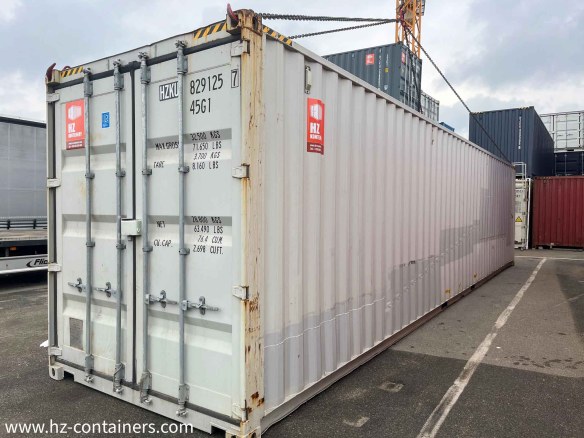
 Italy, La Spezia
  WITHOUT SHIPPING


Other container news...
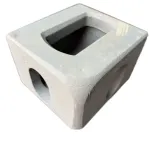
Corner casting steel vs aluminum
Every shipping container in the world — all 40 million of them — rests on eight critical components. Corner castings are the load-bearing blocks at each corner of an ISO shipping container, and they are the universal interface between the container and every crane, twistlock, spreader, and chassis on the planet. When you lift a container, stack it nine high on a ship, or lock it to a truck trailer, every ton of force flows through these fittings.

Construction cabin – selection, tips, dimensions and prices
Every construction project – whether a family house, a development project or a reconstruction – starts with the infrastructure. No construction manager, craftsman or investor who needs an on-site office, a changing room for workers or a safe storage for tools can do without a quality construction cell. But navigating the offer is not easy: residential containers, sanitary cells, storage modules, rental, purchase, refurbished pieces… This guide will give you answers to all the essential questions in one place.
Storage container
A storage container is a lockable steel box designed for the safe and dry storage of materials, tools, goods or equipment. Originally created as a shipping container for maritime transport, its durability and versatility have found their way onto construction sites, corporate premises and private land.
Shipping container 12m (40 ft)
A 12m shipping container is an investment that, if properly selected and cared for, will pay off in decades of trouble-free use. Whether you plan to use it as a warehouse, workshop, garage or the basis for a residential module — the key is careful selection of the condition, a thorough inspection before purchase and high-quality preparation of the base for placement. Take the time to compare offers, check the seller’s references and do not hesitate to personally inspect the container before buying. A properly selected 40-foot container will serve you reliably for many years.