
Spare parts for shipping containers Slovenia
Spare parts for shipping containers Slovenia represents a specific but growing segment of the European logistics market. Slovenia, and especially the port of Koper, has established itself over the last two decades as one of the key transshipment hubs for Central and Eastern Europe. With this development, the demand for quality spare parts is naturally growing — whether for transport containers themselves, storage units, or special container structures. This guide will walk you through everything you need to know: from types of parts to prices, installation, and transport logistics to the Czech Republic and Slovakia.
What are spare parts for shipping containers and why are they important?
Definition and basic function

Spare parts for shipping containers are individual replaceable components that allow you to keep the container in operational condition without the need for its complete decommissioning. This category includes all mechanical, structural, and functional elements — from door hinges and seals, to floors, to corner castings and locking mechanisms.
Every shipping container, whether used for maritime transport or as a storage unit, is exposed to enormous stress. Salt water, extreme temperature fluctuations, mechanical impacts during handling, and constant opening and closing of doors cause gradual wear. Timely replacement of worn parts is key for:
- Safety of transported goods — leaking doors or damaged locks endanger the cargo,
- Extending the container’s service life — regular maintenance can extend service life by 5–10 years,
- Preserving value — a well-maintained container has a significantly higher resale price,
- Compliance with safety standards — especially for containers used in international transport.
Definition: Spare parts for shipping containers represent a set of standardized components intended for replacement, repair, or modernization of transport and storage containers. Their availability is essential for maintaining the operational capability of the global container fleet, which numbers over 40 million units.
History and development of container parts
The story of spare parts for shipping containers begins when American entrepreneur Malcolm McLean in 1956 dispatched the first container ship Ideal X with 58 standardized transport boxes from Newark to Houston. McLean’s revolution was that containers were designed as modular units — every part was replaceable and repairable.
Until then, maritime transport was chaotic. Each shipper used their own crates, barrels, and bags. Loading one ship took weeks. McLean understood that standardization of dimensions and components would dramatically reduce handling times — and at the same time enable easy replacement of damaged parts.
The International Organization for Standardization (ISO) subsequently codified standards for series 1 containers in the 1960s, including specifications for corner castings, door mechanisms, and other components. Thanks to this standardization, today you can buy a spare part made in China, Italy, or Slovenia and it will fit a container made anywhere in the world.
What are the main types of spare parts for shipping containers?
The range of spare parts for shipping containers can be divided into several logical categories by function and location on the container.
Door components
The container doors are the most frequently used and at the same time the most stressed part. With every opening and closing, mechanical wear occurs on the hinges, levers, and seals. Key door components include:
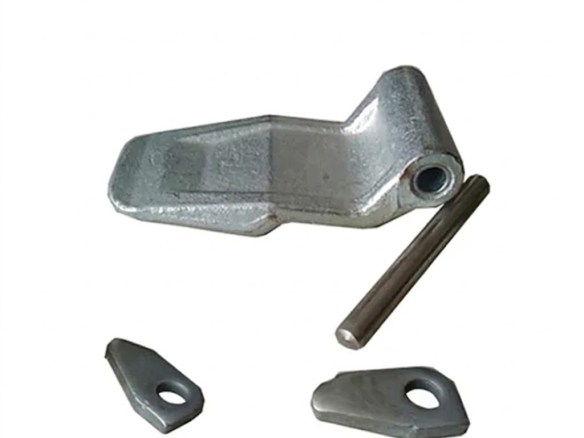
- Door hinges — massive steel welds that bear the entire weight of the door leaves (each leaf weighs approx. 80–120 kg). If the hinge is damaged, the door may sag and the seal may be compromised.
- Door control levers — mechanism that activates the locking bars. The levers bend during improper handling or impact.
- Locking bars — vertical steel bars with cams that secure the door against opening. Corrosion and deformation are the main reasons for replacement.
- Door seals (gasket) — rubber profiles made of EPDM rubber that ensure watertightness. The service life of a quality seal is 3–7 years depending on climatic conditions.
- Locks and security features — including container padlocks and additional lock boxes.
| Door component | Material | Approx. service life | Main reason for replacement |
|---|---|---|---|
| Door hinges | Steel (Corten / S355) | 10–15 years | Mechanical damage, corrosion |
| Control levers | Steel | 5–10 years | Bending, material fatigue |
| Locking bars | Galvanized steel | 10–15 years | Corrosion at welds |
| Seal (gasket) | EPDM rubber | 3–7 years | Hardening, cracks, UV degradation |
| Locks | Hardened steel | Depending on use | Mechanical damage, key loss |
Structural elements
The construction of a shipping container is based on a steel frame with load-bearing elements. Replaceable structural parts include:
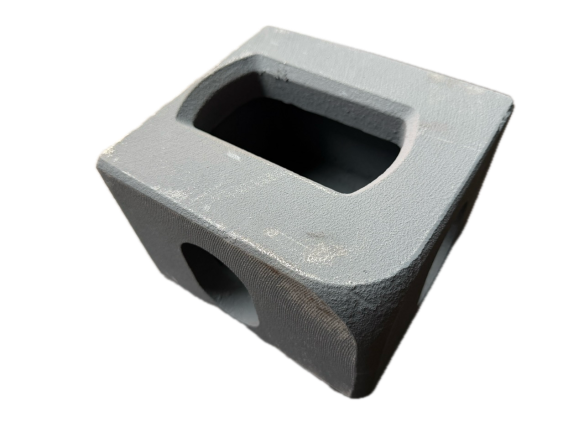
- Corner castings — standardized steel blocks at the eight corners of the container. They serve for attachment during handling and for connecting containers using twist locks. Dimensions and specifications are determined by ISO 1161 standard.
- Floor — most commonly tropical hardwood plywood (28 mm), treated against pests and moisture. Special containers also use steel or aluminum floors.
- Wall panels — corrugated steel sheets made of Corten steel. Replacement of an entire panel is necessary in case of severe corrosion or perforation.
- Roof panels and load-bearing beams — especially in older units, the roof sags due to corrosion of the load-bearing beams.
| Floor type | Material | Thickness | Service life | Approx. price (20ft) |
|---|---|---|---|---|
| Standard plywood | Tropical wood (Apitong/Keruing) | 28 mm | 10–15 years | 8,000–12,000 CZK |
| Laminated plywood | Bamboo / birch + surface treatment | 28 mm | 15–20 years | 10,000–16,000 CZK |
| Steel | Anti-slip steel (Durbar) | 4–6 mm | 20+ years | 15,000–25,000 CZK |
| Aluminum | Aluminum profile | 4–5 mm | 20+ years | 18,000–28,000 CZK |
Connecting and handling elements
These components enable safe handling of containers and their mutual connection:
- Twist lock — a mechanical connecting element that is inserted into the corner castings and allows containers to be connected vertically (stacking) or horizontally. Manual, semi-automatic, and automatic twist locks are distinguished.
- Rollers (traveling pulleys) — used on hook-lift containers (Abroll) for easy sliding out of the carrier.
- Pulling eyes and hooks — elements for attaching the container to the hydraulic arm of the carrier.
- Ramps — folding or fixed ramps for easy entry of equipment into the container.
Safety and additional equipment
- Security locks — including cut-resistant container padlocks and lock boxes that protect the lock against forced entry,
- Ventilation grilles — passive ventilation for moisture removal, essential for storage containers,
- Shelving and racks — hanging or standing systems for efficient use of interior space,
- Leveling feet — allow leveling of the container on uneven terrain,
- Container pads — concrete or plastic blocks that ensure stability and prevent direct contact with the ground.
Depots and terminals in the port of Koper
The port of Koper operates several specialized terminals that are connected to a network of container depots. In these depots, containers are not only stored, but also repaired and maintained — which means that depot staff have direct access to spare parts and know their specifications.
| Entity | Location | Services | Contact channel |
|---|---|---|---|
| Container Terminal Koper (TOC) | Koper, port zone | Transshipment, storage, inspection | Through website |
| Container depot Koper | Koper, industrial zone | Container sales, repairs, parts | Through dealers (HZ Containers etc.) |
| Intereuropa Koper | Koper, logistics park | Storage, distribution, customs services | Through website |
European suppliers operating in Slovenia
Slovenia is part of the single European market, which means that most large European suppliers of container parts can deliver to Slovenian addresses without any problems. Among the most important are:
- HZ Containers — Czech specialist with pan-European operations, offers a spare parts catalog and the option of picking up the container directly in Koper.
How much do spare parts for shipping containers cost?
Prices of spare parts for shipping containers vary significantly depending on the type of part, its origin (original vs. aftermarket), and place of purchase. The following overview is based on current market prices with regard to the Slovenian market.
| Spare part | Approx. price (EUR) | Approx. price (CZK) | Category |
|---|---|---|---|
| Twist lock (manual) | 15–30 | 375–750 | Connecting elements |
| Door hinge | 30–60 | 750–1,500 | Door components |
| Door control lever | 25–55 | 625–1,375 | Door components |
| Door seal set (complete) | 40–80 | 1,000–2,000 | Seals |
| Corner casting | 25–50 | 625–1,250 | Structural elements |
| Floor 20ft (plywood, complete) | 320–500 | 8,000–12,500 | Structural elements |
| Security lock (padlock) | 10–35 | 250–875 | Security elements |
| Ventilation grille | 8–25 | 200–625 | Accessories |
| Complete door leaf (used) | 200–500 | 5,000–12,500 | Door components |
| Roller (Abroll) | 40–100 | 1,000–2,500 | Handling elements |
| Leveling foot | 15–40 | 375–1,000 | Accessories |
| Loading ramp | 100–350 | 2,500–8,750 | Handling elements |
Original vs. aftermarket parts — comparison
When choosing spare parts for shipping containers, you will encounter two basic categories:
- Original parts (OEM) — manufactured by the original container manufacturers (e.g., CIMC, Singamas, Container d.o.o.). They guarantee 100% compatibility, pass certification, and usually carry a 12–24 month warranty. Their disadvantage is the higher price (30–60% compared to aftermarket) and sometimes longer delivery times.
- Aftermarket parts — produced by independent manufacturers according to ISO specifications. They are more affordable, often in stock, but quality varies. For ordinary storage containers, aftermarket parts are fully sufficient. For containers used in international maritime transport subject to CSC (Convention for Safe Containers) inspections, certified OEM parts are recommended.
Practical recommendation: For critical safety elements (corner castings, twist locks, hinges), choose original or certified parts. For cosmetic and accessory components (ventilation grilles, shelving, leveling feet), aftermarket parts are a reliable and economical choice.
Factors affecting the final price
When purchasing spare parts abroad (including Slovenia), additional factors come into play in the final price:
- Transport — for larger orders (e.g., entire floor or door set), shipping can account for 15–30% of the total price,
- VAT — within the EU, reverse charge applies when trading between VAT payers,
- Customs duty — does not apply to trade within the EU,
- Stock availability — parts that are immediately in stock in Koper or Celje have lower total costs than parts ordered to order from Asia.
How does the replacement and installation of spare parts work?
Diagnosis of damage and wear
Before you start ordering spare parts, it is essential to properly diagnose the extent of damage. Not every corrosion requires part replacement — it is key to distinguish between natural patina (protective layer of oxides on Corten steel) and destructive rust.
- Patina — an orange-brown coating that forms on the surface of Corten steel and protects it from further corrosion. It does not need intervention.
- Destructive rust — flaky, peeling corrosion that penetrates deep into the material. If load-bearing elements are affected, immediate replacement is necessary.
Basic diagnostic checklist:
- Visual inspection of all welds and joints,
- Test opening and closing of doors (resistance, squeaking, leaking),
- Seal inspection — does light shine through the door? Is water leaking?
- Floor inspection — are there soft spots? Does it sag? Are there visible traces of pests?
- Inspection of corner castings — cracks, deformation.
Door seal replacement step by step
Replacing the seal (gasket) is one of the most common maintenance operations and can be handled by a technically skilled individual:
- Removing the old seal — using a flat screwdriver or scraper, carefully pry the old rubber profile out of the groove. In older containers, the seal may be hardened and crack.
- Cleaning the groove — use a wire brush to remove all residues of old seal, adhesive, and rust. The groove must be clean and dry.
- Application of adhesive (optional) — some manufacturers recommend using contact adhesive for rubber and metal for better fixation.
- Installing the new seal — start in the upper corner of the door and gradually press the profile into the groove. Proceed evenly so that the seal does not ripple.
- Joining the ends — cut the seal ends exactly square and glue if necessary.
- Leak test — close the door and check that no light penetrates anywhere. Ideally, perform a water test.
The entire operation takes approx. 60–90 minutes per door.
Replacement of locks and locking mechanisms
Replacing the locking mechanism requires greater technical skill:
- Control levers are replaced by unscrewing the pins. The replacement usually also includes the hinge and the hinge eye.
- Locking bars require disassembly of the door handle, pulling the bar out of the guides, and installing a new one. It is important to correctly cut the cams so that the door seals.
- Lock cylinders are the easiest to replace — the old cylinder is unscrewed, the new one is installed.
When working with door mechanisms, expect the weight of individual parts (levers weigh 3–5 kg, complete bars 8–12 kg). It is recommended to work in two people.
Floor repair and replacement
Floor replacement is the most demanding operation and it often pays to entrust it to a professional service:
- Removal of the old floor (including all screws and nails),
- Treatment of steel load-bearing beams against corrosion (painting, possibly replacement of corroded beams),
- Cutting new plywood panels to exact dimensions,
- Installation of panels with proper expansion joints (3–5 mm),
- Impregnation and surface treatment.
Professional floor replacement in a 20-foot container takes 1–2 days and costs 12,000–18,000 CZK including material and labor.
What are the options for transporting spare parts from Slovenia to the Czech Republic and Slovakia?
Logistics options from the port of Koper
The port of Koper has excellent transport connections to Central Europe:
- Rail transport — regular container trains run from Koper to terminals in Prague (METRANS), Ostrava, Bratislava, Dunajská Streda, and other places. For larger shipments of spare parts, this is the most cost-effective option.
- Road transport — distance Koper–Prague is approx. 700 km (8–9 hours drive), Koper–Bratislava approx. 550 km (6–7 hours). For smaller shipments, a groupage service (LTL) can be used.
- Courier services — for small parts (locks, seals, hinges), standard courier services (DPD, GLS, DHL) can be used with delivery within 2–3 working days.
| Transport method | Suitable for | Approx. time | Approx. price |
|---|---|---|---|
| Rail (container train) | Large volumes, whole containers | 2–4 days | 250–500 EUR / container |
| Road transport (FTL) | Full truck loads | 1–2 days | 400–800 EUR |
| Road transport (LTL — groupage) | Smaller shipments, pallets | 3–5 days | 50–150 EUR / pallet |
| Courier service | Small parts up to 30 kg | 2–3 days | 15–40 EUR |
Customs and tax aspects
Since Slovenia has been an EU member state (since 2004), trade in spare parts is subject to the rules of the single market:
- No customs duty — movement of goods between the Czech Republic, Slovakia, and Slovenia is exempt from customs duty,
- VAT — when trading between VAT payers, reverse charge applies (the buyer declares and pays the tax in their own country),
- Intrastat — when exceeding the value of 12 million CZK (for the Czech Republic) for dispatched/received goods, a reporting obligation arises,
- Invoicing — the Slovenian supplier issues an invoice without Slovenian VAT (with the note “reverse charge”) and states the buyer’s VAT ID.
Frequently asked questions (FAQ)
What are the most common spare parts for shipping containers?
The most frequently replaced parts include door seals, which are subject to UV degradation and mechanical wear, door hinges and levers, which suffer from frequent use, twist locks and connecting elements, which are exposed to the greatest mechanical stress, and floors, whose service life is affected by moisture and load.
Where to buy spare parts for shipping containers in Slovenia?
In Slovenia, spare parts can be obtained through several channels, for example through international suppliers such as HZ Containers, which enable pickup of goods in Koper and transport to the Czech Republic/Slovakia.
How much do spare parts for a shipping container cost?
Approximate prices range from 200 CZK for a ventilation grille up to 12,500 CZK for a complete floor of a 20-foot container. The most common items — door seals — cost 1,000–2,000 CZK per set, a single door hinge 750–1,500 CZK, and a twist lock 375–750 CZK. Prices in Slovenia are comparable to the Czech market; the advantage may be lower transport costs for larger volumes.
How do original and aftermarket spare parts for containers differ?
Original parts are manufactured directly by container manufacturers according to strict ISO standards, carry certification and a warranty. They are more expensive but guarantee 100% compatibility. Aftermarket parts are produced by independent manufacturers according to the same specifications — they are cheaper and often more available, but their quality varies. For safety-critical components (corner castings, twist locks), original parts are recommended. For ordinary storage containers, quality aftermarket parts are sufficient.
Is it worth repairing an old shipping container?
In most cases yes. The price of used containers has been rising in recent years — while in 2020 a used 20-foot container cost approx. 40,000 CZK, in 2026 the price is around 55,000–75,000 CZK. An investment in spare parts in the range of 5,000–20,000 CZK therefore makes economic sense, especially if the steel structure of the container is in good condition. The exception is containers with extensive corrosion of load-bearing elements — there the repair is not worth it.
How does the purchase of a container in the port of Koper work?
Purchasing a container in Koper takes place in three steps: (1) Selection of a container through a dealer (e.g., HZ Containers), who will provide photos, description of condition, and price. (2) After payment, the dealer issues a release document, with which the buyer or their hired carrier picks up the container. (3) Pickup takes place on working days (usually 7:00–19:00) by prior arrangement. The buyer arranges their own transport from the depot.
Future of the spare parts market for shipping containers
The market for spare parts for shipping containers is undergoing a significant transformation. Digitalization of logistics enables tracking the condition of containers in real time using IoT sensors that monitor temperature, humidity, and mechanical shocks — and can thus predict when which part will need replacement.
Slovenia, with its strategic location and growing port of Koper, will play an increasingly important role in this segment. The planned expansion of port capacity and modernization of rail infrastructure towards Central Europe will further strengthen Koper’s position as a logistics hub. For Czech and Slovak companies, this means easier access to quality spare parts, shorter delivery times, and more competitive prices.
At the same time, the emphasis on sustainability and the circular economy is growing. Repairing and refurbishing container parts instead of throwing them away is becoming not only an ecological but also an economic necessity. Every replaced part that returns a container to service means less waste and a lower carbon footprint — values that will define the entire container industry in the coming years.
 Czech Republic
  WITHOUT SHIPPING
Other container news...

High Cube container specifications
A high cube container — also referred to as an HC container, HQ container, or high-cube — is an intermodal shipping container that stands one foot taller than the standard ISO container. While a standard general-purpose container measures 8 feet 6 inches (2.59 m) in external height, a high cube container extends to 9 feet 6 inches (2.89 m). This extra 12 inches of vertical clearance translates into approximately 10–15% more cubic capacity without altering the container’s footprint — the same length and width are maintained, meaning the container occupies the same floor space on a vessel, chassis, or storage yard.
Shipping container parts
A shipping container looks like a simple steel box from the outside, but it is an assembly of dozens of precisely engineered shipping container parts — each governed by international standards, each designed to survive decades of ocean transit, crane lifts, and stacking loads that would crush an ordinary structure. Whether you are buying a used container, planning a container home, troubleshooting a repair, or simply building your logistics vocabulary, understanding every individual component is the difference between making an informed decision and an expensive mistake.

40 Foot Container Dimensions
If you have ever booked ocean freight, planned a warehouse layout, or designed a modular building project, you have asked the same question: what are the exact 40 foot container dimensions — and what do they mean for what you can actually load? The numbers are standardized worldwide, but the practical implications of those numbers are surprisingly nuanced. A 40-foot container is not simply 40 feet of usable space, and its weight limits are not what most people assume. This guide covers every measurement, every weight rating, and every loading consideration you need to make informed decisions about the world’s most common shipping container.
Quick Answer: A standard ISO 40-foot shipping container measures 12.19 m (40 ft) long × 2.44 m (8 ft) wide × 2.59 m (8 ft 6 in) high externally and provides approximately 67.7 m³ (2,390 ft³) of usable internal volume. The maximum gross weight is 30,480 kg (67,200 lbs), with a typical payload capacity of approximately 26,700–26,800 kg (58,900–59,000 lbs).

Cargo worthy container
If you have ever shopped for a used shipping container, you have almost certainly encountered the term cargo worthy — often abbreviated as CW or CWO (Cargo Worthy Only). It is one of the most important classifications in the container industry, yet it is also one of the most misunderstood. A cargo worthy container is not a container that looks new. It is not necessarily a container that has a valid CSC plate. And it is definitely not the same as a wind and watertight container. This guide explains what cargo worthy really means — from its technical definition and historical origins to the precise structural criteria, inspection process, cost implications, and common misconceptions that trip up even experienced buyers.