
Where Can I Buy a 40ft High Cube Container?
A 40ft high cube container represents one of the most versatile and cost-effective storage and shipping solutions available today. Whether you are expanding warehouse capacity, starting a container home project, or need secure on-site storage for a construction site, knowing where to buy one — and what to expect — can save you thousands of dollars and weeks of frustration. This guide walks you through every aspect of purchasing a 40ft high cube container, from understanding what it actually is to comparing sellers, navigating delivery logistics, and handling permits.
What Is a 40ft High Cube Container?
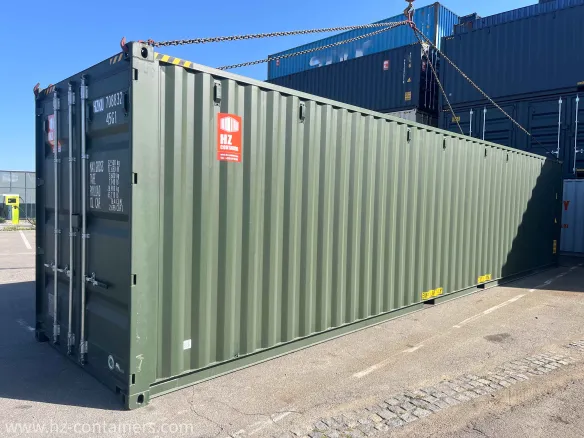
A 40ft high cube container is an intermodal steel shipping container that measures 40 feet in length, 8 feet in width, and 9 feet 6 inches in height externally. The defining characteristic is the extra foot of vertical clearance compared to a standard 40ft container, which stands at 8 feet 6 inches. That additional 12 inches translates into roughly 13% more internal volume — moving from approximately 2,385 cubic feet in a standard unit to roughly 2,694 cubic feet in a high cube.
Where Did the High Cube Shipping Container Come From?
The high cube container did not emerge from a single inventor but rather evolved through the demands of the global shipping industry. By the 1980s, shipping lines recognized that some cargo — particularly lightweight, voluminous goods like furniture, insulation, and certain manufactured components — would benefit from additional height rather than additional weight capacity. Standard ISO containers had been locked into the 8-foot-6-inch external height since the 1960s, when the International Organization for Standardization formalized container dimensions to ensure global interoperability.
The high cube variant, designated as the 45G1 in ISO classification, gained traction through the 1990s and 2000s as containerized trade expanded into consumer goods sectors. Today, high cube containers account for a substantial and growing share of the global container fleet. On the secondary market, where containers are sold after their ocean-freight life ends, 40ft high cubes have become especially popular for storage and conversion projects precisely because that extra foot of height makes them feel less cramped than standard units.
What Makes a High Cube Different From a Standard Container?
The difference between a standard 40ft container and a high cube 40ft container goes beyond the numbers. Here is a direct comparison:
| Specification | 40ft Standard Container | 40ft High Cube Container |
|---|---|---|
| External Height | 8 ft 6 in (2.59 m) | 9 ft 6 in (2.90 m) |
| Internal Height | 7 ft 10 in (2.39 m) | 8 ft 10 in (2.70 m) |
| Door Opening Height | 7 ft 6 in (2.29 m) | 8 ft 6 in (2.60 m) |
| Internal Volume | ~2,385 cu ft (67.7 m³) | ~2,694 cu ft (76.3 m³) |
| Typical Tare Weight | 8,024 lbs (3,640 kg) | 8,598–9,000 lbs (3,900–4,080 kg) |
| Typical Payload | 63,383 lbs (28,750 kg) | 63,052 lbs (28,600 kg) |
| Max Gross Weight | 71,650 lbs (32,500 kg) | 71,650 lbs (32,500 kg) |
Key takeaway: A high cube container adds roughly 300 cubic feet of volume — about the size of a small walk-in closet — without requiring a larger footprint on the ground. The additional height also means taller door openings, which can make the difference between fitting a piece of machinery or not.
The interior height of 8 feet 10 inches means that most adults can stand upright inside without stooping, which is a significant advantage if you plan to convert the container into a workshop, office, or living space.
What Are the Dimensions and Specifications of a 40ft High Cube Container?
When planning a purchase, knowing the exact dimensions prevents costly surprises. The figures below represent the most commonly cited measurements across major shipping lines and sellers, though individual units may vary slightly by manufacturer.
What Are the Exact Interior and Exterior Dimensions?
A 40ft high cube container has the following standard specifications:
| Measurement | Metric | Imperial |
|---|---|---|
| External Length | 12.192 m | 40 ft 0 in |
| External Width | 2.438 m | 8 ft 0 in |
| External Height | 2.896 m | 9 ft 6 in |
| Internal Length | 12.032 m | 39 ft 5⅝ in |
| Internal Width | 2.352 m | 7 ft 8½ in |
| Internal Height | 2.698–2.700 m | 8 ft 10¼ in |
| Door Opening Width | 2.340 m | 7 ft 8⅛ in |
| Door Opening Height | 2.597 m | 8 ft 6¼ in |
| Internal Volume | 76.3–76.4 m³ | 2,694–2,698 cu ft |
| Floor Area | ~28.3 m² | ~305 sq ft |
The floor is typically constructed of marine-grade plywood, approximately 28 mm (1⅛ inches) thick, laid over steel cross-members. The entire structure is built from Corten steel — a weathering steel alloy that develops a protective rust-like patina and resists corrosion far better than standard carbon steel.
How Much Weight Can a 40ft High Cube Container Hold?
Weight ratings are critical and often misunderstood. You need to distinguish between three separate numbers:
- Tare weight (empty weight): Typically 8,500–9,000 lbs (3,900–4,080 kg) for a high cube — slightly heavier than a standard 40ft because of the additional steel in the taller corner posts and side panels.
- Maximum gross weight (MGW): 71,650 lbs (32,500 kg). This is the absolute maximum the container, fully loaded, may weigh. It is a structural and regulatory limit.
- Maximum payload: Calculated as MGW minus tare weight. For a typical high cube, this works out to approximately 62,600–63,000 lbs (28,400–28,600 kg).
Important: The high cube’s extra volume does not equal extra payload. In fact, the payload of a high cube is often slightly lower than a standard 40ft because the container itself is heavier. If your cargo is dense — steel parts, machinery, liquids — you will likely hit the weight limit before you fill the volume. The high cube excels with bulky, lightweight cargo where the constraint is space, not mass.
How Much Does a 40ft High Cube Container Cost?
Container pricing is dynamic. Unlike buying a consumer product with a fixed MSRP, shipping container prices fluctuate based on global trade volumes, steel prices, regional supply and demand, and even the time of year. The ranges below reflect the US market as of late 2026.
What Factors Determine the Price of a Container?
Several variables affect what you will pay:
- Condition grade: The single largest price driver. A pristine one-trip container can cost three to four times what a serviceable used unit costs.
- Location: Containers accumulate at port cities and major rail hubs. If you live near Los Angeles, Houston, New York/Newark, Savannah, or Chicago, you will generally pay less because supply is concentrated there. Delivery to rural areas or regions far from ports can add hundreds of dollars.
- Market conditions: Global shipping demand, steel scrap prices, and trade imbalances all influence the secondary container market. When new container production in China ramps up, used prices soften. When shipping lines hold onto containers longer, supply tightens and prices rise.
- Volume: Buying a single container costs more per unit than buying five or ten. Many sellers offer volume discounts starting at two or three containers.
What Do 40ft High Cube Containers Cost by Condition?
| Condition Grade | Typical Price Range (Depot) | Typical Price Range (Delivered) | What You Get |
|---|---|---|---|
| New / One-Trip | $2,800–$4,500 | $3,500–$6,000+ | Used once, factory-to-US. Near-perfect paint, no rust. 10-year structural warranty common. |
| Cargo Worthy (CW) | $1,500–$2,200 | $2,000–$3,500 | Structurally sound, passes CSC inspection for ocean shipping. Visible cosmetic wear. 5-year warranty typical. |
| Wind & Watertight (WWT) | $1,200–$1,850 | $1,700–$2,800 | Sealed against weather. Older, 12–18 years. Dents and surface rust present. Doors and gaskets functional. 1–5 year warranty. |
| As-Is | $800–$1,200 | $1,300–$2,000 | Sold with no guarantees. May have leaks, door problems, structural issues. No warranty. |
A 40ft high cube typically costs 10–20% more than a standard 40ft container of the same condition grade. The premium reflects both the additional steel in the taller frame and higher demand for the extra interior height.
What Are the Different Condition Grades for 40ft High Cube Containers?
The container resale market uses standardized condition grades. Understanding these prevents you from overpaying or receiving a unit that does not meet your expectations.
What Is a One-Trip (New) Container?
A one-trip container has been manufactured — almost always in China — loaded once with cargo, shipped to the United States, and then sold. It has traveled across the ocean a single time. The paint is fresh, the floor is clean and odor-free, the gaskets are pliable, and there is no rust beyond perhaps minor surface spotting from salt air during transit.
One-trip high cube containers are the gold standard for conversion projects. If you are building a container home, office, or retail pop-up, the cosmetic condition matters. Sellers typically provide a 10-year structural warranty and a 10-year no-leak warranty on one-trip units.
What Is a Cargo Worthy (CW) Container?
A cargo worthy container is a used unit that still passes the Convention for Safe Containers (CSC) inspection required for international ocean shipping. It is structurally sound, the doors close and seal, the floor has no soft spots, and the roof does not leak. However, it will show its age: dents, scrapes, surface rust, and faded paint are normal.
CW containers are typically 8–12 years old. They represent the sweet spot for buyers who need a container that can still be shipped or who want strong structural integrity without paying the one-trip premium. Most sellers offer a 5-year structural and leak warranty on CW units.
What Is a Wind and Watertight (WWT) Container?
A WWT container has aged out of ocean shipping — typically 12–18 years old — and can no longer pass a CSC inspection. However, it still keeps out wind and rain: the roof does not leak, the door gaskets seal, and the floor remains solid. Cosmetic condition will be rough. Expect rust, dents, peeling paint, and possibly patched areas.
WWT containers are the most affordable option and are ideal for static storage where appearance does not matter. If you need secure, dry storage for tools, equipment, or inventory on a farm, construction site, or behind a warehouse, a WWT high cube delivers excellent value. Warranties on WWT units range from 1 to 5 years depending on the seller.
What Is an As-Is Container and Should You Avoid It?
An as-is container is sold with no guarantees whatsoever. It may leak. The doors may not close properly. The floor may be rotted. Structural integrity is not assured. Prices are the lowest — sometimes under $1,000 — but unless you have the skills and budget to repair significant defects, as-is containers are a gamble not worth taking for most buyers. The few hundred dollars saved upfront can easily be consumed by repair costs.
Where Can I Buy a 40ft High Cube Container?
The market for 40ft high cube containers has matured dramatically over the past decade. You can now buy from national online sellers, regional dealers, container marketplaces, and even peer-to-peer platforms. Each channel has distinct advantages and risks.
How Do I Find Local Dealers and Depots Near Me?
Not every buyer needs national shipping. If you live near a major port, rail yard, or container depot, buying locally can eliminate delivery costs entirely — you simply pick up the container yourself (or arrange a short-haul truck).
To find local dealers:
- Search city-specific terms: Queries like “shipping containers for sale Houston” or “40ft high cube container Atlanta depot” surface regional sellers who may not appear in national searches.
- Check port-adjacent areas: Los Angeles/Long Beach, Newark/New York, Savannah, Houston, Seattle/Tacoma, Oakland, Charleston, Norfolk, and Miami all have dense concentrations of container depots.
- Visit container yards in person if possible: Seeing a unit before buying eliminates uncertainty about cosmetic condition. Photos on a website can mask issues.
- Ask about pickup pricing: Many depots offer a lower “will-call” or “ex-works” price if you arrange transport yourself.
How Is a 40ft High Cube Container Delivered?
Delivery is one of the most overlooked aspects of buying a 40ft high cube container. A container this size weighs roughly 4 tons empty and requires specialized equipment to move.
What Are the Delivery Methods?
Two primary delivery methods are used in the United States:
Tilt-bed (roll-off) delivery: The container is transported on a truck with a hydraulically tilting bed. At the delivery site, the bed tilts and the container slides off onto the ground. No customer assistance or equipment is needed. This is the most common method and is preferred for most residential and commercial deliveries.
Customer-assist delivery: The truck carries a flatbed or step-deck trailer. The driver needs an anchor point at the site — typically a sturdy vehicle, tractor, or piece of equipment — to help pull or winch the container off the trailer onto the ground. This method is sometimes used when tilt-bed trucks cannot access the site.
Flatbed with crane or forklift: In some cases, particularly at commercial or industrial sites where a forklift or crane is available, the container is simply lifted off the truck and placed. This requires the buyer to have the equipment ready.
How Much Clearance Space Does a 40ft Container Delivery Need?
The truck and trailer combination that delivers a 40ft container is long and requires specific clearance. Standard requirements include:
- Straight-line approach: At least 120–130 feet of straight, unobstructed space measured from the placement point straight forward. The driver cannot turn within this distance.
- Width clearance: Minimum 10–12 feet along the entire delivery path. Low-hanging branches, fences, gates, and utility poles must be accounted for.
- Overhead clearance: 14–15 feet minimum along the approach for the truck and trailer. At the unloading point, overhead clearance of at least 22 feet is needed because the tilt-bed rises during unloading.
- Ground conditions: The delivery area must support the weight of the truck and container. Soft ground, mud, steep slopes, or freshly landscaped areas may cause the truck to become stuck.
Plan this before you order. A delivery that arrives and cannot unload will incur a dry-run fee — typically $200–$500 — and you will need to reschedule after resolving the access issues.
What Site Preparation Is Required Before Delivery?
The container needs a level, well-drained surface. Common foundation options include:
- Concrete pad: The gold standard. A 4-inch reinforced concrete slab slightly larger than the container footprint provides a permanent, level base that prevents ground moisture from reaching the container floor.
- Gravel or crushed stone pad: A 4–6 inch layer of compacted gravel provides drainage and stability at a fraction of the cost of concrete. This is the most common choice for storage applications.
- Concrete piers or blocks: Placing the container on corner supports keeps it off the ground entirely and allows airflow underneath, reducing moisture issues. Piers must be level and capable of supporting the weight at each corner casting.
- Railroad ties or pressure-treated timbers: An economical option for temporary placement. Ensure they are level across both length and width.
Stacking wooden blocks or placing containers directly on soil without drainage preparation leads to floor rot over time as moisture wicks up from the ground.
Do I Need a Permit for a 40ft High Cube Container?
The answer depends entirely on where you live, how you use the container, and how long it stays.
What Zoning Considerations Apply to Shipping Containers?
Zoning regulations govern where and how a container may be placed. Key variables include:
- Residential vs. commercial zoning: Containers are more permissive in agricultural and industrial zones and far more restrictive in residential neighborhoods. Many municipalities prohibit or tightly restrict shipping containers in residential zones unless they are actively part of an approved construction project.
- Temporary vs. permanent placement: A container used for 30 days during a move may face no restrictions, while the same container placed permanently may require a permit or be prohibited outright. Some jurisdictions define “temporary” as 30, 60, or 90 days.
- Setback requirements: Even where containers are permitted, they must often be placed a specified distance from property lines, roads, and neighboring structures.
When Do You Need a Building Permit?
A building permit is typically required when a container is:
- Permanently affixed to a foundation
- Connected to utilities (electricity, plumbing, HVAC)
- Modified in a way that changes its structural characteristics (cutting openings for doors and windows)
- Used as an occupied structure (office, dwelling, retail space)
If you are simply placing an unmodified container on gravel for storage, a building permit is often not required — but you should verify this with your local building department. A ten-minute phone call can prevent a costly code enforcement action later.
How Do HOA Rules Affect Container Placement?
Homeowners’ associations frequently have rules that explicitly prohibit or severely restrict shipping containers. Even if municipal zoning allows a container, your HOA covenants may not. Review your HOA’s Covenants, Conditions, and Restrictions (CC&Rs) before ordering. If HOA approval is required, expect to submit a detailed plan showing the container’s location, screening (fencing, landscaping), and finish.
What Should You Check Before Buying a 40ft High Cube Container?
The container industry is largely unregulated at the consumer level, and buyer protections vary by seller. Doing due diligence before paying protects you from costly mistakes.
What Red Flags Should You Watch For?
- Prices significantly below market: If a used 40ft high cube is listed for $800 in a market where comparable units sell for $1,500–$2,000, something is wrong. The container likely has hidden damage, a roof leak, or the seller is not legitimate.
- No photos of the actual container: Stock photos that do not show the specific unit you are buying are a warning sign. Legitimate sellers provide photos of the actual container, including the roof, floor, door gaskets, and any damage.
- Vague condition descriptions: “Good condition” is meaningless. Look for the specific grade — one-trip, cargo worthy, or wind and watertight — and ask what each grade means for that seller. Some sellers use their own terminology that does not match industry standards.
- No physical address or depot location: A seller who operates purely online with no physical location where you could inspect inventory may be a broker who never sees the containers they sell.
- Pressure to pay via wire transfer or cash app: Credit card payments offer chargeback protection. Wire transfers and peer-to-peer payment apps generally do not.
What Questions Should You Ask a Seller?
Before completing a purchase, ask these specific questions:
- “What is the exact condition grade of this container, and what warranty comes with it?”
- “Can you send me photos of the specific unit I am buying — including the roof, floor, door gaskets, and corner castings?”
- “What is included in the delivery price, and what delivery method will you use?”
- “What happens if the container arrives and I am not satisfied with its condition?”
- “Do you have a physical depot where I can inspect containers in person?”
- “What is the estimated delivery timeline?”
- “Are there any additional fees beyond what is quoted?”
What Are the Most Common Questions About Buying a 40ft High Cube Container?
Where can I buy a 40ft high cube container?
You can buy a 40ft high cube container from national online sellers. These companies maintain inventory across multiple US depots and ship nationwide. Alternatively, you can find containers through local dealers near port cities and major rail hubs.
How much does a 40ft high cube container cost?
As of late 2026, a 40ft high cube container costs between $1,200 and $7,000+ depending on condition. Used wind and watertight (WWT) units start around $1,200–$1,850 at depot. Cargo worthy (CW) units range from $1,500–$2,200. One-trip (near-new) containers cost $2,800–$4,500. Brand-new units can reach $5,000–$7,000. These prices typically do not include delivery, which adds $300–$800 depending on distance. A high cube carries a 10–20% premium over a standard-height 40ft container of the same grade.
What are the dimensions of a 40ft high cube container?
External dimensions are 40 ft long × 8 ft wide × 9 ft 6 in high (12.19 m × 2.44 m × 2.90 m). Internal dimensions are approximately 39 ft 5 in long × 7 ft 8 in wide × 8 ft 10 in high (12.03 m × 2.35 m × 2.70 m). The door opening measures roughly 7 ft 8 in wide × 8 ft 6 in high (2.34 m × 2.60 m). Internal volume is approximately 2,694 cubic feet (76.3 m³).
What is the difference between a standard and high cube container?
A high cube container is exactly one foot taller than a standard container — 9 feet 6 inches versus 8 feet 6 inches externally. This translates to an internal height of 8 feet 10 inches for the high cube versus 7 feet 10 inches for the standard. The high cube provides roughly 13% more internal volume (about 300 additional cubic feet) on the same 40-foot-by-8-foot footprint. The trade-off is that a high cube weighs slightly more (typically 400–600 lbs heavier) and costs 10–20% more than a standard container of the same condition grade.
What condition grades are available for shipping containers?
Four primary grades exist. One-trip (new) containers have made a single voyage from factory to the US and are in near-perfect condition, typically with a 10-year warranty. Cargo worthy (CW) containers are used but still pass the CSC inspection for ocean shipping; they have visible wear and a 5-year warranty. Wind and watertight (WWT) containers are 12–18 years old and can no longer ship but are sealed against weather, with 1–5 year warranties. As-is containers are sold with no guarantees and may have leaks, structural issues, or door problems.
How much weight can a 40ft high cube container carry?
A 40ft high cube container can carry a maximum payload of approximately 62,600–63,000 lbs (28,400–28,600 kg). This is calculated by subtracting the container’s empty weight (tare weight of ~8,600–9,000 lbs) from its maximum gross weight of 71,650 lbs (32,500 kg). Despite having more internal volume than a standard 40ft container, the high cube’s payload capacity is actually slightly lower because the taller structure makes the container itself heavier. Dense cargo will reach the weight limit before filling the available volume.
Do I need a permit to place a shipping container on my property?
Whether you need a permit depends on your local zoning ordinance, the container’s intended use, how long it remains in place, and whether it connects to utilities. Temporary placement for storage (30–90 days) often requires no permit, while permanent placement frequently does. Residential zones are more restrictive than agricultural or industrial zones. Modifying the container or connecting utilities almost always requires a building permit. HOA rules may prohibit containers regardless of municipal regulations. Always contact your local building department before ordering.
What fits inside a 40ft high cube container?
With approximately 2,694 cubic feet of volume and 305 square feet of floor space, a 40ft high cube container can hold the contents of a 2–3 bedroom apartment, a substantial amount of furniture, one or two vehicles (subject to door opening width), bulk raw materials, large quantities of palletized goods, or construction equipment and materials. The extra foot of interior height compared to a standard container allows taller items — such as stacked pallets, machinery, racking systems, or large appliances — to fit without the clearance issues that a standard container imposes.
How is a 40ft high cube container delivered?
Delivery is typically handled by a tilt-bed (roll-off) truck. The container is driven to your site and the hydraulically tilting bed slides it onto the ground. No customer assistance is required for tilt-bed delivery. Some deliveries use a flatbed truck requiring on-site equipment to offload. Delivery requirements include at least 120–130 feet of straight-line approach, 10–12 feet of width clearance, 14–15 feet of overhead clearance along the approach, and firm, level ground at the placement point.
What should I look for when buying a used 40ft high cube container?
When buying a used 40ft high cube container, inspect the roof from inside with doors closed — any visible daylight indicates leaks. Walk the entire floor checking for soft spots. Test both door leaves to ensure smooth operation and check that gaskets form a tight seal. Look at corner castings for deformation. Verify the specific condition grade and warranty terms in writing. Get photos of the actual unit, not stock images. Confirm delivery method and total cost including all fees before paying. Established sellers with physical depot locations, published warranties, and transparent pricing are significantly safer than private marketplace sellers.

 Czech Republic, Třebíč
 FREE SHIPPING


Other container news...

Shipping container types
Roughly 80% of everything you own traveled to you inside a steel box. Shipping containers—also called cargo containers, ISO containers, or “conex” boxes—are the backbone of global trade, carrying about 90% of the world’s non-bulk cargo across oceans, rails, and highways. Yet a “shipping container” is not one single object. It is a family of specialized steel boxes, each engineered for a specific kind of cargo: some vent, some freeze, some open from the top, and some have no walls at all.

How much does a 40 foot shipping container cost?
A 40 foot shipping container is the single most common large-format steel container in the world. Whether you are adding on-site storage, moving freight overseas, or converting a unit into a home or workshop, the first question almost everyone asks is the same: how much does a 40 foot shipping container cost?
The short answer is that a 40 foot shipping container price in the United States typically lands between $1,500 and $7,000 depending on condition, height, location, and delivery. Used, wind-and-watertight 40ft units often start near $1,500–$2,700, while a brand-new one-trip 40ft high cube can exceed $4,000–$6,500. The gap between those two ends of the range is wide because a “shipping container” is not one product—it is a graded commodity whose value shifts with its physical condition, its market, and even the distance from your site to a major port.

How to move a shipping container
Moving a shipping container is rarely as simple as “put it on a truck and drive.” A standard steel container weighs over two tons even when empty, spans 20 to 40 feet (or more), and has no wheels, no hitch, and no built-in way to attach to standard equipment. Whether you are repositioning a storage container across a jobsite, delivering one to a rural property, or relocating a loaded unit across the country, the method you choose determines your cost, your timeline, and whether the move succeeds at all.

Shipping container sizes
Přepravní kontejnery představují neviditelnou páteř světového obchodu. Přibližně 90 % veškerého zboží (s výjimkou volně ložených komodit) se přepravuje v ocelových boxech, které na první pohled vypadají stejně. Přesto se liší svými rozměry, kapacitou i technickými parametry – což má přímý dopad na náklady, efektivitu přepravy i na to, co do nich lze reálně naložit.
Znalost velikostí přepravních kontejnerů není jen zajímavou drobností. Ať už dovážíte zboží, pořizujete použitý kontejner pro skladování či přestavbu, nebo plánujete stěhování, rozdíl mezi standardním dvacetistopým kontejnerem a čtyřicetistopým kontejnerem typu „high cube“ může znamenat rozdíl mezi cenově výhodnou přepravou a drahou zásilkou, která zůstane z poloviny prázdná.