
What is a shipping container?
Shipping container is a standardized, reusable steel box designed for safe transport of goods between multiple modes of transport – ship, train, and truck – without the need to unload the cargo inside. Also known as ISO container, intermodal container, freight container, cargo container, sea van, dry box, or conex box, the shipping container is the invisible backbone of the global economy. More than 90% of everything you buy – from the smartphone in your pocket to the coffee in your cup – has spent at least part of its journey inside one of these rectangular steel boxes.
“The shipping container was the bigger driving force of globalization than all trade agreements in the last 50 years combined.” – The Economist
This guide covers everything about shipping containers: their history, how they work, types, dimensions, costs, identification, alternative uses, and the future of container shipping.

What is a Shipping Container?
In the simplest sense, a shipping container is a large metal box built to standardized dimensions so it can be moved seamlessly between ships, trains, and trucks. The standardization is governed by the International Organization for Standardization (ISO) under standard ISO 668, which specifies dimensions, corner fittings, and structural requirements. Because every container matches the same external dimensions, the global logistics system – from cranes in the port of Shanghai to chassis on a highway in Nebraska – can handle them interchangeably.
The defining feature of a shipping container is intermodality. A single container can be loaded at a factory in Shenzhen, trucked to a port, loaded onto a container ship, cross the Pacific Ocean, be unloaded in Los Angeles, loaded onto a freight train, and finally trucked to a distribution center in Chicago – all without the goods inside having to be re-sorted. This eliminates the labor-intensive process of break-bulk shipping, where cargo was manually loaded and unloaded in bags, barrels, and crates at every transfer point.
Alternative Names Around the World
Shipping containers are known by many names depending on geography, industry, and context:
- Conex box – Derived from “Container Express,” a term used by the U.S. Army during the Korean War for standardized steel containers. Still widely used in construction and storage.
- Sea van – Common in marine insurance and shipping documentation.
- Dry box or dry van – Used in trucking to distinguish standard containers from refrigerated units.
- ISO container – Technical term emphasizing compliance with international standards.
- Cargo container or freight container – General terms used interchangeably in logistics.
Regardless of the name, they all refer to the same basic concept: a lockable, stackable, weather-resistant steel box built to ISO standards.
Who Invented the Shipping Container and How Did It Change Global Trade?
The Break-Bulk Era (Before 1956)
Before the shipping container, maritime shipping was a painfully slow and expensive process known as break-bulk shipping. Cargo arrived at the port in various shapes and sizes – barrels of oil, pallets of grain, crates of machinery, bales of cotton – and longshoremen loaded each piece individually into the ship’s hold. Unloading one ship took two to three weeks, and the ship spent more time in port than at sea. Theft was rampant, damage was common, and labor costs were enormous. Ports were chaotic, dangerous places, and international trade moved at what, by modern standards, would seem like a glacial pace.
Global Standardization and the ISO Revolution
McLean’s innovation was transformative, but early containers had incompatible sizes – different shipping lines used different dimensions. This fragmentation threatened the container’s potential until the International Organization for Standardization stepped in. In 1968, ISO published standards defining the universal shipping container: 20 feet long, 8 feet wide, and 8 feet 6 inches tall. This forced a global redesign of ships, ports, railways, roads, and cranes around a single common denominator.
ISO 668 and ISO 1496 standards remain the foundation of global container shipping to this day. The cost of shipping goods internationally plummeted, making it worthwhile to manufacture products on the other side of the world and ship them rather than produce them locally. The shipping container became, in the words of historian Marc Levinson, “the crab that changed the world.”
Economic Impact
The shipping container is arguably one of the most important physical inventions in the history of globalization. It decoupled the cost of distance from the cost of goods. Before containerization, maritime shipping could account for 10–25% of a product’s retail price. Today, shipping a television from Shanghai to Los Angeles costs roughly $10 – a negligible fraction of the retail price. The result was an explosion of international trade, the creation of complex global supply chains, and the rise of export-oriented manufacturing economies across Asia, Latin America, and beyond.
How Do Shipping Containers Work in Intermodal Transport?
The Intermodal System Explained
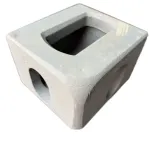
Intermodal transport is the seamless movement of a shipping container between different modes of transport without the cargo inside being handled. The key to this system is the corner casting – a reinforced steel block at each of the eight corners of the container with precisely machined oval openings. These corner castings work with twist-locks on:
- Ship decks and hatch covers
- Crane spreaders
- Truck chassis
- Railway flatcars
When a twist-lock is inserted into a corner casting and rotated 90 degrees, the container is locked in place. When unlocked, the container can be lifted and released in seconds. This universal locking mechanism is what makes intermodal transport possible.
The Container’s Journey
A typical journey of a shipping container is governed by these steps:
- Loading at the point of origin – Goods are packed into the container at a factory, warehouse, or farm. The container is sealed with a high-security bolt seal.
- Transport to the port – A truck chassis picks up the container and delivers it to the port terminal.
- Handling at the port – Gantry cranes lift the container from the truck and stack it in the terminal yard, often using straddle carriers or reach stackers.
- Loading onto the ship – The container is loaded onto a container ship according to a precise stowage plan. Modern ships carry containers both below deck and stacked up to 10 high above deck.
- Maritime transport – The ship sails along its planned route. The largest container ships today carry over 24,000 TEU (twenty-foot equivalent units).
- Destination port – The container is unloaded, temporarily stored, and cleared through customs.
- Inland transport – The container is transferred to a truck or train for final delivery to a distribution center or warehouse.
The Infrastructure That Makes It Possible
The global container system depends on specialized infrastructure: gantry ship-to-shore cranes that can lift 40–60 containers per hour, automated stacking cranes in mega-ports, container chassis for road transport, and intermodal rail terminals that move containers between trains and trucks. The world’s busiest container port – Shanghai – handled over 49 million TEU in a single year (2023).
What Are the Different Types of Shipping Containers?
Shipping containers are not universal. The type of cargo determines the type of container. Below are nine main categories, each with its ISO type code.
| Container Type | ISO Code | Common Sizes | Typical Cargo | Key Features |
|---|---|---|---|---|
| Dry (general purpose) | XXGX | 10ft, 20ft, 40ft, 45ft, 53ft | Packaged goods, palletized cargo, electronics, clothing, machinery | Fully enclosed, weather-resistant, most common type |
| Reefer (refrigerated) | XXRX | 20ft, 40ft, 40ft HC, 45ft HC | Food, pharmaceuticals, flowers, chemicals | Temperature range -65 °C to +40 °C, built-in cooling unit |
| Open Top | XXUX | 20ft, 40ft, 40ft HC | Oversized tall cargo, machinery, scrap | Removable tarpaulin roof, top loading by crane |
| Flat Rack | XXPX | 20ft, 40ft | Heavy machinery, vehicles, pipes, lumber | Folding or fixed end walls, open sides, no roof |
| Tank | XXTX | 20ft, 40ft | Liquids, gases, chemicals, fuels | Cylindrical anti-corrosion tank inside an ISO frame |
| Open Side | XXUX | 20ft, 40ft, 40ft HC | Wide cargo, pallets requiring side access | Side doors along the entire length for loading by forklift |
| Double Door | XXGX | 20ft, 40ft, 40ft HC | Vehicles, cargo requiring through loading | Doors on both ends |
| Half Height | X8UX | 20ft | Heavy bulk goods – ores, stones, scrap | Low center of gravity, open top, high payload |
| Hard Top | XXUX | 20ft, 40ft, 40ft HC | Heavy machinery, tall cargo | Removable steel roof, top loading |
Dry Container (General Purpose)
The dry container is the workhorse of global trade, accounting for approximately 85–90% of all containers in circulation. It is a fully enclosed, weather-resistant steel box with a plywood floor and double doors at one end. It transports virtually any non-perishable cargo that will fit through the doors. Dry containers are available in lengths from 10 feet to 53 feet, with 20 feet and 40 feet being the global standard.
Reefer Container (Refrigerated)
Reefer containers are essentially mobile refrigerators. They have integrated cooling units powered by the ship’s electrical system (or an external power source on land) and maintain precise temperatures anywhere from -65 °C to +40 °C. They are essential for the cold chain, which keeps fruits and vegetables, meat, seafood, dairy products, and pharmaceuticals at safe temperatures during transport. Reefers are more expensive to purchase and operate than dry containers, and their energy consumption is a growing focus of sustainability efforts.
Tank Container
Tank containers consist of a cylindrical stainless steel tank mounted inside a standard ISO container frame. They are designed to transport liquids, gases, and hazardous chemicals – including food-grade products such as wine, milk, and edible oils, as well as industrial chemicals and fuels. The tank is surrounded by insulation and, in some cases, heating or cooling elements. Tank containers are subject to strict safety regulations due to the nature of their cargo.
What Are the Dimensions and Sizes of Shipping Containers?
Shipping container dimensions are standardized worldwide, although minor variations exist between manufacturers. Below are the most common sizes with their internal and external dimensions, capacities, and weight limits.
| Container Size | External Length | External Width | External Height | Internal Length | Internal Width | Internal Height | Door Opening (W×H) | Cubic Capacity | Max Payload | Tare Weight |
|---|---|---|---|---|---|---|---|---|---|---|
| 10ft Standard | 10′ 0″ (3.05 m) | 8′ 0″ (2.44 m) | 8′ 6″ (2.59 m) | 9′ 3″ (2.82 m) | 7′ 8″ (2.34 m) | 7′ 10″ (2.39 m) | 7′ 8″ × 7′ 5″ | 563 cu ft (15.9 m³) | 19,530 lbs (8,860 kg) | 2,850 lbs (1,290 kg) |
| 20ft Standard | 20′ 0″ (6.06 m) | 8′ 0″ (2.44 m) | 8′ 6″ (2.59 m) | 19′ 4″ (5.90 m) | 7′ 8″ (2.34 m) | 7′ 10″ (2.39 m) | 7′ 8″ × 7′ 5″ | 1,172 cu ft (33.2 m³) | 55,126 lbs (25,000 kg) | 5,071 lbs (2,300 kg) |
| 40ft Standard | 40′ 0″ (12.19 m) | 8′ 0″ (2.44 m) | 8′ 6″ (2.59 m) | 39′ 5″ (12.03 m) | 7′ 8″ (2.34 m) | 7′ 10″ (2.39 m) | 7′ 8″ × 7′ 5″ | 2,389 cu ft (67.7 m³) | 61,200 lbs (27,760 kg) | 8,268 lbs (3,750 kg) |
| 40ft High Cube | 40′ 0″ (12.19 m) | 8′ 0″ (2.44 m) | 9′ 6″ (2.90 m) | 39′ 5″ (12.03 m) | 7′ 8″ (2.34 m) | 8′ 10″ (2.70 m) | 7′ 8″ × 8′ 5″ | 2,694 cu ft (76.3 m³) | 58,642 lbs (26,600 kg) | 8,750 lbs (3,970 kg) |
| 45ft High Cube | 45′ 0″ (13.72 m) | 8′ 0″ (2.44 m) | 9′ 6″ (2.90 m) | 44′ 5″ (13.55 m) | 7′ 8″ (2.34 m) | 8′ 10″ (2.70 m) | 7′ 8″ × 8′ 5″ | 3,040 cu ft (86.1 m³) | 55,644 lbs (25,240 kg) | 10,580 lbs (4,800 kg) |
High Cube Containers
High cube (HC) containers offer one foot of additional internal height – 9′6″ (2.90 m) versus the standard 8′6″ (2.59 m). This extra height provides approximately 13% more cubic capacity than a standard container of the same length. High cubes are ideal for light, voluminous cargo and are the preferred choice for container home conversions thanks to the extra headroom. In maritime shipping, the 40-foot high cube is increasingly replacing the standard 40-foot container as the default choice for many trade routes.
What About 53-Foot Containers?
In North America, 53-foot containers are common for domestic intermodal transport (rail and truck), but they are rarely used in maritime shipping. They are designed to match the maximum permitted trailer length on U.S. highways, providing approximately 30% more cubic capacity than a 40-foot container. Major North American railroads and trucking companies use them extensively for cross-continental transport.
How Are Shipping Containers Identified and Certified?
Every shipping container in international service carries a unique set of markings that enable tracking, identification, and safety verification.
Container Identification Number
The container identification number is an 11-character alphanumeric code displayed prominently on all four sides and the roof of the container. It conforms to ISO 6346 and consists of three parts:
- Owner code (4 letters): The first three letters identify the owner or operator of the container, registered with the Bureau International des Containers (BIC). The fourth letter is always “U” (for freight containers), “J” (for detachable container-related equipment), or “Z” (for trailers/chassis).
- Serial number (6 digits): A unique identifier assigned by the owner.
- Check digit (1 digit): A mathematically calculated digit that validates the entire number, computed using an algorithm prescribed by ISO.
Example: HZKU 123456 7 – where “7” is the check digit.
ISO Size and Type Codes
The ISO size and type code is a four-character code displayed on the container’s doors or CSC plate. The first two characters represent length and height, the last two represent the type of container. For example:
- 22G1 = 20-foot × 8′6″ high, general purpose (dry) container
- 42G1 = 40-foot × 8′6″ high, general purpose container
- 45G1 = 40-foot × 9′6″ high (high cube), general purpose container
CSC Safety Approval Plate
The CSC safety approval plate – named after the International Convention for Safe Containers (1972), an international treaty administered by the International Maritime Organization (IMO) – is a legal requirement for every container used in international transport. This metal plate, affixed to the left door of the container, confirms that the container has been inspected and meets structural safety standards.
Key information on the CSC plate includes:
- Country of approval and approval reference number
- Manufacturing date
- Container identification number
- Maximum gross weight (the total weight the container can safely carry, including its own weight)
- Allowable stacking weight (the maximum load the container can bear when stacked)
- Racking test load (sidewall strength)
- Date of first maintenance inspection – New containers are valid for 5 years from manufacture; after that, containers must be re-inspected every 30 months by a certified inspector.
Important: Containers used exclusively for ground storage do not require valid CSC certification. CSC certification is only mandatory for containers in international or intermodal transport.
Other Markings
- Tare weight: The weight of the empty container, stamped on the doors.
- Payload / Net weight: The maximum weight of cargo the container can carry (maximum gross weight minus tare weight).
- Capacity: Cubic volume (cubic meters and cubic feet).
- Country of manufacture: Usually stamped on the CSC plate.
How Much Does a Shipping Container Cost
Shipping container prices fluctuate depending on size, condition, location, and market conditions. The following price ranges are based on data from 2024–2026 for the U.S. market.
| Container Size | New (one trip) | Used – Cargo Worthy | Used – Wind & Watertight (WWT) | Used – As-Is |
|---|---|---|---|---|
| 10ft | $2,000 – $3,000 | $1,500 – $2,500 | $1,200 – $2,000 | $800 – $1,500 |
| 20ft Standard | $2,500 – $5,000 | $1,400 – $2,500 | $1,300 – $2,000 | $900 – $1,800 |
| 40ft Standard | $3,500 – $6,500 | $1,650 – $3,000 | $1,425 – $2,500 | $1,200 – $2,500 |
| 40ft High Cube | $4,000 – $7,000 | $1,800 – $3,200 | $1,500 – $2,800 | $1,500 – $3,000 |
Condition Grades Explained
- New (one trip): Manufactured overseas and used for one trip with cargo to the destination country. Excellent condition, minimal wear, valid CSC.
- Cargo Worthy (CW): Passes inspection for international shipping. Structurally sound, weather-resistant, valid CSC certification. Accepted by all major shipping lines.
- Wind & Watertight (WWT): Structurally sound and weather-resistant, but may have cosmetic defects or expired CSC. Not suitable for ocean shipping, but excellent for storage.
- As-Is: Sold without any warranty. May have significant rust, dents, door issues, or holes. Suitable only for less critical storage or budget projects.
Factors Affecting Price
- Geographic location: Containers near major ports (Los Angeles, Houston, New York/New Jersey, Savannah) are generally cheaper due to supply surplus. Inland and remote locations incur higher delivery costs.
- Market conditions: The COVID-19 pandemic caused a dramatic increase in container prices due to supply chain disruptions. Prices have stabilized since then but remain sensitive to global trade dynamics.
- Delivery: Delivery costs range from $100 to $500+ depending on distance, accessibility, and whether a tilt-bed truck or crane is needed.
- Modifications: Adding doors, windows, insulation, electrical wiring, ventilation, or paint can increase the base price by thousands.
What is TEU and Why Is It Important?
Definition and Measurement
TEU stands for Twenty-foot Equivalent Unit, a universal standard unit of measurement in the container shipping industry. One TEU represents the capacity of one 20-foot ISO container – approximately 20 feet long, 8 feet wide, and 8 feet 6 inches tall.
Container capacity is always expressed in TEU:
- 20-foot container = 1 TEU
- 40-foot container = 2 TEU
- 40-foot high cube = 2 TEU
- 45-foot container = 2.25 TEU
Importance in Global Shipping
TEU is the fundamental metric used to measure and compare everything in container shipping:
- Vessel capacity: The world’s largest container ships – such as MSC Irina and OOCL Spain – can carry over 24,000 TEU. By comparison, the Ideal X in 1956 carried 58 containers.
- Port throughput: The port of Shanghai handles over 49 million TEU annually, making it the world’s busiest container port.
- Trade statistics: Global container trade reached approximately 865 million TEU in 2023, according to industry data.
- Freight rates: Shipping rates are quoted per TEU or per FEU (Forty-foot Equivalent Unit), i.e., a 40-foot container.
TEU is the common language of the container shipping industry. When you hear that “global container volumes grew 3% this quarter,” TEU is the measure.
What Are Shipping Containers Used for Besides Shipping?
Once a shipping container completes its maritime service life – typically 10–15 years of service – it often finds a second life in one of many creative applications.
Storage Solutions
The most common non-shipping use of containers is on-site storage. Construction companies use containers to secure tools, equipment, and materials. Retailers use them for seasonal inventory overflow. Farmers use them for equipment, feed, and supplies. Homeowners use them for personal storage during renovations. The weather-resistant, lockable design of a container makes it an ideal storage unit with minimal installation requirements.
Container Homes and Architecture
Container homes – sometimes called cargotecture – have become a global architectural movement. Containers can be stacked, cut, welded, and combined into striking residential and commercial structures. A single 40-foot high cube container provides approximately 320 square feet of living space, and multiple containers can be joined for larger homes.
Key considerations for container homes include:
- Insulation: Steel is a thermal conductor; spray foam, rigid boards, or insulated panels are essential.
- Structural engineering: Cutting openings for doors and windows requires reinforcement, especially when containers are stacked.
- Permits: Local building codes vary considerably. Some jurisdictions accept container construction; others have strict restrictions.
- Costs: A finished container home typically costs between $150 and $350 per square foot, depending on finishes and complexity.
Commercial and Creative Uses
Containers have been converted into:
- Pop-up retail stores and food markets
- Office spaces and coworking centers
- Cafés and restaurants
- Pools (using a single container as a pool shell)
- Emergency shelters and disaster relief housing
- Vertical farms and hydroponic growing systems
- Art studios and galleries
Their modularity, durability, and relatively low cost make containers an attractive building element for rapid, flexible construction.
What Are the Environmental Impacts and the Future of Shipping Containers?
Sustainability and the Circular Economy
Shipping containers have a complex environmental profile. On one hand, the steel used to manufacture them is highly energy-intensive. On the other hand, containers are extremely durable and nearly 100% recyclable at the end of their life. A used container converted into a home or office represents a significant form of upcycling – giving a second life to an industrial product that would otherwise be melted down, with considerable energy costs.
The circular economy of containers includes:
- Conversion of decommissioned containers for storage, housing, and commercial use
- Renovation of older containers to extend their cargo-worthy life
- Recycling of the steel when the container is no longer usable – approximately 3,750 kg of steel in a 40-foot container
Innovations in Container Shipping
- Smart containers: Equipped with IoT sensors, GPS tracking, and real-time condition monitoring (temperature, humidity, shocks, door open/close), smart containers are changing supply chain visibility.
- Blockchain documentation: Digital bills of lading and smart contracts reduce administrative burden in container shipping, lowering costs and speeding customs clearance.
- Autonomous ships: Although still in early stages, autonomous and remotely operated container ships are being tested, promising reduced crew costs and improved safety.
- Foldable containers: Several manufacturers are developing containers that can be folded when empty, dramatically reducing the space needed for repositioning empty containers – a major inefficiency in the industry.
Future Trends
The container shipping industry faces several transformative pressures:
- Decarbonization: The International Maritime Organization has set targets for net-zero greenhouse gas emissions by approximately 2050. Alternative fuels such as green methanol, ammonia, and hydrogen are being explored.
- Larger vessels: Economies of scale continue to push ship sizes upward, although practical limits from port infrastructure and canal dimensions (Suez, Panama) impose constraints.
- Green shipping corridors: Designated routes between major ports are being piloted where ships operate on zero-emission fuels.
- Digitalization: The container shipping industry is one of the least digitized major industries, and the push for paperless trade, API-driven booking, and real-time tracking is accelerating.
Frequently Asked Questions
What is another name for a shipping container?
A shipping container is also called an ISO container, intermodal container, freight container, cargo container, sea van, dry box, or conex box. “Conex” originates from the U.S. Army’s “Container Express” program during the Korean War.
How does a shipping container work?
A shipping container works by providing a standardized, sealable unit that can be transferred between ships, trains, and trucks using standardized corner castings and twist-locks. Cargo is loaded at the point of origin, the container is sealed, and it travels through the entire supply chain without the cargo being handled again.
What is the difference between a shipping container and a storage container?
A shipping container must have valid CSC certification to be used for international maritime shipping. A storage container may be the same physical box but without current CSC certification, making it suitable only for ground storage. “Storage container” also sometimes refers to smaller, non-ISO containers designed purely for on-site storage.
What is a general purpose shipping container?
A general purpose (GP) container, also called a dry container, is a standard enclosed steel container used for most non-perishable cargo. It has no temperature control and is fully weather-resistant. It is the most common type of container, accounting for approximately 85–90% of the global container fleet.
How are shipping containers loaded onto ships?
Containers are loaded onto ships using massive gantry ship-to-shore cranes. These cranes use a spreader bar that locks into the container’s corner castings. A single crane can move 40–60 containers per hour. Containers are placed according to a computer-generated stowage plan that optimizes weight distribution, port rotation, and stability.
How long does a shipping container last?
A shipping container in active maritime service typically lasts 10–15 years. With proper maintenance (regular repainting, rust treatment, seal replacement), a container can remain functional for 20–25 years or longer. In stationary storage, containers can last 30+ years if kept off the ground and maintained.
How heavy is a shipping container?
An empty 20-foot shipping container weighs approximately 5,000 lbs (2,300 kg), while an empty 40-foot container weighs approximately 8,270 lbs (3,750 kg). High cube containers are slightly heavier due to the extra steel for the additional height. The exact weight – called the tare weight – is stamped on the container’s doors.
Can shipping containers be stacked?
Yes, shipping containers are specifically designed for stacking. The corner castings are engineered to bear the weight of multiple fully loaded containers above them. On container ships, containers can be stacked up to 10 high above deck and up to 8 high below deck. The maximum stacking weight is specified on the container’s CSC plate.
What is a shipping container made of?
Shipping containers are made primarily of Corten steel (also known as weather-resistant steel), which is highly resistant to corrosion. The floor is typically made of marine-grade plywood or bamboo, treated against moisture and pests. Doors are equipped with rubber seals and stainless steel locking rods.
How many pallets fit in a shipping container?
A standard 20-foot container holds approximately 10–11 standard pallets (48″ × 40″) in a single layer, or 20–22 when double-stacked. A 40-foot container holds approximately 20–21 standard pallets in a single layer, or 40–42 when double-stacked. The exact number depends on pallet dimensions and stowage configuration.
Are shipping containers waterproof?
Shipping containers are designed to be weather-resistant and watertight, not fully submersible. They are built to withstand heavy rain, sea spray, and harsh weather during maritime transport. Doors are equipped with rubber seals that create a tight closure. However, containers sitting on the ground that are not ventilated can develop condensation issues inside.
What is the largest container ship in the world?
As of 2026, the largest container ships by capacity are the MSC Irina and the OOCL Spain class vessels, capable of carrying over 24,000 TEU. These ships are approximately 400 meters (1,312 feet) long – longer than four football fields – and over 60 meters wide.

 Croatia, Rijeka
  WITHOUT SHIPPING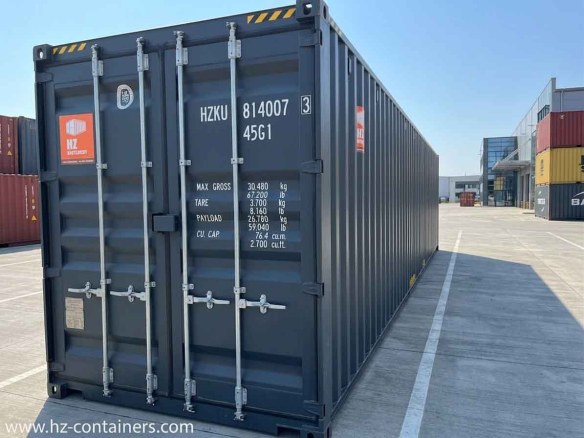


Other container news...
Corner casting steel vs aluminum
Every shipping container in the world — all 40 million of them — rests on eight critical components. Corner castings are the load-bearing blocks at each corner of an ISO shipping container, and they are the universal interface between the container and every crane, twistlock, spreader, and chassis on the planet. When you lift a container, stack it nine high on a ship, or lock it to a truck trailer, every ton of force flows through these fittings.

Construction cabin – selection, tips, dimensions and prices
Every construction project – whether a family house, a development project or a reconstruction – starts with the infrastructure. No construction manager, craftsman or investor who needs an on-site office, a changing room for workers or a safe storage for tools can do without a quality construction cell. But navigating the offer is not easy: residential containers, sanitary cells, storage modules, rental, purchase, refurbished pieces… This guide will give you answers to all the essential questions in one place.
Storage container
A storage container is a lockable steel box designed for the safe and dry storage of materials, tools, goods or equipment. Originally created as a shipping container for maritime transport, its durability and versatility have found their way onto construction sites, corporate premises and private land.
Shipping container 12m (40 ft)
A 12m shipping container is an investment that, if properly selected and cared for, will pay off in decades of trouble-free use. Whether you plan to use it as a warehouse, workshop, garage or the basis for a residential module — the key is careful selection of the condition, a thorough inspection before purchase and high-quality preparation of the base for placement. Take the time to compare offers, check the seller’s references and do not hesitate to personally inspect the container before buying. A properly selected 40-foot container will serve you reliably for many years.