
Shipping Containers Padova Italy
Shipping containers form the backbone of the global trade system, and Padova in Italy is one of the most important centers for their handling and distribution in Europe. This comprehensive guide will provide you with all the information about shipping containers, their roles in Padova, and how modern intermodal logistics works in this key Italian port.
Shipping containers are standardized transport units that have completely revolutionized global transportation and trade. In Padova, which is home to Interporto Padova – one of the most modern intermodal terminals in Italy – thousands of these containers pass through daily. Their efficiency, safety, and flexibility make them an indispensable element of the modern supply chain.
What are shipping containers and what is their origin?
Definition and basic characteristics of shipping containers
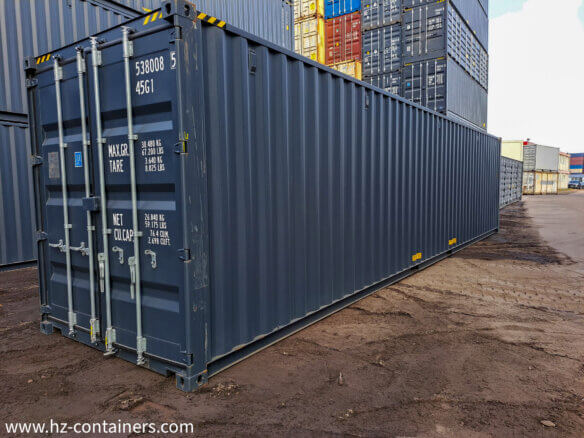
A shipping container is a standardized transport unit made of steel that serves to transport goods by sea, rail, and road. These are rectangular metal boxes with solid walls designed to be safely stacked on top of each other and transported by various means of transport. The key characteristic of a shipping container lies in its standardization – all containers comply with precise international ISO (International Organization for Standardization) standards, which enables their seamless use in global trade.
Shipping containers are made from special corrosion-resistant steel called COR-TEN, which ensures long service life and minimal maintenance. This steel is fully recyclable and resistant to atmospheric corrosion, making containers environmentally acceptable even for long-term use. The interior of the container has a smooth floor, usually made of wood or composite materials, which allows for easy loading and unloading of goods.
Each shipping container is equipped with a robust locking system at both ends, which ensures maximum protection of transported goods. These locking mechanisms are standardized and compatible with all handling equipment in the terminal. Containers are also equipped with lifting eyes and support points for safe transfer.
| Property | Description |
|---|---|
| Material | COR-TEN steel, fully recyclable |
| Service Life | 10–15 years of active transport |
| Temperature Resistance | -40°C to +65°C |
| Tightness | Waterproof and weatherproof |
| Certification | CSC (Container Safety Convention) |
| Weight of Empty Container | 2.0–2.5 tons (depending on type) |
History of containerization and development in Italy
Containerization is not a modern invention – its origins date back to the 1950s. American entrepreneur Malcolm McLean is considered the pioneer of this system. In 1956, he dispatched the first ship with 58 standardized containers from Newark to Houston. This historic moment marks the beginning of a revolution in maritime transport that gradually transformed global trade.
During the 1960s and 1970s, containerization spread rapidly throughout the world. Europe, including Italy, quickly recognized the advantages of this system. Italian ports, especially those in northern Italy, began investing in modern container infrastructure. Padova, which is not a port city but is located near important transport routes, became an ideal location for creating an intermodal center.
Interporto Padova was founded in 1973 as a vision of four founders: the Chamber of Commerce of Padova, the Municipality of Padova, the Province of Padova, and the State Railways. Since its founding, it has gradually developed into the most advanced intermodal platform in Italy. In the 1990s, Padova became one of the first Italian centers to implement fully automated systems for container handling.
| Year | Milestone |
|---|---|
| 1956 | First standardized shipping containers (McLean) |
| 1968 | Adoption of ISO 668 standard for container dimensions |
| 1973 | Founding of Interporto Padova |
| 1980s | Expansion of intermodal terminal in Padova |
| 1990s | Implementation of automated RMG cranes |
| 2000s | Digitalization and automation of processes |
| 2023 | Partnership of PSA Intermodal Italy and Logtainer for further development |
What are the dimensions and types of shipping containers?
Standard ISO dimensions (20′ and 40′)
There are two basic standard dimensions of shipping containers that are most commonly used in international transport: twenty-foot (20 feet = 6.1 meters) and forty-foot (40 feet = 12.2 meters) containers. These dimensions were established by the international ISO 668 standard and are recognized and used worldwide.
The twenty-foot container, often abbreviated as 20′ TEU (Twenty-foot Equivalent Unit), has external dimensions of 6.058 meters in length, 2.438 meters in width, and 2.591 meters in height. The internal usable space is slightly smaller – approximately 5.898 meters in length, 2.362 meters in width, and 2.393 meters in height. This internal capacity corresponds to approximately 33 cubic meters. The weight of an empty container is usually around 2,200 kilograms, which means the maximum payload is approximately 21,800 kilograms.
The forty-foot container, designated as 40′ FEU (Forty-foot Equivalent Unit), has an external length of 12.192 meters, width of 2.438 meters, and height of 2.591 meters. The internal dimensions are 12.032 meters in length, 2.330 meters in width, and 2.393 meters in height, providing usable space of approximately 67 cubic meters – exactly double that of a 20′ container. The weight of an empty 40′ container is approximately 3,850 kilograms with a maximum payload of around 26,680 kilograms.
In addition to these two basic types, there are also high cube (HC) variants, which have increased height. While standard containers have a height of 8.5 feet (2.591 meters), high cube containers have a height of 9.5 feet (2.896 meters). This provides an additional 305 millimeters of internal height, which is particularly useful for transporting light but bulky goods.
| Container Type | Length (m) | Width (m) | Height (m) | Volume (m³) | Payload (kg) |
|---|---|---|---|---|---|
| 20′ Standard (GP) | 6.058 | 2.438 | 2.591 | 33 | 21,800 |
| 40′ Standard (GP) | 12.192 | 2.438 | 2.591 | 67 | 26,680 |
| 20′ High Cube (HC) | 6.058 | 2.438 | 2.896 | 37 | 21,800 |
| 40′ High Cube (HC) | 12.192 | 2.438 | 2.896 | 76 | 26,680 |
| 45′ High Cube | 13.716 | 2.438 | 2.896 | 86 | 26,680 |
Special types of containers for various purposes
In addition to standard general-purpose containers (General Purpose – GP), there is a whole range of special types designed for specific types of goods. Refrigerated containers, also known as reefer containers, are equipped with their own cooling system and are intended for transporting goods requiring temperature control, such as food, medicines, or flowers. These containers can maintain temperatures from -25°C to +25°C and are essential for international trade in perishable goods.
Tank containers are specially designed for transporting liquids and are equipped with an internal tank. They serve for transporting chemicals, oils, wines, and other liquids. These containers have robust construction with safety valves and are certified for hazardous materials.
Open-top containers do not have a fixed roof, which allows for loading goods from above using a crane. They are ideal for transporting heavy pieces, such as machinery, steel structures, or building materials. Open-side containers have one or both side walls that can open, allowing for side loading of long or unusual items.
Flat rack containers are minimalist containers without side walls, designed for transporting very large or heavy items, such as machinery, aircraft parts, or structural elements. Collapsible containers are folding containers that can be folded when empty, saving space during return transport.
Certification and safety standards (CSC and ISO 1496)
Every shipping container intended for international transport must be certified according to the CSC standard (Convention for Safe Containers). This international convention was adopted in 1972 and entered into force in 1977. CSC certification is mandatory for all containers used in international trade and ensures that the container meets strict safety standards.
The CSC label is a small metal plate attached to the outside of the container that contains important information: owner identification, serial number, certification date, and expiration date. Certification is valid for five years and must be renewed. During inspection, the structural integrity of the container, the functionality of doors and locks, the condition of the floor, and the absence of corrosion or damage are checked.
ISO 1496 standard defines technical specifications and safety requirements for transport containers. This standard consists of five parts: Part 1 concerns containers for general cargo, Part 2 deals with thermal containers, Part 3 concerns tank containers, Part 4 deals with open-top containers, and Part 5 concerns flat racks and other special types.
Containers used in Padova, whether new or used, must have a valid CSC label and comply with ISO 1496 standard. Interporto Padova conducts routine inspections of all containers passing through the terminal to ensure compliance with all safety standards. This certification is crucial for transport safety and the protection of persons working in the terminal.
How does Interporto Padova and container transport work?
What is Interporto Padova and its role in Italian logistics
Interporto Padova is a state-of-the-art intermodal logistics center that spans an area of 2 million square meters. It is the most advanced intermodal platform in Italy and one of the most important in Europe. Interporto Padova was founded in 1973 as a mixed-capital company (public and private), founded by four institutions: the Chamber of Commerce of Padova, the Municipality of Padova, the Province of Padova, and the State Railways.
Interporto Padova functions as a key node in the global supply chain. It offers comprehensive infrastructure and services for logistics and transport with the aim of providing customers with high-quality customized solutions. The terminal is connected with more than 8,000 block trains annually, making it one of the busiest intermodal centers in Europe.
The main function of Interporto Padova is the transshipment of containers between different means of transport. Shipping containers arrive from northern European ports (mainly from Venice and Trieste) by rail, are transshipped here to road transport, or are stored. The terminal also enables transshipment from one rail train to another, allowing efficient distribution of goods throughout Europe.
Interporto Padova has more than 520,000 square meters of rail infrastructure and terminal, which are managed directly by the company. In addition, it has more than 300,000 square meters of covered warehouses and offices designed according to the specific needs of logistics and transport operators. The terminal is equipped with advanced automation systems, including electronically controlled gantry cranes (RMG cranes), which enable efficient container handling.
Intermodal connections: how containers are transported
Intermodality is a key principle of Interporto Padova’s operation. It is the ability to transport containers between different means of transport without unpacking them. A shipping container can be loaded onto a ship in Asia, unloaded at a European port, transported by rail to Padova, transshipped there to road transport, and finally delivered directly to the customer at their destination – all without opening the container.
This system offers enormous advantages in terms of efficiency, safety, and cost. Goods are protected throughout the journey, are not exposed to weather, and the risk of theft or damage is minimized. Intermodal transport also reduces transport and handling, leading to lower costs and lower emissions.
In Padova, the intermodal terminal is equipped with 18 loading and unloading tracks. Ten of them are up to 750 meters long and are served by 6 electrically controlled gantry cranes (RMG – Rail-Mounted Gantry cranes). These cranes can handle containers at a rate of up to 30 operations per hour. The remaining 8 tracks are intended for domestic transport and special operations.
Road access to the terminal is also highly developed. The terminal has a modern system of automatic gates for vehicles that recognize cargo units and allow seamless entry and exit without waiting. This automation ensures extremely competitive vehicle dwell times in the terminal.
Automation and modern technology in Interporto Padova
Interporto Padova is at the forefront of technological innovation in the logistics industry. The terminal is equipped with an advanced automation system for road vehicles (including VGM – Verified Gross Mass) and rail entry and exit. This automation enables zero waiting time for vehicles, ensuring extremely efficient operations.
A key element of automation is the RMG gantry cranes, which are electrically powered. These cranes are controlled remotely from the ROS (Remote Operations System) room, which allows operators to control container handling without physical presence in the terminal. This remote control increases safety and enables more precise handling.
Interporto Padova has also implemented advanced information systems for tracking and managing containers. All operations are recorded in real time, allowing customers to track the status of their goods. The terminal is also equipped with systems for automatic vehicle recognition and barcode reading, which speeds up loading and unloading processes.
Recently, Interporto Padova is investing in even more advanced technologies, such as artificial intelligence and blockchain. These technologies have the potential to further improve efficiency, transparency, and safety in logistics operations.
How are shipping containers bought and transported?
New versus used containers: quality, price, and certification
When purchasing a shipping container, customers often choose between new and used units. Each option has its advantages and disadvantages that need to be carefully considered.
New shipping containers are manufactured in accordance with the latest ISO standards and have full CSC certification. They typically have a service life of 10–15 years of active transport. New containers are ideal for companies that need long-term storage or transport solutions. The price of a new 20′ container ranges around 2,500–3,500 EUR, while a 40′ container costs approximately 4,000–5,500 EUR. New containers are often equipped with better sealing elements and have a lower risk of problems during transport.
Used containers, often called “bazaar” or “second-hand,” are cheaper but require more careful inspection. There are two main types of used containers: containers from the first trip from Asia (often called “one-trip” containers), which are in relatively good condition, and older containers that have been in service for 10–20 years. The price of a used 20′ container ranges around 1,500–2,500 EUR, while a 40′ container costs approximately 2,500–3,500 EUR.
When purchasing a used container, it is important to check the CSC certification and the condition of the container. You should look at floor wear, the functionality of doors and locks, the presence of corrosion, and the overall structural condition. Many sellers, such as HZ Containers, offer detailed inspection reports and photographs that will help you make an informed decision.
Prices and availability of shipping containers in Padova and surroundings
Padova and its surroundings is one of the most important centers for buying and selling shipping containers in the Czech Republic and Europe. There are several large distributors and sellers here who offer both new and used containers.
HZ Containers is one of the largest sellers in the Czech Republic with a depot in Padova, Italy. They offer a wide selection of new and used containers of all sizes and types. Their prices are competitive and they often offer transport.
Prices of shipping containers can vary depending on several factors:
- Container condition: New vs. used
- Container type: Standard vs. high cube, special types
- Certification: CSC validity, ISO compliance
- Availability: Seasonal fluctuations, local supply
- Transport: Transport costs from depot to you
- Quantity: Purchasing multiple containers often means discounts
Typical prices in the Czech Republic and surroundings (without transport):
- Used 20′ container: 1,500–2,500 EUR
- New 20′ container: 2,500–3,500 EUR
- Used 40′ container: 2,500–3,500 EUR
- New 40′ container: 4,000–5,500 EUR
Transport and logistics of shipping containers
Once you have purchased a shipping container, you need to transport it from the depot to your destination. There are several transport options, each with its own advantages and disadvantages.
Road transport is the most common method for domestic transport. The container is placed on a special truck and transported by road. Road transport costs range around 1–2 EUR per kilometer, depending on distance and container type. Many sellers offer transport with a hydraulic arm, which allows unloading of the container without external handling.
Rail transport is more economical for long distances and large quantities of containers. Interporto Padova offers rail transport to various locations in the Czech Republic and Europe. Rail transport is also more environmentally friendly, as electric trains in Padova produce lower emissions.
Combined transport (multimodal transport) is the most flexible option. The container can be transported by sea to a European port, then by rail to Padova, and finally by road to you. This combination is often the most economical and safest for international transport.
What are the practical applications of shipping containers?
Storage and storage solutions with containers
Shipping containers have become a popular storage solution. Their durable construction, secure locking, and weather protection make them ideal for storing various types of goods. Containers can be placed on the ground, stacked on top of each other, or placed in buildings.
Storage containers are ideal for companies that need flexible, mobile storage solutions. They can be easily moved to a new location if needs change. A 20′ container provides approximately 33 cubic meters of storage space, which is sufficient for small to medium-sized businesses. A 40′ container offers double the space.
Containers can be customized with the addition of doors, windows, ventilation, or air conditioning. Special refrigerated containers can maintain temperatures of -20°C, which is useful for food or medicine storage. Some companies use containers as modular buildings to create warehouses, offices, or even residential units.
Advantages of storage in containers:
- Low acquisition costs compared to permanent construction
- Mobility – can be moved to a new location
- Security – robust construction and locking
- Weather protection – waterproof and weatherproof
- Possibility of customization
Construction and construction units
The construction industry is one of the largest users of shipping containers. Construction companies use containers as site offices, storage for building materials, worker cabins, and temporary social facilities. Containers provide a safe and comfortable environment for workers and protection of building materials.
Construction units are often equipped with electrical wiring, heating, and air conditioning to provide comfort to workers. They can also be equipped with bathrooms and kitchens. Containers can be stacked on top of each other to create multi-story structures and can be connected using bridges or stairs.
Mobile construction solutions with containers are particularly popular for temporary structures and projects in remote locations. Containers can be easily transported to the construction site and quickly installed, saving time and costs.
Industrial and logistics applications
In industry, containers are used for storing raw materials, semi-finished products, and finished goods. Their standardized dimensions allow for efficient storage and handling in industrial facilities. Containers can be integrated into automated storage systems that use cranes and robots for handling.
In logistics, containers are the backbone of the global supply chain. They enable efficient transport of goods from manufacturing to distribution centers and finally to customers. Interporto Padova plays a key role in this chain, providing infrastructure for transshipment and distribution of containers.
Containers are also used for special applications, such as automobile transport (auto-carriers), transport of refrigerated goods (reefer containers), and transport of hazardous materials (hazmat containers). Each application has specific requirements for the type and equipment of the container.
What are the ecological aspects and future of containers?
Sustainability and green logistics in Interporto Padova
Interporto Padova is committed to sustainability and reducing environmental impact. One of the main initiatives is the installation of one of the largest photovoltaic systems on warehouse roofs in Italy. This system has a capacity of 13 MWp (megawatt peak) and produces annual energy equivalent to the average consumption of 5,000 households.
The terminal has also implemented an innovative photovoltaic system with a capacity of 700 kW specifically designed to power the terminal, including electric gantry cranes. Interporto Padova is also studying the application of an energy storage system that would enable powering the terminal even during night hours without dependence on external electricity.
One of the most advanced initiatives of Interporto Padova is Cityporto – an urban distribution service with low environmental impact. Cityporto was designed and has been managed by Interporto Padova since 2004 as part of an agreement program with local public authorities (Municipality, Province, and Chamber of Commerce of Padova).
Cityporto uses low-emission vehicles, including vehicles powered by natural gas (CNG) and electric vehicles. The service combines deliveries from various operators, thereby reducing the number of trucks in urban areas. This leads to lower emissions of pollutants and reduced urban congestion, with benefits for the entire city.
Future trends and innovations in containerization
The future of containerization is linked to digitalization and automation. Blockchain technology could revolutionize the tracking and verification of goods origin. The Internet of Things (IoT) enables real-time tracking of containers, including temperature, humidity, and location.
Artificial intelligence and machine learning are used to optimize logistics processes, predict demand, and automate decision-making processes. Autonomous vehicles and drones may play a role in container handling and transport in the future.
Ecological innovations will also play an important role. Research focuses on developing containers from recycled materials and bioplastics. Electrification of transport, including electric trucks and ships powered by alternative fuels, will continue.
Interporto Padova is at the forefront of these innovations and is investing in new technologies and infrastructure. The partnership with PSA Intermodal Italy and Logtainer, announced in 2023, aims at further development of the terminal and implementation of the latest technologies.
Frequently Asked Questions (FAQ)
What are shipping containers?
Shipping containers are standardized transport units made of steel that are used to transport goods by sea, rail, and road. They are standardized according to international ISO standards and are equipped with a robust locking system to protect goods.
What are the dimensions of shipping containers?
The most commonly used dimensions are 20′ (6.058 m in length, 2.438 m in width, 2.591 m in height) and 40′ (12.192 m in length, 2.438 m in width, 2.591 m in height). There are also high cube variants with a height of 2.896 meters.
What types of containers exist?
There are various types of containers: standard general-purpose (GP), refrigerated (reefer), tank, open-top, open-side, flat racks, and collapsible containers. Each type is designed for specific types of goods.
What is Interporto Padova?
Interporto Padova is a state-of-the-art intermodal logistics center in Padova, Italy, founded in 1973. It is one of the most advanced intermodal terminals in Italy and Europe, with infrastructure for container handling and distribution by rail and road.
How does container transport work?
Container transport works on the principle of intermodality – the container is loaded onto a ship at the place of origin, unloaded at a European port, transported by rail to Padova, and then by road to the final address. All without opening the container.
What are the ISO standards for containers?
The main standard is ISO 668, which establishes container dimensions, and ISO 1496, which defines technical specifications and safety requirements. Containers intended for international transport must have CSC certification.
Where are shipping containers purchased in Padova?
Shipping containers can be purchased from various distributors, such as HZ Containers with a depot in Padova. Prices and availability vary depending on the type and quality of the container.
What is the price of a shipping container?
The price ranges from 1,500 EUR for a used 20′ container to 5,500 EUR for a new 40′ container. The price depends on condition, type, certification, and availability. Transport usually costs 1–2 EUR per kilometer.

 Italy, Padua
  WITHOUT SHIPPING

Other container news...
Corner casting steel vs aluminum
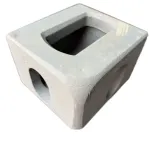
Every shipping container in the world — all 40 million of them — rests on eight critical components. Corner castings are the load-bearing blocks at each corner of an ISO shipping container, and they are the universal interface between the container and every crane, twistlock, spreader, and chassis on the planet. When you lift a container, stack it nine high on a ship, or lock it to a truck trailer, every ton of force flows through these fittings.

Construction cabin – selection, tips, dimensions and prices
Every construction project – whether a family house, a development project or a reconstruction – starts with the infrastructure. No construction manager, craftsman or investor who needs an on-site office, a changing room for workers or a safe storage for tools can do without a quality construction cell. But navigating the offer is not easy: residential containers, sanitary cells, storage modules, rental, purchase, refurbished pieces… This guide will give you answers to all the essential questions in one place.
Storage container
A storage container is a lockable steel box designed for the safe and dry storage of materials, tools, goods or equipment. Originally created as a shipping container for maritime transport, its durability and versatility have found their way onto construction sites, corporate premises and private land.
Shipping container 12m (40 ft)
A 12m shipping container is an investment that, if properly selected and cared for, will pay off in decades of trouble-free use. Whether you plan to use it as a warehouse, workshop, garage or the basis for a residential module — the key is careful selection of the condition, a thorough inspection before purchase and high-quality preparation of the base for placement. Take the time to compare offers, check the seller’s references and do not hesitate to personally inspect the container before buying. A properly selected 40-foot container will serve you reliably for many years.