
Shipping Container Dimensions
Shipping container dimensions are among the most precisely standardized measurements in global trade. Every container that moves across oceans, railways, and highways conforms to a set of dimensional specifications that trace back to the 1950s — when a trucking entrepreneur named Malcolm McLean realized that standardizing the box, not the cargo, would change the world. Today, those dimensions govern everything from how many containers fit on a vessel to whether your cargo clears a warehouse door.
This guide covers every shipping container dimension you will encounter: the common 20-foot and 40-foot units, the high cube variants that add an extra foot of height, the specialized containers that handle everything from frozen goods to construction equipment, and the weight ratings that determine what you can legally put inside them. Every measurement is provided in both imperial (feet and inches) and metric (millimeters and meters), because shipping container dimensions are truly bilingual.
What Are the Standard Shipping Container Dimensions?
The standard shipping container dimensions are defined by the International Organization for Standardization under ISO 668, which establishes the classification, external dimensions, and ratings for series 1 freight containers. When people refer to “standard” shipping containers, they are almost always talking about ISO series 1 general-purpose dry cargo containers.
The most common standard shipping container dimensions break down as follows:
- Length: 20 feet (6.058 m) or 40 feet (12.192 m) externally
- Width: 8 feet (2.438 m) externally — this is nearly universal across all ISO container types
- Height: 8 feet 6 inches (2.591 m) for standard height; 9 feet 6 inches (2.896 m) for high cube
These three dimensions — length, width, and height — form the backbone of the global container fleet. The width of 8 feet (2,438 mm) is the single most consistent dimension across all container types. It was chosen because it allowed containers to fit within the width constraints of highway lanes and rail cars in the United States and Europe, the two markets that drove early container adoption.
The ISO 668 Standard Explained
ISO 668 is not a single document but a family of standards that governs the external dimensions, minimum internal dimensions, and strength requirements of intermodal containers. The standard specifies:
- External dimensions — the maximum permissible external length, width, and height for each container designation
- Minimum internal dimensions — the smallest allowable interior measurements, ensuring that cargo can be loaded and unloaded consistently
- Corner fitting locations — the precise placement of the eight corner castings that allow containers to be lifted, stacked, and secured
- Rating values — the maximum gross weight (MGW) that each container size is certified to carry
The key container designations under ISO 668 are:
| ISO Designation | Nominal Length | External Length | External Width | External Height |
|---|---|---|---|---|
| 1EEE | 45 ft | 13,716 mm (45 ft 0 in) | 2,438 mm (8 ft 0 in) | 2,896 mm (9 ft 6 in) |
| 1EE | 45 ft | 13,716 mm (45 ft 0 in) | 2,438 mm (8 ft 0 in) | 2,591 mm (8 ft 6 in) |
| 1AAA | 40 ft | 12,192 mm (40 ft 0 in) | 2,438 mm (8 ft 0 in) | 2,896 mm (9 ft 6 in) |
| 1AA | 40 ft | 12,192 mm (40 ft 0 in) | 2,438 mm (8 ft 0 in) | 2,591 mm (8 ft 6 in) |
| 1A | 40 ft | 12,192 mm (40 ft 0 in) | 2,438 mm (8 ft 0 in) | 2,438 mm (8 ft 0 in) |
| 1BBB | 30 ft | 9,125 mm (29 ft 11.25 in) | 2,438 mm (8 ft 0 in) | 2,896 mm (9 ft 6 in) |
| 1CC | 20 ft | 6,058 mm (19 ft 10.5 in) | 2,438 mm (8 ft 0 in) | 2,591 mm (8 ft 6 in) |
| 1C | 20 ft | 6,058 mm (19 ft 10.5 in) | 2,438 mm (8 ft 0 in) | 2,438 mm (8 ft 0 in) |
| 1D | 10 ft | 2,991 mm (9 ft 9.75 in) | 2,438 mm (8 ft 0 in) | 2,438 mm (8 ft 0 in) |
Key insight: The letter codes in ISO designations are meaningful. “A” designates a 40-foot container, “C” designates a 20-foot container, and “D” designates a 10-foot container. Additional letters indicate height: “AA” for 8-foot-6-inch height, “AAA” for 9-foot-6-inch high cube. The “EE” and “EEE” designations are for 45-foot containers.
Why Shipping Container Dimensions Are Standardized
Before standardization, cargo ships carried goods in barrels, crates, and sacks of wildly varying sizes. Longshoremen spent days loading and unloading a single vessel. McLean’s insight — later refined by engineer Keith Tantlinger, who designed the corner casting and twist-lock mechanism — was that if every container had identical external dimensions and identical corner fittings, the box itself could move seamlessly between truck, train, and ship. The standardization of shipping container dimensions reduced the cost of loading a ship from $5.86 per ton to $0.16 per ton — a 97% reduction.
How Did Shipping Container Dimensions Become Standardized?
The story of shipping container dimensions is a story of how one man’s frustration with inefficiency reshaped global trade.
Malcolm McLean and the Birth of Intermodal Shipping
In 1937, Malcolm McLean was a 24-year-old truck driver sitting in his cab at a North Carolina port, waiting for his trailer to be unloaded. He watched longshoremen carry individual bales, barrels, and crates off other trucks, piece by piece, while his own cargo sat idle. The process was slow, expensive, and vulnerable to theft. McLean began wondering: what if the entire trailer bed could be lifted off the truck chassis and placed directly onto the ship?
That idea incubated for nearly two decades. In 1955, McLean sold his trucking company — then the fifth-largest in the United States — and purchased the Pan-Atlantic Steamship Company. On April 26, 1956, the converted tanker Ideal X sailed from Newark, New Jersey, to Houston, Texas, carrying 58 of McLean’s newly designed containers on its deck. Each container was 35 feet long, 8 feet wide, and 8 feet tall — dimensions dictated by the maximum trailer length permitted on U.S. highways at the time.
The ISO 668 Standard: How the Numbers Were Chosen
McLean’s first containers were 35 feet long, but he was not the only player. Matson Navigation, serving the Pacific, used 24-foot containers. Grace Line used 17-foot units. The U.S. military used 40-foot CONEX boxes. By the early 1960s, the industry faced a Tower of Babel problem: different container lengths meant different ships, different cranes, and different chassis — defeating the purpose of intermodalism.
In 1961, the ISO established Technical Committee 104 (TC 104) to develop a universal container standard. The negotiations were contentious. American delegates, backed by McLean’s Sea-Land, pushed for 35-foot and 40-foot lengths. European delegates, constrained by narrower roads and rail tunnels, favored smaller sizes. The compromise, formalized in ISO 668, established a family of container sizes with 20-foot and 40-foot lengths as the primary standards, 8-foot width as universal, and 8-foot-6-inch height as the default.
The 20-foot length became the fundamental unit of measurement — the TEU (twenty-foot equivalent unit) — because it balanced road maneuverability with cargo capacity. The 40-foot length provided twice the volume for lighter, bulkier goods. The 8-foot width was the maximum that could travel on standard rail flatcars and fit within European road-vehicle width regulations.
From CONEX Boxes to Global Standards
The term “CONEX” — short for “container express” — originated with the U.S. military during the Korean War. The military developed a 40-foot steel container (8 feet wide, 8 feet 6 inches tall) to transport supplies efficiently. The CONEX program proved that standardized containers could survive rough handling and harsh environments. When the ISO standards were finalized, the 40-foot CONEX dimensions heavily influenced the ISO 1AA designation, which remains the world’s most common 40-foot container size.
By 1970, the ISO 668 standard was fully adopted. Today, an estimated 40 million ISO containers are in circulation globally, carrying approximately 90% of non-bulk cargo worldwide. Every single one of them conforms to the dimensional framework established in those early committee meetings.
What Are the Dimensions of a 20-Foot Shipping Container?
The 20-foot standard shipping container — the TEU — is the fundamental building block of the global container fleet. It is the reference unit against which all other container sizes are measured, and it remains the most popular choice for dense, heavy cargo.
20ft Standard Exterior and Interior Dimensions
The exterior dimensions of a 20-foot standard dry container are:
| Measurement | Imperial | Metric |
|---|---|---|
| External Length | 19 ft 10.5 in | 6,058 mm |
| External Width | 8 ft 0 in | 2,438 mm |
| External Height | 8 ft 6 in | 2,591 mm |
The interior dimensions — the space actually available for cargo — are smaller, because the container walls, floor, and roof have thickness:
| Measurement | Imperial | Metric |
|---|---|---|
| Interior Length | 19 ft 4 in | 5,898 mm |
| Interior Width | 7 ft 8 in | 2,350 mm |
| Interior Height | 7 ft 10 in | 2,390 mm |
The reduction from exterior to interior is approximately 6.5 inches in length, 4 inches in width, and 8 inches in height. The width reduction is particularly significant because it means the widely cited “8 feet wide” specification refers to the outside of the container — not the usable cargo space inside.
20ft Container Door Opening and Cubic Capacity
The door opening at the rear of a 20-foot container is narrower and shorter than the interior cavity:
| Door Dimension | Imperial | Metric |
|---|---|---|
| Door Opening Width | 7 ft 8 in | 2,340 mm |
| Door Opening Height | 7 ft 5.5 in | 2,280 mm |
The door opening height is lower than the interior height because of the door header — a structural steel beam that spans the top of the door frame. This is the same principle as a residential doorway, where the door frame itself is shorter than the ceiling height of the room. You lose approximately 4.5 inches of clearance when passing cargo through the doors.
The cubic capacity of a 20-foot standard container is approximately 33.1 cubic meters (1,169 cubic feet). To visualize this: a 20-foot container can hold the contents of a typical one-bedroom apartment, including furniture, appliances, and boxes.
20ft Container Weight: Tare, Payload, and Gross
Every 20-foot container carries three weight figures on its CSC (Convention for Safe Containers) plate:
| Weight Parameter | Imperial | Metric |
|---|---|---|
| Tare Weight (empty) | ~5,070 lbs | ~2,300 kg |
| Maximum Gross Weight | 67,200 lbs | 30,480 kg |
| Payload Capacity | ~62,130 lbs | ~28,180 kg |
The tare weight is the weight of the empty container. The maximum gross weight is the absolute maximum the container is rated to hold — container plus cargo. The payload capacity is the difference between the two: how much cargo mass you can actually load.
The 20-foot container has a notably high payload-to-volume ratio. At roughly 62,000 lbs of cargo capacity in a 33 cubic meter space, the 20-foot container is the preferred size for dense, heavy goods: machinery, steel coils, stone, and concentrated liquids.
What Are the Dimensions of a 40-Foot Shipping Container?
The 40-foot standard shipping container — equivalent to 2 TEU or 1 FEU (forty-foot equivalent unit) — is the most common container for volume-constrained cargo. It offers roughly twice the interior length of the 20-foot unit at only about 30% more cost to ship, making it the economical choice for bulky but relatively light goods.
40ft Standard Exterior and Interior Dimensions
| Measurement | Imperial | Metric |
|---|---|---|
| External Length | 40 ft 0 in | 12,192 mm |
| External Width | 8 ft 0 in | 2,438 mm |
| External Height | 8 ft 6 in | 2,591 mm |
The interior dimensions of the 40-foot standard container are:
| Measurement | Imperial | Metric |
|---|---|---|
| Interior Length | 39 ft 5 in | 12,032 mm |
| Interior Width | 7 ft 8 in | 2,350 mm |
| Interior Height | 7 ft 10 in | 2,390 mm |
Note that the interior width and height are identical to the 20-foot container. The only dimension that changes is the length. This consistency is deliberate — the ISO standard specifies the same cross-section for all standard-width containers, ensuring that cargo loaded into a 20-foot container fits identically into a 40-foot one.
40ft Container Door Opening and Cubic Capacity
| Door Dimension | Imperial | Metric |
|---|---|---|
| Door Opening Width | 7 ft 8 in | 2,340 mm |
| Door Opening Height | 7 ft 5.5 in | 2,280 mm |
The door opening dimensions are identical to the 20-foot container. The door header problem applies equally to both sizes.
The cubic capacity of a 40-foot standard container is approximately 67.6 cubic meters (2,389 cubic feet). This is enough space to hold the contents of a typical three-bedroom house, or approximately 22 standard pallets arranged in a single tier.
40ft Container Weight: Tare, Payload, and Gross
| Weight Parameter | Imperial | Metric |
|---|---|---|
| Tare Weight (empty) | ~8,265 lbs | ~3,750 kg |
| Maximum Gross Weight | 67,200 lbs | 30,480 kg |
| Payload Capacity | ~58,935 lbs | ~26,730 kg |
The maximum gross weight of 67,200 lbs is the same for both 20-foot and 40-foot containers — a fact that surprises many first-time shippers. Because the 40-foot container is heavier when empty (8,265 lbs vs. 5,070 lbs), it has a lower payload capacity than the 20-foot container despite having twice the volume. This is why heavy cargo almost always ships in 20-foot containers, while lighter, high-volume cargo (furniture, textiles, electronics packaging) goes in 40-foot containers.
What Is the Difference Between Standard and High Cube Containers?
A high cube container is exactly one foot taller than a standard container of the same length. This single additional foot of height — from 8 feet 6 inches to 9 feet 6 inches externally — adds approximately 12% more cubic capacity, which can be decisive for lightweight, voluminous cargo.
High Cube Dimensions: 20ft, 40ft, and 45ft
High cube containers are available in 20-foot, 40-foot, and 45-foot lengths:
| Container Type | External L x W x H | Internal L x W x H | Cubic Capacity |
|---|---|---|---|
| 20ft High Cube | 20′ x 8′ x 9’6″ | 19’4″ x 7’8″ x 8’10” | ~37.4 m³ (1,320 ft³) |
| 40ft High Cube | 40′ x 8′ x 9’6″ | 39’5″ x 7’8″ x 8’10” | ~76.2 m³ (2,690 ft³) |
| 45ft High Cube | 45′ x 8′ x 9’6″ | 44’4″ x 7’8″ x 8’10” | ~86.0 m³ (3,040 ft³) |
The door opening on a high cube container is taller as well — typically 8 feet 5.5 inches (2,585 mm) in height, compared to 7 feet 5.5 inches (2,280 mm) for standard containers. The door width remains the same at 7 feet 8 inches (2,340 mm).
When to Choose a High Cube Over a Standard Container
High cube containers solve a specific problem: cargo that is light enough to fill the volume but not heavy enough to hit the weight limit. Consider two scenarios:
| Factor | Standard 40ft | 40ft High Cube | Difference |
|---|---|---|---|
| External Height | 8 ft 6 in (2,591 mm) | 9 ft 6 in (2,896 mm) | +12 in (305 mm) |
| Internal Height | 7 ft 10 in (2,390 mm) | 8 ft 10 in (2,695 mm) | +12 in (305 mm) |
| Cubic Capacity | 67.6 m³ | 76.2 m³ | +8.6 m³ (+12.7%) |
| Tare Weight | ~8,265 lbs | ~8,775 lbs | +510 lbs |
| Payload Capacity | ~58,935 lbs | ~58,450 lbs | -485 lbs |
The high cube container adds 12.7% more volume while sacrificing only 485 lbs of payload capacity. For cargo like furniture, insulation, empty bottles, or lightweight automotive parts, the extra cubic capacity far outweighs the marginal payload reduction.
High cube containers are also increasingly popular for conversion projects — container homes, offices, and retail spaces — because the extra foot of interior height allows for ceiling insulation, HVAC ducting, and recessed lighting without making the space feel cramped.
What Are the Dimensions of Other Common Container Sizes?
Beyond the 20-foot and 40-foot standards, several other container sizes serve specific markets and use cases.
10-Foot Shipping Container Dimensions
The 10-foot container is the smallest standard ISO container. It is designated as ISO 1D and is used primarily for storage, small-scale shipping, and compact mobile offices.
| Measurement | Imperial | Metric |
|---|---|---|
| External Length | 9 ft 9.75 in | 2,991 mm |
| External Width | 8 ft 0 in | 2,438 mm |
| External Height | 8 ft 6 in | 2,591 mm |
| Interior Length | 9 ft 3 in | 2,830 mm |
| Interior Width | 7 ft 8 in | 2,350 mm |
| Interior Height | 7 ft 10 in | 2,390 mm |
| Cubic Capacity | ~15.9 m³ | ~563 ft³ |
| Tare Weight | ~2,850 lbs | ~1,293 kg |
| Payload Capacity | ~19,550 lbs | ~8,867 kg |
The 10-foot container is popular for on-site storage at construction sites, pop-up retail, and as a compact workshop. Its small footprint means it can be delivered to tight urban locations where a 20-foot container would not fit.
45-Foot High Cube Container Dimensions
The 45-foot high cube is the longest ISO-standard container in common international use. It is designated as ISO 1EEE and is primarily used for lightweight, high-volume cargo on routes where road and rail regulations permit the longer length.
| Measurement | Imperial | Metric |
|---|---|---|
| External Length | 45 ft 0 in | 13,716 mm |
| External Width | 8 ft 0 in | 2,438 mm |
| External Height | 9 ft 6 in | 2,896 mm |
| Interior Length | 44 ft 4 in | 13,556 mm |
| Interior Width | 7 ft 8.5 in | 2,352 mm |
| Interior Height | 8 ft 10 in | 2,697 mm |
| Cubic Capacity | ~86.0 m³ | ~3,040 ft³ |
| Tare Weight | ~10,250 lbs | ~4,650 kg |
| Payload Capacity | ~61,300 lbs | ~27,800 kg |
The 45-foot container offers approximately 13% more volume than a 40-foot high cube for only a marginal increase in shipping cost, making it attractive for voluminous cargo. However, 45-foot containers are not accepted at all ports, and not all container chassis can accommodate the extra length. Shippers should verify port and road compatibility before booking 45-foot units.
53-Foot Domestic Intermodal Container Dimensions
The 53-foot container is a North American domestic standard. It is not an ISO container and is not used for international ocean shipping. Instead, 53-foot containers move goods within the United States, Canada, and Mexico on rail and truck networks.
| Measurement | Imperial | Metric |
|---|---|---|
| External Length | 53 ft 0 in | 16,154 mm |
| External Width | 8 ft 6 in | 2,591 mm |
| External Height | 9 ft 6 in | 2,896 mm |
| Interior Length | 52 ft 3 in | 15,920 mm |
| Interior Width | 8 ft 2 in | 2,490 mm |
| Interior Height | 8 ft 10 in | 2,695 mm |
| Cubic Capacity | ~110 m³ | ~3,900 ft³ |
| Tare Weight | ~10,850 lbs | ~4,920 kg |
| Payload Capacity | ~43,500 lbs | ~19,730 kg |
The 53-foot container is wider than ISO containers (8 feet 6 inches vs. 8 feet) and substantially longer. It is designed to match the dimensions of a standard North American dry van trailer, allowing it to move seamlessly on the domestic trucking network. The wider interior allows two standard 48-inch pallets to be loaded side by side — something that is not possible in an ISO container’s 7-foot-8-inch interior width.
How Are Shipping Container Dimensions Measured?
Understanding how shipping container dimensions are measured prevents costly mistakes when loading cargo, planning transport, or designing a container-based structure.
Exterior vs. Interior Measurements
Exterior dimensions are measured from the outermost points of the container structure — typically the corner castings or the outer face of the corrugated steel panels. These are the dimensions that matter for transport: will the container fit on the chassis, in the ship’s cell guide, or on the railcar?
Interior dimensions are measured from the inside faces of the walls, floor, and roof. These are the dimensions that matter for cargo: will your pallets, machinery, or building materials fit inside?
The difference between exterior and interior dimensions comes from the container’s structural materials:
- Corrugated steel walls: Approximately 1 inch (25 mm) thick on each side
- Plywood or bamboo floor: Approximately 1.125 inches (28 mm) thick
- Roof panels: Approximately 1 inch (25 mm) thick
- Door header beam: Approximately 4.5 inches (114 mm) of vertical clearance lost
The total reduction from exterior to interior is approximately 4 inches in width (2 inches per side), 8 inches in height, and 6.5 inches in length. These numbers are consistent across all standard ISO containers.
Understanding Door Opening Dimensions
The door opening is always smaller than the interior cross-section. The door header — a structural steel beam that reinforces the rear wall above the doors — reduces the door opening height by approximately 4.5 inches compared to the interior ceiling height. The door frame itself narrows the opening by approximately 0.5 inches on each side compared to the interior width.
For cargo planning, the door opening is the limiting dimension. Even if your cargo fits within the interior dimensions, it must also pass through the smaller door opening during loading. This is particularly critical for tall items like machinery or large pre-assembled modules.
Why Dimensions Vary Between Manufacturers
ISO 668 specifies minimum and maximum tolerances rather than absolute fixed dimensions. A 20-foot container’s external length, for example, must be exactly 6,058 mm — but the standard allows a tolerance of 0 to -6 mm. Interior dimensions are specified as minimums, meaning a manufacturer can exceed the minimum interior width or height if they choose.
This tolerance system means that two containers of the same nominal size may differ by up to half an inch in interior dimensions. Manufacturers that use thicker steel for the walls (for added strength) will have slightly smaller interior dimensions. Refrigerated containers, which have insulated walls that are 2–3 inches thick, have significantly smaller interior dimensions than dry containers of the same external size.
What Are the Dimensions of Specialty Shipping Containers?
Standard dry containers handle the vast majority of global cargo, but specialized containers exist for goods that do not fit the standard box shape — whether because of temperature requirements, odd dimensions, or the need for top or side loading.
Refrigerated (Reefer) Container Dimensions
Refrigerated containers, or reefers, maintain a controlled temperature for perishable goods, pharmaceuticals, and other temperature-sensitive cargo. The refrigeration unit occupies approximately 2 feet of the container’s interior length, and the insulated walls are substantially thicker than dry container walls.
20ft Reefer Container:
| Measurement | Imperial | Metric |
|---|---|---|
| External Length | 19 ft 10.5 in | 6,058 mm |
| External Width | 8 ft 0 in | 2,438 mm |
| External Height | 8 ft 6 in | 2,591 mm |
| Interior Length | 17 ft 11 in | 5,456 mm |
| Interior Width | 7 ft 6 in | 2,288 mm |
| Interior Height | 7 ft 5 in | 2,263 mm |
| Cubic Capacity | ~28.2 m³ | ~996 ft³ |
| Tare Weight | ~6,195 lbs | ~2,810 kg |
| Payload Capacity | ~61,000 lbs | ~27,670 kg |
40ft High Cube Reefer Container:
| Measurement | Imperial | Metric |
|---|---|---|
| External Length | 40 ft 0 in | 12,192 mm |
| External Width | 8 ft 0 in | 2,438 mm |
| External Height | 9 ft 6 in | 2,896 mm |
| Interior Length | 38 ft 0 in | 11,590 mm |
| Interior Width | 7 ft 6 in | 2,284 mm |
| Interior Height | 8 ft 4 in | 2,544 mm |
| Cubic Capacity | ~67.5 m³ | ~2,384 ft³ |
| Tare Weight | ~9,900 lbs | ~4,490 kg |
| Payload Capacity | ~65,100 lbs | ~29,510 kg |
The critical difference between dry and reefer containers is the interior width — approximately 2 inches narrower in reefers due to the insulation. This can affect pallet loading patterns. Additionally, reefers have T-shaped floor rails that allow cold air to circulate beneath the cargo, reducing the usable floor height by approximately 1.5 inches.
Open Top Container Dimensions
Open top containers lack a solid roof, allowing cargo to be loaded from above by crane. They are used for tall items that cannot be loaded through the rear doors, such as heavy machinery, large glass panels, or logs. The roof opening is covered by a removable tarpaulin and supported by removable roof bows.
20ft Open Top Container:
| Measurement | Imperial | Metric |
|---|---|---|
| External Length | 19 ft 10.5 in | 6,058 mm |
| External Width | 8 ft 0 in | 2,438 mm |
| External Height | 8 ft 6 in | 2,591 mm |
| Interior Length | 19 ft 4 in | 5,898 mm |
| Interior Width | 7 ft 8 in | 2,350 mm |
| Interior Height | 7 ft 8 in | 2,348 mm |
| Roof Opening | 7 ft 5 in x 17 ft 10 in | 2,260 x 5,440 mm |
The open top container’s interior dimensions are nearly identical to the standard dry container, but the headroom is slightly reduced by the roof bow structure. The roof bows are removable, allowing full vertical access during loading.
Flat Rack Container Dimensions
Flat rack containers consist of a floor structure with fixed or collapsible end walls and no sides or roof. They are designed for cargo that is too large, too heavy, or too awkwardly shaped for any enclosed container — construction equipment, vehicles, pipes, generators, and yacht hulls.
20ft Flat Rack Container:
| Measurement | Imperial | Metric |
|---|---|---|
| External Length | 19 ft 10.5 in | 6,058 mm |
| External Width | 8 ft 0 in | 2,438 mm |
| External Height | 8 ft 6 in | 2,591 mm |
| Interior Length (between posts) | 18 ft 3 in | 5,568 mm |
| Interior Width (between rails) | 7 ft 2 in | 2,194 mm |
| Floor Height | 7 ft 3 in | 2,213 mm |
| Maximum Gross Weight | 84,000 lbs | 38,100 kg |
| Payload Capacity | ~70,000 lbs | ~31,750 kg |
Flat rack containers have a higher maximum gross weight than dry containers (84,000 lbs vs. 67,200 lbs for a 20-foot unit) because they are engineered for heavy, concentrated loads. The end walls can be folded down to allow cargo to overhang the length of the container, and the absence of sides means cargo can be wider than the 8-foot ISO width — subject to transport regulations.
How Much Does a Shipping Container Weigh?
Shipping container weight is a critical factor in transport planning, delivery logistics, and regulatory compliance. The weight of a container affects everything from the truck that can carry it to the crane that can lift it to the ground that can support it.
Understanding Tare Weight, Payload, and Gross Weight
Every ISO container carries three weight ratings on its CSC plate (Convention for Safe Containers), a metal placard riveted to the left door of the container:
- Tare weight: The weight of the empty container. For a 20-foot standard dry container, this is approximately 5,070 lbs (2,300 kg). For a 40-foot standard, approximately 8,265 lbs (3,750 kg).
- Maximum gross weight (MGW): The absolute maximum total weight the container is structurally rated to carry. For both 20-foot and 40-foot standard dry containers, this is 67,200 lbs (30,480 kg).
- Payload capacity: The maximum cargo weight, calculated as MGW minus tare weight. For a 20-foot standard, approximately 62,130 lbs (28,180 kg). For a 40-foot standard, approximately 58,935 lbs (26,730 kg).
The CSC Plate: Where to Find Weight Ratings
The CSC plate is a legal document. Under the International Convention for Safe Containers (1972), every container used in international transport must carry a valid CSC plate. The plate lists:
- Manufacturer, serial number, and date of manufacture
- Maximum gross weight in kg and lbs
- Tare weight in kg and lbs
- Allowable stacking weight (the weight that can be placed on top of the container during stacking)
- Racking test load value (the transverse force the container is rated to withstand)
- Date of last inspection and next inspection due date
A container with a missing or illegible CSC plate cannot legally be used for ocean transport. Many inland carriers will also refuse containers without valid CSC plates. Before accepting delivery of any container, check the plate.
Road Transport Weight Limits vs. Container Ratings
The 67,200-lb maximum gross weight stamped on a container is a structural rating — not a road-legal rating. In the United States, the federal gross vehicle weight (GVW) limit for a tractor-trailer combination is 80,000 lbs. This means the practical road payload is far lower than the container’s structural rating.
Here is the realistic math for a 20-foot container on a U.S. highway:
| Component | Weight |
|---|---|
| Tractor (semi-truck) | 17,000–20,000 lbs |
| Container chassis | 7,000–10,000 lbs |
| Container tare weight (20ft) | ~5,070 lbs |
| Remaining for cargo | ~42,500–50,000 lbs |
The container itself is rated for 62,130 lbs of cargo, but the road limits you to roughly 42,500–50,000 lbs. This gap catches many first-time shippers off guard. For a 40-foot container, the practical road payload is approximately 43,500 lbs.
Federal law also imposes per-axle weight limits: 20,000 lbs for a single axle and 34,000 lbs for a tandem axle group. The Federal Bridge Formula further restricts weight based on the number of axles and the spacing between them. More than 50% of overweight violations at DOT checkpoints are axle-related, not total-GVW violations. Cargo must be distributed evenly along the container floor to avoid axle overloads.
What Is a TEU and How Does It Relate to Container Dimensions?
The TEU — twenty-foot equivalent unit — is the universal yardstick of the container shipping industry. It is not a specific container but a unit of measurement based on the 20-foot ISO container’s external dimensions.
The Twenty-Foot Equivalent Unit Explained
A TEU represents the cargo capacity of one standard 20-foot ISO container: 20 feet long, 8 feet wide, and 8 feet 6 inches tall. The TEU is used to express:
- Vessel capacity: The world’s largest container ships, such as the MSC Irina, can carry over 24,000 TEU. This means the ship can hold the equivalent of 24,000 twenty-foot containers, though in practice the load is a mix of 20-foot, 40-foot, and 45-foot units.
- Port throughput: The Port of Shanghai handled over 49 million TEU in 2024, making it the world’s busiest container port.
- Fleet size: The global container fleet is estimated at approximately 40 million TEU.
TEU Calculations for Different Container Sizes
| Container Size | TEU Value |
|---|---|
| 10-foot container | 0.5 TEU |
| 20-foot container | 1.0 TEU |
| 40-foot container | 2.0 TEU (or 1 FEU) |
| 45-foot container | 2.25 TEU |
| 53-foot container | 2.65 TEU (domestic only, not ISO) |
The TEU system simplifies capacity planning across the entire logistics chain. A shipping line booking 500 TEU of cargo space can accommodate any combination of container sizes that sum to 500 TEU — 500 twenty-foot containers, 250 forty-foot containers, or any mix in between.
What Should You Know Before Choosing a Container Size?
Choosing the right shipping container dimensions is not simply a matter of matching the container’s length to the length of your cargo. Several practical considerations affect the decision.
Matching Container Size to Your Cargo
The choice between 20-foot and 40-foot containers comes down to the relationship between weight and volume:
- Dense cargo (heavy relative to volume): Choose a 20-foot container. Steel, stone, machinery, and liquids will hit the weight limit long before the container is full. A 20-foot container offers the highest payload-to-volume ratio.
- Voluminous cargo (light relative to volume): Choose a 40-foot or 40-foot high cube container. Furniture, textiles, insulation, and empty packaging will fill the container before reaching the weight limit. The 40-foot container offers the lowest cost per cubic meter.
- Tall cargo: Choose a high cube container. The extra foot of interior height can make the difference between fitting and not fitting.
- Odd-shaped cargo: Consider an open top or flat rack container. These specialized types allow loading from above or the side, and permit cargo to exceed the standard container envelope.
Common Misconceptions About Container Dimensions
Misconception #1: “All 40-foot containers are the same size.”
In reality, interior dimensions vary by manufacturer, age, and condition. Two 40-foot containers from different manufacturers may differ by up to half an inch in interior width or height. For most cargo, this is negligible. For precision cargo — like pre-built modular units designed to fit inside a container — it can be critical.
Misconception #2: “The container width is 8 feet inside.”
The 8-foot width is the external dimension. The interior width is approximately 7 feet 8 inches. This is why two standard 48-inch pallets cannot be placed side by side in an ISO container — they require 96 inches (8 feet) of width, and the interior offers only 92 inches. This is a primary reason for the development of pallet-wide containers.
Misconception #3: “A 53-foot container is just a longer ISO container.”
The 53-foot container is wider than ISO containers (8 feet 6 inches vs. 8 feet) and is not recognized by the ISO 668 standard. It is designed for North American domestic transport only and cannot be used for international ocean shipping.
Misconception #4: “The container’s weight rating is how much cargo it can carry on the road.”
The MGW on the CSC plate is a structural rating. The road-legal payload is determined by the 80,000-lb federal GVW limit, which almost always results in a lower practical payload than the container’s structural rating.
Practical Applications by Container Size
| Container Size | Best For |
|---|---|
| 10ft | Compact storage, tool sheds, pop-up retail, single-person offices |
| 20ft | Heavy cargo, machinery, dense goods, small homes, job-site offices |
| 20ft High Cube | Tall dense cargo, small workshops with overhead storage |
| 40ft | Volume cargo, furniture, electronics, standard container homes |
| 40ft High Cube | Lightweight volume cargo, container homes with insulation, retail spaces |
| 45ft High Cube | Maximum volume international cargo, large container conversions |
| 53ft | Domestic freight, maximum volume for non-ocean transport |
Frequently Asked Questions
What are the exact exterior dimensions of a 20-foot shipping container?
A standard 20-foot shipping container measures 19 feet 10.5 inches (6,058 mm) in length, 8 feet 0 inches (2,438 mm) in width, and 8 feet 6 inches (2,591 mm) in height. These are the external dimensions, measured from the outermost points including corner castings. The interior dimensions are approximately 19 feet 4 inches (5,898 mm) long, 7 feet 8 inches (2,350 mm) wide, and 7 feet 10 inches (2,390 mm) high.
How wide is a shipping container on the inside?
The interior width of a standard ISO shipping container is approximately 7 feet 8 inches (2,350 mm). The exterior width is 8 feet (2,438 mm), but the corrugated steel walls on each side reduce the usable interior width by about 4 inches total. This means two standard 48-inch pallets (96 inches total) cannot be placed side by side in a standard ISO container.
What is the difference between a standard container and a high cube container?
A high cube container is exactly 1 foot (305 mm) taller than a standard container. Standard containers have an external height of 8 feet 6 inches (2,591 mm), while high cube containers have an external height of 9 feet 6 inches (2,896 mm). The interior height of a high cube is approximately 8 feet 10 inches (2,695 mm), compared to 7 feet 10 inches (2,390 mm) for a standard container. This adds approximately 12.7% more cubic capacity.
What are the dimensions of a 40-foot high cube container?
A 40-foot high cube container has external dimensions of 40 feet 0 inches (12,192 mm) long, 8 feet 0 inches (2,438 mm) wide, and 9 feet 6 inches (2,896 mm) high. Interior dimensions are approximately 39 feet 5 inches (12,032 mm) long, 7 feet 8 inches (2,350 mm) wide, and 8 feet 10 inches (2,695 mm) high. The cubic capacity is approximately 76.2 cubic meters (2,690 cubic feet). The tare weight is approximately 8,775 lbs (3,970 kg), and the payload capacity is approximately 58,450 lbs (26,510 kg).
How much does an empty 20-foot shipping container weigh?
An empty 20-foot standard dry container (tare weight) weighs approximately 5,070 lbs (2,300 kg). The exact weight varies slightly by manufacturer and age, but the tare weight is stamped on the CSC plate affixed to the left door of every container. A 20-foot high cube container is slightly heavier, with a tare weight of approximately 5,181 lbs (2,350 kg).
What is a TEU in shipping?
TEU stands for “twenty-foot equivalent unit” and is the standard unit of measurement for container capacity in the shipping industry. One TEU equals the capacity of one standard 20-foot ISO container. A 40-foot container equals 2 TEU (also called 1 FEU, or forty-foot equivalent unit). TEU is used to measure vessel capacity, port throughput, and fleet size across the global container shipping industry.
What are the dimensions of a 53-foot shipping container?
A 53-foot domestic intermodal container measures 53 feet 0 inches (16,154 mm) long externally, 8 feet 6 inches (2,591 mm) wide externally, and 9 feet 6 inches (2,896 mm) high externally. Interior dimensions are approximately 52 feet 3 inches (15,920 mm) long, 8 feet 2 inches (2,490 mm) wide, and 8 feet 10 inches (2,695 mm) high. These containers are wider than ISO containers and are used exclusively for domestic transport within North America.
What are the door opening dimensions of a shipping container?
The door opening of a standard ISO shipping container is approximately 7 feet 8 inches (2,340 mm) wide and 7 feet 5.5 inches (2,280 mm) high. The door opening height is lower than the interior height because of the structural door header beam that spans across the top of the door frame. High cube containers have a taller door opening of approximately 8 feet 5.5 inches (2,585 mm).
Can shipping container dimensions vary between manufacturers?
Yes — ISO 668 specifies minimum and maximum tolerances rather than absolute fixed dimensions. Two containers of the same nominal size from different manufacturers may differ by up to half an inch (10–12 mm) in interior dimensions. Manufacturers that use thicker steel for added strength will have slightly smaller interior dimensions. Exterior dimensions are more consistent because they must fit within standardized cell guides on ships and standardized chassis on roads.
What is the maximum weight a shipping container can carry?
A standard 20-foot or 40-foot dry container has a maximum gross weight rating of 67,200 lbs (30,480 kg). The actual payload capacity is the maximum gross weight minus the tare weight of the empty container. For a 20-foot container, the payload is approximately 62,130 lbs (28,180 kg). For a 40-foot container, the payload is approximately 58,935 lbs (26,730 kg). However, road transport weight limits in the United States (80,000 lbs GVW) typically restrict the practical payload to approximately 42,500–50,000 lbs for a 20-foot container and 43,500 lbs for a 40-foot container.
Other container news...

20 Foot shipping container cost
If you are researching the cost of a 20 foot shipping container, you have likely already encountered wildly different prices — from $999 listings online to quotes exceeding $5,500. That range is not a sign of inconsistency. It reflects real differences in container condition, location, delivery logistics, and the seller you are dealing with.
Side Opening container
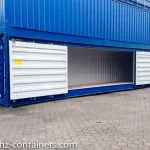
A side opening container is an ISO-compliant intermodal shipping container engineered with full-length bi-fold doors along one of its long side walls, in addition to the standard cargo doors at one end. Unlike conventional containers that restrict access to a single set of rear doors, a side opening container — also widely called an open side container, open-sided shipping container, or side door container — provides unobstructed lateral access across the entire 20-foot or 40-foot length of the unit. This design transforms the container from a narrow tunnel into a wide-open space that forklifts can enter from the side, multiple workers can load simultaneously, and oversized cargo that would never fit through standard end doors can be placed without struggle.
40 Foot High Cube container cost
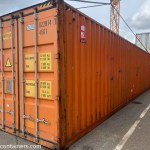
A 40 foot high cube container — often abbreviated as 40ft HC, 40′ HC, or 40-foot high cube — is one of the most common shipping container sizes sold on the secondary market. But if you are researching what a 40 foot high cube container costs, you have almost certainly noticed that prices are all over the map. One seller quotes $1,500. Another quotes $7,000. Both could be legitimate.
20 Foot container cost
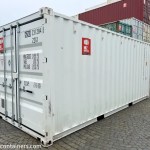
If you have ever searched for a shipping container, you have almost certainly asked one question first: how much does a 20 foot container cost? The answer is not a single number. It is a range that spans from under $1,000 for a weathered, as-is unit to over $5,000 for a pristine, one-trip container — and that is before delivery, site preparation, or modifications enter the picture.