
Container Classification According to ISO Standard
Complete Guide to Classification and Typology
Container classification according to ISO standard is the foundation of modern international logistics and global trade. Without standardized dimensions, parameters, and construction requirements, it would be impossible to safely and efficiently transport millions of containers around the world on ships, trains, and trucks. This complete guide will walk you through ISO container classification, explain the differences between individual types, and show you how these standards are applied in practice.
What is the Origin and Development of ISO Standards for Containers?
Historical Background — From the Beginnings of Containerization
The standardization of transport containers has an interesting history dating back to the second half of the twentieth century. Before 1968, containers existed in various sizes and constructions, which led to inefficiencies in international transport. Ships, trains, and trucks could not be optimally utilized because containers did not have uniform dimensions and were not compatible between different types of transport.
The International Organization for Standardization (ISO) recognized this problem and in 1968 issued the first version of the ISO 668 standard, which established the classification and dimensions of Series 1 containers. This standard was groundbreaking — for the first time in history, there was an internationally recognized standard for transport containers.
Since 1968, ISO 668 has been updated several times. The fourth edition from 2013 represents the current standard, which is recognized and used worldwide. In parallel with the development of ISO 668, the ISO 1496 standard was created, which specifies technical requirements and testing for individual container types. ISO 1496 consists of five parts, each focusing on a different type of construction.
These standards are prepared and managed by the ISO/TC 104 “Containers” technical committee, which consists of experts from around the world. Their task is to ensure that the standards are relevant, safe, and practically applicable in global logistics.
Basic Purpose and Principle of ISO Classification
Why is standardization so important? The answer is simple: interoperability. When a container moves from one country to another, it must be compatible with all types of transport vehicles and handling equipment. Standardized dimensions enable:
- Safe stacking — containers can be safely stacked on top of each other
- Efficient handling — the same handling equipment works for all standard containers
- Transport vehicle compatibility — ship, train, and truck can transport the same containers
- Safety — standardized construction elements ensure safety during transport and handling
- Global trade — uniform standards enable easier and cheaper international trade
Without these standards, logistics would become chaotic and extremely expensive. ISO standards are therefore the pillar of modern global trade.
| Year | Milestone | Description |
|---|---|---|
| 1968 | ISO 668 (1st edition) | First international standard for container classification |
| 1979 | ISO 668 (3rd edition) | Standard revision and expansion |
| 1988 | ISO 1496 (1st edition) | Technical requirements for individual types |
| 2005 | ISO 668 (4th edition) | Update with new types |
| 2013 | ISO 668 (4th edition) | Current standard, used worldwide |
How Are Containers Divided According to ISO 668 — Classification by Dimensions?
What is ISO 668 and What Does It Define?
ISO 668 is an international standard that classifies Series 1 freight containers based on their external dimensions. The standard establishes:
- External dimensions — length, width, and height of the container
- Gross weight — maximum weight that the container can hold (including its own weight)
- Internal dimensions — defined in ISO 1496, but also listed in ISO 668
- Minimum door opening dimensions — where relevant
Series 1 containers are designed for intercontinental operation and are the most widespread in the world. These are the containers you see on ships, trains, and trucks during international transport.
Six Basic Types of Class 1 Containers (1A to 1F)
ISO 668 defines six basic types of Series 1 containers, designated as types 1A, 1AA, 1AAA, 1C, 1CC, and 1E/1F. The division is based on the length and height of the container.
Type 1C — 20′ Standard Container
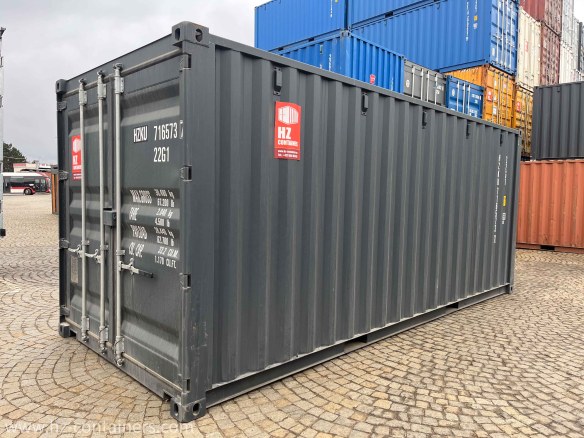
Type 1C is a 20-foot standard container (abbreviated as 20′ or 20 ft). It is the smallest standard type of ISO container and is most commonly encountered on railways and in local transport.
- External dimensions: 6,058 mm (length) × 2,438 mm (width) × 2,438 mm (height)
- Internal dimensions: approximately 5,867 mm × 2,330 mm × 2,350 mm
- Volume: approximately 33 m³
- Weight of empty container (tare): 2,200–2,500 kg
- Payload capacity: 21,800–28,000 kg
- Gross weight: approximately 30,000 kg
Type 1CC — 20′ High Container
Type 1CC is a 20′ container with increased height (8’6″ instead of standard 8′). It offers more space for taller cargo.
- External dimensions: 6,058 mm (length) × 2,438 mm (width) × 2,591 mm (height)
- Volume: approximately 35 m³
- Other parameters: similar to 1C
Type 1A — 40′ Standard Container
Type 1A is a 40-foot standard container (40′ or 40 ft). It is the most common type in international maritime transport.
- External dimensions: 12,192 mm (length) × 2,438 mm (width) × 2,438 mm (height)
- Internal dimensions: approximately 11,980 mm × 2,330 mm × 2,320 mm
- Volume: approximately 67 m³
- Weight of empty container (tare): 3,900–4,000 kg
- Payload capacity: 26,000 kg
- Gross weight: approximately 30,000 kg
Type 1AA — 40′ High Container
Type 1AA is a 40′ container with increased height (8’6″ instead of standard 8′).
- External dimensions: 12,192 mm (length) × 2,438 mm (width) × 2,591 mm (height)
- Volume: approximately 70 m³
Type 1AAA — 40′ High Cube Container
Type 1AAA is a 40′ High Cube container (40’HC or 40’HQ). This is the most commonly used type in modern transport. High Cube means “high cube” — it is a container with significantly increased height.
- External dimensions: 12,192 mm (length) × 2,438 mm (width) × 2,896 mm (height)
- Internal dimensions: approximately 11,988 mm × 2,330 mm × 2,655 mm
- Volume: approximately 70–76 m³ (depending on manufacturer)
- Weight of empty container (tare): 4,100 kg
- Payload capacity: 26,000 kg
- Gross weight: approximately 30,000 kg
Types 1E and 1F — Smaller Containers
Types 1E and 1F are smaller containers that are used less frequently. Type 1E is 10′ (3,048 mm) and type 1F is 5′ (1,524 mm). These types are encountered mainly in special applications or in smaller logistics networks.
Comparison of All Six ISO 668 Types
| Type | Length (mm) | Length (ft) | Height (mm) | Height (ft) | Volume (m³) | Tare Weight (kg) | Payload Capacity (kg) | Note |
|---|---|---|---|---|---|---|---|---|
| 1C | 6,058 | 20′ | 2,438 | 8′ | 33 | 2,200–2,500 | 21,800–28,000 | Standard 20′ |
| 1CC | 6,058 | 20′ | 2,591 | 8’6″ | 35 | 2,200–2,500 | 21,800–28,000 | High 20′ |
| 1A | 12,192 | 40′ | 2,438 | 8′ | 67 | 3,900–4,000 | 26,000 | Standard 40′ |
| 1AA | 12,192 | 40′ | 2,591 | 8’6″ | 70 | 3,900–4,000 | 26,000 | High 40′ |
| 1AAA | 12,192 | 40′ | 2,896 | 9’6″ | 70–76 | 4,100 | 26,000 | High Cube 40′ |
| 1E/1F | 3,048/1,524 | 10’/5′ | 2,438 | 8′ | 14/7 | 1,100–1,500 | 10,000–15,000 | Small types |
What Are the Technical Requirements According to ISO 1496 — Classification by Purpose?
Overview of ISO 1496 and Its Five Parts
While ISO 668 classifies containers by dimensions, ISO 1496 specifies technical requirements and testing for individual container types according to their construction and purpose. ISO 1496 consists of five parts:
| Part | Name | Purpose |
|---|---|---|
| ISO 1496-1 | Containers for general cargo and general use | Standard dry container (Dry Van) |
| ISO 1496-2 | Thermal containers | Refrigerated containers (Reefer) and insulated containers |
| ISO 1496-3 | Tank containers | Tank containers for liquids and gases |
| ISO 1496-4 | Special containers | Open, platform, and other special types |
| ISO 1496-5 | Special containers (continued) | Additional special types (e.g., containers with open sides) |
Each part of ISO 1496 defines:
- External and internal dimensions
- Materials and construction elements
- Strength and safety requirements
- Testing and compliance verification
- Marking and identification
Universal Containers — Dry Van (ISO 1496-1)
Dry Van (also called “General Purpose” or “GP”) is the most common type of ISO container. It is a closed metal box with doors on one end, designed for transporting all types of dry cargo.
Characteristics of Dry Van containers:
- Fully enclosed construction — protects cargo from weather
- Steel construction — 2 mm steel sheet on sides and roof
- Wooden floor — standard with hardwood (eucalyptus or similar)
- Double doors — allow easy loading and unloading
- Corner elements — standardized according to ISO 1161 for safe stacking and handling
Typical uses:
- Textiles and clothing
- Electronics and computers
- Furniture
- Industrial goods
- Paper and cardboard
- All types of general cargo
Dry Van containers are the cheapest to rent or purchase and have the best availability on the market.
Special Container Types According to ISO 1496
Reefer Containers (Refrigerated Containers) — ISO 1496-2
Reefer container (from the English “refrigerated”) is a special type of container equipped with a refrigeration unit that maintains the temperature inside the container at a precisely set level.
Characteristics:
- Refrigeration unit on one end — powered by electricity on the ship’s deck
- Insulation — thicker insulation than standard container
- Temperature control — allows setting temperature in the range of -25°C to +25°C
- Air circulation — ensures uniform temperature throughout the container
Dimensions of 20′ Reefer:
- External: 6,058 × 2,438 × 2,591 mm
- Internal: approximately 5,440 × 2,290 × 2,270 mm
- Volume: approximately 28 m³
Dimensions of 40′ Reefer:
- External: 12,192 × 2,438 × 2,591 mm
- Internal: approximately 11,563 × 2,286 × 2,270 mm
- Volume: approximately 67 m³
Typical uses:
- Fruits and vegetables (bananas, strawberries, apples)
- Meat and poultry
- Dairy products
- Fish and seafood
- Medicines and biological materials
- Flowers and plants
Reefer containers are more expensive to rent and operate (due to electricity consumption), but are necessary for transporting goods that require temperature control.
Open Top Containers — ISO 1496-4
Open Top container is a type of container without a fixed roof. Instead, it is equipped with a removable tarpaulin cover that can be removed for loading and unloading oversized cargo.
Characteristics:
- No roof — open top allows loading from above
- Tarpaulin cover — protects cargo from rain during transport
- Metal frames — on the sides for securing the tarpaulin
- Lighter construction — without roof, the container is lighter
Dimensions of 20′ Open Top:
- External: 6,058 × 2,438 × 2,438 mm
- Internal: approximately 5,867 × 2,330 × 2,350 mm
- Volume: approximately 33 m³
Dimensions of 40′ Open Top:
- External: 12,192 × 2,438 × 2,438 mm
- Internal: approximately 11,980 × 2,330 × 2,350 mm
- Volume: approximately 67 m³
Typical uses:
- Building materials (bricks, tiles, boards)
- Heavy industrial goods
- Machinery and equipment
- Steel profiles and pipes
- Transport of cargo taller than standard container
Platform (Flatbed) Container — ISO 1496-4
Platform container (also called “Flatbed”) is a container without sides, ends, and roof. It is essentially a platform with standardized corner elements.
Characteristics:
- No sides — open construction
- No ends — access from all sides
- No roof — no protection from above
- Solid floor — usually wooden or steel
- Corner elements — for safe stacking and handling
Dimensions of 20′ Platform:
- External: 6,058 × 2,438 × 0,370 mm (height of floor only)
- Payload capacity: 31,260 kg
Dimensions of 40′ Platform:
- External: 12,192 × 2,438 × 0,370 mm
- Payload capacity: 39,300 kg
Typical uses:
- Heavy machinery and equipment
- Automotive industry (cars, engines)
- Steel structures
- Large industrial components
- Non-standard dimension cargo
Tank (Tank) Containers — ISO 1496-3
Tank container (also called “cistern container”) is a special type designed for transporting liquids and gases. It is a cylindrical tank mounted in a metal frame with standardized corner elements.
Characteristics:
- Cylindrical tank — usually made of stainless steel
- Insulation — sometimes insulated to maintain temperature
- Piping and valves — for safe loading and unloading
- Safety elements — to prevent leaks
Typical uses:
- Oil and gasoline
- Chemicals
- Milk and other food liquids
- Liquid hydrogen
- Industrial gases
- Solvents and dissolved substances
Tank containers are highly specialized and must meet strict safety standards.
How Do Standard and High Cube Containers Differ?
Comparison of Standard and High Cube Types
One of the most frequently asked questions in logistics is: “What is the difference between a standard 40′ container and a 40′ High Cube?” The answer is simple — but the consequences are significant.
Standard 40′ container (type 1A) has a height of 2,438 mm (8 feet), while 40′ High Cube (type 1AAA) has a height of 2,896 mm (9’6″) — 458 mm (1’6″) higher.
This seemingly small difference has fundamental consequences:
| Aspect | Standard 40′ (1A) | High Cube 40′ (1AAA) | Difference |
|---|---|---|---|
| External height | 2,438 mm (8′) | 2,896 mm (9’6″) | +458 mm (+1’6″) |
| Internal height | 2,320 mm | 2,655 mm | +335 mm |
| Volume | 67 m³ | 70–76 m³ | +3–9 m³ (+4–13%) |
| Weight (tare) | 3,900–4,000 kg | 4,100 kg | +100–200 kg |
| Payload capacity | 26,000 kg | 26,000 kg | Same |
| Rental price | Standard | +10–15% | More expensive |
| Availability | Very high | High | HC is more popular |
Practical Consequences of Height
For light cargo (e.g., packaged goods, textiles, electronics), High Cube is significantly more advantageous:
- You can load more units into one container
- The number of required containers is reduced
- The price per unit of transported goods is reduced
- More efficient use of space
For heavy cargo (e.g., steel, machinery), the standard container is often a better choice:
- High Cube has the same payload capacity, but more space — so you have leftover capacity
- Standard container is cheaper to rent
- Lower center of gravity — safer during transport
Which Choice to Make?
Choose High Cube (40’HC) if:
- You are transporting light but voluminous cargo
- You want to maximize volume per shipment
- Rental price is not your primary factor
Choose Standard 40′ (1A) if:
- You are transporting heavy cargo
- You want to save on rental
- You don’t need extra space
What Are the Construction Components and Materials of ISO Containers?
Corner Elements and ISO 1161
One of the most important standards for ISO containers is ISO 1161, which specifies the parameters of corner castings (corner fittings). These corner elements are small but critically important components.
What are corner castings?
Corner castings are four metal elements located at the corners of the container (top and bottom). Their purpose is to:
- Ensure safe stacking of containers on top of each other
- Allow safe attachment to handling equipment (cranes, handlers)
- Distribute the weight of the container and cargo to four points
- Prevent container damage during handling
Standardized dimensions:
- Length and width: 170 mm × 170 mm
- Height: 102 mm (top) and 102 mm (bottom)
- Diameter of lifting equipment holes: 50 mm
Without standardization of these dimensions, it would be impossible to use the same handling equipment for different containers. ISO 1161 ensures that all ISO containers have corner elements in the same locations and with the same dimensions.
Materials and Container Construction
Steel Construction
Modern ISO containers are made of steel, which provides:
- High strength — can withstand heavy cargo and handling
- Corrosion resistance — special coatings protect steel from rusting
- Long lifespan — quality container lasts 20–30 years
- Recyclability — steel can be recycled
The sides and roof of the container are usually made of 2 mm steel sheet, which is strong enough but also light.
Floor
The floor of an ISO container is traditionally made of hardwood (most commonly eucalyptus or similar tropical wood). Wood is chosen because:
- It has a good strength-to-weight ratio
- It is inexpensive
- It allows easy cargo attachment (nails, straps)
- It is resistant to wear
In some cases, the floor is replaced with a steel platform for increased durability.
Doors
The doors of an ISO container (usually on one end) are:
- Double doors — open on both sides
- Tightly sealed — prevent water and dirt penetration
- Equipped with locks and latches — ensure cargo security during transport
- Often equipped with rubber sealing strips — for better sealing
Roof and Sides
The roof and sides are made of steel sheet and are:
- Corrugated profile — for increased strength
- Protected by coating — usually red coating with ISO logo
- Equipped with ventilation holes — in some types to prevent condensation
What Are Common Misconceptions About ISO Containers?
Most Common Myths and Their Refutation
During work with ISO containers, we encounter a number of misconceptions. Let’s clarify them.
Myth 1: “All ISO containers are the same”
Reality: This is not true. There are at least six basic types according to ISO 668 (1A, 1AA, 1AAA, 1C, 1CC, 1E/1F) and further dozens of special types according to ISO 1496 (Reefer, Open Top, Platform, Tank, etc.). Each type has different dimensions, capacity, and purpose.
Myth 2: “High Cube has greater payload capacity than standard container”
Reality: No. Both have the same payload capacity — 26,000 kg. High Cube only has greater volume. If you are transporting heavy cargo, there is no reason to pay for High Cube.
Myth 3: “Old containers do not meet ISO standards”
Reality: All ISO containers meet ISO standards — that is their definition. If they did not meet them, they would not be ISO containers. Old containers may be more worn, but they still meet safety standards.
Myth 4: “Reefer containers are only for frozen food”
Reality: Reefer containers are used for any cargo that requires temperature control — this can be 0°C for fresh meat, 15°C for chocolate, or even +25°C for certain medicines. It’s not just about freezing.
Myth 5: “I can load any amount of goods into a container”
Reality: No. Each container has a maximum payload capacity (gross weight) that you must not exceed. Exceeding the weight is dangerous and violates legal regulations.
Where Is the Future of ISO Containerization Heading?
Trends and Developments in Containerization
ISO standards are constantly evolving to meet the new needs of the global economy. What are the main trends?
More Environmentally Friendly Materials
Growing environmental awareness is leading to the development of:
- Containers made from recycled materials
- Lighter constructions — reducing fuel consumption during transport
- VOC-free coatings
- Insulation from more environmentally friendly materials
Digitalization and IoT
Modern containers are increasingly equipped with:
- GPS tracking — real-time location tracking
- Temperature and humidity sensors — to monitor transport conditions
- QR codes and RFID chips — for better identification
- Digital locks — for more secure access
New Sizes
Although 20′ and 40′ remain the standard, new sizes are emerging:
- 45′ containers — for certain routes (e.g., in the USA)
- Modular containers — for special applications
- Containers with adjustable height
Smart Containers
The future will bring:
- Self-loading and unloading
- Automatic condition monitoring
- Predictive maintenance
- Route optimization based on AI
Frequently Asked Questions
What Are the Basic Types of ISO Containers?
There are six basic types according to ISO 668: type 1C (20′ standard), 1CC (20′ high), 1A (40′ standard), 1AA (40′ high), 1AAA (40′ High Cube), and 1E/1F (smaller types). Most commonly, you encounter types 1C (20′) and 1AAA (40′ High Cube).
What Is the Difference Between ISO 668 and ISO 1496?
ISO 668 classifies containers according to their external dimensions (length, width, height). ISO 1496 specifies technical requirements and testing for individual container types according to their construction and purpose (Dry Van, Reefer, Open Top, Platform, Tank, etc.).
What Does High Cube Container Mean?
High Cube (HC) is a type of 40′ container with increased height of 9’6″ (instead of standard 8′). It offers greater volume (approximately 70–76 m³ vs. 67 m³) with the same payload capacity. It is ideal for light but voluminous cargo.
What Are the Dimensions of 20′ and 40′ Containers?
- 20′ standard (1C): 6,058 × 2,438 × 2,438 mm, volume 33 m³
- 40′ standard (1A): 12,192 × 2,438 × 2,438 mm, volume 67 m³
- 40′ High Cube (1AAA): 12,192 × 2,438 × 2,896 mm, volume 70–76 m³
What Are Special Types of ISO Containers?
Special types include Reefer (refrigerated), Open Top (open roof), Platform (flatbed), Tank (tank), and containers with open sides. Each is designed for a different type of cargo.
How Are Containers Classified by Purpose?
Containers are classified according to ISO 1496, which has five parts: ISO 1496-1 (Dry Van), ISO 1496-2 (Thermal/Reefer), ISO 1496-3 (Tank), ISO 1496-4 and ISO 1496-5 (special types).
What Is a Reefer Container and What Is It Used For?
Reefer container is a refrigerated container equipped with a refrigeration unit. It is used for transporting goods that require temperature control — fruits, meat, dairy products, fish, medicines, and others. Temperature can be set from -25°C to +25°C.
What Are the Parameters of Container Corner Elements?
Corner elements (corner fittings) are standardized in ISO 1161. They have dimensions of 170 × 170 mm and height of 102 mm. They are located at the corners of the container and allow safe stacking and handling.
What Is the Difference Between Standard and High Cube Container?
The main difference is height: standard 40′ has 8′ (2,438 mm), High Cube has 9’6″ (2,896 mm). High Cube has greater volume (70–76 m³ vs. 67 m³), but the same payload capacity. High Cube is more expensive to rent, but more efficient for light cargo.
How Long Does an ISO Container Last?
A quality ISO container lasts 20–30 years with proper maintenance. Lifespan depends on intensity of use, climate conditions, and maintenance. Old containers are often used for storage instead of transport.
Where Can I Find Information About ISO Standards for Containers?
Official information about ISO standards can be found on the website of the International Organization for Standardization (www.iso.org). In the Czech Republic, standards are available through ČNI (Czech Standards Institute) or commercial standards providers.
 Czech Republic, Třinec
  FREE SHIPPING


Other container news...

What Is a Shipping Container? The Ultimate Definitive Guide
A shipping container is a standardized, reusable steel box engineered to transport goods safely across multiple modes of transportation — ship, rail, and truck — without ever unloading the cargo inside. Also known as an ISO container, intermodal container, freight container, cargo container, sea van, dry box, or conex box, the shipping container is the invisible backbone of the global economy. More than 90% of everything you buy — from the smartphone in your pocket to the coffee in your cup — spent at least part of its journey inside one of these rectangular steel boxes.

Used Shipping Container: Grades, Costs, Inspection & More
A used shipping container delivers the same structural steel integrity as a new unit at 30–50% lower cost. For most storage, farming, job-site, and budget conversion applications, the right used container — properly graded and inspected — provides equal functional value with meaningfully lower upfront investment. This guide covers every decision you’ll face: grades, pricing, inspection, delivery, lifespan, and the mistakes that cost buyers thousands.

40ft Open Side Container
A 40ft open side container is a specialized ISO shipping container in which one full 40-foot long wall is replaced with bi-fold or multi-panel doors that swing open to provide unobstructed access along the entire side of the unit. Unlike a standard shipping container — where the only way in is through the 7-foot-8-inch-wide double doors at one end — an open side container lets you reach every pallet, every piece of equipment, and every inch of stored cargo from the side, without ever having to dig through layers of inventory. The standard end doors remain intact, giving you two fundamentally different access modes in a single unit.

20 Foot shipping container
A 20 foot shipping container is the single most important unit of measurement in global trade. It is the backbone of intermodal logistics, the standard by which every container ship, port terminal, and freight rate is measured, and — increasingly — a building block for homes, offices, and creative architecture. Despite its ubiquity, most people who encounter a 20 foot shipping container know surprisingly little about what defines it, how it came to be, and what it can actually do.