
Shipping container 20 foot
The 20-foot shipping container is the most important unit of measurement in global trade. It is the backbone of intermodal logistics, the standard by which every container ship, port terminal, and shipping rate is measured, and – increasingly – a building block for homes, offices, and creative architecture. Despite its omnipresence, most people who encounter a 20-foot shipping container know surprisingly little about what defines it, how it came to be, and what it can do.
This guide provides the definitive, in-depth reference material on the 20-foot shipping container. It covers every dimension, every weight figure, every type, the history of the standard, the economics of purchasing it, and the practical aspects of ownership, loading, and modifications.
Definition: A 20-foot shipping container is a standardized, intermodal steel container conforming to ISO 668 specifications, measuring 20 feet in length, 8 feet in width, and 8 feet 6 inches in height, representing exactly 1 TEU (Twenty-foot Equivalent Unit) – the basic unit of container shipping capacity.

What is a 20-foot Shipping Container?
Definition and Basic Characteristics
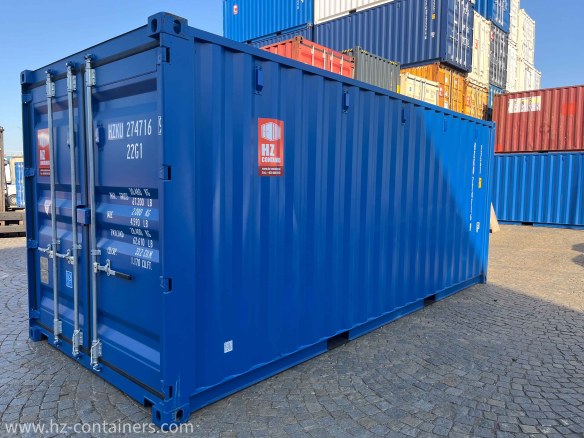
The 20-foot shipping container – also called a 20-foot container, dry van, general-purpose container, or simply a “twenty-footer” – is a rectangular steel box designed to transport dry cargo on ships, trains, and trucks without the need to unload and reload the contents. This is the principle of intermodality: the container moves; the cargo stays in place.
Every 20-foot shipping container is built to precise specifications governed by ISO 668, the international standard that defines external dimensions, corner casting placement, and construction requirements for all intermodal containers. The container frame is made of high-strength steel, and its walls are made of COR-TEN steel (atmospheric steel), a corrosion-resistant alloy that forms a protective rust patina when exposed to the weather. This is why older containers develop their characteristic reddish-brown appearance – and also why they survive decades of exposure to saltwater on container ships.
The floor is typically made of 1⅛-inch marine plywood, bolted to steel cross members. This floor is strong enough to support the weight of a loaded forklift driving inside. Small pressure vents, usually located near the upper corners, allow minimal air exchange to equalize pressure during transport, but they are not sufficient to prevent condensation inside the container – a point we will address later.
Why is the 20-foot Container Called the Industry Standard?
The 20-foot shipping container equals 1 TEU – one Twenty-foot Equivalent Unit. This is the currency of the container shipping industry. A 40-foot container equals 2 TEU. A container ship with a capacity of 20,000 TEU theoretically transports 20,000 twenty-foot containers, or 10,000 forty-foot containers, or any combination thereof.
TEU was not chosen at random. When the International Organization for Standardization (ISO) formalized container dimensions in 1968, the 20-foot length proved to be the most practical basic unit. It was long enough to carry meaningful cargo, short enough to maneuver on roads and railways, and – crucially – strong enough to transport heavy, dense cargo without exceeding weight limits. A 20-foot container can carry nearly the same payload as a 40-foot container (approximately 28 metric tons), because the weight limit is determined by road and crane restrictions, not container volume. This makes the twenty-footer the preferred choice for heavy cargo such as steel, machinery, stone, and canned goods.
ISO 668 and the Global Standard
McLean’s original containers were 35 feet long – the maximum length allowed on American highways at the time. But as containerization spread internationally, the absence of a universal standard created chaos. Different shipping lines used different sizes, and ports and railways could not process them efficiently.
The International Organization for Standardization (ISO) stepped in. After two rounds of standardization, ISO 668 was published in 1968, defining the 20-foot and 40-foot lengths, 8-foot width, and 8 feet 6 inches of height, which remain the global standard to this day. Corner castings – reinforced steel blocks in each of the eight corners of the container – were standardized so that every container could be locked, stacked, and lifted by any crane anywhere in the world.
The 20-foot shipping container, as defined by ISO 668, enabled the creation of global supply chains. Today, more than 90% of the world’s non-bulk cargo is transported in containers, and the 20-foot unit remains the reference point for every measurement in this industry.
What are the Exact Dimensions of a 20-foot Shipping Container?
External vs. Internal Dimensions
The external footprint of a 20-foot shipping container is fixed by ISO 668. The internal dimensions, however, are smaller – the corrugated steel walls, floor, and top frame door header take up space. Understanding the difference between external and internal dimensions is key when planning what will fit inside the container.
| Dimension | External | Internal |
|---|---|---|
| Length | 20 ft (6.06 m) | 19 ft 4 in (5.89 m) |
| Width | 8 ft (2.44 m) | 7 ft 8 in (2.33 m) |
| Height | 8 ft 6 in (2.59 m) | 7 ft 10 in (2.39 m) |
| Door opening width | – | 7 ft 8 in (2.34 m) |
| Door opening height | – | 7 ft 6 in (2.28 m) |
The height of the door opening is 4 inches lower than the internal ceiling height. This is due to the steel top frame header that runs above the door and provides structural integrity to the door frame. If you are loading tall items with a forklift, always measure against the 7 ft 6 in door opening – not the 7 ft 10 in internal ceiling. Many first-time buyers have learned this lesson the hard way.
Standard vs. High Cube Dimensions
A High Cube container adds exactly one foot to the external height – 9 ft 6 in instead of the standard 8 ft 6 in. This extra foot translates to 12 additional inches of internal clear height, resulting in a significant increase in usable volume and payload.
| Specification | Standard 20 ft | High Cube 20 ft |
|---|---|---|
| External height | 8 ft 6 in (2.59 m) | 9 ft 6 in (2.89 m) |
| Internal height | 7 ft 10 in (2.39 m) | 8 ft 10 in (2.69 m) |
| Internal volume | 1,172 ft³ (33.18 m³) | 1,316 ft³ (37.28 m³) |
| Tare weight | ~4,982 lbs (2,259 kg) | ~5,335 lbs (2,420 kg) |
| Maximum payload | ~47,928 lbs (21,739 kg) | ~61,861 lbs (28,060 kg) |
High cube containers are ideal when you need to stack pallets in two layers, store tall machinery, or use the container as a workspace where clear height matters. They are, however, less common than standard 20-foot containers, and in some markets they can be harder to obtain. Standard containers stack more easily in multi-unit configurations because they match the height of adjacent standard 40-foot units.
How Much Does a 20-foot Shipping Container Weigh?
Tare Weight, Payload, and Gross Weight
Three weight figures define every 20-foot shipping container:
- Tare weight is the weight of the empty container itself – typically 4,850 to 5,100 lbs (2,200 to 2,313 kg). This value varies slightly by manufacturer and steel thickness.
- Payload (or net cargo weight) is the maximum weight of cargo the container can carry – approximately 47,928 lbs (21,739 kg) for a standard container.
- Maximum gross weight is the sum of the tare weight and the payload – approximately 52,910 lbs (23,998 kg). This is the absolute maximum the container weighs when fully loaded.
| Specification | Standard 20 ft | High Cube 20 ft |
|---|---|---|
| Tare weight | 4,982 lbs / 2,259 kg | 5,335 lbs / 2,420 kg |
| Maximum payload | 47,928 lbs / 21,739 kg | 61,861 lbs / 28,060 kg |
| Maximum gross weight | 52,910 lbs / 23,998 kg | 67,196 lbs / 30,480 kg |
The payload of a 20-foot container is nearly identical to a 40-foot container, even though it has half the volume. This is why 20-foot containers are preferred for heavy, dense cargo: metals, machinery, stone, tiles, paper rolls, and canned goods all reach the weight limit long before they fill the available space.
Ground Pressure and Site Preparation
A fully loaded 20-foot container exerts pressure of approximately 3,300 lbs per linear foot on its two bottom side rails. If you place the container on asphalt, a parking lot, or soft ground, this concentrated load can cause sinking, cracking, or collapse – especially in hot weather when asphalt softens.
For permanent or semi-permanent placement, the proven approach is to place the container on:
- Concrete footings or a reinforced concrete slab (most durable)
- Compacted gravel with railway sleepers or concrete blocks at the four corner castings
- Pressure-treated wooden supports on level, compacted ground
Always ensure the container is level. An uneven container stresses the frame, makes doors harder to open and close, and can cause water to pool on the roof instead of draining off.
How Much Does a 20-foot Shipping Container Cost?
Prices for New vs. Used Containers
The price of a 20-foot shipping container depends on its condition grade, age, location, and market factors. Below are typical price ranges for the US market as of 2026.
| Condition Grade | Description | Typical Price Range |
|---|---|---|
| New (One-Trip) | Recently manufactured, shipped once with cargo, in near-perfect condition | $2,500 – $5,000 |
| Used – Cargo Worthy (CW) | Certified for international transport, structurally sound, with cosmetic wear | $1,400 – $1,800 |
| Used – Wind & Watertight (WWT) | No longer certified for transport, but doors seal and don’t leak, cosmetic wear expected | $1,300 – $1,600 |
| Used – As-Is / Economy | Functional, but with visible rust, dents, patches, may have minor leaks | $800 – $1,200 |
These prices are for the container only. Transport is usually an additional cost, ranging from $150 to $500+ depending on the distance from the depot and the complexity of the delivery site. Always request a comprehensive quote including transport when comparing prices between suppliers.
What Factors Influence the Price?
Several variables affect the final price of a 20-foot shipping container:
- Distance from port or depot: Containers accumulate in large port cities. The further inland you are, the more you will pay for transport.
- Global steel prices: Shipping containers are made of steel, and their production costs track the commodity price of steel.
- Trade imbalances: When the flow of goods in one direction exceeds the opposite, empty containers accumulate in surplus regions (lowering prices) and become scarce in deficit regions (raising prices).
- Condition and age: A one-trip container is essentially new. A 15-year-old container with heavy rust and door issues has much lower value.
- Individual modifications: Adding windows, doors, insulation, electrical wiring, or paint increases the base price.
What are the Different Types of 20-foot Shipping Containers?
Standard Dry Van
The standard dry van is the most common 20-foot shipping container. It is a fully enclosed steel box with double cargo doors on one end, pressure vents, and a plywood floor. It is designed for general-purpose dry cargo that does not require temperature control. This is the container you see stacked on ships, at port terminals, and in storage yards.
Specialized 20-foot Containers
In addition to the standard dry van, there is a whole range of specialized 20-foot containers for specific cargo needs.
| Container Type | Key Features | Best For |
|---|---|---|
| High Cube | Extra 1 ft internal height (8 ft 10 in), volume ~37.3 m³ | Tall machinery, stacked pallets, conversions to workspaces |
| Refrigerated (Reefer) | Integrated cooling unit, range -60 °C to +25 °C, insulated walls | Perishable food, pharmaceuticals, cold chain logistics |
| Open Top | Removable roof bows and tarp, crane loading from above | Tall machinery, generators, industrial equipment |
| Flat Rack | Platform floor, folding or fixed end walls, no sides or roof | Oversized cargo, construction materials, heavy equipment |
| Tank Container | Cylindrical stainless steel tank inside a 20-foot frame | Liquids, chemicals, food-grade oils, hazardous materials |
| Ventilated | Passive ventilation openings in side walls | Coffee, cocoa, onions, moisture-sensitive cargo |
| Insulated | Insulated walls and ceiling, no active cooling | Temperature-sensitive cargo for short transport distances |
How Does a 20-foot Container Compare to a 40-foot Container?
Side-by-Side Comparison
Choosing between a 20-foot and 40-foot container is one of the most common decisions in logistics and storage. The table below lists the key differences.
| Specification | 20-foot Container | 40-foot Container |
|---|---|---|
| External length | 20 ft (6.06 m) | 40 ft (12.19 m) |
| Internal length | 19 ft 4 in (5.89 m) | 39 ft 5 in (12.03 m) |
| Internal volume | 1,172 ft³ (33.18 m³) | 2,390 ft³ (67.67 m³) |
| Floor area | ~150 ft² (13.94 m²) | ~305 ft² (28.33 m²) |
| Tare weight | ~4,982 lbs (2,259 kg) | ~8,340 lbs (3,782 kg) |
| Maximum payload | ~47,928 lbs (21,739 kg) | ~58,860 lbs (26,700 kg) |
| Typical used price | $1,300 – $3,000 | $2,000 – $4,500 |
| Typical new price | $2,500 – $5,000 | $3,500 – $6,500 |
| Required delivery space | ~110 ft straight line | ~130 ft straight line |
| Pallets (standard US) | 10 | 20–21 |
When to Choose a 20-foot Container Over a 40-foot
A 20-foot shipping container is the better choice when:
- Your cargo is heavy and dense. If you are shipping metal products, machinery, stone, or canned goods, you will likely reach the weight limit before you fill the twenty-footer – let alone the forty-footer.
- You have limited space. A 20-foot container fits in one parking space. A 40-foot container requires double the footprint.
- You need easier access for delivery. Shorter length means a smaller turning radius and less space required for the delivery vehicle.
- Your budget is more limited. A 20-foot container costs roughly 40–50% less than a forty-footer, both in purchase price and transport costs.
- You are undertaking a residential project. Small homes, garden offices, and workshops are much more practical in 20-foot format than 40-foot.
A 40-foot container is better when you need maximum volume for bulky, light cargo, or when you need a large uninterrupted interior space for a conversion project.
What Actually Fits Inside a 20-foot Shipping Container?
Pallet Loading Configurations
How many pallets fit in a 20-foot shipping container depends on the type of pallet and the loading method.
| Pallet Type | Dimensions | How Many Fit |
|---|---|---|
| Standard US pallet (GMA) | 48 in × 40 in | 10 (two rows of 5, loaded sideways) |
| Euro pallet (EUR) | 1200 mm × 800 mm | 10–11 (depending on orientation) |
| ISO pallet | 1200 mm × 1000 mm | 9–10 |
In practice, utilization rarely reaches 100% of theoretical volume. You should plan to fill approximately 85–90% of the container’s cubic capacity to ensure access for loading, irregular cargo shapes, and air circulation. This means a 20-foot container provides in real conditions roughly 25–28 m³ of usable cargo space.
Real-World Capacity Examples
1,172 cubic feet of volume and 150 square feet of floor area inside a 20-foot shipping container translates to tangible real-world equivalents:
- Household belongings: The contents of a 2-room apartment (furniture, boxes, appliances) typically fill a 20-foot container.
- Vehicles: A standard sedan or small SUV fits through the door and into the container, albeit with very little margin on the sides. Larger SUVs and trucks will not pass through the 7 ft 8 in high door opening.
- Construction materials: Approximately 14,000 standard bricks, or 20–25 sheets of plywood stacked flat.
- Retail inventory: A small pop-up shop can stock enough goods for a multi-day event.
What are the Most Surprising Uses for a 20-foot Shipping Container?
Beyond Storage: Creative Applications
The 20-foot shipping container has become a platform for architectural creativity and business innovation. Its standardized dimensions, structural strength, and relative affordability make it an attractive building block.
- Tiny homes and guest houses: With 150 square feet of floor area, a 20-foot container can be converted into a compact living space including a sleeping nook, kitchenette, and bathroom. High cube containers are preferred for this purpose, because the extra foot of clear height allows for insulation, wiring, and a comfortable finished interior.
- Garden offices and studios: The post-pandemic remote work boom has increased demand for container garden offices. A 20-foot container provides a dedicated, sound-insulated workspace that can be fully insulated and air-conditioned.
- Pop-up shops and food service: Restaurants, cafés, and retail boutiques use modified 20-foot containers as mobile, eye-catching storefronts. The structural integrity of the container means it can be relatively easily transported to events, festivals, and new locations.
- Workshops and equipment storage: Contractors use 20-foot containers as lockable, weather-resistant workshops and tool storage on construction sites.
- Emergency shelter and disaster relief: The durability and stackability of shipping containers have made them a popular solution for rapidly deployable housing in disaster zones.
- Swimming pools: A 20-foot container, lined and sealed, can be converted into an above-ground pool. This modification has become surprisingly popular in residential settings.
- Vertical farming: Insulated 20-foot containers equipped with hydroponic systems, LED lighting, and climate control are used for urban farming, year-round cultivation of leafy greens and herbs.
Common Modification Options
When modifying a 20-foot shipping container, the most common additions include:
- Personnel doors and windows (cut into steel walls, framed and sealed)
- Spray foam or rigid board insulation for temperature control
- Electrical wiring with breaker panels and outlets
- HVAC systems (mini-split units are popular for container conversions)
- Interior wall cladding (drywall, plywood, or metal panels)
- Exterior paint or cladding for aesthetics and additional weather protection
- Security features (security covers, reinforced locks, alarm systems)
- Heat-reflective roof coatings to prevent rust
The key principle to keep in mind is that every cut into the container walls weakens the structural frame. For any significant modification – especially cutting large openings for windows or roller doors – consult a structural engineer or an experienced container modification company to ensure the integrity of the container.
What are Common Misconceptions About 20-foot Shipping Containers?
“They Are Completely Watertight”
Shipping containers are wind and water resistant, not watertight. This distinction is important. A water-resistant container will keep out rain, snow, and wind-driven moisture if the doors are properly sealed. However, containers are not designed to be submerged or to withstand standing water. The door seals are rubber gaskets that degrade over time. The floor is made of marine plywood, which is water-resistant but not watertight. If you place the container in a low-lying area where water accumulates, moisture will eventually get inside.
“Condensation Is Not a Problem”
This is probably the most common and most expensive misconception. Shipping containers are metal boxes with minimal ventilation. When temperatures fluctuate – especially during seasonal transitions – warm, humid air inside the container condenses on the cold steel walls and ceiling. This container rain can soak stored items, cause mold, and rust the interior. The small pressure vents in the corners are designed to equalize air pressure during transport, not to prevent condensation in a stationary container. Any container used for long-term storage should have additional ventilation installed – passive vents, turbine vents, or even small electric fans.
“All Containers Are the Same”
The condition grading system exists for a good reason. A container graded as cargo worthy is structurally certified for international transport and has passed a rigorous inspection. A container graded as wind and watertight will keep out the weather, but is no longer certified for ocean transport. An as-is container may have dents, rust, hard-to-open doors, and minor leaks. The price difference between a one-trip container and an as-is container can be $3,000 or more, and the difference in condition is equally dramatic.
“You Can Stack Anything on a Container”
Shipping containers are designed for stacking – but only when the weight is transferred through the corner castings. The roof of a standard container is not designed to bear heavy loads distributed across its surface. If you stack containers or place heavy equipment on top, the load must be transferred through the four corner posts. The roof itself typically supports only about 300 lbs of distributed weight.
How Are 20-foot Shipping Containers Delivered?
Delivery Methods and Space Requirements
Delivering a 20-foot shipping container is not as simple as delivering a package. It requires a specialized truck and adequate space. The most common delivery methods are:
- Roll-off truck: The truck bed tilts and the container slides to the ground. This is the most common delivery method for residential purposes and requires the least additional equipment.
- Flatbed truck with forklift: The container is delivered on a flatbed vehicle and then lifted by a forklift. This requires the delivery site to have a forklift capable of lifting at least 5,000 lbs.
- Crane delivery: A crane lifts the container from the truck and places it precisely. This is more expensive, but allows placement in areas inaccessible to roll-off trucks.
Space Requirements
For delivery of a 20-foot shipping container by roll-off truck, you need:
- Approximately 65 feet of straight driveway space for the truck to approach and position
- An additional 20 feet of space for turning at the pickup point
- A total of about 110 feet of unobstructed space from the road to the final position
- Clear overhead height of at least 14 feet (a truck with a container on the bed can reach this height during tilting)
The ground at the delivery site must be firm enough to support the weight of the container. Soft ground, mud, or freshly laid gravel can cause the delivery vehicle to get stuck, or the container to settle unevenly.
What is the Future of the 20-foot Shipping Container?
Smart Containers and IoT Integration
The shipping container is entering the digital age. Smart containers equipped with GPS trackers, temperature and humidity sensors, shock detectors, and real-time communication modules are already in use by major shipping lines. These IoT-enabled containers provide comprehensive supply chain visibility and enable shippers to monitor cargo conditions, detect tampering, and optimize routing in real time. As sensor and connectivity costs continue to fall, smart features are expected to become standard on new containers.
Sustainability and the Circular Economy
The 20-foot shipping container is already a model example of reuse and repurposing – every container home, office, and storage unit represents a second life for a steel box that would otherwise end up as scrap. The industry, however, is going even further. Manufacturers are exploring alternative materials, including composite panels that reduce weight and improve insulation without sacrificing strength. The trend of reusing containers in architecture, disaster relief, and urban farming is likely to accelerate, as sustainability concerns drive demand for low-carbon construction solutions.
Modular and 3D-Printed Evolution
The standardized dimensions of the 20-foot shipping container have created a global ecosystem of compatible parts, accessories, and modification techniques. Going forward, the modular nature of the container makes it a natural platform for emerging technologies. 3D-printed interior components, prefabricated insulation panels that fit into the corrugated walls, and modular interior systems that allow the container to be reconfigured for different uses are all on the horizon.
The 20-foot shipping container began as a tool for moving goods. It has become a tool for building the world – and its story is still being written.
Frequently Asked Questions
What are the exact dimensions of a 20-foot shipping container?
A standard 20-foot shipping container has external dimensions of 20 ft length × 8 ft width × 8 ft 6 in height (6.06 m × 2.44 m × 2.59 m). Internal dimensions are approximately 19 ft 4 in length × 7 ft 8 in width × 7 ft 10 in height (5.89 m × 2.33 m × 2.39 m). The door opening is 7 ft 8 in wide × 7 ft 6 in high.
How much does a 20-foot shipping container weigh?
An empty 20-foot shipping container (tare weight) weighs approximately 4,850 to 5,100 lbs (2,200 to 2,313 kg). Maximum payload is approximately 47,928 lbs (21,739 kg), and maximum gross weight (container plus cargo) is approximately 52,910 lbs (23,998 kg).
How much does a 20-foot shipping container cost?
As of 2026, a used 20-foot shipping container wind and watertight costs $1,300 to $1,600, a used cargo worthy container costs $1,400 to $1,800, and a new one-trip container costs $2,500 to $5,000. Transport typically adds $150 to $500+ depending on distance.
How many pallets fit in a 20-foot shipping container?
A 20-foot container holds 10 standard US pallets (48 in × 40 in) in two rows of five, or 10 to 11 Euro pallets (1200 mm × 800 mm) depending on orientation. In practice, plan for 85–90% volume utilization.
What is the difference between a 20-foot standard and high cube container?
A high cube 20-foot container has an external height of 9 ft 6 in instead of the standard 8 ft 6 in. This adds 12 inches of internal height (8 ft 10 in vs. 7 ft 10 in), increases volume by 144 cubic feet, and adds approximately 350 lbs to the tare weight. High cube containers are preferred for tall cargo and conversions to workspaces.
What fits inside a 20-foot shipping container?
A 20-foot shipping container holds the contents of a 2-room apartment, a standard sedan, approximately 14,000 bricks, or 25–28 cubic meters of usable cargo space. The floor area is 150 square feet.
What is TEU and why is a 20-foot container the standard?
TEU stands for Twenty-foot Equivalent Unit. It is the standard unit of measurement for container shipping capacity. One 20-foot container equals 1 TEU, and a 40-foot container equals 2 TEU. The 20-foot length was chosen as the ISO standard because it balanced maneuverability, payload capacity, and compatibility with roads and railways.
Can you build a house from a 20-foot shipping container?
Yes, 20-foot shipping containers are commonly converted into tiny homes, guest houses, and garden offices. With 150 square feet of floor area, a well-designed conversion can include a sleeping nook, kitchenette, and bathroom. High cube containers are preferred for residential conversions because the extra foot of clear height provides room for insulation and installations.
How are 20-foot shipping containers delivered?
Most 20-foot shipping containers are delivered by roll-off truck. The truck tilts its bed and the container slides to the ground. You need approximately 110 feet of straight driveway space, firm ground, and at least 14 feet of clear overhead height for delivery.
What are 20-foot shipping containers made of?
20-foot shipping containers are made primarily of COR-TEN steel (atmospheric steel), a corrosion-resistant alloy that forms a protective patina. The floor is 1⅛-inch marine plywood bolted to steel cross members. The frame includes reinforced corner castings designed for stacking and lifting.
Do 20-foot shipping containers rust?
COR-TEN steel is designed to form a stable, protective rust patina that prevents deeper corrosion. However, containers can rust in areas where water accumulates, where the protective coating is damaged, or where there is extreme salt exposure. Regular maintenance – including roof coatings and timely treatment of rust spots – significantly extends the container’s lifespan.
Do I need a permit to place a 20-foot shipping container on my property?
Permit requirements vary by municipality. Some jurisdictions classify shipping containers as temporary structures that do not require a permit, while others treat them as permanent accessory structures requiring zoning approval. Always check with your local building authority before purchasing a container for placement on your property.
 Czech Republic, Ostrava
  WITHOUT SHIPPING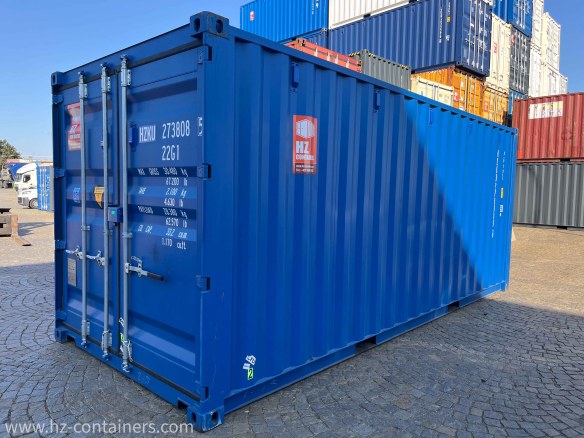


Other container news...
Corner casting steel vs aluminum
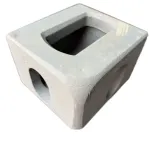
Every shipping container in the world — all 40 million of them — rests on eight critical components. Corner castings are the load-bearing blocks at each corner of an ISO shipping container, and they are the universal interface between the container and every crane, twistlock, spreader, and chassis on the planet. When you lift a container, stack it nine high on a ship, or lock it to a truck trailer, every ton of force flows through these fittings.

Construction cabin – selection, tips, dimensions and prices
Every construction project – whether a family house, a development project or a reconstruction – starts with the infrastructure. No construction manager, craftsman or investor who needs an on-site office, a changing room for workers or a safe storage for tools can do without a quality construction cell. But navigating the offer is not easy: residential containers, sanitary cells, storage modules, rental, purchase, refurbished pieces… This guide will give you answers to all the essential questions in one place.
Storage container
A storage container is a lockable steel box designed for the safe and dry storage of materials, tools, goods or equipment. Originally created as a shipping container for maritime transport, its durability and versatility have found their way onto construction sites, corporate premises and private land.
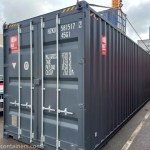
Shipping container 12m (40 ft)
A 12m shipping container is an investment that, if properly selected and cared for, will pay off in decades of trouble-free use. Whether you plan to use it as a warehouse, workshop, garage or the basis for a residential module — the key is careful selection of the condition, a thorough inspection before purchase and high-quality preparation of the base for placement. Take the time to compare offers, check the seller’s references and do not hesitate to personally inspect the container before buying. A properly selected 40-foot container will serve you reliably for many years.