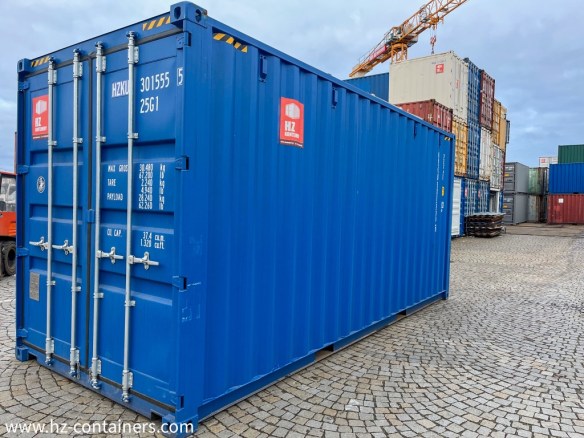
Corner Fittings
What are Corner Fittings? A Comprehensive Guide
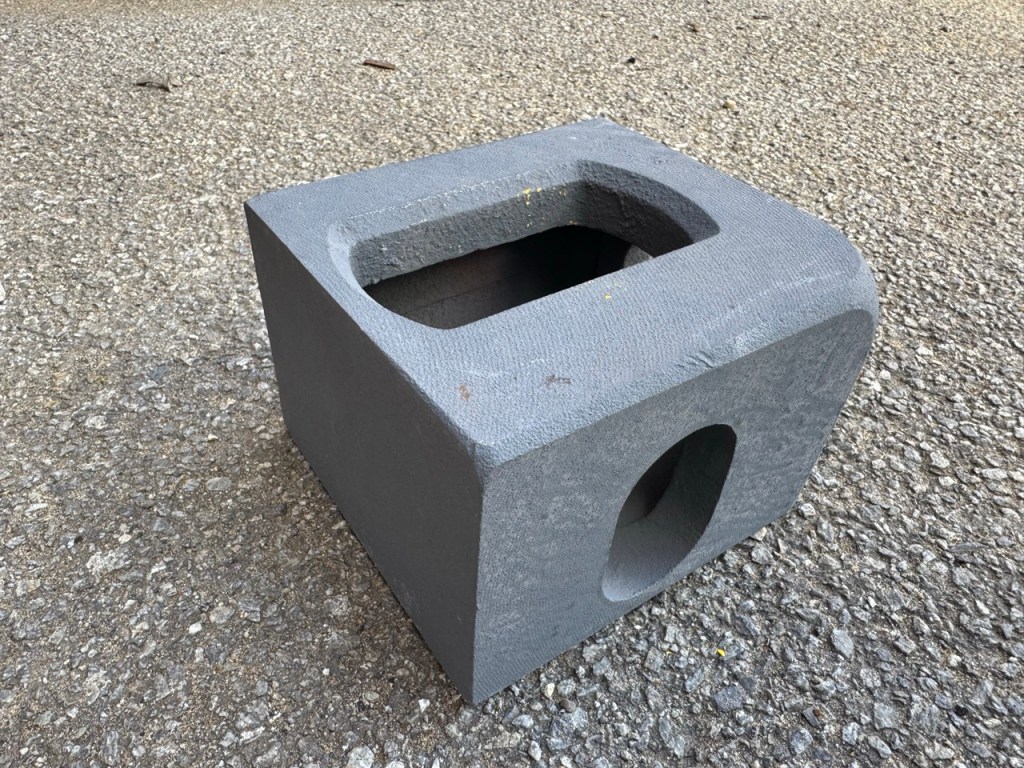
Corner fittings, known also as corner blocks or corner castings, are robust, precisely shaped blocks made of cast steel, which form all corners of standardized ISO containers. They are the fundamental nodes of every container’s construction and enable lifting, stacking, securing and safe transport on ships, trains and trucks. Their dimensions, strength and design are precisely defined by the standard ISO 1161, which ensures worldwide compatibility and safety during handling.
Interesting fact: All major forces during handling and transport of containers (lifting, stacking, securing) are always transferred through the corner blocks. Without their standardization, global container shipping and easy container conversions in architecture would not be possible.
Anatomy and design of corner blocks
Material: Why cast steel?
Corner blocks are almost exclusively manufactured from cast steel, specifically low‑alloy, high‑strength steel that complies with ISO 1161. A typical material is structural steel designated S355J2G3 or similar, or Corten steel.
Advantages of cast steel:
| Property | Significance for corner blocks |
|---|---|
| High tensile and compressive strength | Withstands extreme loads during stacking and handling |
| Excellent weldability | Allows strong and durable joining to the container frame |
| Wall thickness 14–16 mm | Provides robustness and long service life |
| Fatigue resistance | Long‑term use without loss of mechanical properties |
| Corrosion resistance | Protective rust layer (in Corten steel) slows degradation |
| Cost‑effectiveness | Lower price compared with aluminum variants, better for heavy loads |
Steel vs. aluminium comparison:
- Steel is significantly stronger and more heat‑resistant than aluminium, which is crucial for transport and container stacking.
- Aluminium is lighter and more corrosion‑resistant, but does not reach the required strength and would fail under high loads (for example in stacked containers on ships).
- Steel corner blocks can also be easily welded to a steel frame structure.
Standard dimensions and weight
According to the ISO 1161 standard, all corner blocks have the following standardized dimensions:
| Dimension | Value |
|---|---|
| Length × width × height | 178 mm × 162 mm × 118 mm |
| Diameter of twist‑lock opening | approx. 50 mm (rectangular shape) |
| Wall thickness | 14–16 mm |
| Weight of one corner block | approx. 11–12.5 kg |
| Tolerance | 0 to 1.5 mm |
Why are the tolerances so strict?
Every lock, spreader, chassis and securing mechanism must fit the openings with minimal play to ensure safety and stability.
Openings and their functions
Each corner block has three openings on its outer sides:
- Side and front openings (stadium/oval): For horizontal securing of the container and side‑by‑side joining.
- Top/bottom opening (circular): For stacking containers using twist locks.
- Shield‑shaped opening (on upper blocks): For easy and safe attachment of crane hooks and spreaders.
| Opening type | Location | Function |
|---|---|---|
| Oval (stadium) | Side/front face | Connecting containers side‑by‑side (bridge fitting) |
| Circular | Top/bottom face | Vertical stacking, twist lock |
| Shield | Front face of upper blocks | Hanging, spreader, crane lifting |
Types and identification of corner blocks: Top, Bottom, Left, Right
Each container has 8 corner blocks, but there are 4 basic types according to position:
| Type | Location | Characteristic openings | Casting marking |
|---|---|---|---|
| Top Left (TL) | Upper left corner | Shield‑shaped front opening | TL |
| Top Right (TR) | Upper right corner | Shield‑shaped front opening | TR |
| Bottom Left (BL) | Lower left corner | Oval openings | BL |
| Bottom Right (BR) | Lower right corner | Oval openings | BR |
Identification:
Each block is marked with an internal label for easy installation and inspection. Top/Bottom differ by the shape of the front opening; Left/Right are mirrored.
Key role and function in logistics and construction
Lifting and handling
- Lifting fully loaded containers (up to 30–35 tonnes) always occurs through the corner blocks.
- In ports, spreaders with twist locks automatically lock into the upper openings.
- The safety factor is typically 5:1 – each point must theoretically support five times the maximum operating load.
Securing the container for transport
- On a ship: Containers are stacked and secured with twist locks (rotating locks) inserted into the corner block openings. Special anchoring points are also used inside the hold.
- On a trailer/train: Each chassis has four twist locks that fit precisely into the lower corner blocks and prevent container movement.
Stacking
- Openings on the upper and lower blocks enable safe stacking of containers up to nine tiers (common on container ships).
- Twist locks connect containers vertically and prevent shifting even when the ship heels.
Structural integrity
- Corner blocks connect all main load‑bearing profiles of the container (posts, longitudinal members) and transmit loads to the foundations or to adjacent containers.
- During building modifications (e.g., cutting openings for large doors) the continuity of the load path through the corner blocks must always be preserved.
ISO 1161: The global language of containers
The ISO 1161:2016 standard defines:
- Exact dimensions of all openings, walls and external shapes with tolerances up to 1.5 mm.
- Mechanical material properties – minimum tensile strength, toughness, fatigue resistance.
- Testing requirements – destructive tests, tolerance measurement, surface defect inspection.
- Functional compatibility with all common twist locks and spreaders.
- Mandatory markings (type, manufacturer, batch number, certification mark).
Without complying with this standard a container cannot be certified for international transport (CSC certificate is not possible).
Applications beyond logistics: Container modifications and architecture
Shipping Container Homes and modular construction
- Corner blocks serve as universal joining and anchoring points when building shipping container homes, offices, schools, shops and warehouses from containers.
- They allow easy side‑by‑side (bridge fittings) and vertical (twist locks) connections.
- Securing to foundations is often achieved through the corner blocks, providing stability for the entire structure.
Custom constructions and accessories
- Individual corner blocks can be purchased and used to build custom modular frames, platforms, technology cabinets or temporary structures.
- Manufacturers also offer complete corner casting kits for DIY projects – for example for building a container chassis, mobile technologies or mobile workshops.
Accessories for corner blocks
| Accessory type | Function |
|---|---|
| Twist locks | Securing/stacking containers |
| Bridge fittings | Horizontal connection of containers side‑by‑side |
| Lifting lugs/hooks | Hanging points for crane handling |
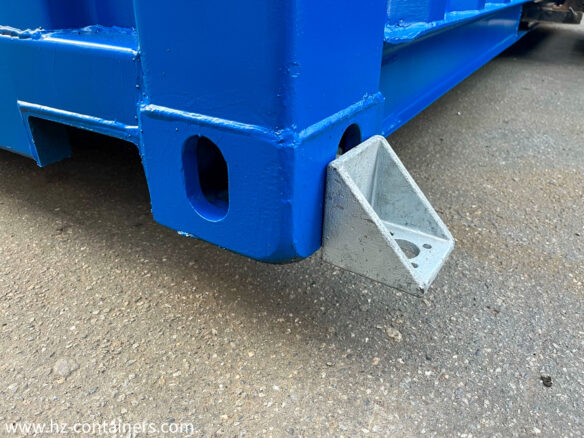
| Pads under corner blocks | Protecting the substrate (concrete, asphalt, paving) |
| Frames for modifications | Attachment of annexes, terraces, stairs |
| Quick‑release systems | Temporary anchoring without welding |
Maintenance, damage and replacement
Typical damage
- Corrosion: Especially in salty port environments and on ships, deep corrosion can thin walls and reduce strength.
- Deformation: Improper handling, impacts from heavy equipment or overload can cause bending or cracks.
- Wear of openings: Frequent use of twist locks and hooks can wear the opening walls, leading to degraded connection and safety.
Replacing a damaged corner block
- Professional removal of the old block (usually by plasma or oxy‑fuel cutting) and precise welding of a new, certified block is required.
- After replacement, weld inspection, geometry verification and often a pressure test must be performed.
- A container with a damaged block must not be used for international transport until repaired and inspected.
Overview – table of properties and parameters of corner castings
| Parameter | Typical value / standard |
|---|---|
| Material | Cast structural steel (e.g., S355J2G3) |
| Surface finish | Natural, galvanised, special coating |
| Dimensions (L × W × H) | 178 × 162 × 118 mm |
| Wall thickness | 14–16 mm |
| Weight | 11–12.5 kg |
| Load capacity (static) | > 86 000 kg per corner (per ISO 1161) |
| Standard | ISO 1161:2016 |
| Number per container | 8 (4 upper, 4 lower) |
| Types | TL, TR, BL, BR |
| Installation method | Welding |
Practical insights
- Container modifications: Manufacturers now offer complete corner casting kits.
- Pads under containers: Prevent damage to asphalt or paving and increase stability for temporary placement.
- Rapid‑assembly joining systems: New non‑weld connections are available for temporary structures or highly flexible applications.
- Environmental recycling: Old corner blocks can be recycled as steel scrap.
Summary
Corner fittings are a key element not only in logistics, but also in container architecture and industrial applications. Their robustness, standardization and versatility enable safe, efficient and fast handling of containers around the world. They are not only the silent hero of global transport, but also the inspiration for modern modular construction.
 Czech Republic
  WITHOUT SHIPPING