
What are the uses of a 40ft High Cube container?
If you have ever stood next to a 40ft high cube shipping container, you know the feeling: the sheer scale of it makes you think about what you could do with all that space. At 40 feet long, 8 feet wide, and 9 feet 6 inches tall, a 40ft high cube container offers roughly 2,694 cubic feet of usable volume — about 10 to 13 percent more than a standard 40ft container. That extra foot of height changes everything. It transforms a steel box into a workshop, a home, a farm, a store, a data center, or an emergency clinic. This guide covers every proven use of a 40ft high cube container, from the obvious to the surprising, with real dimensions, real costs, and real-world examples.
Key takeaway: A 40ft high cube container is not just a bigger standard container. It is a different class of asset — one that opens up use cases that standard-height containers simply cannot accommodate.
What Is a 40ft High Cube Container?
A 40ft high cube container — often abbreviated as 40HC, 40HQ, or simply “high cube” — is an ISO-standard intermodal dry freight container whose defining characteristic is an exterior height of 9 feet 6 inches (2.89 meters), exactly one foot taller than the standard 40ft general purpose container. In the ISO 6346 classification system, it carries the code 45G1, where the “4” denotes 40-foot length and the “5” signals the high cube height class. A standard 40ft container, by contrast, carries the code 42G1.
The container is built from corrugated Corten steel — a weathering steel alloy that forms a protective rust-like patina when exposed to the elements — with marine-grade plywood flooring, steel corner castings, and heavy cargo doors at one end. It is designed to be handled by cranes, forklifts, trucks, trains, and ships worldwide.
Where Did the High Cube Container Come From?
The high cube container did not exist when Malcolm McLean’s first container ship, the SS Ideal-X, sailed from Newark to Houston in 1956. The ISO standards that followed in the late 1960s settled on the 8-foot width and established 20-foot (TEU) and 40-foot (FEU) lengths, with a standard height of 8 feet 6 inches.
The problem emerged in the 1980s. Shippers of light, voluminous goods — furniture, textiles, insulation materials, empty plastic packaging — were hitting the cubic ceiling of standard boxes long before approaching weight limits. They were paying for a full container but could not physically fit more cargo inside. Demand grew for taller containers.
The challenge was clearance. A taller container on a standard chassis would exceed the 13-foot-6-inch height limit for many overpasses and port handling equipment. The solution was the gooseneck tunnel chassis — a chassis with a recessed channel built into the floor bed that allows the front of the container to sit lower, keeping the overall combined height within legal road limits. With this innovation, the high cube container became viable for over-the-road transport, and adoption accelerated throughout the 1990s and 2000s.
Today, high cube containers represent a significant and growing share of the global container fleet, particularly on Asia-Europe and trans-Pacific routes where volume-constrained cargo is common.
40ft High Cube vs. 40ft Standard Container: Full Comparison
| Specification | 40ft Standard Container | 40ft High Cube Container |
|---|---|---|
| ISO Code | 42G1 | 45G1 |
| External Length | 40 ft (12.19 m) | 40 ft (12.19 m) |
| External Width | 8 ft (2.44 m) | 8 ft (2.44 m) |
| External Height | 8 ft 6 in (2.59 m) | 9 ft 6 in (2.89 m) |
| Internal Length | 39 ft 5 in (12.03 m) | 39 ft 5 in (12.03 m) |
| Internal Width | 7 ft 8 in (2.35 m) | 7 ft 8 in (2.35 m) |
| Internal Height | 7 ft 10 in (2.39 m) | 8 ft 10 in (2.70 m) |
| Usable Volume | ~2,390 cu ft (67.7 m³) | ~2,694 cu ft (76.3 m³) |
| Tare Weight | ~8,000 lbs (3,630 kg) | ~8,600–8,900 lbs (3,900–4,040 kg) |
| Max Gross Weight | ~67,200 lbs (30,480 kg) | ~67,200 lbs (30,480 kg) |
| Typical Payload | ~59,200 lbs (26,850 kg) | ~58,300–58,600 lbs (26,400–26,580 kg) |
| Door Opening Height | 7 ft 5 in (2.26 m) | 8 ft 5 in (2.57 m) |
| New Price (2026, US) | $2,500–$3,500 | $2,950–$4,200 |
| Used Price (WWT, 2026, US) | $1,500–$2,500 | $1,800–$3,300 |
The extra foot of internal height is the single most important differentiator. It means you can stack pallets one row higher, walk upright comfortably even with insulation and ceiling fixtures, and fit tall equipment that would never clear a standard container door.
What Are the Dimensions and Capacity of a 40ft High Cube Container?
Understanding the exact dimensions of a 40ft high cube container is essential before planning any use — whether for shipping, storage, or conversion.
External and Internal Measurements
The external dimensions are standardized by ISO 668 to ensure compatibility with ships, railcars, and truck chassis worldwide:
- External length: 40 feet (12.19 meters)
- External width: 8 feet (2.44 meters)
- External height: 9 feet 6 inches (2.89 meters)
The internal dimensions vary slightly by manufacturer, year, and condition, but typical values are:
- Internal length: approximately 39 feet 5 inches (12.02 meters)
- Internal width: approximately 7 feet 8 inches (2.35 meters)
- Internal height: approximately 8 feet 10 inches (2.70 meters)
- Door opening: 7 feet 8 inches wide × 8 feet 5 inches high
- Floor area: approximately 303 square feet (28.1 m²)
- Usable volume: approximately 2,694 cubic feet (76.3 m³)
How Much Weight Can a 40ft High Cube Container Hold?
Every container has a maximum gross weight stamped on its CSC (Convention for Safe Containers) safety plate, typically 67,200 lbs (30,480 kg). The actual payload capacity is the maximum gross weight minus the tare (empty) weight:
- Tare weight: 8,600–8,900 lbs (3,900–4,040 kg)
- Typical payload capacity: 58,300–58,600 lbs (26,400–26,580 kg)
Some newer containers are rated for higher gross weights — up to 71,650 lbs (32,500 kg) — but the 67,200 lb rating is the most common. Always check the data plate on the specific unit.
How Many Pallets Fit in a 40ft High Cube Container?
Pallet capacity depends on pallet type and loading configuration. The high cube’s extra height can allow an additional row of stacked pallets in some configurations.
| Pallet Type | Dimensions | Floor-Loaded (Single Layer) | Stacked (Double Layer) | Notes |
|---|---|---|---|---|
| Euro Pallet (EUR) | 47.2 × 31.5 in (1,200 × 800 mm) | 25 pallets | Up to 50 pallets | Best fit for 40ft containers; 5 rows × 5 columns |
| Standard US Pallet (GMA) | 48 × 40 in (1,219 × 1,016 mm) | 20–21 pallets | Up to 40–42 pallets | 2 rows × 10 or 2 rows × 10 + 1 |
| Industrial Pallet | 48 × 48 in (1,219 × 1,219 mm) | 18–20 pallets | N/A (height-limited) | Square format limits arrangement |
| ISO Pallet | 44.9 × 44.9 in (1,140 × 1,140 mm) | 20 pallets | Up to 40 pallets | Common in Asia-Pacific |
In practical terms, a 40ft high cube container can hold the contents of a 5–6 bedroom house, 3–4 small cars, 1,100–1,350 car tires, or 500–600 bales of hay.
What Are the Primary Shipping and Logistics Uses of a 40ft High Cube Container?
The 40ft high cube was designed for shipping, and it remains the backbone use case. Its extra height provides a distinct advantage for certain cargo types.
Ocean Freight and Intermodal Transport
As an ISO-standard intermodal container, the 40ft high cube is compatible with container ships, railcars, and truck chassis worldwide. The 40ft length makes it an FEU (Forty-Foot Equivalent Unit), equivalent to two TEUs. On container ships, high cubes are stacked in the upper tiers of deck stowage where height restrictions are less stringent, and below-deck slots are often designed to accommodate the taller profile.
The gooseneck tunnel chassis keeps the combined height of the container and chassis at or below 13 feet 6 inches, the legal maximum for most US highways without special permits. In Europe, where bridge clearances can be tighter, routing is slightly more restricted but still routine.
Cargo Types Best Suited for High Cube Containers
Not all cargo benefits from the extra foot. The high cube shines when the cargo is:
- Voluminous but relatively light: Furniture, mattresses, insulation, textiles, empty containers, plastic goods, and packaging materials.
- Tall individual items: Industrial machinery, agricultural equipment, large appliances, HVAC units, and prefabricated building components.
- Stackable with extra layer: Boxed consumer goods, electronics in retail packaging, and palletized food products that can gain an extra tier.
- Awkwardly shaped: Items that are not excessively heavy but require vertical clearance for loading and unloading with forklifts.
For dense, heavy cargo like steel coils, bagged cement, or liquid-filled drums, a standard container is often sufficient because the cargo reaches the weight limit before filling the cubic capacity.
FCL (Full Container Load) Advantages
For shippers with enough cargo to fill an entire container, a 40ft high cube in FCL service offers the lowest cost per cubic meter. The shipper loads and seals the container at origin, and it remains sealed until it reaches the consignee. This reduces handling, minimizes damage risk, and simplifies customs documentation compared to LCL (Less than Container Load) shipping.
Warehousing and Transloading
High cube containers are frequently used as temporary or semi-permanent overflow warehousing at ports, distribution centers, and manufacturing facilities. They can be delivered to a site, loaded at ground level, and stored until needed — essentially functioning as a mobile, weatherproof extension of a warehouse. This is particularly valuable during peak seasons, facility expansions, or supply chain disruptions.
How Is a 40ft High Cube Container Used for Storage?
Storage is the single most common use for a 40ft high cube container outside of shipping. The combination of weatherproof construction, security, and immediate availability makes it a practical solution across residential, commercial, and industrial contexts.
Residential Storage
Homeowners use 40ft high cube containers during renovations, relocations, or estate clearances. A single container can hold the contents of an entire 5–6 bedroom house, including furniture, appliances, boxes, and even vehicles. The high cube’s extra height means you can stack boxes and furniture higher without crushing, and you can walk through the container without stooping. For long-term storage, containers can be placed on a property (subject to local zoning) and used as a permanent external storage room.
Commercial and Industrial Storage
Businesses use 40ft high cube containers for inventory overflow, seasonal stock, archived documents, tools, raw materials, and finished goods. Compared to leasing additional warehouse space, a container is a one-time purchase (or low monthly rental) with no long-term lease commitment. The steel construction is rodent-proof, fire-resistant, and capable of withstanding extreme weather. For businesses in retail, e-commerce, manufacturing, and distribution, a container placed in the parking lot or loading area can add 300 square feet of secure storage within days.
Construction Site Storage
Contractors and construction firms are among the largest users of 40ft high cube containers. On a job site, the container serves as a secure tool crib, material lockup, and equipment storage unit. The high cube’s extra height accommodates tall ladders, scaffolding components, and long-handled tools without the need to lay them diagonally. The container can be delivered to the site at the start of a project and removed when the job is complete. Many contractors add shelving, lighting, and even a small workbench area inside the container.
Seasonal and Long-Term Storage Strategies
For seasonal businesses — landscaping companies, holiday decorators, agricultural operations, and event rental companies — 40ft high cube containers provide off-season storage for equipment and inventory. The container can be locked and left on a rural property or storage yard for months at a time, with the confidence that the contents are protected from weather, theft, and pests. Some users build simple roof structures over containers to provide additional shade and weather protection, extending the container’s life even further.
What Are the Agricultural and Farming Uses of a 40ft High Cube Container?
Farms and agricultural operations have embraced 40ft high cube containers as rugged, affordable, and portable storage solutions. The container’s ability to keep out moisture, rodents, and insects makes it uniquely suited to agricultural environments.
Farm Equipment and Machinery Storage
Tractors, tillers, mowers, sprayers, and other farm equipment represent significant capital investments. Storing them indoors extends their service life by protecting them from sun, rain, and temperature fluctuations. A 40ft high cube container can accommodate most small to mid-sized farm machinery, and the high cube door height clears many compact tractors with ROPS (Roll-Over Protective Structures) folded down.
Feed, Seed, and Fertilizer Storage
Animal feed, seed stock, and bagged fertilizer must be kept dry and protected from pests. A high cube container provides a sealed environment that prevents moisture ingress and rodent access. Farmers often add ventilation to prevent condensation and, in some cases, install simple shelving or pallet racking to organize supplies. A 40ft container can hold roughly 2,385 cubic feet of bagged goods — enough for a substantial seed inventory or several months of feed for a mid-sized livestock operation.
Cold Storage and Harvest Protection
With the addition of insulation and a refrigeration unit, a 40ft high cube container can be converted into a cold storage unit. This is particularly valuable for small to mid-sized farms that harvest perishable crops — fruits, vegetables, flowers — and need to hold them at controlled temperatures before transport to market. Companies like AmplifiedAg have built entire businesses around converting shipping containers into refrigerated agricultural storage and processing units.
Livestock Shelter and Temporary Structures
While not a primary use, some farmers use high cube containers as temporary livestock shelters, particularly during extreme weather events. The container can be modified with ventilation openings, drainage, and appropriate flooring to serve as a short-term shelter for smaller animals. In some cases, containers are used as the structural core for more permanent animal housing, with extensions and roofing added around them.
Vertical Farming and Hydroponics Inside Containers
This is one of the most exciting emerging uses. A 40ft high cube container — with its extra height — is ideal for vertical farming and hydroponic growing operations. The additional foot of internal height allows for taller grow racks, better lighting placement, improved airflow, and easier maintenance access.
Companies like Freight Farms, ZipGrow, and Local Roots have developed turnkey container farming systems. A single 40ft container farm can produce the equivalent of 2–5 acres of traditional farmland, using 90–97% less water and operating year-round regardless of external climate. The high cube container’s height is critical here: it allows for 4–5 tiers of growing racks with adequate space for LED lighting, irrigation plumbing, and HVAC ducting above each tier.
A 40ft high cube container farm typically costs $85,000–$180,000 for a fully outfitted turnkey system, depending on the level of automation, climate control, and monitoring technology.
How Can a 40ft High Cube Container Be Converted into a Home or Living Space?
Container homes have moved from novelty to a legitimate housing category. The 40ft high cube container’s dimensions — 40 feet long by 8 feet wide — create a 320-square-foot rectangular footprint that, with the right design, can feel spacious and livable. The high cube’s extra height matters enormously here: after adding insulation, flooring, and ceiling finishes, a standard container can feel cramped, while a high cube preserves a comfortable ceiling height of approximately 8 feet.
Container Home Design Principles
The design of a container home starts with the floor plan. A single 40ft high cube container can be configured as:
- Studio layout: Open-plan living, sleeping, and kitchen area with a separate bathroom at one end.
- One-bedroom layout: Bedroom at one end, bathroom in the middle, kitchen and living area at the other end.
- Two-container layout: Two 40ft containers placed side by side (creating a 16-foot-wide space) or stacked to create a two-story home.
Key design considerations include window and door placement — which requires cutting the structural steel walls — and the orientation of the container for natural light and passive solar heating. The corrugated steel walls are load-bearing, so large openings must be reinforced with steel box beams or I-beams.
Insulation, HVAC, and Utilities
Steel conducts heat rapidly. Without insulation, a container home would be unbearably hot in summer and freezing in winter. The three most common insulation approaches are:
- Spray foam (closed-cell): Applied directly to the interior walls and ceiling. Provides the highest R-value per inch and creates an airtight vapor barrier. Most expensive option.
- Rigid foam board: Cut to fit between furring strips. Lower cost, but requires careful sealing at joints.
- Blanket insulation with interior framing: Traditional batt insulation between 2×4 studs. Requires the most interior space sacrifice.
After insulation, the container is typically finished with drywall or plywood interior walls, electrical wiring, plumbing (for kitchen and bathroom), and HVAC — usually a mini-split heat pump system.
Zoning, Permits, and Building Codes
This is the most overlooked challenge. Container homes must comply with local building codes, zoning ordinances, and often homeowners’ association (HOA) rules. Key considerations:
- Some jurisdictions classify container homes as “alternative construction” and require special engineering approval.
- Foundations must meet local frost-depth and seismic requirements.
- The International Residential Code (IRC) and International Building Code (IBC) do not specifically address container construction, so the project typically falls under “alternative materials” provisions that require a structural engineer’s stamp.
- Rural areas tend to be more permissive; urban and suburban areas often have restrictions.
Cost Breakdown for a Container Home Conversion
| Component | Estimated Cost Range (USD) |
|---|---|
| 40ft High Cube Container (used, WWT) | $1,800–$3,300 |
| Delivery | $300–$1,500 (distance-dependent) |
| Site preparation & foundation | $2,000–$8,000 |
| Structural modifications (cutting, welding, reinforcement) | $3,000–$10,000 |
| Insulation (spray foam) | $2,500–$5,000 |
| Electrical wiring & panel | $3,000–$7,000 |
| Plumbing (kitchen + bathroom) | $4,000–$10,000 |
| HVAC (mini-split system) | $2,000–$5,000 |
| Interior finishing (drywall, flooring, trim) | $5,000–$15,000 |
| Windows & doors | $2,000–$6,000 |
| Permits & engineering | $1,500–$5,000 |
| Total (DIY approach) | $27,000–$76,000 |
| Total (turnkey contractor) | $80,000–$150,000+ |
What Are the Commercial and Retail Uses of a 40ft High Cube Container?
The commercial sector has been one of the fastest adopters of container-based spaces. A 40ft high cube container offers a compelling combination of low cost, rapid deployment, and branding flexibility.
Pop-Up Shops and Retail Spaces
Retailers use converted 40ft high cube containers as temporary or semi-permanent pop-up stores. The container can be placed in a parking lot, at a festival, in a downtown pedestrian zone, or on a vacant lot. With the addition of glass storefront doors, interior shelving, lighting, and point-of-sale systems, a container becomes a fully functional retail space. The high cube’s extra height allows for overhead signage, track lighting, and a more open, airy feel that customers appreciate.
Major brands including Nike, Puma, and Starbucks have deployed container-based retail spaces. The appeal is clear: the container is manufactured off-site, delivered in one piece, and can be operational within days of delivery. When the lease ends or the season changes, the entire store can be relocated.
Restaurants, Cafés, and Food Kiosks
The food-service industry has been particularly creative with container conversions. A 40ft high cube container can be converted into a restaurant kitchen, a café with seating, a drive-through coffee kiosk, or a bar. The configuration typically includes:
- Commercial kitchen equipment (ventilation hood, fryers, grills, refrigeration)
- Servery windows cut into the long side of the container
- Customer counters and menu boards
- Limited seating or standing areas
- Plumbing for sinks and wastewater, electrical for cooking equipment
Container-based food businesses can launch in weeks rather than months, at a fraction of the cost of traditional brick-and-mortar build-outs. The container’s mobility means the business can move to follow foot traffic, events, or seasonal demand.
Event Spaces and Exhibition Booths
Event organizers use 40ft high cube containers as exhibition booths, VIP lounges, merchandise stands, and information centers. The container provides a weatherproof, secure, branded environment that stands out from the typical tent-and-table setup. Multiple containers can be combined to create larger event structures, and the containers can be loaded and unloaded with standard logistics equipment.
Breweries, Bars, and Hospitality
The craft beverage industry has embraced containers as affordable taprooms. A 40ft high cube container can house a bar, keg storage, glassware, and a small seating area. With the addition of an outdoor patio, the container becomes the anchor of a hospitality venue. The industrial aesthetic of the container aligns well with the branding of craft breweries and distilleries.
How Can a 40ft High Cube Container Be Used as a Workshop or Garage?
For DIY enthusiasts, mechanics, woodworkers, artists, and small fabrication businesses, a 40ft high cube container workshop is a compelling alternative to a traditional garage or shed.
Workshop Conversion Essentials
A basic workshop conversion includes:
- Lighting: LED strip lights mounted to the ceiling. The high cube’s extra height allows for overhead lighting without interference.
- Ventilation: Passive vents or powered exhaust fans to manage dust, fumes, and temperature.
- Workbenches: Built along one or both long walls. The container’s 7-foot-8-inch width provides enough room for a workbench on one side and tool storage on the other.
- Electrical: A sub-panel with multiple 120V and 240V outlets, fed from the main building or a generator.
- Flooring: The existing marine-grade plywood is durable, but many users add epoxy coating, rubber mats, or steel plating in high-wear areas.
Vehicle and Equipment Garage
A 40ft high cube container can store cars, motorcycles, ATVs, snowmobiles, and small boats. The high cube’s door height clears most passenger vehicles and SUVs. For taller vehicles, a ramp may be needed to ease the entry angle. The container provides a secure, weatherproof garage that can be locked and left unattended on a rural property or construction site.
Artist Studio and Maker Space
Artists and makers are drawn to container studios for the same reasons: affordable square footage, abundant natural light (with added windows or skylights), and the freedom to make noise, dust, and mess without affecting a living space. The high cube container’s height is particularly valuable for artists working on large canvases, sculptors, and anyone who needs overhead clearance for materials or equipment.
Double-Wide Container Configurations
Two 40ft high cube containers placed side by side with the interior wall removed create a 16-foot-wide by 40-foot-long space — approximately 640 square feet. This is large enough for a full workshop with dedicated zones for different activities. Connection kits are commercially available that include weld-free headers, flashing, and weather seals to join two containers. A double-wide configuration is also popular for larger retail spaces, classrooms, and event venues.
What Are the Office and Workplace Uses of a 40ft High Cube Container?
The demand for flexible, deployable workspace has driven significant innovation in container-based offices.
Mobile Office for Construction and Remote Sites
Construction companies, oil and gas operations, and mining sites use 40ft high cube containers as site offices. A typical conversion includes:
- Insulated walls and ceiling
- HVAC (mini-split heat pump)
- Electrical wiring with multiple outlets and data ports
- LED lighting
- Windows and a personnel door
- Desks, chairs, and filing cabinets
- Optional: restroom, kitchenette, conference area
The high cube’s extra height allows for a dropped ceiling to conceal wiring and ductwork while maintaining comfortable headroom. The container can be delivered to a remote site, set on leveling blocks, and operational within hours of arrival.
Co-Working and Startup Spaces
Entrepreneurs and small teams have used container offices as affordable startup spaces. A single 40ft container can house 4–6 desks, and multiple containers can be combined to create a larger co-working environment. The modular nature of containers means space can be added incrementally as the business grows.
Disaster Recovery and Emergency Operations Centers
Following natural disasters, 40ft high cube containers can be rapidly deployed as emergency operations centers, medical triage units, or temporary administrative offices. The container’s rugged construction protects sensitive equipment and personnel in challenging environments. Organizations like FEMA and various NGOs have incorporated container-based facilities into their disaster response planning.
Classroom and Educational Facilities
Schools facing overcrowding or temporary displacement have turned to container classrooms. A 40ft high cube container can accommodate 20–25 students with desks. The high cube height is essential here — it provides the volume needed for adequate ventilation and a comfortable learning environment. Multiple containers can be combined to create larger educational facilities, and they can be relocated as enrollment patterns shift.
How Do You Modify a 40ft High Cube Container?
Modifying a shipping container is not as simple as cutting into sheet metal. The corrugated steel walls are structural — they bear the load of the container and any containers stacked above it. Removing material without proper reinforcement can compromise the container’s integrity.
Common Modifications
| Modification | Purpose | Typical Cost | Structural Impact |
|---|---|---|---|
| Personnel door | Side access without opening cargo doors | $500–$1,500 | Low — requires framing the opening |
| Windows | Natural light and ventilation | $300–$800 per window | Moderate — requires header reinforcement |
| Roll-up door | Wide access for vehicles or equipment | $1,500–$3,000 | High — requires substantial reinforcement |
| Skylights | Overhead natural light | $500–$1,200 per unit | Moderate — roof cutting requires sealing |
| Ventilation louvers | Passive airflow | $200–$500 per unit | Low |
| Electrical pass-through | Power and data entry | $150–$400 | Minimal |
| Interior partition walls | Room division | $500–$2,000 | None (non-structural) |
| Roof coating (elastomeric) | Thermal reflectivity and leak prevention | $800–$1,500 | None |
Insulation and Climate Control Options
The choice of insulation method depends on the intended use, budget, and climate:
- Closed-cell spray foam (R-6 to R-7 per inch): Best overall performance. Creates an airtight seal, prevents condensation, and adds structural rigidity. Applied at 2 inches thickness, it provides R-12 to R-14. Cost: $2.50–$4.00 per square foot.
- Rigid foam board (R-4 to R-6 per inch): Lower cost alternative. Must be carefully cut and sealed at edges. Best combined with spray foam for gap sealing. Cost: $1.00–$2.00 per square foot.
- Fiberglass batt between framing (R-3.2 to R-3.8 per inch): Least expensive but requires interior framing (2×4 studs), which reduces usable width by approximately 8 inches total. Cost: $0.50–$1.50 per square foot.
Electrical, Plumbing, and Connectivity
Electrical installation typically involves a sub-panel mounted inside the container, fed by an external connection. All wiring should be run in conduit for protection. Plumbing requires cutting through the floor for supply and drain lines. For remote sites without utility connections, solar panels with battery storage and composting toilets are common solutions. Internet connectivity can be provided via cellular modem, satellite, or point-to-point wireless links.
Structural Reinforcement and Cutting Guidelines
Any opening larger than a standard vent requires a structural header. The header — typically a steel box beam or I-beam — transfers the load from above the opening to the vertical supports on either side. The general rule is that the total width of openings on any wall should not exceed 60% of the wall length without a structural engineer’s assessment. For roof modifications, any cut larger than a small vent requires reinforcing the surrounding roof structure.
Modification Costs and Timeline
A basic modification (personnel door, two windows, ventilation, electrical) typically costs $5,000–$12,000 and takes 2–4 weeks. A full conversion (insulation, interior finishing, plumbing, HVAC, multiple openings) can cost $15,000–$40,000 and take 6–12 weeks. Turnkey container conversions from specialist companies range from $30,000 to $80,000+ depending on complexity.
What Are the Emerging and Innovative Uses of 40ft High Cube Containers?
The container’s versatility continues to inspire new applications that push beyond traditional categories.
Vertical Farming and Controlled-Environment Agriculture
As covered in the agricultural section, container-based vertical farming is a rapidly growing industry. The high cube container’s extra height is critical for multi-tier growing systems. Companies like Freight Farms offer the “Garden” model — a complete hydroponic growing system inside a 40ft container, capable of producing up to 2,000 plants per week. These systems use LED lighting, automated nutrient delivery, and climate control to grow crops year-round with 90% less water than traditional farming.
Data Centers and Edge Computing Pods
The rise of edge computing — processing data closer to where it is generated — has created demand for small, deployable data centers. A 40ft high cube container can house server racks, cooling systems, power distribution, and network equipment. The high cube’s extra height provides space for overhead cable trays and cooling ductwork. Companies like Microsoft have deployed container-based data centers as part of their cloud infrastructure, and smaller providers offer containerized edge computing pods for industrial sites, remote locations, and temporary events.
Medical Clinics and Mobile Healthcare Units
Container-based medical clinics have been deployed in underserved areas, disaster zones, and military operations. A 40ft high cube container can be configured as a primary care clinic with an examination room, a small lab, and a waiting area. The extra height allows for medical-grade lighting, ventilation, and equipment that would be difficult to fit in a standard container. During the COVID-19 pandemic, containers were converted into testing centers and vaccination sites.
Community Spaces and Public Installations
Municipalities and community organizations have used containers for public libraries, youth centers, art galleries, and information kiosks. The container’s durability makes it suitable for unsupervised public spaces, and its mobility allows it to be relocated to serve different neighborhoods. The high cube container’s height creates a more inviting interior environment for public use.
How Much Does a 40ft High Cube Container Cost?
Pricing varies significantly based on condition, location, and market conditions.
New vs. Used vs. One-Trip Pricing
| Condition | Description | Typical Price Range (2026, US) |
|---|---|---|
| New (One-Trip) | Manufactured in Asia, used for a single cargo voyage, essentially new condition | $2,950–$4,200 |
| Used — Cargo Worthy (CW) | Certified for international shipping, meets CSC standards, minor cosmetic wear | $2,200–$3,500 |
| Used — Wind & Water Tight (WWT) | Structurally sound, doors seal, no leaks, but not certified for shipping | $1,800–$3,300 |
| Used — As-Is | Functional but may have dents, rust, door issues | $1,200–$2,000 |
| Refurbished | Used container that has been repainted, repaired, and sometimes modified | $3,000–$5,000 |
Rental Costs and Terms
For those who need a container temporarily, rental is an option:
- 40ft high cube container rental: $170–$230 per month (four-week billing cycle)
- Delivery and pickup fees are typically separate and distance-dependent
- Minimum rental terms vary by provider — some offer month-to-month, others require a minimum of 3–6 months
Delivery and Site Preparation Costs
Delivery is the most overlooked cost in container purchasing. A typical delivery within 50 miles costs $300–$600. Longer distances can cost $3–$5 per mile. Site preparation may include:
- Gravel pad or concrete footings: $500–$2,000
- Leveling and ground clearance: $200–$1,000
- Access road preparation for delivery truck: varies widely
The delivery truck requires a straight-line approach, a firm level surface, and approximately 100 feet of clearance for a tilt-bed trailer. Overhead obstacles (tree branches, power lines) must be at least 14 feet above the delivery path.
Total Cost of Ownership by Use Case
| Use Case | Container Cost | Modifications | Site Prep | Total (Approximate) |
|---|---|---|---|---|
| Basic storage (WWT, no mods) | $2,000 | $0 | $500 | $2,500 |
| Workshop (WWT, basic mods) | $2,500 | $8,000 | $1,000 | $11,500 |
| Office (one-trip, full conversion) | $3,500 | $25,000 | $2,000 | $30,500 |
| Container home (full conversion) | $3,000 | $50,000+ | $5,000 | $58,000+ |
| Vertical farm (turnkey) | $3,500 | $100,000+ | $2,000 | $105,500+ |
What Are the Common Misconceptions About 40ft High Cube Containers?
“They’re Only for Shipping”
This is perhaps the most pervasive misconception. While the 40ft high cube container was designed for maritime cargo transport, its repurposed uses now represent a significant portion of the container resale market. Containers that have reached the end of their shipping life — typically 10–15 years — still have decades of useful life as stationary structures.
“High Cube Containers Are Significantly More Expensive”
The price premium for a high cube over a standard 40ft container is typically $300–$700 for used units and $400–$800 for new units. For the additional 10–13% of cubic capacity and the critical extra foot of height, the premium is modest. For most non-shipping uses — homes, offices, workshops, farms — the high cube is the better value proposition.
“Modifications Are Too Difficult”
While container modifications require specific skills — welding, structural engineering, waterproofing — they are not beyond the reach of competent contractors. The growing container conversion industry has standardized many modification techniques, and prefabricated components (doors, windows, connection kits) are readily available. The key is to work with someone who understands container structures specifically, not just general construction.
“They Don’t Hold Value”
Shipping containers, particularly high cubes, retain value remarkably well. A well-maintained container can be resold for 60–80% of its purchase price after 5–10 years of stationary use. Unlike wooden sheds or portable buildings, the steel structure does not rot, warp, or degrade significantly when properly maintained. The global market for used containers provides a floor for resale values.
How Does a 40ft High Cube Container Compare to Other Container Sizes?
Choosing the right container size is one of the most important decisions in any project.
| Feature | 20ft Standard | 40ft Standard | 40ft High Cube |
|---|---|---|---|
| Floor Area | ~150 sq ft | ~300 sq ft | ~303 sq ft |
| Interior Height | 7 ft 10 in | 7 ft 10 in | 8 ft 10 in |
| Volume | ~1,170 cu ft | ~2,390 cu ft | ~2,694 cu ft |
| Best For | Small storage, single-room office, compact workshop | General storage, shipping, moderate modifications | Tall cargo, homes, offices, workshops, farming, retail |
| Delivery Difficulty | Easier (fits tighter spaces) | Standard | Standard (same footprint as 40ft standard) |
| Cost (used, WWT) | $1,200–$2,000 | $1,500–$2,500 | $1,800–$3,300 |
| Stackability | Yes (as part of mixed stacks) | Yes | Yes (upper tiers) |
When to Choose Each Size
- 20ft: Best for tight sites, small storage needs, single-room conversions, or where delivery access is limited.
- 40ft Standard: Best for general shipping, basic storage, and applications where height is not a constraint.
- 40ft High Cube: Best for any application where people will spend time inside, where tall equipment must be stored, where insulation will be added, or where the extra cubic capacity provides meaningful utility.
What Is the Future Outlook for 40ft High Cube Container Uses?
Trends in Modular Construction
The global modular construction market is projected to grow at 6–8% annually through 2030, and container-based construction is a significant segment of that growth. The high cube container’s dimensions align well with the trend toward prefabricated, transportable, and reconfigurable buildings. As urban housing costs continue to rise, container-based affordable housing is gaining attention from policymakers and developers.
Sustainability and Circular Economy
Repurposing a shipping container extends its useful life by decades and avoids the significant energy cost of melting down and recycling the steel. Each repurposed container represents approximately 3,500 kg of steel that does not need to be re-smelted. This aligns with circular economy principles and contributes to green building certifications like LEED. The container’s modularity also means it can be disassembled and relocated rather than demolished — a fundamentally more sustainable approach to construction.
Technology Integration
The next generation of container-based structures is incorporating smart technology. IoT sensors monitor temperature, humidity, security, and structural health. Solar panels integrated into the roof provide off-grid power. Smart glass windows adjust tint based on sunlight. Battery storage systems enable fully off-grid operation. The high cube container’s internal volume provides the space needed to integrate these technologies without compromising usable space.
The 40ft high cube container began as a solution to a shipping problem. It has become a platform for innovation across industries, from agriculture to architecture, from retail to disaster response. Its story is still being written, and the next chapter is likely to be even more surprising than the last.
Frequently Asked Questions
What is a 40ft high cube container?
A 40ft high cube container is an ISO-standard intermodal dry freight container with an exterior height of 9 feet 6 inches (2.89 meters) — one foot taller than a standard 40ft container. It provides approximately 2,694 cubic feet (76.3 m³) of usable volume and carries the ISO code 45G1. It is built from corrugated Corten steel with marine-grade plywood flooring and is designed for shipping, storage, and conversion into a wide range of structures.
What are the dimensions of a 40ft high cube container?
External dimensions are 40 feet long × 8 feet wide × 9 feet 6 inches high (12.19 × 2.44 × 2.89 meters). Internal dimensions are approximately 39 feet 5 inches long × 7 feet 8 inches wide × 8 feet 10 inches high (12.02 × 2.35 × 2.70 meters). The door opening is approximately 7 feet 8 inches wide × 8 feet 5 inches high. The floor area is approximately 303 square feet.
How much does a 40ft high cube container cost?
Pricing depends on condition. In 2026, US prices range from approximately $1,800–$3,300 for a used wind-and-water-tight unit, $2,200–$3,500 for a cargo-worthy used container, and $2,950–$4,200 for a new one-trip container. Rental costs are typically $170–$230 per month. Delivery and site preparation are additional.
What can fit inside a 40ft high cube container?
A 40ft high cube container can hold the contents of a 5–6 bedroom house, 3–4 small cars, large farm machinery, 1,100–1,350 car tires, 500–600 bales of hay, or up to 25 Euro pallets (50 when stacked). The usable volume of approximately 2,694 cubic feet makes it suitable for a wide range of cargo and storage applications.
How is a 40ft high cube different from a standard 40ft container?
The only structural difference is the height. A standard 40ft container has an exterior height of 8 feet 6 inches, while a high cube is 9 feet 6 inches — one foot taller. This provides approximately 10–13% more internal volume, a taller door opening, and the ability to stack cargo one tier higher. The length and width are identical.
Can a 40ft high cube container be used for a home?
Yes. 40ft high cube containers are increasingly used for residential construction. The high cube’s extra height is particularly valuable for homes because it preserves comfortable ceiling height after insulation and interior finishing. A single container can be configured as a studio or one-bedroom apartment, and multiple containers can be combined for larger homes. Costs range from approximately $27,000 for a DIY conversion to $150,000+ for a turnkey contractor build.
What are the most common uses for a 40ft high cube container?
The most common uses include shipping and logistics, secure storage (residential, commercial, and construction), agricultural and farm applications, container homes, commercial and retail spaces (pop-up shops, restaurants), workshops and garages, mobile offices, and increasingly, vertical farming and hydroponic growing operations.
How much weight can a 40ft high cube container hold?
The maximum gross weight is typically 67,200 lbs (30,480 kg), though some newer containers are rated up to 71,650 lbs (32,500 kg). With a tare weight of 8,600–8,900 lbs, the typical payload capacity is approximately 58,300–58,600 lbs (26,400–26,580 kg). Always check the CSC data plate on the specific container.
Can you modify a 40ft high cube container?
Yes, but modifications require structural consideration. The corrugated steel walls are load-bearing, so any large openings (doors, windows, roll-up doors) must be reinforced with steel headers. Common modifications include personnel doors, windows, ventilation, skylights, electrical systems, plumbing, insulation, and interior finishing. Basic modifications cost $5,000–$12,000; full conversions cost $15,000–$40,000+.
Is a 40ft high cube container worth the extra cost?
For most non-shipping applications, yes. The price premium for a high cube over a standard container is typically $300–$700 for used units. For that modest increase, you gain approximately 10–13% more cubic capacity, a taller door opening, the ability to stack cargo higher, and — critically — enough height to add insulation and ceiling finishes while maintaining comfortable headroom. For homes, offices, workshops, and any application where people will spend time inside the container, the high cube is almost always the better choice.
Other container news...
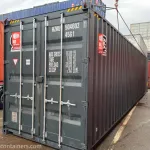
Can You Modify a 40ft High Cube Container?
The short answer is yes — you absolutely can modify a 40ft high cube container, and it is one of the most popular container types for modification projects worldwide. But the real question is not whether you can modify one; it is how to do it correctly, safely, legally, and within budget. This guide answers every dimension of that question, drawing on engineering principles, real-world pricing data, and the collective experience of thousands of modified container projects.
Key Takeaway: A 40ft high cube container offers 320 square feet of floor space with an extra foot of ceiling height compared to a standard container — making it the ideal canvas for offices, workshops, homes, retail spaces, and industrial applications. The extra height is particularly valuable when you add insulation and still want comfortable headroom.

Cargo worthy container
If you have ever shopped for a used shipping container, you have almost certainly encountered the term cargo worthy — often abbreviated as CW or CWO (Cargo Worthy Only). It is one of the most important classifications in the container industry, yet it is also one of the most misunderstood. A cargo worthy container is not a container that looks new. It is not necessarily a container that has a valid CSC plate. And it is definitely not the same as a wind and watertight container. This guide explains what cargo worthy really means — from its technical definition and historical origins to the precise structural criteria, inspection process, cost implications, and common misconceptions that trip up even experienced buyers.

Shipping container home
A shipping container home is a residential dwelling constructed from one or more steel intermodal containers — the same standardized metal boxes that transport goods across oceans, railways, and highways. These containers, engineered from corrosion-resistant Corten steel and designed to withstand brutal maritime conditions, are repurposed into fully habitable living spaces through insulation, structural modifications, and the installation of all standard residential utilities. A shipping container home can range from a minimalist 160-square-foot studio built from a single 20-foot container to a sprawling multi-level compound combining dozens of 40-foot high-cube units.
Core Definition: A shipping container home is a code-compliant, habitable structure built from one or more steel intermodal shipping containers that have been insulated, structurally reinforced where modified, and fitted with windows, doors, plumbing, electrical systems, and interior finishes to function as a permanent or semi-permanent residence.
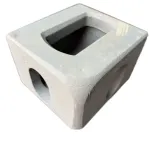
Corner casting steel vs aluminum
Every shipping container in the world — all 40 million of them — rests on eight critical components. Corner castings are the load-bearing blocks at each corner of an ISO shipping container, and they are the universal interface between the container and every crane, twistlock, spreader, and chassis on the planet. When you lift a container, stack it nine high on a ship, or lock it to a truck trailer, every ton of force flows through these fittings.