
Used Shipping Containers Milan – Italy
Are you looking for a used shipping container in Milan without paying the price of a new one? HZ-Containers is your reliable partner for finding used shipping containers of guaranteed quality from our warehouse in Milan. In this guide, you will learn how to select the right container, various quality classifications (IICL, Cargo Worthy, As Is), how to assess conditions, competitive prices and a transparent purchasing process. Whether you need storage, temporary warehouse or specific use, you will find here the information needed to make the best decision.
Why Choose Used Shipping Containers in Milan
Used shipping containers represent an intelligent and economical solution compared to new models. When you buy a used container from HZ-Containers, you get a product that has already proven its reliability in international transport, while maintaining full functionality at a fraction of the original price. Economic savings are significant: a quality used container typically costs 30-50% less than a new one, allowing you to allocate your budget to other business priorities.
Beyond the economic advantage, choosing a used container is a sustainable choice. Shipping containers are made from highly durable Corten steel, designed to last for decades. By reusing an old container, you reduce the consumption of new raw materials, limit industrial waste production and contribute to a circular economy. This approach is increasingly valued by companies that want to act responsibly towards the environment.
Economic Advantages Over New Containers
The main economic advantage is the lower price. A used shipping container in good condition (Cargo Worthy classification) allows you to save thousands of euros compared to buying a new one. If you need multiple units, the savings multiply. For example, if you manage a construction site, logistics company or have a need for temporary storage, investing in used containers allows you to increase storage capacity without excessive investment.
Used containers do not mean compromising on quality. If properly selected (as HZ-Containers does), they retain the same structural and safety characteristics as a new container. The main difference is in aesthetic appearance and natural wear, not in functionality. This means your investment is protected and the container will serve you for many years.
Sustainability and Container Reuse
Choosing used containers is a statement of commitment to sustainability. Each reused shipping container reduces the need for manufacturing new steel and new structures, leading to reduced carbon emissions associated with production. Containers are built to last: galvanized steel, reinforced structures, maritime wooden floors. After years of use in transport, many containers remain fully suitable for various uses: storage, warehouse, construction site, conversion to residential structures.
Circular economy applied to used containers creates long-term value. Instead of being scrapped, these containers find new lives and new uses. HZ-Containers selects used containers that maintain full structural integrity, ensuring that your purchase is both economical and environmentally responsible.
Immediate Availability in Milan Warehouse
HZ-Containers maintains a constantly updated warehouse of used shipping containers in Milan. This means you can find the container you are looking for without long waiting times. The Milan warehouse is strategically located to facilitate access and inspection.
Immediate stock availability is a significant advantage if you have urgency. You don’t have to wait weeks for a new container to be manufactured. You can select and purchase in a short timeframe, coordinating pickup with your trusted carrier.
Types of Shipping Containers: Which One to Choose
There are various types of shipping containers, each designed for specific needs. The choice of the right type depends on the volume you need to transport or store, the weight of the cargo and the use you will have for it. Understanding the differences will help you make an informed investment.
| Type | Internal Dimensions | Carrying Capacity | Main Use | Advantages |
|---|---|---|---|---|
| 20ft Standard (20DC) | 5.87m × 2.35m × 2.39m | 26-28 tons | General transport, storage | Easy to handle, easy transport, suitable for limited spaces |
| 40ft Standard (40DC) | 12.19m × 2.35m × 2.39m | 26-28 tons | General transport, warehouse | Double volume, lower price per unit, logistics efficiency |
| 40ft High Cube (40HC) | 12.19m × 2.35m × 2.69m | 26-28 tons | Bulky cargo, light goods | Increased height, 30cm more for bulky cargo |
| Specialized Containers | Various | Various | Specific use (cooling, open top, flat rack) | Suitable for specific goods, specialized functions |
High Cube Containers (40ft and 20ft)
High Cube containers are an ideal choice if you need to transport or store bulky but light goods. The increased height of 30 cm compared to standard containers allows you to better utilize vertical space. If you work in the logistics sector, e-commerce or manage light goods with high volume, High Cube is the most efficient solution. The additional cost compared to a standard container is minimal, but the advantage in volume is significant.

In the Milan depot, HZ-Containers has availability of used High Cube containers in various quality classifications. You can find 40HC or 20HC models at competitive prices, already checked and ready for use. The choice between 20HC and 40HC depends on your available space and handling needs.
Standard Containers and Specialized Containers
Standard containers (20DC and 40DC) are the most universal and represent the most common choice. They are suitable for any type of general cargo and are easily handled with standard equipment. If you have specific needs, HZ-Containers also offers specialized containers: cooling (Reefer) for goods requiring temperature control, open top for cargo exceeding standard height, flat rack for heavy and bulky cargo.
Used specialized containers represent an excellent opportunity for savings if you have specific needs. A used refrigerated container, for example, costs significantly less than a new one, while maintaining full cold chain functionality. HZ-Containers can guide you in selecting the most suitable specialized type for your needs.
Dimensions and Carrying Capacity
Container carrying capacity depends on its empty weight (Tara) and the maximum load limit set by international standards. A 20ft container typically has a carrying capacity of 26-28 tons and a 40ft also has a carrying capacity of 26-28 tons. This means that a 40ft, although it has double the length, does not have double the carrying capacity, because it is structurally heavier.
When selecting a container, consider both the volume and weight of your cargo. If you need to transport heavy but low-volume goods, a 20ft could be sufficient. If you have light but very bulky goods, 40ft or 40HC is the best choice. HZ-Containers will help you evaluate the most suitable type based on your specific needs.
Quality Classifications: IICL, Cargo Worthy and As Is
When buying a used container, quality classification is essential for understanding the actual condition of the product and its price. HZ-Containers uses three recognized international classifications: IICL, Cargo Worthy and As Is. Each classification represents a different compromise between quality, price and intended use.
What Does IICL (International Institute of Container Lessors) Mean
IICL is the highest quality classification. An IICL container is suitable for international transport and meets the strictest international standards. This means the structure is perfect, doors close hermetically, the floor is intact and there is no water leakage. An IICL container is practically like new from a functional standpoint, although it may show some signs of minimal aesthetic wear.
If you need a container for repeated international transport, for high-value goods or for customers who require high standards, IICL is the right choice. The price is higher compared to other classifications, but it guarantees that your investment is protected and that you will not have surprises during use. In the Milan warehouse, HZ-Containers always maintains availability of used IICL containers.
Cargo Worthy Standard: The Ideal Compromise
Cargo Worthy is the ideal compromise between quality and price. A Cargo Worthy container is structurally sound, suitable for transport and storage, but may have minor acceptable aesthetic defects. These defects do not impair functionality: surface dents, slight rust, small scratches. The structure is intact, doors close properly, the floor is safe.
Cargo Worthy is the most popular choice for companies seeking a balance between quality and price. If you use the container for internal storage, temporary warehouse or construction site, Cargo Worthy is perfect. If you use it for transport, it is generally accepted by carriers, although it may not be suitable for very strict international routes. The Cargo Worthy price is approximately 20-30% lower than IICL, representing excellent value.
As Is Conditions: When It’s Worth It and What to Expect
As Is is the most economical classification. An As Is container works perfectly, but may have visible larger defects: dents, more pronounced rust, obvious signs of wear. The structure remains intact and the container is safe to use, but the aesthetic appearance is more compromised. An As Is container is ideal if you use it for internal storage or construction site, where appearance is not a priority.
When is it worth choosing As Is? If you have a very limited budget, if you use the container internally and it is not visible to customers, or if you need many units and the total price is the deciding factor. The As Is price can be 40-50% lower than IICL, representing a significant savings opportunity.
How to Assess the Quality of a Used Container
Inspection of External Structure and Walls
Start by observing the external walls. Look for signs of deep rust, holes or structural deformations. Small dents and surface rust are normal on a used container, but rust that penetrates the thickness of the steel is a warning sign. The walls should generally be straight: significant deformations could indicate serious impacts. Check the corners and edges, where rust tends to concentrate. If you only see surface rust (which you can scrape off), the container is probably in good condition.
Also observe the roof. A roof in good condition should not have holes or cracks. If you see rust leaks from the roof, it may mean water infiltration is occurring. This is a serious defect that impairs storage functionality.
Verification of Tightness and Sealing
Tightness is essential if you use the container for storing goods sensitive to moisture. Open the doors fully and verify the rubber seals. The seals should be intact, not dry or cracked. If the seals are damaged, water can infiltrate during rain. Close the doors and verify that they close firmly: there should be no gaps between the doors and the frame.
Look inside the doors to verify the presence of moisture, mold or signs of water infiltration. If the interior is dry, that’s a good sign. If you see signs of moisture or mold, the container may have tightness problems. Also verify the gate seals: they should be intact and not compromised. Good tightness is the main factor that distinguishes a quality container from a compromised one.
Floor Check and Door Functionality
The floor is a critical element. Enter the container and walk on the floor, verifying that it is firm and unyielding. Maritime wooden flooring should be intact, without holes or parts rubbing. If the floor is spongy or sags under weight, it is a serious defect. Also look for signs of moisture or mold on the floor: they indicate long-term water infiltration.
Test door functionality. Open and close them fully, verifying that the hinges work properly and that there are no anomalous resistances. Doors should close with smooth movement and remain firmly closed. Verify closing mechanisms: they should be robust and functional. If doors are difficult to open or close, maintenance may be needed.
What Is the Difference Between Cargo Worthy and As Is?
The main difference between Cargo Worthy and As Is is the level of acceptable defects. A Cargo Worthy container has perfect structure and guaranteed functionality, only with minor aesthetic defects. As Is has the same functional structure, but visibly larger defects. If during container inspection you find that the structure is solid, doors work, floor is intact and tightness is good, then the container is at least Cargo Worthy. If you find larger dents or more pronounced rust, but the structure remains solid, then it is probably As Is.
The choice between Cargo Worthy and As Is depends on your use. If you use the container visibly (e.g., as a mobile office or shop), Cargo Worthy is more suitable. If you use it internally and hidden, As Is is economically advantageous.
Milan Warehouse: Availability and Logistics Advantages
The location of the Milan warehouse is strategically important from a logistics perspective. Milan is a major logistics hub in northern Italy with easy access to highways, railways and major Italian ports. This means your container is located in an optimal location for pickup and distribution.
Strategic Location in Milan’s Logistics Context
Milan is the heart of Italian logistics. The warehouse is located in an area with easy access to major transport arteries: highways A1, A4, A7 and railways. This greatly facilitates the organization of container pickup. If you have a carrier or logistics company, they will be able to reach the warehouse easily, regardless of origin. The proximity of the ports of Genoa, Livorno and Venice is an advantage if you need to transport the container to sea.
Milan is also the center of Italian commerce. If you are a manufacturing company, logistics company or trader, having a container in the Milan warehouse means it is in the heart of your distribution network. This reduces handling times and costs.
Ease of Container Pickup and Transport
How do I get the container from the Milan warehouse? The process is simple. Once the purchase and payment are completed, you are responsible for organizing the pickup. HZ-Containers does not provide a transport service, but coordinates with you to facilitate the process. You can contact a trusted carrier, provide them with the warehouse address and pickup date and the carrier will pick up the container.
Stock Availability and Delivery Times
HZ-Containers maintains a constantly updated warehouse of used containers in the Milan warehouse. This means you can usually find the container you are looking for without long waiting times. If you have a specific preference (e.g., 40ft High Cube, Cargo Worthy classification), the warehouse has a high probability of having the product available. If the specific container you are looking for is not immediately available, HZ-Containers can inform you of acquisition times.
Delivery times are fast. Once the purchase is agreed, you can organize pickup within a few days. You don’t have to wait weeks, as would happen with a new container order. This immediate availability is a significant advantage if you have urgency or want to minimize project times.
Purchase Process and Prices
Buying a used container from HZ-Containers is a transparent and simple process. Understanding how the process works and how prices vary will help you plan your investment.
How to Select and Reserve Your Container
The process begins with consulting the HZ-Containers online catalog. You can browse available containers, filter by type (20ft, 40ft, High Cube, etc.), quality classification (IICL, Cargo Worthy, As Is) and price.
What Are the Prices of Used Containers in Milan?
Prices for used containers vary depending on several factors. Type is the first factor: a 20ft container costs less than a 40ft and a 40ft High Cube may cost slightly more than a standard one. Quality classification is the second factor: IICL costs more than Cargo Worthy, which in turn costs more than As Is. Market conditions are the third factor: prices fluctuate depending on demand and supply.
As a guideline example (actual prices vary and must be confirmed by HZ-Containers): a 20ft Cargo Worthy container could cost between 1,500 and 2,500 EUR, a 40ft Cargo Worthy between 1,500 and 4,000 EUR and As Is could be 30-40% cheaper. An IICL container could cost 20-30% more than Cargo Worthy. These are guideline prices: HZ-Containers provides exact quotes based on current availability.
To get an exact price, contact HZ-Containers directly. Provide details: type, desired quality classification and quantity. HZ-Containers will provide you with a transparent quote with no hidden costs. The price includes the container, documentation and administrative assistance. Additional costs (transport, pickup, insurance) are the customer’s responsibility.
Price Transparency and Payment Options
HZ-Containers operates with maximum transparency. The quoted price is the final price: there are no hidden costs, additional taxes or surprises. If the quote says 3,000 EUR, you pay 3,000 EUR (plus VAT if applicable). This is HZ-Containers’ commitment to clarity and trust.
Used Containers vs New: Complete Analysis
Many potential buyers ask whether it is better to buy used or new. The answer depends on your specific needs, budget and intended use. Here is a complete analysis to help you decide.
Differences in Price and ROI
The price difference between used and new is significant. A new container generally costs 100% more than a used container of equivalent quality. This means that if a used Cargo Worthy container costs 3,000 EUR, a new one of the same type could cost 5,500-6,000 EUR. If you buy 10 containers, the difference in investment is 25,000-30,000 EUR, which is a substantial sum.
From a return on investment (ROI) perspective, a used container is better if you use it for storage or internal use. You will recover your investment faster due to the lower price. If you use it for transport, ROI depends on the frequency of use and the value of the transport service.
Durability and Reliability of Used Containers
Is it safe to buy a used container? Yes, if properly selected. A used container that has already completed dozens of international trips and still works perfectly has proven its reliability. Containers are built to last: Corten steel, reinforced structures, robust design. A used container in good condition (IICL or Cargo Worthy) has a lifespan of 10-15 years or more, just like a new one.
The main difference between used and new is not durability, but aesthetic appearance. A new container has a fresh color, no signs of wear, perfect appearance. A used container shows signs of use, dents, slight rust. But in terms of structure and functionality, they are equivalent. If you use the container internally or hidden, this aesthetic difference is irrelevant.
When to Choose Used and When to Consider New
Choose used if: you have a limited budget, need multiple units, use the container for internal storage or are willing to accept minor aesthetic defects. Consider new if: you have a need for frequent international transport on very strict routes, want a product with extended manufacturer warranty, or aesthetic appearance is critical (e.g., container as a mobile office visible to customers).
For most applications (storage, warehouse, construction site, internal use), a used container is an economically and environmentally responsible choice. HZ-Containers specializes in quality used containers and guarantees that your investment is protected and the container will serve you for many years.
Frequently Asked Questions About Used Shipping Containers in Milan
What is the difference between IICL, Cargo Worthy and As Is containers?
An IICL container is the pinnacle of quality, suitable for international transport and guarantees tightness and perfect structure. Cargo Worthy is the ideal compromise: suitable for transport and storage, with minor acceptable aesthetic defects. As Is is the economical choice: works perfectly, but may have dents, surface rust or minor defects that do not impair use.
How much does a used shipping container cost in Milan?
Prices vary depending on type (20ft or 40ft), quality classification and market conditions. A 20ft Cargo Worthy container costs on average less than a 40ft and As Is is cheaper than IICL. HZ-Containers offers transparent quotes: contact directly for a personalized quote based on your needs.
Is a used container suitable for international transport?
It depends on the classification. An IICL container is fully suitable for international transport and meets all international standards. Cargo Worthy is suitable for transport, although it may not be accepted for certain very strict routes. As Is is more suitable for storage or internal use. Check with your carrier for specific requirements.
What is the difference between a 20 foot and 40 foot container?
A 20ft container (TEU) has a carrying capacity of approximately 21-24 tons and internal dimensions of 5.87m x 2.35m x 2.39m. A 40ft container (FEU) is double the length, with a carrying capacity of approximately 26-28 tons. 20ft is more manageable and suitable for limited spaces, 40ft offers greater volume at a lower cost per unit. The choice depends on the volume and weight you need to store.
What are the hidden costs of buying a used container?
With HZ-Containers there are no hidden costs: the price is transparent and includes the container and documentation. Additional costs are the customer’s responsibility: transport/pickup, any necessary repairs (if needed), insurance and registration. Remember that HZ-Containers does not provide a transport service, but coordinates with you to facilitate pickup.
Can a used container last as long as a new one?
A used container in good condition (IICL or Cargo Worthy) has a lifespan of many years, often 10-15 years or more. Durability depends on the quality classification and the use you will have for it. An As Is container may require more frequent maintenance. HZ-Containers selects reliable used containers and guarantees that your investment is protected.

 Italy, Milan
  WITHOUT SHIPPING


Other container news...

The OPNBar leverage tool
The OPNBar leverage tool is a professional-grade, multi-purpose hand tool designed specifically for the shipping container and trucking industry. Manufactured by Shipping Container Safety International (SCS International) and proudly Made in the USA, the OPNBar is fundamentally a 3-in-1 trucker tool that combines a shipping container door leverage bar, a tire thumper, and a 5th wheel pull hook into a single, compact steel implement. The name “OPNBar” is a direct reference to its primary function: it is the bar that “opens” containers.

40 Foot Container Dimensions
If you have ever booked ocean freight, planned a warehouse layout, or designed a modular building project, you have asked the same question: what are the exact 40 foot container dimensions — and what do they mean for what you can actually load? The numbers are standardized worldwide, but the practical implications of those numbers are surprisingly nuanced. A 40-foot container is not simply 40 feet of usable space, and its weight limits are not what most people assume. This guide covers every measurement, every weight rating, and every loading consideration you need to make informed decisions about the world’s most common shipping container.
Quick Answer: A standard ISO 40-foot shipping container measures 12.19 m (40 ft) long × 2.44 m (8 ft) wide × 2.59 m (8 ft 6 in) high externally and provides approximately 67.7 m³ (2,390 ft³) of usable internal volume. The maximum gross weight is 30,480 kg (67,200 lbs), with a typical payload capacity of approximately 26,700–26,800 kg (58,900–59,000 lbs).
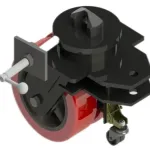
Shipping container wheels
Moving a 12-meter-long steel box that weighs up to 67,200 pounds was, for decades, exclusively a job for a crane and a licensed operator. That reality has changed. Shipping container wheels — an umbrella term covering a family of mobility solutions — now let a single person reposition a 20ft or 40ft container across a yard, warehouse, or construction site without calling in heavy equipment. This guide covers every aspect of container wheel systems: what they are, how they work, the types available, what they cost, and how to choose the right kit for your container.
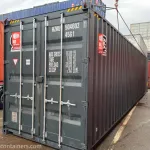
Can You Modify a 40ft High Cube Container?
The short answer is yes — you absolutely can modify a 40ft high cube container, and it is one of the most popular container types for modification projects worldwide. But the real question is not whether you can modify one; it is how to do it correctly, safely, legally, and within budget. This guide answers every dimension of that question, drawing on engineering principles, real-world pricing data, and the collective experience of thousands of modified container projects.
Key Takeaway: A 40ft high cube container offers 320 square feet of floor space with an extra foot of ceiling height compared to a standard container — making it the ideal canvas for offices, workshops, homes, retail spaces, and industrial applications. The extra height is particularly valuable when you add insulation and still want comfortable headroom.