
Used 40 foot shipping container
Used 40ft shipping container is a decommissioned intermodal cargo container built to ISO standards, measuring 40 feet in length, 8 feet in width, and 8 feet 6 inches in height, that has been retired from active maritime transport and is offered for sale on the secondary market. Made of high-strength Corten steel and engineered to withstand decades of harsh ocean conditions, these containers have become one of the most versatile and cost-effective assets available to homeowners, contractors, farmers, and entrepreneurs. Whether you’re looking for secure on-site storage, the foundation for a container home, a mobile office, or a pop-up retail space, a used 40ft shipping container represents a durable, modular, and surprisingly affordable solution – often cheaper than a traditional wooden garden shed of comparable floor area.
The market for used 40ft shipping containers has expanded dramatically over the past two decades. What was once a specialized industrial product has become a mainstream choice for storage, construction, and creative conversions. This guide is the definitive resource on the topic: it covers everything from the history of containerization and the manufacturing process, to condition grades, pricing, delivery logistics, practical uses, maintenance, and common misconceptions. By the end, you’ll know exactly what a used 40ft shipping container is, how to buy one with confidence, and what to expect throughout the entire process.

What is a used 40ft shipping container?
A used 40ft shipping container – also referred to as a 40ft conex container, sea can, or ISO container – is a standardized steel box originally manufactured for transporting cargo across oceans, railways, and highways. Once it completes its service life in the global shipping fleet, typically after 10 to 15 years of active service, it is sold on the secondary market where it begins its second life as a storage unit, building module, or converted structure.
A used 40ft shipping container is a decommissioned cargo container that has been removed from the global shipping fleet and is offered for sale on the secondary market, where it is most commonly converted for storage, construction, and conversion projects.
The 40ft length is the most common container size in the world, representing roughly two TEU (Twenty-foot Equivalent Units), the standard unit of measurement in container shipping. Its dimensions are defined by ISO 668, an international standard that ensures every container is compatible with ships, cranes, trucks, and rail cars regardless of where it was manufactured or which shipping line it belonged to.
Where did the shipping container come from?
The shipping container as we know it today was invented by American trucking entrepreneur Malcolm McLean in 1956. Before containerization, cargo was loaded and unloaded piece by piece – a process known as break-bulk shipping – which was slow, labor-intensive, and prone to theft and damage. McLean’s idea was elegantly simple: instead of loading individual crates, boxes, and barrels onto a ship, why not load an entire trailer?
McLean purchased the Pan-Atlantic Steamship Company, converted a World War II tanker named Ideal X, and on April 26, 1956, shipped 58 containers from Newark, New Jersey to Houston, Texas. The cost savings were staggering: loading a ship using containers cost $0.16 per ton compared to $5.83 per ton for break-bulk cargo. The container revolution had begun.
By the late 1960s, the International Organization for Standardization (ISO) had established universal container dimensions, and the 40ft container became the dominant standard. The standardization of the 40ft container is, in many ways, the invisible infrastructure of globalization – it’s the reason a factory in Shenzhen can seamlessly ship goods to a warehouse in Chicago, with the container passing through several countries, carriers, and modes of transport without ever being opened.
How is a 40ft shipping container manufactured?
Every 40ft shipping container begins as sheets of Corten steel – a weather-resistant steel alloy that, when exposed to the elements, forms a protective rust patina that paradoxically shields the underlying metal from further corrosion. Corten steel contains copper, chromium, and nickel, giving it roughly four to six times higher resistance to atmospheric corrosion than ordinary carbon steel.
The manufacturing process follows a precise sequence:
- Floor assembly: A steel frame is welded and a 28 mm (1 1/8 inch) thick marine-grade plywood is installed. The plywood is treated with pesticides and fungicides to resist insects, mold, and rot.
- Wall and roof panels: Corrugated Corten steel sheets are welded to the frame. The corrugation isn’t decorative – it provides the structural rigidity that allows containers to be stacked nine high on a cargo ship without collapsing.
- Door assembly: Double doors at one end are fitted with heavy-duty hinges, locking rods, and rubber sealing that create a watertight closure when shut.
- Corner fittings: Eight corner fittings – four on top, four on the bottom – are the most critical structural feature. Twist-locks engage at these points, allowing containers to be lifted, stacked, and secured.
- CSC plate installation: Every container receives a CSC (Convention for Safe Containers) safety plate displaying the container’s unique identification number, maximum gross weight, tare weight, payload capacity, and the date of the last inspection.
The entire process takes approximately one to two weeks per container. The average cost to manufacture a new 40ft container ranges from $3,500 to $5,500 depending on factory location and current steel prices.
What are the dimensions and specifications of a 40ft shipping container?
Knowing the exact dimensions of a 40ft shipping container is essential for planning your purchase – whether you need to know if it will fit on your driveway, whether your forklift will clear the door opening, or how many pallets you can load into it.
Standard vs. High Cube: What’s the difference?
The two main height variants of the 40ft container are Standard (8 ft 6 in) and High Cube (9 ft 6 in). The extra foot of height in the High Cube provides approximately 340 additional cubic feet of storage volume – a 12% increase – which can make a significant difference when storing tall items or planning a conversion where insulation and flooring reduce interior height.
| Specification | 40ft Standard | 40ft High Cube |
|---|---|---|
| External length | 40 ft (12.19 m) | 40 ft (12.19 m) |
| External width | 8 ft (2.44 m) | 8 ft (2.44 m) |
| External height | 8 ft 6 in (2.59 m) | 9 ft 6 in (2.90 m) |
| Internal length | 39 ft 5 in (12.03 m) | 39 ft 5 in (12.03 m) |
| Internal width | 7 ft 8 in (2.35 m) | 7 ft 8 in (2.35 m) |
| Internal height | 7 ft 10 in (2.39 m) | 8 ft 10 in (2.70 m) |
| Door opening width | 7 ft 8 in (2.34 m) | 7 ft 8 in (2.34 m) |
| Door opening height | 7 ft 5 in (2.28 m) | 8 ft 5 in (2.58 m) |
| Cubic capacity | ~2,386 cu ft (67.6 m³) | ~2,727 cu ft (76.3 m³) |
| Tare weight | ~8,000–8,500 lbs (3,630–3,860 kg) | ~8,700–9,200 lbs (3,950–4,170 kg) |
| Maximum payload | ~59,000 lbs (26,730 kg) | ~58,000 lbs (26,280 kg) |
| Maximum gross weight | ~67,200 lbs (30,480 kg) | ~67,200 lbs (30,480 kg) |
A High Cube typically costs $200 to $500 more than a Standard container on the used market, but the extra vertical space is almost always worth the premium if you plan to convert the container into living space, install shelving, or store tall equipment.
Internal dimensions, weight, and capacity in detail
The internal dimensions of a 40ft standard container are worth memorizing: 39 ft 5 in long, 7 ft 8 in wide, and 7 ft 10 in high. That’s roughly 300 square feet of floor area, comparable to a single-car garage or a spacious bedroom. The door opening – 7 ft 8 in wide and 7 ft 5 in high – is a narrow point for loading. Anything wider or taller than the door opening must be loaded through the roof or side, which requires a modified container.
The tare weight of 8,000 to 8,500 lbs is significant: a used 40ft container is so heavy that it will require a prepared, level surface to prevent it from sinking or shifting. The maximum payload of approximately 59,000 lbs means the floor can structurally support the weight of virtually any household or construction storage scenario – the limiting factor is almost always volume, not weight.
What fits inside a 40ft container?
The capacity of a 40ft container is best understood through real-world examples:
- Household contents: Contents of a 3 to 5 bedroom home, including furniture, appliances, and boxes
- Vehicles: 2 to 4 small to mid-size cars (depending on orientation and door clearance)
- Pallets: 20 to 25 standard American pallets (40″ × 48″) or 24 to 25 Euro pallets (1.20 m × 0.80 m)
- Construction materials: 450 to 500 hay bales, 600 to 800 tires, or 20 pallets of 120 boxes each
- Business inventory: Enough stock to fill the back room of a small shop
The 2,386 cubic foot storage volume of a container roughly equals a self-storage unit 10 ft by 15 ft – but for a fraction of the monthly cost, and you own it.
What are the different condition grades of used 40ft containers?
When purchasing a used 40ft shipping container, you’ll encounter four main condition grades. Understanding these grades is probably the most important decision you’ll make in the buying process, because the grade determines the container’s price, remaining service life, and suitability for your intended use.
One-Trip Containers (like new)
A One-Trip container was manufactured overseas, loaded with cargo exactly once, shipped to the United States, and sold immediately after unloading. It has never been used for repeated shipping cycles. The condition is virtually indistinguishable from new: the paint is fresh, the floor is unmarked, the door seals are supple, and the CSC plate is current. These containers command a premium price – typically $4,000 to $6,000 for a 40ft standard – but offer a 25 to 30 year service life and the best appearance for customer-facing applications like retail pop-ups, offices, or luxury container homes.
Cargo Worthy (CW) Containers
A Cargo Worthy container has been inspected and certified as structurally fit for international cargo transport. The certification is typically performed to IICL (Institute of International Container Lessors) standards, which verify that the corner posts, door mechanisms, floor, and walls meet the minimum requirements for maritime transport. CW containers show signs of aging – surface rust, dents, faded paint – but have no structural defects. Prices range from $2,500 to $4,000 for a 40ft standard. CW containers are the right choice if you need to ship goods internationally again or want maximum structural integrity for demanding applications.
Wind and Watertight (WWT) Containers
WWT is the most popular grade for storage and represents the ideal choice for the majority of buyers. A WWT container is guaranteed hole-free and protects against wind and rain – the roof doesn’t leak, the door seals are tight, and the floor is intact. Cosmetic wear is expected and accepted: rust spots, dents, faded or peeling paint, and minor scratches are normal. Structural integrity is fine, but the container is no longer certified for international maritime transport. Prices range from $1,500 to $3,000, making WWT the best choice for on-site storage, workshops, and budget-conscious buyers.
AS-IS Containers
An AS-IS container is sold without any warranties. It may have holes, significant rust, damaged doors, or a compromised floor. The price is the lowest available – $800 to $1,500 – but the risk is the highest. AS-IS containers are suitable for buyers who are confident in repairs, who need a container for scrap or for storage that doesn’t require weather protection, or who plan to fully convert the container for a creative project where the initial condition isn’t very relevant. Always factor in repair costs before purchasing AS-IS.
Condition grade comparison
| Grade | Condition | Typical price range (40ft Standard) | Best for | Remaining service life | Certification |
|---|---|---|---|---|---|
| One-Trip | Almost new, minimal wear, fresh paint | $4,000–$6,000 | Customer-facing projects, homes, long-term investment | 25–30+ years | CSC valid |
| Cargo Worthy (CW) | Structurally sound, cosmetic wear, IICL inspected | $2,500–$4,000 | International shipping, heavy-duty storage, resale | 15–25 years | CSC valid, IICL certification |
| Wind & Watertight (WWT) | Weather resistant, visible rust/dents, no holes | $1,500–$3,000 | On-site storage, workshops, general use | 10–15 years | None |
| AS-IS | Damaged, no warranties, may have holes | $800–$1,500 | DIY projects, scrap, buyers willing to repair | Variable (5–10 with repairs) | None |
The grade you choose should be determined by three factors: intended use, budget, and how much cosmetic appearance matters. For most residential and small business buyers, a 40ft WWT container offers the best price/performance ratio.
How much does a used 40ft shipping container cost?
The price of a used 40ft shipping container varies significantly depending on condition grade, geographic location, and market conditions. The following price ranges reflect the U.S. market in mid-2026.
Price ranges by condition grade
- AS-IS: $800 to $1,500 – lowest entry point, but budget for potential repairs
- WWT: $1,500 to $3,000 – most common range for storage-grade containers
- CW: $2,500 to $4,000 – structurally certified, higher demand in port cities
- One-Trip: $4,000 to $6,000 – almost new, increasingly popular for conversions
These prices are for the container alone and don’t include transportation. It’s worth noting that container prices are cyclical: during periods of high global trade volume, used containers are scarce and prices rise; when trade slows, shipping lines retire more containers, flooding the secondary market and lowering prices.
What factors affect the price?
Several variables influence the final price of a used 40ft shipping container:
- Location: Containers are cheapest near major ports (Los Angeles/Long Beach, Newark/New York, Savannah, Houston, Seattle/Tacoma) and become more expensive the further inland you go, due to transportation costs to the depot.
- Delivery distance: Even if the container price is attractive, a depot 200 miles away can add $500 to $1,000 in transportation fees.
- Market supply and demand: Container prices can fluctuate by $500 to $1,500 within a single year depending on global shipping conditions.
- Container age: Older containers (15+ years) are cheaper, but have a shorter remaining service life.
- Seasonal demand: Prices tend to rise in spring and summer when construction activity and home projects peak.
- Grade: As noted above, the difference between AS-IS and One-Trip can be $4,000 or more.
Hidden costs to budget for
The container price is only part of the total cost. Common additional expenses include:
- Transportation fees: $350 to $1,500+ depending on distance, delivery method, and accessibility. Remote locations, difficult roads, and challenging terrain all increase costs.
- Site preparation: A level, well-drained surface is essential. A gravel base costs approximately $300 to $800 for a 40ft container footprint. Concrete foundations cost $1,000 to $3,000.
- Ground surface: Containers placed directly on soil will sink and rust faster. Railway sleepers, concrete blocks, or gravel are the minimum recommended foundation.
- Modifications: Adding personnel doors, windows, insulation, electrical wiring, or ventilation can add $1,000 to $10,000+ depending on complexity.
- Permits: Some municipalities require permits for container placement, especially for residential use or habitable conversions. Costs range from $50 to $500+.
- Taxes: Sales tax may apply, although some states exempt purchases of agricultural or storage containers.
How to buy a used 40ft shipping container?
Buying a used 40ft shipping container is not like buying ordinary consumer goods. The industry is fragmented, inventory is decentralized, and quality varies enormously. A systematic approach protects you from overpaying or receiving a container that doesn’t meet your needs.
Common scams and how to avoid them
The container industry has attracted its share of fraudsters, especially on peer-to-peer marketplaces. Common scams include:
- Deposit scams: The seller demands a deposit – often 50% upfront – and then disappears. Always use a payment method with buyer protection, or choose a seller that offers payment on delivery.
- Misleading photos: The seller shows photos of a pristine container, but delivers a rusty, damaged unit. Request photos of the specific container you’re buying, including the CSC plate with the visible identification number.
- Deceptive pricing practices: The advertised low price turns out to be for an AS-IS container, and the seller pushes you to “upgrade” for a much higher price after your commitment.
- Fake sellers: Fraudulent websites or social media profiles that impersonate legitimate sellers. Verify the seller’s physical address, check reviews on Google and Trustpilot, and call the listed phone number before sending money.
What are the delivery requirements for a 40ft container?
Delivery is often the logistically most demanding part of buying a used 40ft shipping container. A 40ft container is an enormous, heavy object, and the delivery truck requires considerable space to maneuver.
Site preparation and clearance
The most common delivery method is tilt-bed delivery, where a specialized truck tilts its bed and the container slides off onto the ground. This requires:
- Straight clearance: At least 120 feet of straight, unobstructed space in front of the delivery site. The truck and trailer together measure approximately 65 to 70 feet, and the driver needs room to align, back up, and tilt the bed.
- Vertical clearance: At least 14 feet of vertical space free of tree branches, power lines, and building overhangs. The container sits on the tilted bed and can reach considerable height during unloading.
- Ground surface: The delivery site must be firm, level, and accessible. Soft soil, mud, steep slopes, or sharp turns can make delivery completely impossible. If the truck cannot reach the final location, the container may be left at the nearest accessible spot and the rest of the move is up to you.
- Width: The access road or driveway must be at least 10 to 12 feet wide to accommodate the truck.
Delivery methods: Tilt-bed vs. Flatbed vs. Crane
| Delivery method | How it works | Best for | Typical cost | Requirements |
|---|---|---|---|---|
| Tilt-bed | Truck tilts bed, container slides off onto ground. Most common method. | Ground-level placement, accessible sites | $350–$800 (local) | 120 ft straight clearance, firm level surface |
| Flatbed + forklift | Container is delivered on a flatbed and unloaded by forklift. | Sites with available forklift, tight spaces | $300–$600 (local) + forklift rental | Forklift capable of lifting 8,500+ lbs |
| Crane delivery | Crane lifts container from delivery vehicle and places it precisely. | Tight urban locations, stacking, placement over obstacles | $500–$1,500+ | Crane access, additional coordination |
Delivery costs and what to expect
Delivery costs follow a predictable pattern: a base rate for the first 50 miles ($350 to $500) plus a per-mile rate for additional distance ($3 to $8 per mile, depending on fuel prices and carrier). A container delivered 200 miles from the depot can cost $800 to $1,500 in transportation fees alone. Remote areas, islands, and locations requiring ferry transport carry significant surcharges.
Always confirm delivery costs as part of the total purchase price before committing. Many sellers have a delivery quote calculator on their website where you can enter your ZIP code for an instant estimate.
What can you use a used 40ft shipping container for?
The versatility of a 40ft container is one of its greatest strengths. The same steel box that shipped electronics from Shanghai to Los Angeles can become a workshop, a home, a clinic, or an agricultural building.
Storage applications
This is the most common use case. A 40ft shipping container provides secure, weather-resistant storage for:
- Construction sites: Tools, equipment, materials, and generators
- Residential storage: Seasonal items, furniture during moves, vehicles, hobby equipment
- Agricultural and farm storage: Hay bales, feed, machinery, harvested crops
- Business inventory: Retail stock, wholesale goods, archival documents
- Vehicle storage: Cars, motorcycles, ATVs, boats, snowmobiles
A 40ft WWT container used for storage provides an effective cost of roughly $0.50 to $1.00 per cubic foot – compare that to a self-storage facility that charges $1.50 to $3.00 per cubic foot monthly, and the container pays for itself in one to two years.
Container conversions and modifications
With the right modifications, a used 40ft container can become virtually any type of habitable or functional space:
- Container homes and tiny houses: A 40ft container provides approximately 320 square feet of living space, enough for a studio apartment with kitchen, bathroom, and living area. For larger homes, multiple containers can be combined.
- Accessory Dwelling Units (ADU): A backyard ADU container can serve as a guest house, rental unit, or home office.
- Mobile offices: Air-conditioned, insulated container offices are widely used at construction sites, industrial facilities, and remote locations.
- Workshops and studios: Artists, carpenters, mechanics, and makers use containers as secure, customizable workshop spaces.
- Pop-up retail and restaurants: A container can be converted into branded retail space, a food truck, café, or bar with windows, counters, and electrical hookups.
- Gyms and saunas: Home gyms, CrossFit boxes, and container saunas are increasingly popular.
Commercial and industrial uses
- Mobile health clinics and emergency shelters: Containers have been deployed as COVID-19 testing sites, vaccination clinics, and disaster relief shelters.
- Classrooms and training facilities: Schools and organizations use modified containers as affordable learning spaces.
- Data centers and server rooms: Insulated, air-conditioned containers securely house IT equipment.
- Hydroponic and vertical farms: Controlled-environment agriculture inside containers is a growing industry.
Agricultural and specialized uses
- Mushroom farms: Containers provide the dark, humid environment mushrooms need to grow.
- Shrimp and fish farms: Modified containers serve as aquaculture tanks.
- Barns and animal shelters: Containers create durable, affordable shelters for livestock, feed, and equipment.
- Cold storage: With refrigeration units installed, containers become refrigerated or freezer boxes.
How long does a used 40ft shipping container last?
The service life of a used 40ft shipping container depends primarily on its condition grade at purchase and how well it’s maintained.
Service life by condition grade
- One-Trip: 25 to 30+ years with proper maintenance. These containers are essentially new and will outlast most applications.
- Cargo Worthy: 15 to 25 years. Structurally sound, these containers have significant remaining service life and withstand demanding use.
- WWT: 10 to 15 years. The most common grade, WWT containers are weather resistant and structurally suitable for static storage. Their service life depends heavily on climate – containers in dry regions last longer than those in humid, coastal environments.
- AS-IS: 5 to 10 years with repairs, but highly variable. An AS-IS container in a dry climate with minor rust may last ten years; one with significant rust-through in a humid climate may fail within a few years.
Maintenance and rust prevention
The biggest threat to a used 40ft shipping container is rust. Corten steel is corrosion-resistant, but not corrosion-immune. In coastal or highly humid environments, rust can accelerate dramatically. Preventive maintenance includes:
- Elevate the container: Place it on railway sleepers, concrete blocks, or a gravel base so the bottom rails don’t sit on the ground where moisture accumulates.
- Ensure drainage: The ground under and around the container should slope away to prevent water from pooling.
- Repair rust spots in time: Sand surface rust, apply a rust converter, and repaint with marine-grade paint. Pay special attention to the roof, corner posts, and bottom rails.
- Maintain door seals: Replace cracked or brittle door seals to preserve the watertight closure. Seal replacement kits cost $50 to $150 and represent a straightforward DIY job.
- Provide ventilation: Install passive or louvered vents to prevent condensation buildup inside the container, which can cause mold and accelerate internal rust.
- Inspect the roof regularly: The roof is the most vulnerable surface and often develops rust-through first. Inspect it at least once a year, especially after major storms.
How does a 40ft container compare to a 20ft container?
40ft and 20ft containers are the two most common sizes, and the choice between them depends on your space, budget, and storage needs.
| Feature | 20ft container | 40ft container |
|---|---|---|
| External dimensions | 20 ft × 8 ft × 8 ft 6 in | 40 ft × 8 ft × 8 ft 6 in |
| Internal floor area | ~150 sq ft | ~300 sq ft |
| Cubic capacity | ~1,170 cu ft (33.2 m³) | ~2,386 cu ft (67.6 m³) |
| Tare weight | ~5,000 lbs (2,270 kg) | ~8,200 lbs (3,720 kg) |
| Maximum payload | ~62,000 lbs (28,120 kg) | ~59,000 lbs (26,730 kg) |
| Typical used price (WWT) | $1,200–$2,200 | $1,500–$3,000 |
| Cost per square foot | ~$11–15/sq ft | ~$5–10/sq ft |
| Delivery clearance required | ~80 ft | ~120 ft |
| TEU equivalent | 1 TEU | 2 TEU |
| Best for | Small storage, tight spaces, lower budget, single-vehicle storage | Large storage, conversions, workshops, multi-vehicle storage, best value per cubic foot |
When to choose a 40ft over a 20ft
Choose a 40ft container when:
- You need volume: Cost per cubic foot is roughly half that of a 20ft container. If you have the space, a 40ft container is better value.
- You’re planning a conversion: A 40ft container provides enough square footage for a functional apartment, office, or workshop. A 20ft container is more limited for habitable conversions.
- You’re storing vehicles or large equipment: A 40ft container can hold multiple vehicles or large machinery; a 20ft container holds at most one car.
- You have adequate access for delivery: The 120 ft clearance requirement for a 40ft container is the main limitation. If your location allows it, a 40ft container is almost always the better choice.
Choose a 20ft container when your location has limited access, your budget is tighter, or your storage needs are modest enough that the extra space of a 40ft container would go unused.
What are common misconceptions about used 40ft shipping containers?
Several persistent myths surround used shipping containers. Separating fact from fiction helps you make a better buying decision.
- “Used means broken or unreliable.” False. A WWT or CW used container is a structurally sound, functional asset that has simply been retired from active transport. The steel itself still has decades of life left. A used container is more like a used commercial vehicle – it’s been used, but is far from the end of its useful life.
- “All containers are the same.” False. Condition grade, age, manufacturer, and maintenance history create enormous differences. A five-year-old One-Trip and a twenty-year-old AS-IS are fundamentally different products, even though both are “used 40ft containers.”
- “A used container cannot be modified.” False. Shipping containers are among the most modular structures that exist. They can be cut, welded, insulated, wired, plumbed, and finished to almost any specification. The only limitation is that structural modifications – especially to corner posts or roof – should be done with engineering guidance.
- “Containers are maintenance-free.” False. While a container requires far less maintenance than a wooden structure, it’s not maintenance-free. Rust, door seals, and the floor require regular care, especially in harsh climates.
- “All containers are watertight.” False. Only WWT grade and above are guaranteed watertight. AS-IS containers may have holes or failed seals. Even WWT containers can develop leaks over time if not maintained.
- “You don’t need a permit for a container.” It depends. Many municipalities classify a shipping container as a temporary structure that doesn’t require a permit for storage use. However, if you plan to convert it into living space, connect it to utilities, or place it in a residential zone with HOA restrictions, permits will almost certainly be required. Always check with your local building department before purchasing.
What is the future outlook for used shipping containers?
The used shipping container market is shaped by several converging trends that suggest continued growth in demand and innovation in applications.
Sustainability and upcycling: As circular economy principles gain strength, converting a retired shipping container – which contains approximately 3,500 kg of steel and 8,000 kWh of embodied energy – is the environmentally preferred alternative to scrapping it and building a new structure from virgin materials. A container home or office has a significantly lower carbon footprint than a traditional stick-built equivalent.
Growth of container architecture: The global container homes market is forecast to expand at a compound annual growth rate of 6% to 8% into the early 2030s, driven by urban housing affordability crises, the tiny house movement, and the speed of container construction (a container home can be built in weeks compared to months for traditional construction).
Supply chain impacts: The availability of used containers is directly tied to global trade volume. Trade slowdowns increase the supply of retired containers and lower prices. Economic upturns tighten supply and raise prices. Geopolitical shocks – such as the Red Sea crisis, which in 2024 diverted shipping routes around the Cape of Good Hope – can create temporary container shortages that ripple through the secondary market.
Prefab container construction: A growing number of companies now offer fully prefabricated container structures – homes, offices, bathrooms, kitchens – delivered to site complete with electrical, plumbing, and finish work. This trend is likely to accelerate as construction labor shortages persist and off-site manufacturing becomes more efficient.
Resale value: A well-maintained used 40ft container retains significant resale value. A WWT container purchased for $2,000 and maintained for five years can often be resold for $1,200 to $1,800 depending on local market conditions. One-Trip containers retain an even higher percentage of their value, making them a surprisingly resilient asset.
Frequently asked questions
What is the difference between a 40ft standard and a 40ft high cube container?
A High Cube is exactly one foot taller – 9 ft 6 in instead of 8 ft 6 in. This provides approximately 340 additional cubic feet of storage volume and a taller door opening, which is key for loading tall items or installing insulation and finishes in a conversion without the interior feeling cramped.
How much does a used 40ft shipping container weigh?
The tare weight of a standard 40ft container is approximately 8,000 to 8,500 lbs. The maximum gross weight – the total weight of the container plus cargo – is 67,200 lbs, meaning the container can safely carry a payload of approximately 59,000 lbs.
Are used shipping containers watertight?
WWT (Wind and Watertight) containers are guaranteed watertight at the time of sale. CW and One-Trip containers are also watertight. For AS-IS containers, there is no guarantee. Even watertight containers require regular maintenance of door seals and roof coatings to maintain their seal over time.
How much does delivery of a 40ft container cost?
Delivery typically costs $350 to $500 for the first 50 miles from the depot plus $3 to $8 for each additional mile. Delivery 200 miles from the depot can cost a total of $800 to $1,500. Remote locations, difficult terrain, and crane delivery add significant surcharges.
What should I check when buying a used shipping container?
Check the roof for holes and rust, the floor for soft spots and rot, the corner posts for structural soundness, the door seals for cracks, and that the doors operate smoothly. Verify that the CSC plate is present and legible. If buying remotely, request detailed photos of these specific areas.
How long does a used shipping container last?
A WWT container typically lasts 10 to 15 years with proper maintenance. A CW container lasts 15 to 25 years. A One-Trip container can last 25 to 30+ years. Service life is heavily influenced by climate – containers in dry, inland environments last significantly longer than those in coastal or highly humid areas.
Can I paint a shipping container?
Yes. Surface preparation is key: remove rust, clean the surface, apply a metal primer, and then use marine-grade or industrial enamel. Many buyers choose to paint the container to match their property, improve reflectivity in hot climates, or add a branded look for commercial use.
Do I need a permit for a shipping container on my property?
Permit requirements vary by municipality. Many areas allow one container for storage without a permit, especially in rural or agricultural zones. Residential zones, HOA-managed communities, and planned conversions to living space almost always require permits. Contact your local building department before purchasing.
What is the cost per square foot of a used 40ft container?
A 40ft WWT container at $2,000 provides approximately 300 square feet of floor area, which equals roughly $6.67 per square foot. Compare that to a traditional stick-built garden shed, which typically costs $30 to $50 per square foot, and the container’s value proposition is clear.
Can a 40ft container be stacked?
Yes, 40ft containers are designed to withstand stacking nine high when fully loaded. For static on-site storage, stacking two containers is common and safe, provided the bottom container is on a level, stable foundation and the corner fittings are aligned. For stacked configurations intended for habitation, always consult an engineer.
Is a used 40ft container a good investment?
For the right buyer, yes. Cost per cubic foot of storage is lower than any other comparable durable option, and containers retain significant resale value. A container that eliminates a $150/month storage unit rental pays for itself in less than two years. For business owners, the ability to have secure, mobile on-site storage without recurring rental fees is a compelling financial argument.
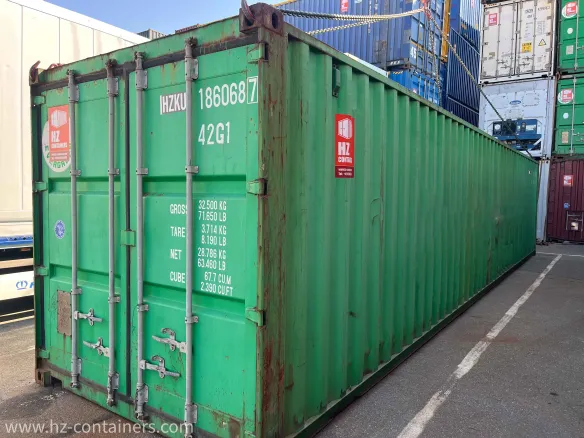
 Česká Lípa, Czech Republic
  FREE SHIPPING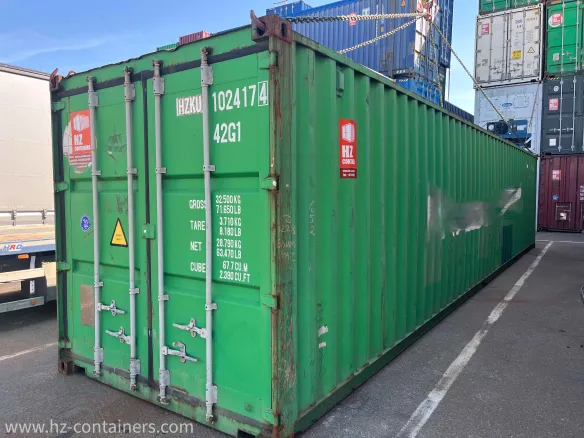


Other container news...

New shipping containers
If you are currently considering purchasing a new shipping container, you are not alone. While just twenty years ago containers were used almost exclusively for maritime transport, today they have found their way into construction, storage, business, and even housing. This growing popularity brings with it a host of questions: Which type should you choose? How much does it cost? How do you recognize quality? How can you avoid falling victim to scammers?

6m shipping container
Are you thinking about buying a 6-meter shipping container but aren’t sure what to look for? You are not alone—this 20-foot container is the best-selling size on the Czech market, and the differences between various types, conditions, and prices can be significant. In this guide, you will find everything you need to know: from exact dimensions and a comparison of categories (such as “one-way,” refurbished, and “Cargo Worthy”) to current prices and shipping advice.
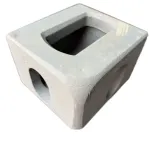
Corner casting steel vs aluminum
Every shipping container in the world — all 40 million of them — rests on eight critical components. Corner castings are the load-bearing blocks at each corner of an ISO shipping container, and they are the universal interface between the container and every crane, twistlock, spreader, and chassis on the planet. When you lift a container, stack it nine high on a ship, or lock it to a truck trailer, every ton of force flows through these fittings.

Construction cabin – selection, tips, dimensions and prices
Every construction project – whether a family house, a development project or a reconstruction – starts with the infrastructure. No construction manager, craftsman or investor who needs an on-site office, a changing room for workers or a safe storage for tools can do without a quality construction cell. But navigating the offer is not easy: residential containers, sanitary cells, storage modules, rental, purchase, refurbished pieces… This guide will give you answers to all the essential questions in one place.