
Types of Shipping Containers and Their Maximum Weights (MGM, Payload, Cubic Capacity)
What is a Shipping Container?
A shipping container, often also called an intermodal or ISO container, is a robust steel box of standardized dimensions, developed for the purpose of safe and efficient transportation of goods across various types of transport vehicles – by ship, train or truck – without the need to unload the cargo itself. The foundation is high resistance to weather influences and mechanical damage, which allows for repeated use in logistics chains around the world. This containerization brought a revolution to international transport and today more than 90% of general cargo is transported in these containers.
Modern containers are manufactured according to strict ISO (International Organization for Standardization) standards, which ensure compatibility between different carriers and handling systems. Each container is marked with a unique identification number (e.g., BIC code), is equipped with steel corner elements for easy stacking and handling, and must meet the requirements of the CSC (International Convention for Safe Containers) safety convention.
Key Terms of Container Weight and Capacity
Overview of Basic Terms
When handling and transporting containers, it is absolutely essential to understand the data that are listed on the doors of each unit. This data determines the limits for safe loading, transport, and stacking of the container.
| Term | Meaning | Typical value for 20ft | Typical value for 40ft |
|---|---|---|---|
| Tare (Tare Weight) | Weight of empty container without cargo | 2,050–2,200 kg | 3,750–3,900 kg |
| Payload (Carrying Capacity) | Maximum weight of cargo that can be safely loaded | 28,250–28,430 kg | 26,590–26,730 kg |
| MGM/MGW (Max. Gross Weight) | Maximum permitted total weight (container + cargo) | 30,480 kg | 30,480–34,000 kg |
| Cubic Capacity (Internal Volume) | Usable internal space in m³ | 33–33.2 m³ | 67–76 m³ (High Cube) |
Exact values may vary depending on the manufacturer, year of manufacture, and type (e.g., high-cube, reefer, etc.).
MGM (Maximum Gross Mass, Maximum Gross Weight – Maximum Gross Weight)
- MGM (or MGW) is an absolutely key figure determining what is the maximum permitted total weight of a loaded container.
- It is set by the container manufacturer and is always in accordance with international standards (ISO 668, CSC).
- MGM includes both the weight of the empty container itself (tare) and the maximum permissible weight of cargo (payload).
- Exceeding MGM not only leads to violation of the law, but exposes the transport to the risk of container destruction, damage to the transport vehicle, and endangerment of safety.
Formula:
MGM = Tare Weight + Payload
Example:
20ft container: MGM = 2,120 kg (tare) + 28,360 kg (payload) = 30,480 kg
Tare Weight (Tare Weight, “tara”)
- Tare weight is the weight of the empty container itself including all its components – steel structure, floor (usually 28 mm plywood), doors, possibly cooling unit, etc.
- Tare is always firmly set by the manufacturer, listed on the doors, and essential for calculating useful load.
Typical values:
- 20ft standard container: 2,050–2,200 kg
- 40ft standard container: 3,750–3,900 kg
- 40ft high cube container: approx. 3,890–4,670 kg
Payload (Carrying Capacity, Useful Load)
- Indicates the maximum weight of cargo that can be safely placed in the container.
- It is calculated as the difference between MGM and tare weight.
Formula:
Payload = MGM - Tare Weight
Note:
A larger container does not necessarily have automatically higher carrying capacity – for example, 40ft has twice the volume compared to 20ft, but MGM is often the same or only slightly higher, so payload is “only” about 15–20% higher.
Cubic Capacity (Internal Volume)
- Expresses how much actual space (volume) is inside the container for storing goods.
- Measured in cubic meters (m³).
- An important parameter mainly for bulky or light goods, where space rather than weight is the limiting factor.
Typical values:
- 20ft standard: approx. 33 m³
- 40ft standard: approx. 67 m³
- 40ft high cube: approx. 76 m³
TEU (Twenty-foot Equivalent Unit)
- Standard unit for containerized transport volume, corresponding to one 20ft container.
- 40ft container = 2 TEU.
Overview of Types of Shipping Containers
There is a whole range of specialized types of containers, each with a clearly defined purpose and technical parameters.
Standard Container (Dry Van / General Purpose)
| Parameter | 20ft Standard | 40ft Standard | 40ft High Cube |
|---|---|---|---|
| External length | 6,058 mm | 12,192 mm | 12,192 mm |
| External width | 2,438 mm | 2,438 mm | 2,438 mm |
| External height | 2,591 mm | 2,591 mm | 2,896 mm |
| Internal length | 5,898–6,010 mm | 12,032–12,110 mm | 12,032–12,110 mm |
| Internal width | 2,340–2,352 mm | 2,340–2,352 mm | 2,340–2,352 mm |
| Internal height | 2,390 mm | 2,393 mm | 2,695 mm |
| Tare | 2,050–2,200 kg | 3,750–3,900 kg | 3,890–4,670 kg |
| Payload | 28,250–28,430 kg | 26,590–26,990 kg | 26,590–29,330 kg |
| MGM | 30,480 kg | 30,480–34,000 kg | 34,000 kg |
| Cubic Capacity | 33.0–33.2 m³ | 67 m³ | 76 m³ |
Characteristics:
- Fully enclosed metal box with double-leaf doors.
- Resistant to weather influences.
- Most frequently used type for dry, packaged cargo.
- Suitable for palletized goods, boxes, electronics, textiles, furniture.
High Cube (HC) Container
- One foot higher than standard (external height 2,896 mm, internal height approx. 2,695 mm).
- Suitable for bulky, lighter cargo or highly stackable goods.
- Most often in the 40ft HC variant, less frequently 20ft HC.
Reefer Container (Cooling/Freezing Container)
| Parameter | 20ft Reefer | 40ft High Cube Reefer |
|---|---|---|
| External length | 6,058 mm | 12,192 mm |
| External width | 2,438 mm | 2,438 mm |
| External height | 2,591 mm | 2,896 mm |
| Internal length | 5,444–5,460 mm | 11,564–11,580 mm |
| Internal width | 2,285–2,294 mm | 2,286 mm |
| Internal height | 2,273 mm | 2,557 mm |
| Tare | 3,000–3,400 kg | 4,500–4,670 kg |
| Payload | 27,000 kg | 29,500 kg |
| MGM | 30,480 kg | 34,000 kg |
| Cubic Capacity | 28.4 m³ | 67 m³ |
Characteristics:
- Insulated container with built-in cooling/freezing unit, capable of maintaining temperatures from -40 °C to +30 °C.
- Suitable for transporting food, medicines, chemicals, and other temperature-sensitive goods.
- Reduced internal volume due to thick insulation.
Open Top Container
- Same dimensions as a standard container, but instead of a fixed roof it has a removable tarpaulin.
- Allows loading by crane from above – suitable for heavy equipment, machinery, large rolls, wood, etc.
- The upper door crossbar is often rotatable for easier access.
Flat Rack Container
| Parameter | 20ft Flat Rack | 40ft Flat Rack |
|---|---|---|
| External length | 6,058 mm | 12,192 mm |
| External width | 2,438 mm | 2,438 mm |
| External height | 2,591 mm | 2,591 mm |
| Tare | 2,360–2,500 kg | 5,500–6,200 kg |
| Payload | up to 30,000 kg | up to 39,500 kg |
| MGM | 30,480–34,000 kg | 45,000 kg |
- Open platform with fixed or collapsible ends, without side walls and roof.
- Suitable for heavy, oversized or non-standard sized goods (machinery, vehicles, building components).
Tank Container (ISO Tank)
- Cylindrical stainless steel tank in a steel frame of 20ft standard container dimensions.
- Designed for liquids, gases and bulk materials, including hazardous ones.
- Usually volume 21,000–26,000 liters, tare approx. 3,200–4,100 kg, MGM up to 36,000 kg.
Double Door (Tunnel) Container
- Double-leaf doors on both shorter sides – allows easy loading/unloading from both directions or space division.
Half-Height Container
- Half the height compared to a standard container – designed for very heavy, compact material (ores, scrap, stone).
- Lower center of gravity ensures better stability.
Other Special Types
- Side Opening (side opening): An entire long wall is equipped with doors – facilitates loading of bulky goods.
- Pallet Wide: Wider shipping container internal dimensions allow more euro pallets to be placed side by side.
- Dangerous Goods (IMO/DG): Container meets strict standards for transporting hazardous substances.
Important Aspects of Safe Transport and Handling
Weight Distribution
- Cargo must be distributed evenly across the entire floor area to prevent overloading of the structure or loss of stability during transport and handling.
- Containers have limited point load (floor load rating), usually around 7,000 kg/m².
Marking and Identification – CSC Label
- Every container intended for international transport must be equipped with a CSC label.
- The label contains:
- Manufacturing number, manufacturer, year of manufacture
- Maximum MGM and stacking load
- Date of last and next inspection
- The CSC label confirms compliance with safety and technical requirements set by the convention.
Practical Tips for Selecting the Right Container
When considering purchasing or renting a container, we recommend:
- Type of cargo: Dry, liquid, bulk, temperature-sensitive, oversized?
- Weight and volume: Will you exceed MGM or payload? Will the goods fit in cubic capacity?
- Method of loading/unloading: Do you need doors on both sides, side opening, loading from above?
- Length and height: Maximum space utilization according to cargo type (pallet goods, stackable, long pieces).
- Special requirements: Food standards, transport of chemicals, need for internal insulation, etc.
 Czech Republic, Litvínov
  FREE SHIPPING
Other container news...

20 Foot shipping container cost
If you are researching the cost of a 20 foot shipping container, you have likely already encountered wildly different prices — from $999 listings online to quotes exceeding $5,500. That range is not a sign of inconsistency. It reflects real differences in container condition, location, delivery logistics, and the seller you are dealing with.
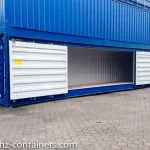
Side Opening container
A side opening container is an ISO-compliant intermodal shipping container engineered with full-length bi-fold doors along one of its long side walls, in addition to the standard cargo doors at one end. Unlike conventional containers that restrict access to a single set of rear doors, a side opening container — also widely called an open side container, open-sided shipping container, or side door container — provides unobstructed lateral access across the entire 20-foot or 40-foot length of the unit. This design transforms the container from a narrow tunnel into a wide-open space that forklifts can enter from the side, multiple workers can load simultaneously, and oversized cargo that would never fit through standard end doors can be placed without struggle.
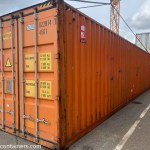
40 Foot High Cube container cost
A 40 foot high cube container — often abbreviated as 40ft HC, 40′ HC, or 40-foot high cube — is one of the most common shipping container sizes sold on the secondary market. But if you are researching what a 40 foot high cube container costs, you have almost certainly noticed that prices are all over the map. One seller quotes $1,500. Another quotes $7,000. Both could be legitimate.
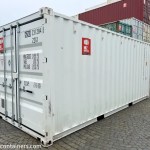
20 Foot container cost
If you have ever searched for a shipping container, you have almost certainly asked one question first: how much does a 20 foot container cost? The answer is not a single number. It is a range that spans from under $1,000 for a weathered, as-is unit to over $5,000 for a pristine, one-trip container — and that is before delivery, site preparation, or modifications enter the picture.