
Shipping Containers Ravenna Italy
Shipping containers in Ravenna, Italy, represent a key element of modern international logistics and trade networks. Ravenna, situated on the coast of the Adriatic Sea, is one of the most important ports in northern Italy, processing thousands of containers annually. This guide will provide you with comprehensive information on how container shipping works in Ravenna, what options are available, and how this infrastructure affects global trade.
What is the historical background of the Port of Ravenna?
Ravenna has a rich history as a port city. The Port of Ravenna was strategically important already in ancient times, but its modern expansion was achieved particularly in the 20th and 21st centuries. Today it is one of the fastest-growing ports in Italy, focusing on container shipping, chemical products, and industrial goods.
Historically, the port was primarily oriented toward regional trade, but in the last twenty years it has transformed into a modern logistics center. Investments in infrastructure, including the expansion of container terminals, have enabled Ravenna to compete with larger European ports such as Hamburg or Rotterdam.
The Port of Ravenna is managed by the Autorità di Sistema Portuale dell’Adriatico Centro Settentrionale, which ensures the efficient operation and maintenance of the entire infrastructure.
What are the types of shipping containers used in Ravenna?
The Ravenna port uses various types of shipping containers, which are standardized according to international norms. Understanding these types is essential for efficient logistics and shipping planning.
Standard Containers (20′ and 40′)
The most commonly used containers in Ravenna are 20-foot (TEU) and 40-foot (FEU) containers. These dimensions are standardized worldwide and enable easy interoperability in the global logistics network.
The 20-foot container has the following specifications:
- External dimensions: 6058 x 2438 x 2591 mm
- Internal volume: 33 m³
- Maximum payload: 21 tons
- Ideal for: heavy and dense goods
The 40-foot container offers double the capacity:
- External dimensions: 12192 x 2438 x 2591 mm
- Internal volume: 67 m³
- Maximum payload: 30 tons
- Ideal for: bulkier and lighter cargo
High Cube Containers (HC)
High Cube variants (40′ HC) provide increased height, allowing the transport of taller and bulkier cargo. These containers have become increasingly popular in Ravenna thanks to their greater capacity:
- External dimensions: 12192 x 2438 x 2896 mm
- Internal volume: 76 m³
- Increased height: +305 mm compared to a standard container
- Suitable for: light but bulky goods (textiles, paper, plastic products)
Special Containers
The Port of Ravenna also processes special types of containers:
| Container Type | Description | Main Use |
|---|---|---|
| Open Top containers | No roof, allows loading from above | Heavy material, construction elements |
| Refrigerated containers (Reefer) | With cooling system | Food, pharmaceuticals, perishables |
| Tank containers (Tank) | For liquids and gases | Chemical products, oils, liquids |
| Containers with glass walls | Partially open sides | Heavy but transparent cargo |
How does shipping container logistics work in Ravenna?
Logistics at the Ravenna port is a complex system that involves the reception, storage, handling, and dispatch of thousands of containers monthly. Understanding these processes is important for all participants in the supply chain.
Container Reception and Registration
When a container arrives at the Port of Ravenna, it undergoes several inspection processes:
- Shipping documentation – All documents are checked and registered in the system
- Customs inspection – Random or targeted checks of contents based on risk
- Physical inspection – Checking the external condition of the container
- Scanning and labeling – Assigning identification codes for tracking
Storage and Handling
The Port of Ravenna has extensive storage areas with modern infrastructure:
- Container yard – Outdoor storage areas for short-term storage
- Covered warehouses – For sensitive goods requiring protection
- High-reach forklifts (RTG) – Automated systems for stacking containers
- Access roads – Optimized for efficient transport
The typical storage time for a container at the port is 5-7 days, after which the container must either be loaded onto a ship or picked up by the recipient.
Loading and Unloading
Modern equipment in Ravenna enables efficient loading and unloading of containers:
- Ship-to-Shore (STS) cranes – Can lift containers directly from ships
- Mobile Harbor Cranes – Mobile cranes for handling
- Capacity – The port can handle 1000+ containers per day
How does Ravenna differ from other Italian ports?
Italy has several important ports, but Ravenna has its own unique characteristics that set it apart from the competition.
| Port | Location | Specialization | Capacity (mil. TEU/year) |
|---|---|---|---|
| Ravenna | Northern Italy, Adriatic Sea | Containers, chemicals, steel | 0.5-0.7 |
| Genoa (Genova) | Northern Italy, Ligurian Sea | Main hub, containers | 2.5-3.0 |
| Trieste | Northern Italy, Adriatic Sea | Containers, RoRo | 0.7-0.9 |
| Naples | Southern Italy, Tyrrhenian Sea | Containers, automobiles | 0.6-0.8 |
Ravenna stands out for:
- Proximity to Central Europe – Easy access to Austria, Germany, Poland
- Lower costs – Compared to larger hubs like Genoa or Rotterdam
- Flexible infrastructure – Ability to process different types of cargo
- Environmental approach – Investments in cleaner technologies
What are the practical applications of shipping containers in Ravenna?
Shipping containers in Ravenna serve many practical purposes that go beyond just transporting goods.
International Trade and Transport
The primary function is of course the transport of goods. Ravenna processes:
- Textiles and clothing – From Asia and the Balkans to Europe
- Electronics – Components and finished products
- Chemical products – Industrial chemicals and pharmaceuticals
- Construction materials – Steel, cement, wood
- Food – In refrigerated containers from Africa and Asia
Storage and Distribution
Many companies use containers as temporary storage units:
- Storing goods at the port before further transport
- Creating mobile warehouses for seasonal peaks
- Temporary storage during logistical delays
Construction and Modular Buildings
Containers are increasingly used for non-traditional purposes:
- Construction site cabins – Offices, sanitary facilities at construction sites
- Modular housing – Eco-friendly residential units
- Retail spaces – Pop-up shops and kiosks
- Storage solutions – Permanent storage units
What are the most common mistakes and misconceptions about shipping containers?
When working with shipping containers in Ravenna, common mistakes occur that can lead to unnecessary costs and delays.
Misconception 1: all containers are the same
The reality is that there are significant differences between container types. Choosing the wrong type for your cargo can lead to goods damage or inefficient use of space. It is important to consult with a logistics company about which type is ideal for your specific cargo.
Misconception 2: containers are always available
During peak periods (November-December), containers can be scarce, especially specific types. Planning ahead is essential to avoid delays.
Misconception 3: lower price means lower quality
Used containers can be just as high quality as new ones, provided they are properly inspected and certified. Many companies choose used containers for economic reasons without sacrificing safety.
Misconception 4: the port automatically arranges transport
The Port of Ravenna only ensures logistics within the port. Transport to/from the port and to the final destination must be arranged by the relevant business partner or logistics company.
Misconception 5: all certifications are the same
Containers must have valid CSC (Container Safety Convention) and ISO certifications. Old or low-quality certificates can lead to the refusal of transport.
What are the future trends in Ravenna’s shipping logistics?
The Port of Ravenna is evolving and adapting to new challenges and technologies in global logistics.
Digitalization and Automation
The Port of Ravenna is investing in modern technologies:
- Blockchain technology – For transparent cargo tracking
- IoT sensors – Monitoring temperature and humidity in containers
- Artificial intelligence – For optimizing storage and handling
- Automated systems – Robotic unloading and loading
Environmental Initiatives
Sustainability is becoming a priority:
- Electrification of approaches – Replacing diesel vehicles
- Lower emissions – Investments in cleaner technologies
- Recycling – Programs for recycling packaging and containers
- Green shipping – Supporting ships with lower emissions
Capacity Expansion
Planned projects include:
- Expansion of the container terminal
- Improvement of access roads
- Increasing storage area capacity
- Modernization of cranes and handling equipment
Multimodal Logistics
Ravenna is positioning itself as a hub for combined transport:
- Rail connection – Direct trains to Central Europe
- River transport – Use of the Po River for intermodal transport
- Road connection – Optimized routes for trucks
- Integrated system – Seamless transfer between modes of transport
How to choose the right type of container for your shipment?
Choosing the right container is key to successful and economical transport. Here is a practical guide:
Steps for Selection
- Determine the dimensions and weight of the cargo
- Measure length, width, height
- Weigh the cargo (including packaging)
- Calculate the volume
- Consider the type of goods
- Is it a liquid? → Tank container
- Does it require cooling? → Reefer container
- Is it heavy material? → Standard container
- Is it bulky and light? → High Cube container
- Assess price vs. efficiency
- 20′ container: Suitable for smaller cargo (up to 21 tons)
- 40′ container: More economical for larger volumes
- 40′ HC: Best for light but bulky goods
- Verify certifications
- CSC certificate (Container Safety Convention)
- ISO 1496 standard
- Certificate validity
- Consult with an expert
- Logistics company
- Freight forwarder
- Customs advisor
What are the costs associated with shipping containers in Ravenna?
Understanding costs is essential for financial planning of transport.
Basic Costs
| Item | Approximate Price (EUR) | Note |
|---|---|---|
| Transport 20′ container | 1,500-3,000 | Depends on destination |
| Transport 40′ container | 2,500-5,000 | Usually cheaper per TEU |
| Storage (per day) | 10-30 | Depends on container type |
| Handling (unloading) | 200-500 | Per container |
| Customs services | 100-300 | Depends on type of goods |
| Documentation | 50-150 | Administrative fees |
Additional Fees
- Demurrage – Fee for extended storage (usually after 5-7 days)
- Detention – Fee for keeping the container outside the port
- Surcharge – Additional fees for fuel prices, port, etc.
- Insurance – Cargo insurance (0.5-2% of value)
How to navigate customs documentation?
Customs documentation is critical for the smooth flow of transport through the Port of Ravenna.
Necessary Documents
- Bill of Lading (B/L) – Shipping waybill
- Commercial Invoice – Invoice with goods details
- Packing List – List of container contents
- Certificate of Origin – Confirmation of goods origin
- Import/Export Declaration – According to legal regulations
Tips for a Smooth Process
- Prepare documents in advance
- Ensure accurate information about contents
- Communicate with the customs officer
- Use an experienced freight agent
- Keep copies of all documents
Frequently Asked Questions
How long does it take to unload a container in Ravenna?
Standard unloading takes 24-48 hours from the ship’s arrival. If the container is part of a large shipment, it may take longer. The Port of Ravenna strives to minimize waiting times and offers express services for an additional fee.
Can I buy a used container directly from the Port of Ravenna?
Yes, it is possible. The Port of Ravenna and surrounding companies offer sales of used containers. Prices range from 1,500 to 3,000 EUR for a 20′ container and 2,500 to 4,500 EUR for a 40′ container, depending on condition.
What are the safety requirements for containers in Ravenna?
All containers must have:
- Valid CSC certificate
- Proper sealing and locks
- Legible identification number (BIC)
- No visible damage or corrosion
How do I track my container at the port?
The modern Port of Ravenna offers online tracking:
- Enter the container number on the port’s website
- Receive information about location and status
- Set up notifications for key milestones
What are the most common problems with container delivery?
The most common problems include:
- Ship delay – Unpredictable weather
- Container shortage – During peak periods
- Customs delays – Due to incomplete documentation
- Goods damage – Improper packaging or handling
- Loss of container – Rare but possible
How many containers does the Port of Ravenna process annually?
The Port of Ravenna processes approximately 500,000 to 700,000 TEU (Twenty-foot Equivalent Units) annually. This number is constantly increasing with infrastructure expansion.
Are there special services for hazardous materials?
Yes, the Port of Ravenna has special equipment and procedures for hazardous materials (HAZMAT). Additional certificates and documentation are required, and handling is subject to strict safety standards.
What are the operating hours of the Port of Ravenna?
The Port of Ravenna operates 24/7, but certain services (such as customs inspection) may have limited working hours. It is recommended to contact the port in advance to ensure service availability.

 Italy, Ravenna
  WITHOUT SHIPPING

Other container news...
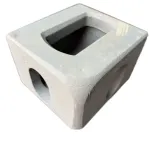
Corner casting steel vs aluminum
Every shipping container in the world — all 40 million of them — rests on eight critical components. Corner castings are the load-bearing blocks at each corner of an ISO shipping container, and they are the universal interface between the container and every crane, twistlock, spreader, and chassis on the planet. When you lift a container, stack it nine high on a ship, or lock it to a truck trailer, every ton of force flows through these fittings.

Construction cabin – selection, tips, dimensions and prices
Every construction project – whether a family house, a development project or a reconstruction – starts with the infrastructure. No construction manager, craftsman or investor who needs an on-site office, a changing room for workers or a safe storage for tools can do without a quality construction cell. But navigating the offer is not easy: residential containers, sanitary cells, storage modules, rental, purchase, refurbished pieces… This guide will give you answers to all the essential questions in one place.
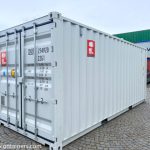
Storage container
A storage container is a lockable steel box designed for the safe and dry storage of materials, tools, goods or equipment. Originally created as a shipping container for maritime transport, its durability and versatility have found their way onto construction sites, corporate premises and private land.
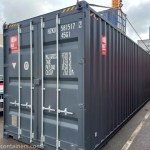
Shipping container 12m (40 ft)
A 12m shipping container is an investment that, if properly selected and cared for, will pay off in decades of trouble-free use. Whether you plan to use it as a warehouse, workshop, garage or the basis for a residential module — the key is careful selection of the condition, a thorough inspection before purchase and high-quality preparation of the base for placement. Take the time to compare offers, check the seller’s references and do not hesitate to personally inspect the container before buying. A properly selected 40-foot container will serve you reliably for many years.