
International Regulations for Weight Distribution in Shipping Containers
International Regulations for Weight Distribution in a Shipping Container
Weight distribution inside a shipping container is not merely a question of practical logistics – it is a discipline firmly anchored in international law, technical standards, and binding safety regulations. Anyone who loads a container – whether as a shipper, freight forwarder, packer, or carrier – bears legal responsibility for ensuring that the cargo does not endanger human lives, property, or the environment. This article provides a comprehensive overview of all relevant international regulations governing weight distribution in shipping containers.
What are international regulations for weight distribution in a shipping container and why do they exist?
International regulations for weight distribution in a container represent a system of conventions, codes, and technical standards that establish how cargo must be arranged inside a transport unit to ensure safety during road, rail, and maritime transport. These regulations are not a single document – they form a layered system in which binding international conventions are complemented by non-binding but contractually required codes of good practice.
Why is weight distribution in a container regulated?
The history of maritime transport is full of accidents that shared a common denominator: improper cargo distribution. In January 2008, the vessel MV Riverdance ran aground off Blackpool – the investigation revealed that the accident was contributed to by underestimated container weight and shifting of improperly secured cargo. In 2007, improper weight distribution caused damage to the vessel MSC Napoli, which had to be deliberately run aground. During handling in ports and terminals, containers regularly tip over when disconnected from a semi-trailer – often because up to 87 % of the cargo weight was concentrated on just half the length of the container.
According to data from the World Shipping Council (WSC), an average of more than 1,300 containers fall into the sea each year. A significant portion of these incidents relates directly to loading errors – whether incorrect weight declaration or uneven distribution, which causes securing mechanisms to fail during the voyage.
Consequences range from cargo damage, endangering crew and port workers, to environmental disasters in the event of hazardous substance releases. These incidents led the international community to create a comprehensive regulatory framework.
Overview of key international regulations
The following table summarizes all main regulations relating to weight distribution in a container:
| Regulation / Standard | Publisher | Year (latest revision) | Binding nature | Key weight distribution requirements |
|---|---|---|---|---|
| SOLAS Chapter VI, Regulation 2 (VGM) | IMO | 2016 | Binding (international convention) | Verification of total container weight before loading onto the vessel |
| CTU Code | IMO / ILO / UNECE | 2014 | Non-binding but contractually required | Loading planning, distribution of heavy cargo, eccentricity rule |
| ISO 3874 | ISO | 2007 (Amd. 4) | Technical standard (contractual) | Centering of center of gravity, maximum eccentricity, safe handling |
| ISO 1496 | ISO | 2013 | Technical standard (contractual) | Floor load capacity, wall strength, point load |
| CSC (Container Safety Convention) | IMO | 1972 (continuously amended) | Binding (international convention) | Structural strength, floor load capacity, mandatory safety plate |
| IMDG Code (Chapter 5.4.2) | IMO | 2022 (Amd. 41-22) | Binding (through SOLAS) | Stuffing certificate – certification of correct placement of dangerous goods |
| ČOS 399002 (CZ) | Army of the Czech Republic / ÚNMZ | — | National standard (CZ) | Requirements for even weight distribution in military transports |
Key distinction: SOLAS, CSC, and the IMDG Code are binding international conventions – their violation may lead to criminal liability, detention of the vessel or container, and fines. The CTU Code is non-binding, but shipping companies, insurers, and port authorities commonly require it as a contractual condition.
How does the CTU Code regulate weight distribution in transport units?
The CTU Code (full title: IMO/ILO/UNECE Code of Practice for Packing of Cargo Transport Units) is the most detailed existing document directly addressing weight distribution in containers and other transport units. Although it is not formally binding, in practice it functions as a universal reference standard cited by shipping companies, insurers, courts, and accident investigators.
What is the CTU Code and who issues it?
The CTU Code is a joint work of three UN organizations:
- IMO (International Maritime Organization) – provides the maritime perspective and safety requirements,
- ILO (International Labour Organization) – ensures the protection of workers handling cargo,
- UNECE (United Nations Economic Commission for Europe) – covers land and intermodal transport standards.
The code was created in response to an alarming number of incidents caused by errors in packing and loading. Its aim is to unify procedures across the entire logistics chain – from the packer through the carrier to the consignee. Although it is “soft law,” an increasing number of shipping companies embed it in their transport contracts. Insurers, moreover, when investigating claims, commonly examine whether loading was carried out in accordance with the CTU Code – and in case of non-compliance, indemnity may be reduced or denied.
Specific CTU Code requirements for weight distribution
Chapter 3 of the CTU Code contains general requirements that directly shape the way cargo must be arranged in a container:
- Loading planning (point 3.2): The code stipulates that, where deemed necessary, a loading plan must be developed. This plan must respect the maximum permitted payload of the container, the type of cargo, and the method of its securing.
- Distribution of heavy cargo (point 3.3): The code expressly requires: “Distribute heavy cargo appropriately over the floor area.” This means that the weight must be spread so that no dangerous point concentrations of load occur.
- Position of the center of gravity: The center of gravity of a loaded container must be kept as low and as close to the geometric center as possible. A center of gravity placed too high increases the risk of tipping during handling and during transport (centrifugal forces in turns, vessel rolling).
- Symmetry: Cargo must be distributed symmetrically not only longitudinally but also athwartships. Asymmetric distribution causes uneven stress on the container structure and unpredictable behavior during lifting.
The 60/40 rule and maximum eccentricity
The best-known technical rule derived from the CTU Code and ISO 3874 is the so-called 60/40 rule:
A maximum of 60 % of the total cargo weight may be placed on 50 % of the container length (measured from either end). With this distribution, the eccentricity of the center of gravity is approximately 5 % of the container length – which represents an absolute structural and handling limit.
Exceeding this limit causes:
- Excessive stress on corner castings and the floor on the overloaded side,
- Dangerous tilting of the container during lifting (up to 27.6 % of the total weight may act on one corner),
- Instability when disconnecting a semi-trailer (the tractor may tip over),
- Exceeding the permitted axle load in road transport,
- Uneven stress on stacking corners when containers are stored on top of one another.
The following table lists the key parameters for the most common container types:
| Parameter | 20ft container (1C) | 40ft container (1A) | 40ft High Cube |
|---|---|---|---|
| Max. gross weight (R) | 30,480 kg | 30,480 kg | 32,500 kg |
| Tare (empty weight) | ~2,200 kg | ~3,800 kg | ~3,900 kg |
| Max. payload | ~28,280 kg | ~26,680 kg | ~28,600 kg |
| Max. 60 % of payload on 50 % of length | 16,968 kg | 16,008 kg | 17,160 kg |
| Eccentricity at 60/40 | 5 % (292 mm) | 5 % (599 mm) | 5 % (599 mm) |
| Max. point load on floor | 200 kg / 600×300 mm | 200 kg / 600×300 mm | 200 kg / 600×300 mm |
Practical calculation: If you are loading a 40ft container with a total cargo weight of 24,000 kg, no more than 14,400 kg (60 %) may be placed in one half of the container. The remaining 9,600 kg must be in the other half.
How do the CTU Code and SOLAS VGM differ and which has greater legal weight?
This is one of the most common areas of confusion in logistics practice. SOLAS VGM and the CTU Code address two different aspects of safety, and their legal status is fundamentally different.
SOLAS VGM – mandatory verification of total weight
The SOLAS (Safety of Life at Sea) Convention is a binding international treaty, joined by more than 160 states. Since 1 July 2016, an amendment to Chapter VI, Regulation 2 has been in force, introducing the obligation to verify the gross mass of a container – the so-called VGM (Verified Gross Mass). Key points:
- The shipper is solely responsible for verifying and declaring the total weight of a loaded container.
- Without a valid VGM, the container must not be loaded onto a vessel.
- The weight can be verified by two methods: (1) weighing the entire loaded container on a calibrated scale, or (2) summing the weights of all cargo items plus the weight of packaging, securing material, and the container itself.
What SOLAS VGM does NOT address: It verifies only the total weight. It does not address whether this weight is evenly distributed inside the container. This remains the responsibility of the CTU Code, IMDG Code (for dangerous goods), and ISO standards.
CTU Code – non-binding but contractually enforceable
The CTU Code, by contrast, is not an international convention – it is a technical code of good practice. Legally, it is therefore “soft law.” In practice, however:
- Shipping companies incorporate it into their transport conditions (e.g., Maersk, MSC, Hapag-Lloyd).
- Insurers (TT Club, UK P&I Club) use it to assess whether gross negligence occurred.
- Port authorities and inspectors use it as a reference framework.
Practical consequence: If you comply with SOLAS VGM but ignore the CTU Code (e.g., loading 80 % of the weight into the first third of the container), you may face denial of insurance indemnity, contractual sanctions from the shipping company, or – in the event of an accident – a lawsuit for negligence.
Comparison table
| Criterion | SOLAS VGM | CTU Code |
|---|---|---|
| Legal nature | Binding international convention | Non-binding code (soft law) |
| What it regulates | Verification of total weight | Method of packing and cargo distribution |
| Who is responsible | Shipper | Packer |
| Sanctions for violation | Container detention, fines, criminal liability | Denial of insurance indemnity, contractual sanctions |
| Certification required | Yes (VGM declaration) | Yes for DG (stuffing certificate) |
What technical requirements does ISO 3874 set for cargo handling and distribution?
The international standard ISO 3874 (Series 1 Freight Containers – Handling and Securing) is a technical standard that addresses how containers must be safely lifted, moved, and secured. For weight distribution, its fourth amendment (Amendment 4, 2007) is of key importance.
ISO 3874 requirements for cargo distribution
The standard sets out the following principles:
- Center of gravity as low and centered as possible: Cargo must be distributed so that the center of gravity is kept as central and as low as possible. The reasons are:
- Prevention of excessive tilting during lifting,
- Protection of the container structure and handling equipment from overloading,
- Compliance with the permitted axle load of the vehicle,
- Maintaining vehicle stability during transport.
- Definition of eccentric cargo: The standard expressly states that at a 60 % concentration of cargo on 50 % of the container length, the eccentricity corresponds to 5 %. This is considered the maximum permissible value.
- Special warning for single-end lifting: When lifting by one end (single-point lift), the standard warns of the risk of tipping due to center of gravity eccentricity. Special attention must be paid to:
- Tank containers (liquid may shift the center of gravity),
- Containers with bulk material,
- Containers with flexitanks (liquid bag inside),
- Reefer containers with integrated cooling unit (imbalance).
Floor load capacity according to ISO 1496 and CSC
ISO 1496 specifies design requirements for containers. For the practice of weight distribution, the key requirement for floor load capacity is:
- The floor must withstand a point load of 200 kg distributed over an area of 600 × 300 mm (typical forklift footprint).
- With even cargo distribution, the floor must bear the total weight corresponding to the maximum payload.
The CSC plate (CSC Safety Approval Plate), which must be affixed to every container in international transport, contains:
- Date of manufacture and identification number,
- Maximum gross weight (R),
- Permitted stacking load (for 1.8 g),
- Permitted load in the racking test.
Exceeding the values stated on the CSC plate constitutes a violation of an international convention and may lead to the immediate decommissioning of the container from service.
What obligations does the IMDG Code impose for dangerous goods in terms of weight distribution?
The transport of dangerous goods (DG – Dangerous Goods) is subject to even stricter rules. The IMDG Code (International Maritime Dangerous Goods Code) is binding through SOLAS, and its violation may have criminal consequences.
Stuffing certificate – certification of correct loading
Chapter 5.4.2 of the IMDG Code requires the person responsible for loading a container with dangerous goods to sign a so-called stuffing certificate (certificate of loading). With this document, the loader certifies that:
- The container was clean, dry, and fit for transport,
- The cargo was properly packed, secured, and evenly distributed,
- Dangerous substances that must not come into contact with one another were properly segregated,
- All packages were marked and labeled in accordance with regulations.
For weight distribution, the certification of correct weight distribution is an explicit requirement. False or negligent confirmation may give rise to criminal liability.
Specific rules for DG cargo
The IMDG Code in conjunction with the CTU Code establishes further rules specific to dangerous goods:
- Light goods above heavy goods: Liquids must not be placed above solid substances (risk of leakage). Lighter items must always be above heavier ones.
- Even distribution across the floor: The risk of point concentration of weight is higher for DG cargo – risk of packaging puncture and substance release.
- Separation of incompatible substances: Certain DG classes must not be in the same transport unit (e.g., oxidizing substances and flammables).
- Increased control: Shipping companies (e.g., Maersk in its 2022 guidelines) carry out stricter inspections of DG containers, including visual inspection of cargo distribution and photographic documentation.
What are the consequences of improper weight distribution in a container?
The consequences of incorrect weight distribution range from financial losses through civil liability to criminal prosecution. Below is a categorization by severity.
Real accident cases
The company CTM Survey, which specializes in the investigation of insurance events in maritime transport, has documented recurring scenarios:
A container loaded with dangerous goods tipped over when disconnected from a semi-trailer. The subsequent investigation revealed that 87 % of the cargo weight was concentrated on 50 % of the container length. The tipping occurred on a straight section at low speed. The loader was at fault, having placed heavy coils against the front wall and light material near the doors – exactly the opposite of what the CTU Code requires.
The “staircase” loading method (heaviest items from the front wall, lightest at the doors) is a common mistake in practice. Loaders mistakenly believe that they are protecting the cargo from the effects of sudden braking. In reality, however, they create dangerous eccentricity – the container may be transported in both directions, and its orientation on the chassis is not guaranteed.
Overview of consequences by severity
| Category of consequences | Specific examples | Responsible party |
|---|---|---|
| Cargo damage | Crushing of boxes, damage to packaging, cargo spoilage | Packer, shipper |
| Container damage | Floor deformation, cracked welds, corner damage | Packer, carrier |
| Damage to means of transport | Axle overloading, semi-trailer damage | Carrier, shipper |
| Handling accidents | Container tipping during lifting, fall from ramp | Terminal operator, packer |
| Transport accidents | Tractor overturning, train derailment | Carrier, packer |
| Maritime disasters | Containers falling overboard, vessel stability compromised | Shipper, shipping company |
| Environmental damage | Release of hazardous substances into the sea | Shipper (polluter) |
| Contractual sanctions | Contractual penalties, cargo detention | Shipper |
| Insurance consequences | Denial of indemnity, reduction of insurance | Shipper, packer |
| Criminal liability | Endangering the environment, bodily harm | Shipper, packer |
Insurance coverage and weight distribution
Insurers (especially TT Club and UK P&I Club), when investigating claims, routinely examine whether loading was carried out in accordance with the CTU Code. If they find gross negligence – which includes ignoring basic weight distribution rules – it may result in:
- Reduction of insurance indemnity (percentage deductible of the insured),
- Complete denial of indemnity (upon proof of intent or gross negligence),
- Subrogation – after paying the claim, the insurer recovers the amount from the party at fault.
How to properly distribute weight in a container?
Below is a practical procedure that synthesizes the requirements of all the above regulations into specific steps.
Step 1: Planning before loading
- Find out the container parameters – From the CSC plate, read the max. gross weight (R), subtract the tare, and obtain the max. payload.
- Calculate the total cargo weight including packaging, pallets, and securing material. Compare with the max. payload.
- Identify heavy items – Anything weighing more than 25 % of the total cargo weight must be placed in the central area.
- Calculate the 60/40 limit: 60 % of the total cargo weight must not exceed half the container length.
- Plan the layout – Ideal scheme: heaviest items in the middle (both longitudinally and athwartships), medium-heavy evenly around, light ones on top.
Step 2: Loading procedure
- Symmetrical filling – Proceed from the center of the container toward both ends simultaneously. Never fill one half completely and leave the other empty.
- Vertical arrangement – Heavy cargo always at the bottom, light at the top. This lowers the center of gravity and increases stability.
- Cargo securing – Every item must be secured against shifting. Use wooden wedges, lashing straps, inflatable bags (dunnage bags), or steel cables.
- Filling gaps – Empty space between the cargo and the walls must be filled to prevent shifting when the vessel rolls (up to 30°).
Step 3: Inspection and verification
- Visual inspection – Check the symmetry of distribution, vertical arrangement, and quality of securing.
- Weighing the container – Verify the total weight (VGM) and compare with the declaration.
- Documentation – Complete the VGM declaration. For dangerous goods, sign the stuffing certificate.
- Photographic documentation – Take photos of the loaded container (especially for DG goods) for use in any later dispute.
How do the weight distribution requirements differ between transport modes?
Weight distribution affects not only safety – it has a direct impact on the legal limits of individual transport modes. The following overview shows the key differences.
| Transport mode | Specific limit | Consequence of poor distribution | Relevant regulation |
|---|---|---|---|
| Road | Max. axle load (CZ: 10 t drive, 11.5 t drive for tandem) | Axle overloading, fine up to 500,000 CZK, driving ban | Act No. 13/1997 Coll., Decree No. 209/2018 Coll. |
| Rail | Max. axle pressure according to track, center of gravity height restriction | Derailment, track damage | UIC Loading Rules (UIC Leaflet 202) |
| Maritime | SOLAS VGM, stacking limits per CSC plate, 60/40 rule | Refusal of loading, vessel accident, PSC fines | SOLAS VI/2, CSC, CTU Code |
| Port handling | Max. eccentricity for safe lifting, spreader speed limits | Container tipping during lifting, spreader damage | ISO 3874 |
What will the future bring for the regulation of weight distribution in containers?
Regulation in the field of weight distribution is constantly evolving. Current trends point to several directions:
Digitalization and sensors
A growing number of containers are equipped with IoT sensors that monitor tilt, vibration, temperature, and weight distribution in real time. Companies such as Traxens or Orbcomm offer “smart container” solutions that enable improper distribution to be detected even before the vessel sets sail. In the future, these technologies can be expected to be integrated into mandatory control mechanisms.
Tightening of enforcement
Insurers and shipping companies are increasingly demanding proof of correct weight distribution – not just a form, but, for example, photographic documentation or a third-party certificate (surveyor). Since 2022, Maersk has been carrying out random physical container inspections before loading.
Possible transformation of the CTU Code
It is being discussed whether the CTU Code should be converted into a binding form – similarly to what happened with VGM. For now, however, the prevailing view is that the technical flexibility offered by a non-binding code is more appropriate for the diversity of cargo.
Frequently Asked Questions (FAQ)
What are the international regulations for weight distribution in a container?
International weight distribution in a container is governed by several interrelated regulations: SOLAS VGM (verification of total weight – binding convention), CTU Code (IMO/ILO/UNECE – non-binding code of good practice), ISO 3874 (technical standard for handling), ISO 1496 (floor load capacity and construction), CSC (container safety plate), and IMDG Code (for dangerous goods).
What is the 60/40 rule for weight distribution in a container?
The 60/40 rule states that a maximum of 60 % of the total cargo weight may be placed on 50 % of the container length. This rule is derived from ISO 3874 and the CTU Code and ensures that the eccentricity of the center of gravity does not exceed 5 % of the container length. If exceeded, there is a risk of tipping during handling or transport.
Is the CTU Code legally binding?
The CTU Code by itself is not legally binding – it is a code of good practice issued by the IMO, ILO, and UNECE. In practice, however, it is routinely required by shipping companies in transport contracts and by insurers as a standard of care. Its violation may lead to contractual sanctions, denial of insurance indemnity, or civil liability in the event of an accident.
Who bears responsibility for correct weight distribution in a container?
Responsibility lies primarily with the packer – the person or company that physically loads the container. For dangerous goods, this fact must be confirmed by signing a stuffing certificate. The shipper is responsible for declared data including VGM. The carrier is responsible for checking whether the container shows obvious signs of improper loading.
What sanctions apply for improper weight distribution in a container?
Sanctions range from contractual penalties (shipping companies), through fines from state authorities (up to 500,000 CZK for axle overloading in the Czech Republic), container detention (in case of SOLAS VGM violation), reduction or denial of insurance indemnity, to criminal liability in the event of release of hazardous substances or causing bodily harm.
What is a stuffing certificate and when is it required?
A stuffing certificate (certificate of loading) is a document required by the IMDG Code (Chapter 5.4.2) for every container transporting dangerous goods. The packer certifies that the cargo was properly packed, secured, and evenly distributed. False confirmation may have criminal consequences.
How does weight distribution affect insurance coverage?
Insurers (e.g., TT Club, UK P&I Club), when investigating a claim, routinely examine compliance of loading with the CTU Code. If they find gross negligence in weight distribution (e.g., extreme eccentricity), they may reduce or completely deny the insurance indemnity and subsequently seek reimbursement from the party at fault.
How do the weight distribution requirements differ between road and maritime transport?
Maritime transport is governed by SOLAS, CSC, and the CTU Code with an emphasis on total VGM and center of gravity eccentricity. Road transport is additionally limited by axle load limits (in the Czech Republic under Act No. 13/1997 Coll.) – uneven distribution may cause the limit of an individual axle to be exceeded, even if the total weight is within limits.
Is it safer to load heavy goods against the front wall of the container?
No – this widespread myth is dangerous. The “staircase” loading method (heavy at the front, light at the back) intuitively protects against the effects of sudden braking, but creates dangerous eccentricity and the container may be transported in both directions. The correct procedure: place the heaviest items in the center of the container (both longitudinally and athwartships).
Must weight distribution in a container be documented?
For ordinary cargo, documentation of weight distribution is not mandatory (only VGM – total weight – is mandatory). For dangerous goods, however, the stuffing certificate is mandatory and must confirm correct distribution. Given the growing requirements of insurers and shipping companies, it is strongly recommended to take photographic documentation of the loaded container, including the distribution of heavy items – it can be decisive evidence in case of a dispute.
 Czech Republic, Jablonec nad Nisou
  FREE SHIPPING
Other container news...
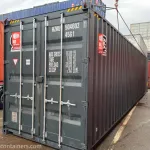
Can You Modify a 40ft High Cube Container?
The short answer is yes — you absolutely can modify a 40ft high cube container, and it is one of the most popular container types for modification projects worldwide. But the real question is not whether you can modify one; it is how to do it correctly, safely, legally, and within budget. This guide answers every dimension of that question, drawing on engineering principles, real-world pricing data, and the collective experience of thousands of modified container projects.
Key Takeaway: A 40ft high cube container offers 320 square feet of floor space with an extra foot of ceiling height compared to a standard container — making it the ideal canvas for offices, workshops, homes, retail spaces, and industrial applications. The extra height is particularly valuable when you add insulation and still want comfortable headroom.

Cargo worthy container
If you have ever shopped for a used shipping container, you have almost certainly encountered the term cargo worthy — often abbreviated as CW or CWO (Cargo Worthy Only). It is one of the most important classifications in the container industry, yet it is also one of the most misunderstood. A cargo worthy container is not a container that looks new. It is not necessarily a container that has a valid CSC plate. And it is definitely not the same as a wind and watertight container. This guide explains what cargo worthy really means — from its technical definition and historical origins to the precise structural criteria, inspection process, cost implications, and common misconceptions that trip up even experienced buyers.

Shipping container home
A shipping container home is a residential dwelling constructed from one or more steel intermodal containers — the same standardized metal boxes that transport goods across oceans, railways, and highways. These containers, engineered from corrosion-resistant Corten steel and designed to withstand brutal maritime conditions, are repurposed into fully habitable living spaces through insulation, structural modifications, and the installation of all standard residential utilities. A shipping container home can range from a minimalist 160-square-foot studio built from a single 20-foot container to a sprawling multi-level compound combining dozens of 40-foot high-cube units.
Core Definition: A shipping container home is a code-compliant, habitable structure built from one or more steel intermodal shipping containers that have been insulated, structurally reinforced where modified, and fitted with windows, doors, plumbing, electrical systems, and interior finishes to function as a permanent or semi-permanent residence.
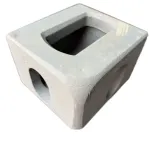
Corner casting steel vs aluminum
Every shipping container in the world — all 40 million of them — rests on eight critical components. Corner castings are the load-bearing blocks at each corner of an ISO shipping container, and they are the universal interface between the container and every crane, twistlock, spreader, and chassis on the planet. When you lift a container, stack it nine high on a ship, or lock it to a truck trailer, every ton of force flows through these fittings.