
Use of Cargo Containers
Use of cargo containers is a modern trend in architecture, construction, and design, where shipping containers are adapted and used for purposes other than their original cargo transport function. This method of so-called “cargotecture” finds application in residential construction, commercial buildings, industry, agriculture, and community and creative projects. Containers represent an affordable, environmentally friendly, and extremely flexible building solution for the 21st century.
History and Development of Container Architecture
- Beginnings: The system of standardized intermodal shipping containers was introduced in the 1950s by Malcolm McLean. This led to a massive expansion of maritime shipping and the creation of surplus containers in ports.
- First use in architecture: From the 1960s onwards, the first experiments with container conversion began to appear (cottages, temporary shelters). In the 1970s–1980s, rapid development occurred due to their structural properties.
- Present day: Containers have become a building standard for innovative, fast, and ecological construction.
Types of Shipping Containers and Their Technical Parameters
The following types of containers are most commonly used for construction purposes:
| Type | Length (m) | Width (m) | Height (m) | Internal volume (m³) | Max. load (kg) | Empty weight (kg) | Note |
|---|---|---|---|---|---|---|---|
| 20′ Standard | 5.90 | 2.35 | 2.39 | 33.2 | 28,230 | 2,250 | Most common small container |
| 40′ Standard | 12.03 | 2.35 | 2.39 | 67.7 | 26,700 | 3,780 | Common for larger buildings |
| 40′ High Cube | 12.02 | 2.35 | 2.70 | 76.3 | 26,460 | 4,020 | Increased height (comfort) |
| 20’/40′ Reefer | see table | see table | see table | 29.9–67.0 | 27,450–29,880 | 3,030–4,120 | Refrigerated container |
| Open Top | see table | see table | see table | 32.5–66.4 | 28,130–26,630 | 2,350–3,850 | Removable roof |
| Flat Rack | see table | see table | see table | – | 31,260–39,300 | 2,740–5,700 | No sides, for equipment |
| Platform | see table | see table | see table | – | 42,100–49,150 | 2,900–5,850 | Floor only, heavy loads |
Key Advantages of Cargo Containers
- Durability: Made from Corten steel, lifespan over 30 years, resistant to weather, corrosion, and mechanical damage.
- Modularity: Possibility of stacking and connecting like building blocks (standardized dimensions).
- Mobility: Easy relocation by truck, train, or ship.
- Sustainability: Upcycling, less waste, possibility of energy-passive buildings.
- Speed and efficiency: Construction takes weeks instead of months, most modifications are done in the workshop.
- Safety: Protection against burglary, fire, vandalism.
- Price: Lower acquisition costs, savings on structure and foundations.
Main Categories of Cargo Container Use

1. Residential and Living Spaces
- Container homes: From small “tiny houses” (20′) to luxury villas made from multiple containers. They allow individual design, construction speed, and low costs.
- Student dormitory Urban Rigger: Floating complex of nine containers – an innovative solution for Copenhagen.
- Recreational cottages / off-grid homes: Ideal for standalone buildings off the grid, easy connection to solar panels, rainwater systems, etc.
- Emergency shelters: Quick assistance in crisis areas (humanitarian use, work camps, etc.).
2. Commercial Use
- Offices and meeting rooms: Mobile and permanent spaces, often on construction sites or in warehouses.
- Retail units and pop-up shops: Unique appearance, quick installation, possibility of relocation.
- Restaurants, cafes, bars: Notable are Starbucks cafes in the USA (45 locations in containers), Manifesto Market in Prague, and others.
- Breweries and production facilities: Compact equipment, possibility of expansion.
3. Industry, Storage, Agriculture
- Storage spaces: Secure, watertight, lockable warehouses for materials, equipment, feed.
- Technology facilities: Conversion to server rooms, electrical substations, battery storage, technology centers.
- Mobile workshops: Steel structure ideal for maintenance, welding, repairs of heavy equipment.
- Hydroponic farms: Climate-controlled vertical farms, year-round vegetable/herb production.
4. Community, Public, and Creative Projects
- Schools and classrooms: Quick construction, possibility of expansion in developing areas.
- Healthcare facilities: Mobile clinics, testing centers (COVID-19), pharmacies.
- Sanitary facilities: Modern changing rooms, showers, toilets for sports and cultural events.
- Art studios and galleries: Affordable, flexible spaces for creative activities.
5. Unusual and Specialized Applications
- Swimming pools: Containers (20′ and 40′) are converted into full-fledged pools with filtration, possibility of glass sides or use as hot tubs.
- Saunas: Robust, quickly installed wellness facilities.
- Garages: Simple solutions for parking or vehicle storage.
- Bridges: Use of solid structure for temporary and permanent bridging.
Technical Aspects and Conversion Process
Planning and Design
- Project documentation: Must comply with ČSN standards, often in vector SVG/XML format for precision and scalability.
- Statics: Openings for windows/doors require frame reinforcement, maintaining the strength of the load-bearing shell.
- Insulation: Steel conducts heat – quality insulation is necessary (sprayed PUR foam, mineral wool, sandwich panels).
- Floors: Original plywood often contains pesticides, replacement or thorough sealing is recommended.
- Installation: Electrical, water, sewage – always according to current standards.
Physical Modifications
- Cutting and welding openings, installing windows, doors, connecting multiple containers.
- Surface treatment – anti-corrosion coatings, cladding according to design requirements.
- Roof modifications – possibility of green roof, solar panels.
- Climate: Installation of heating, air conditioning, ventilation (HVAC).
- Quality of workmanship and experience of the implementation company is crucial!
Legal and Legislative Framework in the Czech Republic
Building Permits and Notifications
- Buildings up to 40 m² and height up to 5 m (on a property with a house): Do not require building permits, only notification. However, permanent residence cannot be registered.
- Larger and standalone buildings: Building permits required as for traditional houses (project documentation, neighbor approvals, territorial decisions, connection to utilities).
- Energy label (PENB): Mandatory for new buildings over 50 m², requirement for nearly zero energy consumption (minimum class B).
- Other requirements: Must address connection to roads, utilities, fire safety, hygiene standards, and possibly heritage protection requirements.
Ecological and Economic Benefits
- Upcycling: Use of decommissioned containers saves steel and reduces waste.
- Reduction of carbon footprint: Fewer new materials, possibility of installing renewable sources (solar panels).
- Cheaper construction: Lower costs for foundation slab, faster return on investment.
- Flexibility: Possibility of expansion, relocation, or complete recycling of the building.
Most Interesting Global Implementations
- Travis Lake Villa (Texas, USA) – luxury residence made from several containers.
- Urban Rigger (Copenhagen, Denmark) – floating student dormitory.
- Manifesto Market (Prague, Czech Republic) – container marketplace and gastro center.
- Starbucks Container Stores (USA) – network of mobile cafes.
Frequently Asked Questions and Recommendations
- Which type of container to choose? 20′ for small buildings, 40′ or High Cube for residential and commercial buildings.
- Is it possible to get a mortgage for a container house? Some banks accept it, provided there is a building permit and permanent connection to the property.
- What are the main disadvantages? Need for quality insulation, solving condensation and moisture issues, static reinforcement after modifications, legislative restrictions on permanent residence for small buildings.
- Can containers be used for off-grid living? Yes, very suitable due to strength, mobility, and possibility of installing autonomous systems.
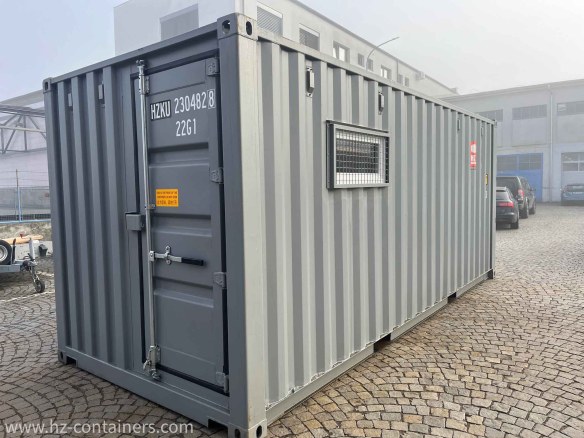
 Czech Republic, Třebíč
  WITHOUT SHIPPING

Other container news...
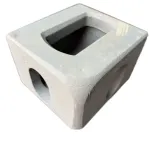
Corner casting steel vs aluminum
Every shipping container in the world — all 40 million of them — rests on eight critical components. Corner castings are the load-bearing blocks at each corner of an ISO shipping container, and they are the universal interface between the container and every crane, twistlock, spreader, and chassis on the planet. When you lift a container, stack it nine high on a ship, or lock it to a truck trailer, every ton of force flows through these fittings.

Construction cabin – selection, tips, dimensions and prices
Every construction project – whether a family house, a development project or a reconstruction – starts with the infrastructure. No construction manager, craftsman or investor who needs an on-site office, a changing room for workers or a safe storage for tools can do without a quality construction cell. But navigating the offer is not easy: residential containers, sanitary cells, storage modules, rental, purchase, refurbished pieces… This guide will give you answers to all the essential questions in one place.
Storage container
A storage container is a lockable steel box designed for the safe and dry storage of materials, tools, goods or equipment. Originally created as a shipping container for maritime transport, its durability and versatility have found their way onto construction sites, corporate premises and private land.
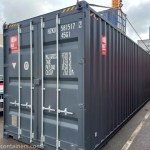
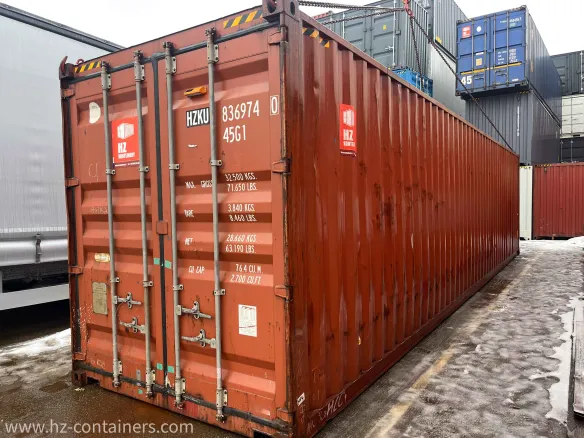
Shipping container 12m (40 ft)
A 12m shipping container is an investment that, if properly selected and cared for, will pay off in decades of trouble-free use. Whether you plan to use it as a warehouse, workshop, garage or the basis for a residential module — the key is careful selection of the condition, a thorough inspection before purchase and high-quality preparation of the base for placement. Take the time to compare offers, check the seller’s references and do not hesitate to personally inspect the container before buying. A properly selected 40-foot container will serve you reliably for many years.