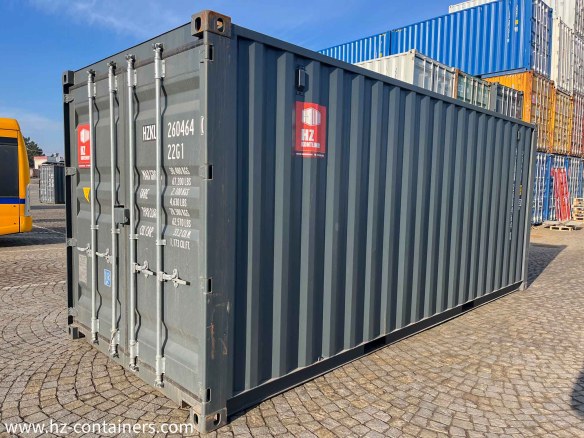
Fire Safety for Modular Buildings
Modular buildings, known for their efficiency, economic advantages and sustainability, represent a modern approach to construction. However, like any innovation, they also present specific challenges, particularly in the area of fire safety. This glossary serves as a comprehensive resource for understanding key concepts, terms and factors related to fire safety in modular construction. The aim is to answer the fundamental question:
What is fire safety for modular buildings and why is it important?
1. Modular Buildings

What is it?
Modular buildings are structures created from pre-manufactured modules or units that are produced off-site and assembled on location. These modules are designed to connect seamlessly and create complete buildings, such as shipping container houses, offices, hotels or schools.
Key characteristics:
- Volumetric modular construction: Complete three-dimensional modules (including walls, floors and ceilings) are prefabricated.
- Panel modular systems: Individual walls or floor panels are manufactured and assembled on-site.
- Materials: Commonly used materials include wood, steel, reinforced concrete and composite systems.
Relevance to fire safety:
The prefabrication process and materials used play a crucial role in fire safety. Modular designs often contain empty spaces and cavities that can facilitate the spread of fire, smoke and heat if not adequately addressed. Additionally, the division of a building into individual modules can either help or hinder keeping a fire under control – this depends on the quality of assembly and fire protection measures used. [Source: ICC Safe Journal – Fire Safety Solutions]
2. Fire Protection
What is it?
Fire protection refers to measures and systems designed to prevent fire, control it or mitigate its effects in a building. In modular construction, fire protection strategies must be adapted to the specific risks associated with prefabricated components.
Types of fire protection:
- Passive fire protection (PFP): Built-in elements, such as fire-resistant walls, floors and ceilings, designed to contain fire and smoke.
- Active fire protection (AFP): Systems, such as sprinklers, detectors and alarms, that actively respond to fire.
Challenges in modular buildings:
- Integration of fire protection systems during prefabrication off-site.
- Ensuring continuity of fire protection barriers at module connection points.
- Controlling proper assembly and fire protection measures in controlled factory conditions. [Source: Lockton Insights]
3. Fire Resistance
What is it?
Fire resistance is the ability of a building to withstand exposure to fire for a certain period of time without losing its structural integrity. It is measured in time intervals (e.g. 30 minutes, 1 hour).
Key elements:
- Structural fire resistance: Ensures that the building’s structural elements can bear loads during a fire.
- Compartmentation: Division of a building into fire-resistant zones that limit the spread of fire and smoke.
Specific aspects of modular construction:
- Joints and connections: Modular buildings often contain joints between modules that represent potential weak points in fire resistance.
- Hollow spaces: Unsealed cavities between modules can serve as channels for fire and smoke spread, emphasizing the need for fire-resistant seals. [Source: Buildings & Cities Journal]
4. Fire Risk Assessment
What is it?
Fire risk assessment (FRA) is the process of identifying fire hazards, evaluating risks and implementing measures to mitigate these risks. In many countries, this is a legal requirement and for modular buildings it is particularly important given their specific design and construction processes.
Steps in fire risk assessment:
- Identification of sources of ignition, fuel and oxygen.
- Assessment of the potential for fire spread through cavities or flammable materials.
- Implementation of fire safety measures, such as fire-resistant materials and active protection systems.
- Regular review and updating of assessments.
Significance for modular buildings:
Modular construction’s unique challenges of prefabrication and assembly require specialized fire risk assessment protocols to ensure elimination of all potential risks from manufacturing through to installation on-site. [Source: Lockton Insights]
5. Fire Spread
What is it?
Fire spread refers to the movement of fire and smoke through a building. In modular construction, fire spread is influenced by:
- Hollow spaces: Gaps between modules that can serve as pathways for fire and smoke.
- Flammable materials: Materials, such as wood or adhesives used in module assembly, can accelerate fire spread.
Mitigation strategies:
- Installation of cavity barriers that block pathways for fire spread.
- Use of non-flammable or fire-retardant materials for construction.
- Application of fire-resistant coatings and sealants at module joints.
These strategies are key to ensuring the safety of modular structures, which might otherwise present specific risks due to their design. [Source: ICC Safe Journal]
6. Approved Document B
What is it?
Approved Document B is part of the Building Regulations in the United Kingdom and provides guidance on fire safety in building design. Similar regulations exist worldwide to ensure compliance with fire safety standards.
Relevance for modular buildings:
Approved Document B includes provisions for fire-resistant construction, compartmentation and escape routes that must be adapted to the modular context. Designers must ensure that modular buildings comply with these regulations, particularly in areas such as fire doors, cavity barriers and sprinkler systems. [Source: Buildings & Cities Journal]
Conclusion
Fire safety for modular buildings is a dynamic field that requires innovative approaches. By understanding key concepts, such as fire resistance, risk assessment and regulations, all stakeholders can ensure that modular buildings are as safe as traditionally constructed ones. Advances in fire-resistant materials, testing methods and active protection systems give modular construction the potential to set new standards for safety and sustainability in the built environment.

 Czech Republic, Třebíč
  WITHOUT SHIPPING