
The Ultimate Guide to Buying Corner Castings for Shipping Containers
If you have ever watched a crane lift a 40-foot shipping container loaded with 30 tons of cargo and effortlessly swing it onto a cargo ship, what you saw was the silent genius of eight small steel blocks — corner castings. Every standard ISO shipping container relies on exactly eight corner castings, which enable it to be lifted, stacked, secured, and transported across oceans, railways, and highways. Without them, the global logistics system as we know it simply could not exist.
Whether you are repairing a damaged container, building a container house, manufacturing your own modular structure, or sourcing spare parts, understanding what corner castings are, how they work, and how to buy the right ones is essential. This guide covers everything: history, specifications, materials, types, pricing, installation, inspection, and what the future holds for this overlooked but indispensable component.
What is a corner casting on a shipping container?
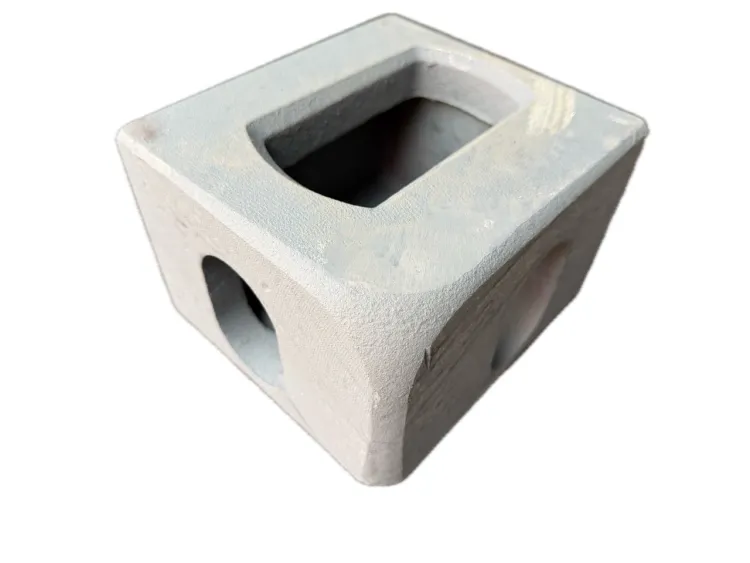
A corner casting (also called a corner fitting, corner block, or container corner) is a high-strength cast steel component installed at each of the eight corners of an ISO shipping container. Each corner casting has three precisely machined holes on its outer faces — one on the top or bottom face and two on the side faces. These holes are where twist locks, lifters, lashing rods, and stacking cones engage to handle the container.
Definition: A corner casting is a standardized load-bearing steel block that forms the primary connection point between a shipping container and all handling, lifting, stacking, and securing equipment used in global intermodal transport.
Why corner castings are the most critical structural component
Every force acting on a shipping container — whether from a crane lifting it, a ship rolling in heavy seas, or a stack of eight containers pressing down on it — passes through the corner castings. They perform four concurrent functions:
- Lifting: Cranes and spreaders engage the top corner castings to lift containers.
- Stacking: Twist locks inserted into the corner castings vertically lock containers together, enabling stacks of up to nine containers on ships.
- Securing: Lashing rods and turnbuckles connect to the bottom corner castings to anchor containers to chassis, rail cars, and ship decks.
- Structural integrity: Corner castings transfer all loads into the corner posts and frame members, forming the container’s load path.
Because corner castings are the single point of failure for all of these functions, the international standard ISO 1161 governs their design with millimeter precision and strict mechanical property requirements.
Where did corner castings come from?
The pre-standardization problem
Before the 1950s, cargo ships were loaded and unloaded piece by piece — a process called break-bulk shipping. Dockworkers handled crates, barrels, and bags by hand, and it took a full week to load or unload a single ship. The system was slow, expensive, and dangerous. Different ports used different equipment, and there was no universal way to lift or secure cargo.
Keith Tantlinger and the invention that changed global trade
American trucking entrepreneur Malcolm McLean is widely credited as the inventor of the shipping container. But the component that made the container globally interoperable — the corner casting — was designed by Keith Tantlinger, McLean’s chief engineer at Sea-Land Service.
Tantlinger realized that a container is only useful if any crane can handle it, it can be secured to any chassis, and it can be stacked on any ship anywhere in the world. His solution was a standardized hollow steel block with precisely shaped apertures, cast into the eight corners of every container. Paired with the twist lock mechanism he also designed, the corner casting created a modular, Lego-like system that allowed containers to connect and be handled by standardized equipment.
Why Tantlinger gave the patent away for free
In what was then an unprecedented move in industrial history, Tantlinger convinced McLean to release the corner casting and twist lock patents into the public domain. On January 29, 1963, Sea-Land granted free rights to the International Organization for Standardization (ISO). This single decision enabled global adoption of containerization because no company could monopolize the technology. The result was ISO 1161, first published in 1967, which standardized corner casting dimensions and performance requirements worldwide.
Today, every corner casting manufactured — whether in China, Germany, India, or the United States — meets the same ISO 1161 standard that Tantlinger’s generosity enabled.
What are the different types of corner castings?
A standard ISO shipping container uses eight corner castings, but they are not all identical. There are four distinct types, each designed for a specific position on the container.
The four types: TL, TR, BL, and BR
| Type | Position | Top face opening | Side opening shape | Marking |
|---|---|---|---|---|
| TL (Top Left) | Top left corner | Yes — oval opening | Acorn shape (elongated at the top) | Stamped “TL” |
| TR (Top Right) | Top right corner | Yes — oval opening | Acorn shape (elongated at the top) | Stamped “TR” |
| BL (Bottom Left) | Bottom left corner | No top opening | Semi-circular (flat bottom) | Stamped “BL” |
| BR (Bottom Right) | Bottom right corner | No top opening | Semi-circular (flat bottom) | Stamped “BR” |
The top castings (TL and TR) have an oval opening on the top face that receives a twist lock from a container stacked above, or a spreader pin from a lifter. The side openings on the top castings have a distinct acorn or elongated shape. The bottom castings (BL and BR) have no opening on top — instead, their bottom face is flat and rests against the chassis or stacking surface. Their side openings have a semi-circular shape with a flat bottom edge.
How to identify which type you have
If you are holding a corner casting and are unsure of the type, look inside the side opening. Every ISO-compliant casting is marked with its type designation — TL, TR, BL, or BR — stamped directly into the steel. This marking is permanent and visible during inspection.
Additionally, the left and right variants are mirror images. Top left and top right are mirror images; bottom left and bottom right are similarly mirror images. When ordering a complete set, you will receive exactly:
- 2 × Top Left (TL)
- 2 × Top Right (TR)
- 2 × Bottom Left (BL)
- 2 × Bottom Right (BR)
What are the standard dimensions and specifications of corner castings?
ISO 1161:2016 defines every critical dimension of corner castings with tight tolerances to ensure global interchangeability. Here is what you need to know.
ISO 1161 dimensions at a glance
| Dimension | Value | Tolerance |
|---|---|---|
| External length | 178 mm (7.01 in) | ±1 mm |
| External width | 162 mm (6.38 in) | ±1 mm |
| External height | 118 mm (4.65 in) | ±1 mm |
| Top opening width (max) | 66 mm (2.60 in) | — |
| Top opening length (max) | 127 mm (5.00 in) | — |
| Minimum top plate thickness | 23 mm (0.91 in) | — |
| Minimum side opening wall thickness | 18 mm (0.71 in) | — |
| Typical weight | ~11 kg (24.25 lbs) | Varies by manufacturer |
The side openings are not perfectly round — they are elongated, designed to receive the rotating head of a twist lock. When the twist lock is inserted and rotated 90 degrees, it locks securely inside the casting. The precise dimensions of these openings are what make the system functional worldwide.
Why tolerances matter
A deviation of just a few millimeters can prevent a twist lock from securing or a spreader from locking onto the container. That is why ISO 1161-certified corner castings are machined on all faces after casting — to ensure exact final dimensions. When buying corner castings, always verify that the supplier explicitly states ISO 1161 compliance.
What materials are corner castings made from?
The vast majority of corner castings are made from cast steel. However, depending on the application, stainless steel and aluminum variants are also available.
Material comparison
| Property | Cast steel (SCW480/ASTM A27) | Stainless steel (304/316) | Aluminum |
|---|---|---|---|
| Tensile strength | 430–600 MPa | 515–620 MPa (304) | 310–350 MPa (6061-T6) |
| Yield strength | ≥220 MPa | ≥205 MPa (304) | ≥275 MPa (6061-T6) |
| Weight per unit | ~11 kg (24.3 lbs) | ~11 kg (24.3 lbs) | ~4.5 kg (10 lbs) |
| Weldability | Excellent | Good (requires proper filler) | Fair (requires TIG/MIG expertise) |
| Corrosion resistance | Low (requires paint/coating) | Excellent | Very good (natural oxide layer) |
| Price (relative) | $ (lowest) | $$$ (3–5× steel) | $$ (2–3× steel) |
| Typical use | Standard ISO containers | Food, chemical, offshore | Lightweight special containers, military |
Cast steel: the industry standard
The most common cast steel grades used for corner castings are:
- SCW480 — Standard cast carbon steel with excellent weldability and toughness. The most widely used grade worldwide.
- SCW490 — A variant with higher tensile strength, often specified for heavy-duty or offshore containers.
- ASTM A27 Grade 70-36 — The American equivalent standard, widely used for castings made in the USA.
These materials are not the same as Corten steel (weathering steel), which is used for container walls and frames. Corner castings are always made of cast steel, never Corten. The chemical composition is tightly controlled — with carbon content limited to a maximum of 0.20% — to ensure weldability and impact resistance down to -40 °C.
Stainless steel: for corrosive environments
Stainless steel corner castings, typically grade 304 (A2) or 316 (A4), are used for containers transporting food products, chemicals, or operating in highly corrosive marine environments. They are significantly more expensive — 3 to 5 times more than cast steel — but eliminate the need for painting and provide decades of corrosion-free service.
Aluminum: light but limited
Aluminum corner castings weigh approximately 40% of their steel counterparts, making them attractive for weight-sensitive applications such as military logistics or aviation containers. However, aluminum has lower strength, lower fatigue resistance, and is more difficult to weld to the steel frame of a standard container. They are typically found only on special containers built entirely from aluminum.
How much do corner castings weigh and what loads can they handle?
Weight per unit
A standard ISO 1161 cast steel corner casting weighs approximately 11 kg (24.25 lbs). Some manufacturers produce castings weighing as little as 10 kg or as much as 12.5 kg, depending on the exact alloy and wall thickness. A complete set of eight castings weighs approximately 88 kg (194 lbs).
Rated loads: what the numbers mean
ISO 1161, in conjunction with IACS (International Association of Classification Societies) requirements, specifies the minimum loads that corner castings must withstand. These are not theoretical limits — they are tested and certified.
| Load type | Required strength (kN) | Equivalent (tons) | Context |
|---|---|---|---|
| Stacking — top casting | 848 kN | ~86.5 tons | Offset 25.4 mm laterally / 38 mm longitudinally |
| Stacking — bottom casting | 954 kN | ~97.3 tons | On a flat surface |
| Lifting — top casting | 150 kN | ~15.3 tons | Hook or eye pull |
| Lifting — bottom casting | 300 kN | ~30.6 tons | Lifting at a 30° sling angle |
| Longitudinal securing | 300 kN | ~30.6 tons | Bottom castings, 2-point restraint |
| Lashing (vertical) | 300 kN | ~30.6 tons | All openings |
| Lashing (horizontal) | 150 kN | ~15.3 tons | All openings |
To put these numbers in perspective: a single bottom corner casting must withstand a compressive load of nearly 100 tons. In a stack of nine fully loaded containers on a ship, the bottom castings bear the cumulative weight of everything above them. That is why corner castings are cast as a single piece without welds or joints — any seam would be a potential failure point under these loads.
How are corner castings welded to a shipping container?
Welding corner castings is a precision task that requires proper preparation, materials, and technique. A weld failure on a corner casting is not a cosmetic problem — it is a pending structural failure.
Pre-welding preparation
- Clean thoroughly: Remove all rust, oil, paint, and scale from the contact surfaces. The steel must be bare metal.
- Bevel the edges: For thick sections, create a V or X groove with a minimum width of 4–5 mm to achieve full penetration.
- Precise fit-up: Minimize gaps between the casting and the container frame. Misalignment can create stress concentrations.
- Preheat as needed: When ambient temperature is below 5 °C (41 °F), or when welding thick sections (>25 mm), preheat to 80–150 °C.
Welding method comparison
| Method | Best for | Wire/electrode | Shielding gas | Skill level |
|---|---|---|---|---|
| MIG/MAG (GMAW) | Workshop fabrication, production | ER70S-6 (G3Si1), 1.0–1.2 mm | 82% Ar / 18% CO₂ | Intermediate |
| FCAW (flux-cored wire) | Outdoor, field work | E71T-1 (with gas) or E71T-11 (self-shielded) | CO₂ or none | Intermediate |
| MMA/SMAW (stick electrode) | Repairs, remote locations | E7018 low-hydrogen, 2.5–4 mm | None (coated) | Advanced |
MIG/MAG is the most common method in container manufacturing and assembly shops. ER70S-6 wire is the industry standard filler material for joining cast steel corner castings to Corten or mild steel container frames. Use spray transfer mode for deep penetration.
FCAW is preferred for outdoor work because the flux-cored wire is less sensitive to wind than MIG shielding gas. Gas-shielded FCAW (E71T-1) produces higher-quality welds than self-shielded variants.
Stick electrode welding (MMA) with E7018 electrodes is the primary method for field repairs. E7018 is a low-hydrogen electrode that minimizes the risk of hydrogen cracking — the most common cause of weld failure in cast steel.
Post-welding requirements
- Interpass temperature: Never exceed 250 °C between passes.
- Slow cooling: Avoid rapid cooling. Wrap with a non-flammable blanket if needed.
- Post-weld heat treatment (PWHT): For repairs, heat the repaired area to approximately 550 °C and allow it to cool slowly. This relieves residual stresses.
- Inspection: Every weld on a corner casting must be visually inspected and ideally tested by magnetic or penetrant method (NDT).
Important: Never weld a corner casting that has not been heat-treated. As-cast material is prone to cracking. All certified corner castings are heat-treated (normalized or annealed) before sale.
How do corner castings differ from twist locks and other connectors?
Corner castings are often confused with the hardware that connects to them. Understanding the difference is critical when sourcing parts.
| Component | Function | Connects to | Standard |
|---|---|---|---|
| Corner Casting | Load-bearing connection point built into the container | Everything else connects to it | ISO 1161 |
| Twist Lock | Rotating locking pin that secures containers to each other | Inserts into corner casting openings | ISO 1161 / ISO 3874 |
| Stacking Cone | Simple guide pin for aligning containers during stacking | Sits between two corner castings | Various |
| Bridge Clamp (Bridge Fitting) | Horizontal clamp joining adjacent containers side by side | Clamps two corner castings together | Various |
| Lashing Rod | Tension rod for securing containers to decks | Hooks into bottom corner casting | Various |
Corner castings are fixed, passive components. Twist locks, stacking cones, and bridge clamps are active, removable hardware that engages with them. When you buy corner castings, you are buying permanent structural container corners. When you buy twist locks, you are buying connection hardware. They are complementary but distinct.
How much do corner castings cost and where can you buy them?
Where to buy
- Container dealers: HZ Containers sells directly — ideal for large-volume orders of 50+ pieces.
What to look for when buying
- ISO 1161 certification: The supplier must explicitly state ISO 1161 compliance. If it is not mentioned, assume it is not certified.
- ABS or classification society certification: Many marine insurers require corner castings certified by ABS, DNV, Lloyds, or equivalent.
- Material certificates: The supplier should provide reports of chemical composition and mechanical properties.
- Type markings: Castings should have TL/TR/BL/BR stamped inside the openings.
- Return policy: Uncertified castings are often non-returnable after welding.
What are common problems with corner castings and how to inspect them?
Damage types and IICL criteria
The Institute of International Container Lessors (IICL) publishes detailed damage criteria for container inspections. For corner castings, the most common issues are:
| Damage type | Description | Severity | Action |
|---|---|---|---|
| Cracking | Visible cracks radiating from openings or edges | Critical | Replace immediately — do not repair by welding unless certified |
| Deformation | Bent or distorted casting, elongated openings | Moderate to critical | Replace if twist lock cannot engage properly |
| Corrosion | Rust-through, pitting deeper than 3 mm | Moderate | Replace if structural integrity is compromised |
| Wear | Oval elongation of opening from repeated use | Moderate | Measure against ISO 1161 tolerances — replace if exceeded |
| Missing CSC plate | No valid safety approval plate | Critical | Container cannot be used for intermodal transport |
Inspection checklist
When inspecting corner castings, perform these checks:
- Visual inspection: Look for cracks, especially those radiating from the corners of openings. Use a flashlight and mirror to inspect the inside of the casting.
- Dimensional check: Measure opening dimensions with gauges and compare to ISO 1161 specifications. Pay particular attention to the top opening on top castings — elongation beyond 66 mm × 127 mm is a failure.
- Wall thickness: Check the steel thickness at the stadium-shaped side opening. If less than 18 mm, the casting is either not to ISO, or is seriously worn.
- Weld inspection: Inspect all welds joining the casting to the corner posts and members. Look for cracks, undercut, or porosity.
- CSC plate verification: Ensure the Container Safety Convention plate is present and legible, with a valid next inspection date.
When to repair and when to replace
Repair may be acceptable for: minor surface corrosion, small weld defects, or cosmetic issues that do not affect opening dimensions or load-bearing capacity. Any repair must follow procedures approved by IICL, including preheating, proper filler material, and post-weld heat treatment.
Replace immediately if: cracks are present, opening dimensions exceed tolerance, deformation prevents twist lock engagement, or the casting has been subjected to impact damage that may have caused internal cracking.
Failure of a corner casting during lifting or at sea can cause a container stack collapse. According to TT Club insurer data, corner casting defects are among the most serious structural deficiencies found during port state inspections, with approximately 2,500 serious structural deficiencies reported annually.
What does the future hold for corner casting technology?
Smart corners and RFID integration
The next generation of corner castings may not be purely mechanical. Several logistics technology companies are developing “smart corners” — corner castings with embedded RFID tags or sensors that can transmit container identification, location, and condition data. These would allow automated port systems to identify and track containers without manually scanning the CSC plate.
Advanced materials
Research into high-strength low-alloy (HSLA) cast steels and ductile iron variants aims to produce corner castings that are lighter without sacrificing strength. A 20% weight reduction per corner casting, multiplied by millions of containers worldwide, would translate into significant fuel savings and emission reductions for the shipping industry.
Sustainability trends
The cast steel used in corner castings is 100% recyclable. As the container industry moves toward circular economy principles, manufacturers are increasingly using electric arc furnace (EAF) steel made from recycled scrap. Some foundries are also exploring green sand casting processes, which reduce energy consumption and emissions during manufacturing.
Frequently asked questions
How many corner castings does a shipping container have?
Every standard ISO shipping container has exactly eight corner castings — four on the top corners and four on the bottom corners. They come in four types: Top Left, Top Right, Bottom Left, and Bottom Right (two of each per container).
What is ISO 1161?
ISO 1161 is the international standard that specifies dimensions, tolerances, functional requirements, and strength specifications for corner castings used on Series 1 freight containers. It ensures that any ISO-compliant corner casting can be handled by any standard container equipment anywhere in the world.
How do you identify top left vs. bottom right corner castings?
The easiest method is to look inside the side opening. ISO-compliant castings are permanently stamped with their type: TL (Top Left), TR (Top Right), BL (Bottom Left), or BR (Bottom Right). Top castings have an oval top opening and acorn-shaped side openings. Bottom castings have no top opening and have semi-circular side openings.
How much does a corner casting weigh?
A standard cast steel corner casting weighs approximately 11 kg (24.25 lbs). Stainless steel castings weigh roughly the same. Aluminum castings weigh approximately 4.5 kg (10 lbs). A complete set of eight steel castings weighs approximately 88 kg (194 lbs).
Can corner castings be repaired?
Minor defects can sometimes be repaired using approved welding procedures, but only on castings that have been properly heat-treated. The repair must include preheating, proper filler material, post-weld heat treatment, and non-destructive testing. Severely damaged or cracked castings should always be replaced, not repaired.
How are corner castings manufactured?
Corner castings are produced through a multi-step foundry process: pattern design → mold production → pouring of molten steel → cooling and shakeout → shot blasting → heat treatment (normalizing or annealing) → precision machining → quality inspection. Each batch is tested for chemical composition and mechanical properties.
What material are corner castings made from?
The vast majority are made from cast steel, typically grades SCW480, SCW490, or ASTM A27 Grade 70-36. Stainless steel (304 or 316) is used for food or corrosive environments. Aluminum is used for lightweight special containers. Corner castings are never made from Corten steel or cast iron.
How much weight can a corner casting bear?
A single bottom corner casting must withstand a compressive stacking load of 954 kN (approximately 97.3 tons). Top castings are rated for 848 kN (86.5 tons) in stacking and 150 kN (15.3 tons) in lifting. These ratings are tested and certified to ISO/IACS standards.
How do you weld corner castings to a shipping container?
For workshop fabrication, use MIG/MAG welding with ER70S-6 wire and 82% Ar / 18% CO₂ shielding gas. For field work, use FCAW with E71T-1 wire or stick electrode welding with E7018 electrodes. Always preheat when temperature is below 5 °C, keep interpass temperature below 250 °C, and allow slow cooling after welding.
Where can I buy corner castings for shipping containers?
You can buy corner castings from container dealers (HZ Containers). Expect to pay $25–85 per unit for steel castings, depending on quantity, certification, and supplier.
 Czech Republic
  WITHOUT SHIPPING


Other container news...

Obligation to Check Tightness When Selling a Reefer Container
Who is responsible for the refrigerant leak check when selling a refrigerated container? Find out what obligations the seller has at the time of handover and why they must provide a PTI report along with the technical data plate. Learn which regulatory requirements and F-gas record-keeping duties become the sole responsibility of the new owner.

New shipping containers
If you are currently considering purchasing a new shipping container, you are not alone. While just twenty years ago containers were used almost exclusively for maritime transport, today they have found their way into construction, storage, business, and even housing. This growing popularity brings with it a host of questions: Which type should you choose? How much does it cost? How do you recognize quality? How can you avoid falling victim to scammers?
New sea shipping containers
If you are currently considering purchasing a new shipping container, you are not alone. While just twenty years ago containers were used almost exclusively for maritime transport, today they have found their way into construction, storage, business, and even housing. This growing popularity brings with it a host of questions: Which type should you choose? How much does it cost? How do you recognize quality? How can you avoid falling victim to scammers?

6m shipping container
Are you thinking about buying a 6-meter shipping container but aren’t sure what to look for? You are not alone—this 20-foot container is the best-selling size on the Czech market, and the differences between various types, conditions, and prices can be significant. In this guide, you will find everything you need to know: from exact dimensions and a comparison of categories (such as “one-way,” refurbished, and “Cargo Worthy”) to current prices and shipping advice.