
New shipping containers
If you are currently considering buying a new shipping container, you are not alone. While just twenty years ago containers served almost exclusively for maritime transport, today they have found their way into construction, storage, business, and housing. And it is precisely this growing popularity that brings many questions: Which type to choose? How much does it cost? How to recognize quality? How to avoid falling victim to scammers?
This guide will give you answers to all these questions — and even more. After reading it, you will know exactly which new shipping container to purchase, what to watch out for when buying, and how much it will cost you.
What is a new shipping container and how does it differ from a used one
When Czech advertisements talk about new shipping containers, they actually most often refer to so-called one-way containers. They are not completely new in the sense of “just manufactured and never used” — but they are very close to it.
One-way containers — what it means
A one-way container is a shipping container that was manufactured in Asia (most often in China, where manufacturers such as CIMC are based), loaded with goods, and completed a single sea voyage to Europe. After unloading the cargo at a European port, it does not return — the costs of returning an empty container would be higher than producing a new one. Therefore, it is sold on the local market.
In practice, this means you get a container that:
- has completed just one journey (3–6 weeks at sea),
- is almost flawless in structure and appearance — at most a few minor scuffs from handling at the port,
- has a completely clean interior, no odor, with an undamaged wooden floor,
- is watertight — the rubber seals on the doors are in perfect condition,
- has a fully functional opening mechanism — the locking rods are not bent, the doors open easily.
Practical difference: With a used container (CW — Cargo Worthy), you often deal with leaks, corrosion, stiff hinges, or a damaged floor. With a one-way container, these problems do not exist. You pay a higher purchase price, but zero repair costs.
IICL 6 and other quality certifications
One-way containers are often associated with the designation IICL 6. The abbreviation IICL stands for Institute of International Container Lessors — an international organization bringing together container lessors that sets strict standards for condition assessment.
The number 6 denotes the highest quality grade. A container rated IICL 6:
- has undergone detailed inspection according to standardized criteria,
- has no structural damage,
- is watertight and fully functional for international transport,
- has a valid CSC plate (Convention for Safe Containers), which is essential for legal transport.
IICL 6 certification itself is not legally required for sale in the Czech Republic. However, it is the strongest signal that the seller understands their business and offers quality they can stand behind.
New vs. used — comparison
| Criterion | One-way / IICL 6 (new) | Used CW (Cargo Worthy) |
|---|---|---|
| Age | 0–6 months | 5–15 years |
| Number of voyages | 1 | 10–50+ |
| Floor condition | Perfect, without damage | May be worn, locally repaired |
| Watertightness | 100% | Usually tight, may have minor leaks |
| Appearance | Minimal cosmetic defects | Visible signs of use, dents, rust |
| Odor | None | May smell of transported goods |
| Lifespan | 25–30+ years | 10–15 years (with proper maintenance even more) |
| Price 20′ | 62,000–69,000 CZK | 35,000–45,000 CZK |
| Price 40′ HC | 85,000–100,000 CZK | 55,000–70,000 CZK |
The price difference is therefore roughly 25,000–40,000 CZK — an amount that over long-term use is recouped through zero maintenance costs and longer lifespan.
Types and dimensions of new shipping containers
Before you start selecting a specific unit, you need to know what is available on the market. New shipping containers are manufactured in several standardized dimensions that comply with international ISO standards.
20′ DC (Dry Container) — the universal six-meter container
The best-selling and most versatile option. With a length of just under 6 meters, it fits on smaller plots and is easier to handle than larger types.
- External dimensions: 6,058 × 2,438 × 2,591 mm (l × w × h)
- Internal dimensions: 5,898 × 2,350 × 2,390 mm
- Volume: approximately 33 m³
- Tare weight: approx. 2,200 kg
- Payload: up to 28,000 kg
Ideal for: storing tools and materials, construction site facilities, garage, small workshop, garden house. If you don’t need a huge space, the 20′ container is the most practical choice.
40′ DV (Dry Van) — the classic twelve-meter container
Double the length compared to the twenty-foot means double the volume — and a more favorable price per cubic meter.
- External dimensions: 12,192 × 2,438 × 2,591 mm
- Internal dimensions: 12,032 × 2,350 × 2,390 mm
- Volume: approximately 67 m³
- Tare weight: approx. 3,700 kg
- Payload: up to 26,500 kg
Ideal for: larger warehouses, production spaces, conversions to offices or living spaces. If you have enough space for placement, the forty-foot offers a better price-to-volume ratio.
40′ HC (High Cube) — the elevated version with the best price/volume ratio
High Cube is the most sought-after variant on the market. Compared to the standard 40′ DV, it has a 30 cm higher ceiling (one foot more), which significantly improves the usability of the interior space.
- External dimensions: 12,192 × 2,438 × 2,896 mm
- Internal dimensions: 12,032 × 2,350 × 2,695 mm
- Volume: approximately 76 m³
- Tare weight: approx. 3,900 kg
- Payload: up to 26,200 kg
Ideal for: conversions to housing (30 cm extra height makes a huge difference when installing underfloor heating, insulation, and suspended ceilings), storing taller items, workshops with greater headroom.
Practical tip: If you are hesitating between 40′ DV and 40′ HC, go for HC. The price difference is usually only 5,000–10,000 CZK, but you get 9 m³ more space and a more comfortable ceiling height.
Special types of containers
In addition to basic dry containers, there are special designs:
- Open Top — container with a removable roof (tarpaulin). Suitable for top-loading by crane — for example, bulk material, machines, or oversized cargo.
- Double Door (DD) — doors on both short sides. Allows walk-through access, which is practical for warehouses with two-sided service.
- Side Open — the entire side wall opens, ideal for quick access to the entire contents.
- Reefer (refrigerated) — container with an integrated cooling unit. Used for transporting and storing food, medicines, or flowers. The price of a new reefer starts at 200,000 CZK.
Summary table of dimensions and parameters
| Type | External dimensions (l × w × h) | Internal dimensions (l × w × h) | Volume | Tare weight |
|---|---|---|---|---|
| 20′ DC | 6,058 × 2,438 × 2,591 mm | 5,898 × 2,350 × 2,390 mm | 33 m³ | 2,200 kg |
| 20′ HC | 6,058 × 2,438 × 2,896 mm | 5,898 × 2,350 × 2,695 mm | 37 m³ | 2,350 kg |
| 40′ DV | 12,192 × 2,438 × 2,591 mm | 12,032 × 2,350 × 2,390 mm | 67 m³ | 3,700 kg |
| 40′ HC | 12,192 × 2,438 × 2,896 mm | 12,032 × 2,350 × 2,695 mm | 76 m³ | 3,900 kg |
| 10′ | 2,991 × 2,438 × 2,591 mm | 2,831 × 2,350 × 2,390 mm | 16 m³ | 1,200 kg |
Prices of new shipping containers in 2026
Price is the third most important parameter after type and size. Let’s take a closer look at it — including everything that affects it.
What affects the price of a new shipping container
Container pricing is not random. Several factors are reflected in the final amount:
- Condition and quality — the most fundamental factor. A completely new container (0 voyages) costs 30–50% more than one-way.
- Size and type — the larger, the more expensive in absolute terms, but cheaper per m³. Special types (Open Top, Reefer) are significantly more expensive.
- Color — standard colors (gray, blue, green) are cheaper. Custom RAL colors (e.g., anthracite RAL 7016, white RAL 9010) add 5,000–15,000 CZK.
- Current market situation — container prices fluctuate according to global demand. In 2020–2022, prices skyrocketed due to pandemic logistics problems, and have been gradually declining since 2023.
- Transport and assembly — rarely included in the container price. Count on additional 5,000–15,000 CZK depending on distance.
Indicative price list of new and one-way containers (excluding VAT, 2026)
| Container type | One-way / IICL6 | Completely new (0 voyages) |
|---|---|---|
| 20′ DC | 62,000–69,000 CZK | 80,000–95,000 CZK |
| 20′ HC | 70,000–78,000 CZK | 90,000–105,000 CZK |
| 40′ DV | 80,000–95,000 CZK | 100,000–120,000 CZK |
| 40′ HC | 85,000–100,000 CZK | 105,000–130,000 CZK |
| 10′ | 55,000–65,000 CZK | 80,000–95,000 CZK |
| 40′ HC Double Door | 95,000–115,000 CZK | 120,000–140,000 CZK |
| 40′ HC Open Top | 110,000–135,000 CZK | 140,000–170,000 CZK |
Prices are indicative and may vary depending on the season and current steel prices. For an exact calculation, contact us or view our current price list.
How much does container transport and assembly cost
Container transport is a separate item that buyers often underestimate. The container is transported on a special semi-trailer or flatbed and unloaded using a hydraulic arm (HARA) or crane.
Typical transport costs in the Czech Republic:
- Local transport (up to 30 km from depot): 3,000–5,000 CZK
- Regional transport (30–100 km): 5,000–8,000 CZK
- Long-distance transport (100–300 km): 8,000–15,000 CZK
Some sellers, such as HZ Containers, offer free transport when ordering multiple units. Always ask whether transport is included in the price or charged separately.
How to choose the right new shipping container
Choosing the right container means clarifying three things: purpose, budget, and location. Let’s break them down step by step.
According to purpose of use
Each way of use places different demands on the container:
- Storing material and equipment — a standard 20′ or 40′ DC is sufficient. Watertightness and security are key. Consider Double Door for easier access to stored items.
- Construction site facilities (changing room, office) — a 20′ container is sufficient. You will likely modify it (windows, doors, insulation, electricity), so the original one-way condition is ideal.
- Conversion to housing — 40′ HC is the gold standard. The increased height is crucial for installing floors, insulation, and suspended ceilings. Count on investing another 300,000–800,000 CZK into the conversion.
- Business intention (pop-up shop, café) — 40′ HC or 20′ HC with modifications, including glazing, electrical installation, and interior fittings.
- Garden house or hobby workshop — 10′ or 20′ container. Choose a lighter color (white, light gray), which does not overheat as much in summer.
How to verify a serious seller
The shipping container market unfortunately also attracts scammers. Fake e-shops, suspiciously low prices, and demands for 100% payment upfront are warning signs. How to recognize a reliable seller:
- Has their own physical depot — a serious seller will invite you for an inspection. If they make excuses, it’s a red flag.
- Has traceable company ID and history — verify the company in the commercial register. How many years have they been in business? Do they have references?
- Offers payment on pickup or after delivery — never pay 100% upfront to an unknown seller.
- Has a transparent price list — prices should be publicly available, not hidden behind a quote request form.
- Has their own transport or verified carriers — if the seller also arranges transport, it’s a sign they take business seriously.
Certifications and standards — what to watch out for
A quality new shipping container is recognized by its certifications. Let’s explain what each one means and why it matters.
CSC plate — a key document for transport
CSC (Convention for Safe Containers) is an international agreement on container safety that entered into force in 1977. Every container intended for international transport must have a valid CSC plate — a metal plate attached to the left door.
On the CSC plate you will find:
- Country of manufacture and manufacturer
- Date of manufacture
- Maximum Gross Weight (MGW)
- Tare weight (TARE)
- Payload (NET / PAYLOAD)
- Date of last periodic inspection (valid for 30 months)
Practical significance: If you plan to transport the container anywhere (even one-time to your property), it must have a valid CSC plate. Without it, the carrier will not load the container.
ISO standards — standardization of dimensions
All standard shipping containers comply with ISO 668 and ISO 1496. These standards define:
- precise external dimensions,
- location of corner castings, which enable stacking and crane handling,
- strength requirements (the container must withstand stacking of up to 9 fully loaded units on top of each other).
When you buy a container for purposes other than transport (for example, as a warehouse), ISO certification is not essential — but it is a guarantee that the container was manufactured according to strict standards.
COR-TEN steel — why it matters
All quality shipping containers are made from COR-TEN steel (also referred to as “weathering steel”). This special material:
- contains admixtures of copper, chromium, and nickel, which create a protective patina (oxide layer) on the surface,
- does not rust through — unlike ordinary steel, where rust progressively damages the structure, COR-TEN corrosion stops at the surface,
- has high strength — resists extreme weather, salt water, and mechanical stress,
- does not require coatings — the protective patina is sufficient. However, if you want to paint the container (for aesthetic reasons, for example), you can.
What to watch out for: Some manufacturers of cheap storage containers use ordinary steel instead of COR-TEN. Such a container will corrode significantly faster in Czech conditions (rain, frost, snow). When purchasing, always make sure the container is made of COR-TEN steel.
Transport and placement of the container
You bought a container — what’s next? Transport and placement are the last, but critically important steps.
Transport options within the Czech Republic
Transport is usually arranged by the seller, or you can order it yourself. In any case, you need:
- A vehicle with a hydraulic arm (HARA) — allows container assembly directly at the location without the need for a crane. The reach of the hydraulic arm is usually 6–10 meters. The container must be placed within 5–6 meters from the edge of the access road.
- Or a truck crane — if it is not possible to get the hydraulic arm close enough. A crane is a more expensive option (from 8,000 CZK per trip).
Important: Before ordering transport, verify that the destination has a paved road with sufficient width (at least 3 meters) and load-bearing capacity. A semi-trailer with a container weighs 15–25 tons — a muddy meadow or narrow dirt road can be a problem.
Preparing the site for placement
The container should not stand directly on the ground. There are two reasons:
- Ventilation under the floor — you prevent moisture accumulation and rotting of the wooden floor.
- Even weight distribution — the container must be level, otherwise the doors may warp.
Recommended solutions:
- Concrete footings or panels at the corners (4 pieces for 20′, 6 pieces for 40′),
- or railway sleepers (concrete, not wooden),
- or compacted gravel subbase at least 20 cm thick.
The height of the substructure should be at least 15–20 cm so that air flows under the container. If you plan to inhabit the container or store moisture-sensitive items in it, consider also a vapor barrier (for example, PE foil) between the ground and the container.
Conclusion: What to take away before purchasing
A new shipping container (actually one-way) is an investment that, with the right choice, will last for decades. Let’s summarize the key points:
- Determine your purpose — type, size, and budget depend on this.
- Choose one-way / IICL 6 — you get an almost new container at a reasonable price.
- Verify the seller — physical depot, company ID, references.
- Inspect the container in person — focus on the floor, watertightness, doors, and CSC plate.
- Count on transport and placement — total costs are higher than the container price itself.
- Prepare the site — concrete footings or sleepers, level terrain, access for heavy equipment.
With this guide in hand, you have all the information you need to buy exactly the container you need — and avoid making unnecessary mistakes along the way.
FAQ
What is a one-way container?
A one-way container is a shipping container that has completed a single sea voyage from Asia to Europe. After unloading the cargo, it does not return, but is sold on the European market. It is practically in new condition — clean, watertight, with an undamaged floor and functional mechanism — but at a lower price than a completely new unit.
How to choose a new shipping container?
Start the selection by clarifying the purpose (storage, conversion, transport), according to which you choose the type and size. For most uses, a one-way / IICL 6 container is ideal. Further, set a budget including transport, choose a verified seller with a physical depot (HZ Containers), and if possible, inspect the container in person before purchasing. Focus on the floor, watertightness, doors, and validity of the CSC plate.
How much does a new shipping container cost?
The price depends on the type and condition. A one-way 20′ DC costs 62,000–69,000 CZK excluding VAT, a 40′ HC 85,000–100,000 CZK excluding VAT. Completely new containers (0 voyages) are 30–50% more expensive. VAT of 21% and transport (usually 5,000–15,000 CZK depending on distance) must be added to the price.
What are the dimensions of a shipping container?
The most common 20′ DC has external dimensions of 6,058 × 2,438 × 2,591 mm (l × w × h) and an internal volume of 33 m³. The 40′ HC has external dimensions of 12,192 × 2,438 × 2,896 mm and an internal volume of 76 m³. All standard containers comply with ISO standards, so dimensions are identical for all manufacturers.
How does shipping container transport work?
The container is transported on a special semi-trailer and unloaded using a hydraulic arm (HARA) or crane. Transport requires a paved access road at least 3 meters wide. The placement site must be level and paved — ideally on concrete footings or sleepers. The distance from the edge of the road to the assembly point should not exceed 6 meters (reach of the hydraulic arm).
What to watch out for when buying a container?
The biggest risks are: fraudulent e-shops without a physical depot, suspiciously low prices, demand for 100% payment upfront, missing CSC plate, container made of ordinary steel instead of COR-TEN, or concealed defects (leaks, damaged floor). Always verify the seller in the commercial register and, if possible, inspect the container in person before purchasing.
What is the difference between a new and a used container?
A new (one-way) container has completed just one voyage and is in almost flawless condition — clean, watertight, with an undamaged floor and a lifespan of 25–30+ years. A used container (CW) has completed 10–50+ voyages, has visible signs of wear, may have minor leaks or damage, and its lifespan is 10–15 years. The price difference is 25,000–40,000 CZK, which over long-term use is recouped through lower maintenance costs.
What is IICL 6 certification?
IICL 6 is a quality standard set by the Institute of International Container Lessors. It designates a container of the highest quality grade — without structural damage, watertight, with a valid CSC plate, ready for international transport. In practice, these are one-way containers that have completed only one journey and have passed strict inspection.
What material are shipping containers made of?
Shipping containers are made of COR-TEN steel (weathering steel) — a special alloy that, thanks to admixtures of copper, chromium, and nickel, creates a protective patina on the surface. This prevents deep corrosion. Containers made of ordinary steel corrode significantly faster and are not suitable for long-term outdoor use.

 Croatia, Rijeka
  WITHOUT SHIPPING


Other container news...

6m shipping container
Are you thinking about buying a 6-meter shipping container but aren’t sure what to look for? You are not alone—this 20-foot container is the best-selling size on the Czech market, and the differences between various types, conditions, and prices can be significant. In this guide, you will find everything you need to know: from exact dimensions and a comparison of categories (such as “one-way,” refurbished, and “Cargo Worthy”) to current prices and shipping advice.
Corner casting steel vs aluminum
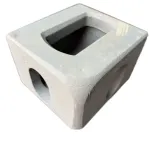
Every shipping container in the world — all 40 million of them — rests on eight critical components. Corner castings are the load-bearing blocks at each corner of an ISO shipping container, and they are the universal interface between the container and every crane, twistlock, spreader, and chassis on the planet. When you lift a container, stack it nine high on a ship, or lock it to a truck trailer, every ton of force flows through these fittings.

Construction cabin – selection, tips, dimensions and prices
Every construction project – whether a family house, a development project or a reconstruction – starts with the infrastructure. No construction manager, craftsman or investor who needs an on-site office, a changing room for workers or a safe storage for tools can do without a quality construction cell. But navigating the offer is not easy: residential containers, sanitary cells, storage modules, rental, purchase, refurbished pieces… This guide will give you answers to all the essential questions in one place.
Storage container
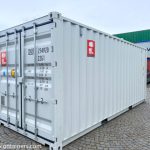
A storage container is a lockable steel box designed for the safe and dry storage of materials, tools, goods or equipment. Originally created as a shipping container for maritime transport, its durability and versatility have found their way onto construction sites, corporate premises and private land.