
Bridge Fitting Dimensions
In global logistics and container transport, even seemingly modest components such as bridge fitting have a key impact on the safety and efficiency of the entire chain. This article provides a comprehensive overview of dimensions, construction, materials, installation, maintenance, standards, and practical use of bridge fittings, including specific technical parameters from leading European suppliers.
What is a Bridge Fitting?
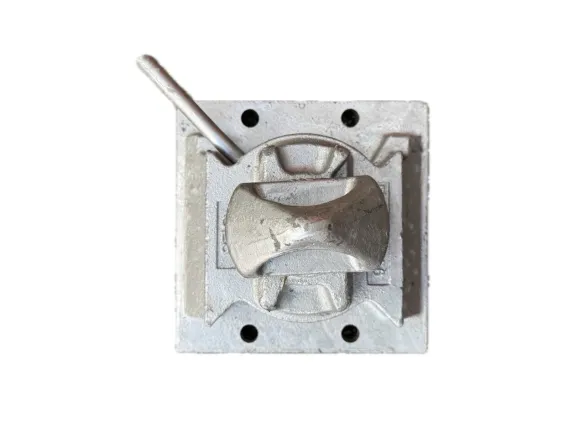
Bridge fitting is a robust connecting element designed exclusively for horizontal joining of shipping containers. It enables a firm and secure connection of two ISO containers placed side by side or end‑to‑end, thereby ensuring their stability during sea, rail, and yard handling.
Basic principle
- Anchors into standardized corner castings, which are part of every ISO container according to ISO 1161.
- The mechanism allows quick tightening and loosening of the joint with simple tools.
Operating Principle and Construction
Bridge fitting is the result of precise engineering design, where strength, simplicity, and versatility are combined.
Main components
| Component | Description |
|---|---|
| Two steel hooks | Shaped to exact dimensions for insertion into the side openings of corner castings. |
| Central body with thread | Massive central part containing a threaded rod with right‑hand and left‑hand threads on opposite sides, allowing simultaneous pulling of the hooks together when turned. |
| Rotating mechanism | Operable with a standard 32 mm wrench or an adjustable “Bahco” wrench. |
Function and mechanics
- After inserting the hooks into the corner castings of two adjacent containers, the central part rotates – the hooks are drawn together, firmly linking the containers without play.
- The mechanism provides a pre‑tensioned, extremely strong joint that resists tension, compression, and shear.
- The construction allows repeated use, quick connection and disconnection even under demanding conditions.
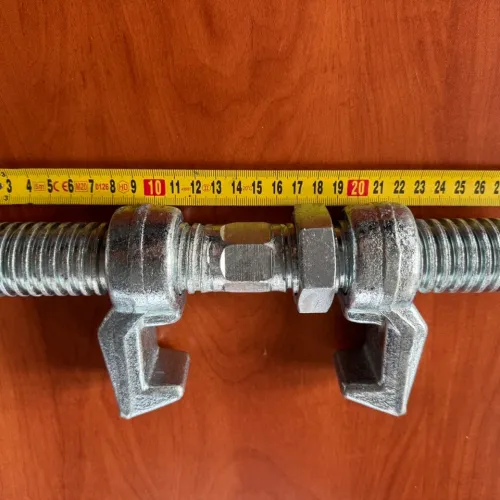
Key Dimensions and Technical Specifications
Understanding the dimensions and specifications is essential for proper selection and safe use.
Size variants and adjustable range
| Type | Length at maximum retraction | Adjustable range | Application |
|---|---|---|---|
| Small | 260 mm | approx. 179–259 mm | For containers placed tightly together |
| Large | 330 mm | larger range (up to approx. 310 mm) | For gaps between containers, e.g., due to ship structure |
Source: HZ‑Containers
Additional technical parameters
| Parameter | Value |
|---|---|
| Weight | approx. 3.5–7.4 kg (depending on type) |
| Material | Forged steel, most often forged (higher strength) or cast (economical version) |
| Surface finish | Hot‑dip galvanized |
| Tools | 32 mm wrench / adjustable wrench (Bahco) |
| Rated load (SWL) | 3.7–10 t (typical values, always verify with manufacturer) |
| Maximum break load (MBL) | ≥100 kN (≈10.2 t) |
| Certifications | DNV, ISO, Lloyd’s Register (verify with supplier) |
Production and protection details
- Forged vs. cast: Forged bridge fittings have higher fatigue resistance, fewer internal defects, and better wear resistance – recommended for intensive use and harsh conditions.
- Galvanizing: Provides permanent protection against seawater and weather, meeting long‑life requirements.
Types of Bridge Fittings and Their Uses
Standard types
- Tensioning bridge fitting – the most common, universal solution for horizontal joining of ISO containers (including dry, refrigerated, residential, and special modules).
Special variants
- Extended versions – for larger gaps between containers.
- Custom‑made – for non‑standard applications such as modular buildings (shipping container homes, container houses), portacabins, etc.
Comparison with other joining elements
| Element | Use (direction) | Mechanism | Note |
|---|---|---|---|
| Bridge fitting | Horizontal | Threaded tensioner | For side‑by‑side container connection |
| Twistlock | Vertical | Rotating lock | For stacking containers |
| Lashing bar, chains, D‑rings | Various | Mechanical | For overall securing on board |
Importance in Container Logistics and Transport
Safety assurance
- Minimises the risk of shift, overturn, or fall of containers under extreme conditions (waves, wind, ship maneuvers).
- Protects cargo and the vessel from chain‑related accidents.
Structural integrity of stacks
- Bridge fittings distribute lateral forces between adjacent stacks, especially on higher tiers where stability is most challenged.
Space optimisation
- Enable higher and tighter container stacking, increasing vessel capacity and yard storage efficiency.
Use beyond transport
- Modular constructions, temporary offices, warehouses, living units (container homes, container houses) – bridge fittings for containers provide rigid connections between modules.
Installation and Maintenance
Installation steps
- Visual inspection – reject damaged, deformed, or corroded pieces.
- Prepare containers – clean corner castings, position containers at the required distance.
- Insert hooks – into the side openings of the corner castings of both containers.
- Tighten – with a 32 mm wrench or Bahco wrench until the joint is rigid and free of play.
- Quantity – typically 4 bridge fittings per connection (2 on top, 2 on bottom).
Recommended maintenance
- Regular inspection – as part of maintenance schedules, check all joining elements.
- Lubrication – apply water‑resistant lubricant to the threaded mechanism (prevents seizing, protects against salt).
- Storage – after use, clean, protect from mechanical damage, and store in a dry environment.
Standards, Certifications, and Expert Recommendations
International standards
- ISO 1161 – standardisation of corner castings.
- EN 12079, DNV 2.7‑1 – standards for transport containers and accessories.
- Certifications Lloyd’s Register, DNV, Bureau Veritas – recommended when selecting bridge fittings for maritime transport.
Expert tips
- Always choose bridge fittings for containers with clearly declared load capacity and certification.
- For intensive use and extreme conditions, prefer forged versions over cast ones.
Related Terms in Container Nomenclature
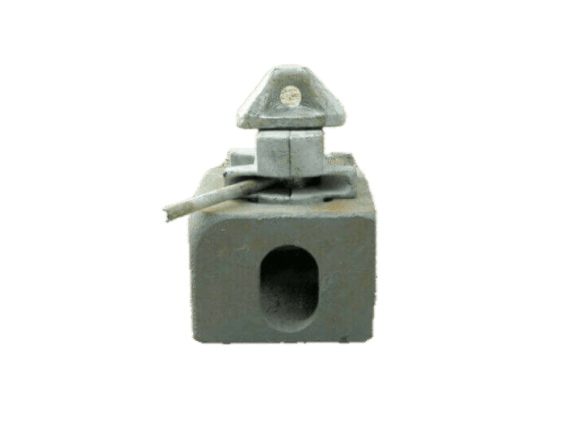
- Corner casting – reinforced steel block at the corners of a container, essential for handling and joining.
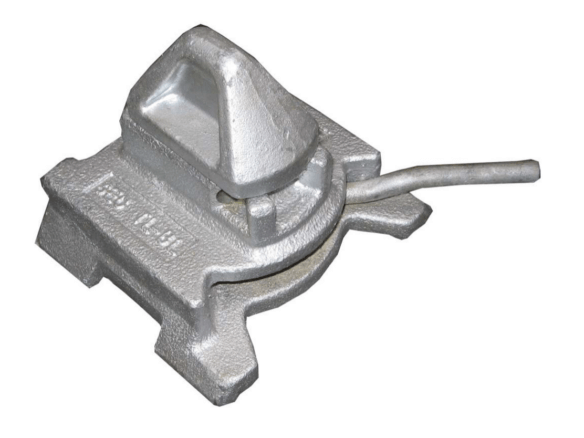
- Twistlock – for vertical connection of containers, required for stacking.
- Container lashing – general term for all techniques and accessories used to secure containers.
- Lashing bar, chains – for fixing containers on board.
- Depot stacker – specialised equipment for handling and stacking containers in yards.
Frequently Asked Questions
What wrench do I need to install a bridge fitting?
Usually a 32 mm wrench or an adjustable Bahco‑type wrench.
What is the service life of a bridge fitting?
With proper maintenance (lubrication, corrosion protection) and quality material, it can exceed 10 years.
Can I use a bridge fitting vertically?
No, bridge fittings for containers are intended only for horizontal connections. Use twistlocks for vertical connections.
 Czech Republic
  WITHOUT SHIPPING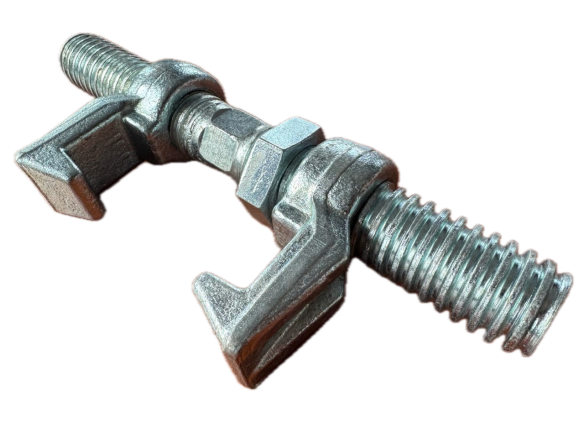
Other container news...
Corner casting steel vs aluminum
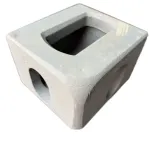
Every shipping container in the world — all 40 million of them — rests on eight critical components. Corner castings are the load-bearing blocks at each corner of an ISO shipping container, and they are the universal interface between the container and every crane, twistlock, spreader, and chassis on the planet. When you lift a container, stack it nine high on a ship, or lock it to a truck trailer, every ton of force flows through these fittings.

Construction cabin – selection, tips, dimensions and prices
Every construction project – whether a family house, a development project or a reconstruction – starts with the infrastructure. No construction manager, craftsman or investor who needs an on-site office, a changing room for workers or a safe storage for tools can do without a quality construction cell. But navigating the offer is not easy: residential containers, sanitary cells, storage modules, rental, purchase, refurbished pieces… This guide will give you answers to all the essential questions in one place.
Storage container
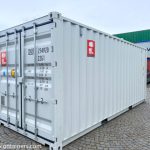
A storage container is a lockable steel box designed for the safe and dry storage of materials, tools, goods or equipment. Originally created as a shipping container for maritime transport, its durability and versatility have found their way onto construction sites, corporate premises and private land.
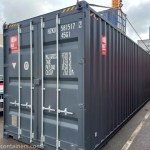
Shipping container 12m (40 ft)
A 12m shipping container is an investment that, if properly selected and cared for, will pay off in decades of trouble-free use. Whether you plan to use it as a warehouse, workshop, garage or the basis for a residential module — the key is careful selection of the condition, a thorough inspection before purchase and high-quality preparation of the base for placement. Take the time to compare offers, check the seller’s references and do not hesitate to personally inspect the container before buying. A properly selected 40-foot container will serve you reliably for many years.