
Shipping container storage
Storage in shipping containers has rapidly evolved from an industrial afterthought into one of the most practical, durable, and cost-effective storage solutions available today. Whether you are a homeowner drowning in seasonal clutter, a contractor protecting expensive tools, a farmer shielding equipment from the elements, or a business owner managing inventory overflow, a steel shipping container offers a level of security and weather resistance that few alternatives can match. This guide covers every dimension of the topic – from the surprising history of containerization to detailed site preparation, moisture control, and long-term maintenance – so you can make informed decisions and get the maximum out of your container for decades.
What is storage in shipping containers?
At its core, storage in shipping containers is the practice of using an intermodal cargo container – a standardized steel box originally designed to ship goods across oceans, railways, and highways – as a stationary or semi-portable storage unit. These containers, built to ISO specifications, are repurposed after their ocean shipping career ends and serve as secure, weatherproof storage spaces on private land, construction sites, farms, and commercial properties.
Unlike a traditional self-storage unit you rent inside a building with multiple tenants, a shipping container used for storage is typically either purchased or rented and then delivered directly to your location. You own or control the container, hold the keys, and access it whenever you need – no business hours, no monthly storage company payments, and no shared walls. The container becomes your property.
The concept is simple: a decommissioned shipping container still has decades of structural life left after it is no longer certified for ocean shipping. Rather than being broken down for scrap, the secondary market sells these containers to individuals and businesses who need robust, lockable storage. Repurposing a shipping container for storage is, in many ways, an act of industrial recycling – you take a piece of global trade infrastructure and give it a second career in your backyard.
How does storage in shipping containers differ from traditional storage units
The differences between a shipping container on your property and a unit in a traditional self-storage facility run far deeper than physical construction. They encompass ownership economics, accessibility, security, and long-term flexibility.
| Property | Storage in a shipping container | Traditional self-storage |
|---|---|---|
| Ownership model | You purchase or rent the container; it sits on your land. You own the property (or rent it). | You rent space monthly in someone else’s building. You own nothing. |
| Access | 24/7, on demand. You walk outside and open the door. No commuting. | Limited to facility business hours – often 6:00 to 22:00. You must drive there each time. |
| Monthly costs | 0 CZK after purchase (only maintenance). Rental: 1,500–4,000 CZK/month for 20ft. | 1,000–6,000 CZK/month for a similarly sized unit, forever. |
| Security | Heavy Corten steel walls, your own lock, on your property. Extremely hard to break into. | Basic roller shutters and a padlock. Facility security varies considerably. |
| Durability | Built to survive ocean storms, stacked nine high on ships. Wind and water resistant. | Usually light metal or wood frame with thin cladding. Not watertight in extreme conditions. |
| Portability | Can be moved by truck. If you move, take it with you. | Fixed. You must move your belongings out by hand. |
| Customizability | Can add shelving, lighting, ventilation, insulation, even electricity. | You generally cannot modify the unit at all. |
| Weather resistance | Excellent with good maintenance. Designed for marine conditions. | Moderate. Leaks, pests, and temperature swings are common complaints. |
The financial math is compelling. A used 20ft shipping container can be bought for 35,000–80,000 CZK with delivery. A climate-controlled 3×3 m self-storage unit in a mid-sized American city runs around 3,500 CZK/month. In two years, you spend roughly the cost of acquiring a container – and still own nothing. Past that breakeven point, the container is essentially free storage for another 15–25 years of its remaining life.
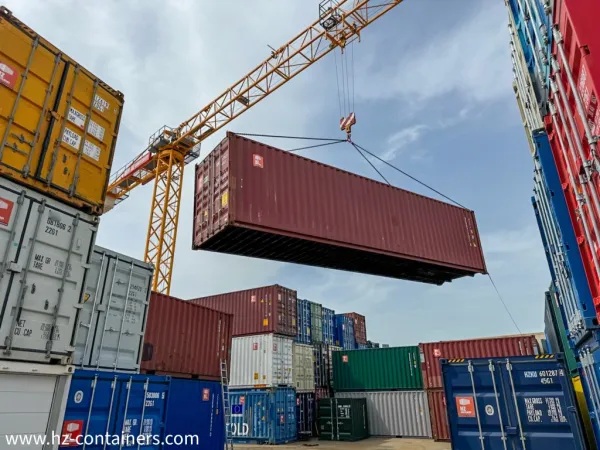
Where did storage in shipping containers come from?
The story of how a steel box designed for ocean shipping ended up storing lawnmowers and Christmas decorations in suburban backyards is one of the most important – and underappreciated – narratives in modern economic history.
The birth of the intermodal container
The idea of standardized containers predates the shipping container as we know it by nearly two centuries. In 1766, English engineer James Brindley designed the “Starvationer” – a narrow boat with ten compartments for transporting coal along English canals. In 1795, Benjamin Outram created what many historians consider the first true container system: iron boxes filled with coal at mines, pulled by horses on rails to canals, transferred onto boats, and then unloaded at destination. The boxes themselves were never opened – only moved.
Throughout the 19th and early 20th centuries, railways in Europe and America experimented with wooden and iron container systems. In the 1920s, a luxury passenger train between London and Paris packed travelers’ luggage into four standardized containers – an elegant foreshadowing of what was to come. None of these systems, however, reached global scale because they lacked the one thing that ultimately transformed world trade: a single universally accepted standard.
The man who solved that problem was Malcolm McLean, a trucking entrepreneur from North Carolina. In 1937, waiting at a New Jersey port for a cotton shipment, McLean watched longshoremen spend hours unloading individual barrels, sacks, and crates from trucks and carrying them by hand onto ships. He later described his reaction: “I sat there and watched them load and unload, box by box, piece by piece, and I thought – there has to be a better way.”
In 1955, McLean sold his trucking company – then the fifth largest in America with 1,750 trucks – and bought the Pan-Atlantic Steamship Company. On April 26, 1956, a converted World War II tanker called Ideal X sailed from Newark, New Jersey to Houston, Texas, carrying 58 of McLean’s newly designed shipping containers on deck. The containers were 35 feet long, made of steel, and could be lifted by crane directly from a truck chassis onto the ship. Loading the Ideal X took less than eight hours – a fraction of the time needed for traditional break-bulk cargo handling. The cost? McLean calculated that loading cargo via container cost about $0.16 per ton compared to $5.83 per ton for traditional methods. The shipping container reduced cargo handling costs by more than 97%.
From global trade to backyard storage
The International Organization for Standardization (ISO) formalized container dimensions in 1968, establishing the 20ft and 40ft lengths we still use – along with the standard 8ft width and 8.5ft height. This standardization meant that a container loaded in Tokyo could be trucked to a port, lifted onto a ship, offloaded in Los Angeles, placed on a train, and delivered to Chicago without its contents ever being touched. The modern global supply chain was born.
In the 1990s and early 2000s, the global container fleet grew into millions of units. Trade imbalances between Asia and the West – China and other manufacturing nations shipping far more goods to the U.S. and Europe than they imported back – created a growing surplus of empty containers at western ports. For shipping lines, it was often cheaper to sell these containers to domestic customers than to ship them back empty across the Pacific. A robust secondary market emerged, and suddenly an ordinary person could buy a 40ft steel box that had crossed the Pacific five times for a few thousand dollars. What began as global trade infrastructure became the world’s most over-engineered garden shed.
What are the different types of shipping containers for storage?
Not every shipping container is suitable for storage. The container market offers a range of types, sizes, and conditions – and understanding the differences ensures you buy or rent the right unit for your specific needs.
Common container types for storage
Dry van / standard container – This is the classic shipping container: fully enclosed corrugated steel walls, hard wood or bamboo flooring, and two cargo doors on one end. Available in 20ft and 40ft lengths, it is by far the most common choice for storage. If you are storing tools, furniture, equipment, documents, or household items, this is almost certainly what you need.
High Cube container – Identical to a standard dry van but one foot taller (9.5ft instead of 8.5ft). That extra vertical foot adds roughly 12% more cubic storage volume without increasing the footprint. High Cube containers are particularly valuable for storing tall equipment, stacking shelves high, or simply wanting more breathing room when walking inside. They typically cost 10–15% more than standard height equivalents.
Refrigerated container (Reefer) – Insulated and equipped with an integrated cooling unit, reefers maintain controlled temperatures and are ideal for food storage, pharmaceuticals, flowers, electronics, or anything sensitive to heat and humidity. They require a power source to run the cooling unit, which adds ongoing electricity costs. Used reefers are significantly more expensive than dry vans, but indispensable for temperature-sensitive storage.
Open top container – Features a removable tarpaulin roof and top rail instead of a fixed steel roof. Useful for storing oversized items that must be loaded from above by crane – think industrial machinery, tall construction materials, or loose commodities. Less common for general storage due to higher cost and reduced weather sealing.
Open side container – One entire long wall is replaced with doors that open fully, providing access to the entire length of the container. Excellent for storage requiring frequent, wide access – retail inventory, event equipment, or workshop spaces.
For the vast majority of storage situations, the right choice is a standard dry van or a High Cube dry van. The other types solve specific problems at a higher price.
Container sizes and dimensions
Understanding the actual interior dimensions is critical. A 20ft shipping container will not give you 20 feet of usable length inside – the walls have thickness and the doors eat into some of the opening. Here are the exact specifications for the most common storage sizes:
| Specification | 10ft standard | 20ft standard | 40ft standard | 40ft High Cube |
|---|---|---|---|---|
| Exterior length | 10′ 0″ (3.05 m) | 20′ 0″ (6.10 m) | 40′ 0″ (12.19 m) | 40′ 0″ (12.19 m) |
| Exterior width | 8′ 0″ (2.44 m) | 8′ 0″ (2.44 m) | 8′ 0″ (2.44 m) | 8′ 0″ (2.44 m) |
| Exterior height | 8′ 6″ (2.59 m) | 8′ 6″ (2.59 m) | 8′ 6″ (2.59 m) | 9′ 6″ (2.90 m) |
| Interior length | ~9′ 2″ (2.79 m) | ~19′ 4″ (5.89 m) | ~39′ 5″ (12.01 m) | ~39′ 5″ (12.01 m) |
| Interior width | ~7′ 8″ (2.34 m) | ~7′ 8″ (2.34 m) | ~7′ 8″ (2.34 m) | ~7′ 8″ (2.34 m) |
| Interior height | ~7′ 10″ (2.39 m) | ~7′ 10″ (2.39 m) | ~7′ 10″ (2.39 m) | ~8′ 10″ (2.69 m) |
| Door opening width | ~7′ 8″ (2.34 m) | ~7′ 8″ (2.34 m) | ~7′ 8″ (2.34 m) | ~7′ 8″ (2.34 m) |
| Door opening height | ~7′ 6″ (2.29 m) | ~7′ 6″ (2.29 m) | ~7′ 6″ (2.29 m) | ~8′ 6″ (2.59 m) |
| Interior volume | ~560 cubic feet | ~1,170 cubic feet | ~2,390 cubic feet | ~2,700 cubic feet |
| Empty weight | ~2,800 lbs | ~5,000 lbs | ~8,500 lbs | ~8,800 lbs |
| Typical use | Small tool shed, motorcycle storage | Single garage equivalent, small workshop | Two-car garage equivalent, large workshop, farm storage | Tall equipment, stacking storage, conversion projects |
A 20ft container provides roughly the storage volume of a standard single garage. A 40ft container doubles that volume – the equivalent of a two-car garage filled wall to wall and floor to ceiling. A 10ft container is rarer and often more expensive per square foot due to lower supply, but fits where a 20ft or 40ft simply cannot.
How much does storage in a shipping container cost?
Pricing a shipping container is not like pricing a refrigerator. The same 20ft container can cost 35,000 CZK or 115,000 CZK depending on its condition, location, and whether delivery is included. Understanding the variables helps you budget realistically.
Price overview by size, condition, and grade
Shipping container prices vary primarily based on three factors: size, condition grade, and geographic location. Containers are cheapest near major ports (Los Angeles, Houston, New York/New Jersey, Savannah) where supply of incoming containers is highest. The further inland you are, the more delivery costs inflate the final price.
| Condition grade | 20ft standard | 40ft standard | 40ft High Cube | Notes |
|---|---|---|---|---|
| New / one trip | 70,000–105,000 CZK | 90,000–130,000 CZK | 100,000–150,000 CZK | Almost factory condition. One cargo trip from Asia to USA. Typical warranty 10+ years. |
| Cargo Worthy (CW) | 50,000–75,000 CZK | 65,000–95,000 CZK | 75,000–110,000 CZK | Structurally certified for shipping. CSC plate valid or recently expired. Some cosmetic wear. |
| Wind & Water Tight (WWT) | 35,000–65,000 CZK | 42,000–80,000 CZK | 50,000–95,000 CZK | No longer certified for ocean shipping. Keeps out rain. Dents, surface rust, floor wear. |
| AS-IS | 18,000–42,000 CZK | 28,000–58,000 CZK | 35,000–70,000 CZK | Sold as-is. May have leaks, rust holes, door problems. For budget projects or scrap. |
Delivery costs are separate and typically run from 3,500 to 14,000 CZK for local delivery (within 80 km of depot) up to 50–115 CZK/km for long-distance transport. Always request a total quote that includes delivery to your exact location. A “35,000 CZK container” can easily become a 70,000 CZK container once delivery fees, rural surcharges, and hydraulic lifting equipment are added.
What are the pros and cons of using a shipping container for storage?
Advantages
Extreme durability. Shipping containers are made from Corten steel – a weathering steel alloy designed to resist corrosion in marine environments. The corrugated walls provide structural rigidity far beyond what any wooden shed or sheet metal structure offers. A well-maintained container can last 25+ years in stationary storage.
Exceptional security. The combination of 14-gauge steel walls, heavy cargo doors, and the ability to install specialized lock boxes and disc locks makes a shipping container one of the most difficult storage units to break into. Unlike a traditional shed that can be breached with a crowbar in minutes, a properly secured container can resist all but the most determined thieves armed with power tools.
Complete weather resistance. At WWT grade or better, a container keeps rain, snow, wind, and pests out. It will not rot, collapse, or attract termites the way a wooden shed inevitably does.
Portability and flexibility. Need to move? Your storage goes with you. A flatbed truck can relocate a loaded 20ft container in a single trip. This portability also means you can place the container exactly where it is most convenient – next to a workshop, at the edge of a field, or behind a loading dock.
On-site access, 24/7. No commuting to a storage facility, no limited hours, and no waiting for a freight elevator. You walk outside, unlock the door, and everything you need is right there.
Customization potential. Add shelving, lighting, ventilation, insulation, workbenches, or even electrical wiring. The container is a blank steel canvas. Many users gradually convert their storage container into a hybrid workshop-warehouse over time.
Disadvantages and challenges
Condensation and moisture. This is the single most frequently reported problem with shipping container storage. Steel conducts temperature rapidly, and when warm, humid air meets the cold container wall, water condenses – a phenomenon known as “container rain.” Without any ventilation or moisture control, stored items can develop mold, rust, or fungus. The problem is solvable (see the moisture control section below) but requires conscious effort.
Temperature extremes. An uninsulated shipping container behaves like a metal oven in summer and a freezer in winter. Interior temperatures can exceed 49°C in direct sun and drop well below freezing in cold climates. Items sensitive to temperature swings – electronics, photographs, vinyl records, certain chemicals – require a climate-controlled alternative or container modifications.
Aesthetic concerns. Let’s be honest: a 40ft steel box in your yard is not unobtrusive. HOAs (homeowners associations), neighbors, and municipal ordinances may restrict container placement or appearance. Some owners paint their containers to blend with the surroundings or install wood cladding, but the industrial look is not for everyone.
Zoning and permit issues. Many municipalities require permits for shipping containers, especially in residential zones. Some ban them outright. Always check local regulations before buying – a 70,000 CZK container that must be removed due to a building order is a 70,000 CZK mistake.
Delivery and placement limitations. A delivery truck needs significant straight access – up to 30 meters for a 40ft container. Overhead power lines, low tree branches, soft ground, and narrow gates can make delivery impossible. Site preparation is not optional; it is essential.
How to prevent moisture and condensation in a shipping container?
Moisture is the enemy of everything you store, and shipping containers are condensation factories. The good news is that understanding the science makes the solution straightforward.
Understanding container rain
Condensation occurs when warm air saturated with moisture comes into contact with a surface cooled below the dew point – the temperature at which water vapor condenses into liquid. Shipping containers, with their thin steel walls, cool rapidly at night and heat up quickly during the day. When the air inside is warm and humid (from ambient humidity or moisture released by stored items like wood, cardboard, or textiles), and the steel walls cool at night, water droplets form on the ceiling and walls. These droplets then drip onto your stored belongings – hence the term “container rain.”
The same principle explains why a cold can of lemonade sweats on a humid summer day. Your shipping container is that can, and everything inside is at risk of getting wet from above.
Proven moisture control strategies
Install ventilation. The single most effective and affordable solution is air movement. Installing louvered vents on opposite walls creates cross-ventilation that equalizes interior and exterior temperatures and expels humid air. Solar-powered turbine vents actively draw air through the container without needing electricity. Even two strategically placed passive vents can dramatically reduce condensation.
Use desiccants. Products like DampRid, silica gel canisters, and calcium chloride buckets passively absorb moisture from the air. They are cheap and work well in containers that are not opened frequently. Replace or recharge them every couple of months depending on humidity levels.
Install a dehumidifier. For containers with access to electricity, a portable dehumidifier is the gold standard. It actively removes moisture from the air and can maintain a constant relative humidity – typically 50% or less, which prevents mold growth and rust formation. Budget 3,500–7,000 CZK for a unit sized for a 20ft or 40ft container.
Insulate the container. Spray foam insulation applied to the interior walls and ceiling – particularly closed-cell polyurethane foam – serves a dual purpose. It creates a thermal barrier that reduces temperature swings, and a vapor barrier that prevents condensation on interior surfaces. This is a more expensive solution (35,000–95,000 CZK depending on size and professional vs. DIY installation), but it permanently solves the condensation problem while also moderating temperature extremes.
Elevate the container off the ground and ensure proper drainage. A container sitting directly on the ground wicks moisture from the earth. A gravel bed or concrete foundation allows water to drain away rather than pooling under the container, reducing moisture load from below.
Avoid storing wet or hygroscopic items. If you put damp lumber, wet equipment, or large quantities of paper and cardboard into a closed container, you are introducing moisture. Dry everything thoroughly before storing and consider using sealed plastic bins instead of cardboard boxes for moisture-sensitive items.
How to prepare a site for a shipping container?
A container weighs between 2,300 and 4,100 kg empty, and substantially more when loaded. It cannot be placed just anywhere. Proper site preparation prevents structural damage, ensures doors operate smoothly, and keeps moisture in check.
Ground preparation and foundations
Choose the right location. The site must be accessible for a delivery truck – usually a full-sized semi-truck with a trailer or tilt-bed. It must have firm, level ground that will not sink under 4,500+ kg of concentrated weight. Avoid low spots where water collects, areas directly under large trees (falling branches can puncture the roof), and locations too close to property lines where restrictions may apply.
Clear and level the area. Remove vegetation, rocks, debris, and topsoil from the container’s footprint plus at least 60 cm of margin on all sides. Level the area flat. A slope of more than a couple of centimeters along the container’s length will cause door misalignment and frame stress.
Choose a foundation type:
- Gravel bed – The most common and cost-effective option. Excavate 10–15 cm, lay landscape fabric to prevent weed growth, and fill with crushed gravel of about 2 cm fraction or crushed stone. Compact thoroughly. Gravel provides excellent drainage, is cheap (4,500–14,000 CZK for materials), and can be installed in a weekend. Position the container so its corner castings sit directly on the gravel; the weight distributes naturally through the frame.
- Concrete slab – The most permanent and stable option. Pour a reinforced concrete slab at least 10 cm thick that slightly exceeds the container’s footprint. Cost: 23,000–70,000 CZK depending on size and local concrete prices. The slab provides a perfectly level surface, prevents any ground moisture penetration, and makes the container a more permanent structure. If you plan to use the container as a workshop, a concrete slab is strongly recommended.
- Railway sleepers / wooden beams – A cost-effective option for well-drained soil. Place treated wooden beams or railway sleepers at four spread points (and two additional points for 40ft containers), then set the container on top. This raises the container a few centimeters for air circulation underneath but does not block ground moisture as effectively as gravel. Cost: 2,300–7,000 CZK.
- Concrete piers / foundation blocks – Prefabricated concrete block footings or cast foundations placed at load-bearing points. Similar concept to wooden beams but more permanent. Good for sloped sites where full leveling is not practical.
Delivery logistics and access requirements
A delivery truck with a 40ft container loaded on a tilt-bed trailer requires approximately 30 meters of straight, unobstructed access for backing up and lowering the container. A 20ft container requires roughly 18–21 meters. The access path must also be at least 3.5 meters wide and free of overhead obstructions below 4.2 meters (power lines, tree branches, eaves). The ground along the delivery route must be firm enough to support a 13,500–22,500 kg heavy truck without sinking – soft soil after rain is a common reason delivery fails on arrival day. Communicate any site restrictions to the seller before delivery day. If standard delivery is not possible, crane delivery can place a container over fences or into tight spaces, but adds 7,000–18,500 CZK to the total cost.
How to organize and secure a shipping container for storage?
Interior organization and shelving systems
A disorganized shipping container is less useful than no container at all – you spend more time searching for items than you saved by having them stored nearby. Plan your layout before loading a single item.
Create a space plan. Measure the interior dimensions, take inventory of everything you plan to store, and sketch a floor plan. Identify zones: frequently accessed items near the door, long-term storage toward the back, tall items against the walls, heavy items at floor level.
Install shelving systems. Freestanding metal shelving units (available at any hardware store for 1,200–3,500 CZK) allow vertical stacking without drilling into container walls. For heavier loads, wall-mounted brackets or cantilevered shelves bolted through the container’s steel ribs provide exceptional strength. Pipe racks – vertical steel pipes with horizontal arms – are ideal for storing lumber, pipes, and long construction materials.
Go vertical. The ceiling and upper walls represent the most underutilized space in any container. Hooks, ceiling racks, magnetic tool strips, and overhead storage boxes can double your effective storage capacity. Take advantage of every centimeter of the 2.6-meter interior height.
Leave a center aisle. Even in a narrow 20ft container, a 60 cm walkway down the middle lets you reach items at the back without climbing over everything in front. In a 40ft container, this aisle is essential. The alternative – packing the container solid from front to back – means you only access the first 90 cm of contents without a major expedition.
Label everything. Use large, waterproof labels on bins and boxes facing the aisle. Create a simple inventory map and post it by the door. A month later, when you need that specific box of Christmas lights, the map will save you an hour of searching.
Best security practices
The steel walls of a shipping container deter opportunistic thieves, but the door hardware is a vulnerable point. A standard shipping container uses vertical locking rods operated by a handle – secure in principle, but the padlock itself is the weak link.
Install a lock box. A lock box is a steel cover welded or bolted over the lock hasp that completely encloses the padlock. It prevents bolt cutters from reaching the shackle and protects the lock from hammer strikes. Bolt-on lock boxes (900–2,300 CZK) require no welding and can be installed with basic tools in under an hour. Welded boxes (3,500–7,000 CZK installed) are more tamper-resistant. This is the single most important security upgrade you can make.
Use a disc lock or hidden shackle lock. Standard padlocks expose their shackle to bolt cutters. A disc lock (also called a hockey puck lock) has a nearly flush shackle that sits inside the lock body, leaving virtually no surface for cutting tools to grip. Combined with a lock box, a disc lock makes a container extremely difficult to defeat without an angle grinder – and angle grinders are noisy, slow, and conspicuous.
Consider crossbar locks. A heavy steel bar that spans both cargo doors and locks into brackets on both sides of the container frame. This prevents the doors from being pried open even if the primary lock is compromised. Crossbar systems are more common in commercial and industrial settings due to their cost (4,500–11,500 CZK) and installation complexity.
Add lighting and visibility. Solar-powered LED floodlights with motion sensors mounted near the container doors deter nighttime tampering by eliminating cover of darkness. A well-lit container in a visible location is far less attractive to thieves than one hidden in the shadows behind a structure.
What should you know before buying a used shipping container?
Buying a used shipping container is straightforward, but only if you understand the grading system and know what to inspect. The same terminology is used by sellers nationwide, and knowing it prevents costly misunderstandings.
Understanding container condition grades
| Grade | Description | Structural condition | Typical age | Warranty | Best for |
|---|---|---|---|---|---|
| New / one trip | One cargo trip from the factory (typically Asia) to the USA. Almost perfect condition. | Excellent. No rust, minimal dents. Factory floor intact. | 0–2 years | 5–10 year structural + watertight warranty | Premium conversions, food-grade storage, customer-facing uses, buyers who want zero maintenance |
| Cargo Worthy (CW) | Meets ISO standards for ocean shipping. CSC plate valid or recently expired. | Very good. Structurally sound, stackable. May have surface rust. | 3–8 years | Varies; often 1–3 years | Active shipping, export, buyers who prioritize structural certification |
| Wind & Water Tight (WWT) | No longer certified for shipping, but is watertight. Keeps rain and pests out. | Good. Dents, surface rust, and floor wear are common. Doors and seals functional. | 5–15 years | Varies; often 30–90 days | General storage, construction sites, farms, equipment storage – the most popular grade for shed buyers |
| AS-IS | Sold in current condition with no warranties. May have leaks, rust holes, or door problems. | Variable – unknown risk. | 10–25+ years | None | Budget projects, scrap value, buyers willing to repair, containers destined for heavy modifications |
Key insight: Do not confuse age with grade. A ten-year-old decommissioned container classified as WWT that has been well-maintained can outperform a poorly maintained three-year-old unit. Grade is determined by inspection, not by manufacture date. Always ask for the current grade certificate, not just the year of manufacture.
Inspection checklist
If you can visit the container in person, spend 15–20 minutes methodically checking these areas:
- Doors and seals: Open and close both doors fully. They should swing freely without scraping or binding. Rubber seals around the door perimeter should be intact, flexible, and free of tears or cracks. Shine a flashlight around closed doors from the inside – any visible light means a gap where water can enter.
- Roof: The roof is the most critical surface for weather. Look for dents, punctures, or deep rusty pitting. Surface rust is acceptable; rust that has eaten through the steel is not. If possible, walk the roof (carefully, along reinforced edges) or inspect it from a ladder.
- Walls: The corrugated side panels should be free of holes, deep rust, or large dents that compromise structural ribs. Small dents and scratches are cosmetic and irrelevant for storage purposes. Check the bottom rail – the horizontal bearer along the base – which is most prone to rust from ground contact.
- Floor: Most containers use marine hardwood or bamboo flooring. Look for soft spots, warping, deep stains (indicating past flooding or chemical spills), and signs of insect infestation. The floor should feel solid underfoot with no sponginess.
- Corner castings: The eight corner fittings (four top, four bottom) are the strongest structural points. They must be intact and uncracked – this is what the container rests on and what lifting equipment grips. Damage here is difficult and expensive to repair.
- Smell: Open the door and take a breath. A musty, moldy, or chemical smell indicates past moisture problems or cargo contamination. Some smells (tires, hay, general mustiness) can be aired out; chemical smells (solvents, pesticides) may be permanent.
- CSC plate: The Container Safety Convention (CSC) plate is a metal data plate riveted to the exterior, usually near the left door. It lists the container manufacturer, manufacture date, maximum gross weight, and inspection history. Verify that the information matches what the seller told you. A missing CSC plate is a warning sign – the container may not be an original ISO unit.
What regulations and permits apply to shipping container storage?
Before buying a container, verify that you can legally place it where you intend. Regulations vary enormously by jurisdiction.
At the municipal level, most cities and counties classify shipping containers under zoning ordinances – typically as “accessory structures” (similar to sheds) or “portable storage units.” Common requirements include:
- Residential zones: Many municipalities prohibit permanent shipping containers in residential areas or restrict them to backyards with specific setbacks (e.g., at least 1.5 meters from property lines). Some only allow them during active construction, with a time limit of 90–180 days.
- Commercial and industrial zones: Generally more lenient. Containers in these zones face fewer restrictions, though screening requirements (fencing, landscaping to hide the container from public view) may apply.
- Temporary Portable Storage Container (TPSC) permits: Many jurisdictions offer a specific permit class for containers placed temporarily – typically 30–180 days. Beyond that threshold, the container is considered a permanent structure and must meet full building code requirements.
- HOA restrictions: Homeowners associations often ban shipping containers outright through Covenants, Conditions, and Restrictions (CC&Rs). HOA rules are legally enforceable and can override municipal leniency. Always check both.
- Building codes: If you significantly modify the container – adding windows, electrical wiring, plumbing, second doors – you may trigger building code requirements that mandate permits, inspections, and compliance with International Building Code (IBC) standards.
The safest approach is to call your local planning or building department, describe what you intend to do, and ask what permits are required. A ten-minute phone call can prevent a costly removal order.
What are common misconceptions about shipping container storage?
Misconception #1: “Shipping containers are completely watertight.” They are designed as weather-resistant, not hermetically sealed. Condensation forms from the inside, and aging door seals will eventually begin to leak. A WWT-grade container keeps rain out but does not stop moisture-driven condensation.
Misconception #2: “New containers are always better than used ones.” A new/one-trip container costs 40–80% more than a WWT unit of the same size. For storage purposes – where the container will sit stationary on gravel and hold tools, furniture, or equipment – the premium for new condition rarely pays off. The structural difference between a one-trip container and a solid WWT container is negligible for ground-level storage.
Misconception #3: “You can place a container anywhere on your property.” Many buyers learn the hard way that zoning laws, HOA rules, and access restrictions dictate where – and whether – a container can be placed. Never assume permission.
Misconception #4: “A shipping container lasts forever.” Corten steel is remarkably durable, but it is not immortal. Without maintenance – touching up rust spots, keeping the roof clear of debris, ensuring drainage, replacing door seals – a container will rust through in 10–15 years, especially in humid or coastal environments. With basic maintenance, expect 20–30 years of life.
Misconception #5: “All containers are the same.” Container quality varies dramatically by manufacturer, age, cargo history, and maintenance. Two 20ft WWT containers advertised at the same price can be in completely different structural condition. Inspection matters.
What does the future of shipping container storage look like?
The shipping container storage market is evolving beyond the basic steel box. Several emerging trends signal where the industry is heading:
Smart container technology. IoT sensors that monitor interior temperature, humidity, and door status are becoming affordable for consumer use. A Bluetooth sensor for 1,200 CZK can now alert your phone if the temperature inside the container exceeds a set threshold or if a door opens unexpectedly. GPS trackers hidden inside the container frame provide recovery capability in case of theft.
Solar climate control. Small solar panels mounted on the container roof can power ventilation fans, LED lighting, and low-wattage dehumidifiers – turning a passive storage container into an active, climate-controlled space without the need for electrical wiring. This technology is especially transformational for containers in remote locations – farms, hunting cabins, off-grid cottages – where grid power is not available.
Modular container storage facilities. A new generation of self-storage businesses is being built entirely from stacked shipping containers instead of traditional building construction. These facilities are faster to build (months instead of years), more adaptable (containers can be added or removed as demand shifts), and more durable than conventional storage buildings.
Sustainability and circular economy models. As environmental awareness grows, repurposing decommissioned shipping containers is increasingly seen as an act of industrial upcycling rather than a budget compromise. A used container represents roughly 3,500 kg of steel that would otherwise require energy-intensive recycling – or worse, abandonment. Marketing around container storage is shifting from “cheap alternative” to “sustainable choice.”
Container modifications as a service. Companies increasingly offer fully modified containers – pre-wired with lighting and outlets, pre-insulated with spray foam, pre-fitted with shelving, ventilation, and security hardware – delivered ready to use. This removes the burden of DIY work and drives adoption among customers who want the benefits of container storage without the hands-on labor.
Frequently asked questions
What is storage in shipping containers?
Storage in shipping containers is the practice of using a repurposed intermodal cargo container – a standardized steel box originally built for shipping cargo – as a secure, weatherproof storage unit placed on private property, a construction site, or commercial land. Unlike traditional self-storage, the container is typically owned or rented and delivered directly to your location, providing 24/7 on-demand access.
How much does a shipping container cost?
A used 20ft wind-and-water-tight (WWT) container typically costs 35,000–65,000 CZK with delivery depending on location. A 40ft standard WWT unit costs 42,000–80,000 CZK. New/one-trip containers cost 40–80% more. Rental runs 1,500–4,000 CZK monthly for a 20ft container. Always include delivery (3,500–14,000 CZK locally, more for long distances) in your budget.
What sizes do shipping containers come in?
The most common storage sizes are 20ft standard (interior ~5.89 × 2.34 × 2.39 m), 40ft standard (interior ~12.01 × 2.34 × 2.39 m), and 40ft high cube (interior ~12.01 × 2.34 × 2.69 m). The less common 10ft container is also available. Width is standardized at 2.44 m exterior for all sizes.
What is the difference between a shipping container and a storage container?
A shipping container is built to ISO standards for intermodal cargo transport – it is designed for stacking, crane lifting, and movement on ships, trains, and trucks. A storage container (or portable storage container) is typically a lighter unit made specifically for stationary storage, often with thinner walls, different door mechanisms, and no stackability. In practice, many people use these terms interchangeably, and most “storage containers” sold today are decommissioned shipping containers repurposed for stationary use.
Are shipping containers good for storage?
Yes, provided you manage moisture and understand their limitations. Shipping containers excel at secure, weatherproof, long-term storage of tools, equipment, furniture, vehicles, inventory, and most household items. They are less suitable for temperature-sensitive items (electronics, artwork, wine) without climate control modifications. The primary risk is condensation, which is manageable through ventilation, desiccants, or dehumidification.
How do I prevent condensation in a shipping container?
Install cross-ventilation (louvered vents on opposite walls), use desiccants or a portable dehumidifier, insulate the walls and ceiling (closed-cell spray foam is best), elevate the container on a gravel bed for drainage, and avoid storing items that release moisture, such as wet wood or large quantities of cardboard. A combination of ventilation and dehumidification solves condensation for most users.
What foundation do I need for a shipping container?
The most common foundation is a 10–15 cm gravel bed with crushed stone, which provides drainage, stability, and easy installation for 4,500–14,000 CZK. A concrete slab (23,000–70,000 CZK) offers the most permanent and level surface. For budget installations on well-drained soil, railway sleepers or concrete blocks at spread points suffice. Avoid placing a container directly on bare ground – it promotes rust and improper door alignment.
Do I need a permit for a shipping container on my property?
In most US municipalities, yes – especially in residential zones. Contact your local planning or building department before purchasing. Common requirements include minimum setbacks, screening (fencing or landscaping), and time limits for temporary placement (typically 30–180 days). HOAs often ban shipping containers outright regardless of municipal rules.
How long do shipping containers last?
A shipping container used for stationary storage, properly maintained (rust spots touched up, roof kept clear, drainage ensured), typically lasts 20–30 years. In coastal or highly humid environments, expect 15–20 years. Without any maintenance – left on bare ground, never repainted – a container can rust through in as little as 10 years. Corten steel is durable, but it is not maintenance-free.
What is container rain?
Container rain is condensation that forms on the interior ceiling and walls of a shipping container when warm, humid air comes into contact with cold steel surfaces – the same phenomenon that causes a cold beverage can to sweat on a humid day. Water droplets then drip onto stored items. It is the most commonly reported problem among shipping container storage users and is preventable through ventilation and moisture management.
What should I check when buying a used shipping container?
Check the doors and rubber seals (must close completely without gaps), the roof (no punctures or deep rust-throughs), the walls (look for holes and rust on the bottom rail), the floor (no soft spots, warping, or chemical stains), the corner castings (must be intact and uncracked), the interior smell (avoid strong chemical odors), and the CSC plate (verify it matches the seller’s description). If possible, visit the container in person and bring a flashlight.

 Czech Republic, Třebíč
 FREE SHIPPING


Other container news...

Shipping container types
Roughly 80% of everything you own traveled to you inside a steel box. Shipping containers—also called cargo containers, ISO containers, or “conex” boxes—are the backbone of global trade, carrying about 90% of the world’s non-bulk cargo across oceans, rails, and highways. Yet a “shipping container” is not one single object. It is a family of specialized steel boxes, each engineered for a specific kind of cargo: some vent, some freeze, some open from the top, and some have no walls at all.

Where Can I Buy a 40ft High Cube Container?
A 40ft high cube container represents one of the most versatile and cost-effective storage and shipping solutions available today. Whether you are expanding warehouse capacity, starting a container home project, or need secure on-site storage for a construction site, knowing where to buy one — and what to expect — can save you thousands of dollars and weeks of frustration. This guide walks you through every aspect of purchasing a 40ft high cube container, from understanding what it actually is to comparing sellers, navigating delivery logistics, and handling permits.

How much does a 40 foot shipping container cost?
A 40 foot shipping container is the single most common large-format steel container in the world. Whether you are adding on-site storage, moving freight overseas, or converting a unit into a home or workshop, the first question almost everyone asks is the same: how much does a 40 foot shipping container cost?
The short answer is that a 40 foot shipping container price in the United States typically lands between $1,500 and $7,000 depending on condition, height, location, and delivery. Used, wind-and-watertight 40ft units often start near $1,500–$2,700, while a brand-new one-trip 40ft high cube can exceed $4,000–$6,500. The gap between those two ends of the range is wide because a “shipping container” is not one product—it is a graded commodity whose value shifts with its physical condition, its market, and even the distance from your site to a major port.

How to move a shipping container
Moving a shipping container is rarely as simple as “put it on a truck and drive.” A standard steel container weighs over two tons even when empty, spans 20 to 40 feet (or more), and has no wheels, no hitch, and no built-in way to attach to standard equipment. Whether you are repositioning a storage container across a jobsite, delivering one to a rural property, or relocating a loaded unit across the country, the method you choose determines your cost, your timeline, and whether the move succeeds at all.