
Rules and Requirements for Transporting Dangerous Goods in Containers
Transporting dangerous goods in containers represents one of the most critical segments of global logistics, where safety, precise compliance with regulations, and expert knowledge of legislation and technical requirements play a key role. Modern container transport enables efficient, rapid, and global movement of goods; however, for dangerous goods (hazmat, dangerous goods, DG), extremely strict rules apply. These rules are harmonized at the international level and reflect not only safety risks (explosion, fire, toxicity, radioactivity, etc.), but also environmental protection and public health.
The legal framework for transport is formed by a set of international conventions, codes, and national regulations that complement each other and create a robust system. The foundation includes, for example, ADR (road transport), IMDG Code (maritime transport), RID (rail transport), IATA-DGR (air transport), CTU Code (cargo container packing practices), plus national regulations and inspection standards (e.g., CSC label inspection).
Basic Principles and Pillars of Transporting Dangerous Goods in Containers
Classification and Identification of Dangerous Goods
Dangerous goods are defined as any substances, mixtures, or objects that, by their properties, may cause explosion, fire, poisoning, corrosion, infection, radioactive contamination, or ecosystem damage.
Classification of Dangerous Goods According to UN Regulations (UN Model Regulations)
| Class | Name | Example Substance/Object | Key Risk |
|---|---|---|---|
| 1 | Explosives | Explosives, pyrotechnics | Explosion, detonation |
| 2 | Gases | Propane, acetylene, chlorine | Flammability, toxicity |
| 3 | Flammable Liquids | Gasoline, ethanol, paints | Combustion, vapors |
| 4 | Flammable Solids | Phosphorus, carbide, sulfur | Self-ignition, gas evolution |
| 5 | Oxidizing Substances | Ammonium nitrate, peroxides | Oxidation, reactivity |
| 6 | Toxic/Infectious Substances | Cyanides, pesticides, samples | Poisoning, infection |
| 7 | Radioactive Materials | Isotopes, uranium | Radiation |
| 8 | Corrosives | Sulfuric acid, hydroxide | Corrosion, erosion |
| 9 | Other Dangerous Goods | Asbestos, lithium-ion batteries | Environmental risks |
Each substance is assigned a UN number (a four-digit identifier, e.g., UN 1203 for gasoline) and an “official shipping name” (PSN).
Packing Group (PG)
- PG I – high danger
- PG II – medium danger
- PG III – low danger
Packing group determines the level of resistance and construction of packaging.
International and European Regulations
Basic Legal Framework
Main applicable regulations:
- ADR (Accord européen relatif au transport international des marchandises Dangereuses par Route) – road transport
- IMDG Code (International Maritime Dangerous Goods Code) – maritime transport
- RID (Règlement concernant le transport international ferroviaire des marchandises Dangereuses) – rail transport
- CTU Code (Code of Practice for Packing of Cargo Transport Units) – recommendations for packing, securing, and handling containers across transport modes
- IATA DGR (Dangerous Goods Regulations) – air transport
Origin and Harmonization of Regulations
The basic prototypes of these regulations derive from the so-called “Orange Book” of the UN (UN Model Regulations). Individual transport modes have specific requirements, but basic principles (classification, packing, marking, documentation) are harmonized.
Example of harmonization:
A container prepared according to ADR is often accepted for IMDG as well, but must meet some additional requirements – for example, issuance of a Container Packing Certificate.
Requirements for Containers and Their Technical Condition
Basic Technical Requirements
- Container must be mechanically intact, clean, and dry.
- Must have a valid CSC label (Convention for Safe Containers) – confirmation of suitability for international transport, regularly inspected. Transport of dangerous goods in a container with an expired or defective CSC label is strictly prohibited.
- Construction: ISO containers (most commonly 20′ or 40′), steel material, floor resistant to chemicals, drainage holes, anchor points (D-rings) for cargo securing.
Special Containers
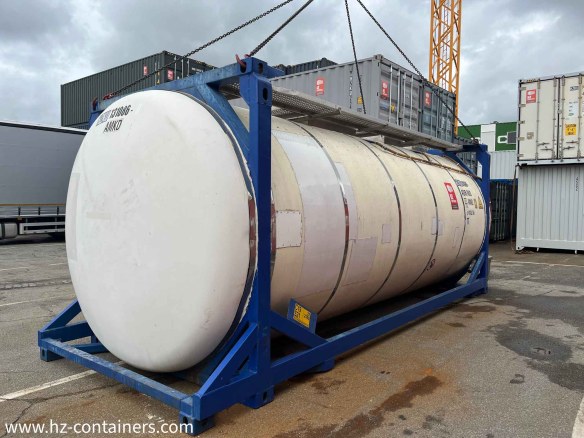
- Tank containers – for liquids and gases, must meet special technical standards (e.g., IMDG Tank Instruction, UN Portable Tank Requirements).
- IBC (Intermediate Bulk Container) – large-volume containers for bulk or liquid substances.
- Reefer containers – controlled temperature, special requirements when transporting flammables.
Inspections and Controls
- CSC label is inspected during every major handling, during reviews and inspections.
- In case of container integrity breach (corrosion, holes, deformation), transport is prohibited.
Packing, Loading, and Cargo Securing According to CTU Code
CTU Code – Key to Packing Safety
CTU Code (IMO/ILO/UNECE Code of Practice for Packing of Cargo Transport Units) is a globally recognized standard for proper packing, securing, and handling of containers.
Main Principles of CTU Code:
- Proper loading planning – consider cargo properties, routes, climatic conditions.
- Firm cargo securing – prevent movement in all directions, use of strapping belts, wooden or metal reinforcements, inflatable bags, dunnage.
- Even weight distribution – minimize risk of tipping, container damage, exceeding floor load capacity.
- Do not exceed permitted weight (payload) – obligation to verify maximum container load according to CSC label.
- Separation of incompatible substances – segregation according to compatibility (see IMDG/ADR tables).
Container Packing Checklist (Selection):
- Inspection of container interior condition (dryness, absence of cracks, residue from previous cargo)
- Verification of CSC label validity
- Verification of marking legibility and correctness
- Appropriate selection and placement of securing devices
- Verification of even weight distribution
Typical Errors and Incidents
- Poorly secured cargo leads to shifting and destruction of packing, container damage, or accidents on the road or during loading.
- Exceeding floor load capacity can lead to container destruction and loss of integrity.
- Insufficient separation of incompatible substances can cause chemical reaction, fire, or explosion.
Marking, Labeling, and Safety Information
Requirements for Labels and Placards
- Each package containing dangerous goods must be marked with a safety label, UN number, and official name (PSN).
- On the container, large safety placards (250 x 250 mm) must be placed on all sides, corresponding to the hazard class.
- For road transport ADR, orange panels are additionally used (Kemler code and UN number).
- Markings must be clearly visible, indelible, and not covered by other information.
Marking Specifics for Selected Modes:
- IMDG: Additionally requires “Marine Pollutant” marking for substances dangerous to the aquatic environment.
- Fumigated containers: Mandatory warning label marking, fumigation certificate attached, ventilation inspection.
Mandatory Documentation
Container with dangerous goods must always be accompanied by complete and properly completed documentation.
Basic Documents:
- Dangerous Goods Note / Multimodal Dangerous Goods Form
- Contains UN number, official name, class, packing group, number and type of pieces, total quantity, sender and recipient addresses, shipper’s declaration of compliance with regulations.
- Written Instructions (e.g., according to ADR)
- Document for drivers with instructions in case of accident, mandatory in a language understood by the driver.
- Container/Vehicle Packing Certificate
- Confirmation by the person responsible for loading and securing cargo in the container, mandatory for IMDG transport.
- Training and Certification Documents
- E.g., ADR driver certificate, vehicle approval certificate, record of training for workers handling dangerous goods.
Roles and Responsibilities in the Transport Chain
| Subject | Main Responsibilities |
|---|---|
| Shipper | Classification and packing of goods, issuance and delivery of correct documentation, delivery to trained carrier |
| Carrier | Provision of suitable and approved vehicle, crew training, inspection of shipment condition before transport |
| Recipient | Receipt of cargo, provision of unloading and removal of markings after container emptying |
| Loader/Packer | Proper loading, placement, and securing of cargo, issuance of Packing Certificate |
| Safety Advisor (DGSA) | Training, compliance verification, preparation of annual reports, incident resolution |
Attention! Each participant is legally responsible for compliance with their assigned obligations. Non-compliance can lead to serious consequences – from fines through prohibition of activity to criminal liability!
Special Cases and Extended Requirements
Fumigated Containers
- Must be marked with a special warning label.
- Mandatory document on fumigation performance, gas type, and ventilation period.
- Detection equipment for the given gas must be available on ship decks.
Temperature-Controlled Containers (Reefers)
- When transporting flammables, the unit must not be in operation if there is a risk of ignition.
- Units with combustion engines must be transported only “on deck” (on the ship’s deck).
Cryogenic Liquids
- Special vacuum-insulated tank containers must be used.
- Fittings must not be made of aluminum (risk of brittleness at low temperatures).
- Mandatory monitoring of holding time (MRHT), storage on ship only “on deck”.
Most Common Errors and Incident Examples
- Incorrect marking or incomplete documentation – leads to shipment detention, fines, or even accidents.
- Insufficient cargo securing – cargo shifting can cause container destruction, ship or vehicle accident, dangerous goods leak.
- Mixed transport of incompatible substances – chemical reaction, fire, explosion.
- Neglected container technical condition – substance leak, environmental contamination, ecological damage.
- Insufficient personnel training – incorrect handling, injuries, endangerment of worker or public health.
Trends and Future of Dangerous Goods Transport Regulation
- Documentation digitalization (e-DG documents, electronic labels)
- Advanced container tracking and monitoring (IoT sensors, GPS, temperature and humidity monitoring)
- Stricter environmental requirements (mandatory “Marine Pollutant” marking, packaging recycling, leak reduction)
- Development of new container types (special tank containers, lithium-ion battery containers, etc.)
Glossary of Basic Terms
- ADR – European Agreement concerning the International Carriage of Dangerous Goods by Road
- IMDG Code – International Maritime Code for the Transport of Dangerous Goods
- RID – Regulations concerning the International Carriage of Dangerous Goods by Rail
- UN number – Four-digit identifier of dangerous substance
- Packing Group (PG) – Degree of substance hazard
- CSC label – Container safety certification according to the Convention for Safe Containers
- Placard – Large safety mark measuring 250 × 250 mm
- DGSA – Safety advisor for dangerous goods transport
- Dunnage – Liners, fillings, and securing materials for cargo securing
- CTU Code – International code for packing of cargo transport units
 Czech Republic, Prague
  FREE SHIPPING


Other container news...

Corner casting steel vs aluminum
Every shipping container in the world — all 40 million of them — rests on eight critical components. Corner castings are the load-bearing blocks at each corner of an ISO shipping container, and they are the universal interface between the container and every crane, twistlock, spreader, and chassis on the planet. When you lift a container, stack it nine high on a ship, or lock it to a truck trailer, every ton of force flows through these fittings.

Construction cabin – selection, tips, dimensions and prices
Every construction project – whether a family house, a development project or a reconstruction – starts with the infrastructure. No construction manager, craftsman or investor who needs an on-site office, a changing room for workers or a safe storage for tools can do without a quality construction cell. But navigating the offer is not easy: residential containers, sanitary cells, storage modules, rental, purchase, refurbished pieces… This guide will give you answers to all the essential questions in one place.
Storage container
A storage container is a lockable steel box designed for the safe and dry storage of materials, tools, goods or equipment. Originally created as a shipping container for maritime transport, its durability and versatility have found their way onto construction sites, corporate premises and private land.
Shipping container 12m (40 ft)
A 12m shipping container is an investment that, if properly selected and cared for, will pay off in decades of trouble-free use. Whether you plan to use it as a warehouse, workshop, garage or the basis for a residential module — the key is careful selection of the condition, a thorough inspection before purchase and high-quality preparation of the base for placement. Take the time to compare offers, check the seller’s references and do not hesitate to personally inspect the container before buying. A properly selected 40-foot container will serve you reliably for many years.