
Shipping containers Bonn Germany
Shipping containers represent one of the most significant innovations in the history of global logistics. These standardized steel transport units today form the backbone of international trade – approximately 95% of all world cargo is transported by sea, and the vast majority of that is in containers. For Czech entrepreneurs, tradespeople, and individuals considering buying or renting a shipping container, Germany – and specifically the Bonn area and North Rhine-Westphalia (NRW) – represents an exceptionally attractive market with a wide selection, competitive prices, and excellent logistics infrastructure.
This guide will walk you through everything you need to know about shipping containers – from their history and technical specifications to types and certifications, as well as practical advice for purchasing in Bonn and the surrounding area.
What is a shipping container and how does it work?
Definition and basic principle
A shipping container (also known as a maritime container, transport container, or ISO container) is a standardized rectangular transport unit made of highly durable COR-TEN steel, designed for intermodal transport – i.e., transport that combines sea, rail, and road transport without the need to reload the cargo itself.
The key design element of every shipping container is the corner castings – specially shaped steel blocks with openings into which twist-locks engage. It is this ingenious mechanism that allows containers to be safely stacked in layers on ship decks, firmly anchored to rail wagons or truck chassis, and easily handled with cranes and forklifts.
The standardization of dimensions, shapes, and strength parameters according to ISO 668 and ISO 1496 standards ensures that a container manufactured in China can be loaded in Rotterdam, transshipped in Hamburg, and unloaded in Bonn – all using the same handling equipment and without any modifications.
Why shipping containers became the global standard
Before the introduction of containers, cargo was handled manually – individual crates, bags, and barrels had to be carried one by one from truck to ship. This process was extremely slow, expensive, and risky. Containerization brought several key advantages:
- Safety: The closed steel shell protects goods from damage, weather, and theft.
- Efficiency: A single crane can transship dozens of containers per hour – work that previously took hundreds of workers an entire day.
- Modularity: Containers can be stacked up to 9–10 levels high on a ship’s deck.
- Cost reduction: Containerization reduced the costs of maritime transport by more than 90% compared to the era of loose-loaded cargo.
How and when was the shipping container created?
Malcolm McLean and the revolution of 1956
The story of the shipping container begins with the frustration of one American truck driver. Malcolm P. McLean was delivering cotton packages to a port in New Jersey in 1937, and while waiting to unload his vehicle, he watched workers individually carrying each crate from trucks onto a ship. He later recalled:
“I had to wait most of the day. I sat in the truck and watched the workers load the other trucks. It struck me how much time and money I was losing there.”
This experience planted an idea in McLean’s mind: what if the entire truck body – without wheels and chassis – could simply be transferred onto a ship? Nineteen years later, on April 26, 1956, the converted tanker Ideal X sailed from the port of Newark in New Jersey with 58 aluminum containers on board, heading for Houston. The container revolution was born.
Milestones in the development of container transport
| Year | Event | Significance |
|---|---|---|
| 1956 | First voyage of Ideal X with 58 containers | Birth of commercial container transport |
| 1961 | International Organization for Standardization (ISO) begins work on standardization | Beginning of global unification of dimensions |
| 1968 | Publication of ISO 668 and ISO 1496 standards | Fixed dimensions of 20′ and 40′ containers become the standard |
| 1970 | Introduction of the TEU (Twenty-foot Equivalent Unit) | Unified metric for measuring ship and terminal capacity |
| 1980–1990 | Rise of mega-ships of the Panamax and Post-Panamax class | Capacity over 4,000 TEU |
| 2006 | Launch of the Emma Mærsk (15,500 TEU) | Beginning of the era of ultra-large container ships |
| 2020 | HMM Algeciras – 23,964 TEU, length 400 m, width 61 m | The largest container ship in the world to date |
| Present | ~43–72 million containers in circulation, ~3.67 million new ones annually | Containers form the backbone of the global economy |
It is interesting to note that China today manufactures approximately 97% of all shipping containers in the world. The entire manufacturing process – from welding steel profiles through painting to final drying – takes approximately 10–11 hours per unit in modern automated factories.
What types of shipping containers exist and what are they used for?
The market offers a wide range of specialized containers. The following table provides a comprehensive overview:
| Type of container | Designation | Description | Typical use |
|---|---|---|---|
| Standard (Dry Van) | GP / DV (General Purpose / Dry Storage) | Enclosed steel container with double-leaf doors, wooden floor | Transport of dry goods, storage, construction site cabins |
| High Cube | HC | Standard container with height increased by 1 foot (30 cm) | Bulky goods, storage, conversions to housing |
| Open Top | OT | Container with removable tarpaulin roof | Oversized cargo protruding above the container frame |
| Flat Rack | FR | Folding end walls, open sides – essentially a solid platform | Heavy machinery, construction equipment, pipes |
| Refrigerated (Reefer) | RF | Thermally insulated container with integrated cooling unit | Food, pharmaceuticals, flowers – temperature control down to −30 °C |
| Tank | TK | Cylindrical tank in a steel frame with container dimensions | Liquids, gases, chemicals, food oils |
| Bulk | BU | Container with filling openings in the roof and discharge openings in the doors | Bulk materials – grain, granulates, cement |
| Double Door / Tunnel | DD | Container with doors at both ends | Fast loading/unloading, drive-through warehouses |
In Germany and Bonn, you will most often come across standard Dry Van containers (20′ and 40′), High Cube variants, and refrigerated containers, which are in demand especially for food and pharmaceutical logistics in the Rhine region.
What are the dimensions and technical specifications of shipping containers?
Standard dimensions and load capacity
Containers are manufactured in lengths measured in feet. The most common are 20′ (approximately 6 meters) and 40′ (approximately 12 meters). Each 20′ container represents 1 TEU (Twenty-foot Equivalent Unit), which is the basic unit for measuring the capacity of ships and terminals. The following table summarizes the key parameters:
| Type of container | External dimensions (l × w × h, mm) | Internal dimensions (l × w × h, mm) | Volume (m³) | Max. load capacity (kg) | Tare weight of empty (kg) |
|---|---|---|---|---|---|
| 10′ GP | 2,991 × 2,438 × 2,591 | 2,831 × 2,352 × 2,372 | ~15.9 | ~10,000 | ~1,300 |
| 20′ DV (GP) | 6,058 × 2,438 × 2,591 | 5,898 × 2,352 × 2,393 | ~33.2 | ~28,300 | ~2,200 |
| 20′ HC | 6,058 × 2,438 × 2,896 | 5,898 × 2,352 × 2,698 | ~37.4 | ~28,200 | ~2,350 |
| 40′ DV (GP) | 12,192 × 2,438 × 2,591 | 12,032 × 2,352 × 2,393 | ~67.7 | ~28,750 | ~3,800 |
| 40′ HC | 12,192 × 2,438 × 2,895 | 12,032 × 2,352 × 2,690 | ~76.3 | ~28,620 | ~3,950 |
Note: For refrigerated (reefer) containers, expect that approximately 60 cm of internal length is reserved for the cooling unit, so the usable transport space is somewhat smaller.
Container markings – how to read the codes on the doors
Each container carries several mandatory identification elements on its doors, which indicate its origin, ownership, and technical parameters:
- Owner code (4 letters + 7 numbers): The first three letters indicate the owner (e.g., HZK), the fourth letter is the category code (U = freight container).
- ISO size and type code (4 characters): The first character determines the length (2 = 20′, 4 = 40′), the second character the height (2 = 8′6″, 5 = 9′6″ HC). The remaining two characters define the type of container (G0/G1 = GP, R1 = Reefer, P1 = Flat Rack).
- CSC plate (Convention for Safe Containers): International safety certificate with date of manufacture, date of last inspection, maximum gross weight (MGW), and permitted load capacity.
- Tare Weight / Max Load / MGW: Weight of empty container, maximum cargo weight, and maximum total weight.
Where to buy shipping containers in Bonn?
Overview of the market in Bonn and NRW
Bonn and its surroundings have an exceptionally developed container infrastructure. The city lies on the Rhine River, which is one of the key European waterway transport routes, and is located in the heart of North Rhine-Westphalia – Germany’s most populous federal state with more than 18 million inhabitants and a huge industrial base.
Prices of shipping containers in Germany (2024–2026)
The German shipping container market is one of the most competitive in Europe. Thanks to the proximity of large ports (Hamburg, Bremerhaven, Rotterdam) and a dense network of container depots, prices are generally more favorable than in the Czech Republic. Approximately:
- Used 20′ (Cargo Worthy): €850–1,600
- Used 40′ (Cargo Worthy): €1,100–2,200
- One-Way 20′ (almost new, one voyage): €1,350–2,000
- New 20′: €2,850–3,500
- Used 40′ HC: €1,600–2,800
- Rental of 10′ storage: from ~€45/month
When purchasing in Germany, you also need to take into account the cost of transport to the Czech Republic, which ranges from €300 to €800 depending on distance and type of container.
How does the transport and logistics of shipping containers in Bonn work?
Container terminal at the port of Bonn
The port of Bonn (Hafen Bonn), operated by Bonner Hafenbetriebe GmbH, underwent extensive modernization between 2008 and 2012 worth 16 million euros. Its centerpiece is an impressive container bridge with the following parameters:
- Length of bridge girder: 122 meters
- Height: 43 meters
- Load capacity: 65 tons
- Total weight of structure: 600 tons
Part of the modernization was also the extension of the port wall by 100 meters, the construction of two new crane tracks 300 meters long, and the expansion of transshipment areas. Emphasis was also placed on environmental aspects – low-noise technology and additional noise barriers ensure that operations minimally affect the surrounding residential areas.
Transport accessibility for Czech customers
Bonn is approximately 550–650 km from the Czech border (depending on the route via Rozvadov, Děčín, or Mikulov). Thanks to the excellent motorway network (A3, A61, A555), the city is easily accessible by truck. The standard delivery time for a container from the Bonn depot to the Czech Republic is 3–7 working days. For urgent cases, some suppliers offer express delivery within 48 hours.
What are alternative ways to use shipping containers?
Container houses and conversions
Shipping containers have long since exceeded their original purpose. Thanks to their modular design, strength, and relatively low cost, they have become a popular material for container architecture. Used containers can be used to build:
- Family houses and tiny houses – a single 40′ HC container offers a usable area of approximately 28 m². By joining multiple units, a full-fledged home can be created.
- Construction site cabins and mobile offices – equipped with insulation, electrical installations, windows, and air conditioning.
- Pop-up shops and cafés – quickly realizable commercial spaces.
- Mobile workshops and warehouses – secure storage of tools and materials directly on the construction site.
In Germany, container structures are subject to building law (BauGB) and the relevant state regulations (Landesbauordnung NRW). Before implementation, it is necessary to verify whether the project requires a building permit or whether it falls into the category of buildings without a permit (e.g., temporary structures up to a certain volume).
Storage and commercial use
In Bonn itself, there is a highly developed market for self-storage and storage containers. Companies such as Bonn Storage Service or Baumann Lagerung offer container rentals located in secured areas with a 24-hour camera system. Prices start from €30 per month for a basic storage unit.
What certifications must a shipping container meet?
When buying a used or new container, you will come across several key certifications. Understanding them will help you choose a quality and safe product:
- CSC (Convention for Safe Containers): An international agreement from 1972 requires that every container used for international transport pass a strength test and carry a valid CSC plate. The plate indicates the date of manufacture, the date of the last periodic inspection, and the technical parameters. Without a valid CSC plate, the container cannot be legally transported by sea.
- ISO 668: Defines the external dimensions and tolerances of Series 1 containers. Without this standard, global interchangeability of containers between different manufacturers and carriers would not exist.
- ISO 1496: Specifies the technical requirements and test methods for individual types of containers – floor strength, wall resistance, water resistance, corner casting resistance.
- Cargo Worthy (CW): A commercial designation for a used container that is still in such technical condition that it meets the requirements for maritime transport. CW containers undergo a detailed inspection – the integrity of the shell, door functionality, sealing condition, and water resistance are checked. It is the highest category of used containers.
- Wind and Water Tight (WWT): A container that is wind and water resistant, but does not have to meet all the stricter CSC requirements for maritime transport. Suitable for storage on land.
Frequently asked questions (FAQ)
How do I recognize a quality used shipping container?
Check the CSC plate (inspection validity), the integrity of the steel shell (no punctures, minimal corrosion), the functionality of the doors and seals, the condition of the wooden floor (no rot, mold, or mechanical damage), and overall water resistance. Serious sellers allow personal inspection and provide detailed photographs.
How is a shipping container transported?
Containers are transported using a hook lift, hydraulic arm, or crane. For standard 20′ and 40′ containers, a truck with an appropriate chassis is sufficient. The condition is a reinforced and level surface at the unloading site, accessible for heavy equipment.
Can a shipping container be used as permanent housing?
Yes, but it requires building modifications – primarily quality insulation (mineral wool, PUR foam), installation of windows and doors, electrical installations, water and heating distribution. In the Czech Republic as well as in Germany, a container house is subject to building law – if the building exceeds 25 m² and a height of 5 meters (in the Czech Republic), a building permit is required. Smaller buildings up to 25 m² may fall into the category of buildings requiring only notification or zoning consent. We always recommend consulting with the local building authority.
What is the difference between a “One-Way” and “Cargo Worthy” container?
One-Way (also known as “new one trip”) is a container that has completed only one sea voyage from a Chinese factory to a European port. It is practically new, with minimal signs of use. Cargo Worthy is a used container that has completed multiple voyages, but still meets the strict CSC standards for further maritime transport. One-Way is more expensive, but closer to new condition. Cargo Worthy is more cost-effective and still of very high quality.
Why is Bonn a strategic location for purchasing containers?
Bonn lies on the Rhine – one of the most important European waterways – and has a modern container terminal with a transshipment capacity of 65 tons. It is located in the heart of industrial NRW, where many logistics companies and container depots are based. For Czech customers, the distance from Bonn to the Czech Republic is comparable to the journey to Hamburg, while the local market offers a wider selection and often lower prices than Czech depots.

 Bonn, Germany
  WITHOUT SHIPPING
 Other container news...

New shipping containers
If you are currently considering purchasing a new shipping container, you are not alone. While just twenty years ago containers were used almost exclusively for maritime transport, today they have found their way into construction, storage, business, and even housing. This growing popularity brings with it a host of questions: Which type should you choose? How much does it cost? How do you recognize quality? How can you avoid falling victim to scammers?
New sea shipping containers
If you are currently considering purchasing a new shipping container, you are not alone. While just twenty years ago containers were used almost exclusively for maritime transport, today they have found their way into construction, storage, business, and even housing. This growing popularity brings with it a host of questions: Which type should you choose? How much does it cost? How do you recognize quality? How can you avoid falling victim to scammers?

6m shipping container
Are you thinking about buying a 6-meter shipping container but aren’t sure what to look for? You are not alone—this 20-foot container is the best-selling size on the Czech market, and the differences between various types, conditions, and prices can be significant. In this guide, you will find everything you need to know: from exact dimensions and a comparison of categories (such as “one-way,” refurbished, and “Cargo Worthy”) to current prices and shipping advice.
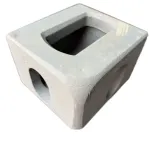
Corner casting steel vs aluminum
Every shipping container in the world — all 40 million of them — rests on eight critical components. Corner castings are the load-bearing blocks at each corner of an ISO shipping container, and they are the universal interface between the container and every crane, twistlock, spreader, and chassis on the planet. When you lift a container, stack it nine high on a ship, or lock it to a truck trailer, every ton of force flows through these fittings.