
Shipping Containers Bremerhaven Germany
Bremerhaven represents one of the most significant hubs of global container shipping. This northern German port handles millions of container units annually and serves as a key gateway for goods flowing from Asia to Europe – and vice versa. In the following guide, we take a detailed look at everything you need to know about shipping containers in Bremerhaven: from history and technical parameters, through a comparison with Hamburg, to practical information on transport to the Czech Republic.
What is the Port of Bremerhaven and why is it key for shipping containers?
The Port of Bremerhaven is the fourth-largest container port in Europe and the second-largest in Germany. It lies on the northwest coast of the country, approximately 32 kilometers from the open North Sea, at the mouth of the River Weser. Together with Bremen, located sixty kilometers away, it forms the federal state of the Free Hanseatic City of Bremen – a unique arrangement where two cities share a single federal identity.
Location and geographical significance
The strategic location of Bremerhaven is one of its greatest assets. Unlike Hamburg, which lies approximately 100 kilometers up the Elbe, Bremerhaven has direct and fast access to deep water. While ships bound for Hamburg must navigate a challenging, tide-affected channel, vessels heading to Bremerhaven reach the open sea in less than an hour of sailing. This geographical advantage means that even the world’s largest container ships – so-called ULCVs (Ultra Large Container Vessels) with a length of over 400 meters – can safely berth in Bremerhaven without restrictions imposed by tides.
Definition: ULCV (Ultra Large Container Vessel) is a designation for the largest container ships in the world, capable of transporting more than 20,000 TEU. Bremerhaven is among the few European ports that can fully service these giants.
Key statistics and capacity
The following table summarizes the key parameters of the port:
| Parameter | Value |
|---|---|
| Annual transshipment capacity | 5–6 million TEU |
| Length of quay | 4,680–4,900 meters (the longest in Europe) |
| Number of simultaneously berthed ships | up to 14 large container ships |
| Maximum draft | 16 meters |
| Open storage area | 3 million m² |
| Covered warehouses | 30,000 m² |
| Freezer areas | 8,000 m² |
| Total port length | 17 kilometers |
| Employment | approximately 80,000 jobs |
In 2024, the port handled 4.45 million TEU, representing a year-on-year increase of 6.3%. The total theoretical capacity, according to operators, reaches up to around 9 million TEU.
Significance for European and global logistics
Bremerhaven is not just a German matter – it is a key hub of global trade. The port is connected to more than 130 ports worldwide and forms a backbone point for supply chains ranging from Chinese factories to European consumers. In addition to container shipping, Bremerhaven is also the largest European transshipment point for automobiles – more than 1.7 million vehicles pass through it annually, including a growing volume of Chinese electric vehicles from brands such as BYD, NIO, and XPeng.
What is the history of the Bremerhaven container port?
The history of Bremerhaven extends much further back than the container revolution of the 20th century – and understanding this history helps explain why the port has become what it is today.
From a fishing settlement to the largest container terminal
The oldest written record of the area of today’s Bremerhaven dates from 1139. The port itself, however, was established much later – in 1827, when the city of Bremen was forced to look for a new transshipment point closer to the sea. The original Bremen port on the River Weser was gradually ceasing to meet the growing drafts of seagoing ships. The newly founded port was given the eloquent name Bremerhaven – “Bremen’s harbor.”
During the 19th and the first half of the 20th century, Bremerhaven served primarily as a fishing and trading port, including a significant role in transatlantic emigration – it was from here that millions of Europeans sailed to America. A fateful turning point came in the 1960s with the advent of containerization.
Milestones in the development of container shipping
The first containers began to appear in European ports in the late 1960s. Bremerhaven responded to this revolution quickly and ambitiously. In 1970, the first specialized container terminal was completed here. During the following decades, the port underwent dramatic expansion:
- 1971: Commissioning of the first container terminal
- 1980s: Massive expansion of capacity, construction of new transshipment points
- 1990s: The port establishes itself as the fourth-largest in Europe
- 2010: Container-Terminal Bremerhaven becomes the largest continuous container terminal in the world
- 2024–2025: Announcement of an investment program worth 3 billion euros
While in 1997 approximately 3 million TEU passed through Bremerhaven, by 2007 this number had more than doubled – and growth continues to this day.
How does Bremerhaven differ from the Port of Hamburg?
The choice between Hamburg and Bremerhaven is among the most common decisions faced by importers and exporters trading with Germany. Both ports are large, both are modern – yet they differ in fundamental respects.
Geographical differences and accessibility
Hamburg lies approximately 100 kilometers from the North Sea, upriver on the Elbe. Sailing from the open sea to Hamburg’s terminals takes several hours and is tide-dependent – despite extensive dredging, the depth of the navigation channel remains a limiting factor for the largest ships.
Bremerhaven, in contrast, is only 32 kilometers from the open sea. Ships reach the terminals in less than an hour, and without tidal restrictions. This means faster ship turnaround and fewer delays – an advantage especially for time-sensitive shipments.
Capacity comparison
Hamburg handles approximately 7.8 million TEU annually (2024), Bremerhaven 4.45 million TEU. Hamburg is thus larger in volume – but Bremerhaven is growing faster (6.3% vs. 0.9% year-on-year in 2024) and its theoretical capacity reaches up to 9 million TEU.
Specialization in cargo types
| Factor | Hamburg | Bremerhaven |
|---|---|---|
| Port type | River (Elbe), 100 km from the sea | Coastal, 32 km from the sea |
| Containers (2024) | 7.8 million TEU | 4.45 million TEU |
| Max. draft | ~15.7 m | ~16 m |
| Rail share | 50.2% of container shipping | Good connection, lower share |
| Automobiles (RoRo) | Limited | 1.7+ million vehicles/year (largest in Europe) |
| Main alliances | Gemini, MSC, Ocean Alliance | Gemini, Premier Alliance |
| Hinterland | Germany, Eastern Europe, Scandinavia | Germany, Nordic countries, Central and Western Europe |
Summary: Hamburg is a rail giant with larger volume, but limited access for the largest ships. Bremerhaven scores on speed, deep-water access, and dominance in automotive logistics.
What types of shipping containers are handled in Bremerhaven?
Bremerhaven handles practically all standardized types of maritime containers. For businesses and individuals considering the purchase or rental of a container, it is important to know the basic categories.
Standard containers (20ft, 40ft, 45ft)
The most common units are dry containers in lengths of 20 feet (6.1 m), 40 feet (12.2 m), and 45 feet (13.7 m). The standard width is 8 feet (2.44 m) and the height is 8 feet 6 inches (2.59 m), with the “High Cube” version offering a height of 9 feet 6 inches (2.90 m). Bremerhaven handles all these variants in massive quantities – and thanks to its capacity, it ranks among the most flexible ports for purchasing and renting used containers.
Special containers
In addition to standard dry containers, the port has infrastructure for:
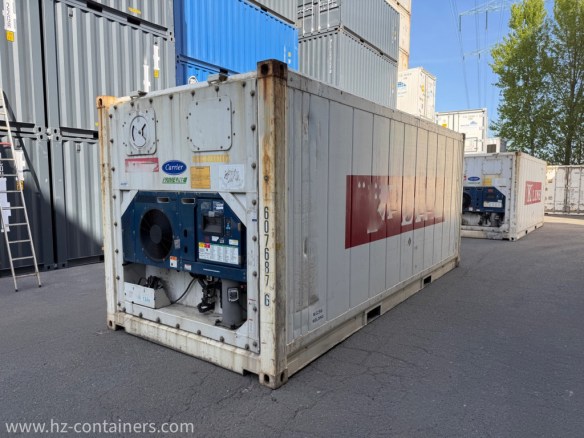
- Refrigerated (reefer) containers – with 8,000 m² of freezer area, Bremerhaven is among the leaders in Europe
- Tank containers – for liquid and gaseous cargo
- Open-top containers – with a removable roof for oversized cargo
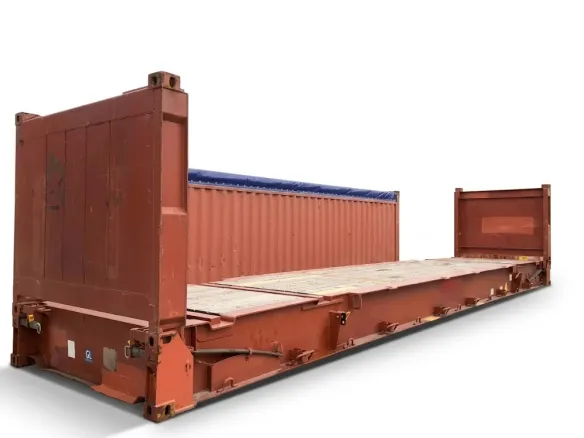
- Flat rack containers – with folding sides for heavy and bulky goods
Containers for dangerous goods
Bremerhaven has specialized zones for handling dangerous goods (ADR/RID). Containers for dangerous goods – often referred to as IMO containers – are subject to stricter safety standards, and the port has dedicated areas and personnel for their handling. In the past, specialized containers for dangerous goods (e.g., the Denios MC4320 type) have also been auctioned here, testifying to the diversity of cargo passing through the port.
Practical information: Regular auctions of used maritime containers are held in Bremerhaven. Prices range from hundreds to thousands of euros depending on size and condition – a 10-foot container can be purchased for just a few hundred euros, a 40-foot one for 1,500–3,000 euros. Loading is charged separately (20′ container ~50 €, 40′ container ~85 €).
How does container transport from Bremerhaven to the Czech Republic work?
The Czech Republic is a landlocked country, and therefore efficient connection to seaports is absolutely essential. Bremerhaven is one of the key gateways to world trade for Czech importers and exporters.
Rail connection (Mělník–Bremerhaven)
Rail Cargo Group (RCG), the freight division of the Austrian Federal Railways (ÖBB), operates a regular intermodal TransFER service on the Mělník–Hamburg/Bremerhaven route. This connection enables the transport of containers of all common sizes (20ft, 40ft, 45ft) directly from the Czech interior to the North German ports. The terminal in Mělník – operated by Rail Cargo Operator – CSKD s.r.o. – functions as a key transshipment point for container transport between the Czech Republic and the North Sea.
Rail represents the most environmentally and economically advantageous option for long-distance container transport – one train replaces up to 40 trucks and significantly reduces the carbon footprint of the transport chain.
Road transport
For smaller volumes or time-critical shipments, truck transport remains relevant. The distance between Prague and Bremerhaven is approximately 650–700 kilometers, representing roughly 7–8 hours of driving. The main route runs along the D8 motorway (Prague–Dresden) and continues via the German motorway network A2/A7/A27.
Combined transport and logistics chains
In practice, a combination of maritime and rail, or maritime and road transport, is most often used. The container arrives by ship from Asia to Bremerhaven, where it is unloaded and then travels by rail to an inland terminal (Mělník, Prague, Pardubice), from where it is distributed by truck to the final recipients. This model – known as combined (intermodal) transport – optimizes costs, speed, and environmental footprint.
What are the current investments and future of the Port of Bremerhaven?
Bremerhaven is not standing still. At a time when global trade is undergoing fundamental changes and pressure on logistics efficiency continues to grow, the port is investing massively in its future.
Planned expansion worth 3 billion euros
The largest modernization program in the history of the port accounts for an investment of 3 billion euros. The plans include:
- Expansion and modernization of existing berths
- Construction of new storage capacities
- Strengthening rail connections to the hinterland
- Adaptation to a new generation of container ships with a capacity of over 24,000 TEU
The goal is to ensure that Bremerhaven remains competitive with Rotterdam, Antwerp, and Hamburg for decades to come.
Automation and digitalization
Bremerhaven is actively introducing elements of automation – from automatic gantry cranes to digital management of transshipment operations. MSC Gate is among the terminals with the highest degree of automation in Europe, and other terminals (Eurogate, NTB) are gradually following. Digitalization of processes – including electronic data interchange (EDI), predictive load analysis, or real-time container tracking – is a key pillar of the strategy for the coming years.
Environmental initiatives
Under the pressure of European regulation and its own sustainability goals, Bremerhaven is investing in greening its operations. This includes the electrification of cranes and handling equipment, the introduction of shore electrical connections for berthed ships (so-called cold ironing), the expansion of rail transport as a more environmentally friendly alternative to trucks, and pilot projects for the use of hydrogen in port logistics.
Frequently asked questions
How many containers pass through the Port of Bremerhaven annually?
In 2024, the Port of Bremerhaven handled 4.45 million TEU (Twenty-foot Equivalent Unit), representing a year-on-year increase of 6.3%. Long-term theoretical capacity is around 9 million TEU. For comparison – Hamburg handled 7.8 million TEU in the same year, Rotterdam approximately 13.4 million TEU.
How does a container get from Bremerhaven to the Czech Republic?
The most efficient route is the Mělník–Hamburg/Bremerhaven rail connection operated by Rail Cargo Group. Containers are transported by rail to the terminal in Mělník and distributed from there by truck. Alternatively, direct truck transport can be used (distance approx. 650–700 km, 7–8 hours of driving) via the D8/A2/A7/A27 motorway network.
Why is Bremerhaven more advantageous than Hamburg for large container ships?
Bremerhaven is only 32 km from the open sea and has a depth of up to 16 meters without tidal restrictions. Hamburg is approximately 100 km up the Elbe and, despite dredging, is limited to a maximum draft of around 15.7 meters. For the largest ULCV-class container ships, Bremerhaven is therefore technically more accessible and faster.
What types of containers can be purchased in Bremerhaven?
In Bremerhaven, standard dry containers (10ft, 20ft, 40ft, 45ft), High Cube variants, refrigerated (reefer) containers, tank containers, open-top containers, flat rack containers, and specialized containers for dangerous goods are available. Used containers can be purchased through regular auctions and direct sales from depot operators.
What is the history of the Port of Bremerhaven?
The oldest record of the area dates from 1139. The port itself was founded in 1827 by the city of Bremen, which needed a new transshipment point closer to the sea. Originally, it served as a fishing and emigration port. The container era began in the 1970s, when the first specialized container terminal was built, and since then Bremerhaven has continuously grown.
What environmental initiatives is the port introducing?
Bremerhaven is investing in the electrification of handling equipment, introducing shore electrical connections for berthed ships (cold ironing), expanding rail transport as a low-emission alternative to trucking, and experimenting with hydrogen technologies in port logistics. These initiatives are part of a broader sustainability strategy responding to European climate goals.
 Hamburg, Germany
  WITHOUT SHIPPING

Other container news...

Obligation to Check Tightness When Selling a Reefer Container
Who is responsible for the refrigerant leak check when selling a refrigerated container? Find out what obligations the seller has at the time of handover and why they must provide a PTI report along with the technical data plate. Learn which regulatory requirements and F-gas record-keeping duties become the sole responsibility of the new owner.

New shipping containers
If you are currently considering purchasing a new shipping container, you are not alone. While just twenty years ago containers were used almost exclusively for maritime transport, today they have found their way into construction, storage, business, and even housing. This growing popularity brings with it a host of questions: Which type should you choose? How much does it cost? How do you recognize quality? How can you avoid falling victim to scammers?
New sea shipping containers
If you are currently considering purchasing a new shipping container, you are not alone. While just twenty years ago containers were used almost exclusively for maritime transport, today they have found their way into construction, storage, business, and even housing. This growing popularity brings with it a host of questions: Which type should you choose? How much does it cost? How do you recognize quality? How can you avoid falling victim to scammers?

6m shipping container
Are you thinking about buying a 6-meter shipping container but aren’t sure what to look for? You are not alone—this 20-foot container is the best-selling size on the Czech market, and the differences between various types, conditions, and prices can be significant. In this guide, you will find everything you need to know: from exact dimensions and a comparison of categories (such as “one-way,” refurbished, and “Cargo Worthy”) to current prices and shipping advice.