
Global Warming Potential (GWP) and Shipping Containers
This extensive article provides a detailed and technically precise explanation of key concepts related to Global Warming Potential (GWP) in the field of maritime transport, with an emphasis on refrigerated shipping containers (reefers). It offers a comprehensive view of the connection between refrigeration technology, legislative trends, environmental challenges, and technological developments in container logistics.
GWP and Shipping Containers – Detailed Introduction
The relationship between GWP and shipping containers is crucial mainly for refrigerated containers(“reefers”), which ensure the transport of perishable foods, pharmaceuticals, or chemicals. These containers use refrigeration circuits with refrigerants whose leaks and energy consumption fundamentally affect the environmental footprint of the entire sector.
Why is GWP crucial?
- GWP (Global Warming Potential) expresses how many times more heat a given gas traps in the atmosphere compared to CO₂ (reference value 1) over a certain period (most often 100 years). It thus enables comparison of the impacts of different refrigerants and other greenhouse gases on climate change.
- Refrigerants used in containers – historically primarily HFCs (hydrofluorocarbons) – often have a GWP in the hundreds to thousands.
Technology of Refrigerated Containers – Detailed Description
Construction and Operating Principle
| Component | Function |
|---|---|
| Thermally insulated shell | Minimizes heat losses between the external and internal environment |
| Compressor | Compresses the refrigerant, increasing its temperature and pressure |
| Condenser | The refrigerant is cooled and condensed here, forming a liquid |
| Expansion valve | Reduces the pressure of the liquid refrigerant, enabling its evaporation |
| Evaporator | The refrigerant evaporates here and absorbs heat from the interior of the container |
| Electronic control | Monitors and regulates temperature, humidity, alarms, and energy consumption |
| Backup power source | Enables operation even outside the ship (container terminal, rail, road) |
Operating Parameters
- Temperature range: -30 °C to +30 °C (most reefers)
- Service life: On average 12–18 years in maritime transport, afterwards often used as stationary storage
- Energy consumption: High, depends on ambient conditions, insulation, and system efficiency
- Types of refrigeration systems: Single-stage and two-stage circuits for different temperature regimes
Maintenance and Legislation
- Regular leak checks of refrigeration circuits (preventing refrigerant leaks)
- Certification of service technicians under European legislation (EU Regulation 2024/573, formerly 517/2014)
- Mandatory record-keeping of maintenance, leak logs, and refrigerants used
Refrigerants and Their GWP – Historical Development, Trends, Alternatives
History of Refrigerants in Containers
- CFCs and HCFCs (e.g. R-12, R-22, R-502): Highly harmful to the ozone layer, high ODP, already banned under the Montreal Protocol (1987)
- HFCs (e.g. R-404A, R-134a): Zero ODP, but extremely high GWP (R-404A = 3922, R-134a = 1430), gradual phase-down in the EU and elsewhere between 2020–2030
- Alternative refrigerants (HFOs, natural): A response to climate legislation and pressure for low-carbon solutions
Key Refrigerants in Marine Refrigeration Technology
| Refrigerant | Type | GWP | ODP | Properties/Notes |
|---|---|---|---|---|
| R-404A | HFC | 3922 | 0 | Excellent thermodynamic properties, now being phased down in the EU, allowed only for servicing older equipment |
| R-134a | HFC | 1430 | 0 | Standard for reefers, still dominant, but under pressure to be replaced |
| R-452A | HFO/HFC mix | ~2140 | 0 | Replacement for R-404A, lower GWP, compatible with most existing equipment |
| R-513A | HFO/HFC mix | 573 | 0 | Significantly lower GWP, possibility of direct “drop-in” replacement, still synthetic |
| R-1234yf | HFO | <1 | 0 | Ultra-low GWP, mildly flammable, higher price, promising for the future |
| R-744 (CO₂) | Natural | 1 | 0 | Non-flammable, high pressures, high efficiency, more demanding technically and in terms of investment |
| R-290 (propane) | Natural | 3 | 0 | High efficiency, very low GWP, flammable (requires safety measures and standards) |
Legislation and Regulations
- EU Regulation No. 2024/573: Tightens limits for refrigerant GWP, sets phase-down stages for F-gases – ban on new equipment with GWP > 1500 from 2025 (in some applications), ban on servicing equipment with GWP > 2500 from 2030
- Kigali Amendment to the Montreal Protocol: Global reduction of production and consumption of HFC refrigerants
- Obligations of operators: Monitoring, maintenance, record-keeping, and gradual retrofit of existing equipment
Greenhouse Gas Emissions from Refrigerated Containers
Direct and Indirect Emissions
- Direct emissions: Leaks of refrigerants (especially in the event of failures, wear of seals, poor maintenance). Annual leakage rates can reach up to 25% of the charge in older systems.
- 1 kg of R-404A = 3922 kg CO₂e (equivalent climate impact!)
- Indirect emissions: Electricity consumption required to operate the refrigeration system (generated mainly by burning fossil fuels on ships – diesel generators).
- The energy efficiency of the system, container insulation, and type of refrigerant significantly affect total emissions
Ways to Reduce Emissions
- Switching to refrigerants with low/ultra-low GWP (R-513A, R-1234yf, R-744, R-290)
- Increasing energy efficiency (better insulation, more efficient compressors, electronic control)
- Digitalization of operations (monitoring, predictive maintenance, remote diagnostics)
- Use of renewable energy sources for power supply (container terminals equipped with solar panels)
Retrofit of Refrigeration Equipment
Retrofit means technical modernization and transition to more environmentally friendly refrigerants without the need to completely replace the equipment. It is essential for:
- Extending the service life of existing containers
- Reducing operating costs and emissions
- Ensuring compliance with legislation (EU, IMO)
Key retrofit steps:
- Analysis of the existing refrigeration system and selection of a suitable replacement refrigerant
- Necessary modification of components (seals, valves, control electronics)
- Certification and training of operators, record-keeping
- Subsequent monitoring of leaks and efficiency
Overview of Key Terms
Global Warming Potential (GWP)
- Measures the long-term climate impact of a greenhouse gas relative to CO₂
- Values are regularly updated by the IPCC (Intergovernmental Panel on Climate Change)
- GWP is essential for environmental policy, emissions trading, and legislative limits
Refrigerated Containers
- Intermodal transport units with their own refrigeration unit
- Key for global supply chains in food, pharmaceuticals, chemicals, etc.
- Must withstand extreme operating conditions (temperature, humidity, vibration)
Alternative Refrigerants
- New generation of refrigerants – HFOs, natural (CO₂, propane)
- Goal: combination of low GWP, zero ODP, high efficiency, and operational safety
Environmental Impact
- Not only GWP, but also other effects (e.g. formation of TFA from some HFOs – potential risk for aquatic ecosystems)
- Comprehensive life-cycle assessment of equipment and refrigerant is crucial for sustainability
International Maritime Organization (IMO)
- Sets global rules for shipping, including environmental aspects (CII, EEXI, MARPOL)
- Reducing the carbon footprint, driving innovation in propulsion and refrigeration technology
Current Trends and the Future
- The EU and the world are moving towards a ban on high-GWP F-gases by 2050
- Rapid development of technologies for natural refrigerants (CO₂, R-290) and HFOs with ultra-low GWP
- Manufacturers (Carrier, Maersk Container Industry, Thermo King) already offer new generations of refrigeration units optimized for environmentally friendly refrigerants
- Digitalization of operations and remote monitoring to minimize leaks and optimize energy consumption
- Training of operators, modernization of service methods, and strict compliance with legislation are of fundamental importance
Table: Overview of Legislative Milestones
| Year | Event / Regulation |
|---|---|
| 1987 | Montreal Protocol (gradual ban on CFCs/HCFCs) |
| 2016 | Kigali Amendment (global limitation of HFCs) |
| 2014 | EU Regulation 517/2014 (F-gases, quotas, monitoring) |
| 2024 | EU Regulation 2024/573 (tightening GWP limits, ban on some refrigerants) |
| 2025+ | Ban on new equipment with GWP > 1500 in some applications, obligation to state GWP on equipment labels |
| 2030 | End of servicing equipment with GWP > 2500 in the EU |
| 2050 | End of F-gases in the EU |
Examples of Environmentally Friendly Technologies in Practice
- Maersk Star Cool – R-513A: Pioneering system with low GWP, optimized for energy efficiency and leak minimization
- Carrier NaturaLINE – CO₂: First mass-produced container system using natural refrigerant CO₂, proven in operation under extreme conditions
- Thermo King Advancer – R-452A: Advanced unit with lower GWP, optimized for retrofit of older systems
 Brno, Czech Republic
  FREE SHIPPING
Other container news...
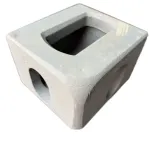
Corner casting steel vs aluminum
Every shipping container in the world — all 40 million of them — rests on eight critical components. Corner castings are the load-bearing blocks at each corner of an ISO shipping container, and they are the universal interface between the container and every crane, twistlock, spreader, and chassis on the planet. When you lift a container, stack it nine high on a ship, or lock it to a truck trailer, every ton of force flows through these fittings.

Construction cabin – selection, tips, dimensions and prices
Every construction project – whether a family house, a development project or a reconstruction – starts with the infrastructure. No construction manager, craftsman or investor who needs an on-site office, a changing room for workers or a safe storage for tools can do without a quality construction cell. But navigating the offer is not easy: residential containers, sanitary cells, storage modules, rental, purchase, refurbished pieces… This guide will give you answers to all the essential questions in one place.
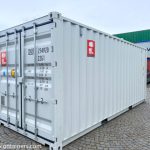
Storage container
A storage container is a lockable steel box designed for the safe and dry storage of materials, tools, goods or equipment. Originally created as a shipping container for maritime transport, its durability and versatility have found their way onto construction sites, corporate premises and private land.
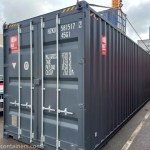
Shipping container 12m (40 ft)
A 12m shipping container is an investment that, if properly selected and cared for, will pay off in decades of trouble-free use. Whether you plan to use it as a warehouse, workshop, garage or the basis for a residential module — the key is careful selection of the condition, a thorough inspection before purchase and high-quality preparation of the base for placement. Take the time to compare offers, check the seller’s references and do not hesitate to personally inspect the container before buying. A properly selected 40-foot container will serve you reliably for many years.