Refrigerant R-452A
Refrigerant R-452A, also known under the trade name Opteon™ XP44, represents the latest generation of refrigerants designed to replace older, environmentally problematic mixtures, particularly R-404A and R-507A. It is a zeotropic mixture from the HFO/HFC category (hydrofluoroolefins and hydrofluorocarbons), which was developed with the aim of significantly reducing the global warming potential (GWP) without compromising the performance or reliability of cooling systems.
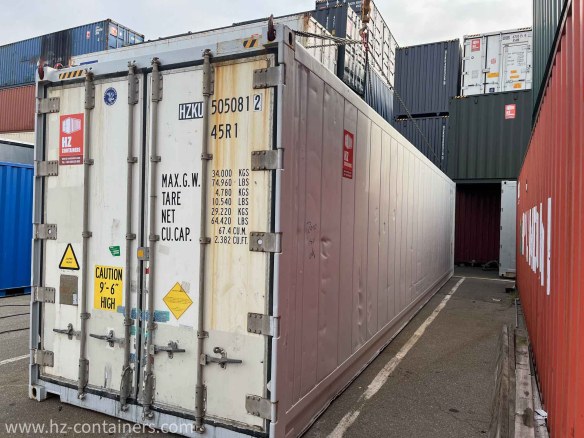
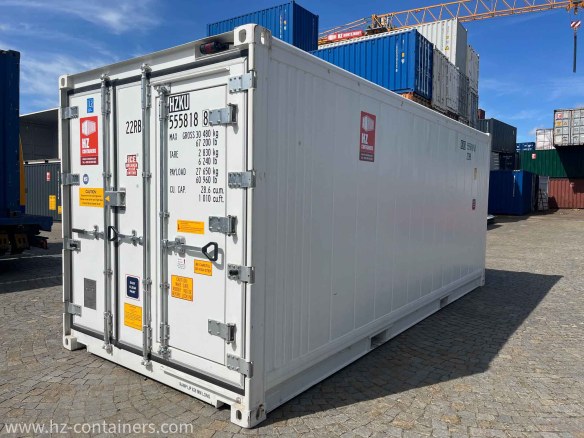
R-452A is classified according to ASHRAE 34 standard into safety category A1 (low toxicity, non-flammable), which predestines it for widespread use, particularly in transport refrigeration: refrigerated and frozen cargo vehicles, shipping containers (reefers), as well as in commercial and smaller industrial cooling systems.
Key characteristics:
- Direct replacement for R-404A/R-507A – so-called “drop-in” or retrofit, often without the need for major system modifications.
- Significantly lower GWP – compared to R-404A, GWP is reduced by approximately 45%25.
- Safe use – non-toxic, non-flammable, suitable for mobile and public spaces.
- Compatible with commonly used materials, components and POE oil.
Chemical composition and physical properties
R-452A is a three-component mixture that precisely combines the properties of individual components to achieve optimal operating parameters and safety.
| Component | Chemical name | Weight percentage | Function in mixture |
|---|---|---|---|
| R-32 | Difluoromethane | 11%25 | Increases cooling capacity and energy efficiency |
| R-125 | Pentafluoroethane | 59%25 | Reduces flammability, stabilizes mixture |
| R-1234yf | 2,3,3,3-tetrafluoropropene | 30%25 | Significantly reduces GWP, increases environmental sustainability |
Overview of main technical parameters
| Property | Value | Unit | Description |
|---|---|---|---|
| ASHRAE nomenclature | R-452A | – | Standardization of name |
| Trade name | Opteon™ XP44 | – | Manufacturer Chemours |
| GWP (100 years, AR4) | 2141 | – | Compared to R-404A (GWP 3922) reduction of approximately 45%25 |
| ODP | 0 | – | Contains no chlorine, does not damage ozone layer |
| Safety class | A1 | – | Non-toxic, non-flammable |
| Type of mixture | Zeotropic | – | Temperature glide approximately 3 K |
| Boiling point (1 bar) | -47.0 | °C | Comparable to R-404A |
| Critical temperature | 74.9 | °C | – |
| Critical pressure | 40.02 | bar | – |
| Oil compatibility | POE | – | Polyol ester oils (same as R-404A) |
Temperature glide:
A zeotropic mixture means that during evaporation and condensation, there is a small temperature glide (approximately 3 K), which requires proper procedures when charging (always in liquid phase) and increased attention during maintenance and leak detection.
Historical context and purpose of development

The development of refrigerant R-452A directly responded to increasingly stringent European and global legislation:
- EU F-gas Regulation (517/2014): Prohibits the use of HFCs with high GWP in new equipment and gradually restricts their market availability.
- Kigali Amendment to the Montreal Protocol (2016): Extends climate protection to HFC gases, establishes global quotas.
The main objectives were:
- Reduce GWP without major compromises in performance.
- Enable simple retrofit (transition) without the need for extensive equipment modifications.
- Maintain maximum safety and compatibility with used materials and technologies.
R-452A is perceived as a transitional solution – it enables compliance with current legislative requirements while extending the service life of existing equipment.
Main applications and areas of use
Transport refrigeration (main area)
- Refrigerated and frozen vehicles (TRU)
- Shipping containers (reefers)
- Carrier, Thermo King, Zanotti units – authorized use of R-452A in new and existing equipment
- Direct expansion, displacement compressors, medium and low temperatures
Commercial and industrial refrigeration
- Refrigerated and frozen display cases in supermarkets
- Refrigerated warehouses, ice makers, smaller industrial applications
- Suitable especially where flammable refrigerants cannot be used (R-290, R-32, R-454B)
Practical advantages
- Very similar operating pressures and performance as R-404A/R-507A
- Possibility of retrofit without replacement of most components
- Proven in thousands of applications throughout Europe
Advantages of refrigerant R-452A
Overview of advantages:
| Advantage | Practical impact |
|---|---|
| Significantly lower GWP (2141) | Meets current emission limits, easier purchase of F-gas quotas |
| Non-flammable (A1) | Maximum safety even in mobile and public applications |
| Retrofit without major modifications | Cost savings, quick transition, minimal operational risk |
| Compatibility with POE oil | No need to change oils when transitioning from R-404A |
| Lower compressor discharge temperature | Longer compressor life, lower failure risk, lower thermal load |
| Stable and proven behavior in practice | Operating pressures, temperatures, cooling capacity almost identical to R-404A |
| Guaranteed service support | Availability throughout the EU, trained service personnel |
Practical example:
According to operational tests, R-452A achieves almost identical performance parameters as R-404A in transport refrigeration, in some applications even with better efficiency and lower compressor discharge temperature.
Disadvantages and limitations
Overview of disadvantages:
| Disadvantage | Impact/note |
|---|---|
| Still relatively high GWP | In the long term, it will be necessary to transition to refrigerants with GWP < 150 |
| Zeotropic mixture (temperature glide) | Requires precise charging and proper maintenance procedures, risk of composition change in case of leak |
| Higher price and patent protection | Higher acquisition costs than obsolete refrigerants; dependence on manufacturer |
| Not a final solution for new equipment | In new installations, legislation and market push towards even more environmentally friendly options (CO₂, R-290, HFO with GWP < 150) |
Important technical note:
In case of partial charge loss, the composition of the mixture may change, which affects cooling capacity and equipment life. It is therefore necessary to always replenish refrigerant in liquid phase and use precise weighing.
Environmental and safety aspects
Environmental impact
- GWP 2141 represents a significant improvement over older mixtures, but it is still a medium-term solution.
- No ozone layer damage (ODP = 0)
- Minimizing leaks is key to climate protection and compliance with legislative obligations.
Safety
- Non-toxic, non-flammable (A1)
- In case of larger leaks, it can displace oxygen, ventilation of enclosed spaces is necessary.
- Handling only by certified technicians, obligation to keep records according to F-gases.
- Obligation to use detection systems in facilities with larger amounts of refrigerant.
Leak detection and safety systems
Why is leak detection critical?
- Refrigerant leaks have a negative impact on the environment, equipment performance and operating costs.
- Obligation to record and detect leaks according to EU F-gas Regulation.
Types of detectors for R-452A:
| Technology | Advantage | Disadvantage | Example devices |
|---|---|---|---|
| NDIR (non-dispersive infrared) | High selectivity, accuracy, long service life | Higher acquisition price | ZRT510, ZRT512J |
| MOS (metal-oxide semiconductor) | Lower price, fast response | Lower selectivity, possibility of false alarms | Basic monitoring, smaller operations |
Installation and operation of detection systems
- Mandatory in spaces with higher refrigerant charge (engine rooms, warehouses, supermarkets)
- For transport containers, it is recommended to combine with automatic ventilation and signaling
Comparison with other refrigerants
Comparison table:
| Refrigerant | Type | GWP | Safety | Advantages | Disadvantages |
|---|---|---|---|---|---|
| R-404A | HFC | 3922 | A1 | Proven performance, low price | High GWP, legislative restrictions |
| R-452A | HFC/HFO | 2141 | A1 | Drop-in replacement, lower discharge temperature | Still medium-high GWP, glide |
| R-454B | HFC/HFO | 466 | A2L | Very low GWP, efficiency | Slightly flammable (A2L), requires safety measures |
| R-448A/R-449A | HFC/HFO | 1387/1397 | A1 | Lower GWP, non-flammable | Higher glide, more suitable for stationary applications |
| R-290 (propane) | HC | 3 | A3 | Ultra-low GWP, excellent efficiency | Highly flammable, limited charge, special component requirements |
Practical note:
When choosing a refrigerant, it is always necessary to consider the compromise between environmental requirements, safety, compatibility with existing equipment and legal limits. R-452A is today the preferred solution where safety, simplicity of transition and service availability are priorities.
Future and legislation
- Gradual tightening of emission limits means that refrigerants with GWP > 150 will be gradually displaced in new applications.
- R-452A will remain an important service refrigerant for existing vehicle and technology fleet (retrofit, service).
- In new installations, the importance of refrigerants with GWP < 150 is increasing (R-454C, CO₂, propane).
- Price availability will decrease with gradual reduction of HFC quotas (F-gas quotas).
- Industry and users must plan for long-term equipment renewal and transition to “final” environmental refrigerants.
Related terms
- GWP (Global Warming Potential): A measure of how much heat a gas retains in the atmosphere compared to CO₂.
- ODP (Ozone Depletion Potential): Potential for ozone layer damage – zero for R-452A.
- F-gases: A group of fluorinated greenhouse gases subject to European regulation.
- Zeotropic mixture: A mixture with temperature glide, emphasizing proper procedures when charging and maintaining.
- Retrofit: Conversion of an existing system to a new refrigerant with the aim of extending its service life and reducing environmental impact.
- NDIR sensor: State-of-the-art technology for detecting refrigerant leaks (especially HFC/HFO).
Conclusion
R-452A (Opteon™ XP44) is currently one of the best options for a quick, safe and efficient transition from older refrigerants with high GWP to more environmentally friendly solutions, particularly in transport and commercial refrigeration. Its main advantages lie in easy implementation, high safety, availability and proven operating characteristics. In the long term, however, it will be necessary to seek further solutions with even lower climate impact. Until then, R-452A remains a key component for meeting current legislative and operational requirements.
 Beroun, Czech Republic
  FREE SHIPPING