
Refrigerant R-404A – History, Properties, Legislation and Phase‑out in the EU
Refrigerant R‑404A is an almost azeotropic mixture of three hydrofluorocarbon (HFC) refrigerants that was developed in the 1990s as a replacement for refrigerants damaging the ozone layer, especially R‑502 and R‑22. Its massive spread was driven by excellent thermodynamic properties at low and medium evaporation temperatures. R‑404A became the dominant refrigerant in commercial cooling (supermarkets, cold stores, transport cooling) and was the standard for almost two decades.
Key characteristics:
- Zero ozone‑depletion potential (ODP = 0) – a decisive breakthrough after the CFC and HCFC era.
- Extremely high global warming potential (GWP = 3922) – meaning that 1 kg of R‑404A has roughly the same warming effect as almost 4 tonnes of CO₂. This value led to its gradual phase‑out in the EU and elsewhere.
Refrigerant R‑404A today is a symbol of technological progress and an environmental paradox – its widespread adoption helped protect the ozone layer but contributed to climate load. This article maps its history, properties, legislative framework and the replacement process.
Historical context and development of R‑404A
Ozone‑layer protection and the emergence of a new generation of refrigerants
By the late 1980s, cooling was dominated by CFC‑based refrigerants (e.g. R‑12) and HCFCs (e.g. R‑22). For commercial freezing, R‑502 (a blend of R‑22 and R‑115) was the standard. Scientific evidence confirmed that chlorine atoms from these substances destroy stratospheric ozone. The result was the Montreal Protocol (1987), which gradually banned the production and use of substances with high ODP.
Challenge for the chemical industry:
- Develop chlorine‑free refrigerants with zero ODP.
- Preserve suitable thermodynamic properties and safety.
The solution was synthetic HFC refrigerants.
R‑404A was launched in 1994 as a direct replacement for R‑502. Its composition was designed to match R‑502’s properties as closely as possible, enabling simple retrofit of existing systems. Classification A1 by ASHRAE (non‑flammable, non‑toxic) and reliability led to rapid adoption in commercial cooling.
Global‑warming paradox
When HFCs were introduced, their GWP was not seen as a major issue. With the adoption of the Kyoto Protocol (1997) and growing emphasis on climate change, HFCs became the target of new environmental legislation. R‑404A, with a GWP of 3922, belongs to the most problematic F‑gases, which determined its phase‑out.
Chemical composition and key technical properties
Composition
| Component | Chemical name | Share [%] |
|---|---|---|
| R‑125 | Pentafluoroethane | 44 |
| R‑143a | 1,1,1‑Trifluoroethane | 52 |
| R‑134a | 1,1,1,2‑Tetrafluoroethane | 4 |
The mixture is almost azeotropic – during phase change it behaves almost like a single substance, and the temperature glide is less than 1 °C, which simplifies equipment design and service.
Basic technical parameters
| Property | Value |
|---|---|
| Chemical formula | Mixture (see above) |
| Safety classification | A1 (non‑flammable, non‑toxic) |
| Boiling point (1 atm) | –46.5 °C |
| Critical temperature | 72.1 °C |
| Critical pressure | 37.35 bar |
| Temperature glide | approx. 0.7 K |
| Liquid density (25 °C) | approx. 1040 kg/m³ |
| Vapor density (1 atm, 25 °C) | approx. 3.59 kg/m³ |
| Auto‑ignition temperature | > 700 °C |
| Thermal conductivity (liquid, 25 °C) | 0.073 W/m·K |
| Specific heat capacity (liquid, 25 °C) | 1.48 kJ/kg·K |
Environmental properties
- ODP (Ozone Depletion Potential): 0 – R‑404A contains no chlorine or bromine, fully safe for the ozone layer.
- GWP (Global Warming Potential): 3922 – extremely high (100‑year horizon, IPCC AR4). For example, a leak of 10 kg R‑404A equals 39.2 tonnes of CO₂.
- Atmospheric lifetime: approx. 29 years (based on components).
- Toxicity: Very low, ASHRAE A1.
- Flammability: Non‑flammable (ASHRAE A1), suitable for a wide range of applications.
Comparison with other refrigerants
| Refrigerant | GWP | ODP | Boiling point [°C] | Flammability | Typical uses |
|---|---|---|---|---|---|
| R‑404A | 3922 | 0 | –46.5 | No | Commercial cooling |
| R‑410A | 2088 | 0 | –51.6 | No | Air‑conditioning, heat pumps |
| R‑134a | 1430 | 0 | –26.1 | No | Cooling, automotive |
| R‑290 | 3 | 0 | –42.1 | Yes (A3) | Small plug‑in systems |
| R‑744 (CO₂) | 1 | 0 | –78.4 | No | Modern supermarket systems |
Main areas of use and applications
R‑404A’s properties made it a universal refrigerant in many sectors, especially where low to medium evaporation temperatures are required.
Overview of the most common applications
Commercial cooling
- Supermarkets and retail: cooling and freezing display cases, service counters, island freezers. In the 1990s and 2000s R‑404A formed the backbone of EU systems (central plants, decentralized loops).
- Cold and frozen storage warehouses: logistics centres, food warehouses, gastronomy.
- Ice makers: commercial ice machines for gastronomy and food processing.
Transport cooling
- Refrigerated trailers and trucks: maintaining the cold chain during transport of food and sensitive goods.
Industrial cooling
- Process cooling in chemical and pharmaceutical industries
- Compressed‑air dryers: e.g., model HHD 1700 (Hankison) used R‑404A.
Specific notes
- R‑404A was not suitable for ordinary air‑conditioning or air‑to‑water heat pumps (these used R‑410A, R‑134a, etc.).
- In food logistics and supermarket chains, installations often contained dozens to hundreds of kilograms of refrigerant per system – the greatest environmental risk.
Legislative framework in the EU: F‑gases regulation and the ban on R‑404A
Main milestones of European legislation
| Year | Event |
|---|---|
| 1987 | Montreal Protocol – ban on CFC/HCFC due to ODP |
| 1997 | Kyoto Protocol – focus on high‑GWP F‑gases |
| 2006 | First F‑gases Regulation (EU No 842/2006) |
| 2014 | New Regulation (EU) No 517/2014: stricter limits, quotas, preparation of HFC phase‑down |
| 2020 | Ban on placing new equipment with HFCs GWP ≥ 2500 on the market (including R‑404A) |
| 2030 | End of the possibility to service equipment with R‑404A or regenerated refrigerant (exceptions end) |
Key regulatory mechanisms
1. Phase‑down mechanism
- Introduced a quota system for production and import of HFCs into the EU, expressed in tonnes CO₂‑equivalent (t CO₂eq).
- High‑GWP refrigerants such as R‑404A heavily “consume” quotas, driving price increases and rapid phase‑out.
2. Ban on placing new equipment on the market
- From 1 January 2020, new stationary refrigeration equipment with HFCs GWP ≥ 2500 is prohibited – this includes R‑404A.
- Exception: equipment for cooling below –50 °C (very specific industrial applications).
3. Ban on service and maintenance
- From 1 January 2020, service and maintenance of equipment containing ≥ 40 t CO₂eq (≈ 10.2 kg R‑404A) with “new” (virgin) refrigerant is prohibited.
- Exception: until 2030, recycled/regenerated R‑404A may be used for servicing older equipment, but availability and price are limited.
Consequences and practice
- Sharp rise in prices of R‑404A, limited availability, pressure to switch to alternatives.
- Development of new service technologies, growth of retrofit solutions.
- Intensive training of service technicians on safety, new refrigerants and legislation.
Phase‑out in practice: Substitutes and alternatives to R‑404A
Replacing R‑404A is a complex process – the choice depends on equipment age, application type, required performance, investment capacity and safety risks. Main options are:
HFC/HFO synthetic blends (retrofit)
| Refrigerant | Type | GWP | Compatibility | Notes |
|---|---|---|---|---|
| R‑407A | HFC | 2107 | Retrofit | First‑generation replacement, lower GWP than R‑404A |
| R‑407F | HFC | 1825 | Retrofit | Better efficiency than R‑407A |
| R‑448A | HFC/HFO | 1387 | Retrofit | Modern blend, good efficiency, most common today |
| R‑449A | HFC/HFO | 1397 | Retrofit | Widely used, similar properties to R‑448A |
| R‑452A | HFC/HFO | 2141 | Retrofit | Designed for transport cooling, discharge temperatures similar to R‑404A |
Advantages:
- Direct compatibility with existing systems (minor modifications – oil change, seal replacement).
- Non‑flammable, generally safe (mostly A1).
Disadvantages:
- GWP still relatively high – only a temporary or medium‑term solution.
Natural refrigerants (long‑term solutions)
| Refrigerant | GWP | ODP | Flammability | Main use | Technical limitations |
|---|---|---|---|---|---|
| R‑744 (CO₂) | 1 | 0 | No | Supermarkets, industry | Very high pressures, trans‑critical cycles |
| R‑290 (propane) | 3 | 0 | Yes (A3) | Plug‑in, display cases, small systems | Charge limits for safety, certification requirements |
| R‑717 (ammonia) | 0 | 0 | Yes (B2L) | Industrial cooling | Toxicity, need for special design and safety measures |
Detailed application examples
- R‑448A, R‑449A: retrofit of supermarket, logistics centre and large‑warehouse chillers; controller updates, oil (POE) replacement.
- R‑452A: replacement in transport refrigeration units (similar discharge temperatures, lower GWP).
- R‑744 (CO₂): new supermarket installations where maximal ecological performance and low GWP are required.
- R‑290: small plug‑in display cases, standalone cooling units; charge limited to 150 g (per EN 378), high efficiency.
- R‑717: large industrial freezers, breweries, dairies.
Modern trends (2024–2025)
- Development of A2L refrigerants (mildly flammable, e.g. R‑455A, R‑454C) – GWP < 150, suitable for smaller systems, strong growth trend.
- Massive expansion of CO₂ technology in Europe (trans‑critical systems, booster loops, improved efficiency in warm climates).
- Legislative pressure for further GWP reductions and support for natural refrigerants.

 Czech Republic, Uherské Hradiště
  FREE SHIPPING


Other container news...
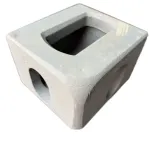
Corner casting steel vs aluminum
Every shipping container in the world — all 40 million of them — rests on eight critical components. Corner castings are the load-bearing blocks at each corner of an ISO shipping container, and they are the universal interface between the container and every crane, twistlock, spreader, and chassis on the planet. When you lift a container, stack it nine high on a ship, or lock it to a truck trailer, every ton of force flows through these fittings.

Construction cabin – selection, tips, dimensions and prices
Every construction project – whether a family house, a development project or a reconstruction – starts with the infrastructure. No construction manager, craftsman or investor who needs an on-site office, a changing room for workers or a safe storage for tools can do without a quality construction cell. But navigating the offer is not easy: residential containers, sanitary cells, storage modules, rental, purchase, refurbished pieces… This guide will give you answers to all the essential questions in one place.

Storage container
A storage container is a lockable steel box designed for the safe and dry storage of materials, tools, goods or equipment. Originally created as a shipping container for maritime transport, its durability and versatility have found their way onto construction sites, corporate premises and private land.
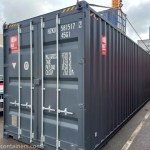
Shipping container 12m (40 ft)
A 12m shipping container is an investment that, if properly selected and cared for, will pay off in decades of trouble-free use. Whether you plan to use it as a warehouse, workshop, garage or the basis for a residential module — the key is careful selection of the condition, a thorough inspection before purchase and high-quality preparation of the base for placement. Take the time to compare offers, check the seller’s references and do not hesitate to personally inspect the container before buying. A properly selected 40-foot container will serve you reliably for many years.