
What does the IICL abbreviation mean for a shipping container?
IICL is an abbreviation for the Institute of International Container Lessors. This organization represents a globally recognized authority in the field of standardization, inspection and maintenance of sea containers and chassis. IICL brings together the world’s largest container leasing companies, which control most of the global fleet in this segment.
In practice, an “IICL container” refers to used shipping containers that meet the highest quality standard for used units. Such a container has been thoroughly inspected and maintained according to the strictest IICL standards (currently IICL-6). These containers are considered a “premium class” among used units, offering maximum structural reliability, service life and a visual condition close to new “one-trip” units.
Detailed definition and significance of IICL in the container industry
The IICL organization – history and importance
- Founded: 1971, as a response to the need for unified global standards of safety, quality and interoperability in the rapidly growing container industry.
- Members: Include the world’s largest container leasing companies.
- Market share: IICL members control the majority (estimated up to 90%) of all leased sea containers worldwide.
Key activities of IICL
| Area of activity | Description and importance |
|---|---|
| Setting standards | Publication of IICL-5, IICL-6 manuals for inspection, repair and maintenance; they define damage limits, types of acceptable repairs, minimum condition requirements. |
| Education and certification | Certification of inspectors around the world, online and in-person courses, exams to obtain an IICL license – recognized by all major players. |
| Representation of interests | Active participation in the creation of international conventions (IMO, ISO), negotiations with governments and customs authorities; influencing legislation (e.g. CSC, TIR, ISO, Roadability Regulations). |
| Research and innovation | Safety studies, environmental impact assessments, development of new materials and technologies for repair and maintenance. |
Selected international conventions and standards influenced by IICL
- CSC (Convention for Safe Containers, 1972): The basic legal framework for the safety of container transport.
- ISO standards (ISO 668, ISO 1496, etc.): Dimensions, strength and types of containers.
- Customs agreements (Customs Convention on Containers 1972, TIR 1975): Recognition of containers as means of international transport.
IICL standard – Condition certification of a container
What does an IICL inspection look like and what does it guarantee?
The IICL standard is not a physical certificate, but a condition classification. A container marked as “IICL” has passed an inspection according to the manual (currently IICL-6) and meets very strict limits for damage and wear. These limits are significantly stricter than the usual Cargo-Worthy (CW) or WWT standards.
Key parameters of an IICL inspection
| Inspected area | Typical IICL criteria (IICL-6) | Difference compared to CW/WWT |
|---|---|---|
| Roof, side walls | Maximum dent depth, number and size of repairs | Stricter limits for deformations |
| Corner fittings | No deformation, no cracks, 100% functionality | CW tolerates more wear |
| Frame, beams | Minimal corrosion, no sagging | Stricter assessment of load-bearing capacity |
| Floor | No holes, no delamination, max. damage up to 25×25 mm | WWT tolerates larger defects |
| Doors | Easy to open/close, sealing gaskets undamaged | CW tolerates poorer tightness |
| Interior | Clean, odor-free, no contamination | WWT does not have to guarantee cleanliness |
Inspection process:
- Performed by a certified IICL inspector (holder of a valid license).
- Every defect is measured and compared with the limits according to the IICL manual.
- All deviations must be repaired using an approved methodology (e.g. type of patch, weld).
- After a successful inspection, the container is designated “IICL” and can continue to be used for the transport of goods worldwide.
Importance and benefits of IICL certification
- Guaranteed quality and safety: IICL is the most recognized “seal of quality” for used containers – guaranteeing structural integrity, reliability and long service life.
- Transport efficiency: Lower risk of delays due to necessary repairs, reduced maintenance costs in the future.
- Environmental benefits: Repairs and maintenance according to IICL extend the life cycle of the container, reduce the number of decommissioned units and thus the environmental burden.
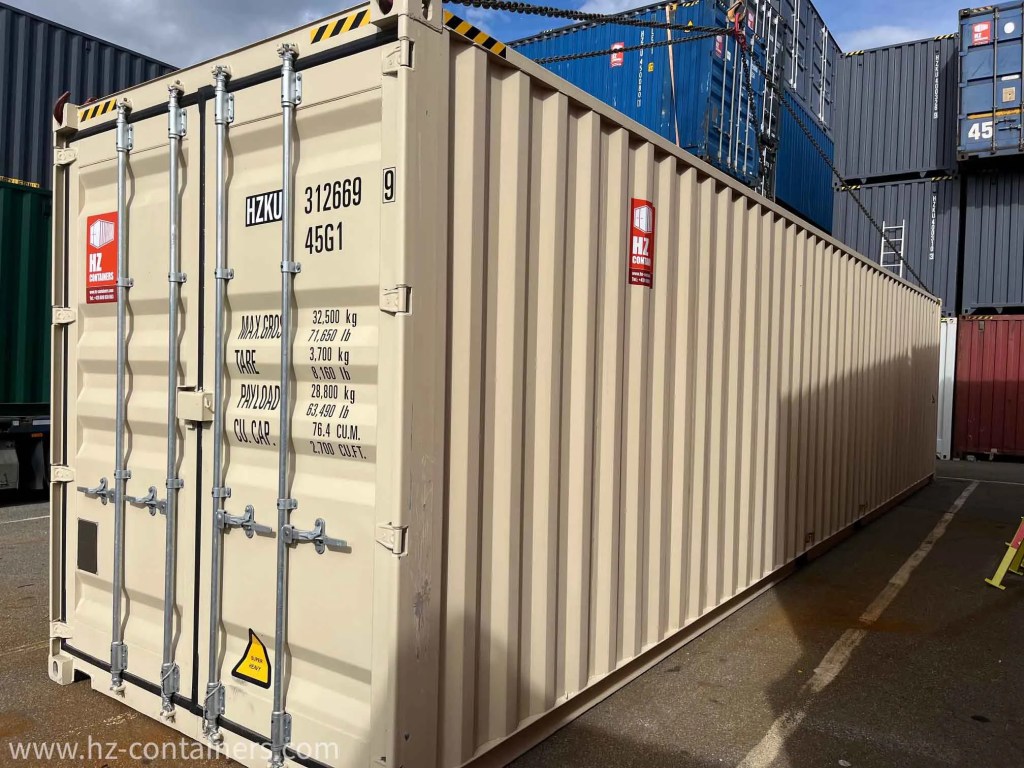
Comparison of IICL standard with other container classes
Let’s take a detailed look at the main differences between the individual categories of containers according to condition and usability:
| Category | Condition | Age (typical) | Service life | Certification | Use |
|---|---|---|---|---|---|
| One-Trip (new) | Practically new | 0–1 year | 25–30+ years | CSC | Transport, modifications, storage |
| IICL | Premium used | 5–10 years | 20–25 years | IICL + CSC | Transport, storage, modifications |
| Cargo-Worthy (CW) | Typically used | 10–15 years | 15–20 years | CSC | International transport, storage |
| Wind & Water Tight | Older, worn | 15–20 years | 10–15 years | – | Storage |
| As-Is | Unchecked | 20+ years | <10 years | – | Modifications, recycling, parts |
Key notes:
- All IICL containers automatically meet CW (“Cargo-Worthy”) requirements, but not vice versa.
- IICL containers are always suitable for export/import and for further modifications.
Inspection process according to IICL (IICL-6) – Technical details
IICL-6 inspection manual
- Valid from: 2016 (replaced IICL-5)
- Scope: More than 100 pages of descriptions, specifications and photos of defects
- Defines: Maximum permitted deformations, number and type of repairs, corrosion limits, condition of floor, locks, seals, etc.
Examples of specific IICL-6 limits
| Type of defect | Maximum permitted range (example) |
|---|---|
| Dent in wall | Depth up to 25 mm, length up to 200 mm, max. 2 per panel |
| Patch in wall | Max. area 100×100 mm, quality weld, max. 2 per panel |
| Corrosion on frame | Surface only, must not affect strength; no rusted-through holes |
| Floor | Smooth, no holes, max. damage up to size 25×25 mm |
| Door seals | No cracks, tight along entire length |
| Corner fittings | No cracks, no deformations, 100% functionality |
Most common repair works to reach IICL standard
- Replacement or reinforcement of the floor (marine plywood)
- Repair/patching of walls and roof by welding according to IICL patch types
- Removal of surface corrosion, application of protective coatings
- Replacement of door seals, adjustment of locks and hinges
- Inspection and possible replacement of corner fittings
IICL vs. CSC plate – Difference and connections
CSC plate – Basic safety certification
- Purpose: Confirms that a container is structurally safe for international transport (according to the Convention for Safe Containers, 1972).
- Obligation: Every container in international transport must have a valid CSC plate; validity is limited (usually 30 months).
- Tested parameters: Basic structural integrity (pressure, frame load, load capacity); does not address cosmetic defects, appearance or tightness.
IICL standard – A higher level of quality
- Purpose: Guarantees not only safety but also top condition, minimal wear, long service life and premium appearance.
- Scope: Inspection even of the smallest defects, strict limits on all damage, attention to detail.
- Obligation: Voluntary, but recognized as the best possible condition for used containers.
Analogy:
CSC = technical roadworthiness inspection of a car, IICL = certified premium used car after thorough servicing.
Advantages of an IICL container for the buyer
- Quality and peace of mind: Lowest risk of hidden defects, leaks or need for early repairs.
- Long service life: Younger containers, carefully maintained – an investment for 20+ years.
- High residual value: When resold, an IICL container has a higher price than CW or WWT.
- Ideal base for modifications: No need for extensive repairs before modification (e.g. for a shipping container house, office, café).
- Representative appearance: For business, public use, mobile facilities, etc.
- More ecological choice: Longer life cycle, lower environmental impact.
Who is an IICL container suitable for?
- Companies needing reliable long-term storage
- Investors and developers of modular buildings (shipping container homes, container houses)
- Exporters/importers – for repeated transport without complications
- Entrepreneurs requiring a representative appearance of the container
- Demanding customers who want maximum value for their money
Most common myths and mistakes when assessing IICL quality
- “IICL = new container” – Not true, it is the best condition of used containers; “one-trip” is still better.
- “A CSC plate is enough” – CSC guarantees only safety, not appearance and minimal wear.
- “IICL containers are always expensive” – The higher price is justified by longer service life, lower modification costs and higher resale value.
- “IICL only applies to transport” – On the contrary, for modifications, storage and business use it is the most suitable choice.
Frequently asked questions (FAQ)
What does the IICL abbreviation mean?
Institute of International Container Lessors – an association of the world’s largest container lessors.
How can I recognize an IICL container?
Minimal corrosion, small dents only, perfectly functioning doors, clean interior, declaration from a reputable seller.
Is an IICL container always suitable for export?
Yes, it meets all requirements for international transport and is moreover in top condition.
What is the difference between IICL and CW containers?
All IICL containers are also CW, but not all CW containers reach IICL quality.
Is investment in an IICL container worth it?
Yes, if you require long service life, reliability and a representative appearance.

 Czech Republic, Hodonín
  FREE SHIPPING


Other container news...

Container door leverage bars
This guide was compiled from industry research, manufacturer documentation, workplace safety data, and hands-on operator experience. Container door leverage bars are simple tools, but they solve a problem that costs the logistics industry billions of dollars annually. If you work with shipping containers, a quality leverage bar is one of the smartest investments you can make.


Container Caster Wheels: The Ultimate Guide to Moving Shipping Containers Safely and Efficiently
Moving a 40-foot steel box that weighs up to 67,200 pounds used to mean one thing: calling a crane. For decades, that was the only realistic option for repositioning a shipping container on a job site, in a yard, or at a depot. Today, that equation has changed. Container caster wheels — heavy-duty, twist-lock-mounted wheel assemblies that attach directly to the corner castings of ISO shipping containers — have transformed container mobility from a specialized, expensive operation into a task that a small crew can complete in under an hour.

Shipping containers Hamburg Germany
Hamburg is one of the most interesting places in Europe for anyone thinking about buying a shipping container. It is home to the third largest container port on the continent, and millions of shipping containers pass through it every year. The huge volume of transhipment means that Hamburg’s depots and terminals accumulate a large stock of used shipping containers of all types, sizes and quality classes – often at significantly lower prices than those found at Czech dealers. This guide will guide you through everything you need to know: from the history of the Port of Hamburg to the types of containers and the specific procedure for purchasing and transporting them to the Czech Republic.