
The Pallet Wide Shipping Container Can Hold Up to 30% More Pallets
What is a Pallet Wide Shipping Container?
A Pallet Wide (PW) shipping container is a specially designed transport container intended to carry a larger quantity of European pallets than standard containers. These containers feature an internal width of approximately 2.438 meters (8 feet), which is roughly 9 centimeters more than standard ISO containers. This seemingly small increase in width has a significant impact on cargo capacity — it allows one additional pallet to be placed per row compared to traditional transport units. It is precisely this extra width that is the defining characteristic making Pallet Wide containers exceptionally valuable for European logistics operations, where European pallets (dimensions 1.2m x 0.8m) are the standard for palletized goods transport.

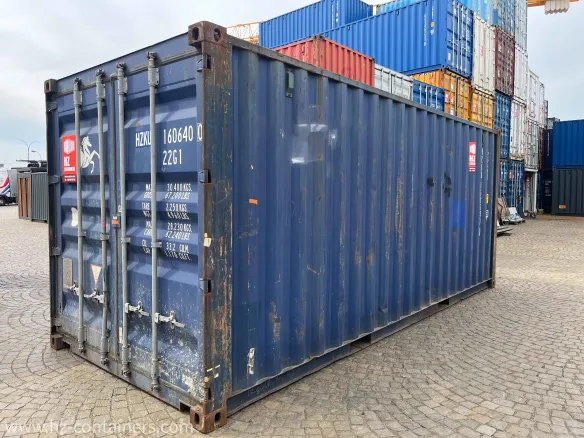
The construction of Pallet Wide containers adheres to international maritime standards while incorporating special design elements. These containers are manufactured from a heavily corrugated steel frame with fully vertically corrugated steel sides and ends, complemented by a corrugated steel roof. The most distinctive feature is their wooden plank floor, which serves a dual function: it provides durability and reduces friction between pallets and the container floor, thereby minimizing cargo movement and potential damage during transport. This flooring system is essential for maintaining the integrity of goods throughout the entire transport journey, whether by sea, rail, or road.
Pallet Wide containers represent a significant development in container design that addresses a specific yet widespread logistical challenge. In the early 2000s, as European logistics networks expanded and the standardization of European pallets became increasingly universal, shipping companies realized that standard containers were not optimally designed for palletized cargo transport. The introduction of Pallet Wide variants solved this problem by providing a container capable of transporting 30 European pallets in a 40-foot configuration, compared to just 25 pallets in a standard 40-foot container. This 20% increase in capacity per container made Pallet Wide units indispensable for European shippers and gradually expanded into global logistics operations.
How Many Pallets Fit in Different Types of Pallet Wide Containers?
The capacity of Pallet Wide containers varies significantly depending on the length and height of the container. Understanding these capacity differences is essential for logistics planning and cost optimization. A 20-foot Pallet Wide container can hold 15 to 16 European pallets, representing an advantage of 4 pallets over standard 20-foot containers. This option is ideal for smaller shipments where space efficiency is critical and transport costs need to be minimized.
The 40-foot Pallet Wide container is the most commonly used variant in European logistics. This container holds 30 European pallets, compared to 25 pallets in a standard 40-foot container. This increase of 5 pallets directly translates into a 20% improvement in capacity, making it the preferred choice for medium to large shipments. The internal dimensions of the 40-foot Pallet Wide container are 12.03 meters in length, 2.44 meters in width, and 2.39 meters in height, providing ample space for safe pallet storage.
For operations requiring maximum capacity, the 40-foot high cube Pallet Wide container is the best solution. These containers have an additional meter in height (2.69 meters total), enabling vertical stacking of pallets. When properly loaded with pallets stacked to approximately 1.1 to 1.15 meters in height, a 40-foot HC Pallet Wide container can hold up to 32 European pallets. The 45-foot high cube Pallet Wide container represents the largest standard variant, capable of holding 33 to 36 European pallets depending on the stacking configuration and cargo weight distribution.
| Container Type | Length (m) | Width (m) | Height (m) | European Pallet Capacity | Advantage vs. Standard |
|---|---|---|---|---|---|
| 20ft Pallet Wide | 5.89 | 2.44 | 2.39 | 15–16 | +4 pallets |
| 40ft Pallet Wide | 12.03 | 2.44 | 2.39 | 30 | +5 pallets |
| 40ft HC Pallet Wide | 12.05 | 2.44 | 2.69 | 32 | +7 pallets |
| 45ft HC Pallet Wide | 13.55 | 2.44 | 2.69 | 33–36 | +8–9 pallets |
The practical implications of these capacity differences are substantial. A logistics company shipping goods from Central Europe to Scandinavia could reduce the number of required 40-foot containers from 20 to 16 simply by switching to Pallet Wide units. This reduction directly lowers fuel consumption, freight charges, and handling costs, while improving overall supply chain efficiency. The additional capacity also means fewer shipments are needed to transport the same volume of goods, thereby reducing administrative costs and accelerating delivery times.
What Are the Main Advantages and Benefits of Pallet Wide Containers?
The primary advantage of Pallet Wide containers is their superior space utilization. By fitting 5 to 7 additional pallets per container compared to standard units, businesses can significantly reduce their shipping costs per unit. When transporting European pallets, the cost per pallet decreases proportionally with capacity. For a company shipping 1,000 pallets annually, switching to Pallet Wide containers could reduce the number of container shipments from 40 to 32, generating substantial savings on freight charges, port fees, and handling costs.
Reduced packaging costs represent another significant benefit. Because Pallet Wide containers accommodate more cargo in a single unit and because pallets are securely stored within the container, there is less need for additional protective packaging. The wooden floor and secure pallet storage minimize cargo movement, thereby reducing the risk of damage during transport. This means companies can often reduce their packaging materials by 10–15%, lowering operational costs while also supporting sustainability goals.
The safety and security advantages of Pallet Wide containers are equally important. Pallets are tightly stored within the container, preventing movement and sliding during transport. This tight configuration is particularly valuable for fragile goods or items sensitive to vibration and impact. Reduced movement also minimizes the risk of cargo damage and product loss, which can account for 5–10% of shipping costs for certain cargo types. The wooden floor further contributes to safety by providing a stable base that reduces friction and prevents pallet slippage.
Pallet Wide containers also offer considerable advantages for just-in-time logistics and supply chain optimization. Because more goods can be transported per container, companies can maintain leaner inventory levels while ensuring sufficient stock availability. This reduces warehouse storage costs and improves cash flow by reducing the amount of capital tied up in inventory. For goods with short shelf lives or fashion items with short sales cycles, the ability to transport more product per container can be the difference between profitability and loss.
| Advantage | Impact | Quantifiable Benefit |
|---|---|---|
| Increased Capacity | More pallets per shipment | 20–30% fewer containers |
| Reduced Packaging Costs | Less protective material required | 10–15% cost reduction |
| Damage Prevention | Secure pallet storage | 5–10% fewer damage claims |
| Lower Cost per Unit | Costs spread across more units | Savings of 5–15 EUR per pallet |
| Faster Delivery | Fewer shipments required | 2–3 day reduction in transit time |
| Improved Sustainability | Fewer shipments = lower emissions | 12% CO2 reduction per unit |
What Types of Cargo Are Suitable for Pallet Wide Containers?
Pallet Wide containers are particularly suitable for European palletized goods, including consumer goods, industrial products, food and beverages, pharmaceutical products, automotive components, and electronics. Any cargo that is normally transported on European pallets benefits from the use of Pallet Wide containers. Retail goods destined for supermarkets and distribution centers are ideal candidates, as these operations typically rely on European pallet standards for storage and logistics.
Food and beverages represent one of the largest user groups of Pallet Wide containers. These products are almost universally transported on European pallets, and the increased capacity of Pallet Wide containers allows food distributors to reduce shipping costs while maintaining cold chain integrity when using refrigerated variants. The tight storage also prevents product damage, which is critical for beverages and fragile food items.
Pharmaceutical and healthcare companies benefit from Pallet Wide containers due to their enhanced security and controlled environment capabilities. Many Pallet Wide containers can be equipped with temperature and humidity monitoring devices, ensuring compliance with pharmaceutical storage requirements. The increased capacity also makes it more economical to use specialized containers for temperature-sensitive shipments.
Heavy industrial goods and machinery components are also frequently transported in Pallet Wide containers. Manufacturing companies shipping components to assembly plants across Europe can optimize their logistics using Pallet Wide units. The robust construction of these containers ensures that heavy machinery and industrial equipment arrives safely, while the increased capacity reduces the number of shipments required.
How Do Pallet Wide Containers Differ from Standard Containers?
The fundamental difference between Pallet Wide containers and standard containers is width. While standard 40-foot containers have an internal width of 2.348 meters, Pallet Wide containers measure 2.438 meters internally — a difference of 9 centimeters. This seemingly small difference has major implications for pallet capacity. In standard containers, three European pallets (each 1.2 meters wide) fit side by side with minimal clearance. In Pallet Wide containers, an additional pallet fits in the same space, allowing four pallets to fit across the width.
The external dimensions of Pallet Wide containers remain identical to standard ISO containers, meaning they can be transported using the same infrastructure, equipment, and shipping routes. This compatibility is crucial, as it allows companies to integrate Pallet Wide containers into existing logistics networks without the need for significant capital investment in specialized handling equipment. Standard forklifts, cranes, and container handling equipment can work with Pallet Wide units without any modifications.
In terms of cost, Pallet Wide containers typically cost 10–15% more than standard containers to purchase or lease. However, this premium is quickly offset by the increased capacity. When costs are calculated on a cost-per-pallet-transported basis, Pallet Wide containers are more economical. A logistics company might pay 1,500 EUR for a standard 40-foot container versus 1,700 EUR for a 40-foot Pallet Wide container, but since the Pallet Wide container holds 30 pallets versus 25, the cost per pallet decreases from 60 EUR to 57 EUR.
| Specification | Standard 40ft | Pallet Wide 40ft | Difference |
|---|---|---|---|
| External Length | 12.19m | 12.19m | Same |
| Internal Width | 2.348m | 2.438m | +9cm |
| European Pallet Capacity | 25 | 30 | +5 pallets |
| Typical Cost | 1,500 EUR | 1,700 EUR | +13% |
| Cost per Pallet | 60 EUR | 57 EUR | -5% |
| Cubic Capacity | 67.7m³ | 70.2m³ | +3.7% |
What Are the Specifications and Dimensions of Pallet Wide Containers?
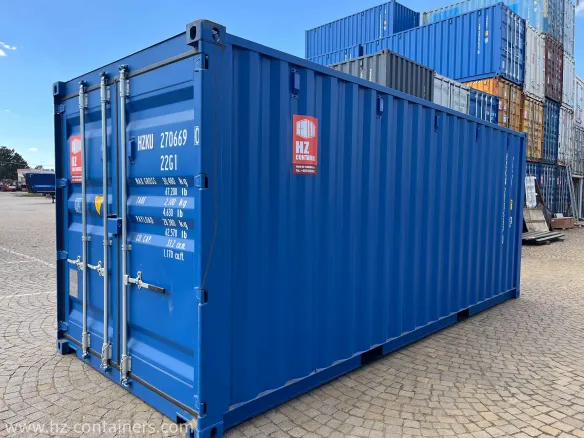
The 20-foot Pallet Wide container has external dimensions of 6.10 meters in length, 2.44 meters in width, and 2.59 meters in height. Internally it measures 5.89 meters in length, 2.44 meters in width, and 2.39 meters in height. The door opening is 2.29 meters wide and 2.28 meters high, providing adequate access for standard pallet handling equipment. The tare weight (empty container weight) is approximately 2,400 kilograms, while the maximum payload is 28,080 kilograms. The cubic capacity is approximately 34.5 cubic meters.
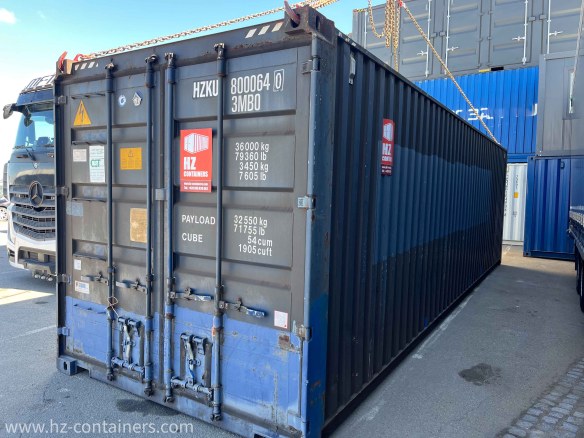
The 40-foot Pallet Wide container has external dimensions of 12.19 meters in length, 2.44 meters in width, and 2.59 meters in height. The internal dimensions are 12.03 meters in length, 2.44 meters in width, and 2.39 meters in height. The door opening measures 2.29 meters wide and 2.28 meters high. The tare weight is 3,800 kilograms with a maximum payload of 26,680 kilograms. The cubic capacity is 70.2 cubic meters, making it ideal for medium to large shipments.
The 40-foot high cube Pallet Wide container has the same external and internal length dimensions as the standard 40-foot Pallet Wide container, but with increased height. Externally it measures 2.59 meters in height, while internally 2.69 meters. This additional height enables vertical stacking of pallets, significantly increasing capacity. The tare weight is 3,917 kilograms with a maximum payload of 28,583 kilograms. The cubic capacity reaches 78.4 cubic meters.
The 45-foot high cube Pallet Wide container is the largest standard variant. It has external dimensions of 13.72 meters in length, 2.44 meters in width, and 2.90 meters in height. Internally it measures 13.55 meters in length, 2.44 meters in width, and 2.69 meters in height. The tare weight is 4,280 kilograms with a maximum payload of 29,720 kilograms. The cubic capacity is 86.2 cubic meters, making it suitable for high-volume shipments where space optimization is critical.
| Specification | 20ft PW | 40ft PW | 40ft HC PW | 45ft HC PW |
|---|---|---|---|---|
| Internal Length (m) | 5.89 | 12.03 | 12.05 | 13.55 |
| Internal Width (m) | 2.44 | 2.44 | 2.44 | 2.44 |
| Internal Height (m) | 2.39 | 2.39 | 2.69 | 2.69 |
| Tare (kg) | 2,400 | 3,800 | 3,917 | 4,280 |
| Maximum Payload (kg) | 28,080 | 26,680 | 28,583 | 29,720 |
| Cubic Capacity (m³) | 34.34 | 69.86 | 78.4 | 86.2 |
What Factors Should Be Considered When Loading Pallet Wide Containers?
Proper loading is essential for maximizing the benefits of Pallet Wide containers and ensuring cargo safety. The first consideration is the condition and uniformity of pallets. All pallets should be in good condition with no broken boards or protruding nails that could damage other cargo. Ideally, all pallets should be of similar height to facilitate even stacking and maximize vertical space utilization.
Weight distribution is another critical factor. Pallets should be loaded evenly across the container floor to prevent tipping or uneven pressure on the container structure. The heaviest pallets should be placed at the bottom, with lighter pallets stacked higher. The maximum weight per pallet should not exceed the structural limits of the pallet itself, typically 1,000–1,500 kilograms depending on the pallet type and construction.
Securing pallets is essential to prevent movement during transport. Pallets should be packed tightly to minimize gaps, and where gaps exist, dunnage (blocking material) should be used to prevent movement. Strapping or shrink wrapping may be necessary for particularly fragile or high-value goods. The wooden floor of Pallet Wide containers provides good friction, but for containers that will be subject to rough handling or long transit times, additional securing measures are recommended.
Ventilation and air circulation should be considered for cargo sensitive to humidity or temperature fluctuations. Although Pallet Wide containers are not specifically designed for temperature control, proper stacking that allows air circulation can help prevent condensation buildup. For perishable goods, refrigerated variants of Pallet Wide containers should be used instead of standard units.
Compliance with weight regulations is essential. Each country has specific regulations regarding the maximum container weight for road transport. A fully loaded Pallet Wide container can weigh 30–31 tons, which may exceed weight limits in some countries or require special permits. Shippers should verify local regulations before loading and plan accordingly.
What Are the Costs of Using Pallet Wide Containers?
The total cost of using Pallet Wide containers includes several components: the purchase or lease cost of the container, freight charges, handling fees, and insurance. The purchase price of a new 40-foot Pallet Wide container typically ranges from 3,500 to 4,500 EUR, depending on specifications and market conditions. Used containers in good condition cost 1,500 to 2,500 EUR. Leasing Pallet Wide containers typically ranges from 80 to 150 EUR per month per 40-foot unit.
Freight costs vary significantly depending on the route, carrier, and market conditions. However, since Pallet Wide containers hold more cargo, the freight charge per container must be compared to the cost per pallet. A shipper might pay 1,200 EUR to ship a standard 40-foot container holding 25 pallets (48 EUR per pallet) versus 1,250 EUR to ship a Pallet Wide container holding 30 pallets (42 EUR per pallet). In this scenario, the Pallet Wide container provides a 12.5% cost-per-pallet advantage.
Handling and port fees are typically charged based on the number of containers rather than cargo volume, so using Pallet Wide containers reduces these costs proportionally. A company shipping 1,000 pallets would need 40 standard containers, but only 33 Pallet Wide containers, thereby reducing port handling fees by approximately 17.5%.
The return on investment for Pallet Wide containers is typically realized within 12–24 months of regular use. For companies with consistent palletized shipping needs, the long-term cost savings are substantial. Annual savings of 5,000 to 15,000 EUR per container are achievable for high-volume shippers, depending on shipping frequency and route.
What Are the European Pallet Standards Used in Pallet Wide Containers?
The European pallet, also known as the Euro pallet or EPAL pallet, is a standardized cargo handling platform with dimensions of 1200 x 800 millimeters. These pallets are manufactured from hardwood or softwood and are secured with 78 special nails in a prescribed pattern. The European pallet is one of the most widely used pallets in Pallet Wide containers and is recognized as an international ISO standard.
The weight of an empty European pallet ranges between 22 and 25 kilograms, depending on the moisture content of the wood. The dynamic load capacity (in motion) reaches up to 1,500 kilograms, while the static load capacity (stacked at rest) reaches up to 4,000 kilograms. The racking load capacity (on a rack) is up to 1,000 kilograms. These values may vary slightly depending on the condition of the pallet and conditions of use.
The European pallet is certified to the UIC 435-2 standard and verified by the European Pallet Association (EPAL). All certified European pallets must comply with the International Standard for Phytosanitary Measures ISPM-15, which requires heat treatment of the wood to prevent the spread of pests in international trade. Heat treatment (HT) involves heating the wood to a minimum temperature of 56°C for at least 30 minutes at the core of the material.
European pallets are optimized for European trucks and transport systems. Their dimensions of 1200 x 800 millimeters allow two pallets to be placed side by side in a European trailer with a width of 2.40 meters without unnecessary empty space. This feature significantly improves cargo space optimization and reduces operating costs by enabling more goods to be transported in fewer trips.
What Are the Practical Applications and Uses of Pallet Wide Containers?
Pallet Wide containers are used across various industries and logistics operations. In retail and distribution, Pallet Wide containers are the ideal solution for transporting goods from manufacturers to distribution centers and stores. The increased capacity allows retailers to reduce the number of shipments required and improve distribution chain efficiency.
In the food and beverage industry, Pallet Wide containers are used for transporting perishables and non-perishables. The increased capacity allows food distributors to reduce shipping costs while maintaining cold chain integrity. The tight storage also prevents product damage, which is critical for beverages and fragile food items.
In the pharmaceutical industry, Pallet Wide containers are used for transporting medicines and medical devices. Many variants can be equipped with temperature and humidity monitoring devices, ensuring regulatory compliance for storage. In the automotive industry, Pallet Wide containers are used for transporting components and parts between manufacturers and assembly plants.
In the electronics industry, Pallet Wide containers are used for transporting electronic components and equipment. The increased capacity and secure storage make these containers ideal for shipping valuable electronic goods. In the packaging and paper industry, Pallet Wide containers are used for transporting paper, cardboard, and other packaging materials.
How to Choose the Right Type of Pallet Wide Container?
Choosing the right type of Pallet Wide container depends on several factors. The most important factor is the type and volume of cargo. If the cargo is fewer than 15 pallets, the 20-foot Pallet Wide container is the most economical choice. For cargo between 15 and 30 pallets, the 40-foot Pallet Wide container is ideal. For cargo exceeding 30 pallets, the 40-foot high cube or 45-foot high cube Pallet Wide container is the best choice.
Another important factor is the type of transport. If goods are transported primarily by sea, the 40-foot or 45-foot Pallet Wide container is ideal. If goods are transported by a combination of sea and road, the 40-foot Pallet Wide container is the most commonly used choice. If goods are transported primarily by road, the 20-foot Pallet Wide container is often the most economical.
The third factor is availability and cost. In some regions, certain sizes of Pallet Wide containers may be more readily available and less expensive than others. It is important to check local availability and prices before deciding on a container type.
The fourth factor is special cargo requirements. If the cargo is temperature-sensitive, a refrigerated variant must be used. If the cargo is hazardous, a special safety variant must be used. If the cargo is very heavy, the container’s payload capacity must be taken into consideration.
What Are the Trends and Future of Pallet Wide Containers?
Pallet Wide containers are becoming increasingly popular in European logistics and are gradually expanding into other regions. One of the main trends is the increased use of tracking and monitoring technologies. Many new Pallet Wide containers are equipped with IoT sensors that enable real-time tracking of location, temperature, and humidity.
Another trend is an increased focus on sustainability. Manufacturers are working on developing Pallet Wide containers from recycled materials and reducing their weight to lower carbon emissions. Some new variants use composite materials that are lighter and more durable than traditional steel.
The third trend is integration with automation and robotics. New pallet handling systems are designed to work with Pallet Wide containers and automate the loading and unloading process. This reduces labor costs and increases operational efficiency.
The fourth trend is the development of specialized variants for specific applications. Manufacturers are developing Pallet Wide containers with cooling systems, humidity control systems, and other special features for specific industries.
 Czech Republic, Varnsdorf
  FREE SHIPPING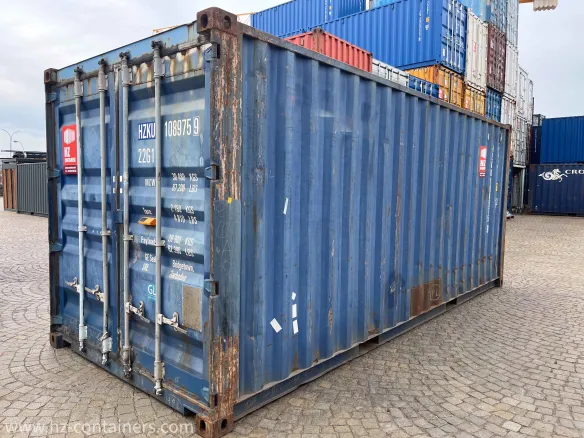



Other container news...

Obligation to Check Tightness When Selling a Reefer Container
Who is responsible for the refrigerant leak check when selling a refrigerated container? Find out what obligations the seller has at the time of handover and why they must provide a PTI report along with the technical data plate. Learn which regulatory requirements and F-gas record-keeping duties become the sole responsibility of the new owner.

New shipping containers
If you are currently considering purchasing a new shipping container, you are not alone. While just twenty years ago containers were used almost exclusively for maritime transport, today they have found their way into construction, storage, business, and even housing. This growing popularity brings with it a host of questions: Which type should you choose? How much does it cost? How do you recognize quality? How can you avoid falling victim to scammers?
New sea shipping containers
If you are currently considering purchasing a new shipping container, you are not alone. While just twenty years ago containers were used almost exclusively for maritime transport, today they have found their way into construction, storage, business, and even housing. This growing popularity brings with it a host of questions: Which type should you choose? How much does it cost? How do you recognize quality? How can you avoid falling victim to scammers?

6m shipping container
Are you thinking about buying a 6-meter shipping container but aren’t sure what to look for? You are not alone—this 20-foot container is the best-selling size on the Czech market, and the differences between various types, conditions, and prices can be significant. In this guide, you will find everything you need to know: from exact dimensions and a comparison of categories (such as “one-way,” refurbished, and “Cargo Worthy”) to current prices and shipping advice.