
How do weather and climate conditions affect temperature and humidity in shipping containers?
What is container rain and how does it form?
Container rain, often also called “container sweating” or “container rain”, is a critical phenomenon in global maritime transport that costs the international supply chain an estimated 6–8 billion dollars annually. It is not rain in the traditional sense – there are no clouds or precipitation inside the steel box. It is rather condensation: moisture that condenses on the inner walls and ceiling of a shipping container and eventually drips onto the cargo like water falling from a roof during rain.
The mechanism is fundamentally physical and governed by the basic laws of thermodynamics. When warm air containing water vapor encounters a cold surface – such as the steel walls or ceiling of a container that has cooled down at night or while passing through colder waters – the air can no longer hold all of its moisture. This happens because the capacity of air to hold water vapor is directly tied to temperature. For every 10°C (18°F) increase in temperature, air can hold approximately twice as much water vapor. Conversely, when temperature drops, this capacity falls dramatically, forcing excess water vapor to condense into liquid droplets. This transformation from vapor to liquid is governed by the so-called dew point – the temperature at which air becomes saturated with moisture and condensation begins.
A practical example illustrates the scale of the problem. A standard 40-foot high-cube container sealed in a humid port in Southeast Asia may contain air at 30°C (86°F) with 80% relative humidity. This air contains approximately 24 grams of water per cubic meter. When the same container crosses colder Pacific waters or arrives at a port in a temperate zone where nighttime temperatures drop to 10°C (50°F), the air’s capacity drops dramatically to just 9.4 grams per cubic meter. The difference – 14.6 grams per cubic meter – has to go somewhere. In a 76-cubic-meter container, this means more than 1,100 grams (more than a liter) of water condensing as container rain, dripping onto the cargo and creating ideal conditions for mold growth within a few days.
| Scenario | Outdoor Temperature | Container Temperature | Relative Humidity | Water Capacity (g/m³) | Risk Level |
|---|---|---|---|---|---|
| Equatorial Port (Day) | 30°C | 35°C | 80% | 24 | High |
| Equatorial Port (Night) | 25°C | 20°C | 90% | 14.6 | Critical |
| Colder Waters | 10°C | 8°C | 95% | 9.4 | Extreme |
| Day-Night Transit | 25°C → 10°C | 30°C → 12°C | 80% → 95% | 24 → 9.4 | Daily Risk |
Why do temperature fluctuations occur during transport and storage?
Temperature fluctuations inside shipping containers are not random – they are the inevitable consequence of the passive nature of standard container design and the routes containers travel. Unlike climate-controlled logistics, standard maritime transport operates without active temperature regulation, meaning containers are exposed to dramatic thermal fluctuations that occur both on a macro scale (across different climate zones) and on a micro scale (day and night cycles).
On a macro scale, containers experience extreme temperature differences based on their shipping routes. A container leaving Singapore (average 27°C) heading to Hamburg (average 9°C) will experience a temperature difference of 18°C – sufficient to reduce the air’s moisture-holding capacity by more than half. But even on a single route, the daily cycle (temperature changes between day and night) creates multiple condensation risks. Steel containers heat up quickly under direct sunlight – surface temperatures can exceed 60°C – and cool rapidly at night, creating 15–20°C temperature swings during a single voyage. Containers placed on deck (exposed to sun and wind) experience more extreme fluctuations than those in the ship’s hold, where thermal dynamics are different but still unstable.
The cargo itself contributes to this instability. Many products – wood, agricultural goods, textiles, organic materials – are hygroscopic, meaning they contain moisture and release it when temperature rises. Wooden pallets are a major contributor: pallets made from green (undried) wood can have a moisture content of 50–100% and contain more than ten kilograms of water that evaporates into the container atmosphere during warm periods, raising humidity and setting the stage for condensation when temperatures drop. Even dried pallets and packaging materials (corrugated paper, cardboard) act like a sponge, absorbing and releasing moisture depending on the equilibrium moisture content (EMC) of the container environment.
What moisture sources enter shipping containers?
Moisture in shipping containers comes from multiple sources, and understanding these sources is essential for prevention. The moisture that damages cargo does not primarily come from seawater seeping through the container walls – modern containers are largely watertight. Instead, the real culprit is moisture already present inside the container in various forms.

Air itself is the first source. Air always contains water in the form of water vapor, measured as relative humidity (RH). When containers are loaded in humid environments – tropical ports, humid warehouses – the air inside becomes saturated with moisture. A container loaded in an environment with 90% RH at 28°C contains far more water vapor than one loaded in an environment with 60% RH at 15°C. When this humid air cools, condensation becomes inevitable.
Packaging and cargo materials are the second major source. Any packaging made from wood or wood-based materials – corrugated paper, cardboard, oriented strand board (OSB) – acts as a hygroscopic material. These materials absorb moisture from humid air until their moisture content reaches equilibrium with the surrounding environment. Wooden pallets are particularly problematic: pallets made from undried (green) wood can have a moisture content of 50–100%, while dried pallets have a much lower moisture content (~19%) and do not release moisture in maritime containers, as this moisture content is below the EMC. The distinction is critical: heat-treated pallets are not the same as kiln-dried pallets and can have very different moisture contents.
Organic products themselves – food, textiles, agricultural goods – are hygroscopic and contribute moisture. Even the container floor, if not properly dried before loading, can contribute moisture. When the temperature inside the container rises during the day, moisture from the floor, pallets, packaging materials, and goods evaporates into the air, raising humidity and setting up a condensation risk when temperatures drop at night.
| Moisture Source | Typical Contribution | Control Method | Effectiveness |
|---|---|---|---|
| Humid air (90% RH) | 15–20 g/m³ | Seal vents, use silica gel | High |
| Green wood pallets | 10+ kg per pallet | Replace with dried pallets | Very High |
| Wet container floor | 5–10 liters | Dry before loading | Very High |
| Hygroscopic packaging | Variable | Use vapor barriers | Medium |
| Organic cargo moisture | Variable | Pre-dry cargo, silica gel | Medium to High |
What is the dew point and why is it important in containers?
The dew point is the specific temperature at which air becomes saturated with moisture and condensation begins. It is not a fixed temperature – it depends on both the current temperature and the relative humidity of the air. Understanding the dew point is essential because it defines the precise conditions under which container rain will occur.
The relationship between temperature, relative humidity, and dew point is governed by the Clausius-Clapeyron equation, which describes how the capacity of air to hold water vapor changes with temperature. This is not theoretical – it is a mathematical certainty. For a given relative humidity, there is a specific dew point temperature. If the temperature inside the container drops below this dew point, condensation forms. A drop of just 5°C is often sufficient to trigger condensation, meaning that with the warm days and cold nights of maritime transport, the risk of condensation is constant.
Consider a practical example. Air at 25°C with 80% relative humidity has a dew point of approximately 20°C. If the temperature inside the container drops to 20°C or below, condensation will form on any surface cooler than this point. In shipping containers, the coldest surfaces are typically the ceiling and upper walls, which cool fastest at night and when exposed to sea fog or rain. During a typical daily cycle in transit, containers experience temperature swings of 15–20°C, meaning the crossing of the dew point occurs repeatedly – sometimes multiple times per day.
The practical implication is that preventing condensation requires either preventing temperature drops (through insulation and air conditioning), reducing humidity (through silica gel and ventilation management), or both. Standard containers do neither, which is why container rain is so widespread. The dew point concept explains why a container can be perfectly sealed and still develop condensation – the problem is not air leakage; it is the fundamental thermodynamic behavior of the air already inside.
How does “container breathing” worsen humidity problems?
Container breathing is the daily cycle of air expansion and contraction that occurs in every shipping container, and it is the primary mechanism for introducing new moisture into sealed containers. The term is descriptive: as the temperature inside the container rises during the day, air expands and is pushed out of the container through small gaps (particularly around door seals and ventilation openings). As the temperature drops at night, the air inside contracts and new air is drawn in from outside to equalize pressure.
This breathing cycle is relentless. During a week-long ocean voyage, a container may experience 20, 30, or more complete day-night cycles. Each time the container “inhales,” it draws in humid air from the external environment. If the container is in a humid port or traveling through humid regions, each breath introduces more moisture-laden air. The cumulative effect is significant: a container that starts with 80% relative humidity may be exposed to 90%+ RH air dozens of times during transit, progressively increasing the total moisture burden inside.
The mechanism is simple but powerful. When the container is warm (35°C) at 80% RH and the outside air is cooler (20°C) at 90% RH, the outside air contains more absolute moisture despite its lower temperature. When this humid outside air is drawn in as the container cools, it increases the total moisture inside. Then, when the container heats up again the next day, this moisture evaporates, raising relative humidity further. By the time the container reaches cooler climates, the air inside is heavily saturated, and even small temperature drops will trigger condensation.
The solution is not simply to ventilate – ventilation actually worsens container breathing by providing pathways for humid air to enter. Instead, effective prevention requires either sealing the container (taping vents and doors to minimize breathing), using silica gel to absorb moisture that does enter, or both.
What are the main consequences of container rain for cargo?
Container rain causes multiple types of damage depending on the type of cargo and the duration of exposure. The financial impact is staggering: approximately 10% of all container shipments suffer some moisture loss, and approximately 5% of global goods suffer financial loss due to moisture damage during transport – totaling billions of dollars annually.
Types of damage vary. For packaging, moisture causes paper boxes, paper labels, and other cellulose materials to absorb water, weakening structural integrity. Boxes collapse, labels peel off and become illegible (complicating logistics and handling), and the protective function of the packaging is compromised. For organic materials – textiles, wood, food products – excess moisture creates ideal conditions for mold and yeast growth. These fungi spread rapidly in warm, humid conditions, rendering goods unsaleable, not only damaging the product but also creating health risks.
Metal products and machinery are highly susceptible to corrosion. Even small amounts of condensation on metal surfaces leads to rusting, reducing the value and functionality of the product. Perishable goods such as food and pharmaceuticals can spoil if exposed to excess moisture, rendering them completely unusable. Even non-perishable items degrade: electronics fail, building materials deteriorate, plastics become brittle, paints degrade, and chemicals become unstable. The mere presence of an unpleasant odor – without visible physical damage – is often reason enough for a buyer to reject a shipment.
| Cargo Type | Primary Damage | Timeline | Prevention Method |
|---|---|---|---|
| Electronics | Failure, corrosion | Hours to days | Air conditioning, silica gel |
| Textiles | Mold, yeast, odor | 2–5 days | Silica gel, sealed ventilation |
| Metals | Rust, corrosion | 1–2 weeks | Vapor barriers, silica gel |
| Food/Perishables | Spoilage, mold | 24–48 hours | Refrigerated containers, silica gel |
| Wood/Furniture | Warping, swelling | 1–3 weeks | Dried pallets, silica gel |
How can silica gels and desiccants prevent container rain?
Desiccants are moisture-absorbing materials that reduce humidity in containers by absorbing water vapor from the air. The most commonly used types are silica gel, clay, and calcium chloride-based products. These materials work by absorbing water vapor that comes into contact with the desiccant material and holding it in their porous structure, thereby reducing the relative humidity of the air in the container and lowering the risk of condensation.
The mechanism is straightforward: when water vapor comes into contact with the desiccant material, it is absorbed and retained. This reduces the relative humidity of the air in the container. If the relative humidity drops below the dew point threshold, condensation cannot form. Effectiveness depends on the quantity and type of desiccant used, the container size, the type of cargo, the length of the voyage, and the initial moisture burden.
Desiccants are most effective when used in combination with sealed containers – meaning when ventilation openings are sealed (taped) and door gaps are minimized. Field tests have shown that when vents are sealed and desiccants are properly sized, relative humidity can be reduced to 25–30% even with evaporation from cargo, completely preventing condensation. The cost is minimal compared to cargo loss: protecting a container shipment with desiccants may cost 100–300 dollars in desiccant material, while moisture damage can result in the loss of an entire cargo worth thousands or millions of dollars.
Calcium chloride is the most commonly recommended choice for large containers. It has an absorption capacity of up to 300% of its own weight, significantly higher than silica gel (approx. 40%) or clay (15–30%). For a standard 40-foot container, 12–24 desiccant strips are typically recommended, while 6–12 strips are sufficient for a 20-foot container. Desiccants begin working from day one and can provide protection for up to 90 days during a voyage.
| Desiccant Type | Absorption Capacity | Suitability | Recommended Quantity (40ft) |
|---|---|---|---|
| Calcium chloride | Up to 300% | Large containers | 12–24 strips |
| Silica gel | Approx. 40% | Medium packaging | Less suitable |
| Clay | 15–30% | Small spaces | Less suitable |
| Combined solution | 150–200% | Optimal | 8–16 strips + ventilation |
What are the options for air conditioning and insulation?
For sensitive cargo or long-term storage, climate-controlled containers offer active temperature and humidity regulation. These containers are modified with HVAC systems (heating, ventilation, and air conditioning) that maintain interior temperatures between 13–29°C (55–85°F) and controlled humidity levels. Several options exist:
Insulated containers use heavy insulation (spray foam, rigid foam panels, or fiberglass) to reduce heat transfer from outside to inside. This passive approach slows temperature fluctuations but does not eliminate them. Insulation is measured using R-values; spray foam typically provides R-values of 6–7 per inch, while rigid foam panels offer R-values of 5–8 per inch. Insulated containers are cost-effective for moderate climate control.
Active air conditioning systems include window air conditioners (affordable but limited cooling capacity), through-the-wall HVAC systems (robust and effective for large containers), and baseboard electric heating (heating only). Each has trade-offs: window units are cheap but ineffective for large containers; through-the-wall systems are powerful but expensive and require professional installation.
Ventilation systems include passive options (louvered vents, roof turbine vents) that rely on wind and natural airflow, and active options (exhaust fans, air supply, balanced systems) that use electricity to move air. Passive ventilation is cost-effective but limited in extreme conditions; active ventilation is more reliable but consumes electricity.
The choice depends on the application. For electronics, pharmaceuticals, and works of art, climate-controlled containers with AC and heating are essential. For furniture and dry goods, insulated containers may suffice. For food and perishables requiring specific temperatures, refrigerated containers (reefer containers) with built-in cooling are necessary.
| Climate Control Option | Temperature Range | Cost Level | Best Use |
|---|---|---|---|
| Insulation only | Moderate reduction | Low | Dry goods, furniture |
| Window AC | 13–29°C | Low | Small containers, offices |
| Through-wall HVAC | 13–29°C | Medium–High | Large containers, sensitive cargo |
| Refrigerated containers | -25°C to +25°C | High | Food, pharmaceuticals, perishables |
| Passive ventilation | Ambient ±5°C | Low | Basic storage |
| Active ventilation | Ambient ±2°C | Medium | Workspaces, sensitive items |
What are the ISO standards and norms for shipping containers?
Shipping containers are governed by a range of international standards that ensure their safety, compatibility, and functionality. These standards are managed by the International Organization for Standardization (ISO) and the International Maritime Organization (IMO).
ISO 668 defines the classification, dimensions, and load capacities of the most commonly used containers. It classifies containers into several series, with Series 1 being the most commonly used for dry cargo. For these containers, it establishes nominal lengths (20 and 40 feet), widths (8 feet), and heights (8 feet 6 inches for 20 and 40 feet, and 9 feet 6 inches for high-cube containers). It also specifies the maximum gross weight (24 tons for 20-foot, 30 tons for 40-foot) that containers can safely carry.
ISO 1496 consists of multiple parts, each focusing on specific aspects of container construction, testing, and performance. It covers general-purpose containers (Part 1), specialized types such as thermal containers (Part 2), and tank containers (Part 3). Key aspects include material specifications, structural requirements, stacking capability, watertightness, and performance under various environmental conditions.
ISO 6346 defines the coding system used to uniquely identify shipping containers. Known as the BIC code, it consists of four letters and helps track containers throughout their journeys. The standard also specifies requirements for marking containers with basic information such as the owner code, serial number, maximum gross weight, and tare weight.
ISO 1161 establishes specifications for corner fittings used on shipping containers. These fittings are essential for safe lifting, stacking, and handling of containers during transport. It defines dimensions, strength, and performance requirements for various types of corner fittings, ensuring container compatibility and safe handling across different operations.
The International Convention for Safe Containers (CSC), introduced in 1972 by the International Maritime Organization, sets minimum standards for the construction and testing of shipping containers. Its primary objective is to ensure global safety in container transport, covering structural strength, safe closure, and proper identification markings.
How can cargo be effectively protected against moisture?
Effective protection of cargo against moisture requires a combined approach involving multiple strategies. The most effective method is to eliminate the moisture source or absorb moisture before it becomes harmful.
Container preparation is the first step. The container should be thoroughly dried before loading. High-pressure washing should be avoided to prevent leaving excess water, and all residual moisture should be dried out. The floor, walls, and ceiling should be checked for any moisture or damp spots.
Cargo preparation is equally important. Pallets should be kiln-dried (preferably kiln-dried, not merely heat-treated). Cargo should be checked for moisture and pre-dried if possible. All packaging materials should be dry.
Sealing vents reduces the risk of container breathing. Ventilation openings can be taped on the inside of the container, reducing the amount of humid air that enters during temperature changes. This also improves the effectiveness of desiccants.
Using desiccants is the simplest and most effective solution. For a 40-foot container, 12–24 calcium chloride-based desiccant strips are the standard recommendation. Desiccants should be distributed evenly throughout the container, preferably hung near the ceiling where condensation most commonly forms.
Air conditioning is essential for very sensitive cargo. Climate-controlled or refrigerated containers maintain precise temperature and humidity conditions, which is ideal for electronics, pharmaceuticals, fine art, and perishable goods.
Monitoring during transport helps identify problems at an early stage. Some modern containers are equipped with temperature and humidity sensors that provide real-time data.
What is the economic impact of moisture damage?
The economic consequences of moisture damage in maritime shipping are enormous. Approximately 10% of all container shipments suffer some moisture damage, and approximately 5% of global goods transported by sea suffer financial loss due to moisture damage during transport – totaling an estimated billions of dollars annually.
Costs vary by cargo type. Electronics can become completely non-functional after just a few hours of moisture exposure. Textiles and organic materials can be destroyed by mold within 2–5 days. Metals can begin to rust within 1–2 weeks. Food and pharmaceutical products can be completely ruined within 24–48 hours.
Given these risks, the investment in prevention – whether through desiccants (costing 100–300 dollars per container), air conditioning, or a combination of both – is considerably lower than the potential cargo loss. Insurance for moisture damage is often unavailable or very expensive, making prevention the best strategy.
What are the recommended practices for protecting cargo in shipping containers?
In summary, the following practices are recommended to minimize the risk of moisture damage:
- Choose the right container type – for sensitive cargo, choose a climate-controlled or insulated container
- Prepare the container – ensure it is clean and dry before loading
- Prepare the cargo – use dried pallets, dry packaging materials, and pre-dried cargo where possible
- Seal the vents – tape ventilation openings on the inside of the container
- Use desiccants – place an appropriate quantity of desiccants (12–24 strips for a 40ft container)
- Consider air conditioning – for very valuable or sensitive cargo
- Monitor conditions – where possible, use temperature and humidity sensors
- Ensure proper handling – minimize container exposure to humid environments during loading and unloading
- Document conditions – take photographs of the container and cargo condition before and after transport
- Insure the cargo – although moisture damage insurance is limited, it remains important
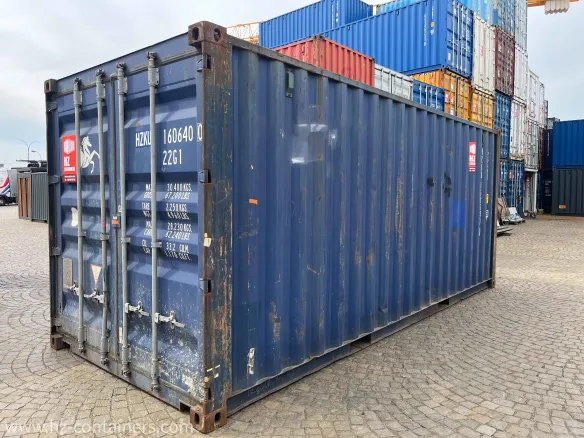
 Czech Republic, Varnsdorf
  FREE SHIPPING


Other container news...
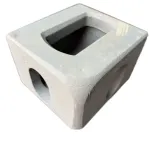
Corner casting steel vs aluminum
Every shipping container in the world — all 40 million of them — rests on eight critical components. Corner castings are the load-bearing blocks at each corner of an ISO shipping container, and they are the universal interface between the container and every crane, twistlock, spreader, and chassis on the planet. When you lift a container, stack it nine high on a ship, or lock it to a truck trailer, every ton of force flows through these fittings.

Construction cabin – selection, tips, dimensions and prices
Every construction project – whether a family house, a development project or a reconstruction – starts with the infrastructure. No construction manager, craftsman or investor who needs an on-site office, a changing room for workers or a safe storage for tools can do without a quality construction cell. But navigating the offer is not easy: residential containers, sanitary cells, storage modules, rental, purchase, refurbished pieces… This guide will give you answers to all the essential questions in one place.
Storage container
A storage container is a lockable steel box designed for the safe and dry storage of materials, tools, goods or equipment. Originally created as a shipping container for maritime transport, its durability and versatility have found their way onto construction sites, corporate premises and private land.
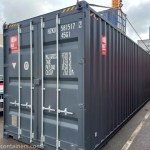
Shipping container 12m (40 ft)
A 12m shipping container is an investment that, if properly selected and cared for, will pay off in decades of trouble-free use. Whether you plan to use it as a warehouse, workshop, garage or the basis for a residential module — the key is careful selection of the condition, a thorough inspection before purchase and high-quality preparation of the base for placement. Take the time to compare offers, check the seller’s references and do not hesitate to personally inspect the container before buying. A properly selected 40-foot container will serve you reliably for many years.