
Sea shipping container
A shipping container is a standardized transport unit made of highly resistant steel (most commonly COR-TEN), used for intermodal transport of goods – i.e., transport where the cargo is moved between sea, rail, and road transport without the need to transship the actual contents. This brilliantly simple invention fundamentally transformed global trade, and today virtually no international supply chain can do without it. In addition to logistics, however, the shipping container has also found its way into construction, storage, and modern architecture – and this guide will cover all of these aspects.
History and significance of the shipping container
Although the first attempts to standardize transport containers date back to the 19th century, the real revolution came in 1956, when American entrepreneur Malcom McLean had a tanker converted into a ship capable of carrying 58 containers. This moment launched the era of containerization, which within a few decades almost completely replaced traditional piece-by-piece transport.
The International Organization for Standardization (ISO) subsequently created the key standards – particularly ISO 668 (dimensions), ISO 1496 (specifications), and ISO 1161 (corner castings) – which unified production across continents. It is precisely thanks to these standards that today you can load a container made in China onto a train in Germany and transfer it to a ship in Rotterdam without any issues.
The global container fleet today counts over 40 million TEU (Twenty-foot Equivalent Unit, i.e., units corresponding to a 20-foot container). For perspective: every day, goods worth over a trillion dollars are transported across the world’s seas – and practically all of it travels in shipping containers.
Types of shipping containers
Not all containers are the same. Depending on the cargo being transported and specific needs, we distinguish several basic types:
Dry Storage (General Purpose) – universal dry container
The most widespread type, making up over 85% of the world’s container fleet. It is an enclosed steel box with double doors on one end, a wooden or corrugated steel floor, and ventilation openings. It is suitable for most ordinary goods – from electronics through textiles to engineering products.
High Cube (HC) – raised variant
A container that is taller than the standard version by one foot (approximately 30 cm). It is designated as HC and offers an interior height of around 2.7 m instead of the standard 2.39 m. For building container houses or offices, High Cube is practically a necessity – after insulating the floor and ceiling, you will have sufficient headroom inside for comfortable movement.
Reefer – refrigerated container
A thermally insulated container with an integrated refrigeration unit that maintains a temperature in the range from -30 °C to +30 °C. It requires connection to the electrical grid. It is used for transporting food, medicines, flowers, and other temperature-sensitive goods.
Open Top – open-top container
Instead of a fixed roof, it has a tarpaulin on a removable structure. It allows loading by crane from above, which is essential for oversized cargo (machines, glass, wood). The side walls remain fixed.
Flat Rack – platform container
It has a fixed floor and folding or fixed end walls, but no side walls or roof. It is intended for oversized and heavy cargo – construction machines, boats, turbines, steel structures.
Tank – tank container
A steel tank placed in a load-bearing frame with the dimensions of a standard container. It is used for transporting liquids, gases, and bulk chemicals.
Dimensions and technical specifications
The dimensions of a shipping container are strictly standardized. The following table summarizes the parameters of the most common types:
| Container type | External dimensions (l × w × h) | Internal dimensions (l × w × h) | Volume | Tare weight | Max. payload |
|---|---|---|---|---|---|
| 20′ DV (6 m) | 6 058 × 2 438 × 2 591 mm | 5 910 × 2 345 × 2 335 mm | ~33 m³ | ~2 250 kg | ~28 230 kg |
| 20′ HC | 6 058 × 2 438 × 2 896 mm | 5 898 × 2 344 × 2 695 mm | ~37 m³ | ~2 320 kg | ~28 160 kg |
| 40′ DV (12 m) | 12 192 × 2 438 × 2 591 mm | 12 029 × 2 350 × 2 392 mm | ~67.7 m³ | ~3 780 kg | ~26 700 kg |
| 40′ HC | 12 192 × 2 438 × 2 896 mm | 12 024 × 2 350 × 2 697 mm | ~76.3 m³ | ~4 020 kg | ~26 460 kg |
Note: Dimensions may vary between individual products in the order of single millimeters. The values given correspond to the ISO 668 standard and are valid for most containers on the Czech market.
What does TEU mean?
TEU is an abbreviation from the English Twenty-foot Equivalent Unit. One 20-foot container equals 1 TEU, one 40-foot container equals 2 TEU. This unit is used to measure the capacity of container ships and ports.
Price of a shipping container (2025)
The price of a shipping container depends on several factors: size, type, age, technical condition, and the current market situation. The following indicative prices apply to the Czech market in 2025:
| Container type | Condition | Indicative price (excl. VAT) |
|---|---|---|
| 20′ DV | Used (CW) | 35 000 – 55 000 CZK |
| 20′ DV | One-trip (IICL) | 55 000 – 75 000 CZK |
| 20′ DV | New | 65 000 – 90 000 CZK |
| 40′ DV | Used (CW) | 45 000 – 65 000 CZK |
| 40′ HC | Used (CW) | 50 000 – 75 000 CZK |
| 40′ HC | One-trip (IICL) | 75 000 – 100 000 CZK |
| 40′ HC | New | 90 000 – 130 000 CZK |
Rental price of a shipping container ranges approximately from 1 500 to 3 500 CZK per month depending on size and condition, plus a one-time transport charge. Rental pays off especially for short-term projects and seasonal storage.
Transport must also be included in the total price, which within the Czech Republic usually ranges between 3 000 and 8 000 CZK depending on the distance and accessibility of the location (crane handling is more expensive than placement with a hydraulic arm).
New vs. used shipping container
When choosing, you will come across three main condition categories. Each has its place – the key is to match the condition with your purpose:
IICL / One Way – after one trip
A container that has completed one voyage from the factory (usually from China) to Europe. It is practically as new – clean, without rust, with intact seals, functional doors, and a valid CSC certification. Ideal for conversions into housing, offices, or representative warehouses.
Cargo Worthy (CW) – operational
A used container that still meets the conditions for sea transport. It may bear cosmetic defects – scratches, minor dents, light surface rust – but it is watertight, structurally sound, and has a valid certification. The most common choice for company warehouses, workshops, and garages.
As Is – in current condition
A decommissioned container without valid certification. It may have depressions, rusty areas, damaged flooring, or non-functional doors. The price is the lowest, but count on investing in repairs. Suitable for undemanding storage of bulk materials or as a base for low-cost projects.
| Criterion | IICL / One Way | Cargo Worthy (CW) | As Is |
|---|---|---|---|
| Age | 0–2 years | 5–15 years | 10–20+ years |
| Rust | None | Minimal, superficial | Can be extensive |
| CSC Certification | Valid | Valid | Invalid / missing |
| Watertightness | 100% | Yes | Not guaranteed |
| Suitability for housing | Excellent | Conditional (after repairs) | Unsuitable |
| Price level | $$$ | $$ | $ |
How to buy a shipping container: step by step
Buying a shipping container is not complicated, but it pays off to proceed in a systematic way. The following procedure will guide you from purpose to delivery:
1. Define the purpose
Before you start browsing offers, answer the key question: what do you need the container for? Different parameters will apply to a garden tool storage, different to a mobile workshop, and completely different to a base for a container house. The purpose determines everything – from size to type to the required condition.
2. Choose the right size and type
For ordinary storage in the garden or at home, a 20′ DV (6 m) is sufficient. For company warehouses, workshops, or garages, a 40′ DV or 40′ HC is more suitable. If you are planning a conversion into housing, High Cube is practically a necessity – the standard height of 2.39 m drops below 2.1 m after insulating the floor and ceiling, which is uncomfortable for most people.
3. Compare offers from verified sellers
In the Czech Republic, there are several specialized sellers of shipping containers. Compare not only price, but also:
- Warranty (for new and IICL containers, expect at least 12 months)
- Transport (whether it is included in the price or charged separately)
- Possibility of personal inspection (especially for used containers)
- References and reviews (HZ Containers has traceable customer experiences)
4. Verify certification and condition
Every shipping container should have a CSC plate (Container Safety Convention) – a sheet-metal plate on the doors that indicates the date of manufacture, maximum payload, owner, and date of last inspection. Without a valid CSC plate, a container cannot legally complete sea transport. It is not necessary for storage purposes, but it is an indicator of overall condition.
5. Ensure a suitable base and access
A container weighs 2–4 tons. It needs a level, reinforced base – a concrete slab, panels, or at least compacted gravel. At the same time, access for a truck with a hydraulic arm or crane must be ensured. The access road should be at least 3 m wide, with a clearance height of at least 4 m.
Uses of shipping containers beyond transport
The versatility of the shipping container goes far beyond its original logistical purpose. Here are the most common alternative uses:
Shipping container as storage
The most common “second life” of a container. The durable steel construction, lockable doors, and watertightness make it an ideal storage for building materials, seasonal equipment, garden technology, or company supplies. Compared to a brick building, you get an immediate solution without a building permit (subject to the conditions of a temporary structure).
Container house and modular housing
Container architecture has experienced a huge boom in the last decade. Shipping containers are being transformed into family homes, recreational cottages, student dormitories, and entire residential complexes. The advantages are obvious: modular system, speed of construction, structural strength, and – when using used containers – also an ecological dimension (recycling).
The disadvantage is the need for thorough insulation (steel is an excellent thermal conductor), addressing thermal bridges, and the need for a building permit for permanent structures.
Workshops, garages, and operating premises
Thanks to their robust construction and easy modifiability, containers are excellent for mobile workshops, tire shops, garages for equipment, or even self-service operations. It is enough to cut openings for windows and gates, install electricity – and you have a fully functional workspace.
Self-storage and commercial warehouses
Self-service storage areas built entirely from containers are becoming increasingly popular. Each container serves as an independent storage unit that the customer rents. Low acquisition costs and fast construction make this model an attractive business opportunity.
Material and construction: why COR-TEN steel?
Shipping containers are made from COR-TEN steel (abbreviation from CORrosion resistance and TENsile strength). It is a low-alloy steel with additives of chromium, copper, and nickel, which forms a stable oxide layer – a patina – on the surface. This layer acts as a protective shield that prevents further, deep corrosion.
Thanks to this property, containers resist salt water, moisture, and extreme temperature fluctuations for 15–25 years even without additional surface treatment. The floor consists of solid tropical hardwood plywood (most commonly apitong or keruing), impregnated against pests and mold.
FAQ
What is a shipping container?
A shipping container is a standardized steel transport unit manufactured according to ISO standards (particularly ISO 668 and ISO 1496). It is designed for intermodal transport – i.e., seamless transfer between ship, train, and truck without the need to transship the actual cargo. The most common sizes are 20 feet (6 m) and 40 feet (12 m), the material is corrosion-resistant COR-TEN steel.
What are the dimensions of a shipping container?
A standard 20-foot container (20′ DV) has external dimensions of 6 058 × 2 438 × 2 591 mm and an internal volume of approximately 33 m³. A 40-foot container (40′ DV) measures 12 192 × 2 438 × 2 591 mm with a volume of 67.7 m³. The High Cube (HC) variant is 30 cm higher – external height is 2 896 mm, internal height approximately 2 697 mm.
How much does a shipping container cost in 2025?
The price depends on size, type, and condition. You can purchase a used 20′ DV from 35 000 CZK, a new 40′ HC for around 100 000–130 000 CZK (excl. VAT). Transport must be added to the price, which in the Czech Republic ranges between 3 000 and 8 000 CZK.
What is the difference between a new and a used shipping container?
A new container (or IICL / One Way – after one trip) is free from corrosion, with perfect sealing and full CSC certification. A used container in the Cargo Worthy (CW) category is operational and certified, but shows signs of wear. The As Is category means a decommissioned container without a watertightness guarantee and without certification.
How to buy a shipping container in the Czech Republic?
Follow five steps: (1) define the purpose, (2) choose the right size and type, (3) compare offers from verified sellers (HZ Containers), (4) verify the CSC plate and physical condition, (5) ensure a reinforced base and truck access.
Can a house be built from a shipping container?
Yes, container houses are a growing trend worldwide. The High Cube variant is recommended for housing, which after insulation leaves sufficient headroom. For permanent housing, a building permit is required, and the project must address insulation, thermal bridges, distribution systems, and connection to networks.
What is the lifespan of a shipping container?
With standard use in sea transport, the lifespan ranges between 10 and 15 years. After being retired from transport and with proper maintenance (painting, damage repair), the container can serve as storage or as a building base for another 20–30 years.
Do I need a building permit to place a shipping container?
If the container serves as a temporary structure (up to 3 years), is not connected to engineering networks, and its placement is in accordance with the zoning plan, a building permit is generally not required. For permanent structures and container houses, a building permit is required. We always recommend consulting the local building authority.
What does ISO certification of a shipping container mean?
ISO certification means that the container was manufactured in accordance with international standards – particularly ISO 668 (dimensions), ISO 1496 (technical specifications), and ISO 1161 (corner castings for handling). The CSC plate on the container doors confirms that the unit meets the conditions of the International Convention for Safe Containers and is fit for transport.
Can a shipping container be rented?
Yes, most sellers in the Czech Republic offer shipping container rental in addition to sales. The monthly rental price ranges from 1 500 to 3 500 CZK depending on size and condition. Rental is advantageous for short-term projects, seasonal storage, or if you want to try out the container before buying.

 Czech Republic, Prague
  FREE SHIPPING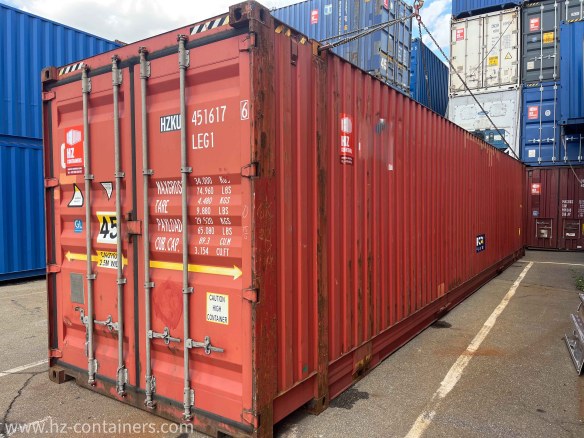


Other container news...
Corner casting steel vs aluminum
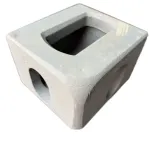
Every shipping container in the world — all 40 million of them — rests on eight critical components. Corner castings are the load-bearing blocks at each corner of an ISO shipping container, and they are the universal interface between the container and every crane, twistlock, spreader, and chassis on the planet. When you lift a container, stack it nine high on a ship, or lock it to a truck trailer, every ton of force flows through these fittings.

Construction cabin – selection, tips, dimensions and prices
Every construction project – whether a family house, a development project or a reconstruction – starts with the infrastructure. No construction manager, craftsman or investor who needs an on-site office, a changing room for workers or a safe storage for tools can do without a quality construction cell. But navigating the offer is not easy: residential containers, sanitary cells, storage modules, rental, purchase, refurbished pieces… This guide will give you answers to all the essential questions in one place.
Storage container
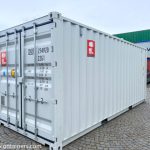
A storage container is a lockable steel box designed for the safe and dry storage of materials, tools, goods or equipment. Originally created as a shipping container for maritime transport, its durability and versatility have found their way onto construction sites, corporate premises and private land.
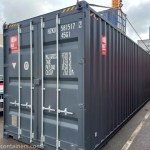
Shipping container 12m (40 ft)
A 12m shipping container is an investment that, if properly selected and cared for, will pay off in decades of trouble-free use. Whether you plan to use it as a warehouse, workshop, garage or the basis for a residential module — the key is careful selection of the condition, a thorough inspection before purchase and high-quality preparation of the base for placement. Take the time to compare offers, check the seller’s references and do not hesitate to personally inspect the container before buying. A properly selected 40-foot container will serve you reliably for many years.