
Mobile Construction Site Units – A Complete Guide
What are mobile construction site units?
Mobile construction site units, also known as portable construction units, site containers or portable modular buildings, are prefabricated structures designed to provide temporary or permanently used solutions for construction sites and other industries. These units are typically based on repurposed ISO shipping containers or on specially built portable structures, modified with specialized features to support site activities, worker accommodation, storage and administrative functions.
The term “mobile construction site units” encompasses a broader category of portable buildings that can be rapidly deployed, relocated and adapted to specific project requirements. Unlike traditional site buildings that require extensive groundwork and permanent installation, mobile construction site units arrive ready for use or require minimal on-site assembly. They represent a modern approach to managing temporary workspaces on construction sites, offering flexibility, cost-effectiveness and durability that traditional temporary structures cannot provide.
The construction industry adopted these containers in the early 1980s, when companies began repurposing shipping containers (also called Conex boxes) for storing tools and materials and for theft protection. Today, applications have expanded dramatically – containers serve as offices, break rooms, toilets, workshops, medical stations and specialized work environments across various industries.
What are the main types of mobile construction site units?
Portable storage containers
Basic characteristics and specifications
Portable storage containers form the foundation of mobile construction solutions. Built from 16-gauge corrugated Corten steel sheet, these containers provide secure, weather-resistant storage for tools, equipment, building materials and supplies. Standard sizes include 10-foot, 20-foot and 40-foot containers, each approximately 8 feet wide and either 8 feet 6 inches high (standard) or 9 feet 6 inches high (high cube).
However, in the Czech Republic they are available exclusively in the 20′ size – i.e. 6 m in length.
The heavy steel construction of portable storage containers is exceptionally resistant to theft, vandalism and weather damage. Double asymmetric steel doors with ground-level access allow easy entry, while locking mechanisms ensure security outside working hours. Interior dimensions vary by size: a 20-foot container provides approximately 150 square feet of usable space, while a 40-foot container offers around 300 square feet. Empty weight ranges from 5,050 lbs for a 20-foot container to 8,775 lbs for a 40-foot high cube container, with payload capacity reaching 28,000 to 62,000 lbs depending on size.
| Specification | 10-foot container | 20-foot container | 40-foot container | 40-foot High Cube |
|---|---|---|---|---|
| Exterior length | 9’9.75″ | 19’10.5″ | 40′ | 40′ |
| Exterior width | 8′ | 8′ | 8′ | 8′ |
| Exterior height | 8’6″ | 8’6″ | 8’6″ | 9’6″ |
| Interior length | 9’3″ | 19’3″ | 39’5″ | 39’5″ |
| Interior width | 7’8″ | 7’8″ | 7’8″ | 7’8″ |
| Interior height | 7’10” | 7’10” | 7’10” | 8’10” |
| Door opening (W×H) | 7’8″×7’5″ | 7’8″×7’5″ | 7’8″×7’5″ | 7’8″×8’5.5″ |
| Usable square footage | 75 sq ft | 150 sq ft | 300 sq ft | 300 sq ft |
| Empty weight | 2,850 lbs | 5,050 lbs | 8,000 lbs | 8,775 lbs |
| Maximum payload | ~10,000 lbs | 28,800 lbs | 62,000 lbs | 62,000 lbs |
Applications and benefits of storage containers
Protecting valuable construction tools is the primary use case. Power tools, hand tools, specialist equipment and machinery stored in containers are protected against theft, weather damage and vandalism. The heavy steel construction and secure locking systems create barriers that deter common theft, while protecting against opportunistic crime on multi-contractor sites.
Strategic placement of containers around the construction site ensures that tools remain accessible to workers while maintaining security. Locking up at the end of the day prevents overnight theft. Weather protection extends the service life of equipment by preventing rusting, corrosion and electrical damage. Cost savings from reduced tool replacement often pay back within the first year of renting or purchasing a container.
Building materials such as timber, steel, concrete and drywall require protection from weather and theft. Containers provide dry, secure storage that prevents water damage to wood products, steel corrosion and contamination of sensitive materials. Organized storage in containers reduces waste, improves material tracking and accelerates project schedules by ensuring materials are readily available when needed.
Mobile office containers and trailers

Equipment and functionality
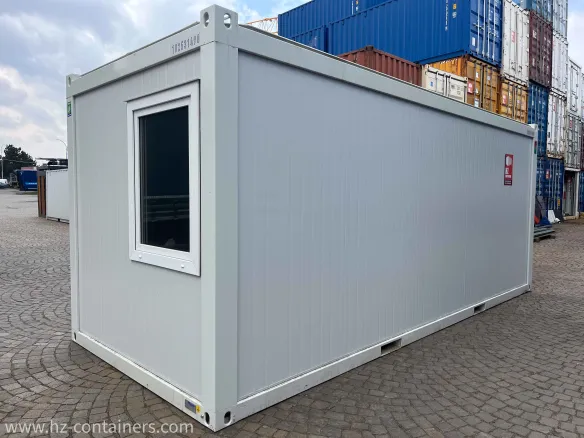
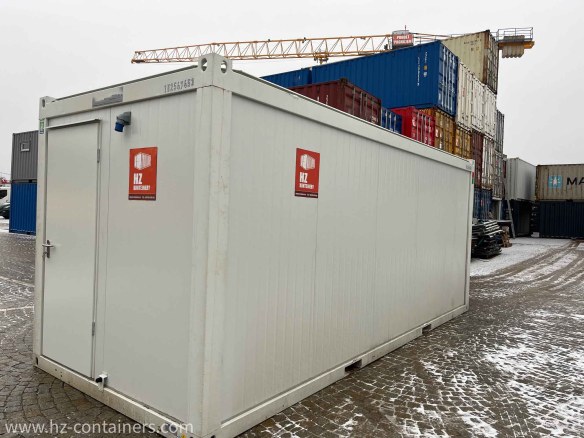
Mobile office containers transform standard shipping containers into fully functional work environments. These units come with air conditioning, insulation and are fitted with windows, doors, electrical outlets and lighting systems. Typical interior configurations include desks, filing systems, HVAC systems and optional amenities such as bathrooms and small kitchenettes.
Mobile office trailers represent an alternative approach, using a wheeled trailer frame rather than shipping containers. Available in widths of 8 feet, 10 feet and 12 feet, trailers arrive fully built and ready for immediate occupancy upon delivery. Both container and trailer mobile offices eliminate the need for foundations, making them ideal for rapid deployment on time-critical projects.
Practical applications in project management
Project managers, site supervisors and engineers use these spaces for real-time decision-making, document storage, client meetings and administrative work. The ability to keep management on site improves communication, accelerates problem resolution and enhances project oversight. Air conditioning ensures worker comfort during extreme weather, protecting sensitive electronic equipment and important documentation from temperature and humidity fluctuations.
Office containers feature professional amenities including workstations, filing systems, communication technology and HVAC systems. The ability to keep management on site improves coordination between contractors, workers and clients, thereby reducing delays and improving project management.
Break room and accommodation containers
Worker morale and safety depend on adequate rest and break facilities. Container break rooms provide dedicated spaces where construction workers can escape the weather, eat and recover between shifts. These units typically include seating areas, tables, small kitchenettes with a refrigerator and bathrooms. Some configurations include lockers for secure storage of personal belongings.
Accommodation containers serve as temporary housing for workers on remote projects or long-term assignments. These units contain bunk beds, heating/cooling systems and basic amenities, enabling companies to house workers on site rather than requiring long daily commutes. This capability is particularly valuable for projects in remote areas or regions experiencing labour shortages.
Toilet and sanitation containers
Regulatory requirements and standards
OSHA regulations require adequate sanitation facilities on construction sites. Rather than renting portable chemical toilets, many construction companies deploy toilet containers equipped with functional plumbing, flush toilets, washbasins, handwashing stations and ventilation systems. These units meet all regulatory requirements while providing workers with dignity and hygiene standards superior to portable toilets.
Toilet containers can be relocated as projects progress, ensuring that facilities remain conveniently accessible to workers. Some configurations include shower facilities, particularly valuable for projects handling hazardous materials that require decontamination.
Under OSHA standard 1926.51, an adequate number of toilets is required on temporary construction sites. It is generally recommended to provide one toilet for every 20 employees. Sites with fewer than 20 workers must have at least one toilet. Toilet containers with modern amenities significantly improve working conditions and meet stringent hygiene standards.
Specialist workshop containers
Work environment and safety
Construction projects often require welding, cutting and assembly work on site. Workshop containers equipped with workbenches, electrical outlets, ventilation systems and tool storage provide controlled environments for these activities. These spaces protect workers from the weather while containing dust, sparks and fumes that would otherwise spread across the site.
Hazardous materials storage containers meet stringent safety standards with spill containment systems, fire-resistant construction, specialist ventilation and secure locking mechanisms. These units isolate chemicals, solvents and flammable liquids from the general work environment, reducing the risk of accidents and ensuring compliance with regulatory requirements.
How do mobile construction site units work?
Manufacturing and construction standards
International ISO standards
Mobile construction site units are manufactured to ISO (International Organization for Standardization) specifications originally developed for maritime shipping. These international standards ensure that containers can withstand harsh conditions at sea – extreme winds, salt spray, temperature fluctuations and heavy loads. Containers intended for shipping must pass rigorous testing by the International Maritime Organization (IMO), which certifies that they protect cargo against weather, impact and corrosion.
Key ISO standards include:
- ISO 668: Classification, dimensions and weight capacities – defines standard sizes of 20-foot and 40-foot containers, 8-foot width and heights of 8 feet 6 inches or 9 feet 6 inches for high cube variants
- ISO 1496: Specification and testing – covers construction materials, structural requirements, stacking capability and performance under various conditions
- ISO 6346: Coding, identification and marking – defines the BIC code and system for uniquely identifying individual containers
- ISO 1161: Corner fittings – specifies the corner fittings necessary for safe lifting and handling
- ISO 3874: Handling and securing – focuses on safe handling and securing of containers during transport
Materials and construction

Most mobile construction site units are manufactured in China, Europe and the Czech Republic using proven industrial processes. Corten steel – a high-strength, weather-resistant alloy – forms the vertical corrugations that provide structural rigidity while minimising weight. Marine-grade timber flooring resists moisture, heavy equipment and constant traffic. Stamped steel roofing effectively channels water and resists puncture and corrosion.
Delivery and site setup
Logistics and installation
Mobile construction containers are transported to sites using specialist flatbed trucks. Standard-size containers (20-foot and 40-foot) fit on flatbeds and semi-trailers. Smaller 10-foot units can be transported on standard trucks. Upon arrival, containers require minimal site preparation – no foundation excavation, utility installation or structural assembly.
Setup involves four primary steps:
- Blocking – placing solid supports (typically concrete blocks or adjustable levelling jacks) under the corners and mid-points of the container frame, raising it slightly above ground to allow drainage and prevent moisture accumulation
- Levelling – ensuring the container sits flat and true, which is critical for door operation and interior comfort
- Anchoring – securing the container against wind loads and seismic activity using cables, chains or bolted connections to ground anchors
- Skirting – installing panels around the container perimeter to prevent debris accumulation and improve appearance
Temporary deployments may require only blocking and levelling. Permanent or long-term installations typically involve full anchoring and skirting, plus utility connections (water, drainage, electricity, gas) where the container includes plumbing or kitchen facilities.
Relocation and flexibility
The key advantage of portability
The defining advantage of mobile construction containers is their rapid relocatability. When project phases are completed or site conditions change, containers can be lifted by specialist transport vehicles and moved to new locations. This flexibility allows construction companies to maximise container utilisation across multiple projects, amortising the investment over many years.
Temporary modular buildings (double, triple and quadruple configurations) arrive on wheeled frames similar to mobile office trailers, enabling relocation without the need for heavy machinery. At the end of a rental period or project completion, these buildings are disconnected and transported back to the provider’s facility with minimal site disruption.
What are the primary uses of mobile construction site units?
Tool and equipment storage
Protecting valuable construction tools is the primary use case. Power tools, hand tools, specialist equipment and machinery stored in containers are protected against theft, weather damage and vandalism. Unlike canvas or aluminium temporary structures, containers cannot be easily broken into. This security advantage alone often justifies the use of containers.
Strategic placement of containers around the construction site ensures that tools remain accessible to workers while maintaining security. Locking up at the end of the day prevents overnight theft. Weather protection extends the service life of equipment.
Storage of building materials
Timber, steel, concrete, drywall and other building materials require proper storage to prevent damage and loss. Portable containers provide an excellent solution for storing these materials, protecting them from weather and ensuring their security. These containers can be positioned strategically around the site, ensuring materials are readily available when needed, reducing downtime and improving workflow.
Office and administrative space on site
Project managers, site supervisors, engineers and administrative staff require air-conditioned workspace for planning, documentation, client meetings and real-time decision-making. Containers equipped with desks, filing systems, communication technology and HVAC systems provide a professional office environment without the cost and time of traditional construction.
Keeping management on site improves project oversight, accelerates problem resolution and enhances communication between contractors, workers and clients. The ability to review plans, access documents and hold meetings on site rather than in off-site offices reduces delays and improves project coordination.
Temporary workspace and workshops
Many construction projects require welding, cutting and assembly work on site. Workshop containers equipped with workbenches, electrical outlets, ventilation systems and tool storage provide controlled environments for these activities. Containing dust, sparks and fumes within the container protects the wider work environment and ensures compliance with air quality regulations.
Medical stations and first aid
OSHA regulations require medical stations on construction sites. Container medical stations provide secure storage for medical supplies, beds for injured workers and sanitary facilities for treatment. Rapid response to injuries reduces severity and demonstrates the employer’s commitment to worker safety.
Document and plan storage
Construction projects generate extensive documentation: plans, permits, contracts, change orders, inspection reports and correspondence. Secure storage in climate-controlled containers protects these critical documents from moisture, temperature fluctuations and theft. Organised filing systems in containers facilitate document retrieval and project record-keeping.
Hazardous materials storage
Construction sites handling chemicals, solvents, flammable liquids and other hazardous materials require compliant storage. Specialist containers with spill containment systems, fire-resistant construction and specialist ventilation meet regulatory requirements while isolating hazardous materials from the general work environment.
Protection of electronics and equipment
Modern construction relies on computers, printers, communication devices and electronic testing equipment. This sensitive equipment requires protection from dust, moisture and extreme temperatures. Weather-resistant containers provide controlled environments that prevent equipment damage and ensure operational availability.
Flexible and overflow storage
Construction projects often require additional storage capacity for materials, tools or equipment that are not immediately needed but must be kept on site. Portable containers offer scalable solutions that allow sites to expand storage capacity as needed and relocate containers between projects in response to changing requirements.
What are the main advantages of mobile construction site units?
Speed and flexibility
Unlike traditional temporary structures requiring groundwork, utility installation and assembly, mobile construction containers arrive ready for use. Minimal site preparation (blocking, levelling and anchoring) enables rapid deployment. Projects requiring immediate workspace can occupy containers within days of delivery, rather than weeks for traditional construction.
Cost-effectiveness
Container solutions reduce capital investment compared to permanent structures. Rental eliminates ownership costs, providing flexibility for short-term projects. Even purchase prices are favourable compared to traditional construction when groundwork, assembly and utility installation are taken into account. Rapid relocation amortises container costs across multiple projects, further improving cost-effectiveness.
According to industry research, the return on investment period for purchasing a container ranges from 1 to 3 years, depending on frequency of use. Companies that own containers and use them across multiple projects achieve significantly better unit costs than those that rent.
Durability and weather resistance
Corten steel construction withstands harsh weather, salt spray, extreme temperatures and heavy impacts. Marine-grade timber flooring resists moisture and heavy equipment. Stamped steel roofing channels water and resists puncture. Containers built to IMO standards exceed the typical durability of temporary structures, often lasting 20 or more years with minimal maintenance.
Security
Heavy steel construction and secure locking systems protect valuable equipment and materials from theft and vandalism. Unlike canvas or aluminium temporary structures, containers cannot be easily broken into. This security advantage alone often justifies the use of containers for storing high-value materials.
Customisation and scalability
Containers allow various customisation options: additional doors, windows, insulation, HVAC systems, electrical infrastructure, plumbing and specialist equipment. Multiple containers can be interconnected to create larger facilities. This flexibility allows containers to adapt to changing project requirements.
Environmental considerations
Repurposing shipping containers for construction applications diverts these units from metal scrap recycling and extends their useful life. Containers can be relocated and reused indefinitely, eliminating the waste associated with temporary structures that are retired after individual projects. Some container modifications incorporate energy-efficient features such as LED lighting and high-efficiency HVAC systems.
How do mobile construction site units compare to alternatives?
Comparison with traditional buildings
Mobile construction containers differ significantly from both traditional site structures and other portable solutions. Compared to permanent site structures, containers require no foundations, require no permits in most jurisdictions and require no permanent utility installation. Setup costs and timescales are dramatically reduced.
Comparison with modular buildings
Compared to modular buildings (prefabricated structures assembled off-site and delivered to location), containers offer lower costs and greater relocatability. Modular buildings provide more customisation and a more permanent appearance, but require more extensive site preparation and assembly.
Comparison with rented temporary offices
Compared to rented temporary offices (canvas or aluminium-framed structures), containers provide superior durability, security, weather resistance and longevity. While initial rental costs may be comparable, the durability of containers and their multi-project utilisation provide better long-term value.
| Criterion | Mobile containers | Modular buildings | Rented temporary solutions |
|---|---|---|---|
| Setup costs | Low | Medium to high | Low |
| Deployment time | 1–3 days | 1–2 weeks | 1–2 days |
| Relocatability | Excellent | Good (temporary) | Good |
| Customisation | High | Very high | Low |
| Long-term value | Excellent | Good | Low |
| Durability | Excellent | Excellent | Good |
| Security | Excellent | Excellent | Good |
What are the key safety considerations?
International standards and certifications
Containers used on construction sites must comply with the International Convention for Safe Containers (CSC), introduced in 1972 by the International Maritime Organization (IMO). The CSC sets minimum standards for container construction and testing, ensuring structural integrity, secure closure and proper identification markings.
Offshore containers require certification to DNV 2.7-1, which ensures suitability for demanding marine environments. This certification covers aspects such as material quality, structural strength, stability, watertightness, lifting points and clear labelling of container information.
Mobile construction site units in brief
Mobile construction site units represent a modern solution for the temporary space needs of construction projects and industrial operations. Their combination of rapid deployment, cost-effectiveness, durability, security and flexibility makes them an indispensable tool for construction managers in today’s dynamic construction environment. Whether for tool storage, office space, worker accommodation or specialist workshops, mobile construction containers provide adaptable solutions that respond to changing project requirements.
The decision to invest in owned containers or to rent them depends on specific project needs, expected duration of use and budget constraints. Regardless of the choice between renting and purchasing, mobile construction site units remain one of the most practical and economical solutions for managing temporary spaces in modern construction practice.
 Czech Republic, Kladno
  WITHOUT SHIPPING

Other container news...

Obligation to Check Tightness When Selling a Reefer Container
Who is responsible for the refrigerant leak check when selling a refrigerated container? Find out what obligations the seller has at the time of handover and why they must provide a PTI report along with the technical data plate. Learn which regulatory requirements and F-gas record-keeping duties become the sole responsibility of the new owner.

New shipping containers
If you are currently considering purchasing a new shipping container, you are not alone. While just twenty years ago containers were used almost exclusively for maritime transport, today they have found their way into construction, storage, business, and even housing. This growing popularity brings with it a host of questions: Which type should you choose? How much does it cost? How do you recognize quality? How can you avoid falling victim to scammers?
New sea shipping containers
If you are currently considering purchasing a new shipping container, you are not alone. While just twenty years ago containers were used almost exclusively for maritime transport, today they have found their way into construction, storage, business, and even housing. This growing popularity brings with it a host of questions: Which type should you choose? How much does it cost? How do you recognize quality? How can you avoid falling victim to scammers?

6m shipping container
Are you thinking about buying a 6-meter shipping container but aren’t sure what to look for? You are not alone—this 20-foot container is the best-selling size on the Czech market, and the differences between various types, conditions, and prices can be significant. In this guide, you will find everything you need to know: from exact dimensions and a comparison of categories (such as “one-way,” refurbished, and “Cargo Worthy”) to current prices and shipping advice.