
Safety and Health in Container Repurposing
(Chemical remediation, certification, building standards)
Repurposing – the reuse of shipping containers – has become a fundamental trend in modern construction, particularly in the field of sustainable and modular buildings. Despite aesthetic appeal and ecological benefits, repurposing requires deep knowledge of risks, applicable standards, remediation procedures, and responsible design. This professionally expanded glossary summarizes key concepts, risks, and the current legislative framework with emphasis on safety and health protection during container conversion for construction purposes.
Repurposing of Shipping Containers
Definition and Practice:
Repurposing of shipping containers means the conversion of standardized ISO containers into residential, working, or public spaces. It is essential that containers were originally designed for extreme loads, long-term durability (typically 20–25 years in maritime transport), and resistance to weather conditions.
Main applications of repurposing:
- Residential buildings (from tiny houses and simple shipping container homes to multi-story apartment buildings)
- Commercial spaces (offices, cafes, shops)
- Storage units
- Schools, healthcare facilities, community centers
Advantages of containers:
- Strength and self-supporting structure (allows stacking up to 9 units)
- Standardized dimensions (facilitate modular construction)
- Speed of construction and mobility
- Long lifespan with proper maintenance (25+ years)
Important Note:
Containers are not manufactured for permanent human habitation. During repurposing, it is necessary to address remediation, structural modifications, fire safety, insulation, ventilation, and full compliance with local legislation.
Key Risks for Safety and Health
Chemical Contamination and Remediation
Expert Facts:
- Coatings: Original industrial container coatings often contain lead, chromates, phosphates, and other toxic components designed for protection in extreme conditions. These substances are carcinogenic and neurotoxic when inhaled or contacted.
- Floors: Standard flooring is made of plywood (mostly tropical wood) impregnated with pesticides (e.g., phenolic compounds, methyl bromide, radaleum) to prevent mold/insects during transport.
- Cargo Residues: Containers often retain residues of transported chemicals, pesticides, or fumigants that can continuously release toxic gases (off-gassing).
Recommended Remediation According to MBI and ICC:
| Procedure | Expert Description and Recommended Standards |
|---|---|
| Removal of Original Coatings | Sandblasting/removal of lead-based paint, application of new coatings with low VOC certificate (EN 71-3, GreenGuard) |
| Complete Floor Replacement | Dismantling of all original plywood, replacement with safe flooring (certification EN 14041, F****, CARB Phase 2) |
| Surface Encapsulation | Application of non-toxic epoxy or polyurethane coatings with health safety certification |
| Professional Cleaning | Thorough cleaning with ozone, followed by surface testing by accredited laboratory (e.g., according to ISO 16000) |
Key Points:
- After remediation, request laboratory tests of air and surfaces for VOC, formaldehyde, pesticides, and heavy metals.
- Entrust remediation only to companies with experience and appropriate authorization.
Structural Integrity
Expert Perspective:
- ISO containers have a frame structure made of weathering steel, corrugated walls, and a floor frame that form a compact unit.
- Any intervention (cutting openings, joining multiple containers) disrupts the original static system.
Main Risks:
- Loss of load-bearing capacity, especially when stacking or with greater roof loads (e.g., snow)
- Deformation of walls/roof, risk of collapse with insufficient reinforcement
Recommended Procedures According to AC462/ICC:
- Engineering Assessment: Every intervention must be assessed in advance by a qualified structural engineer according to EN 1993 (Eurocode 3) and applicable national standards.
- Opening Reinforcement: Windows, doors, and larger penetrations must be enclosed with a steel frame (min. thickness 4 mm) connected to main beams.
- Container Joining: Modular joining must be designed to transfer all forces between containers and foundations (e.g., using welded steel connections, anchor bolts, load washers).
- Static Documentation: The project must include load-bearing capacity calculations, stacking stability, and resistance to seismic and wind loads.
Ventilation, Air Quality, and Thermal Comfort
Container Specifics:
- The steel enclosure is completely airtight, without natural ventilation, leading to rapid accumulation of moisture, pollutants, and extreme temperature fluctuations.
Risks:
- High concentration of VOC (volatile organic compounds)
- Condensation on walls, mold and rot formation
- Risk of overheating in summer and overcooling in winter
Expert Solution:
| Solution | Description and Recommended Standards |
|---|---|
| Quality Insulation | Insulation of walls and ceiling with mineral wool, PIR/PUR panels, or blown foam (certification EN 13162, EN 14315-1) |
| Vapor Barrier | Installation of vapor barrier on the inner side of insulation according to ČSN 730540-2 |
| Mechanical Ventilation | Heat recovery unit or forced ventilation (HVAC system with min. air exchange 0.5 volume/h according to EN 16798-3) |
| Installation of Windows/Doors | Ensuring natural air circulation |
Fire Safety
Facts:
- The steel structure is non-combustible, but at temperatures above 600 °C loses load-bearing capacity and may collapse.
- The greatest danger is posed by internal insulation and cladding (polystyrene, PUR – high smoke production and toxic fumes).
Recommendations According to Building Codes:
| Fire Safety Measure | Standards/Norms |
|---|---|
| Non-combustible Insulation and Cladding | Mineral wool, fire-resistant drywall, cement particle boards (certification EN 13501-1, fire reaction class A1/A2) |
| Fire Detectors | Installation of smoke detectors according to ČSN 730871 |
| Escape Routes | Min. 2 independent escape exits for larger buildings |
| Separate Fire Compartments | Separation of technical and residential areas with fire barriers |
| Electrical Installations | Implementation according to ČSN 332000, fire barriers for penetrations |
Certification and Regulatory Compliance
Loss of Original Certification
- Every ISO container is equipped with a CSC plate (Convention for Safe Containers), which confirms compliance with ISO 1496 standard and safety for transport and stacking.
- Any intervention in the structure (cutting openings, welding) renders CSC certification invalid – the container MUST NOT be further used in maritime transport.
- According to AC462/ICC, the plate must be removed from modified containers to prevent confusion.
Building Permits and Standards
- International and National Regulations:
For example, in the USA, the directive ICC-ES AC462 (Evaluation Criteria for Structural Building Materials from Shipping Containers) applies to repurposed containers, which establishes requirements for construction, remediation, documentation, and inspection. - Czech Building Code and ČSN:
In the Czech Republic, a container is considered a construction product; the project must meet the requirements of the Building Code, Decree 268/2009 Coll., ČSN 73 0035, ČSN 73 0540, and others.
| Investor Obligations | Detailed Description |
|---|---|
| Territorial Permit | Verification of compliance with territorial plan |
| Building Permit | Preparation of project documentation, structural assessment |
| Hygiene and Fire Standards | Compliance with requirements for lighting, ventilation, fire resistance |
| Energy Efficiency | Energy Performance Certificate of Building (PENB) |
| Documentation and Approval | Retention of complete set of documents, inspections, certificates |
Engineering Assessment
- Structural Calculation:
Mandatory preparation by a qualified structural engineer, assesses load-bearing capacity of the structure (before and after modifications), stacking stability, seismic and wind loads. - Project Documentation:
Must contain drawings, technical report, remediation protocol, electrical and plumbing system inspections. - Inspection and Control:
According to AC462, third-party inspection (notified body) is required to verify compliance with structural and health standards.
Practical Steps to Ensure Safety
Selection of the Right Container
| Container Type | Advantages / Risks |
|---|---|
| New (One-Trip) | Minimal contamination risk, no repairs |
| Used (Cargo Worthy, Wind & Watertight) | Risk of chemical contamination, damage, hidden defects |
| Thorough Inspection | Check for corrosion, mold, odor, cracks |
Conversion Process Under Professional Supervision
- The project is prepared by an architect/structural engineer who considers all structural modifications.
- Remediation and removal of flooring/coatings is performed only by a certified specialist.
- Insulation, ventilation, and technical installations (electrical, water, gas) must comply with applicable standards and be performed by licensed professionals.
- Regular inspection and review during construction.
Documentation and Compliance
- Keep all documents: project, structural assessment, remediation, laboratory tests, inspection reports, material certificates.
- After completion, obtain building approval from the building authority (necessary for legal use).

 Czech Republic, Třebíč
  FREE SHIPPING

Other container news...
Corner casting steel vs aluminum
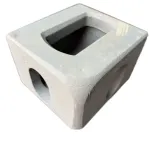
Every shipping container in the world — all 40 million of them — rests on eight critical components. Corner castings are the load-bearing blocks at each corner of an ISO shipping container, and they are the universal interface between the container and every crane, twistlock, spreader, and chassis on the planet. When you lift a container, stack it nine high on a ship, or lock it to a truck trailer, every ton of force flows through these fittings.

Construction cabin – selection, tips, dimensions and prices
Every construction project – whether a family house, a development project or a reconstruction – starts with the infrastructure. No construction manager, craftsman or investor who needs an on-site office, a changing room for workers or a safe storage for tools can do without a quality construction cell. But navigating the offer is not easy: residential containers, sanitary cells, storage modules, rental, purchase, refurbished pieces… This guide will give you answers to all the essential questions in one place.
Storage container
A storage container is a lockable steel box designed for the safe and dry storage of materials, tools, goods or equipment. Originally created as a shipping container for maritime transport, its durability and versatility have found their way onto construction sites, corporate premises and private land.
Shipping container 12m (40 ft)
A 12m shipping container is an investment that, if properly selected and cared for, will pay off in decades of trouble-free use. Whether you plan to use it as a warehouse, workshop, garage or the basis for a residential module — the key is careful selection of the condition, a thorough inspection before purchase and high-quality preparation of the base for placement. Take the time to compare offers, check the seller’s references and do not hesitate to personally inspect the container before buying. A properly selected 40-foot container will serve you reliably for many years.